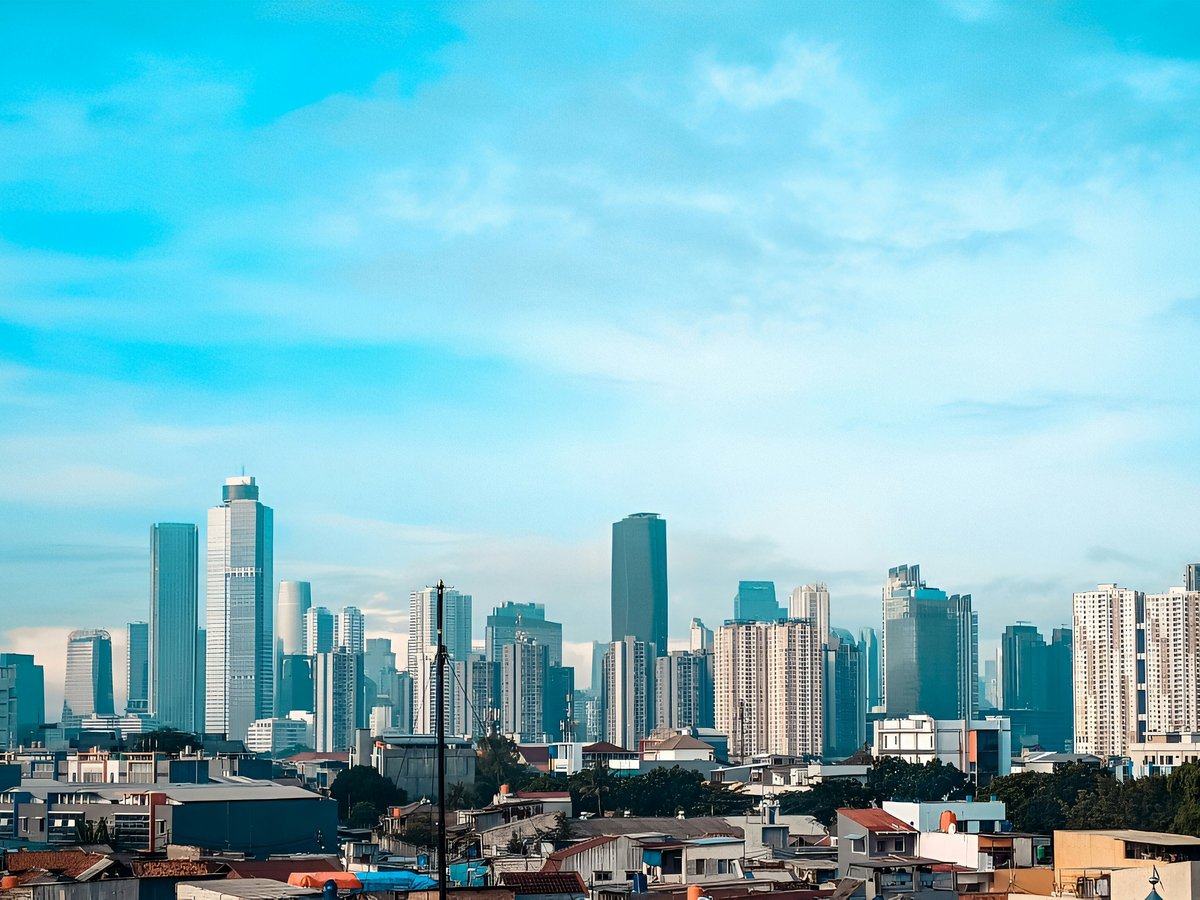
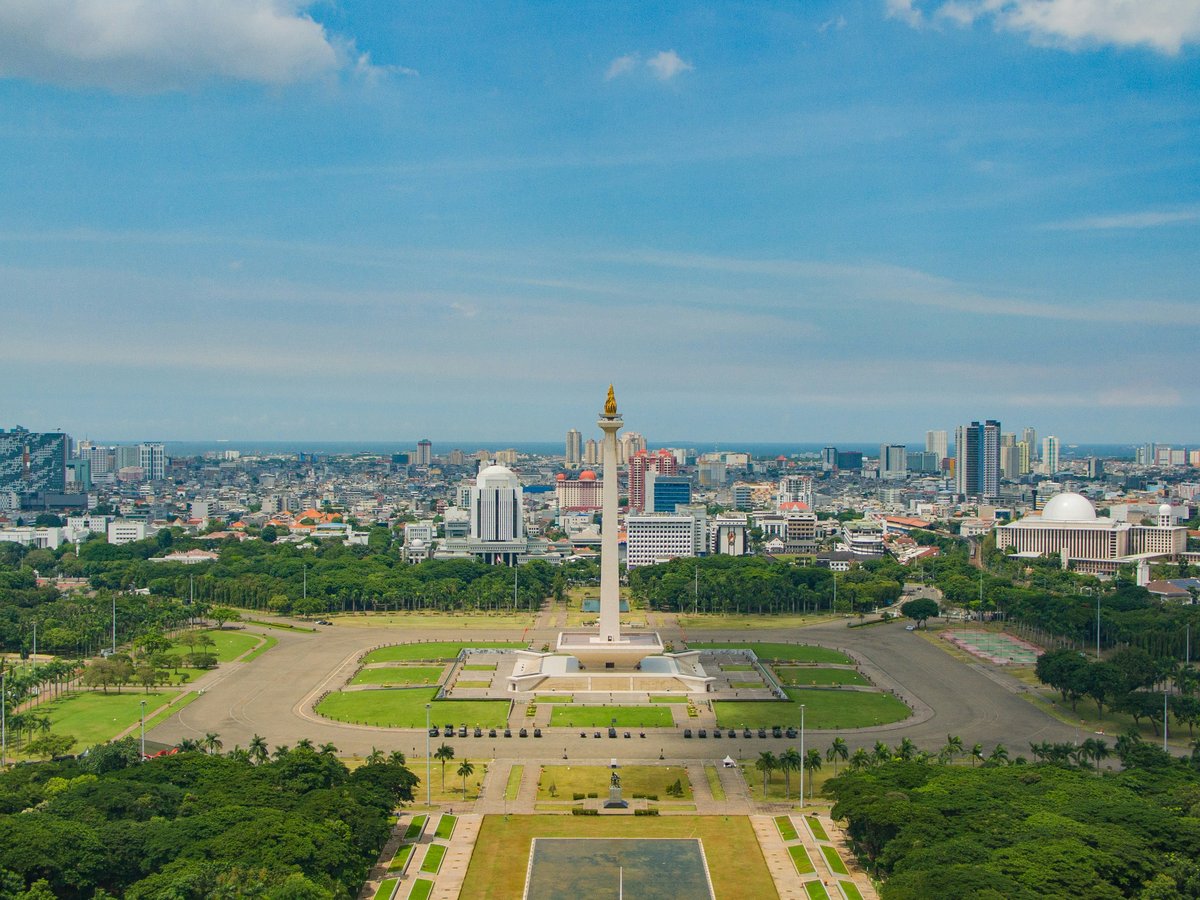
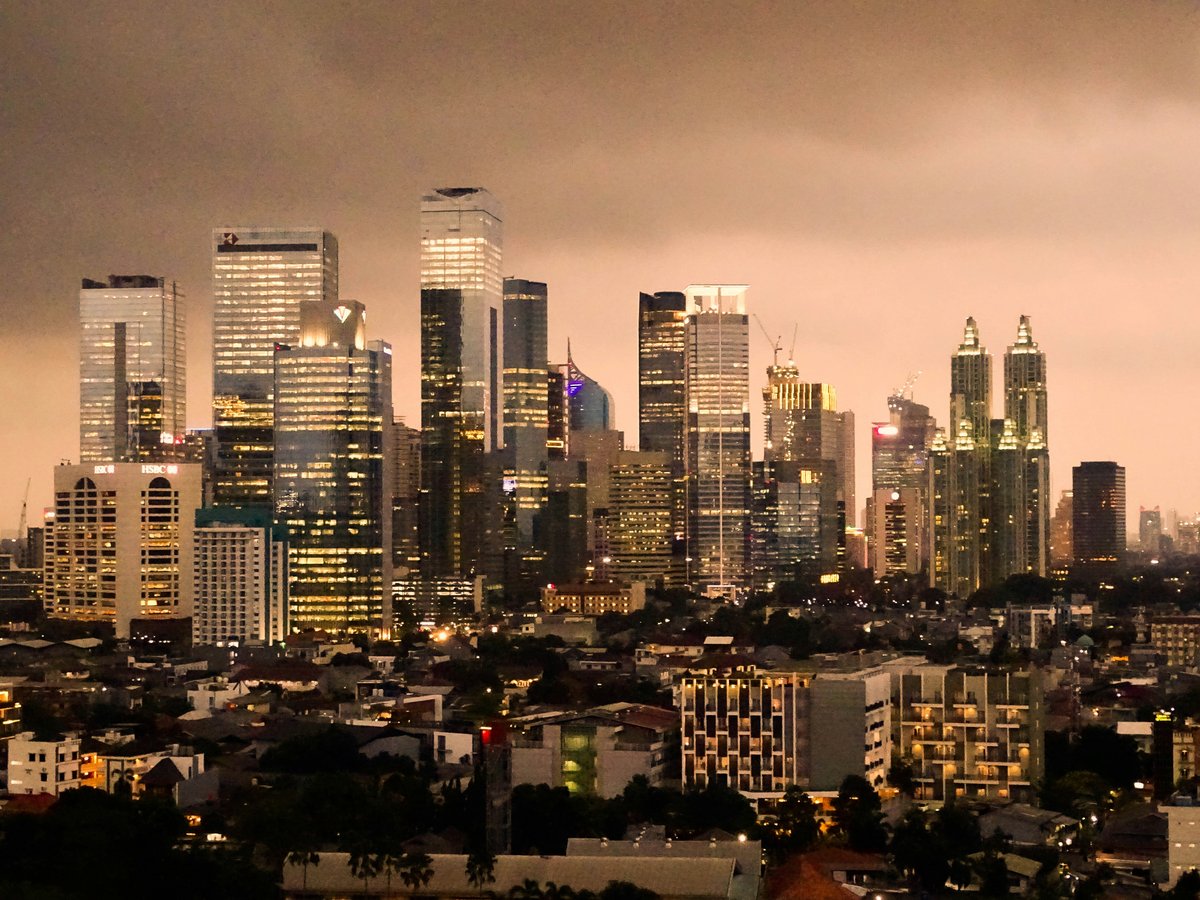
Jakarta sits on the northwest coast of Java, a city of more than ten million spread across a swampy coastal plain that the Dutch colonial administration once tried to tame with canals modeled on Amsterdam's. Those canals still thread through Kota Tua, the old town district where seventeenth-century VOC warehouses have been converted into museums, their facades peeling in equatorial humidity that never lets up. Indonesia declared independence in 1945, and Jakarta became the capital of a republic that would grow into the world's fourth most populous country. That political weight takes physical form in Monas, a 132-metre marble obelisk anchoring Merdeka Square, one of the largest public plazas on earth, where families picnic on weekends and joggers circle the perimeter before the heat sets in. South of the square the city shifts character. Menteng's tree-lined streets hold the kind of mid-century houses that diplomats and old-money families have occupied for decades, while further south Kemang and Senopati have become eating-and-drinking districts where Jakarta's young professional class gathers after work. Traffic defines the daily rhythm more than anything else. A morning commute from the southern suburbs to the business corridor along Jalan Sudirman can take ninety minutes by car but forty on the TransJakarta bus rapid transit, which runs in dedicated lanes above the gridlock. The MRT, opened in 2019, connects Lebak Bulus to Bundaran HI and is beginning to reshape how the city moves north to south. Street food operates on its own clock: nasi goreng vendors appear on sidewalks after dark, and the best soto betawi, a coconut-milk beef soup specific to Jakarta, comes from stalls that have held the same corner for generations. The city does not photograph well from a distance, but at street level it repays the kind of slow attention a first visit demands.
Jakarta in photos
Jakarta right now
Answers about Jakarta
-
Airport to city
From Soekarno-Hatta (CGK), take the KAI Bandara airport train to BNI City station in Sudirman. It costs 70,000 IDR (about $4), runs every 30 minutes from 4:20am to midnight, and takes 46 minutes. After midnight, book a Grab from the pickup zone outside arrivals, budgeting 180,000-250,000 IDR ($10-14) for central Jakarta.
Read the full answer → -
Best time to visit
June through September is the best window for Jakarta. Temperatures hold steady at 32-33°C year-round, but dry-season rainfall drops below 100mm per month. January and February bring three to six times as much rain, flooding roads across the city's northern districts. Those two months are the ones to skip. Mid-year hotel rates sit about 20% below December peaks.
Read the full answer → -
Cost per day
Jakarta is one of the cheapest megacities for backpackers. Budget $15/day covers a hostel dorm, three warung meals, and TransJakarta buses. Midrange lands at $55 with a three-star hotel and Grab rides. Luxury starts around $150. The biggest leaks are mall food courts, Grab surge pricing during rainstorms, and unlicensed airport taxi touts.
Read the full answer → -
Best day trips
Bandung tops the list since the Whoosh high-speed rail cut travel to 40 minutes from Halim station, with fares from IDR 150,000. Bogor is the easiest half-day, 60 km south via the IDR 6,000 KRL commuter train to Kebun Raya. Kepulauan Seribu offers snorkeling 90 minutes by speedboat from Marina Ancol. Puncak's tea plantations sit 80 km south, but weekend traffic can triple the drive.
Read the full answer → -
Food culture
Jakarta's food runs on a schedule most visitors miss. Nasi uduk vendors open at 5:30am for under a dollar, Padang restaurants fill your table with 15 dishes at lunch, and Pecenongan's wok-fried nasi goreng stalls don't peak until 10pm. The city eats like 17,000 islands compressed into one address.
Read the full answer → -
Getting around
Grab or Gojek for everything, MRT Jakarta for the north-south corridor, TransJakarta busway when the route fits. Jakarta's traffic regularly turns a 5 km trip into 90 minutes by car. Download both ridehail apps before landing at Soekarno-Hatta. A GrabBike motorcycle taxi from Sudirman to Kota Tua costs around Rp 15,000 and takes 20 minutes versus an hour by car.
Read the full answer → -
How to get there
Soekarno-Hatta International Airport (CGK), 25 km northwest of central Jakarta, handles all international flights. No nonstop service from North America or Europe. The main connection hubs are Singapore (1 hr 45 min), Tokyo-Narita, Dubai, and Doha. Direct flights from Sydney take about 7 hours on Garuda Indonesia or Qantas. Regional budget carriers connect from Kuala Lumpur and Bangkok for under $150 round-trip.
Read the full answer → -
Is it safe?
Jakarta scores 5.2 out of 10 for solo-traveler safety (see the TTDI Solo-Safety Index). The real threats are motorcycle bag-snatching on busy roads, rainy-season flooding from November through March, and traffic that ranks among the deadliest in Southeast Asia. Violent crime against foreign visitors remains low. The emergency line is 112.
Read the full answer → -
Where locals go
Jakarta's locals skip the Kota Tua tourist corridor for M Bloc Space in Blok M, the Cipete Raya warung strip, and Cikini's arts quarter around Taman Ismail Marzuki. Weeknight crowds at Pasar Santa's second floor and Saturday mornings along Jalan Surabaya give you the windows where foreign faces are rare and Rp 25,000 nasi goreng is the norm.
Read the full answer → -
Must-see
The National Monument, Monas, in Merdeka Square. A 132-metre marble tower topped with 35 kg of gold leaf and the city's only real orientation point. Go when it opens at 8am. By mid-morning the queue wraps the ground-floor lobby and the observation deck wait passes 45 minutes.
Read the full answer → -
3-day itinerary
Day 1 covers Kota Tua and Glodok on foot, from the Jakarta History Museum to Ragusa Es Italia's 1932 ice cream counter. Day 2 is Monas and Central Jakarta's museum row, ending with dinner in Menteng. Day 3 heads to Taman Mini Indonesia Indah and Kemang. About 16 km of walking total, with Grab rides covering the longer hops.
Read the full answer → -
What to avoid
Skip unlicensed taxis at Soekarno-Hatta, the gem-shop scam near Monas, and Ancol Dreamland on weekends. Avoid any road between 4pm and 8pm. Use Grab or Gojek for every ride, never negotiate a street fare, and check flood warnings if you arrive during the wet season.
Read the full answer → -
What to pack
Pack lightweight moisture-wicking clothes for Jakarta's year-round 27-35°C heat and at least one knee-covering layer for Istiqlal Mosque visits. Indonesia uses 230V Type C/F outlets, so bring the correct adapter. Closed-toe shoes handle the broken sidewalks in Kota Tua. Skip mosquito repellent and sunscreen. Both cost under 30,000 IDR at any Guardian or Indomaret.
Read the full answer → -
Where to stay
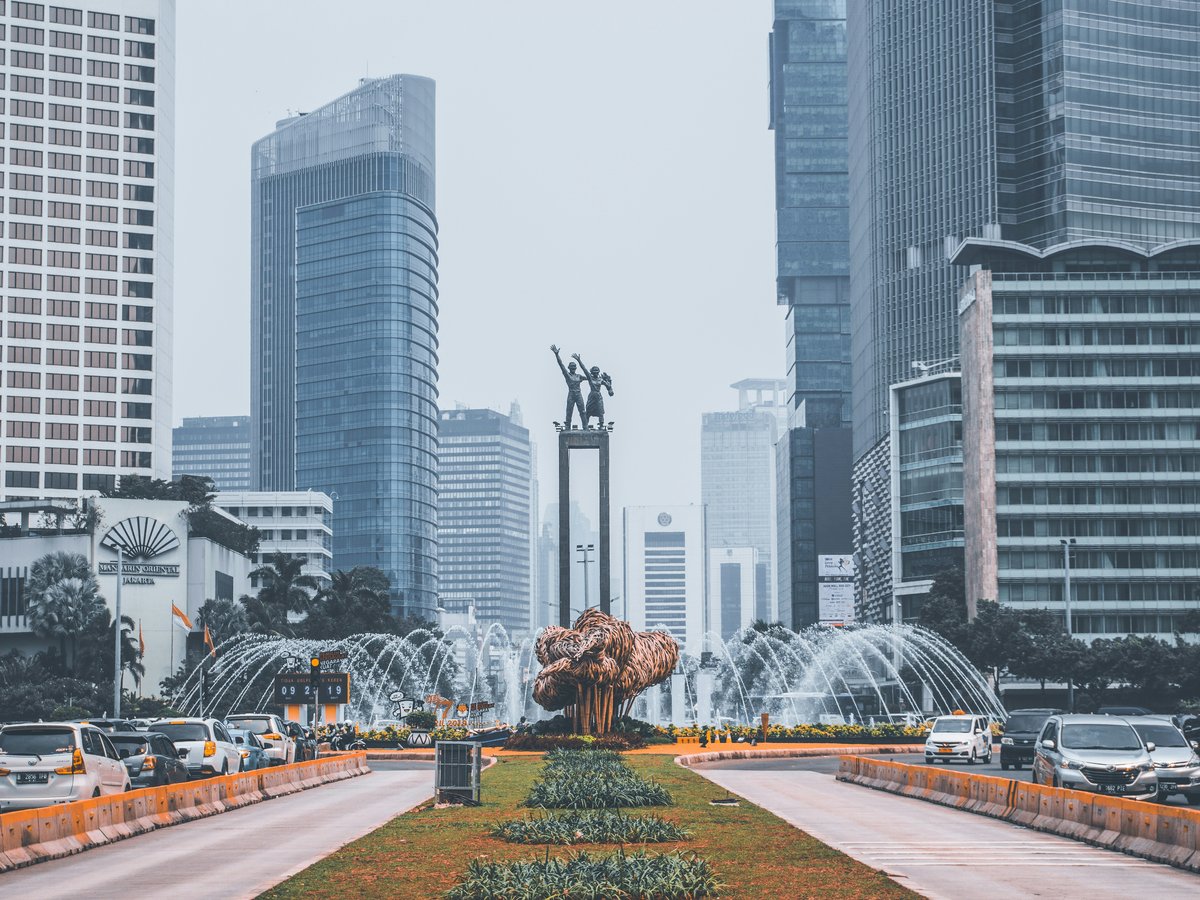
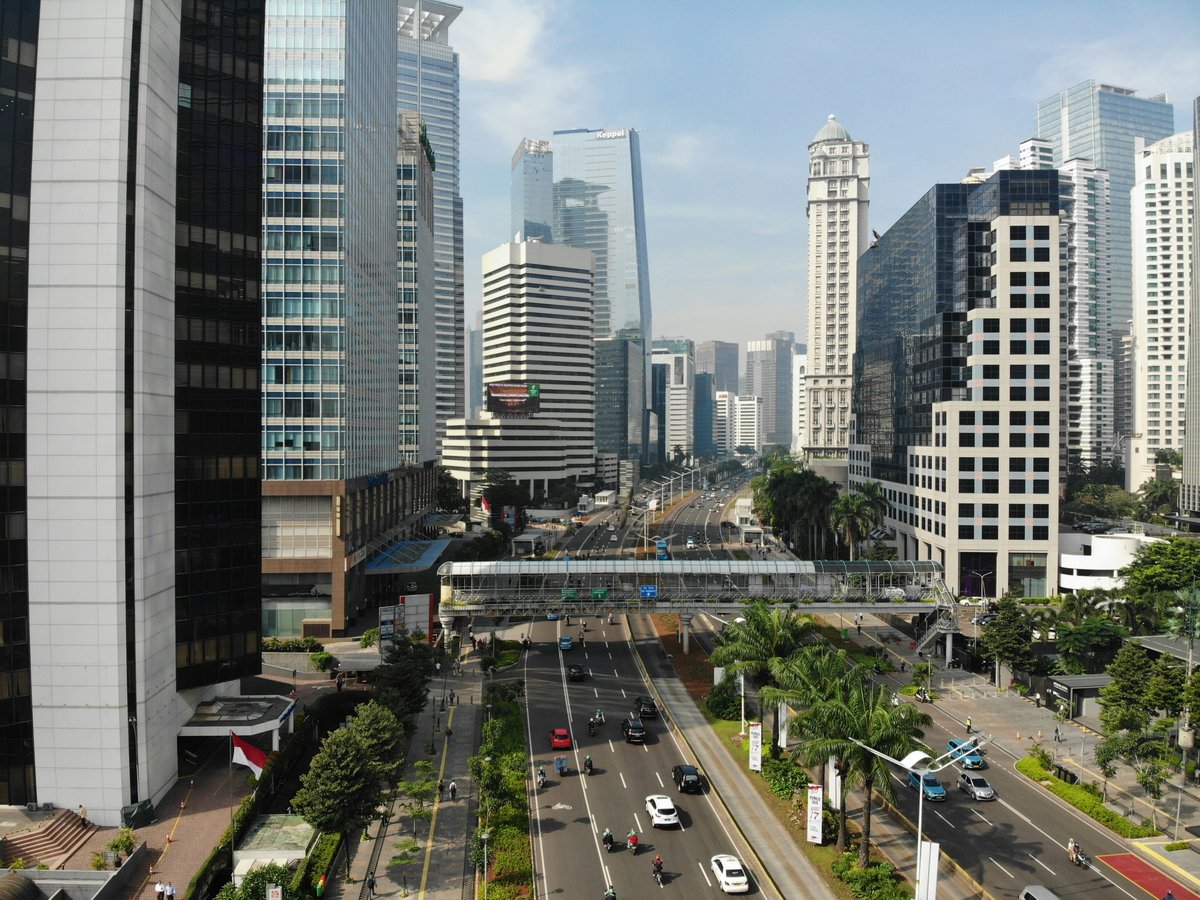
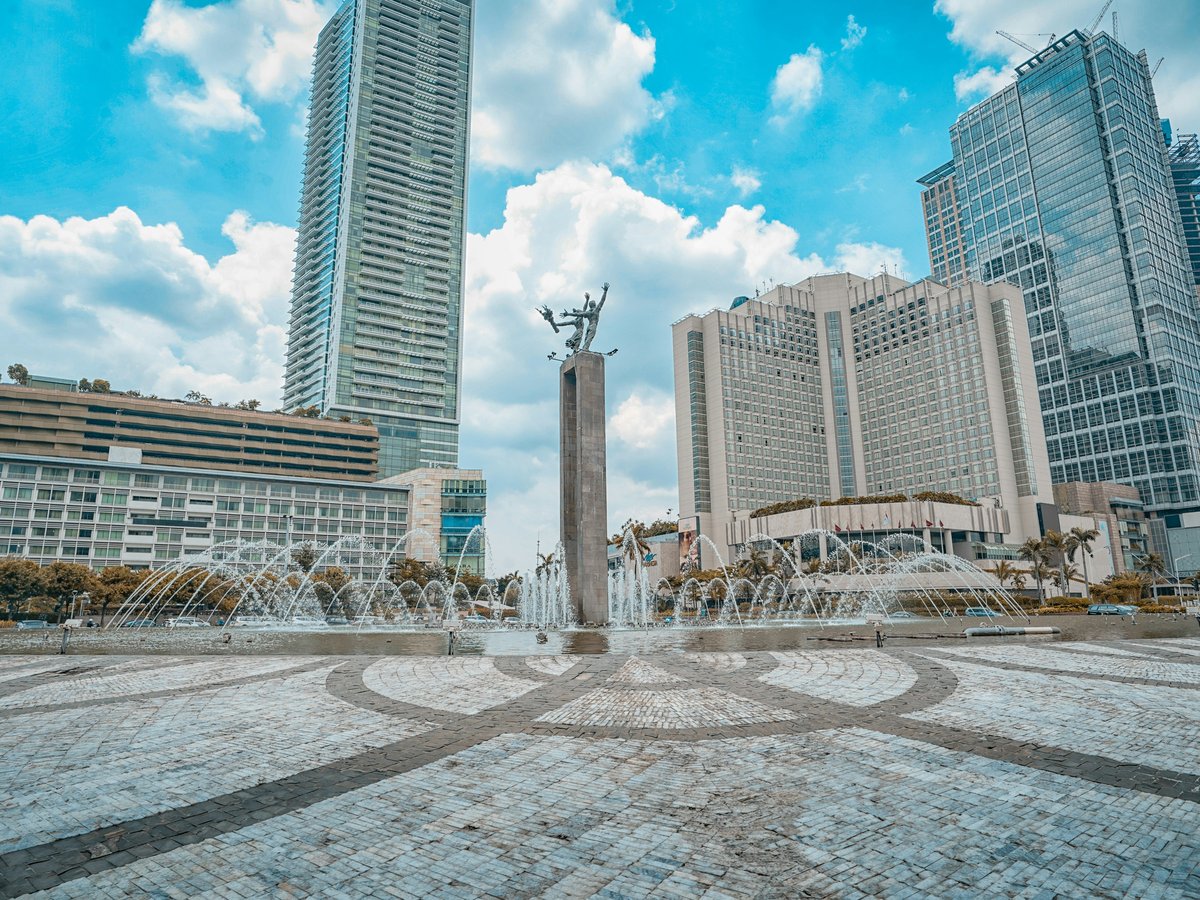
Thamrin corridor or Menteng for first-timers. Thamrin runs south from Merdeka Square, connects to Jakarta's MRT at Bundaran HI station, and puts Grand Indonesia mall within a covered 5-minute walk. Four-star hotels here cost $60-120 per night. Menteng sits one neighborhood east, with boutique guesthouses under $100 within walking distance of the National Museum.
Read the full answer →
Deep guides for Jakarta
-
Jakarta Restaurants: What's Worth It
Twelve kitchens across South Jakarta, Central Jakarta, Menteng, Tebet, and Jakarta Barat, split into two tiers and judged by name. A soto counter opens at 06:00 on Jalan Pejompongan Baru, a grill on Jalan Epicentrum Tengah holds to 01:00, and the smoked sei on Jalan Haji Agus Salim fills the hours between.
Read the guide → -
Best Time to Visit Jakarta, by Season
Jakarta's average highs range from 30.1°C in January to 33.0°C in October, fewer than 3 degrees that hide real differences in how the city feels on foot. This month-by-month guide walks the calendar against verified 5-year observation averages and picks the best window for budget travellers, first-timers, families, and the heat-adapted.
Read the guide →
Curated lists for Jakarta
accommodation
-
Best boutique hotels
Jakarta's hotel map has no single center. Accommodation clusters in corridors: a government and commercial spine running south from Monas through Sudirman and Kuningan, a residential stretch reaching Kemang and Pondok Indah, a western mall district around Central Park, and a northern waterfront strip at Penjaringan. Traffic dictates lodging decisions more than distance. Two neighborhoods three kilometers apart on a map can mean forty minutes in a taxi at rush hour, so the right base depends on which part of the city you need to reach before 9 a.m. or after 10 p.m. MRT Line 1 runs the Sudirman corridor and changes the calculus on that axis, but most of Jakarta still runs on ride-hailing and toll roads. Price tiers overlap across all eight neighborhoods; a mid-range room near Monas costs roughly what a mid-range room near PIK Avenue costs, so the choice comes down to walkability, food options, and how much time you are willing to spend in traffic. The areas below run from the densest hotel clusters to the thinnest, because density signals infrastructure: more rooms means more restaurants, more transit options, and more late-night convenience within walking range.
See the picks → -
Best hostels
Jakarta spreads across a low coastal plain and into hills that rarely appear on tourist itineraries, which means the neighborhood you book determines your experience more than any single hotel. The city's commuter rail, MRT, and TransJakarta bus corridors connect a handful of walkable pockets separated by wide, traffic-choked arterials. Central Jakarta clusters government buildings and old colonial squares near Gambir station; south Jakarta stacks embassies and malls along the new MRT line; north Jakarta runs along the waterfront from the old port at Sunda Kelapa to the theme parks of Ancol and the suburban mall sprawl of Kelapa Gading. West Jakarta sits between the Chinatown corridor and newer residential towers. Jakarta's hostel and budget tier punches well above its price: rooms scoring 8.7 or higher on Trip.com start below $25 a night, and even the pricier central picks rarely break $75. The gap between a $19 bed in Jakarta Barat and a $74 room beside the presidential palace is not just cost; it is the difference between street-food alleys and lobby lounges. Choose your neighborhood by what you want outside the door, not by the thread count inside it.
See the picks → -
Where to stay
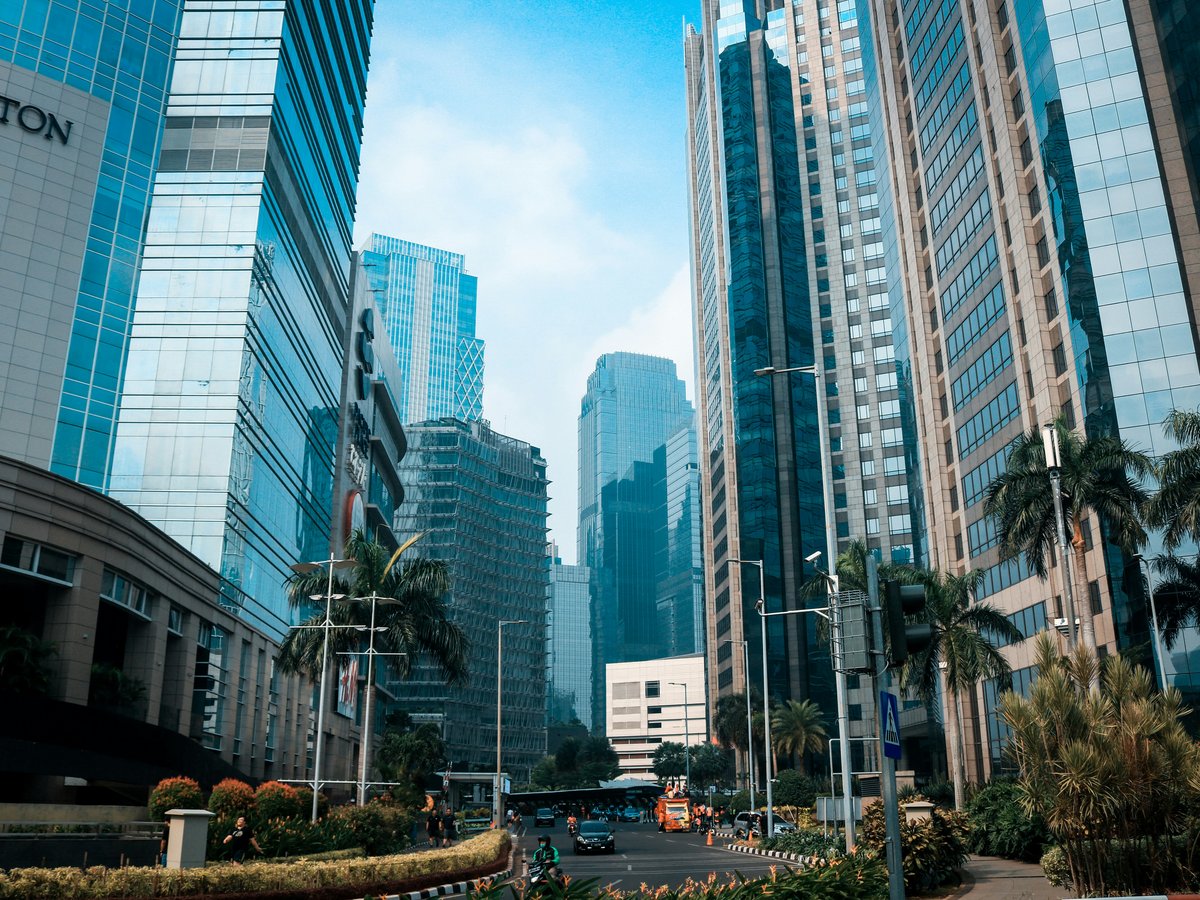
Jakarta spreads across a coastal plain cut by canals and toll roads, and the city's accommodation clusters reflect that sprawl. The central corridor along Jalan Sudirman and Jalan Thamrin holds the densest hotel inventory, with glass towers stacked from Bundaran HI south to SCBD. Move north and the character shifts: Kelapa Gading's suburban malls, Ancol's waterfront theme parks, the airport transit hotels of Benda. South Jakarta fragments into distinct pockets; Blok M's nightlife grid shares a district label with the embassy quiet of Kuningan, but they serve entirely different travelers. Prices swing hard by neighborhood. A night near Soekarno-Hatta costs less than a parking receipt in SCBD, and the mid-range tier along Sudirman competes at rates that would buy luxury in the north. The ten neighborhoods below are ranked by hotel density, highest first, so the areas with the most inventory and the widest tier spread sit at the top.
See the picks →
attractions
-
Best free attractions
Jakarta's free spaces are its most honest introduction to the city. Between the ceremonial expanse at its centre and the pocket gardens of Menteng, the capital keeps a surprising amount of ground open, unticketed, and in use. What follows is nine of them, ranked: each a public square, park, or garden that costs nothing to enter and asks nothing except that you show up. They are not curiosities held in reserve for visitors; they are where Jakartans read a book on a Sunday, where students meet, where morning walkers loop before the heat lands. The list favours places grounded in Wikidata records, so the coordinates check out and the descriptions are verifiable. Treat it as a walking spine for a city that is easier to like when you stop trying to drive across it. Bring water, bring a hat, and read the paragraphs before you commit an afternoon: some reward a slow hour, others are worth ten minutes on the way to something else.
See the picks → -
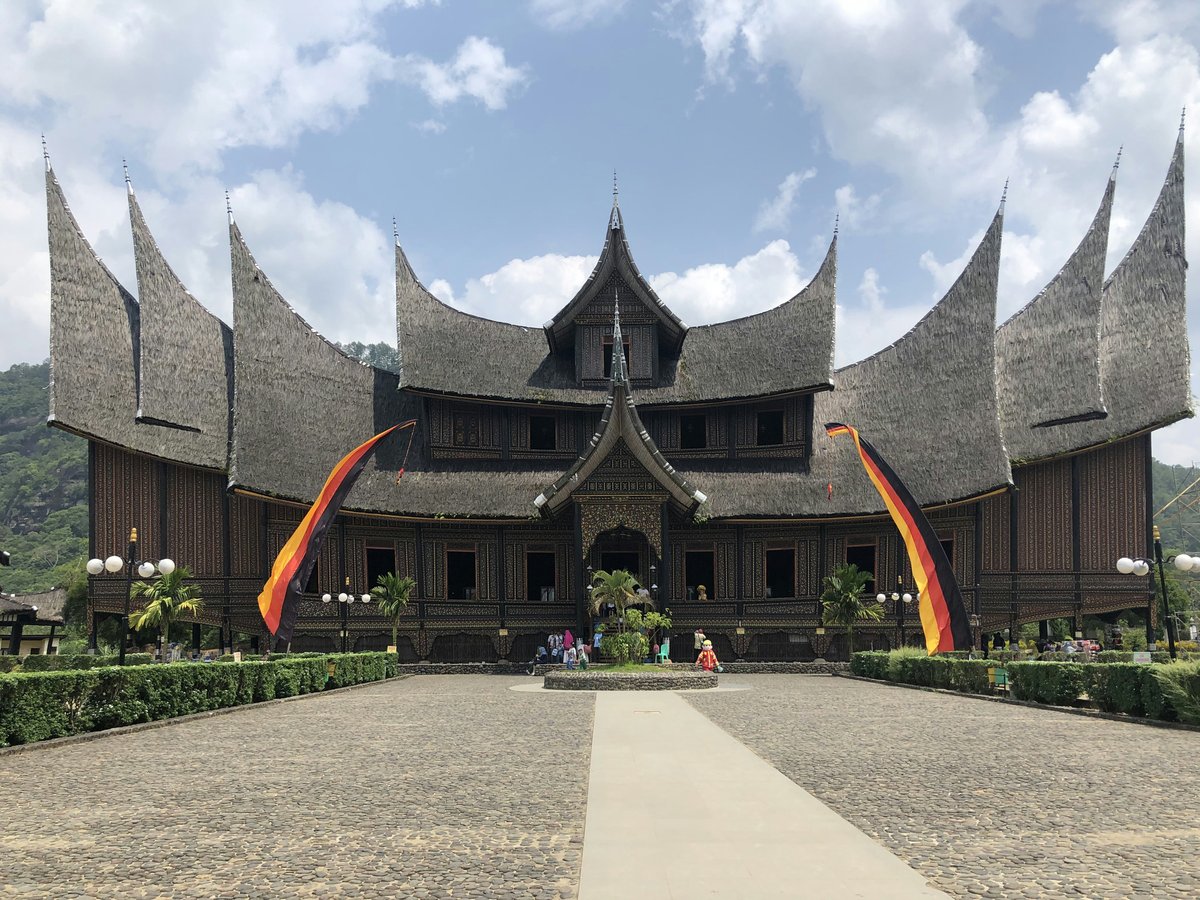
Best museums
Jakarta's museums are scattered across a city that swallows its own history whole, which is exactly why they reward visitors willing to travel for them. The dense cluster around Kota Tua, in the old harbour quarter, keeps the colonial-era archives, the puppets, and the coin vaults within a short walk of one another. Head south into Menteng and Gambir for the independence narrative and the national collections; go further out, past the ring roads, for the ethnography parks and the diaspora museums that most one-day itineraries never reach. What ties the list together is not a single curatorial voice but a willingness, city-wide, to keep the receipts: maritime charters, shadow puppets, drafting-table typescripts, banknotes, contemporary canvases, Hakka migration papers. The twelve below run from the harbour at Sunda Kelapa to a heritage house in Tangerang, and they are ordered by how confidently we would send a first-time visitor through their doors. Read them as a route, not a ranking; two or three in a day is plenty, and the traffic between them is the honest part of the trip.
See the picks → -
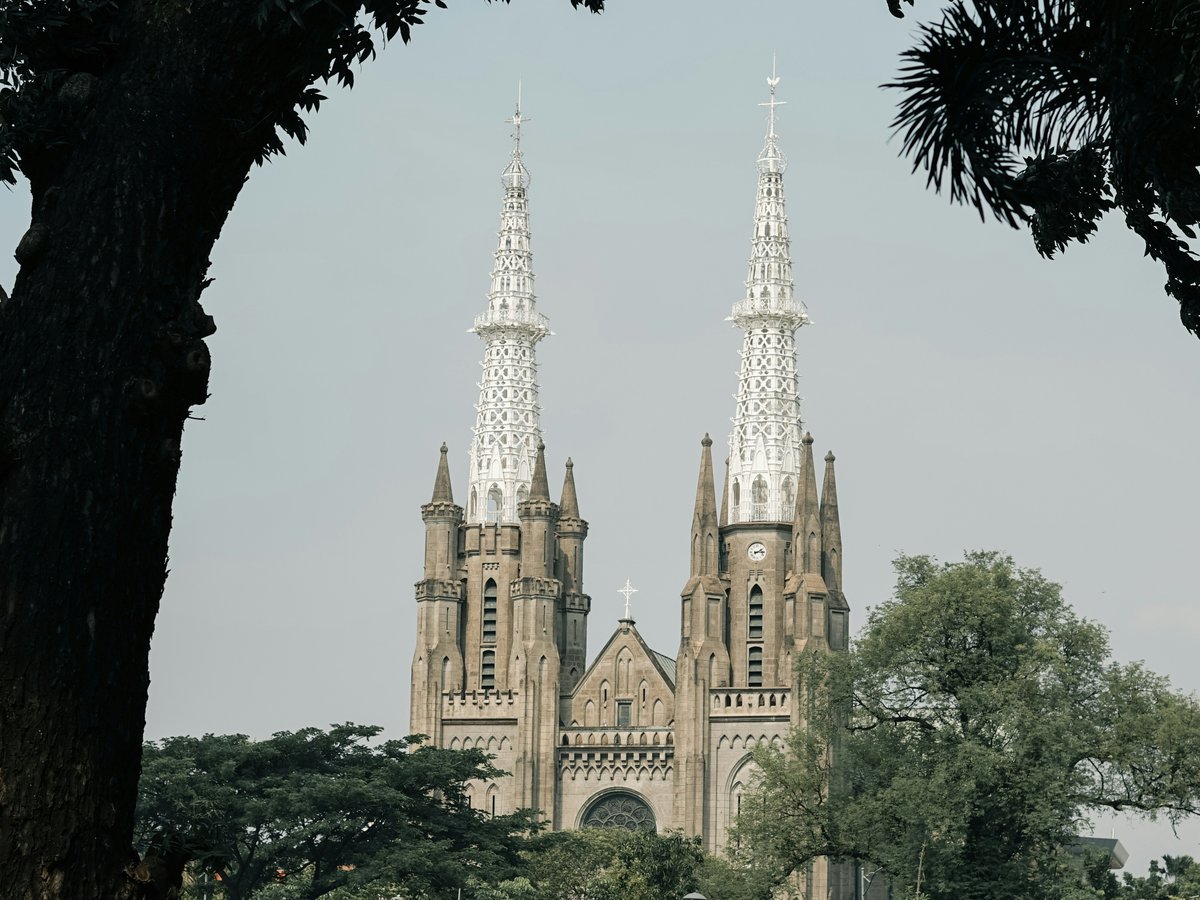
Must-see attractions
Jakarta's must-see list is not a parade of postcards. It is a working capital that keeps its founding stories out in the open, in cemeteries, cathedrals, palaces and a coastal fairground that all sit within the same sprawling metropolis on the north coast of Java. The twelve entries below skew toward buildings that still do the job they were built for, presidential residences that still house a president, churches that still hold Sunday service, and cemeteries that still receive visitors from families abroad. They are grouped in the Batavia-era core where the Dutch capital was laid down, and along the northern shore where the city meets the Java Sea. This is a list for a visitor who wants to read Jakarta as a layered city rather than tick off a skyline, and who is willing to move between a Catholic cathedral, a Protestant church, a megachurch and a war grave in a single afternoon to do it. Addresses and coordinates are given so you can plan the day honestly; the editorial voice is a local one, not a guidebook one.
See the picks →
food
-
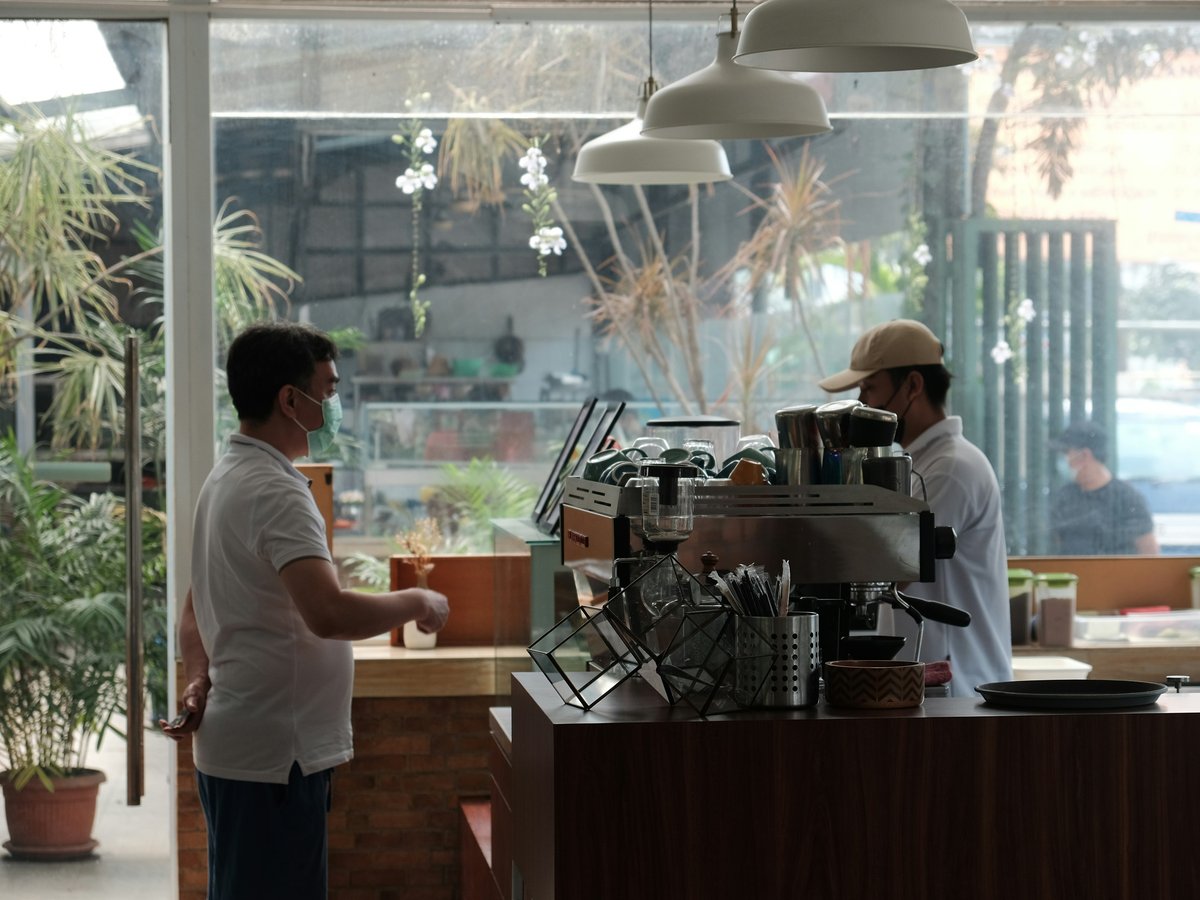
Best cafes
Jakarta's coffee scene is not a single story. It is a long argument between the specialty roasters of Tebet, the third-wave rooms scattered across Tanjung Duren, the neighbourhood workrooms of Jakarta Selatan, and the regional chains that have made kopi susu a daily habit for a city of commuters. This list favours the twelve rooms we return to across the five kota: rooms that open early enough for a pre-traffic espresso, stay late enough for a second meeting, and answer the phone when you call. Every address, every service hour, and every phone number below has been verified against the OpenStreetMap record for that door on that street. If a fact is not sourced, it is not here. What follows is not a ranking of the loudest interiors on Instagram; it is a working directory for a visitor who wants to drink well between 07:00 and midnight without gambling on a closed shutter.
See the picks → -
Best restaurants
Jakarta eats in shifts. The city runs 24 hours in some corners and clocks off at 22:00 in others, and its restaurant map reflects that split personality: warungs that never close, mall trattorias that keep office hours, and family-run soto counters that open before the traffic does. This list is 12 places that reward a visitor willing to cross the city for a specific dish, not a specific vibe. It leans toward addresses you can find, phones that answer, and kitchens that serve one cuisine well rather than six poorly. You will find Sundanese soulfood in Menteng, a Korean grill in Kebayoran Baru, Chinese classics near Petojo, and noodles in Tebet, all with citable coordinates and posted hours. Skip the hotel-lobby buffets and the influencer cafes ringing every mall atrium; the cooking on this list argues for itself. Bring cash, wear shoes you can stand in, and expect to wait behind locals who arrived earlier than you did.
See the picks →
Browse by traveler type
Book experiences in Jakarta
 Free cancellation
 Active Volcano, Rice Field, Hot Spring, Fruit market, Tea Plantation with Lunch
Day trip: free cancellation.
via Viator Free cancellation
 Private Car Charter in Bali with an English-speaking Driver
Day trip: free cancellation.
via Viator Free cancellation
 Private Full-Day Guided Tour: Explore Jakarta’s Top Highlights
Day trip: free cancellation.
via Viator Free cancellation
 Bali Jungle Swing Experience Full Activity
Outdoor experience: free cancellation.
via Viator Free cancellation
 Jakarta Half-Day Sightseeing Tour To Modern City and Old Town
Day trip: free cancellation.
via Viator Free cancellation
 Jakarta Bogor Botanical Garden, Waterfall and Rice terrace, Lunch
Outdoor experience: free cancellation.
via Viator Free cancellation
 Jakarta Heritage of Old Batavia Private City Tour (Historical)
Day trip: free cancellation.
via Viator Free cancellation
 Private FullDay Jakarta Wonderfull Tour with Lunch & Souvenir
Day trip: 7 hours, free cancellation.
via Viator Free cancellation
 Halfday Excursion Old city Batavia with Lunch and Souvenir
Day trip: 5 hours, free cancellation.
via Viator Free cancellation
 Ubud Private Tours with Jungle Swing Experience - all inclusive
Outdoor experience: free cancellation.
via Viator Free cancellation
 Look at Jakarta Local Experience Tour With Boating
Day trip: free cancellation.
via Viator Free cancellation
 Jakarta: Hidden Waterfall Rainforest Trek & Botanical Garden Tour
Outdoor experience: free cancellation.
via ViatorBrowse by interest
Last verified by automated review (v1.7.2) on . What is automated review?