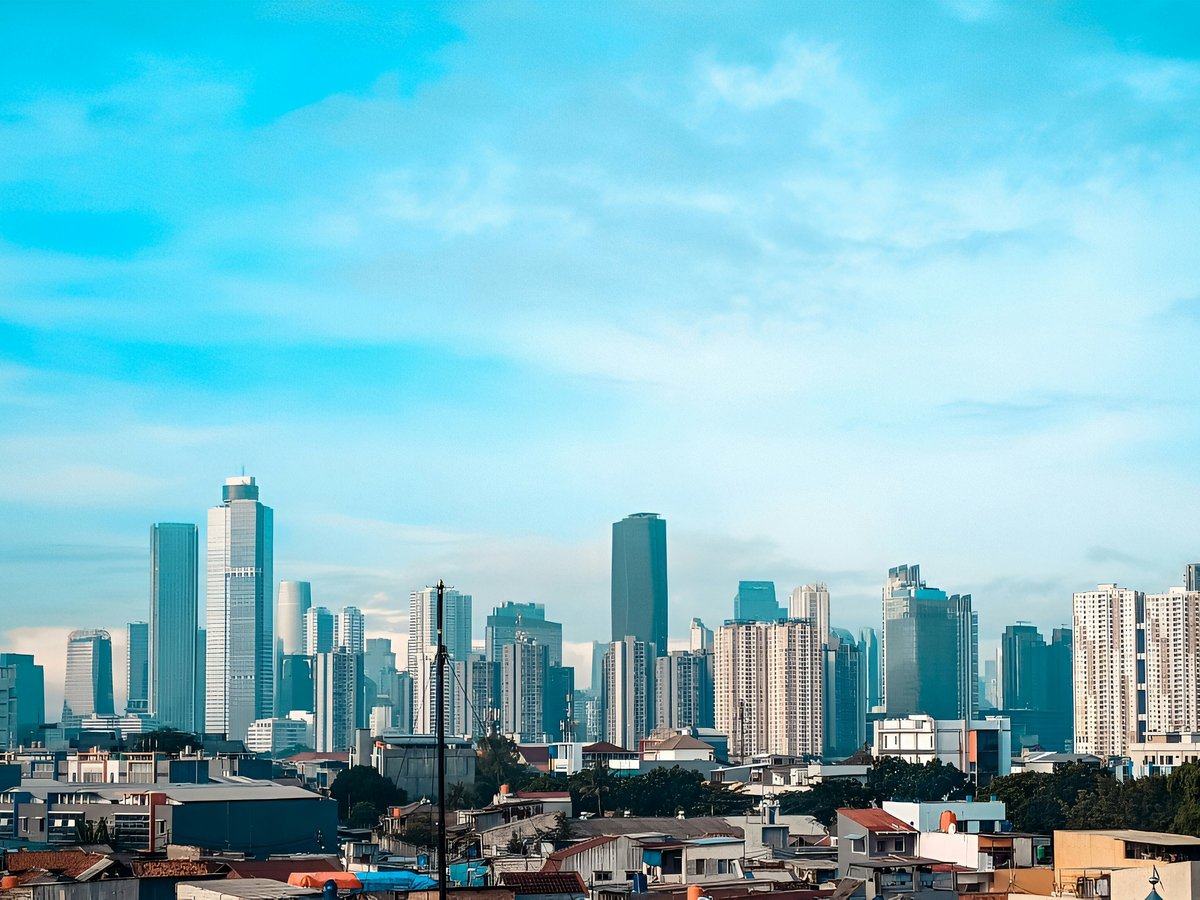
Stay in Jakarta in October
125 hotels in the Trip.com pool for Jakarta, from US$12 a night.
Opens Trip.com on Fri 16 Oct to Sun 18 Oct 2026; change the dates there.
October in Jakarta marks the shift from dry season to wet. August's 99mm of rainfall nearly doubles to 177mm by October, spread across about 22 of the month's 31 days. Temperatures reach 33°C (91°F) by midday with 77% humidity, and the combination pushes the felt temperature toward 38°C (100°F) in direct sun. Mornings tend to stay clear until 13:00 or 14:00. Then a downpour sweeps through for 30 to 60 minutes and fades by early evening.
October's afternoon rain concentrates outdoor time into the morning. Merdeka Square and the cobblestone lanes of Kota Tua fit neatly into a 06:00-to-noon window, and you can smell the damp stone warming under your feet along Jalan Kali Besar as the colonial-era warehouses catch early light. When the sky darkens, the air-conditioned corridors of Grand Indonesia in the Thamrin district are where locals wait it out, though Plaza Senayan and Pacific Place in the SCBD fill up too. The trick most visitors miss is that Jakarta's malls connect to one another through skywalks and underground tunnels along the Sudirman-Thamrin spine, so you can cover 2 kilometers without stepping outside. Evenings settle toward 24°C (75°F), and walks through Kemang's gallery row after the rain carry the first real coolness of the day, the wet asphalt reflecting cafe light along Jalan Kemang Raya.
Fewer tourists come in October than during the July-August dry peak. Hari Batik Nasional on October 2 fills offices across Indonesia with traditional textile patterns, and you might notice batik pop-up displays at Sarinah department store on Jalan Thamrin. Jakarta Fashion Week typically runs later in the month at venues around the Senayan district and pulls designers from across Southeast Asia. Neither event draws the international crowds of a Bangkok Songkran or a Rio Carnival, but both give October a cultural texture that the drier, busier months lack.
Why visit in October
- Morning skies stay clear until early afternoon on most days, giving a reliable 6-to-7-hour window for outdoor sightseeing before rain arrives. That is enough time to cover the Kota Tua museum cluster, loop through Glodok's Jalan Pancoran spice market, and make it to Cafe Batavia for a late-morning coffee.
- Shoulder-season hotel rates sit below the July-August peak, with better availability along the Sudirman corridor and in Menteng's boutique guesthouses near Jalan Cikini Raya.
- Air quality tends to improve over September, as October's heavier rainfall washes out particulates and agricultural smoke that can linger during the tail end of dry season. The view from Monas observation deck reaches noticeably further on clear October mornings than during hazy September.
- Tourist crowds thin from the July-August peak, meaning shorter queues at the National Museum's Bronze Room and easier weekend navigation through Glodok's market alleys, where the narrow passages between dried-fish stalls and herbal medicine shops can feel impassable in peak months.
Worth knowing
- Rain falls on roughly two-thirds of October's days, with intense afternoon downpours that can strand you indoors from early to late afternoon. The sound of rain hammering the tin awnings along Pecenongan's food stalls is atmospheric, but 2 hours of it tests your patience.
- Humidity and sustained afternoon heat create a draining combination, and most visitors find comfortable outdoor walking limited to the 06:00-to-11:00 window. By noon the sidewalks along Jalan Sudirman radiate stored heat that you can feel through your shoes.
- Low-lying roads near the Ciliwung River and North Jakarta underpasses can become impassable during heavy storms, occasionally adding 2-3 hours to afternoon commutes as drivers detour around flooded sections of Jalan Gunung Sahari.
- In years when agricultural burning on Sumatra and Kalimantan extends into October, a persistent haze reduces visibility and makes outdoor mornings less pleasant than the clear months of July and August. BMKG bulletins on air quality are worth checking before a long walk through Menteng's tree-lined streets.
Best for
Think twice if
October sits at the hinge between Jakarta's dry and wet seasons. Daily highs hold in the low 30s Celsius (low 90s Fahrenheit), with overnight lows in the mid-20s Celsius (mid-70s Fahrenheit). Humidity climbs noticeably between early and late October as rain frequency increases. Cloud cover builds through late morning over the Java Sea coast to the north, and by early afternoon convective storms develop over the southern hills around Depok before sweeping into the city center. Heavy rain falls for roughly an hour before skies clear again. The accumulated monthly rainfall roughly doubles August's dry-season total, though individual storms run short and intense rather than all-day gray. Wind stays light, rarely above 15 km/h (9 mph), and the still air between storms amplifies the heat. You can feel the temperature difference stepping from a shaded Menteng side street into the unshaded expanse of Jalan Thamrin.
Seasonal caution
- Flash flooding affects low-lying neighborhoods near the Ciliwung River and road underpasses across North Jakarta during intense downpours. The underpass at Jalan Daan Mogot and sections of Jalan Gunung Sahari can fill within minutes. Avoid driving through standing water of any depth.
- Agricultural burning smoke from Sumatra and Kalimantan occasionally pushes AQI readings above 150 in early October. If haze is visible at ground level from the Monas observation deck, check BMKG air quality bulletins before spending prolonged time outdoors.
- Direct sun exposure between 10:00 and 15:00 poses real heat exhaustion risk for visitors not acclimatized to equatorial humidity. Take shade breaks every 30-45 minutes and carry water at all times. The covered walkway between Bundaran HI MRT station and Grand Indonesia is a useful escape.
Year-round climate
Averages from the last 5 years.
| Month | Avg high (°C) | Avg low (°C) | Rainfall (mm) |
|---|---|---|---|
| Jan | 30 | 24 | 331 |
| Feb | 30 | 24 | 292 |
| Mar | 31 | 24 | 279 |
| Apr | 32 | 24 | 205 |
| May | 32 | 24 | 190 |
| Jun | 31 | 24 | 166 |
| Jul | 32 | 23 | 102 |
| Aug | 33 | 23 | 99 |
| Sep | 33 | 24 | 133 |
| Oct | 33 | 24 | 177 |
| Nov | 32 | 24 | 246 |
| Dec | 31 | 24 | 269 |
Best things to do in October
Morning exploration of Taman Mini Indonesia Indah
cultureThis 150-hectare cultural park, opened in 1975, contains 27 provincial pavilions that showcase traditional architecture from across Indonesia, an IMAX theater, and multiple small museums. The pavilion for West Sumatra, shaped like a traditional Minangkabau rumah gadang with its horn-curved roofline, is worth the walk alone. The covered pavilions provide shelter if afternoon storms arrive ahead of schedule.
October's clear-morning, wet-afternoon pattern suits the park's layout well. Explore open-air sections before noon, then move under covered pavilions when rain hits without losing the day.Booking tipArrive before 09:00 on weekends to avoid school group crowds that typically fill the grounds after 10:00.
Catching a Persija Jakarta match at Jakarta International Stadium
sportsIndonesia's Liga 1 football season runs through October, and Persija Jakarta plays home matches at the 82,000-seat Jakarta International Stadium in Tanjung Priok. The atmosphere from the Jak Mania ultras fills the north end with chanting and coordinated drumming that vibrates through the concrete seats.
Liga 1 is deep into its second half by October, with standings tight and atmosphere building toward the November-December finish. The stakes lift crowd energy above early-season levels.Booking tipCheck Persija's official schedule 2-3 weeks ahead. Mid-week fixtures are easier to attend than Saturday matches.
Attending Jakarta Fashion Week shows and pop-up markets
cultureThe annual fashion event brings Indonesian and regional designers to Senayan City for runway shows, trunk sales, and industry panel discussions. Trade days attract buyers. The public days are where the atmosphere concentrates, with emerging labels beside established names and the hum of sewing machines from live tailoring demonstrations.
Jakarta Fashion Week is specifically an October event, typically in the second half of the month. It does not repeat at any other time of year.Booking tipPublic-day passes go on sale about 3 weeks before through JFW's official channels. Evening show slots fill faster than afternoon ones.
Evening street food crawl through Pecenongan and Jalan Sabang
foodJalan Pecenongan in Central Jakarta transforms into a night food market after 18:00, stretching roughly 800 meters with stalls on both sides. Nasi goreng kambing sizzles on wide, blackened woks, and the sweet-savory smoke from martabak griddles hangs at nose level under the covered awnings. Continue 10 minutes south to Jalan Sabang for satay vendors who fan charcoal grills with folded cardboard, sending sparks into the damp evening air.
October's afternoon rains cool the evening air by several degrees, and the post-19:00 food stall walk feels noticeably more comfortable than the same route during dry-season August. The rain clears the worst of the exhaust haze, too.Afternoon at the National Museum of Indonesia
cultureIndonesia's oldest museum, founded in 1778, holds Southeast Asia's largest collection of pre-colonial artifacts. The Bronze Room and the textile galleries in the newer wing deserve at least 2 hours. The stone Ganesh and Nandi sculptures from the 8th-century Singhasari period have a cool-to-the-touch surface that feels striking in contrast to the heat outside. The building sits near the northwestern corner of Merdeka Square.
October's afternoon rain makes an indoor museum the ideal mid-day pivot when skies darken. Weekday visits are particularly uncrowded compared to school holiday months in June and December.Booking tipVisit on a weekday morning or early afternoon. Weekend family crowds fill the ground floor galleries by 11:00.
Early morning fitness circuit at Gelora Bung Karno
fitnessThe 1962 sports complex in Senayan opens its outer grounds from 05:00. Jakartans jog, cycle, and run group fitness sessions on tree-lined paths that cover roughly 280 hectares. The grounds smell of wet grass and frangipani in October, and the cooling effect of overnight rain makes the 06:00 air feel almost temperate.
October mornings between 05:30 and 08:00 are ideal for outdoor exercise before humidity builds. Recent rains keep the tree canopy fresh and the air cleaner than the tail end of dry season.Walking tour of old Batavia around Taman Fatahillah
cultureThe former Dutch colonial center holds the Wayang (puppet) Museum, Bank Indonesia Museum, and the Cafe Batavia building within a 500-meter radius of the central square. The architecture dates to the 17th and 18th centuries, a sharp contrast to the glass towers visible a few blocks south. The cobblestones on the square radiate a faint dampness in the morning that mixes with the clove-cigarette smoke drifting from nearby warungs.
October's dry-morning window gives a solid 3-4 hours to walk the square and its surrounding streets. When rain arrives, every building on the square is a museum or cafe you can step into.Booking tipArrive before 08:00 on weekends. By 10:00 the square fills with domestic visitors and museum entrances develop long queues.
Browsing Glodok's Chinatown markets
shoppingJakarta's Chinatown stretches along Jalan Pancoran and its side alleys south of Kota Tua. The market sells dried seafood, traditional Chinese medicine, fabric bolts, and ceramic cookware stacked to the ceiling. The air in the dried-goods section carries a dense, salty-sweet smell from bins of dried shrimp, mushroom, and cuttlefish. Vihara Dharma Bhakti, one of Jakarta's oldest Chinese temples (built 1650), sits at the heart of the district.
The covered alleyways make Glodok almost entirely rain-proof, and October's thinned tourist crowds mean you can stop and browse without being pushed along by foot traffic. Morning light filters through the corrugated roofing in long dusty beams.Booking tipGo before 10:00 on a weekday for the least crowded experience. Weekend mornings bring local wholesale buyers who fill the narrow lanes.
What to eat in October
In season: fruit
Mangga gedong gincu
Early-season mangoes with deep red skin and intensely sweet, fiber-free flesh appear at Pasar Mayestik and roadside fruit carts across South Jakarta starting mid-October. The floral aroma is the giveaway. Vendors at the Mayestik fruit section stack them in neat rows, and the ripe ones give off a perfume-sweet smell you catch from 3 meters away.
Duku
Translucent-fleshed langsat fruit that hits its September-to-November peak. Pasar Santa vendors pile them in golden clusters. The segments taste like a sweeter, more floral lychee with a mild citrus finish, and the thin skin peels off with a satisfying snap.
On menus now
Soto Betawi
Jakarta's signature beef and offal soup simmered in coconut milk with lemongrass and galangal. The broth is rich and warming, well-matched to a rainy October afternoon at one of the old-school warungs along Jalan Sabang. The fatty, coconut-forward flavor sets it apart from lighter soto variants found across Java. A bowl with rice and kerupuk runs well under 50,000 IDR.
Street food peaks
Kerak telor
Betawi-style crispy omelette made from glutinous rice, duck egg, and dried shrimp, toasted over charcoal until the edges crack and caramelize. The smoky, umami crunch is best eaten warm from portable stoves around the Senen market area and near the Istiqlal Mosque perimeter during weekend mornings.
What to drink
Es cendol
Shaved ice loaded with pandan-scented rice flour jelly, coconut milk, and dark palm sugar syrup. Vendors around Blok M Square serve it from wheeled carts. The cold sweetness cuts straight through the humidity, and the pandan gives it a distinctive green-flecked, vanilla-adjacent aroma that lingers after you set the glass down.
Wedang ronde
Warm ginger drink with sticky rice balls filled with crushed peanut, served in palm sugar syrup. Street vendors along Jalan Jaksa and near Pasar Baru sell it more frequently as the wet season approaches. The ginger heat lingers on the tongue, and the steam fogs your glasses on damp October evenings after the afternoon rain has cleared.
Regular events in October
Hari Batik Nasional (National Batik Day)Free
Indonesia's national observance of its UNESCO-recognized textile heritage, declared in 2009 after UNESCO inscribed Indonesian batik on its Intangible Cultural Heritage list. Government offices, schools, and many private companies encourage staff to wear batik. Shopping malls like Sarinah and Plaza Indonesia run batik exhibitions and workshops. Not a public holiday, so the city operates normally.
October 2Sumpah Pemuda (Youth Pledge Day)Free
Commemorative day marking the 1928 Youth Pledge that unified Indonesia's independence movement under one national language and one homeland. Government ceremonies take place at the Sumpah Pemuda Museum on Jalan Kramat Raya 106 in central Jakarta, with cultural performances and youth-focused events across the city.
October 28Jakarta Fashion Week
Southeast Asia's largest annual fashion industry gathering, typically running 5-7 days with runway shows from Indonesian and regional designers at Senayan City mall. Public days allow non-industry visitors to attend shows and shop limited-edition collections at pop-up markets. The after-show crowd spills into Senayan's restaurants along Jalan Asia Afrika.
Late October (dates shift annually)Car Free Day on Jalan SudirmanFree
Every Sunday from 06:00 to 11:00, Jakarta closes the 6-kilometer stretch of Jalan Sudirman and Jalan Thamrin to motorized traffic. Thousands of Jakartans jog, cycle, and gather around food vendors and pop-up fitness classes. October mornings give pleasant conditions before the afternoon heat and rain build.
Every Sunday, 06:00-11:00Best places this October
National Monument (Monas)
landmarkThe 132-meter marble obelisk at the heart of Merdeka Square, completed in 1975, offers an observation deck with 360-degree views across Jakarta's sprawl. The base houses a historical museum with 51 dioramas tracing Indonesian history. The presidential Merdeka Palace fronts the square's northern edge, visible from the monument grounds. Morning visits before 10:00 avoid both crowds and the worst of the heat. The elevator queue shortens noticeably on weekdays.
GambirJakarta History Museum (Museum Fatahillah)
museumThe museum occupies a Dutch colonial building on Taman Fatahillah square that dates to 1710. For over two centuries it served as the town hall of Batavia. The collection runs from prehistoric Java through the colonial period. October's afternoon storms make the thick-walled, cool interior a natural refuge after a morning spent on foot around the surrounding lanes. The basement still holds the original colonial-era jail cells.
Kota TuaRagunan Zoo
natureJakarta's primary zoo, established in 1864, sprawls across 140 hectares in southern Jakarta. The Schmutzer Primate Centre holds one of Southeast Asia's largest great ape collections, including Sumatran orangutans and siamang gibbons. October's early rains bring out fresh green canopy, and the animals tend to be more active in the slightly less parched conditions compared to September. The earthy, damp-forest smell after overnight rain makes the primate enclosures feel closer to a real habitat.
Pasar MingguAncol Dreamland (Taman Impian Jaya Ancol)
recreationJakarta's beachfront recreation complex covers 552 hectares along the Java Sea shoreline. The Dunia Fantasi theme park, Sea World aquarium, and Atlantis Water Adventure sit within the grounds. The sheer size means you can spend an entire rainy afternoon moving between covered attractions without feeling trapped indoors. The Sea World tunnel, where sharks glide overhead in green-filtered light, keeps kids occupied for at least an hour.
AncolPasar Baru
marketOne of Jakarta's oldest shopping streets, dating to the 1820s, running north from the Istiqlal Mosque area. The covered market halls sell textiles, tailoring services, and leather goods. October visitors benefit from the roof arcade that keeps shoppers dry while afternoon storms pass outside. Tailors here can produce a custom shirt in 24-48 hours, and the fabric shops carry Indian cotton and local batik by the meter.
Sawah BesarKemang
neighborhoodSouth Jakarta's expatriate-friendly neighborhood has a concentration of independent cafes, galleries, and international restaurants along Jalan Kemang Raya and its side streets. Evening temperatures after the daily October storms make outdoor dining patios here more tolerable than at any point during the midday hours. The converted warehouse galleries south of Jalan Kemang Selatan I host rotating exhibitions from Jakarta's contemporary art scene.
KemangIstiqlal Mosque
landmarkSoutheast Asia's largest mosque, opened in 1978, stands across a plaza from the colonial-era Jakarta Cathedral, and the two buildings together illustrate Indonesia's pluralist identity. The main prayer hall holds 120,000 worshippers. Non-Muslim visitors are welcome outside prayer times, and the soaring interior, with its 45-meter dome, stays cool and quiet even on the steamiest October afternoon. Free guided tours are available at the visitor entrance.
GambirPasar Santa
marketA neighborhood market in South Jakarta that reinvented itself in the 2010s as a hub for independent food vendors, coffee roasters, and vintage shops. The 2nd floor holds a vinyl record shop and a few craft beer stalls that feel wildly out of place in a traditional pasar. October's afternoon storms make the covered upper floor a useful retreat with a cold Bintang and a plate of nasi campur from one of the ground-floor stalls.
Kebayoran Baru
Your packing checklist
Tick items off as you pack. Your progress saves in this browser.
All packed — have a great trip.
Insider tips
Gojek and Grab are more reliable than street taxis, but during October's afternoon storms, surge pricing on ride-hailing apps can double or triple. If you see the sky darken around 13:00, order your ride before the surge kicks in. Worth noting, the MRT from Bundaran HI to Lebak Bulus runs on a fixed schedule regardless of weather and costs 3,000-14,000 IDR per trip.
The rooftop bars along Jalan Sudirman in the SCBD offer some of the best post-storm sunset views in the city. The rain washes out the haze, and weeknight evenings are far less crowded than Fridays or Saturdays. Skye Bar on the 56th floor of the BCA Tower is the most well-known, but the lower-key spots on Jalan Senopati one neighborhood south have better food and shorter waits.
Menteng's tree-lined residential streets around Taman Suropati are Jakarta's most pleasant walking area in the cooler hours before 09:00. On weekends, the park attracts local artists who display and sell original work on the grass. The Dutch colonial houses along Jalan Teuku Umar, with their deep verandas and overgrown gardens, feel like a different city from the towers 2 kilometers north.
Traditional jamu (herbal tonic) sellers push glass-bottle carts through residential neighborhoods like Kebayoran Baru every morning between 06:00 and 08:00. The turmeric-based kunyit asam tastes like ginger-forward lemonade and costs under 10,000 IDR. Listen for the clinking bottles and the vendor's call. It is one of those sounds that disappears if you are not awake early enough.
The underground tunnel connecting Dukuh Atas BRT station to the Sudirman MRT station is Jakarta's most useful piece of pedestrian infrastructure in October. It links 4 transit lines (MRT, BRT, commuter rail, airport rail) without a single step outdoors. On a heavy-rain afternoon, this junction moves you across the city faster than any surface route.
Pasar Mayestik in Kebayoran Baru is where locals buy batik fabric, not the tourist shops in Kota Tua. October's Hari Batik on the 2nd creates a brief spike in demand, but prices stay reasonable if you arrive a few days after. The 2nd-floor textile hall carries hand-drawn batik tulis from Solo and Pekalongan that you will not find in mall shops.
Avoid these mistakes
- Scheduling an outdoor walking tour or site visit for the afternoon. October's rain pattern is extremely predictable. Anything outdoors needs to happen before 13:00, or you will spend 2 hours waiting under a shopfront awning along Jalan Jaksa wondering where the morning went.
- Assuming Jakarta traffic is manageable during rain. Even on dry days, a 10-kilometer trip can take 90 minutes during rush hour (07:00-09:00 and 17:00-19:00). October rain adds another 30-60 minutes to the same route, easily turning a short hop from Menteng to Kota Tua into a 2-hour ordeal.
- Packing only lightweight summer clothing. Jakarta's malls, museums, and restaurants run air conditioning aggressively, often set to 18-20°C. The chill inside Grand Indonesia after 2 hours of walking in 33°C heat is jarring. A light layer for indoor spaces prevents the exhausting hot-cold cycling that leaves many visitors feeling drained by evening.
- Accepting iced drinks made with non-factory ice from small street stalls. Jakarta's tap water is unsafe to drink. Factory-made ice has a cylindrical shape with a hollow center. Irregularly shaped crushed ice may come from an untreated source.
- Ignoring the MRT and TransJakarta BRT in favor of ride-hailing for every trip. The Bundaran HI-to-Lebak Bulus MRT line runs 16 stations in about 30 minutes regardless of surface traffic. During October's afternoon gridlock, a 3,500 IDR BRT ride on the dedicated Corridor 1 lane from Blok M to Kota beats sitting in a Grab for 90 minutes.
Practical tips for October
Book accommodation in the Sudirman-Thamrin corridor or Menteng for walkable access to Jakarta's main attractions and covered mall connections between buildings. The skywalk network linking Grand Indonesia, Plaza Indonesia, and the Bundaran HI MRT station means you can reach 3 major malls without touching the street. Download both Gojek and Grab before arriving, as October's rain increases your dependence on ride-hailing by mid-afternoon. The TransJakarta BRT system runs air-conditioned buses on dedicated lanes for a flat fare of 3,500 IDR, making it the fastest option across the city during rain-induced gridlock. Carry a small day bag with a waterproof liner at all times. Most malls open at 10:00 and close at 22:00, making them natural afternoon shelters during storms. When visiting mosques, including Istiqlal near Merdeka Square, women should cover arms and legs. Borrowed coverings are usually available at the entrance. Indonesia uses Type C and F power outlets at 230V. International hotels provide adapters, but budget properties often do not. If attending Jakarta Fashion Week, book in the Senayan area near Jalan Asia Afrika to reduce transport time to evening shows. For the Sunday Car Free Day on Jalan Sudirman, arrive before 07:00 to claim a spot near the Bundaran HI roundabout, where the best food vendors cluster.
FAQ
Is October a good time to visit Jakarta?
October is a fair month. It sits between the dry-season comfort of July-August and the heavy wet months that start in November. You will encounter rain on the majority of days, though it concentrates in afternoon bursts rather than all-day drizzle. If you can plan outdoor activities before noon and pivot to indoor sites like the National Museum or the air-conditioned levels of Grand Indonesia when rain arrives, October works well enough. The tradeoff is lighter tourist traffic and more relaxed hotel booking compared to the drier months. Mind you, the October evening air after a storm, when Kemang's cafe patios fill up and the temperature drops to 24°C, is more pleasant than most dry-season evenings.
What is the weather like in Jakarta in October?
Hot and increasingly wet. Temperatures hold in the low 30s Celsius (low 90s Fahrenheit) during the day and the mid-20s at night. Humidity sits in the upper 70s percent, the kind that fogs your sunglasses the moment you step out of an air-conditioned mall. Rain falls on most days but arrives in sharp afternoon bursts that usually pass within an hour. Mornings are typically sunny and dry. The accumulated monthly rainfall of roughly 177mm sits well above August's 99mm dry-season low but comfortably below the heavier months of November (246mm) and January (331mm).
Is Jakarta crowded in October?
Less crowded with international tourists than the July-August dry peak, but Jakarta is a megacity of over 10 million residents, so no month feels empty. Sites like the Kota Tua museum district and the Merdeka Square area are noticeably quieter on weekday mornings. The National Museum's Bronze Room, which can feel packed in July, might have only a handful of visitors on an October Tuesday. Weekend domestic tourism still fills popular spots like Ancol Dreamland and Taman Mini. Hotel availability is generally good along the Sudirman-Thamrin corridor, and you rarely need to book restaurants more than a day ahead, even in the popular Kemang and Senopati dining strips.
Does it rain all day in Jakarta in October?
Rarely. October follows a reliable daily pattern. Mornings are usually clear, storms build in the early-to-mid afternoon, heavy rain falls for roughly an hour, and skies clear by late afternoon or early evening. Persistent all-day rain is uncommon in October. That pattern intensifies later in the wet season, particularly December and January, when multi-day stretches of overcast skies and intermittent rain become more frequent. You'll likely hear the rain hammering tin roofs around 14:00, and by 17:00 the streets are steaming dry again.
What should I wear in Jakarta in October?
Lightweight, breathable clothing in cotton, linen, or moisture-wicking synthetic fabrics. Jakarta is conservative by Southeast Asian standards, so avoid very short shorts or sleeveless tops when visiting mosques like Istiqlal or government buildings around Merdeka Square. Carry a light layer for the strong air conditioning inside malls and restaurants, where temperatures can drop to 18°C. Footwear needs to handle wet surfaces, as afternoon rain leaves puddles across most sidewalks and pedestrian areas. Quick-drying sandals with good grip work better than closed shoes for most of the day. For evenings in Kemang or the SCBD restaurant district, smart-casual clothing is enough for any venue.
Things to Do in Jakarta in October
 Free cancellation
 Active Volcano, Rice Field, Hot Spring, Fruit market, Tea Plantation with Lunch
Day trip: free cancellation.
via Viator Free cancellation
 Private Car Charter in Bali with an English-speaking Driver
Day trip: free cancellation.
via Viator Free cancellation
 Private Full-Day Guided Tour: Explore Jakarta’s Top Highlights
Day trip: free cancellation.
via Viator Free cancellation
 Bali Jungle Swing Experience Full Activity
Outdoor experience: free cancellation.
via Viator Free cancellation
 Jakarta Half-Day Sightseeing Tour To Modern City and Old Town
Day trip: free cancellation.
via Viator Free cancellation
 Jakarta Bogor Botanical Garden, Waterfall and Rice terrace, Lunch
Outdoor experience: free cancellation.
via ViatorLast verified by automated review (v1.7.2) on . What is automated review?