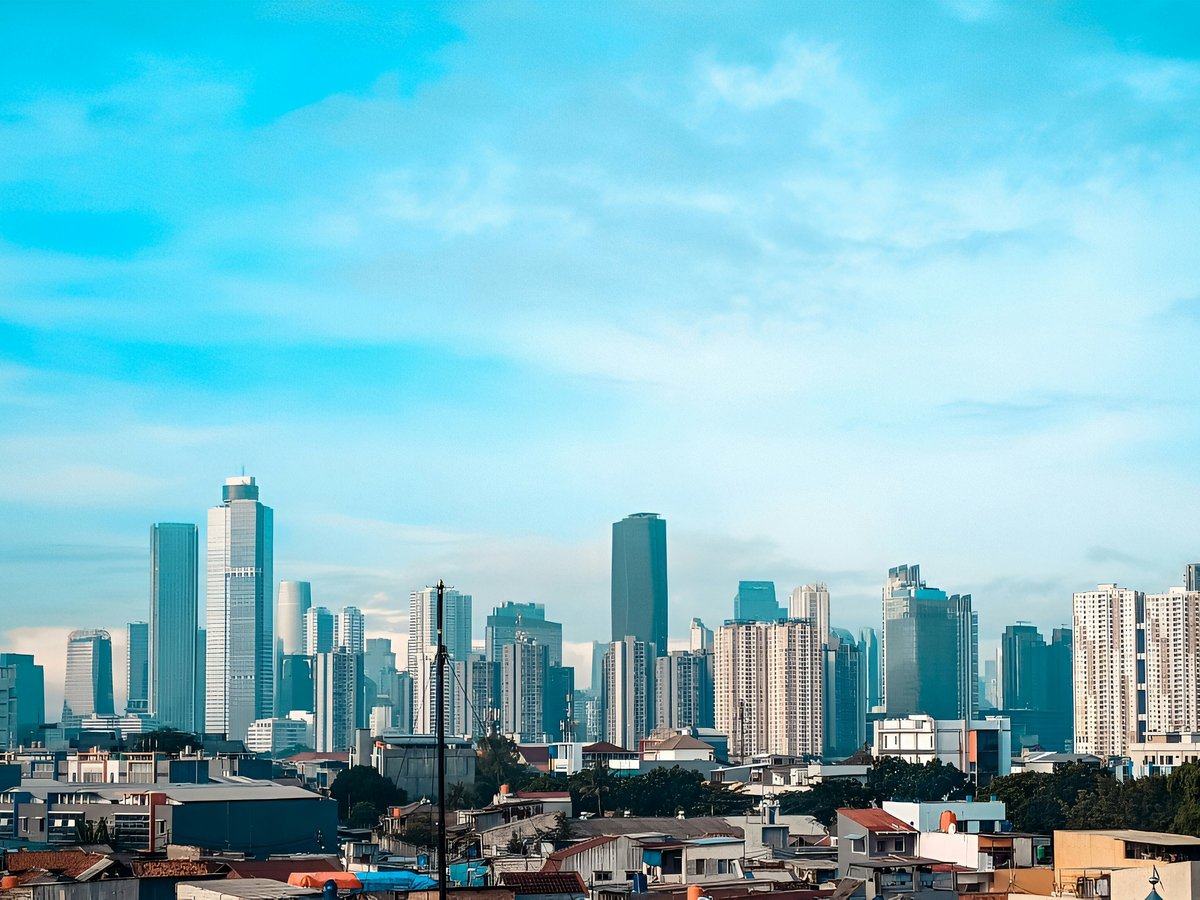
Stay in Jakarta in January
125 hotels in the Trip.com pool for Jakarta, from US$12 a night.
Opens Trip.com on Fri 1 Jan to Sun 3 Jan 2027; change the dates there.
January is Jakarta's single wettest month, with 28 of 31 days likely to see some form of rain. Flooding regularly closes roads across the northern lowlands and neighborhoods along the Ciliwung River. Average highs reach 30.1°C (86°F), lows settle around 23.7°C (75°F), and 84% humidity turns the air thick enough that your clothes start clinging after 10 minutes outside.
That said, Jakarta doesn't shut down. Merdeka Square still draws morning joggers between showers, and Kota Tua's museum cluster sees its quietest visitor counts of the year. The first few days carry energy from Tahun Baru celebrations on January 1. In years when Imlek falls in late January, Glodok fills with red lanterns and the warm smell of fried sesame balls. Hotel rates tend to drop after the holiday week, and you might find shorter lines at the National Museum of Indonesia, which has stood on the western edge of the square since 1778.
January is a tough sell for most travelers heading to Jakarta. Downpours reshape afternoon plans across the city, and flood risk in northern districts like Pluit is genuine. But if you prefer cities at their quietest, Jakarta in the wet season offers exactly that. Pack waterproof shoes and keep at least 2 indoor alternatives ready for each day.
Why visit in January
- Hotel rates reach their yearly low after the first week of January, with properties across Menteng and the Thamrin corridor offering significantly better value than during the June-August dry season.
- The Kota Tua museum cluster and the area around the National Monument receive noticeably fewer visitors than during dry-season months, with shorter waits and more breathing room at every turnstile.
- Peak tropical fruit season. Wet-season harvests from Javanese and Sumatran orchards fill traditional markets across Jakarta with rambutan, durian, and other varieties that are harder to find in later months.
- Air quality tends to be cleaner during the wet season. The dry months sometimes carry haze from agricultural burning on Sumatra and Kalimantan, which January's persistent rainfall washes out of the atmosphere.
Worth knowing
- This is the peak of the monsoon. Rain arrives on most days, and afternoon storms across Central and North Jakarta regularly last 2-3 hours.
- Flooding closes roads for hours or even days in low-lying northern neighborhoods and communities near the city's river systems. Getting across Jakarta by car can take double the usual commute time.
- Dengue mosquito populations peak during the wet months. Standing water from sustained rain creates breeding sites, particularly in residential areas of East Jakarta and the Tangerang satellite.
- Outdoor dining and rooftop plans become unreliable. Even covered terraces in Kemang and Senopati catch wind-driven rain during heavier storms.
Best for
Think twice if
Jakarta's wet season peaks in January. Rain tends to build through the morning and hit hardest between 2 PM and 6 PM as intense tropical downpours that can flood low-lying stretches of Jalan Sudirman within minutes. Mornings are typically muggy but dry enough for sightseeing through Menteng or visiting the old town until noon. Nights across South Jakarta stay warm enough that a cotton t-shirt is plenty. Pack quick-dry fabrics and at least 2 compact umbrellas, because one will likely break or vanish by mid-trip.
Seasonal caution
- Flash flooding can render major roads impassable for 6-12 hours at a time. Jalan Gunung Sahari, the Kampung Melayu area, and parts of Kelapa Gading are historically the worst-affected corridors. Download the JAKI app for real-time flood alerts from BPBD Jakarta before you arrive.
- Dengue fever risk rises during the wet season. Standing water from persistent January rain creates mosquito breeding sites across Jakarta's residential neighborhoods. Use repellent with at least 30% DEET and choose accommodation with screened windows or functioning air conditioning that lets you keep windows closed at night.
Year-round climate
Averages from the last 5 years.
| Month | Avg high (°C) | Avg low (°C) | Rainfall (mm) |
|---|---|---|---|
| Jan | 30 | 24 | 331 |
| Feb | 30 | 24 | 292 |
| Mar | 31 | 24 | 279 |
| Apr | 32 | 24 | 205 |
| May | 32 | 24 | 190 |
| Jun | 31 | 24 | 166 |
| Jul | 32 | 23 | 102 |
| Aug | 33 | 23 | 99 |
| Sep | 33 | 24 | 133 |
| Oct | 33 | 24 | 177 |
| Nov | 32 | 24 | 246 |
| Dec | 31 | 24 | 269 |
Holidays and festivals in January
Public holidays
- New Year's Day(Tahun Baru Masehi)1 January 2027
Best things to do in January
Kota Tua museum circuit
cultureFive museums sit within a 10-minute walking radius of Taman Fatahillah in Old Town Jakarta. Jakarta History Museum, Museum Bank Indonesia, Museum Wayang (puppet museum), Museum Seni Rupa dan Keramik, and Museum Bank Mandiri cover the city's colonial, financial, and artistic history. All are indoors and air-conditioned.
January's persistent rain makes indoor attractions the practical choice, and wet-season visitor counts at these museums drop to their yearly low. You spend more time with the exhibits than navigating crowds.Booking tipArrive before 10 AM for the coolest indoor hours. Museum Bank Indonesia tends to have the shortest lines on weekday mornings.
Pecenongan night food crawl
foodJalan Pecenongan in Central Jakarta transforms into a 500-meter (0.3-mile) street food corridor after sundown. Covered stalls serve nasi goreng kambing (goat fried rice), martabak (stuffed pancake), and sop kaki kambing (goat foot soup) under awnings that keep diners dry. The smoky char of satay grills and the sizzle of hot oil fill the air by 7 PM.
The covered stalls make this one of Jakarta's few reliable outdoor food experiences during peak wet season. Cooler post-storm evening air makes walking the strip more comfortable than during the hotter dry-season nights.Morning visit to Ragunan Zoo
natureRagunan Zoo, founded in 1864, spreads across 140 hectares (346 acres) in South Jakarta. The Schmutzer Primate Centre, Komodo dragon exhibit, and bird aviary house species found only across the Indonesian archipelago. The grounds feel more like a botanical garden than a typical urban zoo.
January rain keeps weekend crowds noticeably thinner than the June-August school holiday period. Many animals, particularly the primates, tend to be more active in the cooler, overcast conditions before the afternoon downpour arrives.Booking tipArrive when gates open at 7 AM on weekdays. Lower sections of the zoo sometimes flood during heavy rain, so plan to finish by early afternoon.
Taman Mini Indonesia Indah regional pavilions
cultureTaman Mini Indonesia Indah, opened in 1975, contains indoor pavilions representing each of Indonesia's provinces across a 150-hectare (370-acre) park. The Keong Emas IMAX theater and Museum Indonesia anchor the center. Provincial pavilions display traditional architecture, textiles, and artifacts spanning from Aceh to Papua.
The indoor pavilions become particularly appealing during sustained rain. In drier months visitors often skip the interiors for the gardens. January reverses that pattern, and you end up spending more meaningful time with the regional exhibits.Booking tipRent a golf cart inside the park rather than walking between pavilions. The distances are significant and you want to stay dry between buildings.
Sunday Car Free Day at Bundaran HI
outdoorEvery Sunday morning, the Jalan Sudirman and Jalan Thamrin corridor closes to vehicle traffic from the Senayan area to the National Monument. Joggers, cyclists, and street food vendors take over Jakarta's main business artery. The Bundaran HI roundabout with its Selamat Datang monument becomes the social center.
Pre-dawn January air is as cool as Jakarta gets, typically near the overnight low. The event wraps before the worst afternoon rain usually hits, making it one of the more dependable outdoor windows this month.Booking tipNo booking needed. Arrive by 7 AM for the liveliest atmosphere. If rain starts early, the covered walkways of Grand Indonesia mall sit a 3-minute walk from Bundaran HI.
Indonesian cooking class focused on rainy-season comfort food
foodCooking schools in Menteng and Kemang run half-day classes covering dishes like soto betawi, gado-gado, and rendang. Classes are conducted indoors and typically begin with a guided visit to a nearby traditional market for fresh ingredients.
January's heavy rains make warm, soupy comfort dishes especially relevant to learn and eat. The market visit at the start of class reveals seasonal produce at its peak, including wet-season tropical fruits.Booking tipBook at least a week ahead for weekend sessions. Weekday classes are easier to secure and typically run with smaller groups of 4-6 participants.
Museum MACAN contemporary art
cultureMuseum MACAN (Modern and Contemporary Art in Nusantara) in Kebon Jeruk, West Jakarta, holds a permanent collection of over 800 works by Indonesian and international artists. The fully air-conditioned gallery space covers 4,000 square meters (43,000 square feet) across multiple exhibition halls.
The museum rotates exhibitions roughly every 3-4 months, and the January show tends to draw fewer visitors than the holiday-season exhibition it replaces. The controlled interior is a genuine relief from the sticky air outside.Booking tipBook timed-entry tickets online at least 3 days ahead for weekend visits. Weekday afternoons are the emptiest.
What to eat in January
In season: fruit
Rambutan
The wet-season harvest peaks between December and February. Look for the Rapiah variety at traditional markets across East Jakarta, where the translucent flesh separates cleanly from the seed. The hairy red shells should be bright and pliable, not browning at the tips.
Durian
Javanese durian orchards in Central and East Java produce their heaviest January yields. Seasonal stalls appear along Jalan Raya Kalimalang in East Jakarta and Jalan Raya Pasar Minggu in South Jakarta, selling the spiky fruit by weight from open-air tables.
On menus now
Soto Betawi
The Betawi people's signature beef and offal soup, enriched with coconut milk and topped with fried shallots and emping crackers. Rainy January mornings are the ideal time for a bowl, and the stalls along Jalan Sabang serve it from around 7 AM.
Street food peaks
Kerak telor
A Betawi egg-and-glutinous-rice dish cooked over a charcoal flame, topped with serundeng (spiced grated coconut) and fried shallots. Street vendors near the Monas park perimeter and along the Kota Tua walking circuit serve it year-round, but January's thinner crowds mean shorter waits at the most popular carts.
What to drink
Wedang ronde
Warm ginger broth with glutinous rice balls, palm sugar syrup, and crushed peanuts. This Javanese comfort drink peaks in popularity during the rainy months, with evening vendors in Blok M and around Menteng doing steady business after sundown.
Bajigur
A warm Sundanese drink made from coconut milk, palm sugar, and ginger. Vendors near Tanah Abang market and in the Senayan area set up evening stalls during rainy weeks. The drink sounds counterintuitive in tropical heat, but January's cooler rain-soaked evenings make it surprisingly fitting.
Regular events in January
Tahun Baru (New Year's Day)Free
Indonesia's national New Year's Day public holiday. Government offices, banks, and some shops close across Jakarta. Major malls and restaurants typically remain open with adjusted hours.
January 1Car Free Day (Hari Bebas Kendaraan Bermotor)Free
Jakarta's weekly car-free event transforms the main Sudirman-Thamrin business corridor into a pedestrian and cycling zone on Sunday mornings. Street food vendors, fitness groups, and tens of thousands of Jakarta residents fill the road.
Every Sunday, 6 AM to 11 AMImlek (Chinese New Year)Free
Indonesia's Chinese New Year public holiday follows the lunar calendar and sometimes falls in late January. When it lands in the month, Glodok's temple streets and Kelapa Gading's malls host lion dances, lantern displays, and festival food stalls that run for several days around the date.
Late January or early February (varies by year)Best places this January
Istiqlal Mosque
religious siteSoutheast Asia's largest mosque, completed in 1978, sits directly across from Jakarta Cathedral in the Gambir district. The main prayer hall spans roughly 20,000 square meters (215,000 square feet). Non-Muslim visitors are welcome outside the 5 daily prayer times. The sheer scale of the interior provides a compelling reason to visit, particularly when January rain rules out outdoor alternatives.
GambirPasar Santa
marketThis two-story covered market in Kebayoran Baru has evolved from a traditional wet market into a weekend gathering spot for artisanal food stalls, specialty coffee roasters, and vinyl record sellers. The covered structure makes it reliable in any weather, and the food vendors on the upper floor serve everything from Japanese-Indonesian fusion to fiery Padang curries.
Kebayoran BaruTaman Suropati
parkA small, shaded park in Menteng lined with ASEAN member-state sculpture installations. Century-old trees create a dense canopy that offers partial cover from light rain. Morning visits between 6 and 8 AM, before the rain typically builds, are the best window to see Jakarta residents exercising among the art.
MentengNational Monument (Monas)
monumentThe 132-meter (433-foot) marble obelisk at the center of Merdeka Square has an observation deck and a basement history museum. The museum stays open during rain, but the elevator to the top platform sometimes closes during storms. The surrounding 80-hectare (198-acre) park turns especially green after sustained January rainfall.
GambirGelora Bung Karno Sports Complex
sportsBuilt for the 1962 Asian Games, this 279-hectare (689-acre) complex in Senayan includes jogging tracks, a public pool, and the national stadium. The covered running track draws Jakarta residents during rainy evenings, and January weekends tend to be quieter than the dry-season weekends when outdoor sports leagues are more active.
SenayanAncol Dreamland (Taman Impian Jaya Ancol)
entertainmentJakarta's 552-hectare (1,364-acre) coastal recreation area in North Jakarta includes SeaWorld aquarium, an art market, and a stretch of reclaimed beach. January rain keeps weekend crowds thin, but the low-lying coastal location makes it one of the first areas to flood during heavy storms. Check JAKI flood reports before heading north.
Ancol
Your packing checklist
Tick items off as you pack. Your progress saves in this browser.
All packed — have a great trip.
Insider tips
The JAKI app (Jakarta Kini) from the city government provides real-time flood maps with neighborhood-level detail. Download it before you arrive. It reports water levels in centimeters and updates every few hours during active flooding across the metropolitan area.
Gojek and Grab surge pricing typically doubles during peak afternoon rain between 3 PM and 5 PM. If your destination is not urgent, wait 30-45 minutes for the initial wave of ride requests to clear. Prices usually drop noticeably once the first rush passes.
MRT Jakarta stays operational during floods when surface roads do not. If you are moving along the north-south corridor during a storm, the underground stations are your most reliable transit option.
Jalan Sabang near the Menteng neighborhood fills with food stalls from around 5 PM and stays active past midnight, all under rain-capable awnings. It tends to be the most consistent dinner fallback when afternoon rain disrupts your plans.
Kota Tua empties after 4 PM on weekdays, and by 7 PM the museums close. The cafes around Taman Fatahillah stay open past 10 PM, and the evening atmosphere on the square feels entirely different from the daytime museum-visitor crowd.
Avoid these mistakes
- Booking a hotel in Jakarta's northern coastal neighborhoods without checking flood maps first. The lowest-lying parts of the city sit below sea level and flood repeatedly during peak wet season. Higher-ground areas in the central and southern districts are significantly safer and worth the slightly longer commute to attractions.
- Planning a full outdoor day without indoor fallback options. Jakarta's January rain does not drizzle. Storms can dump 30-50mm in a single afternoon session, and when the sky opens, you need a covered plan within walking distance or a ride-hailing app ready to go.
- Expecting a Grab or Gojek ride immediately during heavy downpours. Surge pricing and driver scarcity combine to stretch estimated waits to 30-45 minutes during peak storms. The MRT and TransJakarta BRT systems keep running at normal capacity without surge pricing.
- Visiting Ancol Dreamland on a day with heavy rain in the forecast. The coastal location in North Jakarta is among the first areas to flood, and outdoor attractions close when storms roll in.
Practical tips for January
Book accommodation in Central or South Jakarta to minimize flood disruption, ideally in the Menteng, Kebayoran, or Sudirman corridor areas that sit on higher ground. Download the JAKI app for real-time flood alerts before arriving. Major shopping centers including Grand Indonesia and Plaza Indonesia open at 10 AM and work as all-weather refuges with food courts, cinemas, and full air conditioning. TransJakarta BRT buses run from roughly 5 AM to 10 PM at a flat fare regardless of distance. Carry small-denomination rupiah notes for traditional market stalls and street vendors who do not accept digital payment through GoPay or OVO. If you arrive at Soekarno-Hatta International Airport during heavy rain, the airport rail link to BNI City station avoids road flooding and takes roughly 50 minutes versus a potential 3 or more hours by car. Cover your shoulders and knees when visiting mosques and temples. The December school holiday period extends into early January, keeping family-oriented attractions busier than usual for the first 2 weeks of the month.
FAQ
Is January a good time to visit Jakarta?
Honestly, no. January is Jakarta's most challenging month for visitors due to persistent rain and real flood risk. Mind you, the lower tourist numbers and post-holiday pricing do have appeal for travelers who prioritize value over weather. If your dates are fixed, focus on indoor attractions and covered food streets, and book accommodation on higher ground in the central or southern districts. If your schedule allows flexibility, the June through September window is dramatically more comfortable for sightseeing.
What is the weather like in Jakarta in January?
Warm, humid, and very wet. Daytime temperatures hover in the low 30s Celsius (high 80s Fahrenheit) with sticky overnight warmth that rarely dips below the mid-20s. Rain typically builds after noon and falls in intense 1-3 hour bursts, often flooding streets in lower-lying districts. Mornings are generally drier and the best window for outdoor activity. Expect overcast skies on most days.
Does Jakarta flood in January?
Yes, flooding is a recurring January event in Jakarta. Northern coastal neighborhoods and areas along the city's river systems are most affected. In severe years, like the 2020 and 2007 events, floodwaters displaced hundreds of thousands of people across the metropolitan area. Even in milder years, road flooding creates multi-hour traffic delays. The BPBD Jakarta disaster agency pushes alerts through the JAKI mobile app, and the MRT system generally keeps running when surface roads become impassable.
Is Jakarta crowded in January?
Less crowded than most other months. January falls deep into wet season and well past the December holiday rush. International tourist arrivals drop, and domestic leisure travel slows after the Tahun Baru break. Major attractions, malls, and restaurants are noticeably quieter than during the June-August or November-December periods. The exception is the very first days of the month, when residual New Year energy keeps popular areas moderately active.
What should I wear in Jakarta in January?
Lightweight quick-dry fabrics work best in the persistent humidity. Cotton gets heavy and stays damp for hours. Waterproof sandals handle flooded sidewalks better than closed shoes. Carry a thin long-sleeved layer for Jakarta's heavily air-conditioned malls and restaurants, where indoor temperatures can sit 10-12 degrees Celsius below the outdoor air. Modest dress covering shoulders and knees is expected at Istiqlal Mosque and most other religious sites.
Things to Do in Jakarta in January
 Free cancellation
 Active Volcano, Rice Field, Hot Spring, Fruit market, Tea Plantation with Lunch
Day trip: free cancellation.
via Viator Free cancellation
 Private Car Charter in Bali with an English-speaking Driver
Day trip: free cancellation.
via Viator Free cancellation
 Private Full-Day Guided Tour: Explore Jakarta’s Top Highlights
Day trip: free cancellation.
via Viator Free cancellation
 Bali Jungle Swing Experience Full Activity
Outdoor experience: free cancellation.
via Viator Free cancellation
 Jakarta Half-Day Sightseeing Tour To Modern City and Old Town
Day trip: free cancellation.
via Viator Free cancellation
 Jakarta Bogor Botanical Garden, Waterfall and Rice terrace, Lunch
Outdoor experience: free cancellation.
via ViatorLast verified by automated review (v1.7.2) on . What is automated review?