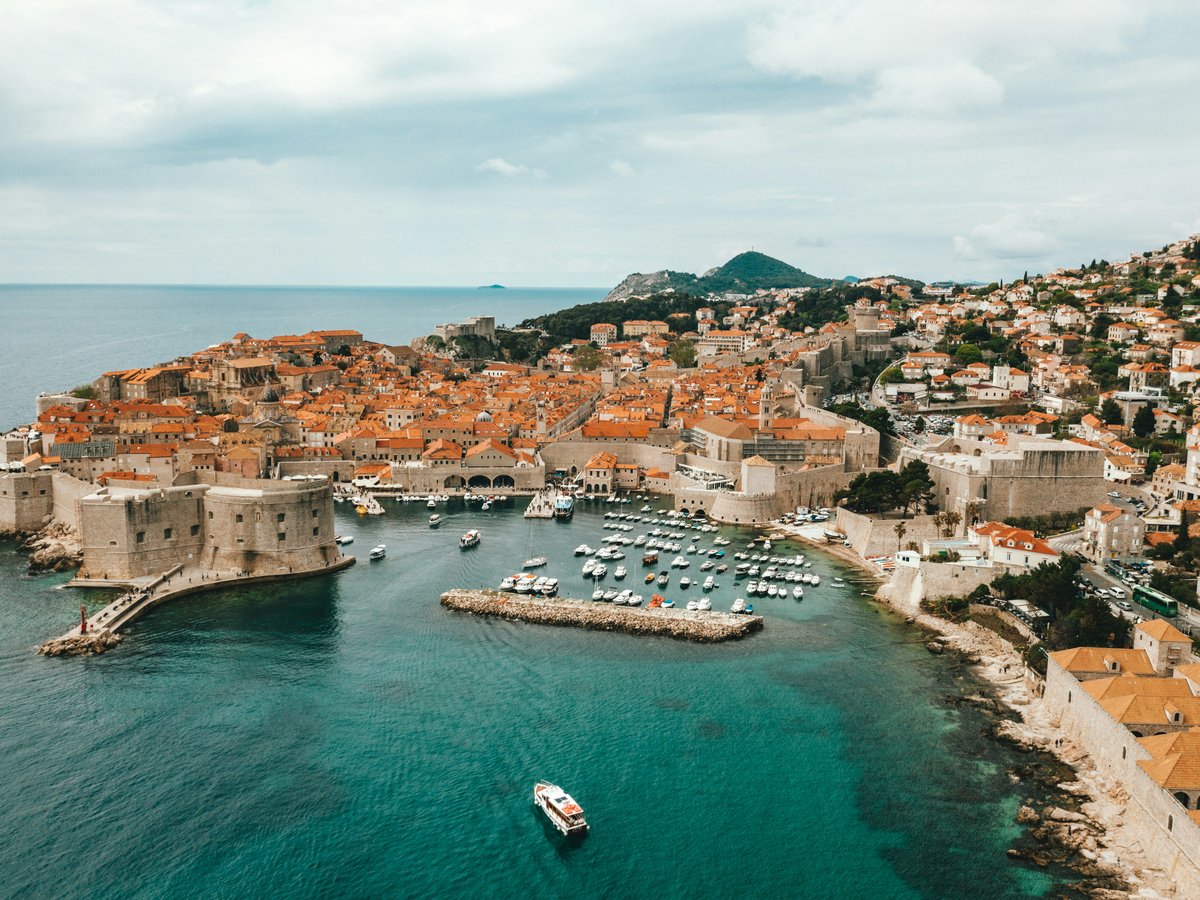
Best Time to Visit Dubrovnik, by Season
Dubrovnik's climate ranges from a 12.0°C January high to 30.9°C in July. The best month depends on what kind of trip you are planning. Here is the trade-off for each season, and the single best window for five kinds of traveller.
Published · Updated
1 December Through February: Dubrovnik Below 14°C, Without the Crowds or the Markup
Wind off the Adriatic stings your ears at Pile Gate on a January morning in Dubrovnik. The smell is wet limestone and espresso from the cafes along the Stradun. January's average high reaches 12.0°C, with lows of 4.5°C after dark. December is slightly warmer at 13.5°C for the high and 5.9°C for the low. February sits between them at 13.1°C and 4.9°C.
That 12.0°C-to-13.5°C band across December through February keeps Dubrovnik above freezing but clears out the summer visitors entirely. The Stradun, Old Town's limestone boulevard, holds a fraction of its peak-season foot traffic. Dubrovnik's city walls feel almost private. Fort Lovrijenac sits quiet against the grey Adriatic. You hear Onofrio's Fountain without the crowd noise that buries it from May onward.
Dubrovnik's winter daylight is shorter than June or July. Some harbour restaurants in Old Town close for the season. Rain arrives more frequently, particularly in December. The Adriatic is too cold for swimming. But the low winter light catches Old Town's terracotta rooftops at an angle that warms the limestone, and the Stradun glows without the bleaching of direct summer sun.
December, at 13.5°C for the high, is the mildest of the three winter months in Dubrovnik. February's 13.1°C sits close behind. January at 12.0°C is the coolest, though Dubrovnik stays above freezing even at its lowest overnight reading of 4.5°C.
Compare those winter figures to what follows. March's high climbs to 14.4°C. April reaches 17.4°C. The December-to-February window sits in a distinct thermal pocket below 14°C, corresponding with Dubrovnik's lowest accommodation rates.
For visitors focused on Old Town architecture and the walls without bottlenecks, December through February delivers. January's 12.0°C high means a warm jacket, not expedition gear. To be fair, you lose beach days and some dining options along the harbour. But Dubrovnik's winter reveals a quality of light and quiet on the Stradun that the 30°C summer obscures. January's overnight low of 4.5°C is the coldest number Dubrovnik records in any month.
Dubrovnik's winter reveals a quality of light and quiet on the Stradun that the 30°C summer obscures
2 March and April Warm Past 14°C Before the Tour Groups Find Dubrovnik
March in Dubrovnik smells like fresh paint and sea salt. Harbour restaurants along Old Town's waterfront reopen their terraces, and the first cruise ships of the season appear beyond Lokrum Island. March's average high is 14.4°C, with lows of 6.5°C. The Stradun is still cool after sunset. April warms noticeably to a 17.4°C high and 9.2°C low.
That 14.4°C-to-17.4°C range across March and April puts Dubrovnik in a comfortable walking zone. Old Town's side streets and staircases are easier to explore than on a July afternoon at 30.9°C. The climb to Minčeta Tower on the city walls, the highest point of the circuit, feels manageable at April's 17.4°C. Fort Lovrijenac's exposed ramparts sit pleasant rather than scorching.
Worth noting, April in Dubrovnik is warmer than many visitors expect. That 17.4°C high sits close to May's 21.9°C. The gap between April and May is 4.5 degrees, while the jump from May to June covers 5.9 degrees. April belongs to the mild pre-summer window, but it leans closer to May's warmth than to the winter months before it.
Dubrovnik in March and April sees a fraction of its peak-season visitors. Ploče Gate and Pile Gate do not have the queues that develop by June. You might share the Stradun with a school group from Zagreb, but you will not be packed shoulder to shoulder. Accommodation rates in Old Town and the Lapad peninsula sit below their June-through-August levels.
The risk in March is rain and cloud. April in Dubrovnik is drier, brighter, and warmer by 3°C. If choosing between the two spring months for the Stradun and the walls, April's 17.4°C high and 9.2°C low give better odds of comfortable days. March's 6.5°C overnight lows still feel like winter after dark on the city walls.
3 May Is the Month Dubrovnik Locals Would Pick
The Stradun's limestone throws back heat by mid-morning on a May day in Dubrovnik, warm enough to feel on your bare arms as you walk through Old Town. The air carries salt from the harbour and the first genuine warmth of the year. May's average high reaches 21.9°C, with lows of 14.0°C.
Compare May's 21.9°C to June's 27.8°C. That 5.9-degree gap marks the line between comfortable and hot in a walled city with limited shade. Old Town's narrow streets and the Stradun trap afternoon heat. The city walls, fully exposed to sun, become a different experience above 27°C. At May's 21.9°C, the wall walk is pleasant. By June's 27.8°C, it tests anyone not acclimated to Mediterranean heat.
May sits before Dubrovnik's peak tourist machinery activates. The cruise calendar is lighter than June through August. Accommodation rates have not hit their summer ceiling in Old Town or Lapad. Banje Beach is swimmable for the hardier visitors, though the Adriatic is still building toward its summer warmth. Lokrum Island makes an easy day trip without August's congestion.
If warm-water swimming is the top priority over walking Old Town, June or September at 25.7°C is the better window. The Adriatic around Dubrovnik in May is still cool compared to August. The water tends to be warmer off the rocks near Babin Kuk, where shallow coves hold residual heat.
Mind you, May is not a secret in Dubrovnik. The shoulder season has been shifting earlier. But visitor numbers at Pile Gate still run well below July and August. The evenings, with lows of 14.0°C, allow comfortable outdoor dining in Old Town without a jacket, cool enough to sleep without air conditioning.
For most visitors who want the full Dubrovnik experience with warm weather and manageable crowds, May is likely the single strongest month. September comes close at a 25.7°C high and 17.4°C low. But May's 21.9°C offers more comfort for walking Old Town's corridors. The 14.0°C overnight low keeps evenings near Rector's Palace pleasant.
May's 21.9°C is likely the single strongest month for most visitors to Dubrovnik
4 June Pushes Past 27°C and Dubrovnik's Summer Trade-Off Begins
Step through Pile Gate into Old Town on a June afternoon in Dubrovnik and the temperature shift is immediate. Old Town's stone walls hold heat. The Stradun radiates it upward. June's average high of 27.8°C, with lows of 19.1°C, marks the start of Dubrovnik's true summer. The jump from May's 21.9°C is 5.9 degrees, and you feel every one of them on the sunlit city walls.
June in Dubrovnik is a pivot month. The weather is genuinely hot, approaching but not yet matching July's 30.9°C. The Adriatic is warm enough for comfortable swimming at Banje Beach and around Lokrum Island. Daylight stretches to its longest over Old Town. Performance venues including Fort Lovrijenac and Rector's Palace stage summer programming through the warm months.
June also brings full cruise-ship traffic to Dubrovnik. Pile Gate and Ploče Gate become bottlenecks on heavy days. The Stradun at midday feels packed. Accommodation rates in Old Town and the Lapad peninsula reach their summer highs. You are now managing heat, crowds, and cost simultaneously, a combination that barely registers in May at 21.9°C or October at 21.4°C.
The 19.1°C overnight low deserves attention. Dubrovnik's summer nights run warm. Old Town's stone buildings retain daytime heat well past midnight. Compare that to May's 14.0°C low or October's 13.0°C low, and the sleeping-comfort gap is significant for visitors in accommodation without air conditioning.
June works for travellers who need warm-water swimming and long daylight at Banje Beach but want to avoid the absolute peak of July and August. The 27.8°C high is the entry cost for Dubrovnik's summer. It has not yet reached 30°C, which arrives in July at 30.9°C on the city walls. That 3.1-degree difference between June and July matters on Dubrovnik's fully exposed wall circuit.
5 July and August Push Past 30°C, and Everyone Had the Same Idea
The limestone of Fort Lovrijenac is almost too hot to press your palm against on an August afternoon in Dubrovnik. The stored heat comes through your clothes. July's average high reaches 30.9°C, with lows of 21.8°C. August runs nearly identical at 30.4°C and 21.3°C. These are Dubrovnik's two hottest months by a wide margin, and the gap from June's 27.8°C hits you the moment you step onto the Stradun.
The city walls in July or August are a serious proposition in Dubrovnik. The circuit is fully exposed, with minimal shade. At 30.9°C, the stone surfaces radiate additional heat. Old Town's Stradun and side streets, enclosed by limestone buildings, trap warm air. The experience of Dubrovnik above 30°C differs physically from May at 21.9°C or October at 21.4°C. Midday in Old Town means finding shade, not exploring.
The crowd factor compounds the heat in Dubrovnik. July and August represent the absolute peak for visitor numbers. The Stradun feels dense. Pile Gate backs up. Banje Beach fills early in the morning. Accommodation in Old Town reaches annual-maximum pricing. Lokrum Island's ferries run full.
That said, July and August deliver things the shoulder months cannot. The Adriatic is at its warmest for swimming off Banje Beach and near Lapad and Babin Kuk. Daylight lasts late over Dubrovnik's harbour.
If July or August is your only option for Dubrovnik, prioritize accommodation with air conditioning in Old Town or Lapad. Start the city walls early, before the 30.9°C peak hits the stone. Spend midday at Banje Beach or on Lokrum Island, where the sea breeze takes the edge off August's 30.4°C. Save the Stradun and Rector's Palace for the evening.
August's 21.3°C overnight low means Dubrovnik barely cools after dark. September's 25.7°C high and 17.4°C low deliver similar swimming conditions with fewer people. For most travellers, September is a better version of what August at 30.4°C promises.
The experience of Dubrovnik above 30°C differs physically from May at 21.9°C
6 September and October Drop Below 26°C and Dubrovnik Exhales
The light in late September in Dubrovnik hits the Stradun at a lower angle than summer, and Old Town's limestone turns a deeper gold. The air has lost its August sting. September's average high of 25.7°C, with lows of 17.4°C, marks a clear drop from August's 30.4°C. You notice it on the city walls, which are walkable at midday again.
September might be Dubrovnik's most underrated month. The Adriatic holds enough warmth for swimming at Banje Beach and around Lokrum Island. The 25.7°C daytime high is warm but not punishing in Old Town's stone corridors. The 17.4°C overnight low means comfortable sleeping without air conditioning. Accommodation rates begin stepping down from their July and August peak at Old Town and Lapad properties. The cruise calendar thins.
October shifts the balance further in Dubrovnik. Highs drop to 21.4°C, lows to 13.0°C. That 21.4°C is nearly identical to May's 21.9°C. October is May's autumn mirror on the Stradun. Similar temperatures, similar crowd levels at Pile Gate, similar pricing in Old Town. The difference is that October trends cooler week by week, while May trends warmer. Early October in Dubrovnik feels like late May. Late October starts to resemble November, which averages 16.6°C for the high.
The September-to-October transition covers a wide thermal range. September at 25.7°C is warm Adriatic summer. October at 21.4°C is mild Mediterranean autumn. Visitors who target early September at Banje Beach get conditions close to June's 27.8°C without June's crowd density at Pile Gate.
For visitors who missed May or want warm swimming with fewer people around Lokrum Island, September is the pick. October suits the spring-shoulder profile, walkers and photographers who trade cooler evenings for emptier streets in Old Town. October's 13.0°C low means a light jacket near Rector's Palace after sunset.
7 The Verdict: One Best Window for Five Kinds of Dubrovnik Traveller
Dubrovnik in November averages a 16.6°C high and 9.2°C low, a quiet zone between autumn and winter that few visitors consider. The question this guide answers depends on what kind of Dubrovnik trip you are planning. The city's climate swings from January's 12.0°C high to July's 30.9°C, nearly 19 degrees of range across the year.
For budget travellers and off-season explorers, December through February. January's 12.0°C high and 4.5°C low mean warm layers, not extreme cold. Old Town is quiet. The Stradun empties out. Accommodation sits at its cheapest in both Old Town and Lapad. The trade-off is no swimming at Banje Beach and fewer open restaurants along the harbour.
For architecture and history visitors, April or October. April's 17.4°C high and 9.2°C low make for comfortable walking through Old Town. October offers 21.4°C and 13.0°C with autumn light on the Stradun's limestone. Both months stay below the 27°C threshold that makes the city walls difficult. October in Dubrovnik is the warmer of the two. April trends toward the even warmer May.
For the complete Dubrovnik package, May. The 21.9°C high and 14.0°C low sit at the sweet spot. Warm enough for early swimming at Banje Beach. Cool enough for sustained walking in Old Town and on the walls. Crowds at Pile Gate and the Stradun have not reached their June peak. Accommodation prices in Lapad and Old Town have not either.
For beach-first visitors who want warm water, September. The 25.7°C high and 17.4°C low deliver summer-adjacent conditions at Banje Beach. The Adriatic carries residual warmth from July and August. Lokrum Island is less congested. September is a lower-cost version of what August at 30.4°C offers, with similar swimming off Babin Kuk and Lapad.
For those committed to summer regardless, early June over late July. June's 27.8°C runs 3.1 degrees below July's 30.9°C, and that gap separates hot from gruelling on Dubrovnik's exposed city walls. June's 19.1°C overnight low is cooler than July's 21.8°C, which matters in Old Town's heat-retaining stone buildings. October at 21.4°C remains the final autumn alternative for visitors willing to skip the summer Stradun entirely.
The city's climate swings from January's 12.0°C to July's 30.9°C, nearly 19 degrees of range across the year
Last verified by automated review (v1.7.0_onboard-dubrovnik-flagship-2026-06-22) on . What is automated review?