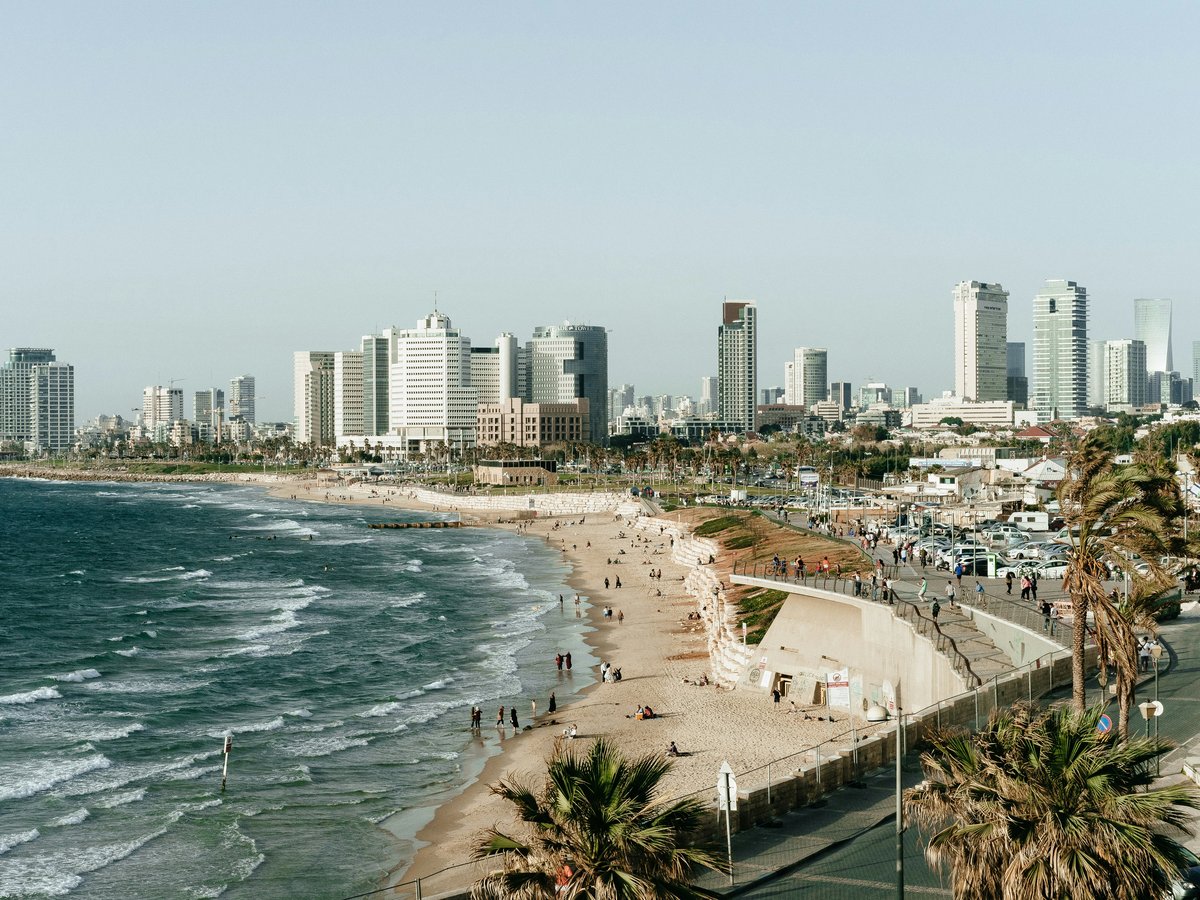
Stay in Tel Aviv in February
75 hotels in the Trip.com pool for Tel Aviv, from US$30 a night.
Opens Trip.com on Fri 5 Feb to Sun 7 Feb 2027; change the dates there.
February sits at the tail end of Tel Aviv's rainy season, and that single fact shapes everything about a visit this month. Expect about 9 rainy days across 28, with total rainfall around 83mm that tends to arrive as short Mediterranean squalls rather than all-day grey drizzle. Daytime highs hover near 17.6°C (64°F), and nights dip to 9.7°C (49°F), which feels cooler than it reads when the wind picks up along the Tayelet promenade. The Mediterranean is still in its winter chill, keeping beach days firmly off the agenda.
Summer crowds thin out considerably in February. Hotel rates drop below the June-through-September peak, and you'll find shorter lines at the Tel Aviv Museum of Art, which has anchored the city's cultural calendar since 1932. The restaurant scene across Neve Tzedek and Florentin runs at full strength year-round, and February brings peak citrus to every market stall in the city. The Tel Aviv Marathon typically fills the coastal route in the last week of the month, drawing runners from dozens of countries along the shoreline.
To be fair, this is not the month for Tel Aviv's primary draw, the beach. If your trip is built around Frishman Beach, Gordon Pool, and rooftop cocktails in the sun, wait for April or May. But if you're after museum afternoons, warm kubbeh soup in Kerem HaTeimanim, and a Friday dinner table in Jaffa without booking 2 weeks ahead, this is one of only 3 months where that combination comes easily.
Why visit in February
- Hotel and short-term rental rates drop noticeably from the June-to-September peak, with last-minute availability improving across neighborhoods like Jaffa and Lev Ha'Ir.
- Mild daytime temperatures make walking-intensive itineraries through the White City's Bauhaus district and along the coastal promenade far more comfortable than attempting them in July's 31°C heat.
- Cultural institutions run full winter programs between October and March, and February typically has the widest repertoire across theaters, galleries, and museums before the spring changeover.
- Peak citrus season fills stalls citywide with Jaffa oranges, pomelos, and blood oranges at their sweetest, a genuine sensory highlight that disappears by April.
Worth knowing
- Rain hits roughly a third of February's days, and while showers are typically short, they can disrupt outdoor plans with little warning.
- The Mediterranean is too cold for swimming at around 17°C (63°F), removing Tel Aviv's single biggest draw for beach-focused visitors.
- Daylight runs shorter than summer, with sunset around 17:30 compared to 19:45 in June, cutting into outdoor sightseeing hours.
- Some beachfront venues along the Tel Aviv shoreline close for winter or operate on reduced schedules between November and March.
Best for
Think twice if
Tel Aviv's February weather swings between crisp, sunny mornings and sudden Mediterranean squalls that blow through in under 30 minutes. You might wake to blue sky and carry an umbrella by lunch. Onshore wind adds a chill factor that makes layers essential after sundown, particularly along the exposed beachfront. Compared to January's heavier rainfall totals, February marks the start of the drying trend that accelerates through March and April. Humidity stays moderate by local standards and well below the oppressive summer ceiling.
Year-round climate
Averages from the last 5 years.
| Month | Avg high (°C) | Avg low (°C) | Rainfall (mm) |
|---|---|---|---|
| Jan | 18 | 10 | 119 |
| Feb | 18 | 10 | 83 |
| Mar | 20 | 12 | 54 |
| Apr | 24 | 14 | 30 |
| May | 27 | 18 | 4 |
| Jun | 29 | 21 | 2 |
| Jul | 31 | 24 | 2 |
| Aug | 32 | 25 | 1 |
| Sep | 31 | 23 | 3 |
| Oct | 28 | 20 | 9 |
| Nov | 25 | 16 | 50 |
| Dec | 20 | 12 | 108 |
Headline events
Tel Aviv Marathon
Late February, usually the last Friday of the month
Tel Aviv's annual marathon draws tens of thousands of runners along a flat coastal course that winds from the northern neighborhoods through the city center and down into the Jaffa port area. The event includes full marathon, half marathon, 10K, and 5K distances, with long stretches parallel to the Mediterranean. International participation has grown steadily since the race began in 2010.
Best things to do in February
Rainy-day museum circuit
cultureThe Museum of the Jewish People at Beit Hatfutsot has told the global Jewish story since 1978 and recently completed a major renovation worth a full afternoon. Pair it with the Design Museum Holon, Ron Arad's curved-steel building that opened in 2010, for a two-museum day when weather pushes you indoors. The contrast between historical depth and contemporary design keeps the day from feeling repetitive.
February's frequent rainy days make indoor cultural plans a smart default rather than a fallback option.Booking tipBoth museums offer online ticket discounts. Weekday mornings tend to be significantly quieter than Fridays.
Winter citrus tasting at the shuk
foodWalk through the city's central open-air market and taste your way through shamouti oranges, blood oranges, clementines, and pomelos from vendor stalls where sampling is freely offered. The sensory hit is hard to overstate. Crates of every shade of orange stacked high, the sharp smell of fresh peel, cold air mixing with the sweetness of fruit torn open 3 seconds ago.
Peak citrus season runs December through March, with February often producing the best ratio of sweetness to acidity.Day trip to the Dead Sea
day_tripThe Dead Sea sits about 90 minutes from Tel Aviv by car. In February, the desert air around Ein Bokek reaches the low 20s°C (low 70s°F), making floating in the salt-dense water and hiking through the surrounding wadis genuinely pleasant rather than an endurance exercise.
Summer Dead Sea trips mean 42°C+ desert heat that limits how long you can stay outside. February's mild 20-22°C makes the same experience comfortable enough to enjoy for hours.Booking tipOrganized tours depart Tel Aviv daily. Self-driving gives more flexibility but plan to return before dark on desert roads.
Almond blossom walks in Hayarkon Park
natureAlmond trees bloom across Israel in late January and February, and Tel Aviv's largest urban park lines several paths with them. The white and pink blossoms mark Tu BiShvat season. The park stretches 3.8 km along the Yarkon River, and the northern sections tend to have the most established trees.
Almond trees bloom for roughly 3-4 weeks starting late January. February is the most reliable month to catch them at full display.Bauhaus architecture walk through the White City
cultureTel Aviv holds over 4,000 Bauhaus and International Style buildings from the 1930s and 1940s, the largest concentration in the world. A 2-3 hour walking route along Rothschild Boulevard and through the surrounding blocks reveals balcony details, curved facades, and pilotis-raised structures that architectural photography blogs revisit year after year.
Mild winter temperatures make a multi-hour architectural walk comfortable. By June, direct sun on white facades creates harsh glare and exhausting heat.Booking tipThe Bauhaus Center on Dizengoff Street runs guided tours several times weekly. Self-guided routes are available for free from their website.
Friday evening Shabbat experience
cultureShabbat begins at sunset Friday and the city shifts noticeably. Some restaurants close, public transit stops, and the pace changes entirely. Experiencing this weekly rhythm from the inside, whether through a hosted dinner or a neighborhood spot that stays open, is distinctly Tel Aviv. February's early sunset means the transition happens while the evening is still young.
Early winter sunset (around 17:15) brings Shabbat in during prime dinner hours. Summer Shabbat does not start until after 19:30, a different rhythm entirely.Self-guided warm hummus morning in Old Jaffa
foodThe streets radiating from Old Jaffa's flea market concentrate some of Tel Aviv's strongest hummus spots within a 15-minute walk of each other. Order the warm version, served smooth with whole chickpeas, a pool of olive oil, and fresh pita from the bread oven. On a cool February morning, a bowl of warm hummus with pickled vegetables and Turkish coffee is one of the most satisfying breakfasts anywhere in the eastern Mediterranean.
Cool mornings make hot, protein-dense hummus feel right at 09:00. In summer heat, lighter foods tend to win at breakfast.Evening at the Israeli Opera
cultureThe Israeli Opera runs a full winter program at the Tel Aviv Performing Arts Center on Shaul HaMelech Boulevard. February typically features 2-3 productions in rotation, mixing Italian repertoire with contemporary works. The main hall seats around 1,500 with reliable sight lines from most sections.
The winter performing arts season runs October through March, with February typically offering the broadest active program before the spring changeover.Booking tipBook weekend performances at least a week ahead. Weeknight shows usually have availability closer to the date.
What to eat in February
In season: fruit
Jaffa oranges
Israel's signature shamouti oranges reach peak sweetness in February. Market vendors sell them by the kilo, and fresh-squeezed juice stands appear on nearly every commercial street during citrus season.
Pomelo
The thick-skinned citrus called pomela locally reaches its best flavor during the winter months. Street vendors sell them peeled and segmented in clear bags for eating between sightseeing stops.
On menus now
Kubbeh soup
Semolina-and-meat dumplings in a tangy beet or okra broth, served steaming from Kurdish-Israeli restaurants. This cold-weather staple peaks in demand during the winter months and becomes harder to find once temperatures climb.
What to drink
Sachlav
A hot, thick drink made from orchid root powder, topped with cinnamon, shredded coconut, and crushed pistachios. Street carts and cafes serve it throughout winter, and it disappears from menus entirely by April.
In markets
Artichokes
Winter marks the start of Mediterranean artichoke season. Restaurants serve them grilled with lemon, fried until edges crisp, or stuffed with rice and herbs. The window closes by late March.
Festival food
Tu BiShvat dried fruit platter
For the Jewish New Year of the Trees, bakeries and specialty shops assemble platters of the Seven Species of Israel. Dates, figs, pomegranates, olives, and carob feature prominently, alongside almonds and dried apricots.
Regular events in February
Tu BiShvatFree
The Jewish New Year of the Trees falls on the 15th of Shevat in the Hebrew calendar. Parks across Tel Aviv host tree-planting ceremonies, bakeries stock dried fruit platters and carob treats, and some restaurants run special menus built around the Seven Species of Israel.
Varies by Hebrew calendar, typically early to mid-FebruaryHabima Theatre winter repertory
Israel's national theater, which has produced Hebrew-language drama since 1917, runs a full winter season through February. The program typically mixes Israeli premieres with international adaptations, performed at the Habima Square campus in central Tel Aviv.
Throughout February, performances Wednesday through SaturdayNachalat Binyamin Arts and Crafts FairFree
The open-air art fair on Nachalat Binyamin Street features jewelry, ceramics, leather goods, and Judaica from roughly 200 Israeli artisans. February's cooler weather makes browsing the outdoor stalls more comfortable than the summer editions, and foot traffic is noticeably lighter.
Every Tuesday and Friday, year-roundBest places this February
Eretz Israel Museum
museumOpen since 1958, this Ramat Aviv campus holds archaeological pavilions, a planetarium, and rotating exhibitions spread across indoor galleries and outdoor courtyards. On a drizzly February afternoon, the collections of ancient glass, ceramics, and regional coins fill 2-3 focused hours.
Ramat AvivJaffa Port and Flea Market
marketThe old port area features a Friday flea market where antique dealers and vintage sellers set up alongside permanent shops. February crowds are thin enough to browse without the shoulder-to-shoulder pressure of summer Fridays. The port's stone alleyways carry the smell of coffee grounds and salt air even on overcast mornings.
JaffaSarona Market
marketThis covered food hall in the restored Sarona compound offers a rain-proof alternative to open-air markets. Roughly 90 stalls sell everything from fresh pasta to artisan cheese to ground spice blends. The surrounding complex sits on the grounds of a former Templar colony established in the 1870s.
SaronaRothschild Boulevard
architectureThe tree-lined boulevard runs through the heart of the White City and doubles as an open-air gallery of 1930s Bauhaus architecture. February's bare-branch sycamores open sightlines to upper-floor details hidden by foliage in summer. Independence Hall, where Israel's 1948 declaration was signed, sits at number 16.
Lev Ha'IrHayarkon Park
parkTel Aviv's largest green space follows the Yarkon River through the city's northern districts. In February, lawns stay green from winter rain and morning joggers have the paths largely to themselves. The eastern botanical garden section reaches peak interest during the cool-season growing period.
North Tel AvivOld Jaffa hilltop
historicThe elevated quarter above the port has narrow stone lanes, artist galleries, and the bell tower of St. Peter's Church visible across much of southern Tel Aviv. February's low-angle winter light hits the sandstone walls in ways the overhead summer sun never achieves. Kedumim Square and its zodiac fountain sit at the center of the hilltop.
Jaffa
Your packing checklist
Tick items off as you pack. Your progress saves in this browser.
All packed — have a great trip.
Insider tips
Tel Aviv scores 5.8/10 for solo-traveler safety (see the TTDI Solo-Safety Index). The city is generally walkable after dark, but the southern stretches near the old central bus station deserve more caution at night than the beachfront neighborhoods to the north and west.
Shabbat (Friday sunset to Saturday sunset) shuts down public buses and trains across the city. Shared taxis called sherut and ride-hailing apps still operate, but expect a premium. Plan Friday evening around walking distance or budget for a taxi.
The Levinsky Market area in Florentin sells spices, dried fruits, and nuts at roughly half the price of tourist-facing shops along Ben Yehuda Street. Stock up on za'atar, sumac, and halva here before heading home.
If you want to day-trip to Jerusalem, the train from HaHagana station takes about 30 minutes and costs a fraction of a taxi. Trains stop for Shabbat, so plan a weekday trip or a Friday morning departure with a Saturday overnight.
When rain sets in hard, head to the Azrieli Observatory on the 49th floor of the Azrieli Center. Post-storm air in February often produces the clearest panoramic visibility of the year across the city's skyline and coast.
Avoid these mistakes
- Packing for a summer Mediterranean trip. First-time visitors often expect year-round beach weather, arrive in shorts and sandals, and end up buying a jacket at Dizengoff Center on day one. February requires actual layers.
- Assuming the city runs normally on Shabbat. Restaurants in secular Tel Aviv mostly stay open, but public transit stops, many shops close, and the rhythm shifts dramatically from Friday afternoon through Saturday evening. Without planning around it, you will spend Saturday either walking everywhere or paying ride-hailing premiums.
- Building a multi-day itinerary entirely around outdoor activities. An all-outdoor plan will likely lose at least one full day to rain in February. Mix in museum visits, cooking classes, and covered market tours that work regardless of weather.
- Skipping Jaffa for the northern beachfront. The historic port neighborhood has more character, better food variety, and fewer shuttered storefronts in February than the beach areas, which feel noticeably dormant without their summer energy.
Practical tips for February
The Israeli New Shekel (ILS) trades at roughly 2.95 to 1 USD. Credit cards work almost everywhere, including market stalls and street food carts. Tipping at sit-down restaurants runs 10-15%. Public transit uses the rechargeable Rav-Kav card, available at train stations and some kiosks, but load credit before Shabbat since machines go offline Friday afternoon. Buses from Ben Gurion Airport to central Tel Aviv take about 40 minutes but stop running on Shabbat and after roughly 23:00. February daylight runs approximately 06:30 to 17:30, giving about 11 hours of usable light. Cover shoulders and knees when visiting religious sites in Jaffa or on a day trip to Jerusalem. Most cafes offer reliable Wi-Fi, and Israeli SIM cards from local carriers can be purchased at the airport on arrival. For detailed transit options including shared taxis and the light rail, https://en.wikivoyage.org/wiki/Tel_Aviv#Get_around covers the system neighborhood by neighborhood.
FAQ
Is February a good time to visit Tel Aviv?
February is a fair choice, not ideal. It marks the tail end of the rainy season, with cool days and periodic showers that can disrupt outdoor plans. Swimming is not an option. But hotel prices sit well below summer rates, cultural venues run full schedules, and the food scene has no off-season. If museums, restaurants, and architecture interest you more than beach time, February delivers reasonable value with noticeably fewer crowds than the April-to-October stretch.
What is the weather like in Tel Aviv in February?
Cool and occasionally rainy. Highs sit in the high teens Celsius (mid-60s°F) and nights hover around 10°C (low 50s°F). Rain falls on roughly a third of the month's days, usually in short, intense Mediterranean squalls rather than all-day drizzle. Between showers, the sun breaks through and the light off the water is particularly sharp. Layers and a rain jacket are non-negotiable.
Can you swim in the sea in Tel Aviv in February?
Not comfortably. Mediterranean water sits well below comfortable swimming range in February, cold enough to deter all but the most committed cold-water swimmers. Some locals wade in, but beach season does not begin in earnest until late April or May. A few hotels and the Gordon Pool maintain heated options if swimming is part of your daily routine.
Is Tel Aviv expensive in February?
Less than peak season but still not cheap by regional standards. February is low season, so accommodation rates drop well below summer pricing. Day-to-day costs for food and transport remain higher than most Middle Eastern cities, though comparable to southern European capitals. The real savings come from hotel discounts and walk-in availability at restaurants that charge reservation premiums in July and August. For neighborhood-by-neighborhood food options, https://en.wikivoyage.org/wiki/Tel_Aviv#Eat covers the main districts.
Is Tel Aviv crowded in February?
No. February is one of the quieter months for tourism in Tel Aviv. Beaches sit mostly empty, museum queues are short, and popular restaurants have walk-in availability on most nights. The one notable exception is the marathon weekend in the final days of the month, which concentrates runners and spectators along the coastal road area for 2-3 days.
Things to Do in Tel Aviv in February
 Free cancellation
 Masada and the Dead Sea Day Trip from Tel Aviv
Day trip: 12 hours, free cancellation.
via Viator Free cancellation
 Nazareth and the Sea of Galilee Day Trip from Tel Aviv
Day trip: 10 hours, free cancellation.
via Viator
Jerusalem Private Tour | Official Licensed Guide
Day trip: 8 hours.
via Viator Free cancellation
 Best of Tel Aviv, Jaffa & Carmel Market Tour
Day trip: 6 hours, free cancellation.
via Viator Free cancellation
 From Tel Aviv/Jerusalem: Galilee, Nazareth, Jordan River Tour
Day trip: 12 hours, free cancellation.
via Viator Free cancellation
 Best of the West Bank Tour from Tel Aviv
Day trip: 12 hours, free cancellation.
via ViatorFind a flight to Tel Aviv
Live fares to Tel Aviv appear here once cookies are accepted.
Last verified by automated review (v1.7.2) on . What is automated review?