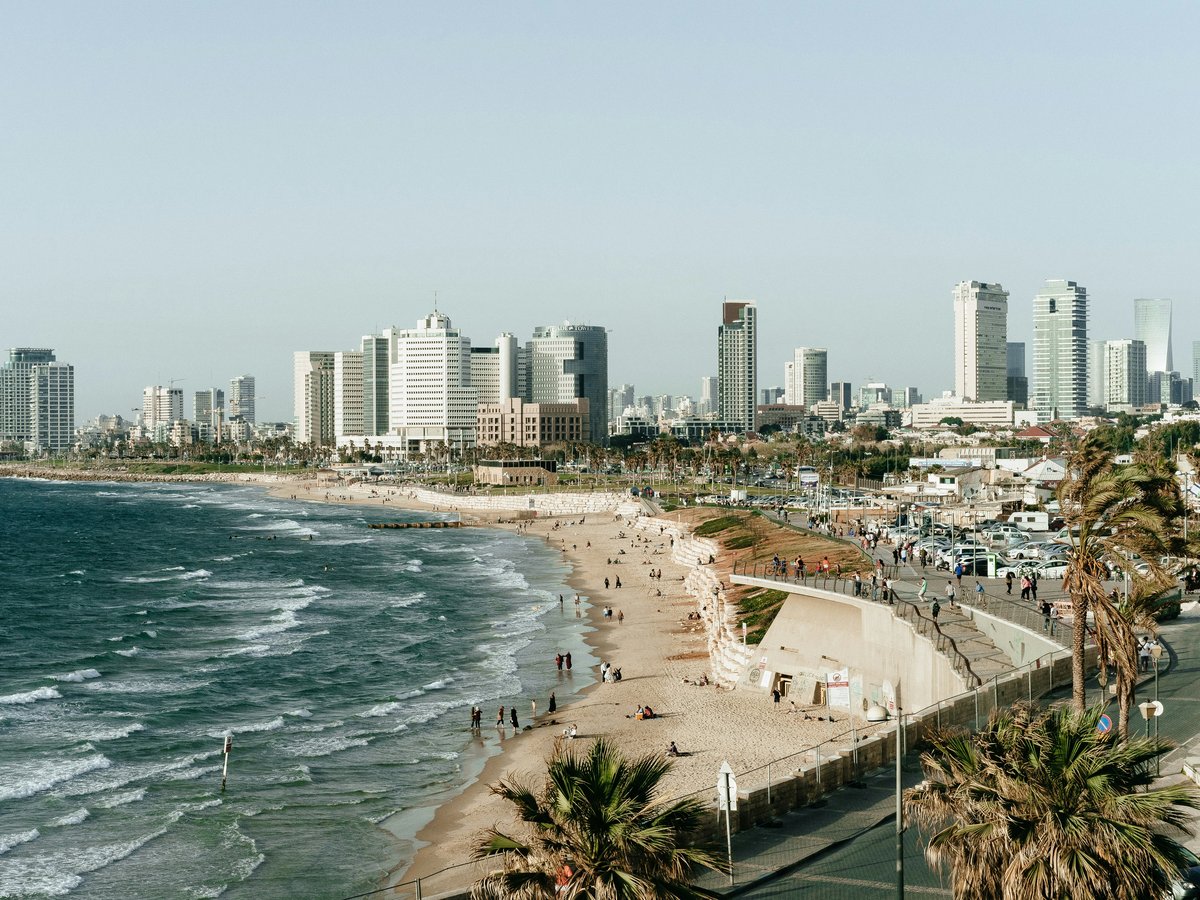
Tel Aviv spreads along 14 kilometers of Mediterranean shoreline, and every meter of that sand is open to anyone with a towel. The city holds roughly 4,000 Bauhaus and International Style buildings, recognized by UNESCO in 2003 as a World Heritage Site. Walk the entire White City and study its facades for free. The open-air markets let you breathe in ground cardamom and roasting sunflower seeds without spending a thing. That said, the city's real gift to zero-budget visitors is its outdoor character. Friday evenings bring crowds to the waterfront, weekends fill the parks with families, and the seafront promenade stays populated past midnight in summer. Tel Aviv scores 8.2/10 for family friendliness (see the TTDI Family-Friendliness Index), partly because so much of what entertains families here costs nothing. At the current exchange rate of 1 USD to 2.9846 ILS, even the paid attractions sit on the affordable end. With over 300 sunny days a year, the free outdoor calendar runs almost without interruption.
Free attractions
-
Old Jaffa (Yafo)
One of the oldest continuously inhabited port cities in the eastern Mediterranean, with evidence of settlement going back roughly 4,000 years. The narrow stone alleys wind past Ottoman-era buildings, galleries in converted warehouses, and the Zodiac Fountain in Kedumim Square. You can walk from the Ottoman clock tower at the entrance down to the ancient port in about 20 minutes. The views north across the Tel Aviv skyline from the hilltop are especially good around sunset. The scent of fresh-baked laffa bread drifts from the bakeries near the flea market entrance.
JaffaHistoric Quarter -
Beit Bialik
The restored home of Chaim Nachman Bialik, Israel's national poet, on Bialik Street. The house dates to 1925 and preserves Bialik's study, personal library, and original furniture. Entry has been free since the house became a public museum. The painted ceiling tiles in the main room use traditional Armenian ceramic motifs. Worth noting, Bialik Street holds three free cultural institutions within 200 meters of each other, including Beit Ha'ir, the former city hall at number 27, which typically runs free rotating exhibitions.
Lev Ha'Ir (City Center)Museum -
Tel Aviv Museum of Art
Founded in 1932, this is one of Israel's largest art institutions, with holdings from the Old Masters through contemporary Israeli and international works. The main building on Shaul HaMelech Boulevard sits beside the Herta and Paul Amir Building, a geometric structure by Preston Scott Cohen that opened in 2011. General admission applies on most days, but the museum has historically offered free entry on Saturdays. Policies shift, so check the current schedule before visiting. The sculpture garden outside the entrance is always accessible.
Lev Ha'Ir (City Center)Museum -
HaYarkon Park (Park HaYarkon)
Tel Aviv's largest green space stretches roughly 6 kilometers along the Yarkon River from its mouth at the Mediterranean east toward Ramat Gan. Paths for walking and cycling wind through eucalyptus groves and open lawns. A botanical garden, a rock garden, and several playgrounds sit inside the park boundaries, all free. On Saturday mornings, the paths fill with runners and families. You'll likely hear parakeets before you see them. The green ring-necked parakeet population settled here decades ago and has become one of the park's more recognizable features.
North Tel AvivPark -
Gan HaPisga (Summit Garden)
A small hilltop garden at the peak of Old Jaffa with open views over the Mediterranean and the Tel Aviv coastline. The garden sits above the excavated ruins of a Canaanite-era gate. Stone benches and a few old ficus trees provide shade. It tends to be quieter than the main Jaffa tourist path, especially on weekday mornings. The park takes about 10 minutes to walk through, but on a clear day the view extends north past the Tel Aviv Marina and south along the coast toward Bat Yam.
JaffaPark and Viewpoint -
Gan Meir
A park of roughly 7,700 square meters in the center of the city, bordered by King George Street and Tchernichovsky Street. The park dates to 1944, making it one of Tel Aviv's oldest planned green spaces. A small dog park, a pond, and a children's wading pool sit inside the grounds. The park also houses the city's municipal LGBTQ+ center. Gan Meir has been a gathering point for Tel Aviv's LGBTQ+ community for years, and the surrounding blocks along King George Street hold several of the city's longstanding community venues. Mature trees keep the temperature noticeably cooler than the surrounding streets, and the park is open 24 hours.
Lev Ha'Ir (City Center)Park -
Charles Clore Park
A beachfront park stretching between the southern end of Tel Aviv's hotel strip and the beginning of Jaffa. The park covers about 4 hectares of grass and paths running parallel to the shore. Friday afternoon pickup football games happen here regularly during the cooler months. The Etzel Museum, a small history museum in a glass-and-concrete building at the park's northern edge, charges a modest admission, but the park surrounding it is entirely free. You can walk north toward the central beach strip or south into Jaffa without leaving the waterfront.
South Tel AvivPark -
Rothschild Boulevard
The tree-lined boulevard runs 1.5 kilometers from Habima Square south toward Neve Tzedek and holds the densest concentration of White City Bauhaus buildings in Tel Aviv. The center median has benches, a cycling lane, and several kiosks. Independence Hall, where David Ben-Gurion declared statehood on May 14, 1948, stands at number 16. The hall itself charges admission, but the boulevard's architecture is free to study. Plaques on many buildings note the architect and year of construction. The canopy of mature ficus trees makes the walk comfortable even in August heat.
Lev Ha'Ir (City Center)Landmark and Walking Route -
Habima Square
The public plaza surrounding Habima Theatre, Israel's national theater. The company was founded in 1917 and settled in Tel Aviv in 1928. The square was redesigned in 2010 as an open pedestrian space with a green roof over underground parking. The surface slopes gently, making it popular with children and skateboarders. Several cafes ring the edges, and the Helena Rubinstein Pavilion for Contemporary Art sits on the square's western side, operating as a branch of the Tel Aviv Museum of Art.
Lev Ha'Ir (City Center)Public Square
Free activities
-
Tel Aviv Beaches (Gordon, Frishman, Hilton, Alma)
The city's public beaches run continuously from the northern border near the Yarkon River mouth south to the Jaffa port. Gordon Beach, roughly at the center, has free showers, a paved promenade, and wheelchair ramps. Frishman Beach sits one block north and tends to be slightly less crowded on weekdays. Hilton Beach, further north near the Hilton hotel, has a section informally designated for the LGBTQ+ community and a separate area for dog owners. Alma Beach, south of the main strip, draws a younger crowd and hosts the Friday afternoon drum circle. Water temperature currently sits around 27-28°C in late August.
Citywide coastlineBeaches -
Shuk HaCarmel (Carmel Market)
Tel Aviv's largest open-air market runs roughly 900 meters along HaCarmel Street from Allenby Street south toward the old Yemenite quarter. Stalls sell produce, spices, baked goods, textiles, and household items. Browsing costs nothing. The smell of ground turmeric, fresh mint, and halvah hits from different directions as vendors start calling prices by mid-morning. Friday before Shabbat brings the most intense activity and the best deals, as sellers clear inventory. Mind you, the market closes Friday afternoon and stays shut Saturday.
Lev Ha'Ir (City Center)Market -
Tel Aviv Promenade (Tayelet)
The paved seaside promenade runs about 5 kilometers along the coast from the old Reading power station in the north to Jaffa port in the south. You can walk, jog, or cycle the full length in under an hour. The concrete surface stays warm underfoot well into the evening. Street performers set up near the major beach entrances along the central stretch. The path narrows as it curves into Jaffa, where the sound of waves replaces traffic noise almost entirely. The full walk passes through at least 8 named beach sections.
Citywide coastlineWalking Route -
Florentin Street Art
The Florentin neighborhood, south of Allenby Street, has been Tel Aviv's informal street art gallery for over 15 years. Walls along Florentin Street, Vital Street, and Abarbanel Street carry large-scale murals that change every few months. The subjects range from political commentary to surreal portraiture, and some pieces cover entire building facades. Late afternoon is the best time for a walk, when western light catches the paint and the neighborhood's bars start opening. You'll hear Hebrew hip-hop from the balconies. Florentin sits a 10-minute walk south of the main market area.
FlorentinStreet Art and Walking Route -
Neve Tzedek Neighborhood Walk
Tel Aviv's oldest residential neighborhood was established in 1887 by Jewish immigrants from Jaffa. The restored stone and stucco houses along Shabazi Street now hold boutiques and cafes, but the architecture itself is the draw. The Suzanne Dellal Centre for Dance and Theatre anchors the neighborhood's cultural identity. Its courtyard, shaded by old orange trees, is open to visitors and free to sit in. Side streets reveal details the main drag misses. Look for Art Nouveau ironwork on second-floor balconies along Rokach Street.
Neve TzedekWalking Route -
Nachlat Binyamin Arts and Crafts Fair
The pedestrian mall on Nachlat Binyamin Street hosts an open-air arts and crafts fair on Tuesdays and Fridays. Local artisans sell handmade jewelry, ceramics, leather goods, and Judaica. Browsing costs nothing, and the fair runs parallel to the market, so you can cover both in one walk. Stalls typically open around 10:00 and pack up by 17:00. Street musicians play between the vendor tables. On Fridays, the fair tends to get busier as the afternoon moves toward Shabbat.
Lev Ha'Ir (City Center)Market and Art Fair
Free events
-
Laila Lavan (White Night)
Annually, typically late JuneTel Aviv's annual all-night cultural festival. Museums, galleries, theaters, and public spaces open free of charge from sunset until sunrise. Live music stages go up along Rothschild Boulevard, the port area, and in Jaffa. The event has run since 2003, typically in late June, and tends to draw well over 100,000 people across a single night.
Citywide -
Tel Aviv Pride Parade
Annually, usually JuneOne of the largest Pride events in the Middle East. The parade route typically follows the beachfront promenade from Meir Park south to Charles Clore Park. Free to attend and watch. The wider Pride week includes free beach parties, outdoor screenings, and cultural performances. The event typically falls in June, often close to the same period as the city's all-night cultural festival.
Beachfront promenade and Charles Clore Park -
Open House Tel Aviv
Annually, typically spring (March or April)An annual architecture event where private homes, studios, government buildings, and historic structures open their doors to the public for free. The event typically covers over 100 buildings across the city, including many White City structures not normally accessible to visitors. Guided walks run throughout the weekend. Particularly useful for seeing the interiors of Bauhaus residential buildings that are otherwise locked.
Citywide -
Free Outdoor Film Screenings
Summer months (June through September), typically weekly or bi-weeklySeveral venues around the city screen films outdoors during the summer months, typically from June through September. The Tel Aviv Cinematheque plaza and the Sarona complex have both hosted free screening nights. Bring something to sit on, as seating tends to fill quickly on weekend evenings. Programs change year to year, so check local listings closer to your visit.
Various, including the Cinematheque area and Sarona
Shabbat and the Free Visitor
Shabbat reshapes Tel Aviv from Friday afternoon through Saturday evening. Bus routes stop running, most shops along Dizengoff Street close, and the pace drops noticeably. That said, Tel Aviv is Israel's most secular major city, and plenty stays open. The beaches remain fully accessible throughout Shabbat, the promenade fills with walkers and runners, and restaurants in the tourist-heavy areas keep serving. Parks tend to be at their busiest on Saturday mornings. For the zero-budget visitor, Shabbat might be the best time. Central Tel Aviv grows noticeably quieter, the light softens, and the waterfront feels less hurried. Lifeguard stations along the main beaches stay staffed through Shabbat, typically until 19:00 during summer.
Timing Your Free Days
Late August in Tel Aviv currently brings temperatures around 27.7°C that feel closer to 32.7°C with humidity at 78%. Partly cloudy skies are typical for this season, with overcast conditions clearing to full sun by about 10:00. The heat peaks between 11:00 and 15:00, so plan walking routes for early morning or late afternoon. Beach time tends to stretch from about 09:00 to 18:00 for most visitors, though locals stay later. Spring (March through May) and autumn (October through November) offer more comfortable temperatures for long outdoor days. Winter rarely drops below 10°C, and rain concentrates between December and February. Tel Aviv's free outdoor calendar functions year-round, with only a few weeks of rain limiting time at the beach.
Stretching Shekels Beyond the Free List
The free options fill several days on their own, but a few affordable additions round out the picture. The Eretz Israel Museum, founded in 1958 in the Ramat Aviv neighborhood, charges admission but its archaeological park and outdoor pavilions are worth the entry fee for history-focused visitors. The Museum of the Jewish People at Beit Hatfutsot, founded in 1978 on the Tel Aviv University campus, reopened after a major renovation and covers different ground on the same period. A single Dan Bus ride currently costs around 5.5 ILS, and the Rav-Kav transit card simplifies transfers. A falafel in pita from market stalls runs roughly 15-20 ILS, while a shawarma plate at sit-down spots in the Kerem HaTeimanim neighborhood tends to cost 40-50 ILS. The Design Museum Holon, which opened in 2010 in a striking Ron Arad building, sits a short bus ride south in the neighboring city of Holon. For more on food districts and local specialties, see https://en.wikivoyage.org/wiki/Tel_Aviv#Eat. Money and language basics are covered at https://en.wikivoyage.org/wiki/Tel_Aviv#Cope.
FAQ
Are all Tel Aviv beaches free to use?
Yes. All public beaches along the coastline are free to access, including cold-water showers and basic changing areas. Sunbed rentals run roughly 20-30 ILS for a day, but the sand is open to everyone. No entry fees, no restricted areas.
Is Tel Aviv safe for solo travelers?
Tel Aviv scores 5.8/10 for solo-traveler safety (see the TTDI Solo-Safety Index). To be fair, the city center and main tourist areas feel comfortable at most hours, and the beachfront promenade stays populated late into the night. Be aware of your surroundings in quieter neighborhoods after dark, as you would in any Mediterranean city. Public transit runs frequently during the day but stops for Shabbat. For detailed safety guidance, see https://en.wikivoyage.org/wiki/Tel_Aviv#Stay_safe.
What is the best free walking route in Tel Aviv?
The stretch from Habima Square south along Rothschild Boulevard, through Neve Tzedek, and into Old Jaffa covers roughly 4 kilometers. You might complete it in about 90 minutes at a comfortable pace, or stretch it to half a day with stops. The route passes Bauhaus architecture, the city's oldest neighborhood, and the ancient port quarter. For transit logistics and neighborhood distances, the Wikivoyage guide has a useful overview at https://en.wikivoyage.org/wiki/Tel_Aviv#Get_around.
Can digital nomads work for free in Tel Aviv's public spaces?
Tel Aviv scores 7.2/10 for digital-nomad suitability (sourced from TTDI's editorial rubric). Free municipal Wi-Fi is available in some public spaces, and most cafes offer Wi-Fi with a purchase. The city's parks and beachfront are pleasant work spots, though screen glare and heat can be limiting factors from June through September. Shaded seating areas around the port and in covered public spaces tend to be popular with laptop workers.
When is the best time to visit Tel Aviv for free events and activities?
Late June tends to concentrate the most free events, as the city's all-night cultural festival and Pride typically fall within the same week. Spring brings the annual architecture open-doors weekend. Summer evenings see free outdoor film screenings at various venues. For major attraction details and seasonal planning, see https://en.wikivoyage.org/wiki/Tel_Aviv#See. Year-round, the beaches and parks remain free regardless of season, though swimming is most comfortable from May through October.
Last verified by automated review (v1.7.2) on . What is automated review?