What's the must-see thing in Tel Aviv?
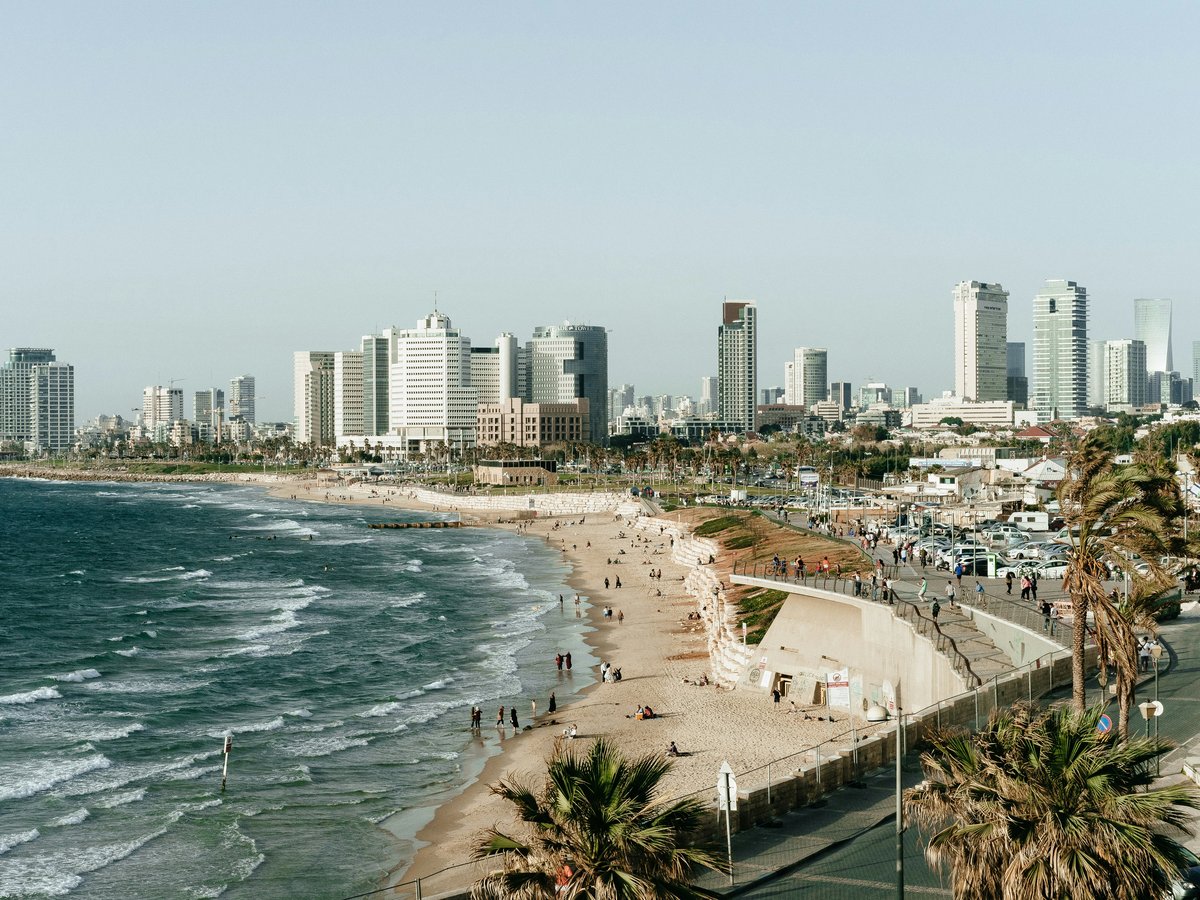
Old Jaffa, the 4,000-year-old port at Tel Aviv's southern tip. The limestone alleys, the fishing harbor, and the view back across the coastline toward the modern city give you the single image that makes Tel Aviv make sense. Come after 4pm when the afternoon heat drops and the light hits the stone walls at a warm angle. No reservation needed.
Old Jaffa. Not the beach, not the Bauhaus quarter, not Rothschild Boulevard. The ancient port of Yafo has been continuously settled since at least the Bronze Age, and in August the late-afternoon light turns the limestone walls the color of warm sand while the Mediterranean throws salt spray up through the fishing harbor. You enter from the south end of the seafront promenade, where the modern city's concrete and glass stops at a hill of Ottoman-era stone. The flea market on Olei Zion Street runs Tuesday through Saturday, and the stalls smell like cardamom, old leather, and fresh shawarma from the stand at the market's north entrance. Most visitors spend 2 to 3 hours here. Come after 4pm, when the heat softens and the light goes golden over the port.
The Tel Aviv Museum of Art, founded in 1932, sits on Shaul HaMelech Boulevard. The main building from the 1970s is functional but unremarkable. The Herta and Paul Amir Building next door, completed in 2011 by Preston Scott Cohen, is the reason to go. Its atrium spirals through concrete and glass that fold inward, and natural light shifts across the galleries in a way that changes the paintings hourly. The permanent Israeli collection on the third floor includes Reuven Rubin and Nahum Gutman, work you will not see outside this country. Entry costs 50 ILS, about 17 USD. Worth noting, the museum stays open until 9pm on Tuesdays and Thursdays, which means you can visit after the midday heat and still have time for dinner on nearby Ibn Gabirol Street.
Carmel Market runs about 500 meters along HaCarmel Street between Allenby Street and Magen David Square, open since the 1920s. The noise hits first, vendors calling prices in Hebrew over stacked crates of pomegranates and figs while the smell of fresh-ground Turkish coffee drifts from the spice stalls on the eastern row. To be fair, the Allenby end can feel staged for tourists. Walk deeper south and you'll find the produce stalls where locals shop, buying halva by the slab for about 30 ILS per 100 grams and fresh-squeezed pomegranate juice at 15 ILS a cup. Cold, slightly tart, sticky with pomegranate sugar. For lunch, M25 smokehouse inside the market sells brisket sandwiches for around 65 ILS. Get there before 1pm or the brisket sells out.
First-timers landing at Ben Gurion Airport can take the train to Tel Aviv HaHagana station in about 18 minutes for roughly 14 ILS. A taxi runs 150 to 200 ILS depending on traffic and time of day. HaHagana sits at the south end of the city, a 10-minute walk from the Neve Tzedek neighborhood. The city is walkable along the coast, about 5 km from Old Jaffa north to the port area. In mid-August, with the humidity around 70% and the air feeling closer to 34°C than the measured 30°C, plan outdoor time for mornings before 10am or late afternoons after the heat breaks. The Mediterranean stays warm enough for swimming through October, and the beaches between Gordon Street and Frishman Street tend to be less crowded than the main stretch near the Hilton.
The top three
Old Jaffa (Yafo)
A Bronze Age port city at Tel Aviv's southern edge where Ottoman-era limestone, a working fishing harbor, and the best sunset view of the modern skyline converge in a 2-to-3-hour walk. Free entry, open daily.
Tel Aviv Museum of Art
The Herta and Paul Amir Building by Preston Scott Cohen is the strongest piece of architecture in the city. Israeli painters Reuven Rubin and Nahum Gutman on the third floor are works you will not find elsewhere. Open late on Tuesdays and Thursdays.
Carmel Market (Shuk HaCarmel)
Tel Aviv's oldest continual outdoor market, open every day except Saturday. The south end is where locals buy produce, halva, and pomegranate juice. M25 smokehouse inside serves some of the city's best brisket.
Verified attractions
Sourced from Wikidata and OpenStreetMap: each entry links to its authoritative page.
-
Museum of the Jewish People at Beit Hatfutsot
museummuseum in Israel
View on Wikidata -
Habima Theatre
theaternational theatre of Israel
View on Wikidata -
Ramat Gan Stadium
stadiumfootball stadium in the Tel Aviv District, Israel
View on Wikidata -
Bloomfield Stadium
stadiumfootball stadium in Tel Aviv, Israel
View on Wikidata -
Eretz Israel Museum
museumhistorical and archeological museum in Tel Aviv, Israel
View on Wikidata -
Antipatris
archaeological siteancient human settlement
View on Wikidata -
Arsuf
archaeological sitecastle ruin
View on Wikidata -
Design Museum Holon
museummuseum in Israel
View on Wikidata -
Tel Aviv Museum of Art
museumArt museum
View on Wikidata -
Hassan Bek Mosque
place of worshipmosque in Tel Aviv, Israel
View on Wikidata -
Rabin Square
plazapublic city square in the center of Tel Aviv, Israel
View on Wikidata -
Netanya Stadium
stadiumfootball stadium in Netanya, Israel
View on Wikidata -
Ariel Sharon Park
parkformer waste dump located southeast of Tel Aviv, Israel
View on Wikidata -
Yarkon Park
gardenpublic urban park in Tel Aviv, Israel
View on Wikidata -
White mosque
place of worshipmosque in Ramla, Israel
View on Wikidata -
HaMoshava Stadium
stadiumfootball stadium in Petah Tikva, Israel
View on Wikidata -
Trumpeldor cemetery
cemeteryhistoric cemetery on Trumpeldor Street in Tel Aviv, Israel
View on Wikidata -
Great Synagogue
place of worshipsynagogue in Tel Aviv, Israel
View on Wikidata -
Al-Bahr Mosque
place of worshipmosque in Jaffa, Tel Aviv, Israel
View on Wikidata -
Dizengoff Square
plazapublic square in Tel Aviv
View on Wikidata -
Jaffa Clock Tower
towerbuilding in Jaffa
View on Wikidata -
Qesem Cave
archaeological siteArchaeological site
View on Wikidata -
Sidna Ali Mosque
place of worshipmosque in Herzliya, Tel Aviv, Israel
View on Wikidata -
Mahmoudiya Mosque
place of worshipmosque in Jaffa, Tel Aviv, Israel
View on Wikidata -
Neot Kedumim
parkpark in Israel
View on Wikidata -
Tel Aviv Cinematheque
museumcinema in Tel Aviv, Israel
View on Wikidata -
Church of Saint George
churchchurch building in Lod, Israel
View on Wikidata -
Cymbalista Synagogue and Jewish Heritage Center
place of worshipsynagogue of Tel Aviv University
View on Wikidata -
Qula
castledepopulated Palestinian village
View on Wikidata -
St. Peter's Church
churchFranciscan Catholic church in Jaffa, Israel
View on Wikidata -
Tel Aviv Performing Arts Center
theateropera house in Tel Aviv, Israel
View on Wikidata -
Kikar Hamedina
plazaplaza in Tel Aviv
View on Wikidata -
Charles Clore Park
parkpark in Tel Aviv, Israel
View on Wikidata -
Habima Square
plazapublic plaza in Tel Aviv
View on Wikidata -
Hechal Yehuda Synagogue
place of worshipsynagogue in Tel Aviv, Israel
View on Wikidata -
Immanuel Church
churchLutheran church in Jaffa, Israel
View on Wikidata -
Ramat Gan Safari
zoozoological center in the Tel Aviv District, Israel
View on Wikidata -
Tell Qasile
archaeological sitearchaeological site in Tel Aviv District, Israel
View on Wikidata -
Victory Monument in Netanya
monumentmonument in Netanya, Israel
View on Wikidata -
Magen David Square
plazasquare in Tel Aviv, Israel
View on Wikidata
Last verified by automated review (v1.7.2) on . What is automated review?