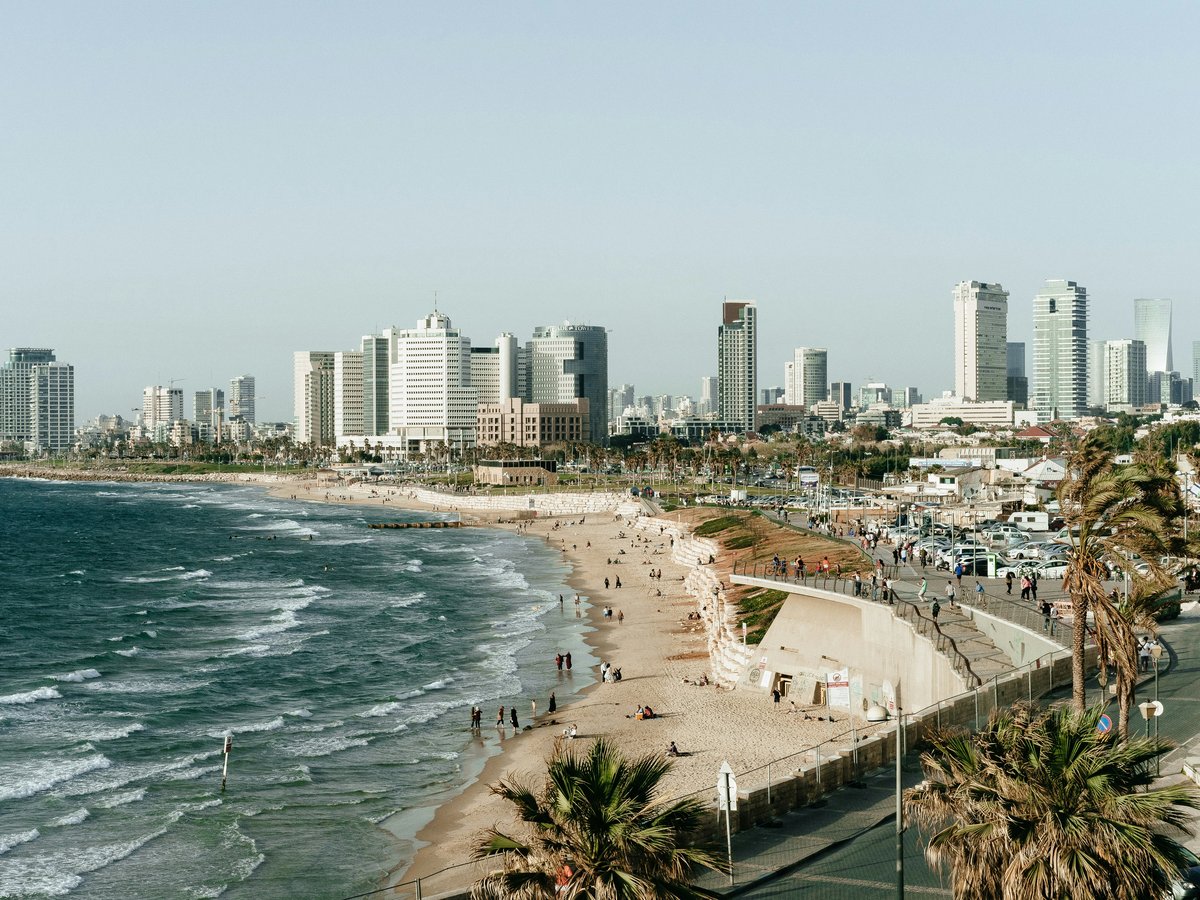
Tel Aviv runs late. On an August evening, when the temperature still hovers near 30°C after sundown and feels closer to 34°C with humidity around 68%, the city's social life is only beginning to stir at 10 PM. Dinner reservations start at 9 PM and nobody considers that early. The real movement toward bars picks up around 11 PM, and on the main going-out nights, Thursday and Saturday, most places don't reach full energy until 1 AM or later. The city scores 7.5/10 for LGBTQ+ friendliness (sourced from TTDI's editorial rubric), and that openness shows up across the nightlife in practical, visible ways. Mixed crowds are the default at Tel Aviv venues, not a niche phenomenon. You'll notice the dress code across the city leans casual to the point of being almost defiant about it. Tel Aviv might be the only Mediterranean city where flip-flops and a wrinkled linen shirt pass at a cocktail bar. Israelis come to socialize, not to perform socializing. On Allenby Street after midnight, salt air off the Mediterranean mixes with cooking smoke from late-night shawarma stands, and the bass from basement bars thumps through the pavement underfoot.
The Bar Scene
Tel Aviv's bar scene has shifted considerably over the past 10 to 15 years. Cocktail bars have multiplied along Rothschild Boulevard and in Neve Tzedek, where bartenders tend to take the craft seriously. You'll find places that use local ingredients. Pomegranate shrubs, za'atar-infused syrups, arak bitters. A cocktail at one of these spots might run 50 to 70 ILS. That said, dive bars seem to be where most locals spend their Thursday evenings. Florentin is the epicenter. Sticky floors, Goldstar lager on tap, loud Mizrahi pop from a battered speaker in the corner. A beer there runs closer to 25 to 35 ILS. Rooftop bars cluster along HaYarkon Street, mostly attached to the beachfront hotels. They lean tourist-heavy with higher prices and slower pours, but the sea breeze at night and the view along the coastline make them worth at least one visit. Wine bars have been appearing steadily around the Jaffa flea market and along Shabazi Street, and they often pour Israeli bottles from the Golan Heights or the Judean Hills. Mind you, Israeli wine has gotten genuinely good in recent years, and the staff at these places tend to know their local producers. For a traditional drink, arak still appears on most menus across the city, served over ice with water until it turns cloudy white.
The Club Scene
Tel Aviv's club scene leans heavily toward house and techno, with Berlin's influence visible in the warehouse spaces and stripped-down aesthetics across south Tel Aviv after dark. Clubs in the industrial Kiryat HaMelacha zone and around Florentin tend to occupy converted garages and workshops. By 2 AM, their concrete walls sweat with condensation and the air is thick with heat and sound. Things don't get going until midnight at the earliest. Showing up at 11 PM on a Thursday means an empty dance floor and a DJ warming up for nobody. Peak energy tends to arrive between 2 and 3 AM and can continue until 6 or 7 AM on weekends. The dress code is essentially non-existent by European standards. Trainers, shorts, a t-shirt. Fine nearly everywhere in Tel Aviv. Door selection, where it exists, seems to focus on group composition rather than clothing. Large groups of men traveling together may find entry harder at some spots. To be fair, the door policy at most Tel Aviv venues feels relatively relaxed compared to Berlin or London equivalents. Cover charges on Thursday nights are often waived or reduced. Friday and Saturday nights at larger events might run 50 to 100 ILS, depending on the DJ and promoter. Local residents tend to follow specific promoters and event collectives rather than committing to a single venue, so the scene shifts month to month, with most word-of-mouth discovery happening on Instagram and WhatsApp groups.
Live Music
Live music in Tel Aviv splits between a few established mid-size venues and a looser network of bar stages and one-off events. The city has produced a distinctive sound over the decades. It blends Mizrahi scales with Mediterranean rock and Western indie influences. On a given Thursday night you might hear an oud sitting alongside a Fender Stratocaster. The local scene runs surprisingly deep for a city of roughly 460,000 residents. Most dedicated music venues seat 200 to 500 people, and they fill up on Thursday and Saturday nights. Jazz has a smaller but committed following, with weekly residencies at bars around the Nahalat Binyamin area. Habima Theatre, Israel's national theatre operating since 1917, anchors a cultural district on Habima Square that occasionally programs musical performances alongside its dramatic season. The Tel Aviv Museum of Art, which opened in 1932, sits nearby and runs periodic evening events with live sound. For something rougher, look to the bar stages in south Tel Aviv and along lower Allenby, where local bands play to crowds of 50 in rooms that smell like spilled Goldstar and cigarette smoke drifting in from the doorway. Check local listings through Hebrew-language event apps. The English-language coverage of Tel Aviv's music scene tends to miss the smaller, better shows.
Nightlife neighborhoods
-
Florentin
Gritty, young, and graffiti-covered. Low-slung buildings, small dive bars with plastic chairs on the sidewalk, a 2 AM falafel stand on every other corner. The neighborhood still feels like it's mid-gentrification rather than post-gentrification, and the prices reflect that.
- Best for
- Budget nights out, the under-30 crowd, Thursday bar-hopping
-
Rothschild Boulevard and Lev Ha'Ir
Polished cocktail bars beneath Bauhaus-era buildings. Rothschild is where Tel Aviv shows its more composed face, though the crowd stays casual even here. Warm lighting through floor-to-ceiling windows, the sound of ice cracking in shakers.
- Best for
- Cocktail enthusiasts, couples, a more composed evening
-
Jaffa (Yafo)
Older and calmer than the rest of Tel Aviv's nightlife. Arab and Jewish bars sit close together in the narrow streets around the flea market. The pace drops noticeably here. Lantern light on stone walls, the smell of nargileh drifting from doorways.
- Best for
- Wine bars, a slower evening, Saturday nights after Shabbat ends
-
Allenby Street Corridor
Messy, loud, and chaotic in the best possible way. The stretch between Rothschild and the beach fills up after midnight with a cross-section of Tel Aviv's entire social spectrum. Neon signs, peeling posters, bass from every third doorway.
- Best for
- Late-night chaos, spontaneous bar-hopping, people-watching past 2 AM
-
Neve Tzedek
Quiet, refined, and the oldest neighborhood in the area, established in 1887. Wine bars and small restaurants line Shabazi Street. The crowd skews slightly older and the evening tends to wind down earlier than elsewhere in the city.
- Best for
- Wine drinkers, date nights, an early-evening start before moving on
-
Namal Tel Aviv (Tel Aviv Port)
Waterfront bars and larger club spaces along the renovated port boardwalk in the north of the city. More mainstream than Florentin, more tourist-friendly. The sea breeze cuts the August heat and the wooden boardwalk has a slight give underfoot.
- Best for
- Groups, waterfront drinks on warm nights, weekend dancing
Safety after dark
Tel Aviv scores 5.8/10 for solo-traveler safety (see the TTDI Solo-Safety Index), which reflects a few practical considerations rather than any single major concern. The central nightlife districts feel walkable and busy well past 2 AM, and most visitors report feeling comfortable around Rothschild, in Florentin, and along the Tayelet boardwalk at night. Keep your phone in a front pocket on crowded streets after midnight, as petty theft does happen. Getting home is straightforward with the Gett app, Israel's primary ride-hailing service. A ride from south Tel Aviv to the center rarely exceeds 35 to 45 ILS. On Friday nights, remember that public buses and trains stop running for Shabbat, from Friday afternoon through Saturday evening, so Gett or walking become your options during that window. Drink awareness applies as it does in any large city. Don't leave drinks unattended. Worth noting, most nightlife venues in Tel Aviv have security checks at the door, including bag searches. This is standard practice across Israel and not specific to nightlife. At tourist-heavy bars along the beach, check drink prices before ordering. Some spots charge well above the neighborhood average. The Tayelet is a common late-night walking route and generally feels safe, though it gets quieter north of the port area. For emergencies, Israel's police number is 100 and medical services are reached at 101. See also the broader city safety overview at https://en.wikivoyage.org/wiki/Tel_Aviv#Stay_safe for additional guidance.
Practical tips
- Currency and prices
- The Israeli shekel currently trades near 2.95 ILS to 1 USD. A night out in Tel Aviv lands in the range of midrange European cities. Card payments are accepted nearly everywhere, though some smaller dive bars in Florentin still prefer cash. ATMs from Bank Leumi and Bank Hapoalim are common throughout the nightlife districts.
- Tipping
- Tipping 10 to 15 percent is standard at sit-down bars and restaurants in Tel Aviv. For a single drink at the bar, rounding up by 5 to 10 ILS is common and appreciated. Service charges are not typically included on the bill. See https://en.wikivoyage.org/wiki/Tel_Aviv#Cope for broader money and customs advice.
- The Thursday rhythm
- Thursday night is when Tel Aviv's nightlife truly peaks. The Israeli work week runs Sunday through Thursday for many people. That makes Thursday the social equivalent of a Friday or Saturday night elsewhere. Plan your biggest night out accordingly. Friday daytime has its own social energy with long brunches and afternoon drinks, but things wind down as Shabbat begins at sunset.
- Shabbat and transit gaps
- Public buses (Dan in the metro area, Egged for longer routes) and the light rail stop running from Friday afternoon through Saturday evening for Shabbat. Gett operates throughout. Some shared taxis, called sherut, run limited routes on major corridors. If you rely on public transit, plan your Friday night return trip before heading out. Most bars and clubs in secular Tel Aviv stay open through Shabbat, so the limitation is transport, not venues. See https://en.wikivoyage.org/wiki/Tel_Aviv#Get_around for transit details.
- Getting between nightlife districts
- Central Tel Aviv is walkable between most nightlife neighborhoods. Florentin to Rothschild is roughly a 15-minute walk. Jaffa sits about 25 minutes south on foot from Florentin. Namal Tel Aviv is farther north, roughly 30 minutes from Rothschild, so a Gett ride makes more sense for that stretch. Electric scooter rentals are common after dark, though riding on the sidewalk can draw fines.
FAQ
What time should I head out for a night in Tel Aviv?
For bars, arriving around 11 PM is reasonable. For clubs, showing up before midnight often means an empty room. Peak club energy tends to land between 2 and 3 AM. A common Tel Aviv pattern is dinner at 9 PM, drinks from 11 PM, then a club or late bar after 1 AM. There is no penalty for arriving late in this city.
Do I need to dress up for Tel Aviv nightlife?
Almost never. Tel Aviv is one of the most casual nightlife cities in the Mediterranean. Shorts, sandals, and a plain t-shirt will get you into most bars and many clubs. A few upscale cocktail spots on Rothschild attract a slightly more polished crowd, but nobody is turning you away for trainers. Overdressing tends to draw more attention than underdressing in this city.
Is there nightlife on Friday nights during Shabbat?
Yes. Secular Tel Aviv largely ignores Shabbat when it comes to bars and clubs. Many venues stay open on Friday nights, particularly in Florentin and along the Allenby corridor. The practical impact is on transport rather than venue availability, since public transit pauses from Friday afternoon through Saturday evening. Gett and taxis fill that gap.
Can I get by speaking English at bars and clubs?
Yes, comfortably. English is widely understood in Tel Aviv's nightlife areas. Bar staff, DJs, and door security generally speak enough for ordering and basic conversation. Menus are often bilingual. A few Hebrew words help with warmth. 'L'chaim' works for clinking glasses, and 'toda' (thanks) covers most everything else.
Last verified by automated review (v1.7.2) on . What is automated review?