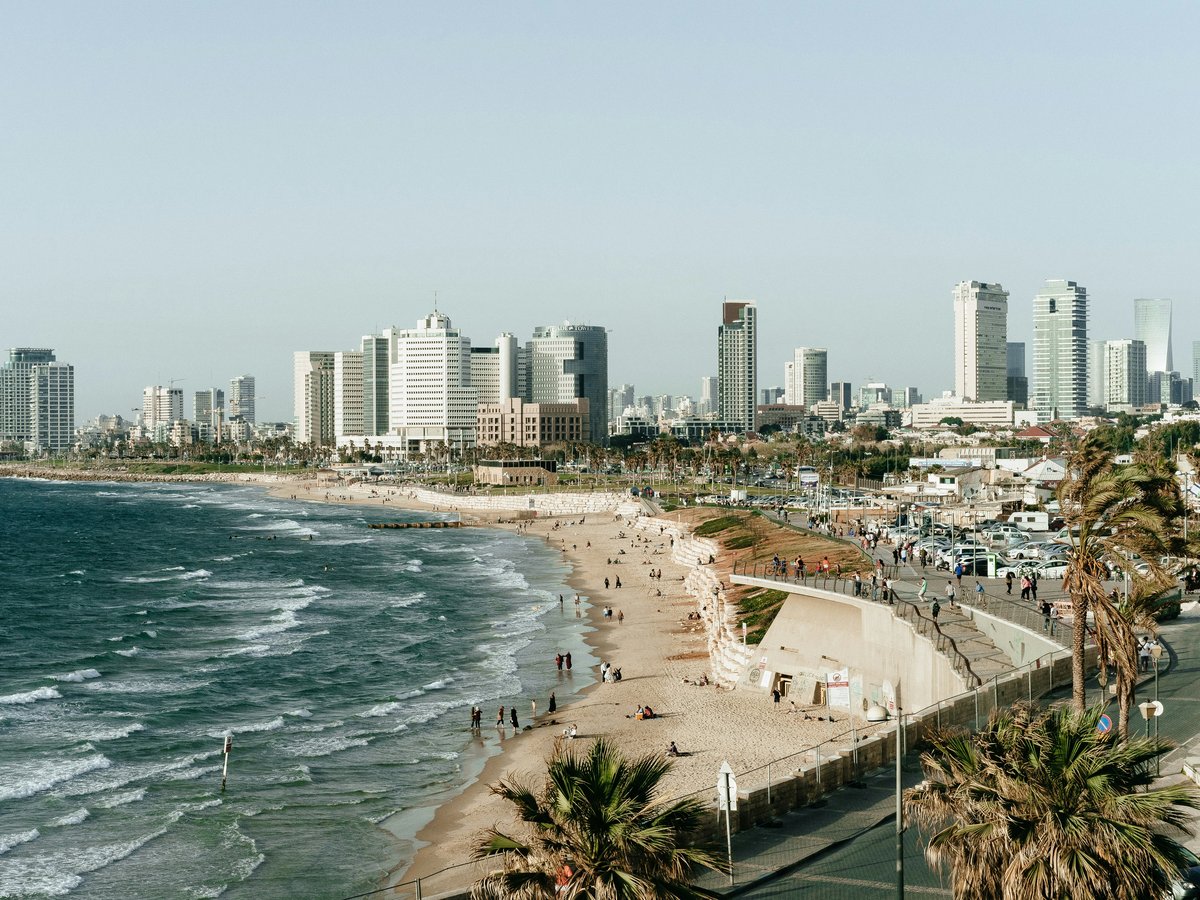
Stay in Tel Aviv in January
75 hotels in the Trip.com pool for Tel Aviv, from US$30 a night.
Opens Trip.com on Fri 1 Jan to Sun 3 Jan 2027; change the dates there.
January is Tel Aviv's wettest and coolest month. Rain falls roughly every 3 days, and the Mediterranean drops too cold for swimming. If you came for the beach culture that defines the city from May through October along Gordon Beach and Frishman Beach, you picked the wrong month. The sand feels windswept and empty, the lifeguard stations close for winter, and most seasonal beachfront bars shut their doors by early January.
That said, Tel Aviv without beach weather still has pull. Neve Tzedek's cafe terraces drag out their heat lamps, Carmel Market vendors stack winter citrus by the kilo, and the cultural calendar at Habima Theatre (founded 1917) runs at its densest between November and March. Hotel rates drop from the summer ceiling, and restaurants that need bookings weeks ahead in July might seat you on the spot.
January sits in a post-holiday lull. December's Hanukkah energy has faded, and the next tourism draw, Passover and warmer weather in April, is months off. You might get 3 or 4 clear days with mild sunshine ideal for walking the White City's Bauhaus facades. You might also hit a full week of grey drizzle that sends everyone indoors. The honest read is that about 10 of Tel Aviv's 12 months give you better odds for a first visit.
Why visit in January
- Hotel rates across central Tel Aviv tend to drop 20-30% from the June-September peak, making neighborhoods like Rothschild Boulevard and the beachfront more accessible for mid-range budgets.
- The winter cultural season is at full tilt, with Habima Theatre, the Israel Philharmonic at the Charles Bronfman Auditorium, and gallery openings in Florentin all running strong through January and February.
- Peak citrus season fills Carmel Market with Shamouti oranges, blood oranges, pomelos, and clementines at their sweetest, typically 5-8 ILS per kilo.
- Cooler temperatures make walking-intensive itineraries, especially the White City Bauhaus architecture tour and the steep lanes of Old Jaffa, far more comfortable than attempting the same routes in 32°C August heat.
- Crowds at major museums and Jaffa's flea market thin out noticeably, with wait times close to zero on weekday mornings.
Worth knowing
- 119mm of rainfall across roughly 11 days means a real chance of losing 2-3 consecutive days to rain. Every outdoor plan needs a backup.
- Mediterranean water temperature near 17°C and steady onshore wind make swimming impractical at all of Tel Aviv's public beaches, including Hilton Beach and Alma Beach.
- Shorter daylight hours, with sunset arriving around 17:00, compress sightseeing into about 7 hours of useful light between 10:00 and 17:00.
- Some beachfront restaurants and seasonal bars close entirely from late December through February, thinning the nightlife options along the Tayelet promenade.
Best for
Think twice if
Tel Aviv's January weather feels like a mild European winter pushed to the coast. Daytime highs average 18.3°C (65°F) and feel pleasant when the sun is out, though the kind of damp chill that 74% humidity adds means 18°C here feels cooler than 18°C in a dry climate. Nights drop to 10.3°C (51°F), enough for a proper jacket if you're walking back from dinner in Kerem HaTeimanim. Rainfall averages 119mm over 11 days, arriving in bursts. Some mornings start grey, open up for a few hours, then close in again by 15:00. You'll hear thunder on the heavier rain days. The wind off the Mediterranean picks up in the afternoons, particularly along the Tayelet and at the northern beaches near the Tel Aviv Port.
Seasonal caution
- Occasional winter storms bring 30-50mm of rain in a single day, causing temporary localized flooding in low-lying areas of south Tel Aviv and along Ayalon Highway. These events happen 1-2 times per January on average, and local transit can be disrupted for a few hours.
Year-round climate
Averages from the last 5 years.
| Month | Avg high (°C) | Avg low (°C) | Rainfall (mm) |
|---|---|---|---|
| Jan | 18 | 10 | 119 |
| Feb | 18 | 10 | 83 |
| Mar | 20 | 12 | 54 |
| Apr | 24 | 14 | 30 |
| May | 27 | 18 | 4 |
| Jun | 29 | 21 | 2 |
| Jul | 31 | 24 | 2 |
| Aug | 32 | 25 | 1 |
| Sep | 31 | 23 | 3 |
| Oct | 28 | 20 | 9 |
| Nov | 25 | 16 | 50 |
| Dec | 20 | 12 | 108 |
Best things to do in January
White City Bauhaus architecture walking tour
cultureTel Aviv's UNESCO-listed Bauhaus district, concentrated around Rothschild Boulevard, Bialik Street, and Dizengoff Square, holds over 4,000 buildings in the International Style. The Bauhaus Center on Dizengoff Street runs guided English-language walks covering about 2 hours and 15-20 facades.
January's 18°C average makes 2 hours of walking far more practical than the same tour in July's 31°C heat. The lower winter sun also brings out the geometric shadows on these facades.Booking tipFriday tours fill up a few days ahead. Book online by Wednesday for a Friday slot.
Surfing at Hilton Beach
sportTel Aviv's best surf break sits at the stretch of beach near the Hilton hotel, between Gordon Beach and the dog-friendly section to the north. Local surf shops rent boards and wetsuits by the hour.
Mediterranean winter swells, driven by storms tracking across the sea, produce the best waves of the year from November through February. January tends to deliver the most consistent swell direction for this break.Booking tipWeekday mornings draw fewer local surfers. A 3/2mm wetsuit is essential at January water temperatures.
Eretz Israel Museum deep visit
cultureThe Eretz Israel Museum (founded 1958) in Ramat Aviv covers archaeology, ethnography, and regional history across a campus of pavilions and outdoor ruins, including a reconstructed ancient glass-making furnace and a 6th-century synagogue mosaic floor. A thorough visit takes 3-4 hours.
Rainy days push visitors indoors, and this museum's sprawling campus layout means fewer people attempt it in wet weather. You'll have pavilions nearly to yourself on a weekday.Jaffa Old City food and history walk
sightseeingThe narrow stone lanes of Old Jaffa climb from the port up to the hilltop park overlooking central Tel Aviv. The route passes the flea market (Shuk HaPishpeshim), several galleries, and a cluster of port-side restaurants. The walk takes about 90 minutes without stops.
January's cooler air makes the uphill walk through Jaffa's stone alleys genuinely pleasant. In summer, the reflected heat from the stone walls pushes temperatures well above the city average.Israel Philharmonic Orchestra winter concert
cultureThe Israel Philharmonic, based at the Charles Bronfman Auditorium on Huberman Street, runs an intensive winter concert series from December through March. January programs often feature international guest conductors and soloists.
The winter season is the orchestra's primary performance window, with the densest scheduling of the year. January typically has 6-8 performances on the calendar.Booking tipTickets for popular programs sell out 2-3 weeks ahead. Check the IPO website early in December for January schedules.
Day trip to the Dead Sea
day tripThe Dead Sea sits about 90 minutes by car east of Tel Aviv, near the lowest point on Earth at roughly 430 meters below sea level. Winter air temperatures there hover around 20°C, and the mineral-dense water stays warm enough for floating year-round.
January is one of the most comfortable months for the Dead Sea. Summer temperatures regularly exceed 40°C there, making the experience more endurance test than relaxation. The 20°C air and roughly 23°C water hit a comfortable range.Booking tipRent a car or book a shared shuttle. Public transit to Ein Bokek takes over 3 hours each way and limits your time considerably.
Carmel Market winter citrus tasting
foodShuk HaCarmel runs 6 days a week (closed Saturday) along HaCarmel Street, and January is when the citrus stalls peak. Vendors offer samples freely. The southern end of the market, closer to Kerem HaTeimanim, tends to have the best produce vendors and the lowest prices.
January is the heart of Israeli citrus season. Shamouti oranges, blood oranges, pomelos, and clementines are all at peak ripeness at the same time. The variety and quality this month are notably higher than what you'll find by March.What to eat in January
In season: fruit
Shamouti oranges and blood oranges
Jaffa's namesake citrus hits peak ripeness in January. Market stalls pile them high, and fresh-squeezed juice from a vendor typically costs 10-15 ILS for a large cup. Blood oranges appear for a shorter window, usually late December through February.
Pomelo (Sweetie variety)
Israel's Sweetie pomelo, a grapefruit-pomelo cross developed at the Hebrew University in the 1970s, peaks in January. Sweeter and less bitter than standard pomelo, it shows up at every market stall and grocery through February.
Fresh clementines (clementinot)
Smaller and sweeter than the Shamouti orange, Israeli clementines peak in January and sell for as little as 3-5 ILS per kilo at market stalls. The Oren variety tends to be the sweetest of the lot.
On menus now
Kubeh (kubbeh) soup
Semolina or bulgur dumplings filled with spiced meat, served in a tart beet or lemon broth. The Iraqi-Jewish and Kurdish-Jewish version is a winter staple at stalls in and around Carmel Market, particularly in the Kerem HaTeimanim neighborhood. Expect to pay 25-40 ILS for a generous bowl.
Winter shakshuka with seasonal greens
The standard tomato-and-egg dish gets a January variation at many Tel Aviv cafes, with wilted chard, spinach, or kale folded into the sauce. Shuk-adjacent restaurants serve it for breakfast and lunch, typically 40-55 ILS per pan.
What to drink
Sahlab
A thick, warm drink made from orchid-root powder, topped with cinnamon, shredded coconut, and crushed pistachios. Sahlab vendors and cafe menus carry it only from roughly November through March. It disappears entirely by spring. You'll find it at kiosks near Jaffa's Clock Tower and at sit-down cafes in Neve Tzedek.
Regular events in January
Tu BiShvatFree
The Jewish New Year for Trees falls on the 15th of the Hebrew month Shevat, sometimes landing in late January, sometimes in February. Tree-planting ceremonies happen in parks around the city, and restaurants feature menus built around the 7 species of the Land of Israel: wheat, barley, grapes, figs, pomegranates, olives, and dates. Neve Tzedek cafes tend to run special tasting menus for the occasion.
Late January or early-to-mid February depending on the Hebrew calendar (January 25 in 2026, February 12 in 2027)Habima Theatre winter repertoire season
Israel's national theater runs its most ambitious programming from November through March, with January typically featuring 15-20 performances across drama, dance, and experimental work. Select productions offer English surtitles.
Throughout January, most evenings except Friday nightFirst Friday gallery openings in FlorentinFree
On the first Friday of each month, galleries and artist studios in the Florentin neighborhood open their doors for an informal art walk. The crowd is local, the wine is free, and the work tends toward emerging and experimental Israeli art. The walk covers about 6-8 venues within a few blocks.
First Friday of January, typically 11:00-14:00Best places this January
Tel Aviv Museum of Art
museumFounded in 1932, this is Israel's largest art museum, with a permanent collection spanning Impressionism through contemporary Israeli work. The Herta and Paul Amir Building, added in 2011, is worth the visit for its architecture alone. On a rainy January weekday, you might share the galleries with fewer than 50 other visitors.
Shaul HaMelech BoulevardSarona Market
food hallAn indoor food hall in the restored Sarona complex, a former German Templer colony. Over 90 vendors sell everything from artisan cheese to Yemeni bread to Japanese-Israeli fusion. When January rain shuts down outdoor dining, this becomes Tel Aviv's de facto communal dining room.
SaronaJaffa Port and flea market (Shuk HaPishpeshim)
market and historic siteThe ancient port area and its adjacent flea market feel quieter in January than in peak months. The market's antique shops, vintage clothing stalls, and small cafes are mostly covered or indoors, making this one of the better rain-day options outside a museum.
Jaffa (Yafo)Museum of the Jewish People at Beit Hatfutsot
museumLocated on the Tel Aviv University campus in Ramat Aviv, this museum (founded 1978, fully renovated in 2016) traces Jewish diaspora history through interactive exhibits and one of the world's largest databases of Jewish genealogy. A proper visit takes 2-3 hours.
Ramat AvivHaYarkon Park
parkTel Aviv's largest urban park, running along the Yarkon River in the north of the city, turns green after the autumn and early-winter rains. January is when the grass and the eucalyptus groves look their best. The main 3.8 km path is popular with joggers even in the rain.
north Tel AvivNeve Tzedek neighborhood
neighborhood walkTel Aviv's oldest neighborhood, established in 1887 before the city itself was founded in 1909. A low-rise grid of restored Ottoman-era and early-20th-century houses, now home to boutiques, galleries, and some of the city's best cafes. Winter mornings here are quiet enough to hear your footsteps on the stone paths.
Neve TzedekDesign Museum Holon
museumAbout 20 minutes south of central Tel Aviv by train, this Ron Arad-designed museum (founded 2010) hosts rotating exhibitions on industrial design, fashion, and architecture. The building's flowing Cor-Ten steel bands are photogenic even on grey days.
Holon (adjacent city)Florentin street art circuit
street artFlorentin's side streets, particularly along Vital Street and Florentin Street itself, carry some of Tel Aviv's densest concentrations of murals and stencil art. The work rotates constantly. January's overcast light reduces glare and makes for better street-art photography than the harsh summer sun.
Florentin
Your packing checklist
Tick items off as you pack. Your progress saves in this browser.
All packed — have a great trip.
Insider tips
Shabbat in January starts as early as 16:25 on Friday afternoons due to short winter days. By 15:30, shops in Kerem HaTeimanim and parts of central Tel Aviv begin closing. Plan your Friday shopping for the morning, or stick to Florentin and Jaffa, which tend to stay open later.
The Tayelet (beachfront promenade) is nearly empty on weekday January mornings, and on clear days the light between 7:00 and 8:30 is some of the best of the year for photography. The low angle picks up the full curve of the coastline from Jaffa to the Reading Power Station.
Sahlab, the warm orchid-root drink, vanishes from menus by March. If you spot a kiosk selling it near Jaffa's Clock Tower or along the edges of Carmel Market, stop. It tastes like warm vanilla custard dusted with cinnamon and coconut.
Thursday nights in January function like a soft weekend opening. Bars along Rothschild Boulevard and in Florentin fill up by 22:00, making Thursday the better night for Tel Aviv's social life if you want to avoid Shabbat timing constraints on Friday.
January produce at Carmel Market is priced for locals, not tourists. If a vendor charges you more than 8 ILS per kilo for clementines, move two stalls down. The south end of the market nearest Kerem HaTeimanim typically has the best prices and quality.
Avoid these mistakes
- Planning a beach-heavy itinerary and scrambling for alternatives when it rains 3 days straight. Build your January trip around indoor activities and walking tours, with the beach as a bonus if you catch a warm, dry day above 20°C.
- Underestimating how early darkness falls. Sunset at 17:00 means outdoor sites like Jaffa's hilltop park and the Bauhaus district lose usable light by 16:30. Front-load sightseeing before lunch and save museums for afternoon.
- Booking a hotel far from the center to save money, then spending 25-40 ILS per Gett taxi ride to reach Jaffa, Florentin, or Neve Tzedek every evening. In January, proximity to indoor dining and culture matters more than a beachfront location.
- Ignoring Shabbat timing. With Shabbat starting before 17:00 in January, a Friday afternoon at the beach followed by a late-afternoon shopping trip simply will not work. Check candle-lighting times for your specific Friday.
Practical tips for January
January visitors should build indoor-heavy itineraries and treat dry days as welcome opportunities rather than expectations. The currency is the Israeli new shekel, with 1 USD currently worth about 2.98 ILS. Tipping in restaurants follows a 10-15% convention, and most places accept credit cards. Ben Gurion Airport sits about 20 km southeast of central Tel Aviv, and the train to HaHagana station takes roughly 20 minutes. For detailed arrival and transit options, Wikivoyage's Tel Aviv guide is a reliable starting point (see en.wikivoyage.org/wiki/Tel_Aviv#Get_in). Public buses run on reduced Friday schedules and stop entirely from Friday afternoon through Saturday evening for Shabbat. The Rav-Kav transit card works on buses and trains and saves the hassle of single-ride cash fares. January daylight runs roughly 10 hours, from about 7:00 to 17:00, so plan accordingly. Solo travelers should note that Tel Aviv scores 5.8 out of 10 for solo-traveler safety (see the TTDI Solo-Safety Index), a rating influenced by the broader regional security context rather than street-level risk in central neighborhoods, which are generally walkable and well-lit. For eating and nightlife orientation, Wikivoyage's food and drink sections provide solid grounding (see en.wikivoyage.org/wiki/Tel_Aviv#Eat and en.wikivoyage.org/wiki/Tel_Aviv#Drink).
FAQ
Is January a good time to visit Tel Aviv?
It is fair, not great. January is the wettest month of the year, with rain on about 11 of 31 days, and the Mediterranean is too cold for swimming. The trade-off is lower hotel prices, thinner museum crowds, and a strong winter cultural calendar. If beaches are your priority, April through October is the window. If you are coming for food, architecture, and indoor culture, January works, though you will need rain contingency plans for most days of the trip.
What is the weather like in Tel Aviv in January?
Cool and wet by Tel Aviv's standards, mild by northern European ones. Expect daytime highs around 18°C (65°F) and nighttime lows near 10°C (51°F). Humidity averages 74%, which adds a damp edge to the cool air. Rain arrives in bursts rather than all-day drizzle. You might get a full sunny day followed by 2 days of steady showers. Layering is the key strategy, and a waterproof jacket is non-negotiable.
Can you swim at the beach in Tel Aviv in January?
Not comfortably. The Mediterranean water temperature drops to about 17°C (63°F), and the onshore wind creates a chill factor on the sand. You will see a few hardy locals and surfers in wetsuits, but casual swimming is off the table until late April or May when water temperatures climb above 20°C. Surfers, by contrast, prefer January for the strongest and most consistent wave conditions of the year.
Is Tel Aviv expensive in January?
Less expensive than its summer peak. Hotel rates in central areas tend to run 20-30% below the June-September average, and flight prices from European hubs are among the year's lowest. That said, Tel Aviv remains one of the more expensive cities in the Eastern Mediterranean year-round. A mid-range dinner for two with wine typically runs 300-500 ILS (roughly 100-170 USD), and even budget-oriented travelers should expect daily costs above what they would spend in Istanbul or Athens.
What should I do on rainy days in Tel Aviv in January?
The indoor options can fill several rainy days without repeating yourself. The Tel Aviv Museum of Art and Beit Hatfutsot each take 2-3 hours for a proper visit. Sarona Market is an all-weather food destination with over 90 vendors under one roof. The Cinematheque on Ha'Arba'a Street runs daily screenings including international films with subtitles. Florentin's covered cafes and Rothschild Boulevard's ground-floor restaurants are set up for lingering over long meals. A rainy-day kubeh soup at a market stall, eaten standing under the partial roof while rain drums on the canvas overhead, is honestly one of the better January experiences in the city.
Things to Do in Tel Aviv in January
 Free cancellation
 Masada and the Dead Sea Day Trip from Tel Aviv
Day trip: 12 hours, free cancellation.
via Viator Free cancellation
 Nazareth and the Sea of Galilee Day Trip from Tel Aviv
Day trip: 10 hours, free cancellation.
via Viator
Jerusalem Private Tour | Official Licensed Guide
Day trip: 8 hours.
via Viator Free cancellation
 Best of Tel Aviv, Jaffa & Carmel Market Tour
Day trip: 6 hours, free cancellation.
via Viator Free cancellation
 From Tel Aviv/Jerusalem: Galilee, Nazareth, Jordan River Tour
Day trip: 12 hours, free cancellation.
via Viator Free cancellation
 Best of the West Bank Tour from Tel Aviv
Day trip: 12 hours, free cancellation.
via ViatorFind a flight to Tel Aviv
Live fares to Tel Aviv appear here once cookies are accepted.
Last verified by automated review (v1.7.2) on . What is automated review?