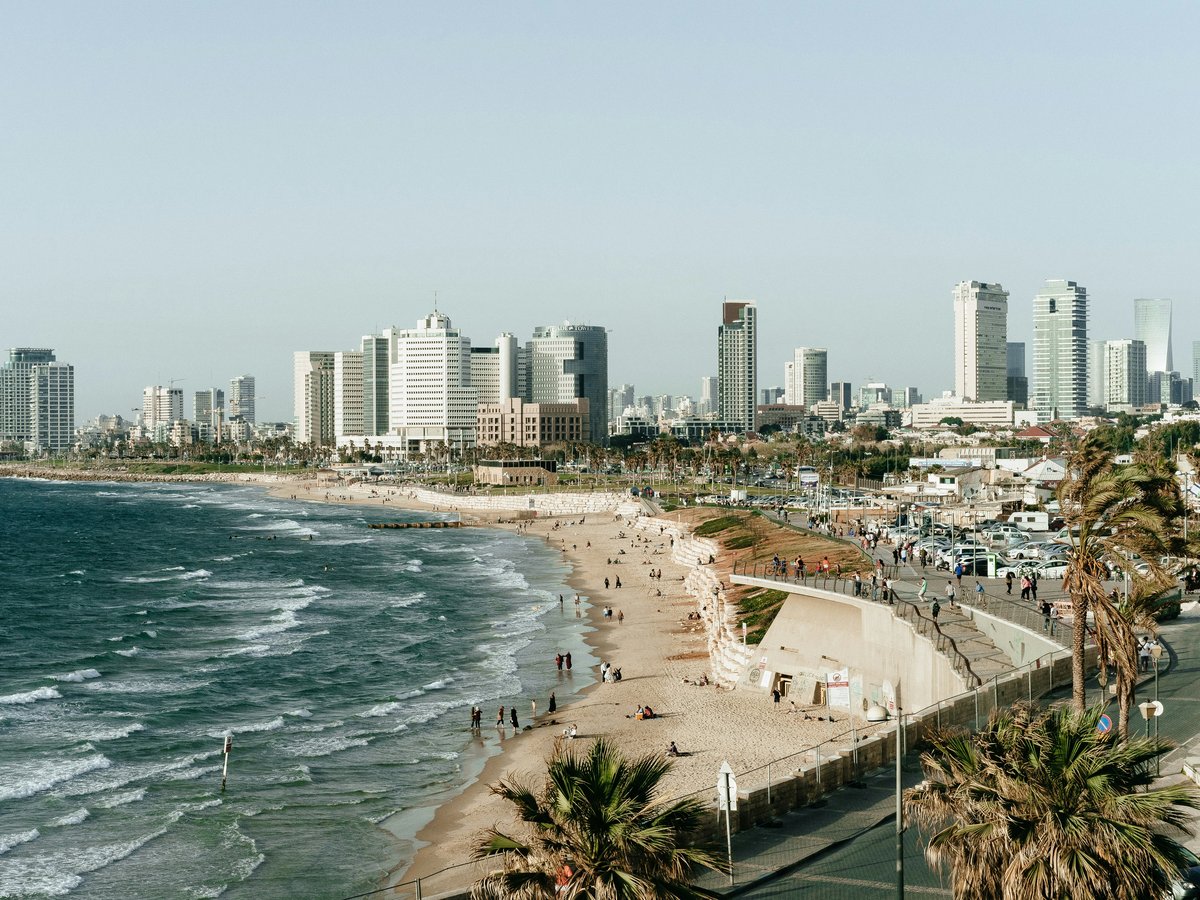
Stay in Tel Aviv in August
75 hotels in the Trip.com pool for Tel Aviv, from US$30 a night.
Opens Trip.com on Fri 6 Aug to Sun 8 Aug 2027; change the dates there.
August in Tel Aviv is persistently hot. The city sits under thick Mediterranean humidity for the full 31 days, with no meaningful rainfall to provide relief. Afternoons push well past 30°C (86°F), and the air is heavy enough that the 10-minute walk from Rothschild Boulevard to the Carmel Market leaves you soaked. No afternoon cloud break from the 1st to the 31st.
That said, the city adjusts. Tel Aviv tilts nocturnal in August. Florentin's bar-lined streets don't fill until 21:00, the Tayelet promenade comes alive after sunset, and the Mediterranean water temperature tends to reach 28-29°C (82-84°F), warmer than any other month. Israeli families on summer break pack Gordon Beach and Mezizim Beach by mid-morning on weekends, but weekday mornings before 10:00 still offer space on the sand. The Carmel Market opens by 08:00, early enough to finish a produce run before the air thickens. Fewer international tourists visit compared to the April-May shoulder, replaced by domestic families on school holiday.
Worth noting, the Jewish fast day of Tisha B'Av falls in early August and triggers widespread closures for about a day. Shabbat adds its own weekly rhythm from Friday evening through Saturday night. If you want full-day sightseeing in comfort, October and November offer gentler conditions with similar dryness. In August, the air-conditioned museum circuit becomes a necessity between 11:00 and 16:00, not an option.
Why visit in August
- The Mediterranean Sea reaches its peak annual water temperature in August, around 28-29°C (82-84°F), making long beach sessions genuinely rewarding rather than bracing.
- Virtually no chance of rain on any given day, so outdoor evening dining and rooftop plans at spots along Rothschild Boulevard require zero weather contingency.
- Tel Aviv's nightlife scene peaks in August, with bars and restaurants in Florentin and along Dizengoff running at full energy until 02:00-03:00 most nights.
- Major museums extend their summer evening hours, turning the midday heat problem into an opportunity for longer air-conditioned cultural visits.
Worth knowing
- High humidity compounds the summer heat into a perceived temperature well above the actual air reading, particularly between 11:00 and 16:00 when shade is scarce across most neighborhoods.
- Israeli school holidays run through late August, pushing domestic beach and hotel demand to annual highs. Weekend parking near Gordon Beach and Frishman Beach fills before 09:00.
- The UV index regularly reaches 10-11 throughout August, among the highest readings for any Mediterranean city, making unprotected midday sun exposure risky within 15-20 minutes.
- Shabbat (Friday sunset to Saturday sunset) halts public bus services weekly, limiting mobility for travelers who rely on transit.
Best for
Think twice if
August is the hottest month in Tel Aviv. The average high reaches 31.8°C (89°F) and the low rarely drops below 24.5°C (76°F), keeping nights warm enough for short sleeves. Humidity sits at 72%, which pushes the felt temperature several degrees above the thermometer by early afternoon. Rainfall is essentially zero at 1mm for the entire month, and cloud cover is rare. The sea breeze along the coast offers some relief, particularly after 17:00, but streets a few blocks inland feel noticeably heavier. Expect roughly 13.5 hours of daylight, with sunrise around 06:05 and sunset near 19:30.
Seasonal caution
- The UV index reaches 10-11 on most August days, among the highest in the Mediterranean basin. Unprotected sun exposure at midday can cause visible sunburn in under 20 minutes. Apply SPF 50+ sunscreen and reapply every 90 minutes.
- Perceived temperature regularly exceeds 36-37°C (97-99°F) during peak hours due to the combination of heat and coastal humidity. Dehydration and heat exhaustion are genuine risks for visitors not accustomed to sustained outdoor activity in these conditions. Carry water and plan indoor breaks between 11:00 and 16:00.
- Occasional sharav (hamsin) wind events bring desert air from the east, temporarily dropping humidity but spiking temperatures to 38-40°C (100-104°F) for 1-3 days. These episodes are difficult to predict more than 48 hours in advance.
Year-round climate
Averages from the last 5 years.
| Month | Avg high (°C) | Avg low (°C) | Rainfall (mm) |
|---|---|---|---|
| Jan | 18 | 10 | 119 |
| Feb | 18 | 10 | 83 |
| Mar | 20 | 12 | 54 |
| Apr | 24 | 14 | 30 |
| May | 27 | 18 | 4 |
| Jun | 29 | 21 | 2 |
| Jul | 31 | 24 | 2 |
| Aug | 32 | 25 | 1 |
| Sep | 31 | 23 | 3 |
| Oct | 28 | 20 | 9 |
| Nov | 25 | 16 | 50 |
| Dec | 20 | 12 | 108 |
Best things to do in August
Morning swimming along the Tayelet beaches
outdoorThe 14 km (8.7 mi) promenade connects over a dozen named beaches from Tel Aviv Port south to Jaffa. Morning sessions between 07:00 and 10:00 offer warm water, functional lifeguard stations, and manageable sun intensity. Gordon Beach has the best facilities, including free showers and a freshwater pool.
Mediterranean water temperature peaks in August, making extended swims comfortable. Morning UV is lower than midday, and the domestic crowds haven't arrived yet on weekdays.Booking tipNo booking needed. Arrive by 08:00 on weekends to claim a good spot near the lifeguard stations.
Museum circuit as midday refuge
cultureThree major museums make a natural rotation when the heat drives you indoors. The Eretz Israel Museum (founded 1958) in Ramat Aviv covers archaeology and crafts across multiple pavilions. The Museum of the Jewish People at Beit Hatfutsot (founded 1978) on the Tel Aviv University campus traces the global diaspora through interactive exhibits. Both sit in the tree-shaded university area, which feels cooler than central Tel Aviv.
The 5-hour midday heat window (11:00-16:00) is too uncomfortable for outdoor sightseeing, and museums extend their summer hours to accommodate the shifted schedule.Booking tipVisit Sunday through Thursday mornings to avoid the pre-Shabbat Friday rush.
Evening food walk through the Carmel Market area
foodThe streets surrounding Shuk HaCarmel and the adjacent Kerem HaTeimanim neighborhood host dozens of restaurants, hummus counters, and sabich stands that shift into evening service during summer. The area cools enough after 19:00 to walk comfortably, and the mix of Yemeni, Iraqi, and Levantine food stalls within a few blocks offers real variety without a tour bus in sight.
Summer evening hours mean the market area stays active until 22:00-23:00, later than any other season. The street food ingredients, particularly eggplant and figs, are at their seasonal peak.Booking tipNo booking for market stalls. For sit-down restaurants near the market, reserving a table for 20:30 or later avoids the first-wave wait.
Sunset at Jaffa Port
outdoorOld Jaffa's elevated position above the Mediterranean offers a west-facing vantage point for sunset. The stone walls of the old city retain the day's heat, so this works best as a late-afternoon arrival (18:00 onward) rather than a full walking tour. The port area has a cluster of restaurants and a small gallery district.
August sunsets occur around 19:20-19:30, late enough that the walk from central Tel Aviv along the Tayelet arrives in comfortable evening temperatures. The warm air keeps the outdoor dining terraces at the port filled through midnight.Nightlife in Florentin
nightlifeThis graffiti-covered neighborhood south of the Carmel Market is Tel Aviv's bar and live-music center. The streets between Florentin Street and Abarbanel Street line up cocktail bars, dive bars, and small music venues within easy walking distance. Outdoor seating becomes comfortable after 21:00, when the air temperature drops into the upper 20s°C.
The neighborhood reaches peak energy in August when the local crowd is on school and work holiday, extending the scene to midweek nights. The warm evenings keep sidewalk tables occupied past 02:00.Booking tipNo reservations needed at most bars. Live music venues sometimes sell tickets online 1-2 days in advance.
Early morning cycling along the coastline
outdoorTel Aviv's bike-share system (Tel-O-Fun) and dedicated coastal bike path let you cover the full Tayelet promenade before 08:00, when temperatures still sit in the mid-20s°C (mid-70s°F). The route runs from the Reading Power Station in the north through the port area, past the main beaches, and down to the Jaffa clock tower.
The narrow window before the heat builds is shorter in August than in spring or fall, making the 06:00-08:00 slot uniquely valuable. The flat coastal path, calm morning air, and empty promenade create conditions you won't find during the cooler months when the path is busier throughout the day.Booking tipTel-O-Fun stations are available 24/7. Register online before your trip to avoid setup time on the morning of.
Paddleboarding from Tel Aviv Marina
outdoorThe marina at the northern end of the Tayelet rents stand-up paddleboards and kayaks. August's Mediterranean is typically calm, with swells under 0.5 m (1.6 ft) on most days. Paddling south along the coast gives views of the skyline from the water, and you can stop at beaches along the way.
August offers the calmest sea conditions of the year for beginners, and the warm water means falling in is refreshing rather than jarring. Early morning sessions (before 09:00) avoid both the heat and the afternoon onshore breeze.Booking tipRentals are first-come, first-served on weekdays. Weekend mornings sell out by 08:30, so arrive early or book ahead if the rental shop offers online reservations.
What to eat in August
In season: fruit
Watermelon (Avattiach)
Israeli watermelon season peaks in July and August, and thick slices appear at beach kiosks, Tayelet stands, and every Carmel Market stall. The dark-skinned Hazera varieties grown in the Arava desert tend to be sweeter and denser than imported alternatives. Some restaurants serve it in salads with Bulgarian cheese and fresh mint.
Fresh figs (Te'enim)
August is prime fig harvest on the coastal plain. Carmel Market vendors display green and black varieties by the crate, and the sweetness of a tree-ripened Israeli fig picked within the week is noticeably different from anything air-freighted. Eat them with labneh for breakfast.
Table grapes
Israeli grape varieties from the Golan Heights and Negev hit the market in August. The flavor intensity of locally grown grapes eaten within days of harvest is a different experience from exported supermarket stock. Look for the small, seedless Sultanina variety.
Street food peaks
Sabich
This Iraqi-Jewish street food layers fried eggplant, hard-boiled egg, hummus, tahini, and amba (pickled mango condiment) inside a pita. Summer eggplant is at peak flavor in August, and the dish is served at room temperature, which makes it ideal when hot soup feels impossible. Stands in the Kerem HaTeimanim neighborhood near the Carmel Market are the traditional spots.
What to drink
Gazoz
Tel Aviv's artisanal sparkling drink trend puts seasonal fruit syrups, fresh herbs, and sparkling water into tall glasses over ice. August versions tend to feature fig, grape, and mint combinations. Levinsky Market in Florentin has several dedicated gazoz stands where you can watch the drink assembled.
Arak on ice
The anise-flavored spirit is traditionally diluted with cold water and ice, turning milky white. Locals drink it alongside meze plates in the evening, and August's warm nights make it the peak season for arak consumption at restaurants in Old Jaffa and along the port.
Regular events in August
Tisha B'AvFree
The 9th of Av on the Hebrew calendar, a fast day commemorating the destruction of both Temples in Jerusalem. Restaurants, bars, cinemas, and entertainment venues close from the preceding evening through the following evening, roughly 25 hours. The date shifts annually with the Hebrew calendar and typically falls in late July or early August. This is not a celebration. It is the most solemn day on the Jewish calendar outside Yom Kippur, and the closures are extensive.
Late July to early August (varies with the Hebrew calendar each year)Tu B'Av
The 15th of Av, roughly a week after Tisha B'Av, is a minor holiday celebrating love and matchmaking. Tel Aviv marks it with special evening events at rooftop bars, beach parties, and restaurant promotions. The mood is casual and celebratory, closer to a summer Valentine's Day than a formal holiday. You might notice flower vendors doing brisk business and special tasting menus at restaurants in Neve Tzedek and along the port.
Early to mid-August (varies with the Hebrew calendar, typically 6 days after Tisha B'Av)Tel Aviv Cinematheque summer outdoor screenings
The Cinematheque on Ha'Arba'a Street runs outdoor film screenings during summer evenings. The program tends to mix Israeli independent productions with international classics and recent festival picks. Screenings start after sunset, around 20:30, when the air cools enough to sit outside. The setting is informal, and the crowd skews local.
Throughout August, typically on select evenings each weekHabima Theatre summer season
Israel's national theater continues its performance calendar through August, with a repertoire of Hebrew-language plays and occasional international touring productions. The air-conditioned auditorium in Habima Square makes evening shows a natural counterpoint to a day at the beach. The square itself, between the theater and the Mann Auditorium, has a landscaped garden that draws evening strollers.
Various dates throughout August, schedule published on the theater's websiteBest places this August
Gordon Beach
beachThe most well-maintained public beach in central Tel Aviv, with free freshwater showers, lifeguard stations operating extended summer hours, and a saltwater pool adjacent to the sand. The beach faces west, catching the afternoon breeze earlier than inland streets. August weekday mornings before 10:00 offer the best balance of warm water and manageable crowds.
Lev Ha'irJaffa Port and Old City
historic districtThe stone alleyways of Old Jaffa hold cooler air in the early morning before the walls absorb the day's heat. The port area faces west and catches the sea breeze earlier than inland neighborhoods. The flea market (Shuk Hapishpeshim) opens by 09:00, and the galleries and restaurants along the port stay open late into the evening. The elevated Artists' Quarter offers views south along the coast.
Jaffa (Yafo)Tel Aviv Museum of Art
museumFounded in 1932, the museum's modern Herta and Paul Amir Building (designed by Preston Scott Cohen) offers some of the best air-conditioned gallery space in the city. The permanent collection spans Israeli and international art from the 19th century onward, and the sculpture garden connects to Habima Square. The cafe on the ground level is a civilized midday stop when the streets outside are at their worst.
Lev Ha'irHayarkon Park
parkTel Aviv's largest green space stretches along the Yarkon River north of the city center. The mature tree canopy provides shade that the open beaches lack, and the park's boating lake offers a different water experience. Morning joggers and dog walkers clear out by 08:30 in August, leaving the paths relatively quiet until the afternoon heat drives everyone home.
North Tel AvivSarona Market
marketA restored Templer-era complex now housing an indoor food market with over 90 stalls and shops. The fully air-conditioned interior makes it a practical midday destination when outdoor markets become uncomfortable. The surrounding Sarona complex has landscaped gardens with benches under shade trees, though by August afternoon even the gardens are warm.
SaronaNeve Tzedek
neighborhoodTel Aviv's oldest neighborhood has narrow streets lined with renovated Ottoman-era buildings, independent boutiques, and small galleries. The Suzanne Dellal Centre for Dance and Theatre anchors the cultural life of the area. Explore before 09:00 in August, when the stone facades are still cool and the light is soft. By midday the lanes become heat traps.
Neve TzedekHabima Theatre and Habima Square
theaterIsrael's national theater, founded in 1917, sits at the southern end of Rothschild Boulevard. The renovated square includes a planted roof garden over an underground parking structure. Evening performances in the air-conditioned auditorium are a natural fit for August, and the square's trees and seating make it one of the more pleasant outdoor gathering spots after sunset.
Lev Ha'irDesign Museum Holon
museumDesigned by Ron Arad and opened in 2010 in neighboring Holon (a 20-minute drive or light-rail ride south of central Tel Aviv), this museum hosts rotating design and architecture exhibitions in a striking curvilinear building of Cor-Ten steel. Its smaller scale makes it a focused 2-hour visit, a good complement to the larger collections in central Tel Aviv on a different day.
Holon
Your packing checklist
Tick items off as you pack. Your progress saves in this browser.
All packed — have a great trip.
Insider tips
Carmel Market vendors start discounting produce sharply after 14:00 on Fridays as Shabbat approaches and perishables need to move. If you're cooking at an Airbnb, this is the cheapest window for fresh fruit, herbs, and vegetables all week.
The sherut (shared taxi) minibuses keep running along major routes during Shabbat when regular bus service stops. They're faster and cheaper than ride-hailing apps, which tend to add surge pricing on Friday nights and Saturday. Look for the white minivans at marked stops on major streets.
The free beach showers along the Tayelet promenade are well-maintained and have fresh water. Gordon Beach has the cleanest restroom and changing facilities of any public beach. Most locals rinse off there before walking home or to dinner.
Ordering 'hafuch gadol' at any cafe gets you a large latte. The afternoon iced-coffee break around 16:00 is effectively a citywide institution, and most cafes on Dizengoff and Ibn Gabirol have it ready as a default order. Budget 15-18 ILS per cup.
Avoid these mistakes
- Booking a midday walking tour through Neve Tzedek or Old Jaffa. The narrow stone streets trap radiated heat, and by 12:00 in August the walls feel warm to the touch. Early morning tours starting before 09:00 are the only comfortable option.
- Arriving on a Friday afternoon without supplies. Shabbat begins at sunset (around 19:15 in August), and most supermarkets close 1-2 hours before. Without advance shopping, finding basics becomes difficult until Saturday evening, outside a few areas.
- Underestimating hydration needs. The combination of heat, salt air, and constant low-grade sweating dehydrates faster than most visitors expect. By the time you feel thirsty in August conditions, you're likely already behind on fluids.
- Planning a packed daytime sightseeing schedule. Locals stay indoors between 11:00 and 16:00, and many smaller shops and galleries close during those hours. Forcing outdoor activity through that window risks heat exhaustion and finds half the city shuttered.
Practical tips for August
Shabbat runs from Friday sunset (approximately 19:15 in early August, closer to 19:00 by month's end) through Saturday evening. All Egged and Dan buses stop, most shops close, and the city grows quiet. Restaurants in the Rothschild Boulevard and Neve Tzedek areas tend to stay open. The Gett ride-hailing app works throughout Shabbat.
The current exchange rate sits at approximately 2.95 ILS per 1 USD. Most restaurants and shops accept credit cards, though smaller Carmel Market stalls often prefer cash. ATMs dispense ILS in denominations of 50 and 200.
Tap water in Tel Aviv is desalinated and safe to drink. Pharmacies (look for the green-cross sign) carry high-SPF sunscreen and electrolyte solutions if you run out. Air conditioning is standard in hotels, restaurants, museums, and Dan-brand buses, but walking between air-conditioned spaces means repeated thermal shifts between cool interiors and hot streets. Dress in layers you can adjust.
Book museum visits for Sunday through Thursday mornings to avoid both the pre-Shabbat Friday rush and Saturday closures. If you plan to rent a car, note that parking in central Tel Aviv is expensive and difficult, particularly near the beaches on weekends. The city is walkable (outside the midday heat window) and the bike-share network covers most neighborhoods.
FAQ
Is August a good time to visit Tel Aviv?
August is a fair time to visit if you prioritize beach culture and nightlife over daytime sightseeing. The persistent heat makes outdoor exploration between 11:00 and 16:00 uncomfortable, but the warm Mediterranean, Tel Aviv's nocturnal dining scene, and extended museum hours compensate. October and November offer more comfortable conditions for walking tours and outdoor attractions, with similar dryness and lower prices.
What is the weather like in Tel Aviv in August?
Expect consistent, unvarying heat with zero rain. The pattern repeats daily: warm morning, hot midday, slow cooling after sunset. The sea breeze along the coast moderates conditions by a few degrees compared to streets a few blocks inland. Every day in August follows essentially the same weather pattern, so you can plan with confidence that conditions won't shift.
Is Tel Aviv safe for solo travelers in August?
Tel Aviv scores 5.8/10 for solo-traveler safety (see the TTDI Solo-Safety Index). The beach areas and central neighborhoods like Florentin and Dizengoff are generally well-lit and populated late into the evening, which helps solo travelers feel comfortable during the shifted summer schedule. Standard precautions apply: avoid unlit beach stretches after midnight, secure valuables in crowded market areas, and stay aware of your surroundings in less-trafficked side streets.
Is Tel Aviv crowded in August?
Domestically, yes. Israeli school holidays run through late August, and families from across the country converge on the coast. Hotel occupancy runs high and beach weekends are packed. That said, international tourist numbers tend to be lower than the spring shoulder season (April-May), so the crowd composition skews local. Weekday mornings at beaches and museums are noticeably calmer than weekends.
Things to Do in Tel Aviv in August
 Free cancellation
 Masada and the Dead Sea Day Trip from Tel Aviv
Day trip: 12 hours, free cancellation.
via Viator Free cancellation
 Nazareth and the Sea of Galilee Day Trip from Tel Aviv
Day trip: 10 hours, free cancellation.
via Viator
Jerusalem Private Tour | Official Licensed Guide
Day trip: 8 hours.
via Viator Free cancellation
 Best of Tel Aviv, Jaffa & Carmel Market Tour
Day trip: 6 hours, free cancellation.
via Viator Free cancellation
 From Tel Aviv/Jerusalem: Galilee, Nazareth, Jordan River Tour
Day trip: 12 hours, free cancellation.
via Viator Free cancellation
 Best of the West Bank Tour from Tel Aviv
Day trip: 12 hours, free cancellation.
via ViatorFind a flight to Tel Aviv
Live fares to Tel Aviv appear here once cookies are accepted.
Last verified by automated review (v1.7.2) on . What is automated review?