Stay in Salzburg in January
59 hotels in the Trip.com pool for Salzburg, from US$21 a night.
Opens Trip.com on Fri 1 Jan to Sun 3 Jan 2027; change the dates there.
January in Salzburg belongs to locals and classical music fans. The Christmas market stalls at Domplatz and Residenzplatz come down in the first week, the Sound of Music tour groups thin to a fraction of their summer numbers, and what remains is a baroque city of 155,000 under Alpine winter. Daytime temperatures average 5.6°C (42°F) with nights dropping to -2.7°C (27°F). Snow covers the Altstadt rooftops on most January mornings, and the light over the Salzach tends toward flat grey.
The single biggest reason to time a trip for January is Mozartwoche, the annual festival organized by the Internationale Stiftung Mozarteum around Mozart's birthday on January 27. It typically runs for about 10 days, with performances in the Großes Festspielhaus and the Mozarteum concert hall. Orchestras and soloists from Vienna, Berlin, and London fill the programs. If you care about live classical performance, this is a legitimate reason to book a January trip. Headline evening concerts tend to sell out by early December, though matinée recitals and chamber performances often have seats available closer to the date.
Outside of Mozart Week, Salzburg is at its quietest and most affordable. Hotel rates after Dreikönigstag on January 6 drop to some of the lowest levels of the year. Restaurants in the Altstadt that had 45-minute waits in August will seat you without one. The trade-off is honest, though. Daylight runs from about 8:00 to 16:30, grey skies outnumber blue, and a few smaller museums and family-run Gasthäuser close for 2-3 week winter breaks. The city is compact enough to walk end-to-end in 25 minutes, from Schloss Mirabell in Neustadt to the Festung Hohensalzburg funicular in Nonntal, and the O-Bus network covers the wider neighborhoods on 10-15 minute intervals.
Why visit in January
- Mozartwoche in late January brings world-class classical concerts to the Großes Festspielhaus and the Mozarteum. This is the only time of year the festival runs, and people fly in from across Europe specifically for it.
- Hotel rates after January 6 drop to the lowest levels of the year, often well below what you'd pay during the July-August Salzburger Festspiele or the December Christkindlmarkt season.
- Major sites like Festung Hohensalzburg and DomQuartier are at their annual visitor minimum. The fortress sees 3,000+ visitors on a summer day. In January, you might share a gallery with 10 people.
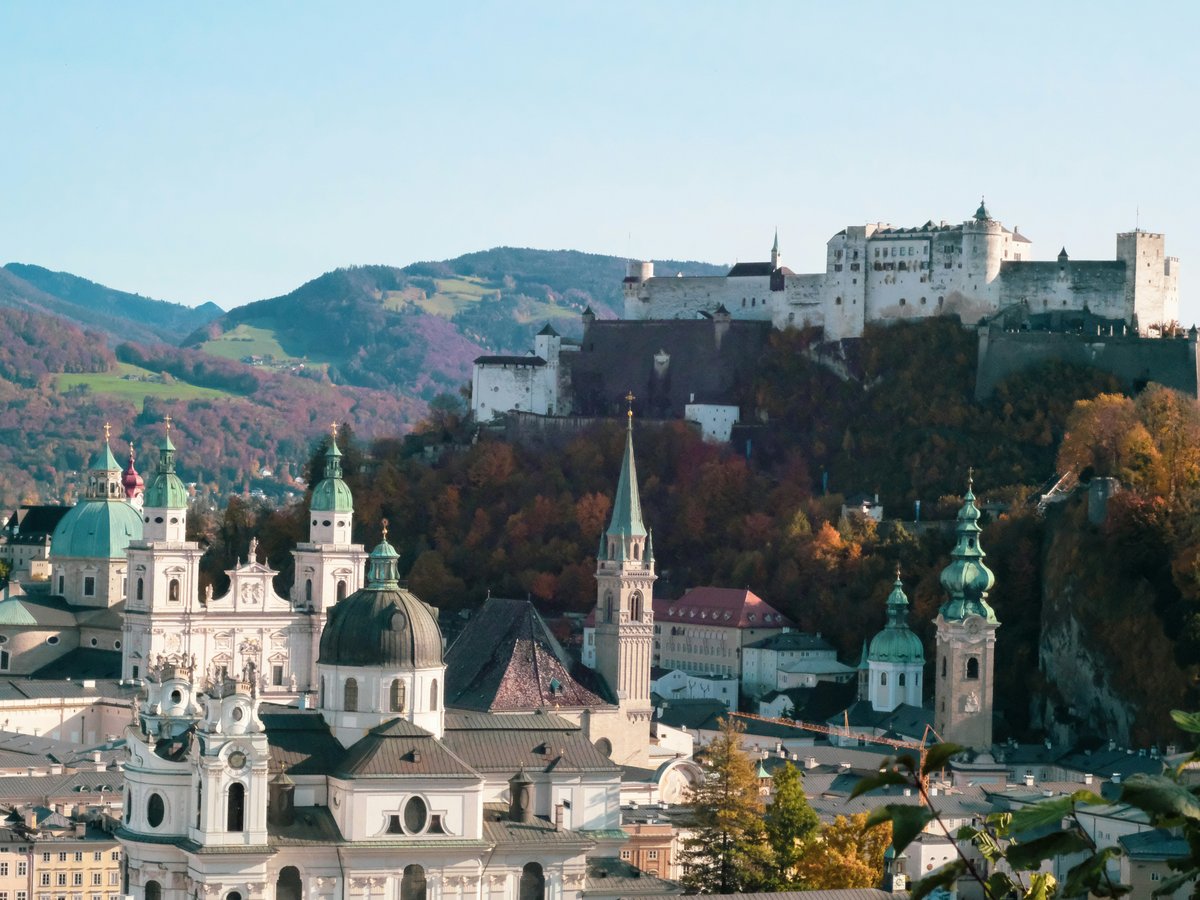
- The Altstadt under fresh snow, with the Festung above and the Untersberg behind, produces the winter panorama that defines Salzburg's visual identity. Photographers get these shots without crowds in frame.
- Day trips to Alpine ski resorts like Obertauern (90 minutes by car) and the Ski Amadé network (75 minutes to Flachau) are easy, with peak snow conditions in January.
Worth knowing
- Daylight is limited to roughly 8:00 to 16:30, giving you about 8.5 hours of usable light per day. That's 7 fewer hours than a June visit.
- Grey, overcast skies are the norm. The Salzburg basin sits in a valley between the Mönchsberg and Kapuzinerberg that traps fog and low cloud during temperature inversions, sometimes for 3-5 consecutive days.
- Temperatures regularly drop below freezing overnight, and black ice on the Altstadt's cobblestone streets is a genuine hazard, especially in shaded alleys near Getreidegasse.
- Some smaller attractions, family-run Gasthäuser, and seasonal businesses close for 2-3 week winter breaks, typically in the second or third week of January.
Best for
Think twice if
January is Salzburg's coldest month alongside December. The city sits at 424m elevation in a valley flanked by the Mönchsberg and Kapuzinerberg hills, which trap cold air during frequent temperature inversions. Expect overcast skies on roughly two-thirds of days, with precipitation falling as wet snow or cold rain across about 15 days. Morning frost is common, and you'll likely see snow on the ground for most of the month. On clear days, the air feels crisp and dry. On inversion days, it sits heavy and damp, with a raw chill that 5°C doesn't quite prepare you for. The city clears main roads and sidewalks efficiently, but side alleys and the Festungsgasse footpath can stay icy until midday.
Seasonal caution
- Temperatures regularly fall below 0°C (32°F) overnight and occasionally stay below freezing all day during cold snaps. Exposed areas like the Festung Hohensalzburg ramparts and the Mönchsberg terrace feel noticeably colder due to wind chill.
- Black ice forms on the Altstadt's cobblestone streets after overnight freezes, particularly in shaded alleys between Getreidegasse and the Salzach River. Morning hours before the sun reaches street level are the worst window for slips.
- Temperature inversions can trap fog in the Salzburg basin for 3-5 consecutive days, limiting visibility and holding temperatures near 0°C even at midday. The phenomenon is more disorienting than dangerous, but it can make an entire short trip feel grey.
Year-round climate
Averages from the last 5 years.
| Month | Avg high (°C) | Avg low (°C) | Rainfall (mm) |
|---|---|---|---|
| Jan | 6 | -3 | 95 |
| Feb | 9 | 0 | 82 |
| Mar | 12 | 1 | 83 |
| Apr | 14 | 3 | 98 |
| May | 18 | 9 | 165 |
| Jun | 25 | 14 | 104 |
| Jul | 25 | 15 | 166 |
| Aug | 24 | 15 | 171 |
| Sep | 21 | 11 | 146 |
| Oct | 17 | 7 | 89 |
| Nov | 10 | 1 | 113 |
| Dec | 6 | -1 | 100 |
Holidays and festivals in January
Public holidays
- New Year's Day(Neujahr)1 January 2027
- Epiphany(Heilige Drei Könige)6 January 2027
Headline events
Mozartwoche (Mozart Week)
Mid to late January, roughly January 18-28, centered on Mozart's birthday on January 27
A 10-day festival of orchestral, chamber, and solo performances centered on Wolfgang Amadeus Mozart's birthday on January 27. Organized by the Internationale Stiftung Mozarteum since 1956, it fills the Großes Festspielhaus, the Mozarteum concert hall, and smaller venues across the Altstadt with world-class musicians. The Wiener Philharmoniker and Camerata Salzburg are frequent performers. This is Salzburg's premier winter cultural event and the primary reason most international visitors come to the city in January.
Best things to do in January
Attend Mozartwoche concerts
cultureThe Mozartwoche festival runs for about 10 days in late January, with performances in the Großes Festspielhaus, the Mozarteum, and smaller venues across the Altstadt. Programs range from full orchestral concerts to intimate chamber recitals and piano performances. Even if you're not a devoted classical listener, hearing Mozart performed in his birth city, in concert halls built for this music, is a different experience from hearing it anywhere else.
Mozartwoche only happens in late January, centered on Mozart's birthday on January 27. This is the sole window for this festival anywhere in the world.Booking tipHeadline evening concerts sell out by December. Book through the Mozarteum Foundation website as soon as the program is announced, usually in September or October. Matinée recitals and chamber performances are easier to get closer to the date.
Visit Festung Hohensalzburg without the crowds
sightseeingSalzburg's 900-year-old hilltop fortress is the city's defining landmark, and in January you can walk its ramparts and museum rooms in near-solitude. The funicular runs year-round, carrying you up in about 1 minute. From the upper terraces, the view south toward the Berchtesgaden Alps is striking when the peaks are snow-covered, and you can hear the city's church bells from above without the background noise of 3,000 summer tourists.
Summer brings thousands of daily visitors. January visitor counts drop to a fraction of that, and the snow-covered Alpine panorama from the fortress walls is at its most dramatic.Booking tipNo advance booking needed in January. Walk up to the funicular at the Festungsgasse base station in Nonntal.
Day trip to Obertauern or Ski Amadé ski resorts
outdoorSalzburg sits within 60-90 minutes of several major Alpine ski areas. Obertauern, about 90 minutes south by car, is known for reliable snow cover with its base at 1,740m. The Ski Amadé network (Flachau, Wagrain, Schladming) offers over 760km of combined pistes. January snow conditions in the northern Alps are typically excellent, and weekday lift lines tend to be shorter than during the February school-holiday weeks.
January typically has the most reliable snow pack in the northern Alps, and the ski areas haven't filled up with the Austrian and German school-holiday crowds that arrive in February.Booking tipRental equipment is available at resort base stations. Booking online 2-3 days ahead can save 10-15% at most rental shops. ÖBB trains run ski shuttle services to several resorts from Salzburg Hauptbahnhof.
Walk the DomQuartier museum circuit
cultureDomQuartier connects the Residenz state rooms, the Residenzgalerie (with works by Rembrandt and Rubens), the Salzburger Dom organ loft, and the Museum St. Peter into a single indoor route through 1,300 years of Salzburg's ecclesiastical and secular history. The circuit takes about 2-3 hours and keeps you inside for nearly all of it.
Cold weather and limited daylight make a long indoor museum visit practical rather than a sacrifice. In summer, you'd resent spending 3 hours inside. In January, you'll welcome it.Booking tipNo advance booking needed in January. The circuit is well-signed and self-paced.
Ride the Untersbergbahn above the fog
outdoorThe Untersberg cable car climbs from 456m at the valley station in Grödig (about 15 minutes south of central Salzburg by bus) to 1,776m near the summit. In January, the Salzburg basin frequently fills with fog from temperature inversions. The cable car lifts you above the grey layer into clear sky and blinding sunshine. The contrast between the socked-in valley and the sunlit summit, with views across to the Watzmann and Berchtesgaden Alps, is genuinely remarkable.
January's frequent temperature inversions create the above-the-clouds phenomenon. In summer, you ride up for the view. In January, you ride up to escape the fog and find the sun.Booking tipCheck the Untersbergbahn website for winter operating hours. The cable car typically runs on a reduced schedule, with the first car up around 9:00 and the last down around 16:00. Dress for summit conditions, which can reach -10°C with wind.
Afternoon in Salzburg's Kaffeehäuser
food and drinkSalzburg's coffee house tradition runs deep, and January is when you'll appreciate it most. Café Tomaselli on Alter Markt has operated since 1700, with marble-topped tables, pastry carts wheeled to your seat, and newspapers on wooden holders. Café Fürst on Brodgasse is where the original Mozartkugel was invented in 1890. Both serve the Melange (half coffee, half steamed milk) that is the standard Austrian café order. In January, you hear the clink of porcelain and low conversation rather than tourist chatter.
Cold weather and early darkness make a 2-hour coffee house sit feel natural rather than indulgent. The Kaffeehäuser are at their most atmospheric in winter, when warm, bright interiors contrast with grey streets outside.Explore the Haus der Natur
sightseeingSalzburg's natural history and science museum on Museumsplatz covers 4 floors, from Alpine geology and wildlife to a hands-on science center and a large aquarium. The reptile zoo and the space science exhibits tend to hold children's attention for 2-3 hours. The building itself is warm and well-lit. You step inside from the January grey and suddenly you're watching piranha in a tropical tank. It works as a counterweight to the city's baroque-and-classical main offerings.
Limited outdoor hours in January mean you'll want 2-3 indoor activities per day. Haus der Natur fills a half-day comfortably and feels like discovery, not a weather-driven compromise.What to eat in January
On menus now
Kasnocken
Salzburg's signature cheese dumplings, made with local Alpine cheese and served sizzling in a cast-iron pan with a side of green salad. Every Gasthaus in the Altstadt has them on the menu, but they're at their most satisfying after a cold January walk. The smell of browned butter and melted cheese hits you before the pan reaches the table.
Leberknödelsuppe
Clear beef broth with one or two large liver dumplings. This is the standard cold-weather lunch at traditional restaurants across Salzburg and the Salzburger Land. The broth arrives steaming, and the dumplings are dense, savory, and warming. A reliable choice when you want something hot and fast between museum visits.
Wildragout
Venison ragout or goulash made with deer from the Alpine valleys around Salzburg. Game season runs through winter, and January menus at restaurants like Stiftskeller St. Peter feature venison prominently. Typically served with Semmelknödel (bread dumplings) and braised red cabbage.
Salzburger Nockerl
The city's signature dessert soufflé, shaped to resemble three mountain peaks and dusted with powdered sugar. It arrives puffed, golden, and still hot from the oven. The texture is light and eggy, almost cloud-like, with a faint vanilla sweetness. Available year-round at Café Tomaselli and Stiftskeller St. Peter, but the warm sweetness feels especially right on a January evening.
What to drink
Glühwein
Mulled red wine with cloves, cinnamon, star anise, and orange peel. If the last Christkindlmarkt stalls at Residenzplatz are still standing in the first days of January, you'll find it there. After that, most Kaffeehäuser and some bars serve their own versions through February. The warm spice-and-citrus smell is essentially the scent of Austrian winter.
Regular events in January
Dreikönigstag (Epiphany)Free
January 6 is a public holiday across Austria. In Salzburg, the Sternsinger (star singers) go door to door in traditional dress, and the Salzburger Dom holds a special High Mass. Most shops and businesses close for the day, though restaurants in the Altstadt generally stay open.
January 6Salzburger PerchtenlaufFree
Masked Perchten figures in elaborate carved wooden masks and fur costumes run through streets in and around Salzburg in the days around Epiphany. The tradition has roots in pre-Christian Alpine folk belief, meant to drive out winter spirits. The figures are loud, dramatic, and occasionally startling. The smell of woodsmoke and damp fur follows them through the crowd. Various communities across the Salzburger Land hold their own runs between late December and January 6.
Late December through January 6New Year's Concerts at the Mozarteum and Festspielhaus
Salzburg's concert venues host their own Neujahrskonzerte on January 1 and in the first days of January. These are separate from Vienna's famous Neujahrskonzert and tend to feature regional orchestras performing Strauss waltzes and Mozart alongside contemporary pieces. The Mozarteum and Großes Festspielhaus both typically program New Year's performances.
January 1-3Best places this January
Festung Hohensalzburg
fortressThe 900-year-old fortress dominates the Salzburg skyline from its perch on the Festungsberg. In January, the fortress ramparts are often dusted with snow, and the view south toward the Berchtesgaden Alps is at its sharpest on clear winter days. Take the funicular up from Festungsgasse to avoid a steep, potentially icy 20-minute walk.
NonntalDomQuartier
museumA connected museum route through the Residenz state rooms, the Residenzgalerie, the Dom gallery, and the Museum St. Peter. The indoor circuit takes 2-3 hours and is one of the best ways to spend a cold January afternoon without stepping outside.
AltstadtMuseum der Moderne on Mönchsberg
museumThe modern art museum sits on the Mönchsberg cliff above the Altstadt. The terrace offers panoramic views of the city under snow, with the fortress across the valley. Take the Mönchsberg lift from Anton-Neumayr-Platz to avoid the icy footpath up.
AltstadtHangar-7
museumRed Bull's aviation and motorsport museum near Salzburg Airport houses a collection of historic aircraft, Formula 1 cars, and rotating art installations under a curved glass roof. The Ikarus restaurant inside is one of Salzburg's most talked-about dining rooms. The museum itself is free to enter, making it a good option on a tight January budget.
MaxglanGetreidegasse
streetSalzburg's most famous shopping street, lined with wrought-iron guild signs and narrow passageways (Durchhäuser) that connect to parallel streets. In January, the tourist density drops enough to appreciate the architecture and duck into the side courtyards without fighting a crowd. Mozart's Geburtshaus (birthplace) sits at number 9.
AltstadtStiegl-Brauwelt
breweryAustria's largest private brewery runs a museum and tasting room in Maxglan. The tour covers the brewing process and ends with fresh Stiegl beer and a pretzel in a wood-paneled hall. In January, the crowd is mostly locals, and the warm interior and a cold beer make a solid 2-hour afternoon when the weather is too grey for walking.
MaxglanMirabellgarten
gardenThe formal gardens around Schloss Mirabell are worth a 20-minute walk even in January. The fountains are off and the flower beds are dormant, but the geometric hedges and the view through the garden toward the Festung are striking with snow on the ground. The Marmorsaal (Marble Hall) inside the palace hosts chamber concerts on selected Thursdays and Sundays, often free or low-cost.
Neustadt
Your packing checklist
Tick items off as you pack. Your progress saves in this browser.
All packed — have a great trip.
Insider tips
The Mönchsberg lift near Anton-Neumayr-Platz saves you a steep, potentially icy 15-minute climb to the Museum der Moderne terrace. In January, the lift is rarely crowded, and the panoramic view from the top, with snow on the Altstadt rooftops and the fortress across the valley, is worth the fare on its own.
Café Tomaselli on Alter Markt has been open since 1700 and still runs a pastry cart to your table. Order a Melange and a Topfenstrudel, claim a window seat, and settle in for an hour. Locals treat the Kaffeehäuser as second living rooms in January, and nobody will rush you. The room smells of coffee, warm pastry, and old wood.
If the inversion fog sits on the city for days (it happens), take the Untersbergbahn cable car up from Grödig. At 1,776m you step out into blinding sunshine while the city below is invisible under cloud. The round trip takes about 2 hours including time at the summit, and it can genuinely rescue a day that feels grey and oppressive at valley level.
The Salzburg Card (available as 24, 48, or 72-hour versions) covers the Festung Hohensalzburg funicular, most major museums, and unlimited public transport. In January, when you're likely visiting more indoor attractions per day than you would in summer, it tends to pay for itself by midafternoon of the first day.
Stiftsbäckerei St. Peter near the Dom has been baking bread since at least the 12th century. Their dark rye loaf and Laugenstangerl (pretzel sticks) come out of wood-fired ovens and are still warm when you buy them. Most tourists walk right past it toward the cathedral without noticing.
Avoid these mistakes
- Many visitors arrive in the first week of January expecting the Christkindlmarkt to still be open. Salzburg's main Christmas market at Domplatz closes around January 1, with a few stalls at Residenzplatz and Mirabellplatz sometimes lingering until Dreikönigstag on January 6. By January 7, they're gone. If Christmas markets are your reason for visiting, come in December.
- An all-outdoor itinerary doesn't work in January. Salzburg's Altstadt is compact (about 25 minutes on foot end-to-end), but cold and darkness after 16:30 limit comfortable outdoor time to 2-3 hours per stretch. Structure your day around museum and concert schedules, with outdoor walks between them, not the reverse.
- Smooth-soled shoes are a recipe for falls on the cobblestones. The shaded alleys between Getreidegasse and the Salzach freeze overnight and sometimes don't thaw until midday. Rubber-soled boots with tread are not optional in January.
- Mozartwoche tickets for the flagship orchestral concerts at the Großes Festspielhaus sell out weeks before the festival opens. If Mozart Week is your reason for visiting, check the Mozarteum Foundation program when it's released in early autumn and book immediately. Do not assume walk-up availability.
Practical tips for January
Mozartwoche tickets should be booked through the Internationale Stiftung Mozarteum website as soon as the program is published, usually in early autumn. January 1 (Neujahr) and January 6 (Dreikönigstag) are public holidays in Austria, so most shops, supermarkets, and banks close entirely on both days. Restaurants in the Altstadt generally stay open, but confirm ahead if you have a specific place in mind. Salzburg's O-Bus and trolleybus network runs on reduced holiday schedules on those two dates, with buses every 20-30 minutes instead of the usual 10-15. For the rest of January, public transport follows its normal winter timetable. The Salzburg Card includes unlimited transit and admission to most major sites. If you're planning 2-3 museum visits per day (likely in January), the 24-hour version typically pays for itself by midafternoon. Dress in layers rather than relying on one heavy coat. The temperature swing between a heated Kaffeehaus at 22°C and the street at -3°C is significant, and you'll cross that threshold 8-10 times per day. Restaurant reservations are rarely needed in January outside of Mozartwoche, when the better Altstadt restaurants fill up for dinner service. Tipping convention in Austria is 5-10% at sit-down restaurants, rounded up to a convenient number.
FAQ
Is January a good time to visit Salzburg?
January works well for the right visitor. If classical music draws you, Mozartwoche in late January is a world-class event held in the city where Mozart was born. If you prefer fewer crowds and lower hotel rates, the second and third weeks of January offer a quieter, more local version of Salzburg at some of the lowest prices of the year. It's not the strongest month for first-time visitors who want to cover all the highlights, though. Daylight runs only from about 8:00 to 16:30, temperatures hover near freezing, and some smaller attractions reduce their hours. For the broadest Salzburg experience, June through September offers longer days, warmer weather, and the Salzburger Festspiele in July and August.
What is the weather like in Salzburg in January?
Cold and often grey. The average high is 5.6°C (42°F) and the average low is -2.7°C (27°F), with about 15 days of precipitation totaling 95mm across the month. Humidity sits around 78%. Snow is common and often sticks, giving the Altstadt a photogenic winter appearance. The Salzburg basin is prone to temperature inversions that trap fog at city level for days at a stretch, which can feel claustrophobic. You'll need a proper winter coat, waterproof boots with good tread, and layers for the constant swing between heated interiors and freezing streets.
Is Salzburg crowded in January?
Not at all. January is one of Salzburg's quietest months for tourism. The Christmas market visitors leave after the first week, and the summer peak (when well over a million visitors per month pass through) is 6 months away. You'll share Festung Hohensalzburg with a handful of visitors instead of hundreds, and Getreidegasse will feel like a normal shopping street rather than a pedestrian highway. The one exception is Mozartwoche in late January, when classical music audiences fill the city-center hotels and concert venues, but even then the overall atmosphere stays calm compared to July or December.
Does it snow in Salzburg in January?
Yes, regularly. Salzburg sits at 424m elevation in the northern Alps, and January precipitation often falls as snow, particularly overnight and in the early morning. Snow on the ground is more common than not during January, though the city clears main roads and sidewalks efficiently. The combination of fresh snow on the Altstadt's baroque rooftops with the fortress above is one of the genuine visual rewards of a January visit. Temperatures can stay below 0°C all day during cold snaps, keeping the snow from melting for extended periods.
What is Mozartwoche and is it worth attending?
Mozartwoche (Mozart Week) is an annual 10-day classical music festival organized by the Internationale Stiftung Mozarteum around Mozart's birthday on January 27. It has been running since 1956 and features orchestras, soloists, and chamber ensembles performing in the Großes Festspielhaus, the Mozarteum concert hall, and smaller Altstadt venues. The Wiener Philharmoniker and Camerata Salzburg are among the regular performers. If you appreciate live classical music, it is genuinely worth building a trip around. The performances are world-class, the venues are intimate by international concert standards, and hearing Mozart in the city of his birth adds a layer of context no other location can match. Demand is high for headline concerts, so book through the Mozarteum Foundation website as early as possible.
Things to Do in Salzburg in January
 Free cancellation
 Hallstatt Half-Day Tour from Salzburg
Day trip: 5.5 hours, free cancellation.
via Viator Free cancellation
 Skip-The-Line Salt-Mines and Bavarian Mountains Tour from Salzburg
Outdoor experience: 4 hours, free cancellation.
via Viator Free cancellation Salzburg Super Saver: Original Sound of Music and Salt Mines Day Trip
Day trip: 9.2 hours, free cancellation.
via Viator Free cancellation
 Public 8h tour to sites of "The Sound of Music Movie" & Hallstatt
Day trip: 8 hours, free cancellation.
via Viator Free cancellation
 Private Full-Day Tour of Hallstatt and Salzkammergut from Salzburg with Options
Day trip: free cancellation.
via Viator Free cancellation
 Private Tandem Paragliding Salzburg Mt Gaisberg
Outdoor experience: free cancellation.
via ViatorFind a flight to Salzburg
Live fares to Salzburg appear here once cookies are accepted.
Last verified by automated review (v1.7.2) on . What is automated review?