What should I pack for Salzburg?
Pack walking shoes that grip wet cobblestones. Salzburg's Altstadt is all uneven stone, and the path to Hohensalzburg Fortress climbs 120 meters. Bring layers for 12-27°C summer shifts, a packable rain jacket for afternoon alpine storms, and a Type C/F adapter for 230V outlets. Skip the umbrella and buy one locally for €5.
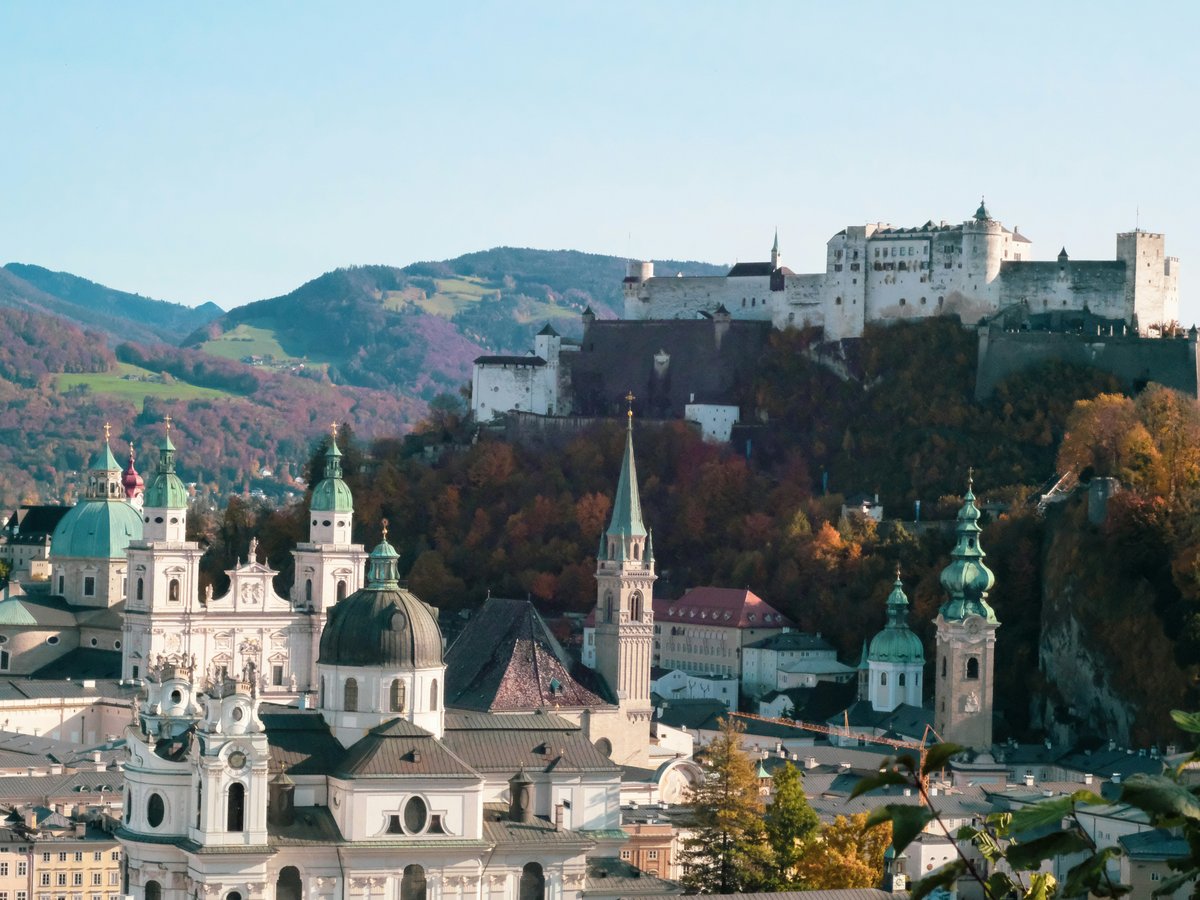
Walking shoes are the one item that will make or break your trip. Salzburg's Altstadt sits on polished cobblestones that turn glassy after rain, and rain comes often here. The climb to Hohensalzburg Fortress, built starting in 1077, gains over 100 vertical meters on uneven stone steps that feel cool and damp underfoot most mornings, even in midsummer. Fashion sneakers with flat soles will have you white-knuckling the handrails. You can take the Festungsbahn funicular for around €13 round-trip, but you'll still walk 2-3 km of cobbled streets to reach the lower station from Mozartplatz. Bring shoes with real tread. Ankle support helps if you're planning the Mönchsberg cliff walk above Augustinerbräu, where the gravel path narrows and drops off on the city side.
Salzburg sits between the northern Alps and the Bavarian flatlands, which means weather shifts fast. A July morning might start at 14°C with fog clinging to the Salzach River and reach 27°C by early afternoon, though low 20s with cloud cover is more typical. Thunderstorms roll in maybe 3-4 afternoons per week in summer. They tend to be short, 30-45 minutes, but heavy enough that you'll hear them echoing off the Untersberg before the first drops land. A packable rain jacket beats an umbrella because the Altstadt's lanes are narrow. Getreidegasse, the main shopping street, is barely 4 meters wide in spots, and an open umbrella turns you into a hazard. Pack 3 layers for summer visits. A light merino base, a fleece for mornings and air-conditioned restaurant interiors, and a waterproof shell. November through March needs proper thermal gear. Temperatures regularly drop to -5°C, and wind across Residenzplatz bites harder than the number suggests.
Salzburg Cathedral, with foundations dating to 701, enforces a dress code. Cover shoulders and knees. Stift Nonnberg, the Benedictine convent visible above the fortress, expects the same. A light scarf that doubles as shoulder coverage weighs nothing and saves you from buying an overpriced wrap at the door. Austria runs on Type C and F sockets at 230 volts. Your phone charger likely handles dual voltage already, but North American hair dryers and straighteners will burn out without a step-down converter. Bring a portable battery pack too. A full day walking from Mozart's Birthplace on Getreidegasse to the Salzburg Museum on Mozartplatz to the fortress and back, all while running Google Maps through the confusing alleys around Universitätsplatz, drains a phone by 2 PM.
Skip packing more than one day's worth of toiletries. DM Drogerie on Linzer Gasse stocks European sunscreen at €6-8 per bottle, and Austrian pharmacies, the shops with the green cross sign, carry strong insect repellent for about €5 if you're planning hikes on the Untersberg or trips into the Salzkammergut lake district. Umbrellas cost €5-8 at any Tabak-Trafik newsstand. You won't need a travel towel for lake swimming either. Fuschlsee and Wolfgangsee, both within 30 minutes by bus, have rental facilities. Worth noting, though. American-strength antiperspirant is hard to find in Austria. European formulas tend to be milder. If that matters to you, bring it from home.
Essentials
- Walking shoes with proper tread for cobblestone streets and the fortress climb
- Packable rain jacket, not an umbrella (Altstadt lanes are too narrow for them)
- Type C/F plug adapter for Austria's 230V outlets
- Light merino or synthetic base layer
- Fleece or light sweater for cool mornings and air-conditioned restaurants
- Waterproof shell layer
- Shoulder-covering scarf or light long-sleeve for Salzburg Cathedral dress code
- Knee-covering pants or skirt for church visits
- Portable phone charger (a full walking day drains the battery by early afternoon)
- Reusable water bottle (Salzburg tap water comes from alpine springs and is safe to drink)
- Sunglasses (alpine UV is stronger than lowland cities, even under clouds)
- Small daypack for water, layers, and camera
Seasonal extras
- November-March: thermal base layers for lows around -5°C
- November-March: insulated waterproof boots for icy cobblestones
- November-March: wool hat, insulated gloves, and warm scarf for Christkindlmarkt evenings at Residenzplatz
- June-August: swimwear for Fuschlsee and Wolfgangsee lake day trips
- June-August: SPF 30+ sunscreen, or plan to buy at DM for €6-8
- April-May and September-October: light packable down jacket for 5-15°C mornings
Buy on arrival
- Umbrella at any Tabak-Trafik newsstand, €5-8
- Sunscreen at DM Drogerie on Linzer Gasse, €6-8
- Insect repellent at any Apotheke (green cross pharmacy), about €5
- Over-the-counter medications at Austrian pharmacies, often cheaper than US prices
- Mozartkugeln chocolates at Konditorei Fürst on Brodgasse, €15-18 per box (the 1890 original, not the mass-produced Mirabell version)
Last verified by automated review (v1.7.2) on . What is automated review?