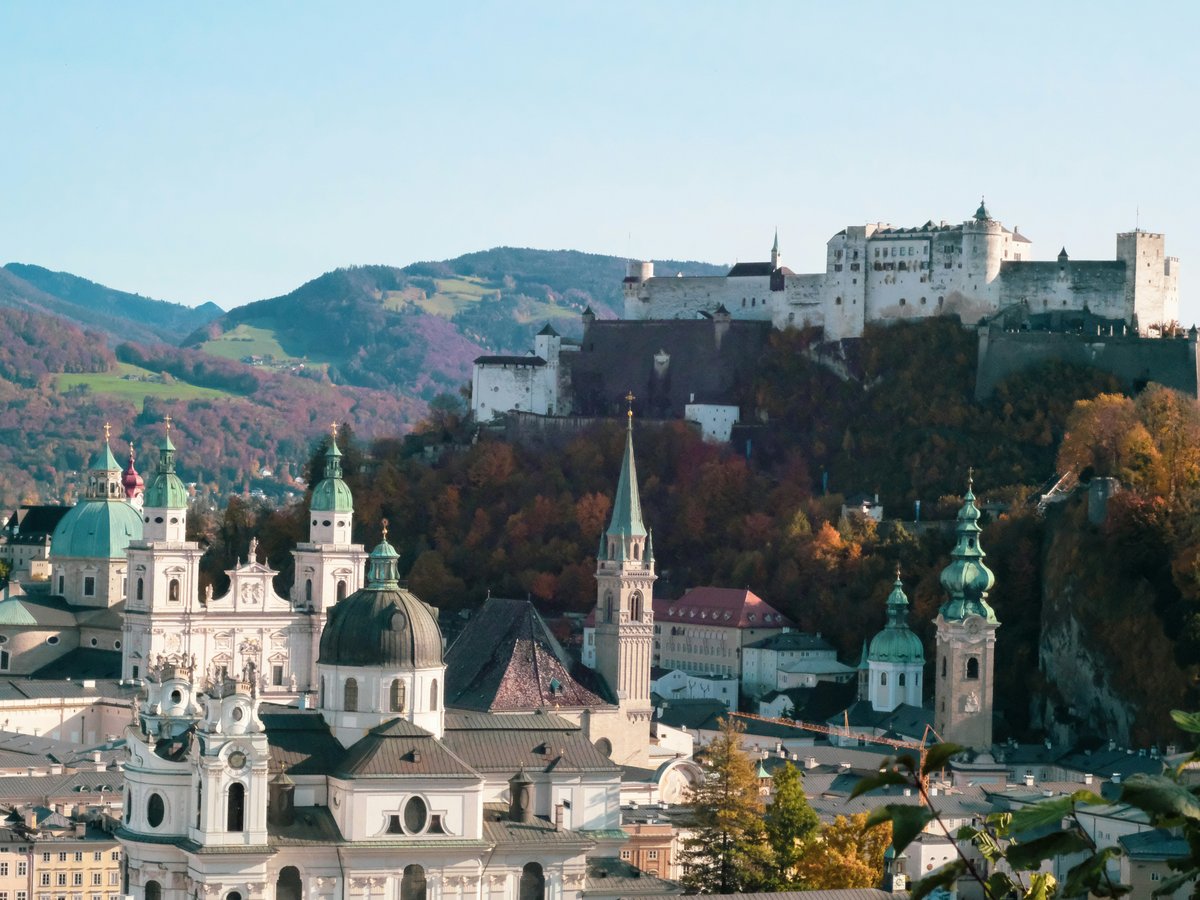
What cultural etiquette should I know for Salzburg?
Salzburg runs on 'Grüß Gott' (not 'Hallo'), punctuality, and quiet Sundays. Tip 5-10% in restaurants by rounding up. Cover shoulders and knees inside Salzburg Cathedral and the other churches across the Altstadt. Skip Sound of Music references with locals. Evening noise draws real complaints, even from hotel neighbors.
The greeting that matters in Salzburg is 'Grüß Gott,' not 'Guten Tag.' Use it when you walk into any shop on Getreidegasse, any bakery in Maxglan, any Tabak-Trafik in Lehen. 'Guten Tag' marks you as a German tourist, which is fine but earns a mild internal eye-roll from Salzburgers who take their Austrian identity seriously. Among younger people, 'Servus' works for both hello and goodbye. A firm handshake and direct eye contact are the standard when meeting someone for the first time. Look away during a toast and you might hear about it. Punctuality is non-negotiable. If you're meeting someone at 14:00, arrive at 13:55. Five minutes late feels rude here in a way it wouldn't in Rome or Barcelona. Address strangers and older people as 'Sie' (formal you), never 'du,' until they suggest the switch themselves.
At Stiftskeller St. Peter, which has been serving food since 803, you'll notice the waiter won't bring the bill until you ask. Say 'Zahlen, bitte' and they'll come to your table with a leather folder. Tip by rounding up or adding 5-10%. On a €34 meal, say 'Vierzig' (forty) as you hand over the cash, and the waiter pockets the difference. Never leave coins scattered on the table the way you might in New York. Credit card tipping is still awkward at smaller Gasthäuser along the Salzach, so carry some euro coins. Lunch has its own ritual. Colleagues and strangers at shared Stammtisch tables greet each other with 'Mahlzeit' around noon. Return it if someone says it to you at a Würstelstand near Hanuschplatz, where the smell of grilled Bosna sausages with curry powder and onions hangs in the air year-round.
The Sound of Music is the elephant in every room Salzburg won't acknowledge. The 1965 film put the city on the global tourist map, and about 300,000 visitors a year still take the bus tour through Mirabell Gardens and past Schloss Leopoldskron. Most Salzburgers have never watched it. Bringing it up tends to produce a polite smile and a subject change. It's not offensive. It's tiring. During the Salzburg Festival, which runs from late July through August, the city's social temperature rises. Performances at the Großes Festspielhaus and Haus für Mozart draw crowds in formal evening wear. You won't be turned away in clean dark jeans and a blazer, but shorts and sneakers at a Festspiel performance would feel wrong. The smell of wool suits and perfume fills the Hofstallgasse on performance nights. Champagne during the interval on the Festspielhaus terrace runs about €12 a glass.
Sundays in Salzburg are still observably quiet. Most shops close. Supermarkets close. The Hauptbahnhof Spar is one of the few exceptions. Mowing a lawn, drilling, or running a washing machine audibly on a Sunday afternoon will earn a neighbor's knock or a formal complaint. Ruhezeit runs from 22:00 to 06:00 on weekdays and all day on Sundays and public holidays. This matters for tourist behavior too. Loud conversations on Linzer Gasse after midnight, slamming apartment doors, dragging rolling suitcases over cobblestones at 5:00 before an early flight from Salzburg Airport. Locals hear all of it. The city has about 157,000 residents, and the Altstadt has been a UNESCO World Heritage Site since 1996. People live in these buildings.
Cultural norms
Greet people with "Grüß Gott" rather than "Hallo": it is the standard in Salzburg and across Austria, used in shops, restaurants, and on the street. A firm handshake accompanies introductions, and you should use "Herr" or "Frau" with the surname until invited to switch to first names. When entering smaller shops or a doctor's waiting room, acknowledge everyone present with a spoken "Grüß Gott"; walking in silently reads as rude.
Inside the Salzburg Cathedral and the Nonnberg Abbey, cover your shoulders and knees: shorts and tank tops will get you turned away. The Festspielhaus during festival season expects evening dress for premieres: dark suits or gowns, though matinees are more relaxed. On buses and the Obus trolleybus network, validate your ticket before boarding or face a fine from plainclothes inspectors. Seats near the door are reserved for elderly and disabled passengers, and locals will correct you if you fail to yield them.
Round up restaurant bills to the nearest euro or add roughly ten percent, stated aloud when paying: say "Stimmt so" to indicate the total includes your tip. Cash is still preferred at smaller Gasthäuser and market stalls along the Grünmarkt. The surest ways to offend are jaywalking on a red pedestrian signal, which Austrians consider genuinely antisocial, and making any casual reference to Austria as part of Germany.
Greetings
Say 'Grüß Gott' (sounds like 'Grews Got') when entering any shop, café, or doctor's office. 'Guten Tag' reads as German, not Austrian. 'Servus' works among friends for hello and goodbye both. Handshakes are firm with direct eye contact during introductions. At shared lunch tables, 'Mahlzeit' is the standard noon greeting between strangers.
Don't do this
- Saying 'Guten Tag' instead of 'Grüß Gott.' Salzburgers hear it as 'I think you're Germans,' and they are not.
- Bringing up The Sound of Music and expecting enthusiasm. Most Salzburgers have never seen the 1965 film.
- Leaving tip money scattered on the table. State the rounded-up total directly to the waiter when paying.
- Making noise during Ruhezeit or on Sunday afternoons. Your Airbnb host will hear from the building's Hausverwaltung the next morning.
- Jaywalking at pedestrian crossings in the Altstadt. Salzburgers wait for the green signal and visibly disapprove of those who don't.
- Entering a small shop or bakery without greeting the owner first. Walking in silently and browsing feels rude.
- Wearing shorts or flip-flops to a Salzburg Festival performance at the Großes Festspielhaus or Haus für Mozart.
- Photographing monks or nuns at Stift Nonnberg or Erzabtei St. Peter without asking. Both are active religious communities.
- Using 'du' (informal you) with strangers or older people before they offer the switch to first-name terms.
- Sitting at a marked Stammtisch at places like Augustiner Bräustübl in Mülln without being invited by the regulars already seated.
Tipping
Rounding up is the norm, not American-style percentage tips. State the total you want to pay directly to the waiter rather than leaving change on the table. Cafés expect rounding to the nearest euro. Hotel porters get €1-2 per bag. Taxi drivers get a rounded-up fare.
Dress code
Shoulders and knees covered inside Salzburg Cathedral and all Altstadt churches. Stift Nonnberg enforces this at the door. Festival performances at the Großes Festspielhaus expect smart casual at minimum, formal for premieres. Hiking gear is fine on Mönchsberg trails, not in Café Tomaselli.
Religious norms
Salzburg Cathedral, founded in 701, holds regular Mass at 10:00 on Sundays. Don't enter during services as a sightseer. Silence in all churches. Photography is often restricted in side chapels at Franziskanerkirche during prayer hours. Stift Nonnberg is an active Benedictine convent with areas closed to visitors entirely. Church bells ring at 7:00, 12:00, and 18:00 across the Altstadt. They mark the hours, not decoration.
Last verified by automated review (v1.7.2) on . What is automated review?