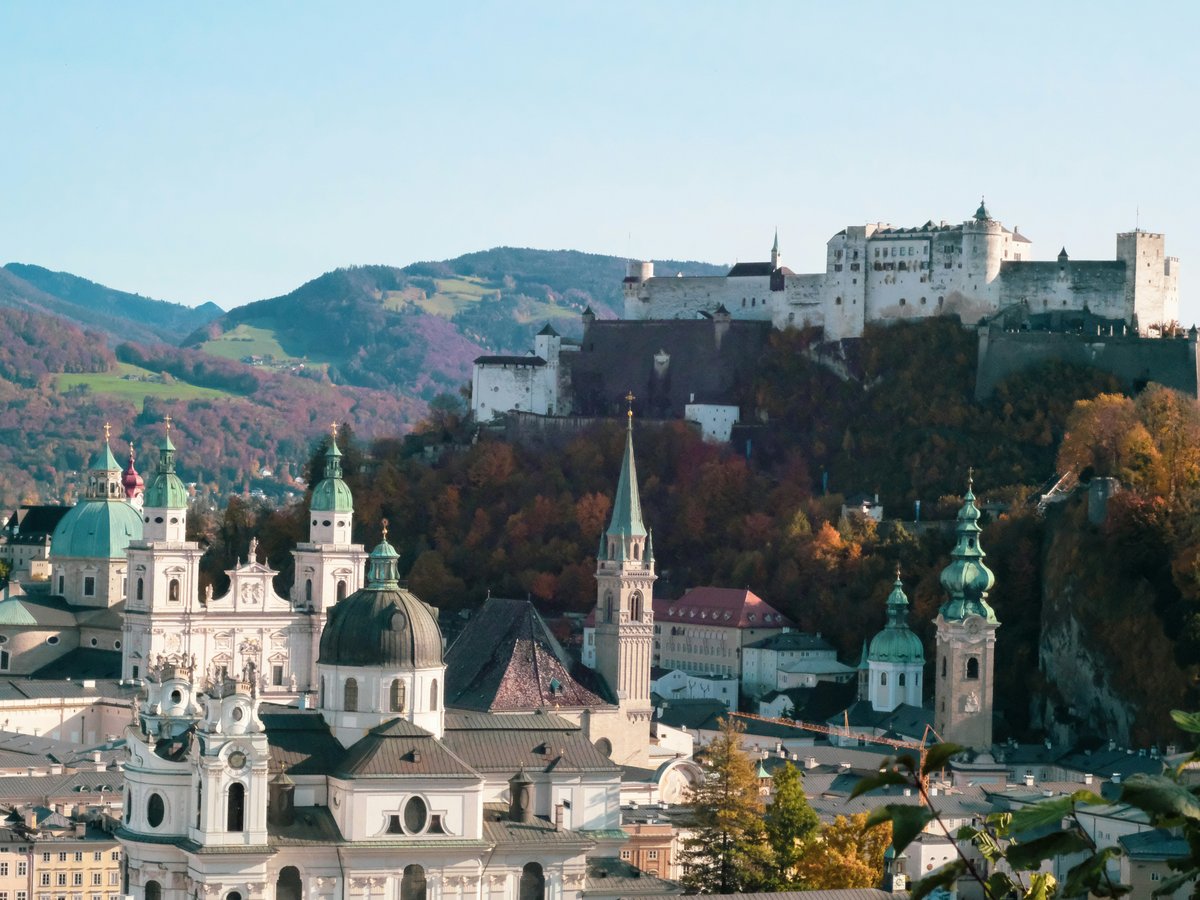
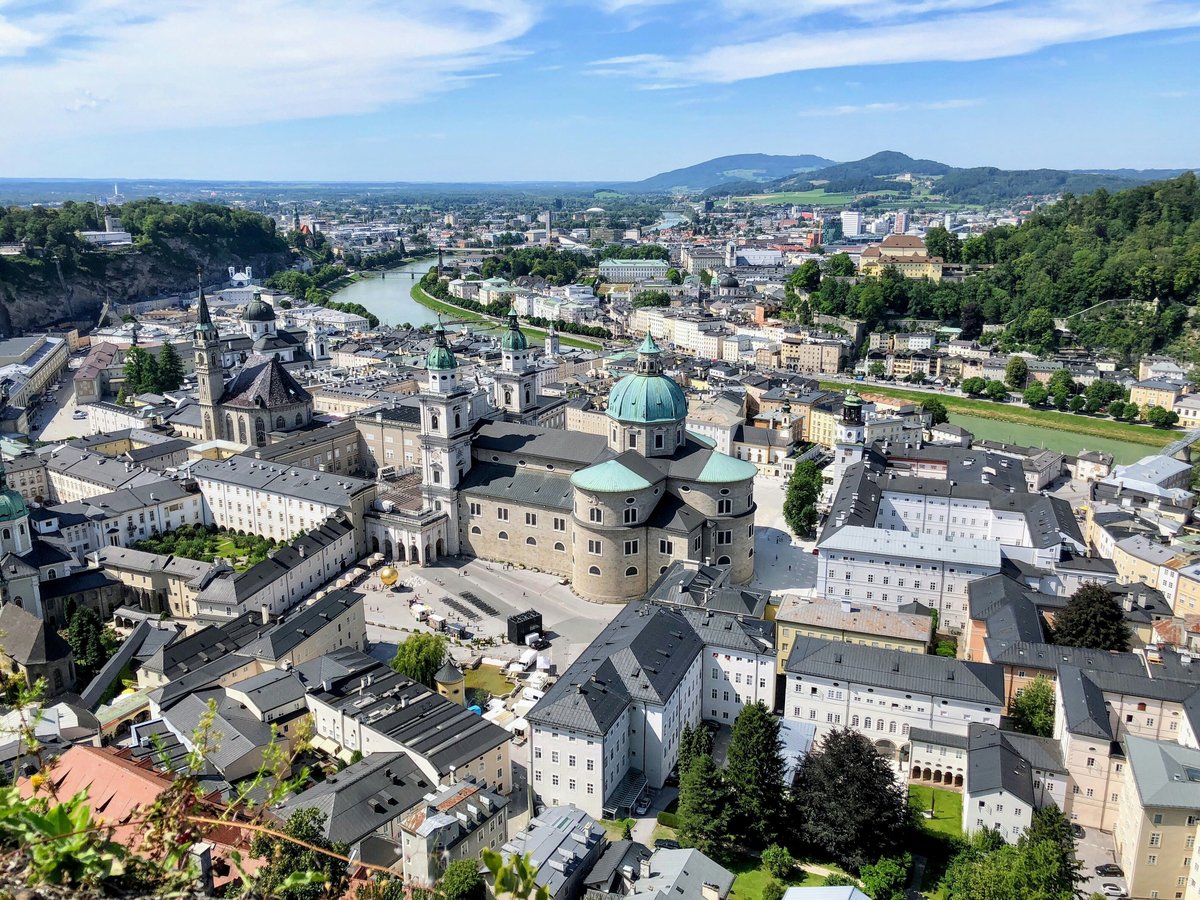
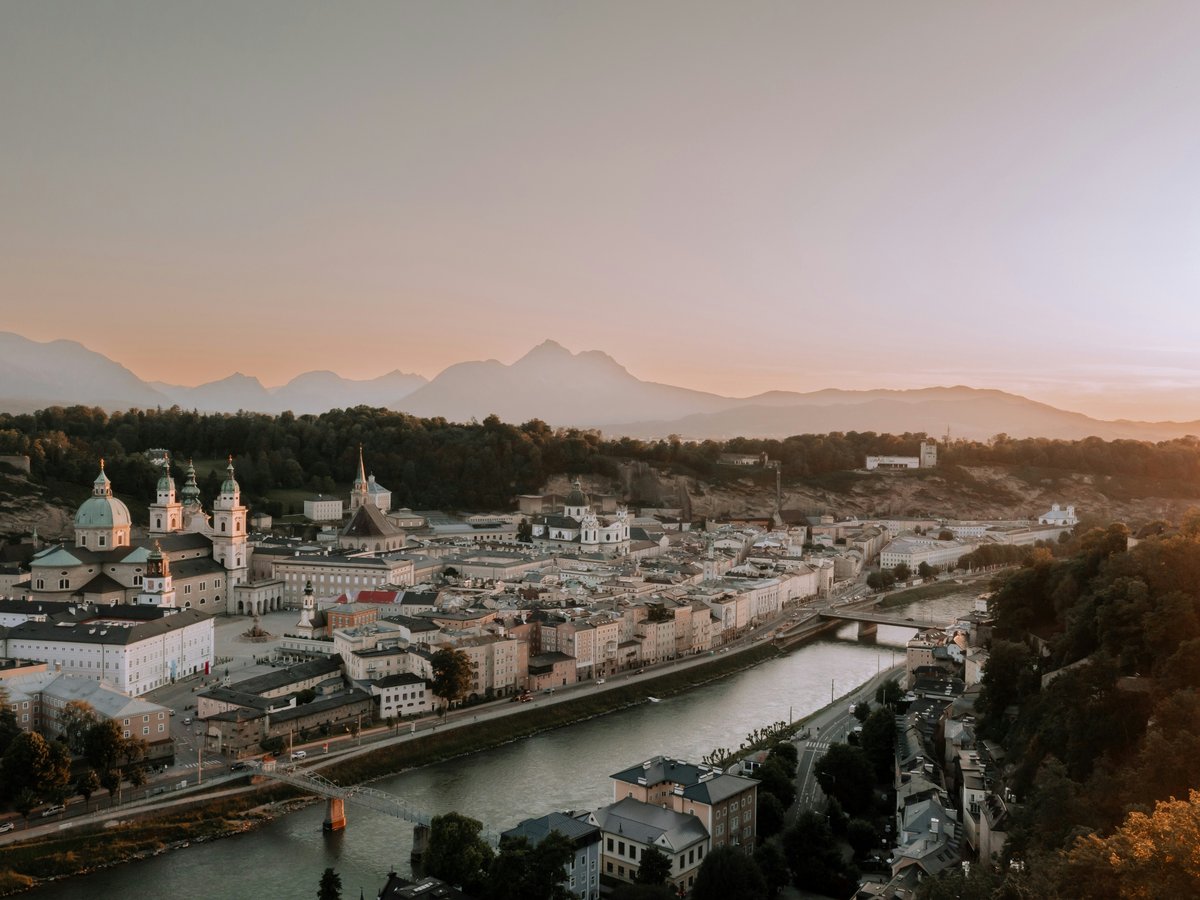
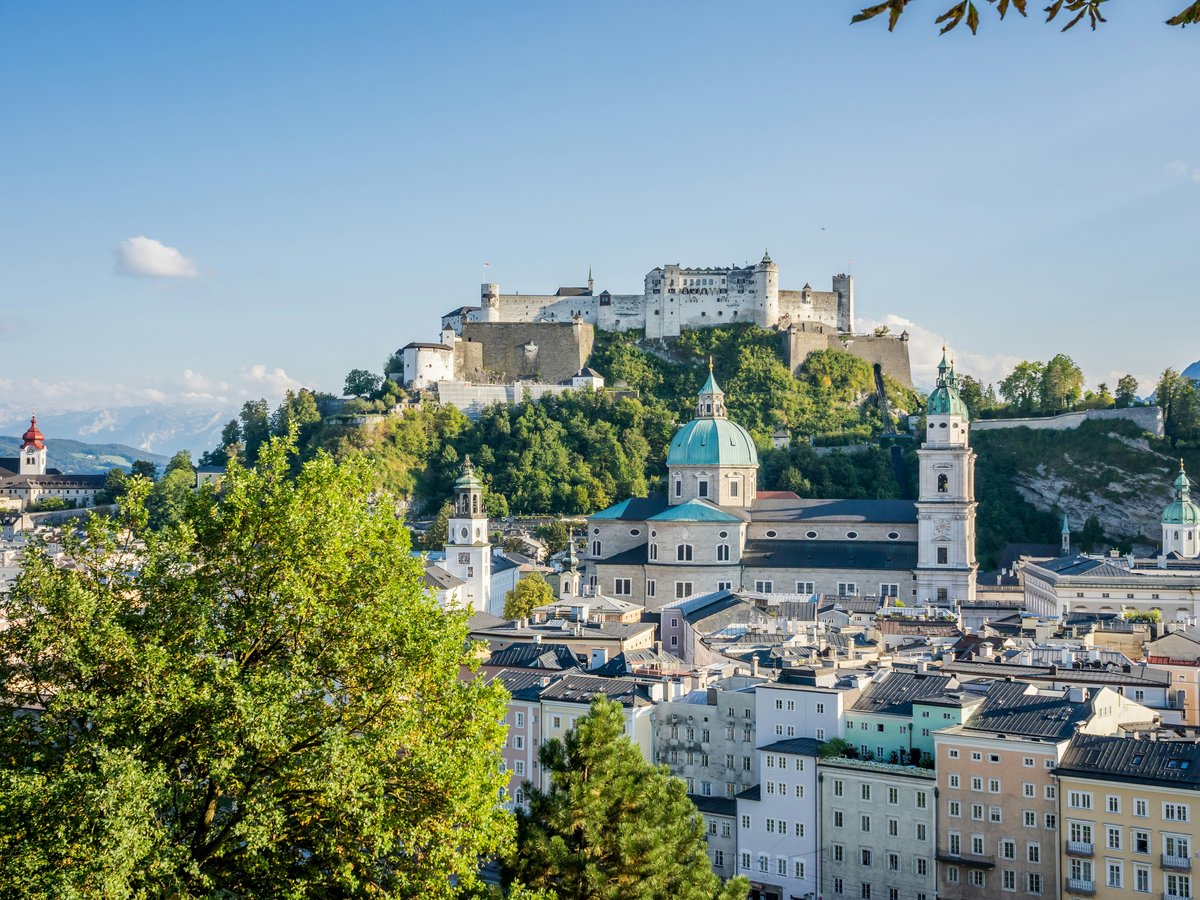
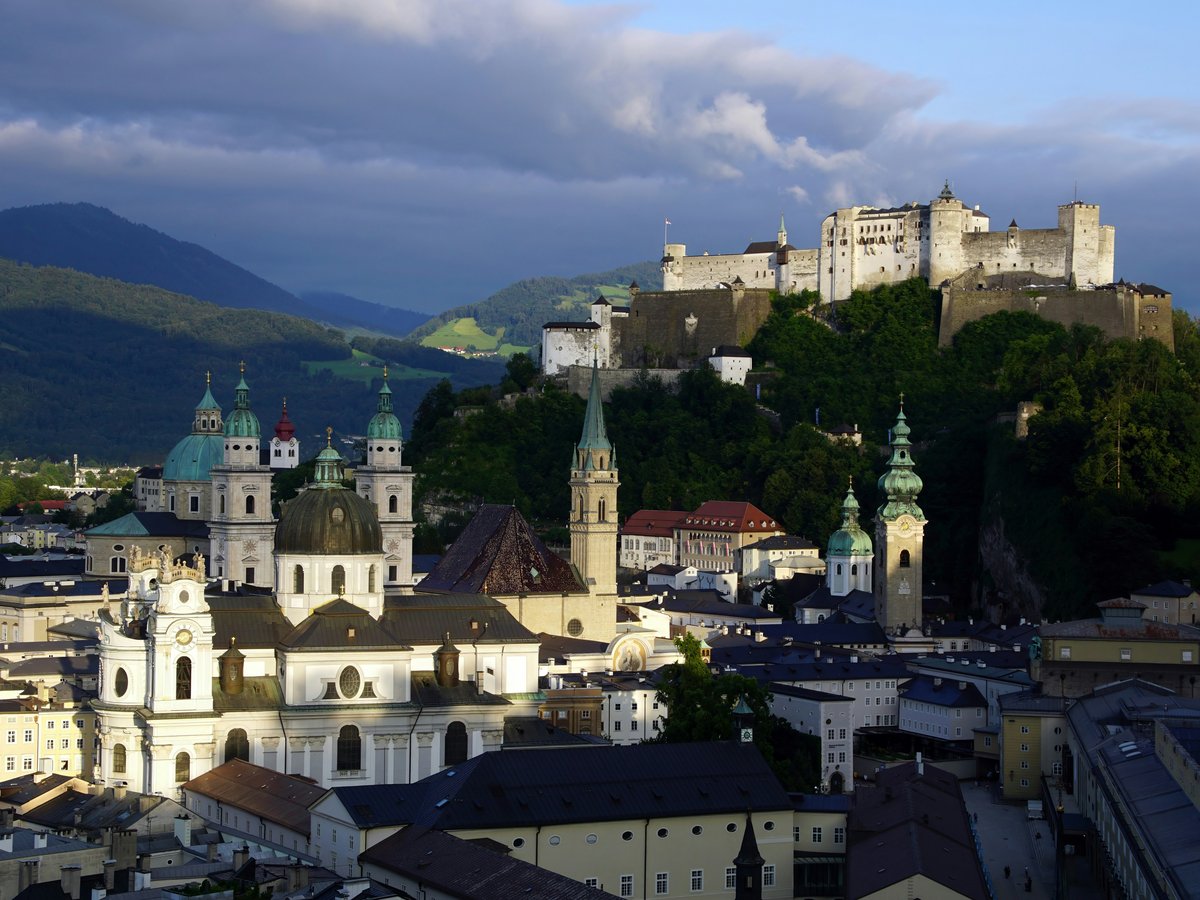
Salzburg sits in a narrow Alpine valley where the Salzach River cuts between two ridges (the Mönchsberg to the west, the Kapuzinerberg to the east) and the Hohensalzburg fortress crowns the southern bluff, a limestone anchor watching over the city since 1077. It is one of Europe's largest intact medieval fortifications, and it sets the tone for a city of roughly 155,000 that feels at once monumental and walkable. The Altstadt, pressed between river and cliff, is small enough to cross in fifteen minutes on foot, and the Getreidegasse's wrought-iron guild signs still hang above the shops that have operated under them for centuries. Mozart was born at number 9 in 1756, and while locals have a complicated relationship with the tourism that fact generates, the city's musical identity runs deeper than one composer: the Salzburg Festival, held every summer since 1920, fills the Felsenreitschule and Großes Festspielhaus with opera and concerts that draw audiences worldwide. Cross the Staatsbrücke to the right bank and you enter a different mood: the Linzergasse is quieter, more residential, and the Kapuzinerberg trail behind it offers a steep climb to views that make the city's geography legible in a way no map can. Further out, Nonntal and Leopoldskron feel like small Austrian towns absorbed into the city's edges, their pace unhurried even in festival season. The cuisine leans hearty and alpine: Salzburger Nockerl, a soufflé baked into three peaks meant to echo the surrounding mountains, is the local signature, and the Stiftsbäckerei near St. Peter's Abbey has been baking bread since at least the twelfth century. Winter brings Christmas markets to the Domplatz and Residenzplatz, where mulled wine and woodsmoke mix with cold air rolling off the Untersberg, the mountain that dominates the southern horizon and marks the German border just eight kilometres away.
Salzburg in photos
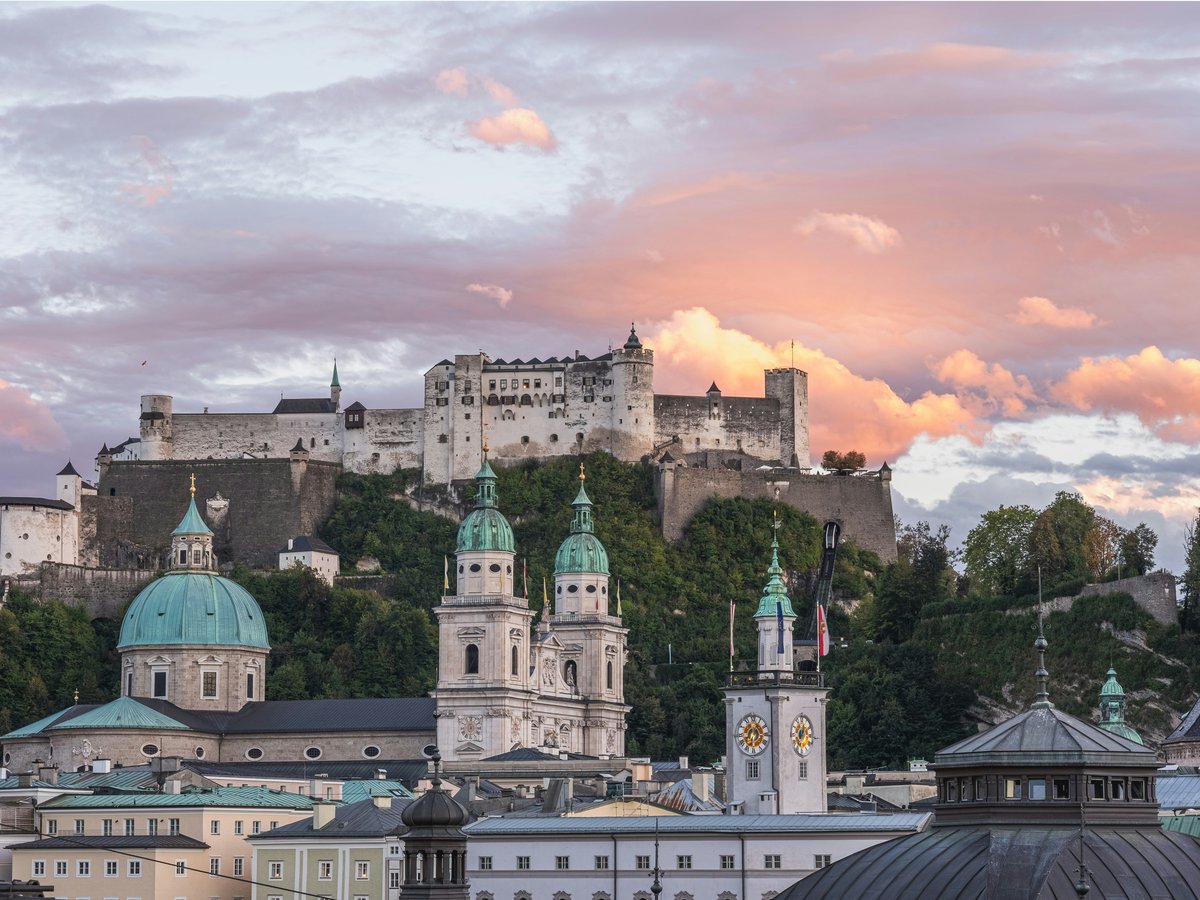
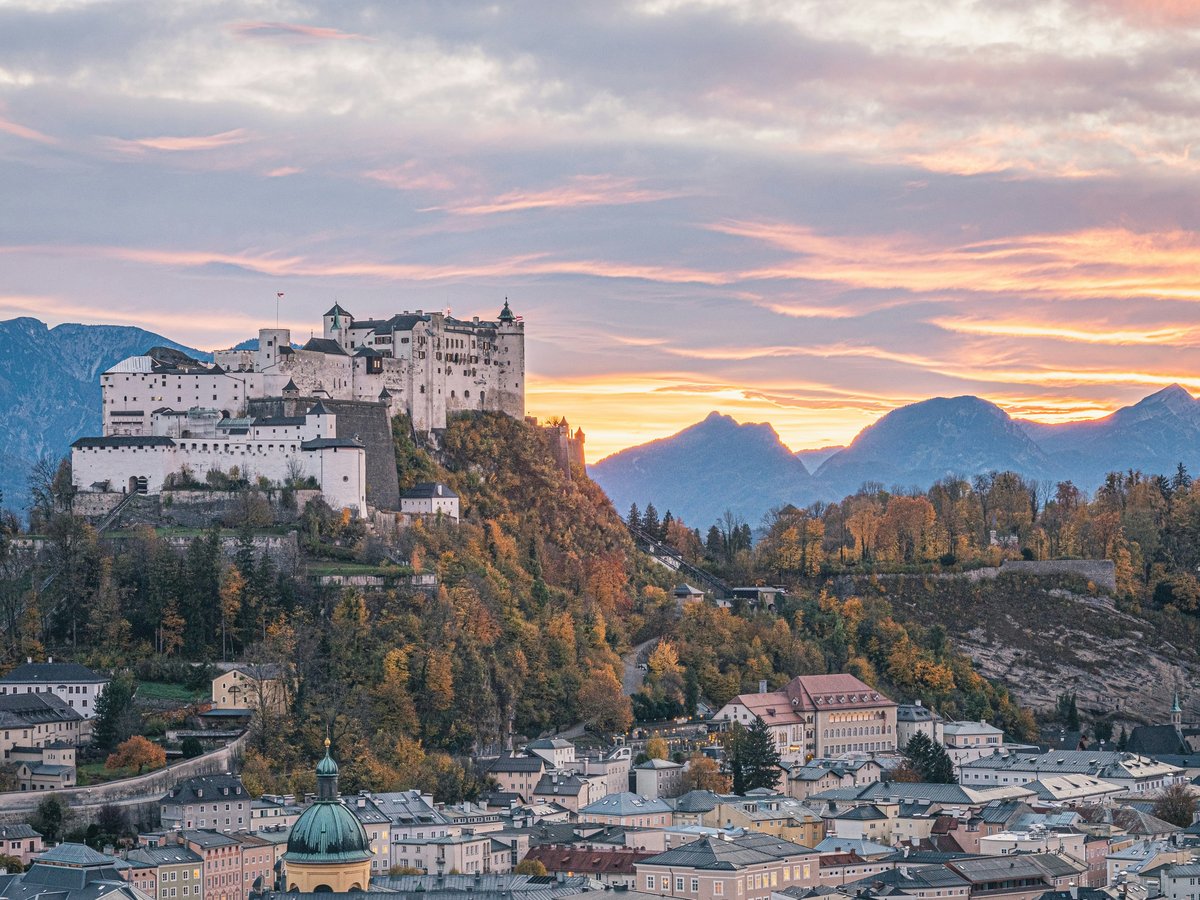
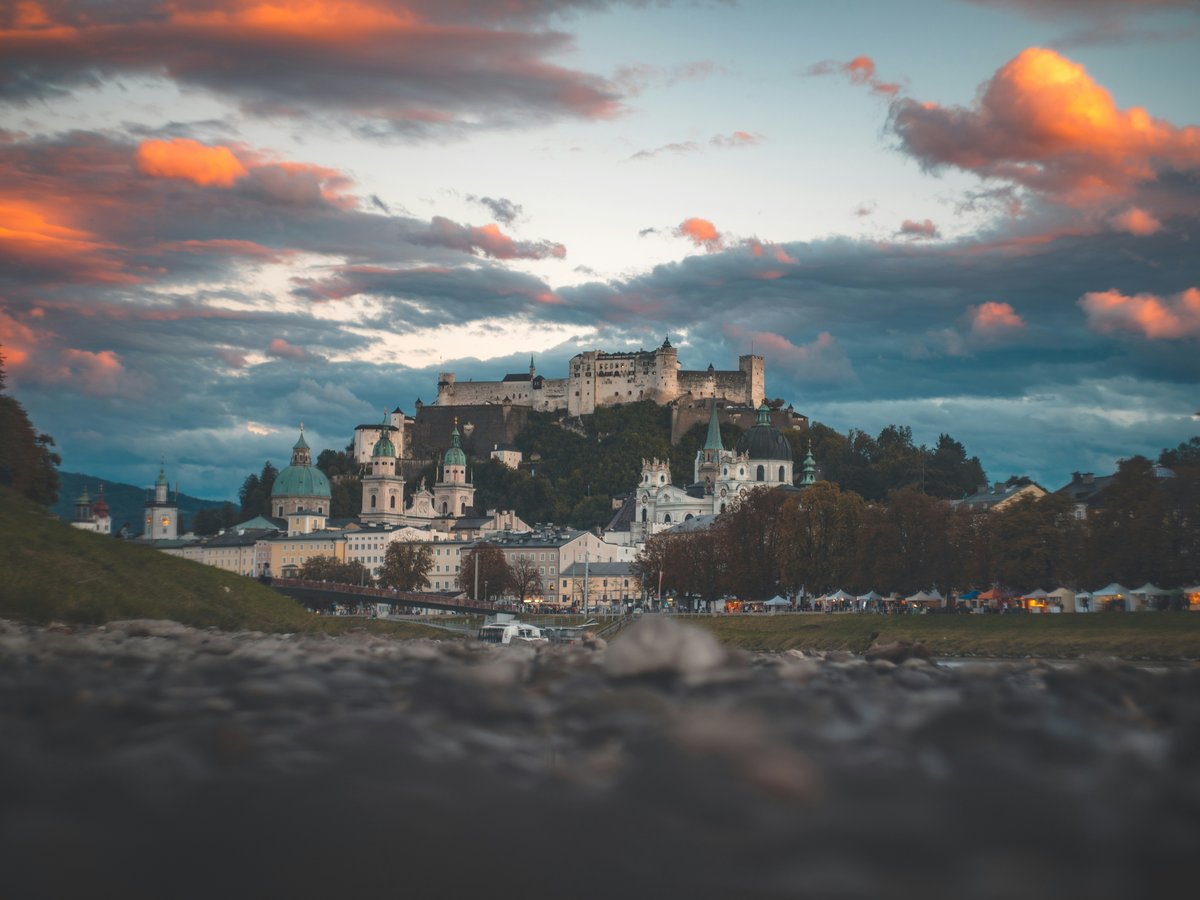
Salzburg right now
Answers about Salzburg
-
Airport to city
Trolleybus Line 2 runs from Salzburg Airport (SZG) to the city center in about 20 minutes for €2.20 ($2.50), with service roughly every 10-20 minutes from 5:30am to 11pm. The airport is only 5.5 km from the Altstadt. After the last bus, a metered taxi costs €15-20 and takes 15 minutes.
Read the full answer → -
Best time to visit
May, June, and September give you Salzburg at its best. Summer temperatures sit around 20-24°C, rain is less frequent than the July-August peak, and the queues at Hohensalzburg Fortress stay under 20 minutes. If the Salzburg Festival matters to you, book late July or August and accept the crowds.
Read the full answer → -
Cost per day
Budget travelers can hold Salzburg to about €50/day ($57). That covers a hostel dorm at YOHO International for €28, Bosna sausages from Balkan Grill for €4.50, and bakery breakfasts around €3. Walking covers most of the compact Altstadt. Midrange lands at €130/day ($148) with sit-down restaurants and paid museums. Luxury runs €400+/day ($455+) at hotels like Sacher Salzburg.
Read the full answer → -
Cultural etiquette
Salzburg runs on 'Grüß Gott' (not 'Hallo'), punctuality, and quiet Sundays. Tip 5-10% in restaurants by rounding up. Cover shoulders and knees inside Salzburg Cathedral and the other churches across the Altstadt. Skip Sound of Music references with locals. Evening noise draws real complaints, even from hotel neighbors.
Read the full answer → -
Best day trips
Königssee in Berchtesgaden (30 km, 50 minutes on bus 840 from Salzburg Hbf) is the strongest single-day pick. The electric boat crosses water clear to 12 meters. Werfen's Eisriesenwelt ice cave and Hohenwerfen castle split well for couples with different energy levels. Hallstatt is doable but needs a pre-7am departure to beat the tour-bus crush.
Read the full answer → -
Digital nomads
Salzburg scores 5.2/10 for digital-nomad suitability (sourced from TTDI's editorial rubric). Fibre broadband is solid in most apartments, but the city has only about 3 coworking spaces for 157,000 residents. Costs run high for what you get, and Austria has no digital-nomad visa, so non-EU stays hit the 90-day Schengen wall without a residence permit.
Read the full answer → -
Family-friendly
Salzburg scores 8.2/10 for family friendliness (see the TTDI Family-Friendliness Index). The Altstadt is flat, compact, and mostly car-free, so walking with kids under 5 works without exhaustion. A funicular eliminates the Hohensalzburg climb. Strollers handle most sidewalks, though some flagstone lanes give small wheels trouble. Austrian kitchens accommodate picky eaters without fuss.
Read the full answer → -
Food culture
Salzburg's food culture runs on alpine dairy, pork, and freshwater fish from the region's lakes. Breakfast starts around 8:30am with bread rolls and coffee at a Konditorei. The Grünmarkt at Universitätsplatz operates as the city's morning produce market. Signature plates include Salzburger Nockerl, Kasnocken, and the Bosna, a curry-dusted bratwurst in a white roll.
Read the full answer → -
Getting around
Walk. Salzburg's Altstadt covers barely 800 meters from Getreidegasse to the Cathedral, and your feet handle 90% of a first visit. The Obus trolleybus network fills the gaps for about €2.20 a ride. A 24-hour transit pass runs €6 for trips to Schloss Hellbrunn or Hangar-7. No metro.
Read the full answer → -
How to get there
Salzburg Airport (SZG) sits 4 km west of the Altstadt, but most transatlantic visitors land at Munich (MUC), 180 km north, then take a 2-hour train to Salzburg Hauptbahnhof. From London, Eurowings and Ryanair fly direct to SZG for €40-150. Vienna (VIE) connects via 2.5-hour ÖBB Railjet.
Read the full answer → -
Is it safe?
Salzburg scores 8.7 out of 10 on TTDI's solo-traveler safety index (see the TTDI Solo-Safety Index). Violent crime against visitors is near zero. The real risks are bicycle collisions on shared paths along the Salzach, pickpocketing near Getreidegasse during July and August festival crowds, and slippery cobblestones after rain. Call 112 for any emergency.
Read the full answer → -
Language basics
German, specifically Austrian German with a Bavarian-Alpine dialect in casual settings. English proficiency in tourist zones around Getreidegasse and Mozartplatz sits around 7 out of 10. 'Grüß Gott' replaces the standard German 'Guten Tag' here, and using it at shop counters and restaurant doors changes the temperature of every interaction. The Latin script means you can read all signs and menus.
Read the full answer → -
Layover guide
Yes. Salzburg Airport sits 4 km west of the Altstadt, and Bus 2 reaches Hauptbahnhof in about 19 minutes for €2.50. With 5 hours between flights, solo travelers can walk Getreidegasse, see the cathedral founded in 701, and eat a proper Nockerl before heading back. Under 5 hours, stay airside or try the free Hangar-7 on the airport perimeter.
Read the full answer → -
LGBTQ-friendly
Salzburg scores 8.5/10 for LGBTQ+ friendliness (sourced from TTDI's editorial rubric). Same-sex couples walk the Altstadt and Mirabell gardens without issue. The dedicated queer scene is small, anchored by a few loyal venues, but the city's restaurants and wine bars are broadly welcoming. Rural Salzburgerland is more reserved, though not hostile.
Read the full answer → -
Where locals go
Salzburg locals drink at Augustiner Bräustübl in Mülln, shop the Thursday Schranne market at Mirabellplatz from 5am to 1pm, and eat at Die Weisse brewery in Elisabethvorstadt. The tourist crowd concentrates in the Altstadt. For remote workers staying a month or more, Lehen and Maxglan have the grocery stores, laundromats, and residential quiet you need.
Read the full answer → -
Must-see
Hohensalzburg Fortress, not the Mozart museums. The 1077 fortress sits 120 metres above the Altstadt on Festungsberg, and from its Reckturm watchtower you can see into Bavaria. Take the Festungsbahn funicular from Festungsgasse. The Mozart house on Getreidegasse is worth an hour, but the fortress is the thing that makes Salzburg Salzburg.
Read the full answer → -
Solo travel
Salzburg scores 8.7/10 for solo-traveler safety (see the TTDI Solo-Safety Index). The Altstadt is compact enough to walk end-to-end in 15 minutes, so you never depend on night buses. Most hotels charge double-room rates regardless of occupancy, but private-room hostels start under €40. Plan your first evening at Augustiner Bräustübl in Mülln, where communal tables fill with strangers who talk to each other.
Read the full answer → -
This week
Salzburg runs on a compact weekly loop. The Grünmarkt at Universitätsplatz opens Monday through Saturday mornings for local produce and bread. Thursday adds the Schranne farmers' market near Mirabellplatz. Weekday mornings before 10am are the window for Hohensalzburg Fortress and Mozart's Birthplace on Getreidegasse, before tour groups fill both sites. Sunday the city goes quiet.
Read the full answer → -
3-day itinerary
Day 1 covers the left-bank Altstadt on foot, from Salzburg Cathedral and Hohensalzburg Fortress to Mozart's birthplace on Getreidegasse. Day 2 crosses the Salzach to Mirabell Palace, the Mönchsberg ridge, and Augustiner Bräustübl. Day 3 heads south to Hellbrunn Palace's trick fountains and the Untersberg cable car at 1,853 metres. About 20 kilometres on foot across three days, with Day 3 adding bus and cable car.
Read the full answer → -
What to avoid
Skip the overpriced Getreidegasse Mozart chocolate shops, the Fiaker horse carriages at Residenzplatz (€50+ for 20 minutes), and any restaurant on Alter Markt with a photo menu. The Sound of Music bus tours vary wildly in quality. Walk up to Hohensalzburg Fortress rather than queuing 40 minutes for the funicular in July and August.
Read the full answer → -
What to pack
Pack walking shoes that grip wet cobblestones. Salzburg's Altstadt is all uneven stone, and the path to Hohensalzburg Fortress climbs 120 meters. Bring layers for 12-27°C summer shifts, a packable rain jacket for afternoon alpine storms, and a Type C/F adapter for 230V outlets. Skip the umbrella and buy one locally for €5.
Read the full answer → -
Where to stay
Stay on the right bank of the Salzach, around Linzer Gasse or near Mirabell Palace. You're a 5-minute walk across the Staatsbrücke to Mozart's birthplace and Salzburg Cathedral, but rooms run $30-50 less per night than left-bank Altstadt hotels. Budget $100-170 for a mid-range double in summer, or $160-250 on the left bank.
Read the full answer →
Deep guides for Salzburg
-
Salzburg With Kids: What Works
Salzburg earns an 8.2 for families, but the score papers over a meltdown trap on Getreidegasse and buries an under-rated winner 6 km south at Hellbrunn. This is the itinerary shape that survives children under 8.
Read the guide → -
Best Time to Visit Salzburg, by Season
Salzburg's temperature range runs from January's -2.7°C lows to July's 24.7°C highs, a 27.4-degree spread that creates five distinct travel windows. This month-by-month verdict names the single best window for each kind of traveller, built from 5-year daily-observation averages.
Read the guide →
Curated lists for Salzburg
accommodation
-
Best boutique hotels
Salzburg splits its hotel inventory across the Salzach River and then climbs into the surrounding hills, and the neighborhood you pick shapes whether you walk to the Getreidegasse or drive to a lake. The Altstadt, pinned between the river and the Mönchsberg cliff, puts Mozart's birthplace and the Festung Hohensalzburg cable car within a few blocks, but the lanes are narrow and noise carries after dark. East of the Hauptbahnhof, Elisabeth-Vorstadt and Schallmoos offer transit-first pricing: the station is close, the old town is a tram ride away, and rates drop. Southwest across the river, Riedenburg trades tourist density for residential quiet and the Stiegl brewery's beer garden. Further out, Heuberg and Krauthügel sit on elevated ground with alpine panoramas and lake access, but they demand a car or patience with infrequent buses. Hagenau, tucked between the station zone and the Salzach, splits the difference: walkable to Mirabell Gardens, priced below the Altstadt, and quiet after the shops close. The city is compact enough that even the outer neighborhoods reach the old town by bus in a short ride, so the real question is not distance but pace: cobblestones and crowds, or hillside calm and a parking spot.
See the picks → -
Best hostels
Salzburg's budget accommodation spreads along a crescent north and west of the Altstadt, anchored by the Hauptbahnhof and threaded by the city's bus network. The Old Town prices out most hostel travelers; the neighborhoods that ring it are where the real value sits. Elisabeth-Vorstadt lies closest to the station and the Altstadt's pedestrian zone, splitting its inventory between chain hostels and small hotels on quieter residential streets south of Rainerstraße. Lehen and Schallmoos stretch north, where conference venues and residential blocks keep nightly rates lower than anything on the river side. Riedenburg occupies the western slope below the Festung, connected to the Altstadt by the Neutor pedestrian tunnel. Sam, farther north along the #21 bus corridor, trades walkability for the lowest practical rates outside the center. Every area here is budget-tier; the question is not which neighborhood has the luxury flagship but which bus line gets you to Mozartplatz fastest, and whether you want to walk to the Altstadt or ride. The neighborhoods below anchor each area to a single pick that sets its price floor.
See the picks → -
Where to stay
Salzburg compresses its hotel inventory into a tight radius around the Salzach River, and that compression works in your favor. The Altstadt and the bastion quarter hug the left bank beneath the Festung Hohensalzburg, while Elisabeth-Vorstadt and Schallmoos spread east of the Hauptbahnhof on the right bank, where rates drop and rooms get larger. The practical split is simple: left bank for walking to Mozart's Birthplace and the cathedral without touching a bus, right bank for the station connection and budget beds. Neighborhoods like Lehen and Hagenau sit further from the postcard views but closer to residential Salzburg, where the bakeries serve locals, not tour groups. Riedenburg covers the western hillside, quieter and steeper, with a tunnel shortcut into the old town. Baderluck is a lake resort outlier, a different stay entirely. Price tiers overlap across most central areas; a budget room in Schallmoos and a suite on the bastion wall share the same tram network. The choice is not luxury versus budget. It is cobblestone versus commute, late cathedral bells versus early train departures.
See the picks →
attractions
-
Best free attractions
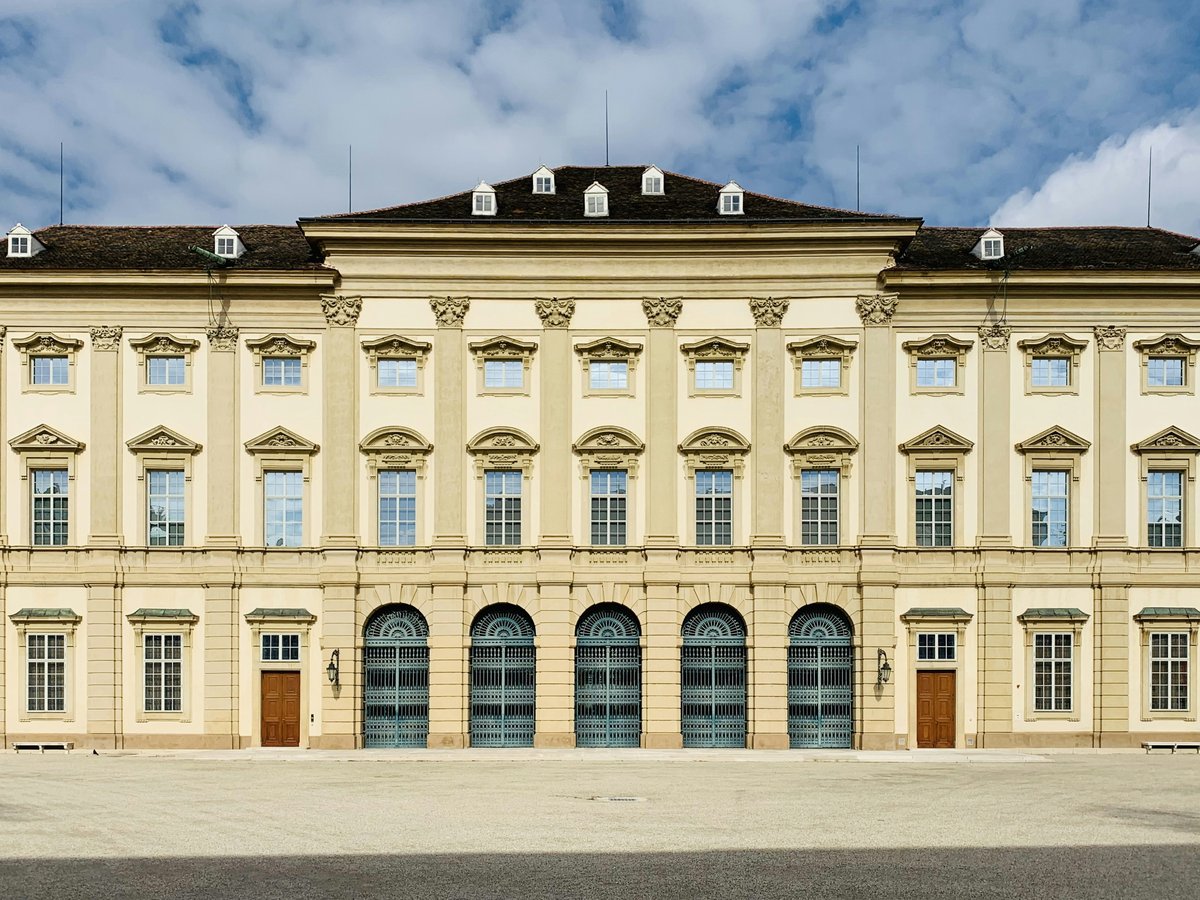
Salzburg's free hours are its best hours. The old city is compact enough that a morning on foot takes you across three of its four great squares without a ticket, a queue, or a guide waving a numbered paddle. What follows is not a checklist of things to tick off: it is four public spaces, all inside the old-city grid, that reward the walker willing to slow down and read the ground under their feet. Two are squares in the historic centre, one is a garden across the river, and one is a market street that has been a market street for longer than living memory. Skip the paid rooftop terraces and the ticketed viewing platforms; the city gives you plenty for nothing if you know where to look. These are for the traveller who would rather stand in a working square with a coffee than sit behind glass, and who understands that in Salzburg the free things are not the consolation prize: they are the point.
See the picks → -
Best museums
Salzburg's museum map is unusually compressed: a fortress on one hill, a modern-art house on another, a working residence in the middle, and the Mozart machinery threaded through the streets in between. Most of what matters sits inside a walkable core, which is both the appeal and the trap: visitors who only chase the Mozart-branded doors miss the quieter rooms where the city shows its hand. The list below reads Salzburg as a stack: the fortress and the archbishops' residence for the power layer, the two Mozart houses for the biography that pays the bills, the Museum der Moderne and the Zweig Centre for the twentieth-century argument that the city keeps trying to have with itself, and Hangar-7 and the Locomotive World on the edges for the industrial pilgrimage crowd. These twelve are ranked, but the ranking is a reading order, not a verdict: the fortress is unavoidable, the Bachschmiede is not, and both are here on purpose.
See the picks → -
Must-see attractions
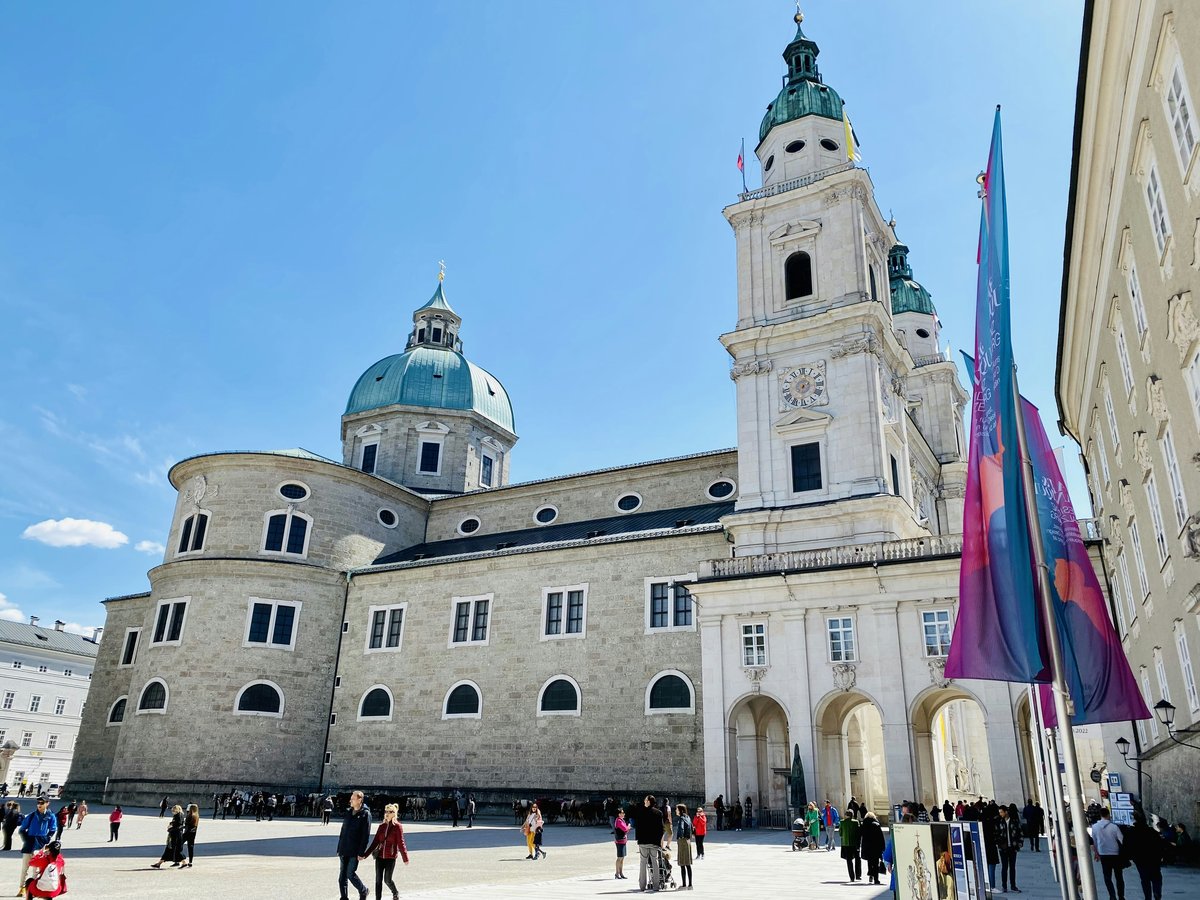
Salzburg's must-see list is not a greatest-hits reel of Mozart souvenirs and Sound of Music bus tours: it is a compact geography of churches, opera houses, and Alpine market towns that sit within an easy radius of the old city. What follows is twelve places worth the walk or the short drive: four working churches inside the Altstadt whose interiors reward a slow half-hour rather than a phone-camera pan, two opera houses on Hofstallgasse that between them carry the summer Festspiele, a lakeside palace on the southern edge of town, and a handful of Bavarian market municipalities across the German border that Salzburgers themselves treat as weekend habit. The list is opinionated on purpose. It skips the obvious fortress-and-fudge circuit that every guidebook front-loads, and it treats the cross-border villages (Bad Reichenhall, Berchtesgaden, Marktschellenberg, Bischofswiesen) as part of Salzburg's real hinterland, because on the ground, they are. Bring walking shoes for the Altstadt clusters and a rail or bus ticket for the Bavarian half. Every address, every coordinate, every website below is cited to a verified source; the opinions are ours.
See the picks →
food
-
Best cafes
Salzburg's cafe map is more honest than its postcards suggest. Alongside the Konditorei tradition (cake, cream, Mozartkugel) there is a working parallel city of coffee bars, breakfast counters, and small kitchens whose menus have nothing to do with Sound of Music tourism. The twelve rooms below span that whole range: a Peruvian kitchen inside a legacy Kaffeehaus on Franz-Josef-Straße, a vegetarian counter three doors down, a Schwarzstraße institution across the river from the Old Town, and an African-run espresso bar on Bürgerspitalplatz. One opens at 07:30 for the commuter crowd; another doesn't unlock the door until 14:00. They are ordered by how useful they are to a visitor who wants to eat and drink where the city eats and drinks, not by how many stars they've accumulated on aggregator sites. Addresses, hours and phone numbers are as they appear in OpenStreetMap; when a place has a website, we've linked it. Skip the queue at the obvious Getreidegasse windows and read on.
See the picks → -
Best restaurants
Salzburg's dining reputation runs on baroque cliché (the Mozart schnitzel, the Sound-of-Music dinner theatre, the cake windows in the tourist arcades), while the eating that matters happens in the working blocks of postal code 5020. This is a list of twelve restaurants there, all mapped, all still cooking (with one asterisk), all with a bias toward rooms that cook one thing well rather than everything for everyone. You will not find a Michelin tasting menu, and you will not find fake alpine kitsch. What you will find: a regional kitchen whose service runs to 02:00, a Thai room that has held to its cuisine, an Indian counter that outlasts fashion, a Mexican bar keeping a short menu, a diner that opens the nights it can staff, and a couple of one-cuisine specialists that take their single cuisine seriously. Rank order below is a local editor's judgement, not a Google score. The asterisk: one entry is currently closed for renovation. We included it anyway, because guides that quietly drop closed rooms turn into advertising sheets for whichever chains stayed open through the works.
See the picks →
Browse by traveler type
Book experiences in Salzburg
 Free cancellation
 Hallstatt Half-Day Tour from Salzburg
Day trip: 5.5 hours, free cancellation.
via Viator Free cancellation
 Skip-The-Line Salt-Mines and Bavarian Mountains Tour from Salzburg
Outdoor experience: 4 hours, free cancellation.
via Viator Free cancellation Salzburg Super Saver: Original Sound of Music and Salt Mines Day Trip
Day trip: 9.2 hours, free cancellation.
via Viator Free cancellation
 Public 8h tour to sites of "The Sound of Music Movie" & Hallstatt
Day trip: 8 hours, free cancellation.
via Viator Free cancellation
 Private Full-Day Tour of Hallstatt and Salzkammergut from Salzburg with Options
Day trip: free cancellation.
via Viator Free cancellation
 Private Tandem Paragliding Salzburg Mt Gaisberg
Outdoor experience: free cancellation.
via Viator Free cancellation
 Private Tour: Eagle's Nest and Bavarian Alps Tour from Salzburg
Outdoor experience: 4 hours, free cancellation.
via Viator Free cancellation
 The Hills Are Alive
Day trip: 8 hours, free cancellation.
via ViatorBrowse by interest
Find a flight to Salzburg
Live fares to Salzburg appear here once cookies are accepted.
Last verified by automated review (v1.7.2) on . What is automated review?