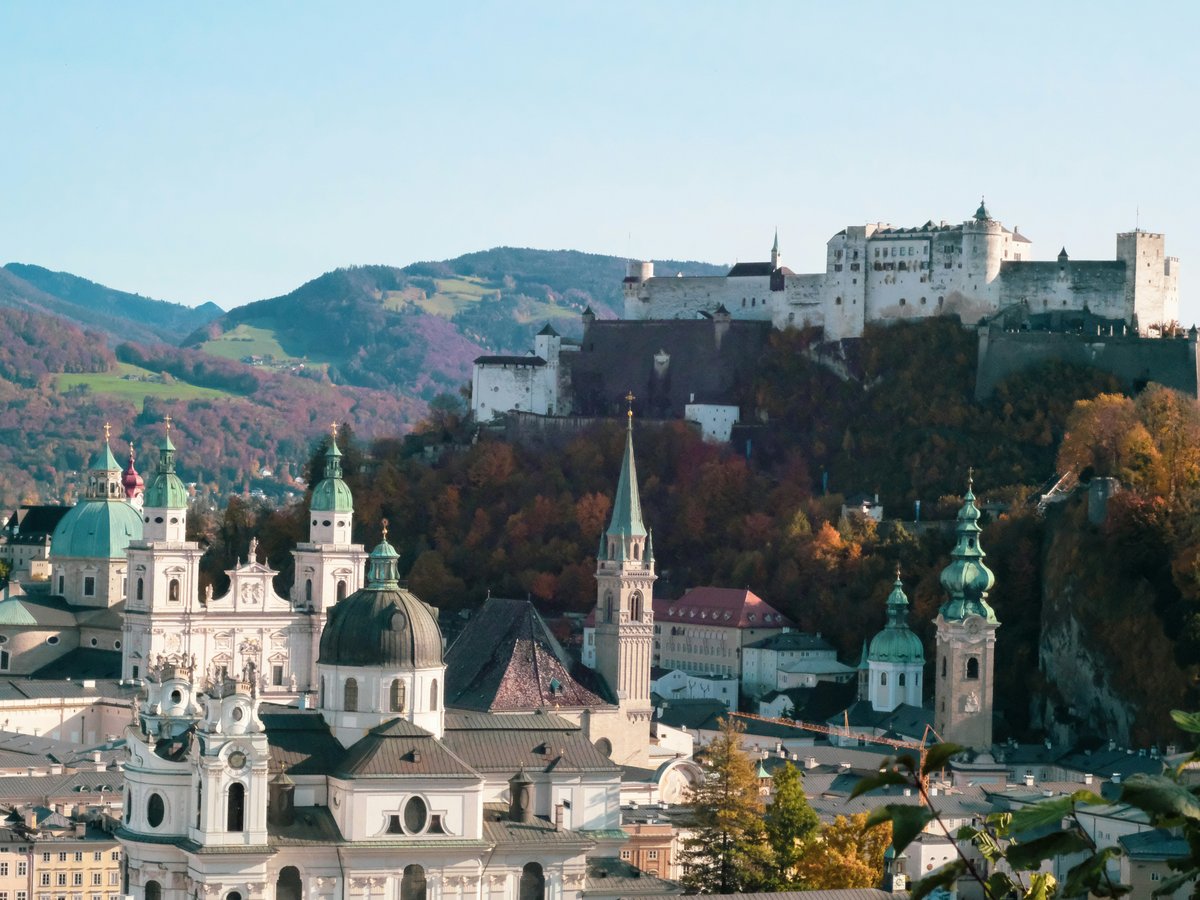
Salzburg tends to fly under the radar as a shopping city, overshadowed by Vienna's grand boulevards and Munich sitting only 90 minutes west by train. That said, the city has a compact, walkable core where you'll find things that are genuinely difficult to source elsewhere. Mozart merchandise is inescapable, yes, but look past the branded chocolate balls and Salzburg reveals a strong tradition of handcrafted goods. Dirndl and Lederhosen tailoring here still follows Salzburger Tracht conventions distinct from Bavarian or Tyrolean styles. The Altstadt's narrow lanes are lined with shops that have operated for decades, some for centuries. Getreidegasse alone has been a commercial street since the 1300s. Local specialties lean toward quality over quantity. Salzburger Nockerl baking mixes, handmade Mozartkugeln from Fürst (the original, dating to 1890), salt products from the Salzburg region's mines, and regional schnaps distilled from Williams pears or mountain herbs. Worth noting, the shopping here is compact enough that you can cover the main areas on foot in a single afternoon.
Shopping districts
-
Getreidegasse
mid-range to highThe old town's main commercial artery runs roughly 300 meters from Rathausplatz toward the Mönchsberg. The wrought-iron guild signs hanging above the shops date back centuries and remain a defining feature of the streetscape. International chains like Zara, H&M, and Swarovski have moved in over the years, but they sit alongside traditional shops selling Tracht clothing, handmade candles, and regional food products. The side passages (Durchhäuser) cut through to parallel streets and hide smaller boutiques. Foot traffic is heavy by midday, especially in summer when tour groups from Hellbrunn Palace and the Sound of Music circuit funnel through. If you want to browse without the crush, try arriving before 10 a.m.
Best for: Traditional crafts, Tracht clothing, and window shopping under the guild signs
-
Linzer Gasse
mid-rangeOn the right bank of the Salzach, Linzer Gasse runs north from the Staatsbrücke bridge. It feels noticeably less touristic than Getreidegasse, even though they're separated by only a 2-minute walk across the river. The mix skews toward independent boutiques, secondhand clothing stores, and a handful of vintage shops. You'll find more locals here doing actual errands. Rents are lower on this side, which tends to keep the smaller operators alive a bit longer. A few antique dealers operate toward the upper end of the street near the Sebastianskirche.
Best for: Independent boutiques, vintage finds, and a calmer browsing pace
-
Alter Markt and Residenzplatz area
highThe Alter Markt square sits at the heart of the Altstadt and still functions as something of a commercial anchor. The surrounding blocks hold specialty food shops, confectioners, and a few high-end fashion retailers. Fürst, the original Mozartkugel maker since 1890, has its main cafe and shop on the square. The side streets branching toward the Residenz tend to carry upscale Austrian and international brands. Mind you, the square itself is small enough that you could cross it in under a minute, but the density of interesting storefronts per square meter is probably the highest in the city.
Best for: Premium Austrian confections, specialty food, and high-end gifts
-
Europark
mixed, mostly mid-rangeSalzburg's largest shopping center sits about 4 kilometers south of the Altstadt, accessible by bus lines 1 and 8 from the Hauptbahnhof. It holds around 130 shops spread across multiple floors, anchored by the usual European department store and fashion chains. The architecture is modern, designed by Massimiliano Fuksas. Locals come here for the practical stuff. Electronics, sportswear, mainstream fashion at standard Austrian prices. It feels like a different city from the Getreidegasse tourist orbit, which is sort of the point.
Best for: Practical shopping, mainstream brands, and rainy-day browsing with covered parking
-
Kaigasse and Kajetanerplatz
mixedKaigasse runs south from the Alter Markt toward the Nonnberg abbey district. The street has a quieter, residential-adjacent feel compared to the main tourist streets. A number of small galleries, antique dealers, and artisan workshops have settled here. You might find handbound notebooks, ceramic work, or small-batch jewelry made in the Salzburg region. The foot traffic drops off noticeably, and that slower pace seems to suit the shops that have chosen this location. Prices vary widely depending on whether you're looking at gallery art or handmade soap.
Best for: Artisan workshops, galleries, antiques, and unhurried browsing
-
Franz-Josef-Strasse and Schallmooser Hauptstrasse
budget to mid-rangeThese two streets form a commercial corridor on the right bank, running roughly northeast from the Makartplatz area. This is where Salzburgers do their everyday shopping. Pharmacies, shoe repairs, hardware stores, and local bakeries line the route. A few specialty shops carry Austrian outdoor gear and regional sportswear. Tourist density drops to nearly zero here. The prices reflect a local customer base rather than a visitor one, and the shop owners tend to appreciate it when you try a few words of German.
Best for: Everyday local shopping, Austrian outdoor gear, and bakeries
Markets
-
Grünmarkt (Green Market)
foodSalzburg's main food market sets up on Universitätsplatz, right behind the Kollegienkirche. Vendors sell regional produce, mountain cheese from the Pinzgau and Pongau valleys, smoked meats, fresh bread, honey from Salzburger Land apiaries, and seasonal fruits. In autumn the stalls fill with pumpkins and Sturm (partially fermented grape juice). The smell of fresh Leberkäse and warm Bosna (Salzburg's signature spiced sausage in a white roll) hits you before you see the food stalls. This is the market that locals use for weekly groceries, and it has been running on this square for decades.
Monday through Saturday mornings, typically wrapping up by early afternoon. Saturdays are the busiest.
-
Salzburger Christkindlmarkt
seasonal, artisanThe city's Christmas market fills the Domplatz and Residenzplatz from mid-November through late December. Around 90 to 100 stalls sell handmade ornaments, beeswax candles, Lebkuchen, roasted chestnuts, and Glühwein in collectible ceramic mugs. The setting against the Salzburg Cathedral and Residenz facades is genuinely striking, especially after dark when the lights go up. It gets packed on weekends, particularly in the 2 weeks before Christmas. Weekday mornings are calmer. The tradition here dates back to the late 15th century, making it one of the oldest Advent markets in the German-speaking world.
Mid-November through December 26, daily from around 10 a.m. to 8:30 p.m.
-
Schranne Market
food, artisanA large weekly market that takes over the area around the Andräkirche on the right bank. The Schranne has been running since 1906 and draws regional farmers, bakers, cheesemakers, and craft producers. You'll find Salzburg Nockerl mix, Pinzgauer Kasnocken cheese, fruit brandies, fresh-cut flowers, and handmade wooden items. It tends to have a livelier, more social atmosphere than the Grünmarkt. Locals treat it as a Saturday morning ritual. Arrive before 9 a.m. for the best selection, because the popular vendors start running low by 11.
Every Thursday, roughly 5 a.m. to 1 p.m.
-
Salzburg Flohmarkt (Flea Market)
fleaA periodic flea market appears near the Salzach riverbank, usually in the area around the Makartsteg or in parking areas along the river. Sellers bring vintage kitchenware, old books, vinyl vinyl, retro Austrian ski gear, and the occasional piece of genuinely interesting mid-century furniture. Quality varies wildly from stall to stall. To be fair, this is not a curated vintage fair. It's a proper flea market with all the randomness that implies. Some weekends you walk away empty-handed, other times you find a 1960s Austrian enamel pot for a few euros.
Schedules shift seasonally. Check local listings (Stadtblatt Salzburg or salzburg.info) for upcoming dates, usually a Saturday.
-
Mirabellplatz Bauernmarkt
food, farmersA smaller farmers' market that sets up near the Mirabell Gardens. It draws producers from the surrounding Salzburger Land region selling organic vegetables, farm eggs, fresh dairy, and seasonal preserves. The scale is more intimate than the Schranne. You might find 15 to 20 vendors on a given day. It tends to attract a neighborhood crowd from the Neustadt side, and the pace is unhurried. Worth a stop if you're already visiting the Mirabell Gardens and want to pick up some local cheese or a jar of forest honey.
Fridays, mornings until early afternoon.
Souvenirs worth bringing home
The most recognizable Salzburg souvenir is the Mozartkugel, a marzipan and nougat ball coated in chocolate. Fürst makes the original handmade version (silver and blue foil, round shape) and has since 1890. The mass-produced Mirabell and Reber versions are different products entirely. Genuine hand-rolled Fürst Mozartkugeln cost more per piece but they taste noticeably different, richer and less sweet. Salt products from the Salzburg region's ancient mines make a fitting gift given the city literally takes its name from salt (Salz). You'll find flavored finishing salts, bath salts, and salt crystals in shops across the Altstadt. Dirndl and Lederhosen in the Salzburger Tracht style are a serious purchase, not a trinket. Expect to spend several hundred euros for a well-made Dirndl from a local Trachten shop. Schnaps from small Salzburger Land distillers, particularly Williams pear (Williamsbirne) and mountain herb varieties (Enzian from gentian root), travels well and is genuinely regional. Hand-painted Gmundner Keramik ceramics with their green-flamed pattern come from nearby Gmunden in Upper Austria and are widely stocked in Salzburg shops. Beeswax candles from the Tennengau area, small wooden carvings, and traditional Austrian linen (Mühlviertler Leinenweber patterns) round out the options that are hard to find outside the region.
Practical tips
- Bargaining
- Fixed prices are the norm in virtually all Salzburg shops. Bargaining is not part of Austrian retail culture outside of flea markets, and attempting it in a boutique or specialty shop will likely produce awkward silence. At the flea market, modest negotiation is acceptable, especially if you're buying multiple items. Even there, the culture leans toward polite offers rather than aggressive haggling.
- Tax refunds (VAT)
- Non-EU residents can claim a VAT refund on purchases above 75.01 euros per receipt through the Tax Free Shopping scheme. Ask the shop for a tax-free form at the time of purchase. You'll need to get the form stamped by customs before your departure from the EU (at Salzburg airport, or at the Austrian border if leaving by train or car). Refund counters and drop boxes are at the airport. The standard Austrian VAT rate is 20%, and the actual refund after processing fees tends to land around 13-15%.
- Opening hours
- Most Salzburg shops open between 9 and 10 a.m. and close by 6 or 6:30 p.m. Monday through Friday. Saturday hours are shorter, with many closing by 5 p.m. or earlier. Shops are closed on Sundays, with the exception of some tourist-oriented stores in the Altstadt and shops at the Hauptbahnhof. This catches visitors off guard. If you arrive on a Sunday, plan for museums and cafes, not shopping. Supermarkets near the train station may stay open slightly later on weekdays, until 7:30 or 8 p.m.
- Payment methods
- Cash (euros) is still widely preferred in Salzburg, more so than in many Western European cities. Smaller shops, market stalls, and some traditional bakeries may not accept cards at all. Larger retailers and chain stores take Visa and Mastercard without issue, and contactless payment has become more common since 2020. ATMs (Bankomaten) are easy to find throughout the Altstadt and near the Hauptbahnhof. Carrying 50 to 100 euros in smaller bills and coins is a good idea for market shopping and small purchases.
- Seasonal timing
- The Salzburg Festival (late July through August) brings heavy tourist traffic and some shops adjust stock toward higher-end festival audiences. December's Christmas markets draw large crowds on weekends. For a calmer shopping experience, late September through mid-November and the spring months (April through early June) tend to be quieter. The Schranne and Grünmarkt run year-round but have their best variety in late summer and early autumn when the regional harvest peaks.
- Carrying purchases across borders
- If you're crossing into Germany (Berchtesgaden is 30 minutes away), be aware that Austrian Schnaps and food products cross without issue within the EU. Non-EU travelers need to keep food products sealed and declare alcohol quantities above personal allowances. Fresh dairy and unpasteurized cheeses from market stalls may face restrictions when entering non-EU countries. Mozartkugeln travel well in hand luggage but can melt in checked bags during summer.
FAQ
Where can I buy the original Mozartkugeln in Salzburg?
Fürst, the confectioner that invented the Mozartkugel in 1890, has its main location on Alter Markt and a couple of other branches in the city center. Their version is handmade, round (not flat on one side), and wrapped in silver and blue foil. The mass-produced versions by Mirabell and Reber are widely available in supermarkets and souvenir shops, but they're a different product with a different taste and texture. Fürst's sell out on busy days, so earlier in the day tends to be safer.
Are Salzburg's shops open on Sundays?
Almost everything closes on Sundays in Salzburg. Austrian law restricts Sunday retail trading, and most shops observe this strictly. A few tourist-oriented stores in the Getreidegasse area may open with limited hours, and shops inside the Hauptbahnhof train station operate on a different schedule that includes Sundays. Restaurants, cafes, and museums remain open. If Sunday is your only shopping day, the train station area is your best option, but the selection is limited to convenience retail.
Is it worth buying Dirndl or Lederhosen in Salzburg?
If you want an authentic Tracht garment, Salzburg is one of the better places to buy. The Salzburger Tracht style has distinctive features, slightly different cuts and fabrics from Bavarian or Tyrolean versions. Several established Trachten shops on and around Getreidegasse carry both ready-to-wear and made-to-measure options. Expect to spend from around 200 euros for a simpler ready-made Dirndl up to well over 1,000 euros for custom-tailored pieces. These are garments Austrians wear to festivals, weddings, and social events, not costumes.
What food products from Salzburg travel well as gifts?
Mozartkugeln from Fürst come in small boxes designed for transport and stay fresh for 2 to 3 weeks. Salzburg-region finishing salts are lightweight and keep indefinitely. Schnaps from local distillers, particularly Williams pear and Enzian, travels well in checked luggage. Mountain herb teas and dried spice blends from the Grünmarkt vendors pack flat. Hard cheeses from the Pinzgau region can last a few days unrefrigerated if they're vacuum-sealed. Avoid bringing fresh dairy, soft cheeses, or anything requiring cold chain across long journeys.
What is the best market in Salzburg for food shopping?
The Grünmarkt on Universitätsplatz is the most central and runs Monday through Saturday, making it the easiest to fit into a visit. For a bigger, livelier experience with more regional producers, the Schranne market near the Andräkirche on Thursdays has a wider selection and a more social atmosphere. The Schranne tends to have better variety for cheese, bread, and schnaps. Both markets are at their best before 10 a.m., when the stalls are fully stocked and the crowds haven't yet peaked.
How does Salzburg compare to Vienna or Munich for shopping?
Salzburg is much smaller than either city, and the shopping reflects that. You won't find the department store scale of Vienna's Mariahilfer Strasse or Munich's Kaufingerstrasse. What Salzburg does well is concentrated, walkable specialty shopping, particularly for regional Austrian crafts, Tracht clothing, and food products. The Altstadt shops tend to carry more locally made goods than you'd find in the equivalent tourist zones of the bigger cities. For mainstream fashion or luxury brands, Vienna and Munich offer far more range. For specifically Salzburger products in a compact setting, Salzburg is the better bet.
Last verified by automated review (v1.7.2) on . What is automated review?