Stay in Savannah in July
35 hotels in the Trip.com pool for Savannah, from US$52 a night.
Opens Trip.com on Fri 2 Jul to Sun 4 Jul 2027; change the dates there.
July is the hottest month in Savannah. Daytime temperatures average 32.2°C (90°F) with 79% humidity, a combination that pushes the heat index well above body temperature on most afternoons. The air over the Historic District's squares sits thick with moisture from the Savannah River and the surrounding Lowcountry marsh.
The city doesn't shut down, though. Savannah has been enduring summers like this since its founding in 1733, and locals have their rhythms. Mornings before 10 AM and evenings after 6 PM are when the sidewalks along Bull Street fill up again and Forsyth Park sees joggers and dog walkers. Room availability opens up compared to the spring crush around St. Patrick's Day, and restaurants in the Historic District have tables that would require a two-week reservation in October.
To be fair, July is not the month Savannah puts its best face forward. Afternoon thunderstorms roll through most days, the azaleas bloomed back in March and April, and walking between the 22 squares at midday gets difficult after about 90 minutes. Plan around the climate, though, and you'll find openings at tours and dining spots that are fully booked during cooler seasons.
Why visit in July
- Room rates in the Historic District drop from their spring highs, and properties that sell out months ahead in March and October have availability in July.
- Georgia peaches reach their annual peak this month, and restaurants across the Historic District build seasonal menus around them.
- Fourth of July celebrations on River Street and at Tybee Island bring fireworks, live music, and a crowd that fills the waterfront from end to end.
- Fewer visitors in the Historic District mean shorter waits at Fort Pulaski, the Cathedral of St. John the Baptist, and Telfair Museums.
- Atlantic water temperatures at Tybee Island reach around 28°C (82°F), warm enough for extended swimming at the peak of beach season.
Worth knowing
- The heat index enters dangerous territory on most July afternoons, limiting comfortable outdoor sightseeing to the morning and evening hours.
- Afternoon thunderstorms bring heavy rain and lightning to the Historic District on short notice, forcing abrupt changes to walking plans. The storms hit hard but pass quickly.
- High humidity makes even shaded areas feel oppressive by midday, and nighttime lows around 24°C (75°F) offer minimal relief from the heat.
- Mosquitoes thrive in the marshland surrounding the city and are at their most aggressive during the warm, wet summer months.
Best for
Think twice if
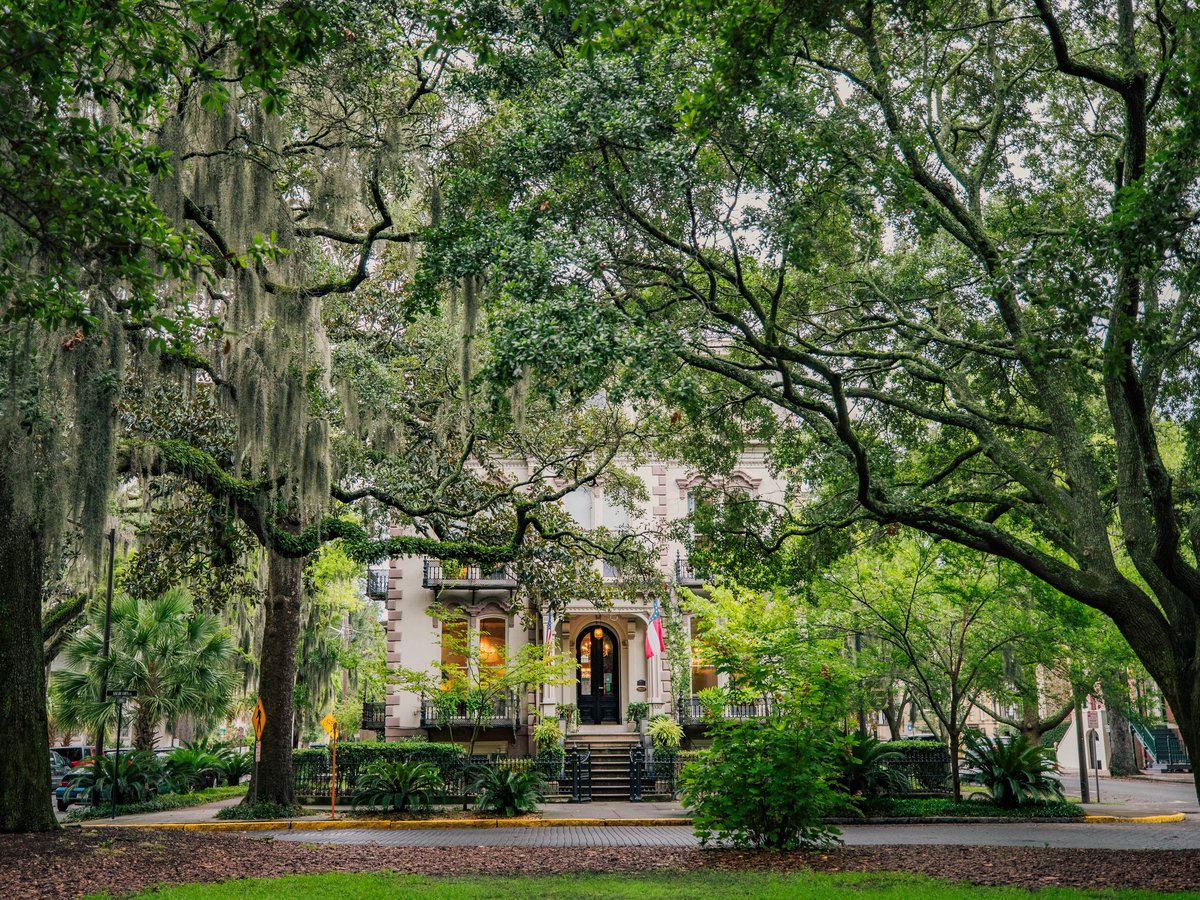
Savannah's peak summer month delivers the kind of humidity that clings to your skin before you finish your first block of walking. Rain falls on roughly 20 of the month's days, usually as afternoon thunderstorms that build quickly and clear within 30 to 45 minutes. Even after sunset the air stays warm and dense, offering limited overnight relief. The live oaks draped in Spanish moss provide shade across the squares, but the moisture beneath them is inescapable.
Seasonal caution
- Heat index regularly exceeds 38°C (100°F) during afternoon hours. The National Weather Service issues heat advisories for the Savannah area multiple times each July. Stay hydrated and limit outdoor exposure between 11 AM and 4 PM.
- Afternoon thunderstorms produce frequent lightning. If you hear thunder while walking between the squares, move indoors immediately. The storms pass fast but lightning in an open square is a real hazard.
- Hurricane season runs June through November, and July falls within the active window. Direct hits on Savannah are uncommon, but tropical systems in the Atlantic can push heavy rain bands and coastal flooding toward Tybee Island on short notice.
Year-round climate
Averages from the last 5 years.
| Month | Avg high (°C) | Avg low (°C) | Rainfall (mm) |
|---|---|---|---|
| Jan | 16 | 6 | 79 |
| Feb | 19 | 9 | 77 |
| Mar | 22 | 12 | 110 |
| Apr | 25 | 15 | 69 |
| May | 28 | 19 | 88 |
| Jun | 31 | 22 | 132 |
| Jul | 32 | 24 | 156 |
| Aug | 31 | 24 | 232 |
| Sep | 29 | 21 | 126 |
| Oct | 25 | 16 | 72 |
| Nov | 21 | 11 | 78 |
| Dec | 18 | 8 | 83 |
Holidays and festivals in July
Public holidays
- Independence Day(Independence Day)5 July 2027
Best things to do in July
Early morning walking tour of the Historic District
walking tourWalk the squares, cobblestone lanes, and oak-lined streets before the heat builds. Morning light through the Spanish moss creates softer contrasts than the flat glare of midday, and the air still carries traces of confederate jasmine blooming through July.
Before 10 AM, temperatures sit in the low to mid-20s Celsius, and the streets are quieter than any other season. Summer light and fewer visitors make for better photographs than the crowded spring months.Booking tipSummer mornings have fewer tours running than spring, so book at least 3 days ahead for weekend 9 AM departures.
Tybee Island beach day
beachSavannah's closest ocean beach, about 30 minutes east on US-80. Lifeguards are on duty, all rental concessions are open, and the pier and pavilion area anchors the north end of the strand.
Water temperatures reach the high 20s Celsius in July, warm enough for long swims without a wetsuit. Peak beach season means full services and the widest range of activity options.Booking tipArrive before 10 AM on weekends to secure parking near the pier. Weekdays are notably less crowded.
Evening ghost tour in the Historic District
tourSavannah's reputation as one of America's most haunted cities fuels a year-round ghost tour industry. Evening tours pass through moonlit squares, past Mercer House, and along the quieter residential streets of the Victorian District.
Sunset falls after 8:30 PM in early July, so tours start later and run through dusk into cooler darkness. Summer evenings draw fewer participants than October, keeping groups small.Kayaking the Savannah National Wildlife Refuge
outdoorPaddle through tidal creeks and freshwater impoundments about 20 minutes north of downtown. Expect to see herons, egrets, and alligators basking on the banks in the early light.
Dawn launches before 7 AM catch calm water and active wildlife during the summer breeding season. Mornings on the water feel several degrees cooler than the city streets.Booking tipGuided kayak tours fill up 4 to 5 days ahead on weekends. Solo rentals are easier to book on short notice.
Museum afternoon at Telfair Museums
cultureSavannah's oldest public art museum, established in 1886, spans three sites in the Historic District. The Jepson Center houses contemporary work, while the Telfair Academy occupies one of the city's finest Regency-style buildings.
Air-conditioned galleries make the hottest hours of the day productive instead of wasted. July crowds at the museums are a fraction of what you'll encounter in April or October.Sunset drinks along the Savannah riverfront
diningRiver Street's converted cotton warehouses hold a row of bars and restaurants with second-story balconies overlooking the Savannah River. The cargo ships passing below are close enough to read the hull markings.
Temperatures drop from the low 30s to the mid-20s Celsius after 7 PM, and the river generates a light breeze that makes outdoor seating comfortable. July sunsets over the river come around 8:35 PM.Fort Pulaski National Monument day trip
historyThe 1829 fort sits on Cockspur Island at the mouth of the Savannah River, east of downtown along US-80 through salt marsh scenery. Its thick brick walls and casemates hold Civil War history, including evidence of the 1862 rifled-cannon siege that changed military fortification worldwide.
The fort's interior stays cooler than the open air outside, and weekday visits in July have minimal crowds compared to the spring field-trip season when school groups fill the grounds.What to eat in July
In season: fruit
Georgia peaches
Peak ripeness in July from orchards around Fort Valley, about 3 hours northwest of Savannah. The Saturday morning Forsyth Farmers' Market carries them alongside local produce vendors.
Georgia watermelon
The harvest peaks in July from growing regions around Cordele, about 3 hours southwest of Savannah. Farmers market stalls and produce stands carry them by the truckload.
On menus now
Lowcountry boil
Shrimp, corn, sausage, and potatoes boiled together in Old Bay seasoning. July's local white shrimp catch from waters off Thunderbolt and Tybee Island makes this the peak month for the dish.
Peach cobbler
Made with peak-season Georgia peaches and served warm. The fresh-fruit version in July is a different experience from the frozen-peach rendition served off-season at the same restaurants.
Street food peaks
Boiled peanuts
Green peanuts from south Georgia farms appear at roadside stands and convenience stores across the Lowcountry in summer. Served warm in salty brine, they're an acquired taste but a regional fixture you'll see everywhere south of I-16.
What to drink
Chatham Artillery Punch
A Savannah-original cocktail with roots in the 19th-century Chatham Artillery regiment. Combines tea, citrus, and multiple spirits. The cold variation takes on particular appeal in July's heat.
Regular events in July
Fourth of July Celebration on the Savannah RiverfrontFree
Fireworks over the Savannah River, live music stages along River Street, and a waterfront street party. One of the larger Independence Day displays on the Georgia coast.
July 4Tybee Island Fourth of July CelebrationFree
A separate fireworks display over the Atlantic from Tybee's north beach, with a parade through the island's main road earlier in the day and food vendors along the strand.
July 4First Friday on StarlandFree
Monthly art walk through the Starland District's galleries, studios, and pop-up vendor stalls. Runs from the early evening into the night with open doors at participating venues along Bull Street and Habersham Street south of Forsyth Park.
First Friday of the monthBest places this July
Forsyth Park
parkEstablished in 1840, the 12-hectare (30-acre) park marks the boundary between the Historic District and the Victorian District. Best visited before 9 AM in July, when the iconic fountain runs in soft morning light and the temperature is still manageable for a long walk.
Historic DistrictBonaventure Cemetery
cemeteryEstablished in 1846, this Spanish moss-draped cemetery along the Wilmington River stays several degrees cooler than the open squares downtown. Arrive before 10 AM for photography in soft, angled light.
ThunderboltTybee Island
beachPeak beach season, with lifeguards on duty and all rental concessions running. The South Beach area near the lighthouse tends to be less crowded than the pier and pavilion stretch on the north end.
Tybee IslandSCAD Museum of Art
museumHoused in a former Central of Georgia railway building converted into a contemporary art space in 2002. Summer exhibitions tend to draw fewer visitors than fall shows, and the galleries stay cool all afternoon.
Historic DistrictWormsloe Historic Site
historic siteA 2.4 km (1.5-mile) avenue of live oaks forms the most photographed approach road in the Savannah area. The dense canopy makes for a far more comfortable walk than anything on the exposed streets downtown.
Isle of HopeRiver Street
waterfrontThe cobblestone riverfront strip of converted cotton warehouses is best after 6 PM in July, when the buildings cast shade and the Savannah River generates a slight breeze. Most bars and restaurants extend outdoor seating through the summer months.
Historic DistrictCongregation Mickve Israel
historic siteEstablished the same year as the city itself, this is one of the oldest Jewish congregations in the United States. The Gothic Revival building welcomes visitors and holds a small museum of early Georgia Jewish history.
Historic District
Your packing checklist
Tick items off as you pack. Your progress saves in this browser.
All packed — have a great trip.
Insider tips
The squares closest to the Savannah River, like Johnson Square and Reynolds Square, tend to catch more breeze than inland ones like Monterey Square or Lafayette Square. Start your morning walk from the river and work south.
Congress Street and Broughton Street restaurants tend to draw more locals and fewer tour groups than the River Street establishments. The food is comparable, but you'll wait less for a table.
If you're visiting Fort Pulaski, combine it with a look at the Cockspur Island Lighthouse visible from the fort's grounds. The drive along US-80 through the salt marshes is worth doing with the windows down in the early morning.
The Starland District south of Forsyth Park has become the neighborhood for independent coffee shops and restaurants that SCAD students and young professionals frequent. It's a 15-minute walk from the southern squares.
Bonaventure Cemetery is quietest on weekday mornings. The riverside section near the bluff catches a breeze off the Wilmington River that the Historic District squares rarely get.
Avoid these mistakes
- Planning a full day of square-hopping on foot with no midday break. Treat the hours between 11 AM and 4 PM as indoor time, and save the walking for the cooler bookends of the day.
- Driving to Tybee Island on a Saturday without leaving early. Parking near the beach fills before 11 AM on July weekends, and the line of cars on US-80 can nearly double your drive time.
- Skipping water or relying on coffee and alcohol to stay hydrated. At July's temperature and humidity, dehydration symptoms like headaches and dizziness can start within an hour of walking without water.
- Booking a noon-departure trolley or carriage tour instead of the 9 AM slot. Open-air trolleys have no air conditioning, and the difference between early morning and midday in July is the difference between pleasant and punishing.
Practical tips for July
Book morning time slots for any outdoor tours, ideally departures before 10 AM. Most walking-tour companies in the Historic District offer early-morning options specifically for summer visitors. Afternoon thunderstorms typically arrive between 3 PM and 5 PM, so schedule indoor activities like museum visits or long restaurant lunches for that window. Weekend dinner reservations in the Historic District are worth making 3 to 5 days ahead, even in the slower summer season. If you're heading to Tybee Island on a Saturday or Sunday, plan to leave downtown before 9:30 AM to secure beachfront parking. Chatham Area Transit runs bus service from downtown to Tybee as an alternative to driving. Bring cash for some of the smaller food stands on River Street during the Fourth of July festivities, as card readers can be spotty in the holiday crowd.
FAQ
Is July a good time to visit Savannah?
July is not an ideal month for Savannah. It is the hottest time of year, with oppressive humidity and frequent afternoon thunderstorms. That said, if you plan outdoor activities for early morning and evening and use midday for air-conditioned museums, restaurants, and galleries, a July trip can work. Accommodation rates are lower than during the peak spring and fall seasons, and crowds are thinner across the Historic District.
What is the weather like in Savannah in July?
Hot, humid, and rainy. Expect temperatures in the low 30s Celsius, around 90 Fahrenheit, with humidity that makes outdoor activity feel considerably harder than the thermometer suggests. Rain arrives more often than not, mostly as afternoon storms that clear within the hour. Mornings and evenings are warm but manageable for walking.
Is Savannah crowded in July?
Less crowded than spring or fall. The Historic District is noticeably quieter than during the St. Patrick's Day celebration in March or the pleasant weather of October and November. The exception is the Fourth of July weekend, when River Street and Tybee Island both fill up. On a typical July weekday, you can walk into most restaurants without a reservation and join guided tours without advance booking.
Can you walk around Savannah in July?
Yes, but in shorter stretches than you might plan for cooler months. The live oak canopy over the squares provides shade, though the humidity still makes sustained walking tiring. Most visitors find they need air-conditioned breaks every hour or so. Start early, carry water, and plan indoor stops between outdoor walks.
Is Tybee Island worth visiting in July?
Tybee Island is one of the better reasons to be in the Savannah area in July. The Atlantic is warm enough for extended swimming, all beach services and lifeguard stations are operating, and the ocean breeze cuts the humidity that makes the city feel so heavy. Arrive early on weekends to secure parking near the beach.
Things to Do in Savannah in July
 Free cancellation
 Savannah Hop-On Hop-Off Trolley Tour
City tour: free cancellation.
via Viator Free cancellation
 Savannah First Squares Culinary & Cultural Walking Food Tour
City tour: 3 hours, free cancellation.
via Viator Free cancellation
 Narrated Historic Savannah Sightseeing Trolley Tour
City tour: 1.2 hours, free cancellation.
via Viator Free cancellation
 Savannah Land & Sea Combo: City Sightseeing Trolley Tour with Riverboat Cruise
Cruise: 5 hours, free cancellation.
via Viator
Southern Flavors Food, Pub Crawl, and History Walking Tour
City tour: 3 hours.
via Viator Free cancellation
 Savannah to Tybee Island with Dolphin Cruise
Day trip: free cancellation.
via ViatorFind a flight to Savannah
Live fares to Savannah appear here once cookies are accepted.
Last verified by automated review (v1.7.2) on . What is automated review?