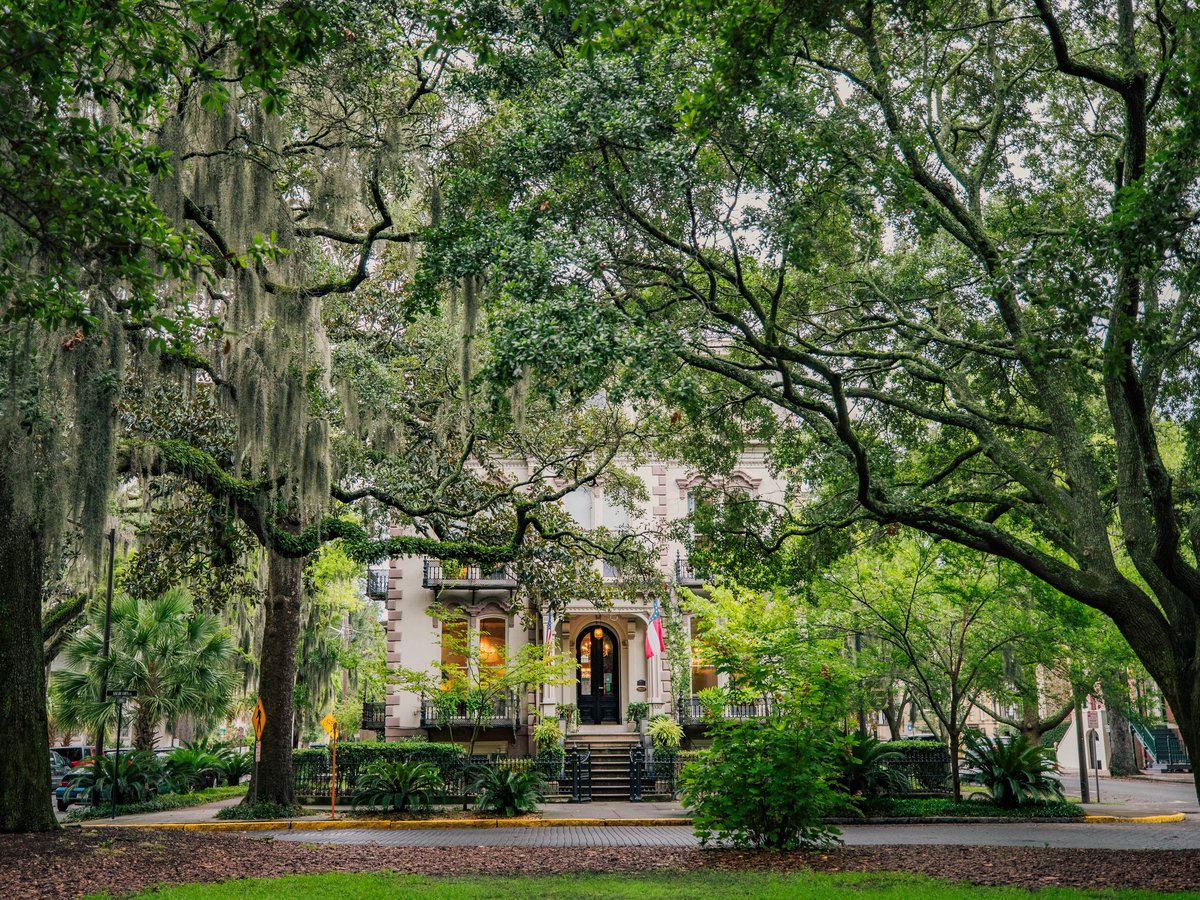
Savannah sits on a coastal plain about 18 miles from the Atlantic, where the Savannah River meets tidal marshland that stretches for miles in every direction. The air here is thick. Even in late September the humidity tends to hover above 90%, and the live oaks dripping with Spanish moss give the whole city a damp, green, slightly primordial feel. Forsyth Park, established in 1840, remains the anchor of the city's outdoor life, but the real character comes from the salt marshes, blackwater creeks, and barrier islands within a short drive. Savannah scores 8.2/10 for family friendliness (see the TTDI Family-Friendliness Index), and that extends to its outdoor spaces. Most trails and parks here are flat, accessible, and well maintained. You will not find elevation gain. What you will find is rich tidal ecology, migratory birds by the hundreds in winter, and waterways where dolphins surface 30 feet from your kayak. The outdoor season runs roughly October through April, when temperatures settle into the 10 to 25°C range and the mosquitoes pull back. Summer is survivable but demands planning. Mind you, the humidity can feel punishing from June through September, currently sitting at 92% with a feels-like temperature near 31°C.
Outdoor activities
-
Cycling the Savannah Historic District
The 22 public squares laid out in the 1733 Oglethorpe Plan make Savannah one of the more interesting cities to bike in the American South. The terrain is dead flat, and most squares are connected by wide, tree-lined streets. You can rent bikes from several shops along Broughton Street for about $25 to $35 per day. A loop that hits all 22 squares covers roughly 8 miles. Early morning is best, before pedestrian traffic picks up and the heat settles in.
- Difficulty
- Easy
- Duration
- 2 to 3 hours for a full square loop
- Best season
- October through April
-
Birdwatching at Skidaway Island State Park
Skidaway Island, about 25 minutes southeast of downtown, sits where maritime forest meets salt marsh. The Big Ferry Trail and Sandpiper Trail combine for about 3 miles of flat boardwalk and packed-earth path through live oak canopy and past tidal creeks. In winter, painted buntings, wood storks, and roseate spoonbills appear regularly. The park's observation tower gives a wide view over the marsh. Bring binoculars and insect repellent in any season.
- Difficulty
- Easy
- Duration
- 2 to 4 hours
- Best season
- November through March
-
Kayaking the Moon River and Skidaway Narrows
The Moon River (yes, the one Johnny Mercer wrote about; he grew up in Savannah) feeds into the Skidaway Narrows, a tidal waterway where bottlenose dolphins hunt in pods of 5 to 15. Guided kayak tours run about $55 to $75 per person and typically launch from the Isle of Hope marina. The paddle covers 3 to 5 miles depending on the tide. You will see dolphins on most outings, along with ospreys, brown pelicans, and the occasional manatee in warmer months.
- Difficulty
- Moderate
- Duration
- 2 to 3 hours
- Best season
- March through May and September through November
-
Hiking at Wormsloe Historic Site
Wormsloe's entrance avenue, a 1.5-mile corridor lined with roughly 400 live oaks, is one of the most photographed spots in Georgia. Beyond the avenue, a trail system of about 2 miles loops through tabby ruins from a 1739 colonial estate and along the marsh edge of the Isle of Hope. The trails are flat and sandy. The site closes at 5 PM, so afternoon light through the oaks is the draw for photographers.
- Difficulty
- Easy
- Duration
- 1.5 to 2.5 hours
- Best season
- Year-round, best October through April
-
Fishing in the Wassaw Sound
Wassaw Sound, where the Wilmington and Bull rivers meet the Atlantic, produces redfish, speckled trout, flounder, and sheepshead year-round. Charter boats run from Thunderbolt marina, about 10 minutes east of downtown, for $400 to $600 for a half-day inshore trip (up to 4 anglers). The fall redfish run, typically October through November, draws the most interest. No experience is needed for inshore charters; the captain handles tackle and bait.
- Difficulty
- Easy to moderate depending on conditions
- Duration
- 4 to 8 hours
- Best season
- October through November for redfish; year-round for inshore species
Day hikes
-
Wassaw Island National Wildlife Refuge
Wassaw Island is an undeveloped barrier island accessible only by boat, about 30 minutes by charter from Thunderbolt marina. The island holds roughly 7 miles of beach and another 10 miles of interior trails through maritime forest, freshwater sloughs, and dune systems. There are no facilities, no vehicles, and no permanent residents. Loggerhead sea turtles nest on the beach from May through August. Bring everything you need, including water, and plan around the tides for landing.
- Difficulty
- Moderate
- Duration
- Full day including boat transit
- Best season
- October through April for hiking; May through August for turtle nesting season
-
Savannah National Wildlife Refuge Laurel Hill Trail
The Laurel Hill Wildlife Drive and its associated walking trails sit about 20 minutes north of downtown, straddling the Georgia-South Carolina border. The 4-mile Laurel Hill Trail follows old rice field dikes through freshwater impoundments where alligators, wood ducks, and great blue herons are common. The terrain is flat and exposed, so bring sun protection. The refuge is free and open dawn to dusk.
- Difficulty
- Easy
- Duration
- 2 to 3 hours
- Best season
- November through March for migratory waterfowl
-
Ossabaw Island Heritage Preserve
Ossabaw Island is Georgia's third-largest barrier island and is managed as a heritage preserve with strictly limited access. Day trips require advance arrangement through the Ossabaw Island Foundation or participation in an organized program. The island holds maritime forest, salt marsh, and about 8 miles of undeveloped beach. Feral hogs and donkeys roam the interior. The island's former plantation house, built in the 1920s, is occasionally open for tours. This is a logistically demanding outing but rewarding for its isolation.
- Difficulty
- Moderate to difficult due to access logistics
- Duration
- Full day
- Best season
- October through April
Water activities
-
Stand-Up Paddleboarding on the Wilmington River
The Wilmington River, which separates the mainland from several barrier islands, offers calmer conditions than the open sound. SUP rentals are available at Tybee Island outfitters for about $35 to $50 for a half day. The stretch near Turner Creek is sheltered by marsh grass and popular for beginners. Dolphin sightings are common, and at low tide the exposed oyster beds attract shorebirds. Paddle on an incoming tide to avoid fighting the current back.
- Difficulty
- Easy to moderate
- Duration
- 2 to 3 hours
- Best season
- April through November
-
Sailing on the Savannah River and Wassaw Sound
Several charter companies offer half-day sailing trips from Thunderbolt marina or Tybee Island, typically $300 to $500 for a private trip on a 30- to 40-foot sailboat. The route usually runs down the Wilmington River into Wassaw Sound, where the wind picks up and the barrier islands come into view. Sunset sails are the most popular booking. No sailing experience is needed; the captain handles the boat.
- Difficulty
- Easy (crewed charter)
- Duration
- 3 to 4 hours
- Best season
- March through November
-
Tybee Island Beach Swimming and Surfing
Tybee Island, about 30 minutes east of downtown, is Savannah's public beach. The south beach near the pier is the most popular swimming area, with lifeguards on duty from Memorial Day through Labor Day. The water is warm (24 to 29°C) from June through September. Surfing is modest here, with waves averaging 1 to 3 feet, but the north end of the island near the jetties picks up slightly bigger swells during tropical systems. Board rentals run about $20 to $30 for a half day.
- Difficulty
- Easy
- Duration
- Half day to full day
- Best season
- May through September for swimming; September through November for occasional surf
-
Crabbing and Shrimping on Lazaretto Creek
Lazaretto Creek, the tidal channel between Tybee Island and Little Tybee, is a productive spot for recreational blue crabbing and cast-net shrimping. You can crab from the Lazaretto Creek bridge or from a rented johnboat ($100 to $150 per day from Tybee Island outfitters). A basic crab trap and chicken necks for bait cost under $15. Georgia requires a saltwater fishing license ($9 for a one-day non-resident license) for shrimping but not for crabbing from shore.
- Difficulty
- Easy
- Duration
- 2 to 4 hours
- Best season
- May through October
Parks & gardens
-
Forsyth Park
FreeForsyth Park covers 30 acres at the southern edge of the Historic District. The 1858 fountain at the north end is the most recognized landmark in Savannah. Beyond the fountain, the park holds a large open lawn, a fragrant garden maintained by the Savannah Area Council of Garden Clubs, basketball and tennis courts, and a weekend farmers market. The perimeter path is about 1 mile. The park is busiest on weekend mornings but never feels crowded on weekdays.
Highlights: The 1858 cast-iron fountain modeled after fountains in Paris and Cusco anchors the north end. The Fragrant Garden, designed for visually impaired visitors, features aromatic plantings and Braille signage throughout. A Saturday farmers market runs from March through November with local produce and prepared food from Savannah-area vendors.
-
Savannah Botanical Gardens
FreeTucked into a 10-acre site on Eisenhower Drive, about 15 minutes south of downtown, this garden is run entirely by volunteers and funded by donations. It includes a rose garden, a native plant collection, a children's discovery garden, and the restored Reinhard House, a mid-1800s farmhouse. The gardens are small but well kept and rarely crowded. Open dawn to dusk daily.
Highlights: The native plant garden features species from the Georgia coastal plain, including saw palmetto, beautyberry, and native azaleas. The rose garden holds over 75 varieties. The Reinhard House, restored to its 1850s condition, includes a period-appropriate kitchen garden planted with heirloom herbs and vegetables.
-
Emmet Park and the Bluff
FreeEmmet Park runs along Bay Street on the bluff overlooking the Savannah River. The park is narrow but the views are wide. You can watch Panamax-class container ships pass within 50 meters on their way to the Georgia Ports Authority terminal upriver. A cobblestone ramp at the east end connects the bluff to River Street and the 19th-century cotton warehouse district below. The park is named for Robert Emmet, the Irish nationalist, and holds a Celtic cross monument.
Highlights: The Harbor Pilot monument marks the bluff's east end, where river pilots have boarded ships since the 1700s. Container ships passing at close range make this one of the better ship-watching spots on the East Coast. The Old Harbor Light, one of the oldest surviving range lights in the United States, stands at the park's western edge near the Westin hotel.
-
Bamboo Farm and Coastal Gardens
FreeThis 46-acre University of Georgia research station, about 20 minutes south of downtown in the town of Savannah, is open to the public daily at no charge. The site holds one of the largest collections of bamboo species in North America, along with demonstration gardens, heritage fruit trees, and trial beds for ornamental plants suited to the coastal Southeast. The grounds are well labeled and self-guided.
Highlights: Over 100 bamboo species grow here, including giant timber bamboo reaching 20 meters. Demonstration gardens show what thrives in Zone 8b/9a coastal conditions, useful for anyone gardening in the humid Southeast. A heritage fruit tree collection includes varieties of fig, persimmon, and citrus selected for coastal Georgia's climate.
Practical tips
- Hydration and Heat Management
- Carry at least 1 liter of water per person per hour of activity from May through September. The heat index regularly exceeds 38°C in summer. Start early, ideally before 9 AM, and plan to be off exposed trails by midday. Electrolyte tablets are worth packing for anything longer than a 2-hour outing.
- Insect Protection
- Mosquitoes and no-see-ums are aggressive near the marshes from April through October. DEET-based repellent (30% or higher) or picaridin works best. Permethrin-treated clothing is worth considering for marsh-edge hikes. Sand gnats are worst on still, overcast days at low tide; a breeze helps, and Avon Skin So Soft is a local folk remedy that works reasonably well.
- Tidal Awareness
- Nearly all water activities and many coastal trails in the Savannah area are tide-dependent. Check the NOAA tide tables for Fort Pulaski (station 8670870) before heading out. Outgoing tides can strand kayaks in mud flats, and some island landings are only safe within 2 hours of high tide. The tidal range here averages about 2 meters.
- Sun Protection
- The coastal Georgia sun is strong year-round, and most trails and waterways here offer minimal shade. Wear a broad-brimmed hat, UV-protective clothing, and SPF 50 sunscreen. Reapply every 90 minutes when sweating or on the water. Polarized sunglasses reduce glare on the water and help spot dolphins and fish.
- Trail Conditions After Rain
- Many trails in the Savannah area run through low-lying ground that floods after heavy rain. Skidaway Island and the Savannah National Wildlife Refuge are especially prone to standing water. Allow 24 to 48 hours after significant rain before attempting marsh-edge trails. Waterproof shoes or sandals with good grip are useful year-round.
FAQ
What is the best time of year for outdoor activities in Savannah?
October through April is the prime window. Temperatures range from about 10 to 25°C, humidity drops to manageable levels, mosquitoes recede, and migratory birds arrive by the thousands. Late October and November are particularly good, with warm enough water for paddling, cool enough air for comfortable hiking, and peak fall bird migration along the Atlantic flyway.
Are there any trails with significant elevation near Savannah?
No. Savannah sits on a coastal plain that barely rises above sea level, and there is no meaningful elevation within an hour's drive. The highest point in the area is about 15 meters above sea level. If you want hill or mountain hiking, the nearest options are Cloudland Canyon State Park (about 5 hours northwest) or the Blue Ridge Mountains in north Georgia (about 4.5 hours north). The local trails compensate with ecological richness rather than vertical challenge.
Is it safe to swim in the rivers and creeks around Savannah?
The tidal rivers and creeks around Savannah are not recommended for swimming. The water is turbid with poor visibility, currents are strong (especially on outgoing tides), and alligators are present in freshwater and brackish areas. Bull sharks have been documented in the Savannah River. For swimming, go to Tybee Island's lifeguarded beach areas, which are monitored and maintained for public safety.
Do I need a permit or license for kayaking or fishing in the Savannah area?
No permit is needed for kayaking on public waterways. For fishing, Georgia requires a freshwater or saltwater fishing license depending on location. Non-resident licenses start at $9 for a single day and are available online through the Georgia Department of Natural Resources. Recreational blue crabbing from shore does not require a license, but cast-net shrimping does. Charter boat captains carry their own licenses, so you do not need one when fishing on a guided trip.
Can I visit the barrier islands around Savannah on my own?
Wassaw Island and Little Tybee Island are accessible by private or chartered boat and do not require permits for day visits. Ossabaw Island requires advance permission through the Ossabaw Island Foundation. Tybee Island is connected by road and freely accessible. There are no ferries to the uninhabited islands, so you need to arrange a water taxi or bring your own boat. Always check tide tables before landing, as some beaches disappear at high tide.
Last verified by automated review (v1.7.2) on . What is automated review?