What cultural etiquette should I know for Savannah?
Savannah's most common etiquette mistake involves the go-cup: you can carry a drink through the Historic District, but it must be in a plastic cup of 16 ounces or less, because glass and cans are not allowed. Say 'hey' and 'ma'am' to strangers in the squares, tip 20% at restaurants, and keep your voice down on ghost tours that pass through residential streets after dark.
Hot sugar from the praline shops on River Street scents the air by mid-morning, and that waterfront is where most first-timers meet Savannah's go-cup ordinance, usually getting it wrong in both directions. Bartenders on Congress Street will pour a half-finished pint into a plastic cup if you ask at the door, and nobody notices when you carry it across Johnson Square. River Street is different: Savannah police patrol its uneven cobblestones heavily on weekend nights, and glass is usually what they stop people for. Skip the River Street frozen-drink stands, which are the tourist trap of the riverfront, and fill your go-cup at a Congress Street bar where locals drink. The legal zone covers the Historic District, roughly from the Savannah River south to Jones Street, and if you carry that cup deep into Forsyth Park, you might be outside the zone. The cup rule has never made public drunkenness legal. A loud bachelorette party weaving down Bay Street at 1am, past candy shops that have long since shut, is the scene locals complain about most.
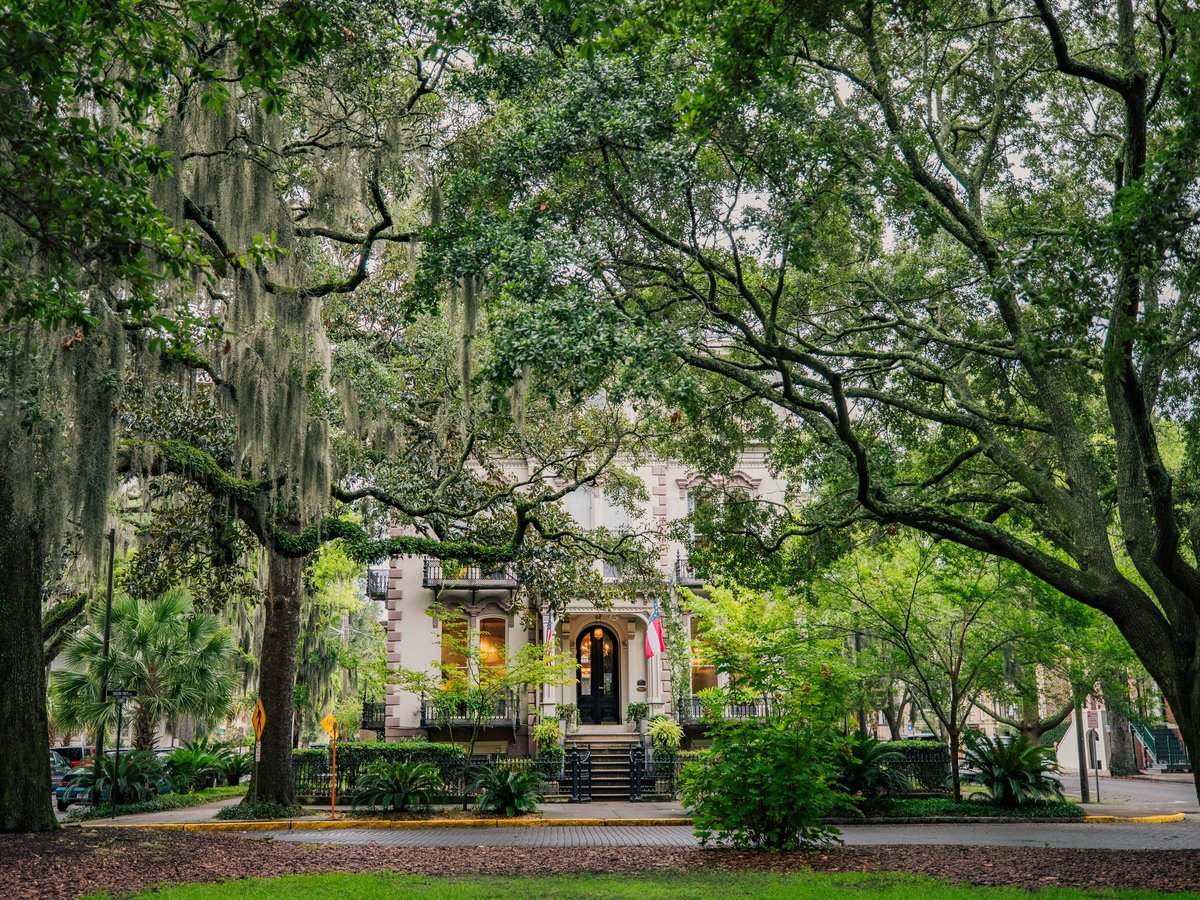
Sidewalk manners come second. Savannah still has 22 of its original squares, and in the quieter ones, like Chippewa Square, dog walkers out at 8am will look you in the eye and say 'mornin'.' Say it back, because in Savannah ignoring a greeting reads as rude, not as big-city privacy. Restaurant service in Savannah is slower than in Atlanta, and that is deliberate: at Mrs. Wilkes' Dining Room you sit at shared tables with strangers and pass bowls of fried chicken, okra and red rice; the sweet tea is sweet enough to coat your teeth, and by tradition diners carry their own plates to the kitchen at the end. One pronunciation wins locals over right away: Savannahians say Pulaski as 'puh-LASS-key,' both for the Casimir Pulaski Monument and for Fort Pulaski out on Cockspur Island.
Most of the facades you photograph in the Historic District belong to people who live there, not to any museum. Sitting on the iron-railed stoop of a Gaston Street townhouse for a photo, or pressing your face to a parlor window on Gordon Street, may earn you a sharp knock on the glass from inside. Ghost tours run until around 11pm, and residents have complained to City Hall about tour noise for years, so when your guide stops outside a house, keep your group quiet and listen instead to the carriage horses on the brick. Colonial Park Cemetery on Oglethorpe Avenue locks its gates in the evening, and climbing the wall after hours for a photo counts as trespassing. Hockey crowds leaving Enmarket Arena on Friday 23 and Saturday 24 October will add late-night foot traffic on the west side of downtown, so book an earlier tour those two nights.
Cultural norms
Savannah runs on unhurried Southern courtesy. Strangers greet each other on the street with a "hey" or "how y'all doin'," and not returning the greeting reads as rude rather than private. Conversations move slower than you expect; jumping straight to a request without pleasantries first will get you cooler service at shops and restaurants. "Yes ma'am" and "yes sir" are still common across ages and carry no irony. When visiting Cathedral of St. John the Baptist or any historic churches along the squares, cover your shoulders; tank tops draw genuine disapproval from parishioners, not just glances. Elsewhere the city is casual: shorts and sandals are fine on River Street and through the historic district, though a collared shirt is expected at restaurants like The Olde Pink House or Elizabeth on 37th.
Tipping twenty percent is standard at sit-down restaurants and expected at the many cocktail bars; Savannah allows open containers in the historic district, but you're still expected to tip the bartender who poured your to-go cup. For carriage and walking tours, five dollars per person is the minimum. The most common visitor misstep is treating the residential squares as parks. Hanging a hammock between the live oaks or climbing on monuments will earn a sharp correction from locals who maintain those spaces as shared front yards, not tourist attractions.
Greetings
Say 'hey' or 'mornin'' to people you pass in the squares, and expect the same back. Use 'ma'am' and 'sir' with older locals and with servers; in Savannah these signal manners, not age. A handshake works for introductions. 'Y'all' is the plural 'you' here, and locals are happy to hear a visitor use it.
Don't do this
- Leaving a bar with your drink still in its glass: ask for a plastic go-cup at the door.
- Sitting on the steps of private homes in the Historic District for photos.
- Driving straight across a square: cars go around every square counterclockwise.
- Climbing the obelisks and statues in the squares for photos.
- Making grave rubbings or sitting on headstones at Bonaventure Cemetery.
- Draping fallen Spanish moss over your shoulders for a photo, because it can carry chiggers.
- Calling Savannah a smaller Charleston, which locals take as an insult.
- Asking for the check the moment your plates arrive at sit-down restaurants on Broughton Street.
Tipping
Tip 18 to 20% at sit-down restaurants and $1 to $2 per drink at bars; give $5 to $10 per person to trolley and walking-tour guides. Pedicab drivers often work for tips alone, so $5 to $10 is fair for a short downtown ride. Leave $3 to $5 a night for hotel housekeeping.
Dress code
Savannah dresses casually, but the Cathedral of St. John the Baptist on Lafayette Square expects covered shoulders, and men should take their hats off inside. Swimwear on Broughton Street gets stares. At 1pm on 19 October it was 17.8°C and clear, so bring a light layer for ghost tours after dark.
Religious norms
Congregation Mickve Israel on Monterey Square was founded in 1733 and still holds services, so your best access is a guided weekday tour. Expect a security check, and stay out of the sanctuary during Shabbat on Friday evening and Saturday. Tourist visits to the cathedral pause during Mass, so if you arrive mid-service, sit down and stay quiet. First African Baptist Church on Franklin Square welcomes visitors on Sunday, but plan to arrive before the service begins.
Last verified by automated review (v1.7.2) on . What is automated review?