Stay in Savannah in August
35 hotels in the Trip.com pool for Savannah, from US$52 a night.
Opens Trip.com on Fri 6 Aug to Sun 8 Aug 2027; change the dates there.
August is Savannah's wettest month, and it isn't close. The city averages 232mm of rain across 21 days, nearly 50% more than July and more than triple what April receives. Daytime highs hover around 31°C (87°F), which sounds manageable until you factor in 82% humidity that turns every walk between the Historic District's 22 squares into a slow, damp affair. The heat index regularly pushes past 38°C (100°F) by early afternoon. This is also the statistical peak of Atlantic hurricane season, and while Savannah tends to catch glancing tropical storms rather than direct landfalls, disruptions to coastal Georgia travel aren't unusual.
To be fair, August has one clear draw. The spring crowds that fill Forsyth Park and spill out of restaurants along Broughton Street largely vanish by summer. Hotel rates across the district drop well below the annual average. You can walk into dinner spots that need reservations two weeks out in March. SCAD students begin filtering back toward campus in the final week of the month, gradually reviving the Starland District's cafe and gallery circuit after a quiet summer.
Mornings before 10 AM are warm but tolerable in the squares, your best window for outdoor exploration. By noon, the air thickens. It's the kind of humidity where your sunglasses fog the moment you step out of an air-conditioned shop on Bull Street. Afternoon storms typically roll in around 3 PM with heavy rain and close thunder, then clear by 5. Evenings along River Street bring a slight breeze off the Savannah River and temperatures settling into the upper 20s°C. By day two, most visitors have landed on a rhythm of mornings outdoors, midday in a museum, and dinner on a patio somewhere in the Victorian District.
Why visit in August
- Hotel availability opens up across the Historic District, with rates dropping to their annual low and walk-in restaurant seating the norm rather than the exception.
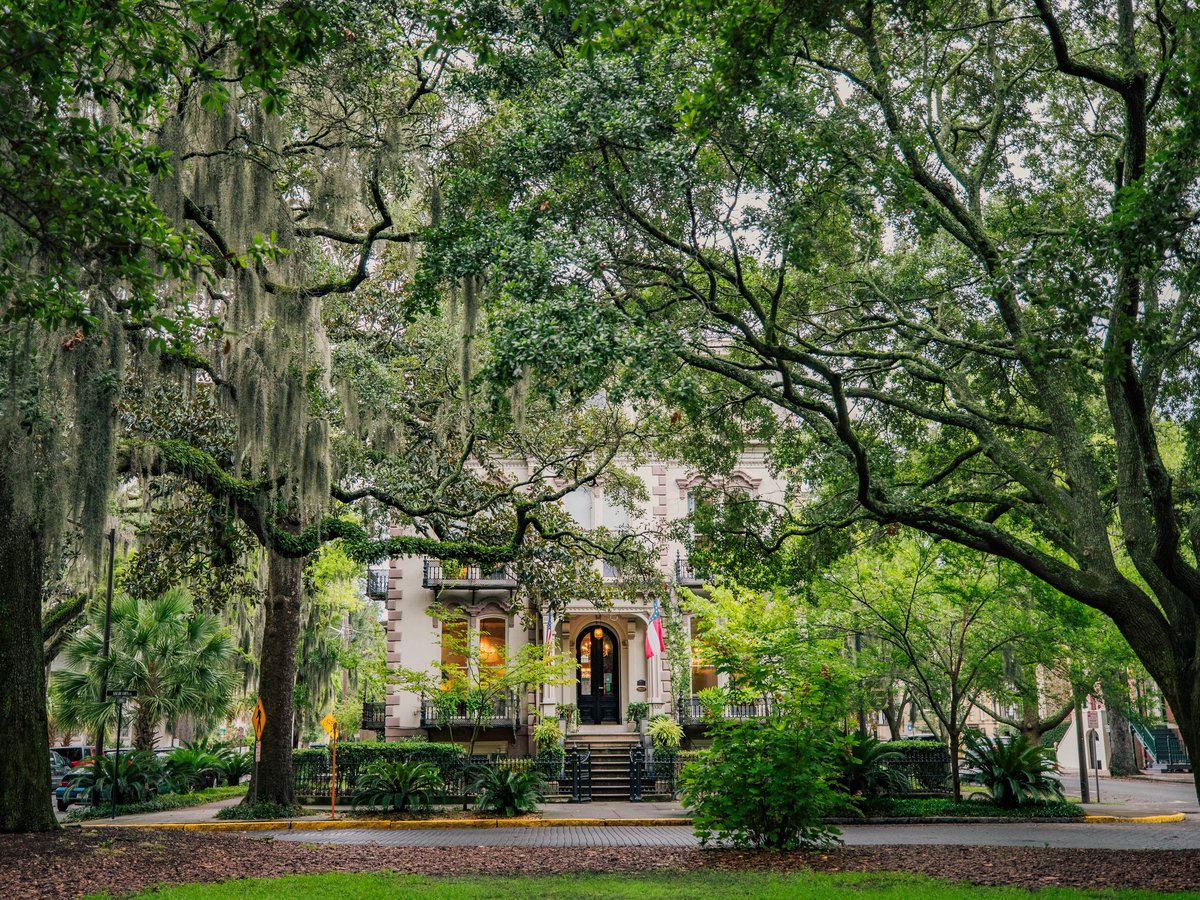
- Live oak canopies are at their fullest summer spread, with Spanish moss hanging at its densest drape, providing more natural shade in the squares than any other season.
- Afternoon thunderstorms, while frequent, clear within 30 to 45 minutes and drop the temperature by 3-5°C (5-9°F), making evenings on the riverfront genuinely pleasant.
- Ocean water off Tybee Island reaches its annual peak near 29°C (84°F), the warmest swimming conditions on the Georgia coast.
Worth knowing
- Afternoon thunderstorms hit on roughly two-thirds of August days, sometimes with lightning severe enough to clear River Street and the squares for an hour or more.
- Sustained humidity makes outdoor walking uncomfortable from late morning through mid-afternoon, with the heat index regularly entering ranges that health agencies flag as dangerous.
- Peak Atlantic hurricane season means tropical weather systems can bring multiday rain and force last-minute cancellations, including potential Tybee Island evacuations.
- Mosquitoes reach their annual worst in August's warm, wet conditions, especially near marsh edges and along the riverwalk after dark.
Best for
Think twice if
The rain comes as intense afternoon thunderstorms rather than all-day drizzle, building predictably from late-morning cloud cover. The storms are loud, brief, and heavy. Mornings start hazy and warm but stay dry, and the first few hours after sunrise offer the most comfortable outdoor conditions. Overnight temperatures provide little relief, holding high enough that you may wake to damp air and condensation on windows. Expect overcast skies on roughly two out of every three days, with occasional stretches of 2-3 clear mornings in a row.
Seasonal caution
- The midday heat index can reach levels classified as dangerous by the National Weather Service, particularly during the first three weeks of August before the seasonal temperature curve begins its slow decline. Limit outdoor exposure between 11 AM and 4 PM and hydrate continuously.
- August and September are the most active months of Atlantic hurricane season. Tropical systems can bring storm surge flooding, road closures, and mandatory evacuation orders for low-lying coastal areas near Savannah, sometimes with less than 48 hours of notice.
- Afternoon thunderstorms produce frequent cloud-to-ground lightning. Move indoors immediately when you hear thunder, particularly in open areas like the squares and the River Street waterfront.
Year-round climate
Averages from the last 5 years.
| Month | Avg high (°C) | Avg low (°C) | Rainfall (mm) |
|---|---|---|---|
| Jan | 16 | 6 | 79 |
| Feb | 19 | 9 | 77 |
| Mar | 22 | 12 | 110 |
| Apr | 25 | 15 | 69 |
| May | 28 | 19 | 88 |
| Jun | 31 | 22 | 132 |
| Jul | 32 | 24 | 156 |
| Aug | 31 | 24 | 232 |
| Sep | 29 | 21 | 126 |
| Oct | 25 | 16 | 72 |
| Nov | 21 | 11 | 78 |
| Dec | 18 | 8 | 83 |
Best things to do in August
Dawn walk through the Historic District squares
walkingWalk the interconnected squares starting from Johnson Square, the city's oldest, and work south. Spanish moss catches the low-angle light, and the brick paths are nearly empty. The architecture is the same as peak season. The experience is completely different.
August crowds are at their annual low, and the 2-3 hours before mid-morning are the only comfortable outdoor window.Booking tipNo booking needed. Start by 7 AM to get the most time before the heat builds.
Morning photography at Bonaventure Cemetery
photographyBonaventure Cemetery, established in 1846, sits on a bluff overlooking the Wilmington River about 5 km (3 miles) east of the Historic District. August's full summer canopy transforms the live oaks into corridors of filtered green light over Victorian monuments and angel statuary.
Summer foliage is at peak density, and August's frequent overcast mornings create soft, even light ideal for photographing the monuments.Booking tipArrive early morning for the best light and coolest temperatures. The cemetery opens at 8 AM to vehicles.
Fort Pulaski National Monument
historyFort Pulaski, dating to 1829, occupies Cockspur Island at the mouth of the Savannah River about 24 km (15 miles) east of downtown. The massive brick fortification, its moat, and the surrounding salt-marsh nature trails take 2-3 hours to explore properly.
Summer low tides expose more of the moat perimeter and shoreline. The island catches a coastal breeze that the inland city lacks.Booking tipGo before 11 AM. The exposed brick walls and open parade ground radiate intense reflected heat by midday.
Afternoon at the SCAD Museum of Art
cultureThe SCAD Museum of Art, opened in 2002, occupies a converted historic railroad building on the downtown campus. Its rotating contemporary exhibitions and permanent photography collection make it one of the strongest small art museums in the American Southeast.
Midday heat makes indoor attractions essential rather than optional, and the museum is typically uncrowded during summer.Tybee Island sunrise swim
beachTybee Island lies about 30 minutes east of downtown Savannah. The North Beach area is less developed than the main strand near the pier and pavilion, with more room to spread out on the sand.
Ocean water temperature peaks in August at the warmest levels of the year on the Georgia coast. Sunrise is the ideal window before storms build.Booking tipFree parking near North Beach is limited. Arrive before 8 AM on weekends to secure a spot.
Evening dining on a Historic District patio
foodOnce the afternoon storm clears, the air becomes notably more comfortable. The restaurant patios fill with locals rather than tour groups. Walk from City Market east through the squares to explore menus ranging from Lowcountry seafood to pan-Asian.
Low visitor counts mean shorter waits and more relaxed kitchen pacing. Restaurant patios that are standing-room in April have open tables.Kayaking the tidal marshes at Skidaway Island
outdoorGuided kayak trips launch from Skidaway Island State Park, paddling through the tidal creeks and cordgrass marshes that define coastal Georgia's landscape. Egrets, herons, and fiddler crabs are everywhere in summer.
Water is at its warmest, morning conditions before the storms are calm, and getting splashed is welcome rather than chilling.Booking tipBook morning departures at 8 AM or 9 AM to avoid the afternoon storms. Reserve a few days ahead for weekend slots.
What to eat in August
In season: fruit
Georgia peaches
Late-season Georgia peaches from the middle counties reach Savannah markets through mid-August. They're smaller than the June harvest but more concentrated in flavor, with a perfume-like sweetness when fully ripe.
Muscadine grapes
Wild muscadines begin ripening across coastal Georgia in late August. Thick-skinned, intensely sweet, and nothing like table grapes. Look for them at farm stands along Highway 80 heading toward Tybee.
On menus now
Lowcountry boil
The communal one-pot meal of coastal Georgia summers. Shrimp, corn on the cob, smoked sausage, and red potatoes boiled together and served on a newspaper-covered table. August backyard gatherings across Savannah revolve around this dish.
Fried okra
Peak local okra season in the sandy soil of Georgia's coastal plain. August menus feature it fried, stewed into gumbo, and pickled. The pods grow fast in the heat and turn up at every farmers market stall.
Street food peaks
Boiled peanuts
Green peanuts from south Georgia farms start appearing at roadside stands and the Forsyth Park farmers market in August. Slow-boiled in heavily salted water for hours, they have a soft, almost bean-like texture that surprises first-timers.
In markets
Georgia white shrimp
Wild-caught season runs July through October off the Georgia coast, with boats unloading daily at the docks in Thunderbolt. August shrimp are sweet, firm, and noticeably different from farmed alternatives. Nearly every restaurant in town features them.
Regular events in August
First Saturday on the RiverFree
Monthly open-air festival along River Street with multiple live music stages, food vendors from Savannah restaurants, and artisan booths on the waterfront.
First Saturday of AugustFirst Friday Starland Art WalkFree
Galleries, studios, and pop-up shops in the Starland District stay open late with new exhibitions and complimentary refreshments. The walk winds through the neighborhood's gallery corridor.
First Friday of AugustSCAD Welcome Week
Savannah College of Art and Design's annual orientation brings student exhibitions, open studios, and public lectures to SCAD galleries across the city after a quiet summer.
Last week of AugustBest places this August
Forsyth Park
parkSavannah's signature 12-hectare (30-acre) park, established in 1840. The live oaks and mature magnolias provide heavy shade that makes morning walks tolerable even in August. The iconic white fountain is the traditional starting point.
Historic DistrictCathedral of St. John the Baptist
attractionCompleted in 1873, this is the seat of the Roman Catholic Diocese of Savannah. The interior is cool, dim, and anchored by some of the finest stained-glass windows in the American South. A genuine reprieve from August heat.
Historic DistrictTelfair Academy and Jepson Center
museumTelfair Museums, founded in 1886, operates two buildings on Telfair Square. The Academy occupies a Regency mansion, while the Jepson Center is a modern Moshe Safdie design. Both are air-conditioned and hold strong collections of American and European art.
Historic DistrictMercer Williams House
historic homeBuilt in 1868, this Italianate mansion on Monterey Square is best known for its connection to John Berendt's Midnight in the Garden of Good and Evil. The ground-floor tour takes about 30 minutes and offers a window into antebellum Savannah's wealthiest households.
Historic DistrictCongregation Mickve Israel
attractionEstablished in 1733, Congregation Mickve Israel is one of the oldest Jewish congregations in North America. The Gothic Revival synagogue houses a small museum with artifacts and documents tracing the congregation's history in Savannah.
Historic DistrictWormsloe Historic Site
historic siteThe 1.5-mile (2.4 km) avenue of live oaks at Wormsloe is one of the most photographed landscapes in Georgia. In August, the canopy is fully leafed and the tunnel effect is at its most dramatic. The colonial-era tabby ruins at the end are worth the walk.
Isle of HopeTybee Island Pier and Pavilion
beachThe pier extends into the Atlantic at the island's south end, with the pavilion offering shaded seating and ocean views. In August, warm water and reduced weekday crowds make it a more relaxed experience than the spring and summer holiday weekends.
Tybee Island
Your packing checklist
Tick items off as you pack. Your progress saves in this browser.
All packed — have a great trip.
Insider tips
The squares closest to the Savannah River, like Johnson Square and Reynolds Square, catch an evening breeze off the water that the interior squares miss entirely. On an August evening, that breeze is the difference between pleasant and sticky.
Leopold's Ice Cream has been a Savannah institution since 1919. The Broughton Street location's line, which wraps around the block in March, is usually manageable in August.
The Savannah Belles Ferry runs free between River Street and Hutchinson Island. It's air-conditioned, and the few minutes on the water function as a cooling break rather than serious transit on a hot August afternoon.
The Saturday morning farmers market at Forsyth Park runs year-round, but August is peak season for local produce. Arrive before 10 AM for the best selection of peaches, muscadines, and field peas at tolerable temperatures.
Avoid these mistakes
- Scheduling a 2-hour outdoor walking tour between noon and 3 PM. The heat index at that hour isn't merely uncomfortable. It's a genuine health risk for visitors not acclimated to sustained humidity. Move guided tours to the early-morning or post-storm evening window.
- Packing cotton clothing for the trip. Cotton absorbs moisture and stays damp in the thick August air, leaving you clammy all day. Lightweight synthetics or linen dry faster and feel notably better.
- Ignoring rain gear because the morning sky looks clear. Afternoon thunderstorms form from local convection that often isn't reflected in the morning forecast. They arrive on most August days regardless of how the morning starts.
- Treating Savannah's August like dry Southwest heat. The critical difference is humidity, which prevents your body from cooling through evaporation. Drink water continuously throughout the day, not when you feel thirsty.
Practical tips for August
Book accommodations within the Historic District to minimize outdoor walking between attractions during peak heat. The free DOT shuttle runs a loop through downtown and provides air-conditioned transit between major stops. Restaurant kitchens tend to open for dinner by 5 PM in summer, slightly earlier than the rest of the year. Keep 2-3 days flexible in your itinerary, because tropical weather systems can stall and extend rain with less than 48 hours of warning. If you plan excursions to Fort Pulaski or Tybee Island, schedule them for the morning and keep afternoons open for indoor alternatives. The riverwalk has water fountains, but carrying your own insulated bottle is more reliable.
FAQ
Is August a good time to visit Savannah?
August ranks as Savannah's least favorable month for tourism. It combines the year's heaviest rainfall with sustained humidity and the peak of Atlantic hurricane season. The trade-off is meaningful, though. Low-season pricing, wide-open hotel availability, and notably smaller crowds at every attraction make it workable for travelers who plan around the weather. If your schedule has flexibility, the spring months or October through November offer a fundamentally better experience.
What is the weather like in Savannah in August?
Expect persistent heat and humidity with near-daily afternoon thunderstorms that arrive fast, hit hard, and pass quickly. Mornings are the most comfortable window for outdoor activity. The air feels significantly warmer than the thermometer reads because of the moisture content, and nights offer limited relief. Most visitors find a rhythm of pre-10 AM outdoor time, midday museum visits, and post-storm evening strolls along the waterfront.
Is Savannah crowded in August?
August is Savannah's quietest month for tourists. The squares that feel packed during March's St. Patrick's Day celebrations and April's peak season are calm. You won't encounter long lines at house museums or need dinner reservations at most restaurants. The end of the month brings renewed foot traffic to the Starland District as the academic year resumes.
Can you still enjoy outdoor activities in Savannah in August?
Yes, with a timing adjustment. The window between sunrise and about 11 AM is warm but manageable for walking the squares, visiting the cemeteries, or heading to Tybee Island. After the afternoon storm clears, usually by 5 PM, evenings are pleasant enough for a riverside walk or patio dinner. The middle of the day is best spent in the air-conditioned museums.
Does hurricane season affect travel to Savannah in August?
It can. August sits at the most active stretch of Atlantic hurricane season, and while direct hits on Savannah are rare, tropical storms bring heavy rain, coastal flooding, and occasionally mandatory evacuation orders for low-lying areas near the coast. Booking travel insurance with weather-cancellation coverage is a reasonable precaution for any August trip to the Georgia coast. Monitor the National Hurricane Center's forecasts starting a week before your trip.
Things to Do in Savannah in August
 Free cancellation
 Savannah Hop-On Hop-Off Trolley Tour
City tour: free cancellation.
via Viator Free cancellation
 Savannah First Squares Culinary & Cultural Walking Food Tour
City tour: 3 hours, free cancellation.
via Viator Free cancellation
 Narrated Historic Savannah Sightseeing Trolley Tour
City tour: 1.2 hours, free cancellation.
via Viator Free cancellation
 Savannah Land & Sea Combo: City Sightseeing Trolley Tour with Riverboat Cruise
Cruise: 5 hours, free cancellation.
via Viator
Southern Flavors Food, Pub Crawl, and History Walking Tour
City tour: 3 hours.
via Viator Free cancellation
 Savannah to Tybee Island with Dolphin Cruise
Day trip: free cancellation.
via ViatorFind a flight to Savannah
Live fares to Savannah appear here once cookies are accepted.
Last verified by automated review (v1.7.2) on . What is automated review?