Stay in Savannah in September
35 hotels in the Trip.com pool for Savannah, from US$52 a night.
Opens Trip.com on Fri 3 Sep to Sun 5 Sep 2027; change the dates there.
September in Savannah falls at the peak of Atlantic hurricane season, and that single fact shapes everything about planning this month. Daytime temperatures hold around 29°C (84°F), with 78% average humidity that sticks to your skin the moment you step outside. The heavy rains of August, Savannah's wettest month at 232mm, ease to roughly 126mm, but afternoon thunderstorms remain a near-daily possibility.
The month has a split personality. Labor Day weekend still fills Tybee Island's beaches and River Street's cobblestone bars. By the following Tuesday, the atmosphere shifts. About 15,000 SCAD students settle into the Starland and Victorian districts, the galleries south of Forsyth Park schedule their fall openings, and the Historic District squares go quiet enough that you can hear a horse-drawn carriage from three blocks away on Jones Street. September requires both flexibility and heat tolerance, but it reveals a slower, more candid version of the city than March or October ever offer.
Why visit in September
- Crowd levels drop sharply after Labor Day weekend, with shorter waits for trolley tours and walk-in availability at restaurants that need reservations during the March-to-May and October-November peak seasons.
- Hotel and B&B rates fall to some of their lowest points of the year, making September one of the most affordable months for a Historic District stay.
- SCAD's fall semester launches new exhibitions at campus galleries, including the SCAD Museum of Art on Turner Boulevard and Gutstein Gallery on Bull Street. Opening receptions are typically free, draw a mix of students and locals, and often serve wine.
- The Savannah Jazz Festival in late September offers free live performances in Forsyth Park, drawing local and regional musicians for several days of open-air sets.
Worth knowing
- September sits at the statistical peak of Atlantic hurricane season. A named storm in the Gulf or Atlantic can force evacuations, close Tybee Island beaches, and cancel outdoor plans with short notice.
- The heat index regularly exceeds what the raw temperature suggests, making midday walks through the Historic District's squares feel more punishing than the thermometer implies.
- Afternoon thunderstorms hit frequently, sometimes arriving and clearing within 30 minutes but capable of disrupting evening plans on River Street or at Tybee Island.
- Mosquitoes thrive in the warm, wet conditions around Savannah's marshes, particularly at dawn and dusk near the Savannah River and along Hutchinson Island.
Best for
Think twice if
September averages a high of 28.7°C (84°F) and a low of 20.7°C (69°F), with 78% humidity that makes the air feel heavier than those numbers suggest. Roughly 126mm of rain falls across about 13 days, mostly as intense afternoon thunderstorms that build quickly, drop heavy rain for 20 to 40 minutes, and then clear to hazy sunshine. Mornings typically start warm and sticky, with temperatures already above 24°C (75°F) by 9am. Evenings cool slowly, and you might not feel relief until after 8pm. The month represents a slight improvement over August, but September still belongs firmly to the Lowcountry summer.
Seasonal caution
- Atlantic hurricane season runs through November, with September historically producing the most named storms. Direct hits on Savannah are rare, but tropical systems passing offshore can bring storm surge to Tybee Island, flooding to low-lying areas near the Savannah River, and sustained winds that close outdoor attractions. Monitor the National Hurricane Center's 5-day outlook and keep your travel plans adjustable.
- The heat index can exceed 38°C (100°F) on humid afternoons, creating conditions that the National Weather Service classifies as a heat advisory. Limit midday outdoor exposure and stay hydrated.
Year-round climate
Averages from the last 5 years.
| Month | Avg high (°C) | Avg low (°C) | Rainfall (mm) |
|---|---|---|---|
| Jan | 16 | 6 | 79 |
| Feb | 19 | 9 | 77 |
| Mar | 22 | 12 | 110 |
| Apr | 25 | 15 | 69 |
| May | 28 | 19 | 88 |
| Jun | 31 | 22 | 132 |
| Jul | 32 | 24 | 156 |
| Aug | 31 | 24 | 232 |
| Sep | 29 | 21 | 126 |
| Oct | 25 | 16 | 72 |
| Nov | 21 | 11 | 78 |
| Dec | 18 | 8 | 83 |
Holidays and festivals in September
Public holidays
- Labour Day(Labor Day)6 September 2027
Best things to do in September
Dawn walking tour of the Historic District squares
walkingSavannah's 22 remaining squares are best experienced on foot, and September mornings offer a narrow window for comfortable exploration before the heat builds. Starting at Johnson Square, the oldest of the original 24 laid out by James Oglethorpe in 1733, you can cover 8 to 10 squares in about 2 hours at an easy pace.
September mornings start warm but bearable, with a 2-to-3-hour window before the humidity becomes oppressive. Unlike October or March, you'll likely have the squares nearly to yourself.Booking tipGuided walking tours in September usually depart early. Book a morning slot, never afternoon.
Morning visit to Bonaventure Cemetery
sightseeingFounded in 1846, Bonaventure sits on a bluff above the Wilmington River about 5 km (3 miles) east of the Historic District. Spanish moss drapes the live oaks over Victorian-era headstones, and the morning light filtering through the canopy draws photographers year-round. Songwriter Johnny Mercer is buried here among several other notable Savannahians.
September's humid mornings produce a soft, diffused light through the live-oak canopy that sharper autumn days in November can't replicate. Weekday mornings are particularly quiet, sometimes offering the grounds to yourself for an hour or more.Fort Pulaski National Monument
historyConstruction began in 1829 on Cockspur Island at the mouth of the Savannah River. The pentagonal brick fortification is surrounded by marshland, and the 1862 Union bombardment that breached its walls with rifled cannons is considered a turning point in military engineering. Trails around the fort offer views of tidal marsh and migratory shorebirds.
Early fall migration brings shorebirds like oystercatchers and willets to the surrounding marshes. The low-angle morning light across the brick walls and spartina grass appeals to nature and history photographers alike.Booking tipNo reservation needed. Arrive before 10am to explore the grounds before peak heat.
SCAD gallery openings in the Starland District
artsThe Savannah College of Art and Design runs several campus galleries, including the SCAD Museum of Art, which opened in 2002 in a repurposed 1856 railroad depot. Fall semester exhibitions launch in September with opening receptions that are typically free and open to the public.
Fall semester exhibition launches cluster in September, with more opening events than most other months.Kayaking on the Moon River
outdoorThe waterway that inspired Johnny Mercer's song winds through the salt marshes south of the city. Guided kayak tours launch from points around the Isle of Hope neighborhood and typically last 2 to 3 hours, covering tidal creeks lined with spartina grass and oyster beds.
Water temperatures near 27°C (80°F) keep paddling comfortable, and September brings fiddler crabs out in force across the oyster beds at low tide. Morning launches avoid the afternoon thunderstorms.Booking tipMorning departures avoid the afternoon thunderstorms. Weekend trips fill faster once SCAD students return.
Evening ghost tour through the squares
tourSavannah consistently appears on lists of the most haunted cities in the United States, and walking ghost tours operate nightly through squares like Madison Square, Chippewa Square, and past Colonial Park Cemetery. Tours typically cover 1.5 to 2 km (about 1 to 1.2 miles) over 90 minutes.
Evening temperatures after sunset finally dip below 27°C (80°F), making the 90-minute walk noticeably more comfortable than in July or August. The darkened, quieter streets between squares add atmosphere.Tybee Island beach morning
beachSavannah's nearest beach lies about 30 km (18 miles) east of downtown on Tybee Island. The Atlantic water temperature in September still hovers around 27°C (80°F), warm enough for swimming. The Tybee Island Light Station, one of the tallest lighthouses in Georgia, sits at the island's northeast tip.
Atlantic water temperatures near 27°C (80°F) still support comfortable swimming, and the post-Labor-Day shift empties the beach enough to find open stretches of sand on weekday mornings.Telfair Academy and Jepson Center
museumTelfair Museums, founded in 1886, operates two buildings on Telfair Square. The Telfair Academy occupies a Regency-style mansion designed by William Jay in the 1810s, while the adjacent Jepson Center for the Arts opened in 2006 with a Moshe Safdie design. Both collections focus on American and European art from the 18th century forward.
Air-conditioned galleries offer a practical refuge from September's heat, and fall exhibitions typically rotate in during this period.What to eat in September
In season: fruit
Muscadine grapes
These thick-skinned native grapes ripen across the Georgia Lowcountry in September. The bronze scuppernong variety tends to be the sweetest, and Saturday morning farmers' markets are the place to find them.
Fresh figs
The tail end of Georgia's fig season extends into early September. Brown Turkey and Celeste varieties thrive in Savannah's heat, and local preserves appear at neighborhood stands before the harvest closes.
On menus now
She-crab soup
Blue crabs from the coastal marshes are plentiful through early fall, and she-crab soup thickened with roe and a splash of sherry appears on menus across the Historic District. Recipes vary noticeably from kitchen to kitchen.
Street food peaks
Boiled green peanuts
September falls in the heart of Georgia's green peanut harvest. Freshly pulled peanuts boiled in heavily salted water bear no resemblance to the dried, roasted version. Roadside stands along Highway 17 sell them by the bag.
In markets
Georgia white shrimp
Georgia's wild-caught white shrimp reach peak sweetness in September's warm coastal waters around Thunderbolt and the Wilmington River. The same-day haul turns up in shrimp and grits across the city.
Regular events in September
Savannah Jazz FestivalFree
Free, multi-day outdoor jazz festival in Forsyth Park featuring local and regional musicians. The festival has been a September fixture for over two decades, with evening performances drawing crowds to the park's open lawn.
Late September, typically the last full weekendLabor DayFree
Federal holiday marking the unofficial end of summer. Tybee Island and River Street see a brief surge of visitors for the long weekend, after which the city enters its quietest tourism stretch until late October.
First Monday of SeptemberFirst Friday Art MarchFree
Monthly gallery walk in the Starland District where shops, studios, and galleries stay open late. The September edition tends to draw more foot traffic than the summer months as SCAD students return.
First Friday of SeptemberBest places this September
Forsyth Park
parkEstablished in 1840 and spanning about 12 hectares (30 acres), the park's canopy of live oaks provides some of the best shade in the Historic District. The cast-iron fountain near the north entrance is the city's most photographed landmark. September mornings bring joggers and dog walkers but few tour groups, and the Saturday Forsyth Farmers' Market offers seasonal produce without the spring-crowd crush.
Historic DistrictCathedral of St. John the Baptist
landmarkCompleted in 1873 on Lafayette Square, this is the oldest Roman Catholic church in Georgia. The twin spires rise above the square's live oaks, and the stained-glass windows, crafted by Austrian artisans, are among the most detailed in the Southeast. September's south-facing morning sun hits the nave windows at a particularly vivid angle before 10am, and the stone interior stays cool even when the air outside reaches its worst.
Historic DistrictMercer Williams House
museumThe Italianate mansion on Monterey Square, completed in 1868 for General Hugh Mercer, became famous through its central role in Midnight in the Garden of Good and Evil. The house museum runs guided tours of the main floor, and September's low attendance makes the tours feel more intimate.
Historic DistrictCongregation Mickve Israel
landmarkFounded in 1733, the same year as the colony of Georgia itself, this is the third-oldest Jewish congregation in the United States. The current Gothic Revival synagogue on Monterey Square dates to 1878 and houses a Torah scroll believed to be among the oldest in North America.
Historic DistrictWormsloe Historic Site
historic siteThe 2.4 km (1.5-mile) avenue of live oaks leading to the colonial-era tabby ruins is one of the most photographed drives in Georgia. The estate dates to the 1730s, and the ruins of the original fortified house still stand. In September, the humid air carries the salt-marsh smell from the surrounding tidal creeks, and the Spanish moss hangs heavier than in the drier months of late fall and winter.
Isle of HopeRiver Street
waterfrontThe cobblestone riverfront strip along the Savannah River was once the city's cotton warehouse district. The converted warehouses now hold restaurants, shops, and bars. In September, the evening breeze off the river offers some relief from the day's warmth, and you can watch container ships pass within a few hundred meters of the railing.
Historic District
Your packing checklist
Tick items off as you pack. Your progress saves in this browser.
All packed — have a great trip.
Insider tips
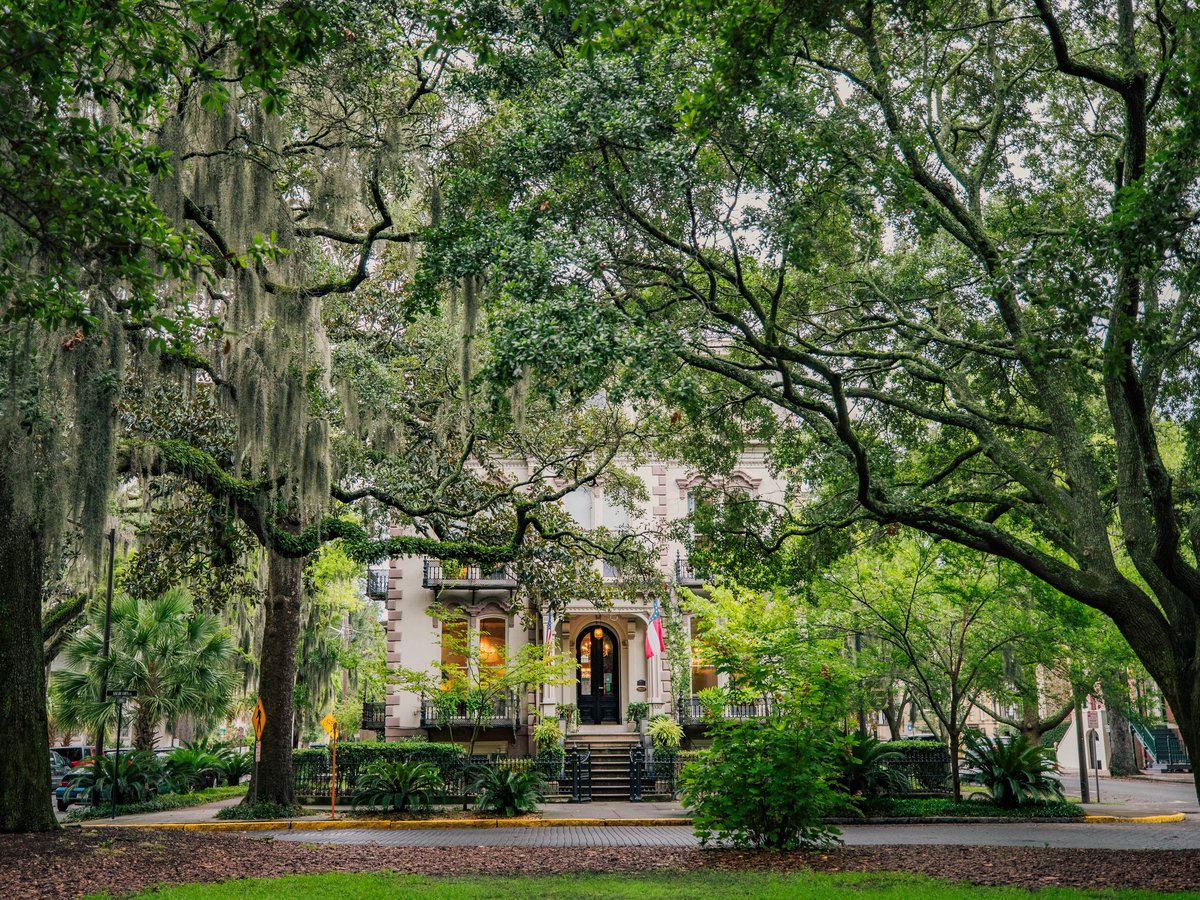
The Historic District's squares are nearly empty at 7am in September. The live oak canopy catches the early light in a way that disappears by 10am, and the air still carries the smell of overnight condensation on the Spanish moss. By 11am, tour trolleys have claimed the streets and the heat has settled in for the day.
Congress Street and Broughton Street have the densest concentration of restaurants and shops with strong air conditioning. When the afternoon storms roll in, they offer better shelter than the open-air spots along the riverfront.
Tybee Island on a September weekday feels like a different place from its Labor Day version. The North Beach near the lighthouse tends to be the emptiest stretch, and the Back River side near Alley 3 faces calmer water for swimming with children.
The squares closer to the riverfront, like Johnson Square and Reynolds Square, tend to be sunnier and hotter than the ones further south near Forsyth Park, where the tree canopy is denser. A south-to-north morning route covers about 2 km and keeps you in shade for the first half.
SCAD students tend to know which restaurants are worth the walk away from the tourist circuit. The stretch of Bull Street south of 37th Street and the blocks around Habersham and 40th Street in the Starland District have the highest concentration of neighborhood spots that locals frequent for weeknight dinners.
Avoid these mistakes
- Packing for early fall based on the calendar. September 15 in Savannah feels closer to July than October. Visitors from the Mid-Atlantic and New England frequently arrive in jeans and ankle boots, then spend the next morning buying shorts and sandals on Broughton Street.
- Scheduling a 10-square walking itinerary in a single stretch without a midday break. The heat index can exceed 38°C (100°F) by early afternoon, and dehydration sets in faster than most visitors expect. Locals split their days in two, heading indoors between noon and 3pm and returning to the squares once the worst heat passes.
- Planning Tybee Island as an all-day beach trip. The afternoon thunderstorms that build over Savannah's mainland often reach Tybee by mid-afternoon, and there is limited shelter on the open beach. Plan for a morning trip and aim to be back in Savannah by 2pm.
- Wearing sandals or flip-flops for a full day of walking the Historic District. The brick and cobblestone surfaces get slick after September's frequent rains, and uneven tree-root heaving across the squares makes ankle injuries more common than visitors expect.
Practical tips for September
Most Historic District attractions keep standard hours through September, but Tybee Island lifeguards typically end their season after Labor Day, which means swimming at the beach is unguarded for most of the month. SCAD's campus galleries reopen for the fall semester in early-to-mid September with free admission and regular weekday hours. Parking meters in the Historic District enforce 2-hour limits year-round, but free street parking in the Victorian District and south of Forsyth Park is easier to find now than during the spring peak. Several trolley tour operators reduce their departure frequency after Labor Day, so check schedules rather than assuming the same hourly departures that run from March through May. Tipping at restaurants follows standard United States practice of 18-20% of the pre-tax total.
FAQ
Is September a good time to visit Savannah?
September ranks 9th out of 12 months for visiting Savannah. Persistent heat, high humidity, and Atlantic hurricane season limit its appeal compared to the comfortable walking weather of October, November, March, and April. The tradeoff is tangible, though. Tour-group traffic thins considerably, accommodation rates reach some of their lowest points, and the return of SCAD students adds creative energy to the Starland District that the tourist-heavy months lack. If you handle heat well and book flexible reservations, September can work. If you want to walk the squares comfortably at any hour, October is the stronger pick.
What is the weather like in Savannah in September?
Warm and wet, with conditions that still belong to Savannah's summer. Morning walks stay comfortable until about 10am, when the humidity becomes a physical presence. The thermometer reads 29°C (84°F) at peak, but the heat index can add 5 to 8 degrees above that. Afternoons bring 20-to-40-minute thunderstorms that clear quickly and leave the brick sidewalks steaming. Evenings cool slowly, with genuine relief rarely arriving before 8 or 9pm. The month improves on August's 232mm of rainfall but remains firmly on the hot side of Savannah's calendar.
Is Savannah crowded in September?
After Labor Day weekend, September is one of Savannah's quietest months for tourism. The Historic District squares feel noticeably less congested, with walk-in availability at restaurants and shorter waits at the Cathedral of St. John the Baptist and the Mercer Williams House. The exception is the Starland and Victorian districts south of Forsyth Park, where SCAD's fall semester fills the cafes and galleries along Bull Street and Habersham Street with student foot traffic.
Is hurricane season a real concern for visiting Savannah in September?
Worth taking seriously, though direct landfalls on Savannah are uncommon. September historically produces more named Atlantic storms than any other month, and systems that approach the Georgia coast can bring flooding to the Historic District's low-lying riverside areas and mandatory evacuations on Tybee Island. The practical approach is to book refundable accommodations, check the National Hurricane Center's 5-day outlook before departure, and know your airline's storm-waiver policy. Most September visits proceed without disruption.
What should I wear in Savannah in September?
Lightweight, breathable fabrics are the only comfortable option. Linen and moisture-wicking synthetics work best in the humidity. Cotton holds moisture and becomes uncomfortable quickly. Closed-toe shoes with grip matter on the brick and cobblestone sidewalks, especially after rain. Bring a hat for sun protection and expect aggressively air-conditioned restaurants and museums, where a light layer might be welcome.
Things to Do in Savannah in September
 Free cancellation
 Savannah Hop-On Hop-Off Trolley Tour
City tour: free cancellation.
via Viator Free cancellation
 Savannah First Squares Culinary & Cultural Walking Food Tour
City tour: 3 hours, free cancellation.
via Viator Free cancellation
 Narrated Historic Savannah Sightseeing Trolley Tour
City tour: 1.2 hours, free cancellation.
via Viator Free cancellation
 Savannah Land & Sea Combo: City Sightseeing Trolley Tour with Riverboat Cruise
Cruise: 5 hours, free cancellation.
via Viator
Southern Flavors Food, Pub Crawl, and History Walking Tour
City tour: 3 hours.
via Viator Free cancellation
 Savannah to Tybee Island with Dolphin Cruise
Day trip: free cancellation.
via ViatorFind a flight to Savannah
Live fares to Savannah appear here once cookies are accepted.
Last verified by automated review (v1.7.2) on . What is automated review?