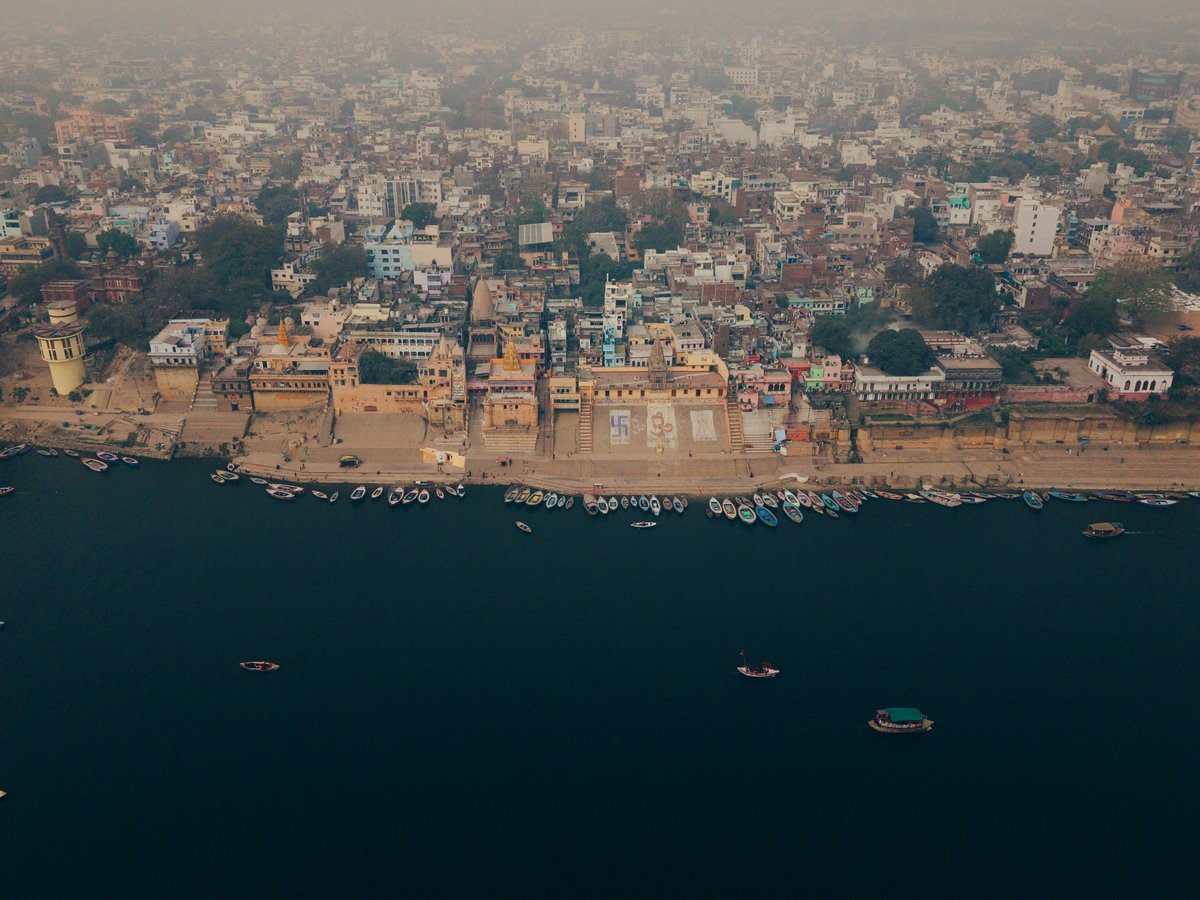
Nearly every place on Varanasi's must-see list is a working sacred site, which makes this less a sightseeing loop than a guide to the city's devotional core. Ramnagar Fort, a fortification near the Ganga River dating from 1750, offers a secular counterweight to the temple circuit, and the Dhamek Stupa at Sarnath carries the city's Buddhist chapter. Between those anchors come shrines to Annapurna, Kaal Bhairav, Durga, Vishalakshi and Hanuman, each a temple with its own following. We put this list together for travellers who want the city's spiritual core rather than a boat-and-sunset checklist. Each of these places is somebody's daily devotion. Dress modestly, keep your voice down, ask before you lift a camera, and give each one more time than you think it needs.
-
1 Kashi Vishwanath Temple
The Hindu temple that heads Varanasi's sacred map, with its own official website for checking arrangements before you go
Of all the Hindu temples in Varanasi, Uttar Pradesh, the Kashi Vishwanath Temple is the one this list puts first. Skip the self-appointed fixers who offer to smooth your way in. The temple runs its own official website at shrikashivishwanath.org, and that is where you should check arrangements before you set out, not with whoever stops you in a lane. Treat it as a working place of worship rather than a sight and you will get far more from it: arrive early, carry as little as you can, and follow instructions without arguing. Whatever your faith, an unhurried hour here explains the rest of the city better than any rooftop view.
-
2 Ramnagar Fort
Ramnagar Road, Varanasi, 221008A fortification from 1750 set near the Ganga River, a secular counterweight to the temple circuit
Ramnagar Fort dates from 1750 and stands on Ramnagar Road in the 221008 postal area, with the Ganga River close enough that the setting itself accounts for half the reason to come. After a run of crowded shrines, a fort shifts the mood in a way this itinerary needs, so don't squeeze it into a rushed half-hour tacked onto the end of a temple day. Give it an unhurried afternoon: walk the grounds slowly, let the scale of the place settle, and leave time to sit by the river before you head back. Bring water and wear shoes you can walk in. It is the one entry here where you can be a sightseer without feeling like an intruder.
Dates from 1750
-
3 Gyanvapi Mosque
A mosque dating from 1664, one of the oldest dated landmarks on this list
Dated to 1664, the Gyanvapi Mosque is a mosque in India and one of the oldest dated buildings on this list. Don't treat it as a quick photo stop between temples. This is a place where restraint sets the right tone, and visitors who arrive with questions rather than assumptions are better received. Ask locally about access the day before you plan around it, and accept the answer you are given. Look at the building properly from wherever you are allowed to stand; its age is reason enough to pause, and the patience you show here is noticed. Come quietly, stay briefly, and leave the debates to the people who live with them.
Dates from 1664
-
4 Annapurna Devi Mandir
A temple to Annapurna Devi, best visited quietly as part of a devotional morning
Small offerings rather than big gestures suit the Annapurna Devi Mandir, a temple in India, and the camera stays in your bag here. The locals understand the rhythm of a working temple far better than any tour script, so watch what the worshippers around you do and follow their lead. Skip the guided rush that herds a group through and out again, because the visitor who stands back, waits, and pays attention gets a truer sense of the place than the one busy framing a shot. Have your route confirmed before you set out, since the street address is not on record and a temple name alone can send a driver the wrong way. Go in the morning, keep the visit short, and if a custom is unclear, ask someone quietly. No one expects you to know everything; being respectful is enough.
-
5 Kaal Bhairav Mandir, Varanasi
A temple to Kaal Bhairav that rewards going with someone who knows the customs
Of every temple on this list, Kaal Bhairav Mandir is the one to visit with a knowledgeable companion; it is a temple in India, and its customs are far easier to follow with a guide than to work out alone. The locals swear by going with someone who knows the form, and that is sound advice for any first-time visitor. Ask your guesthouse host or a trusted guide to come along, or at least to explain what to expect before you go. Keep the visit brief, keep your hands to yourself unless invited, and give way to anyone who has come to worship. The street address is not on record, so confirm the route before you leave.
-
6 Dhamek Stupa
A stupa at Sarnath protected as a Monument of National Importance, the anchor of the city's Buddhist story
Out at Sarnath, Uttar Pradesh, the Dhamek Stupa marks the point where this list shifts from Hindu temples to the region's Buddhist past, and it holds the designation of Monument of National Importance. Skip the hurried taxi dash that buys you a few minutes on site and an hour in traffic; give it a proper half day instead. Package tours that bolt Sarnath onto the end of a temple marathon are worth avoiding, because you arrive too tired to see anything. Leave in the morning, walk around the stupa slowly, and find somewhere shaded to sit before you look again. If pilgrims are circling in prayer, step off their path and keep your voice low. It is the calmest place on this list, and that calm is part of what you came for.
Monument of National Importance
-
7 Chaukhandi Stupa
A Buddhist stupa in Varanasi protected as a Monument of National Importance
For anyone following the region's Buddhist history, Chaukhandi Stupa is a Buddhist stupa in Varanasi, Uttar Pradesh, and too many visitors pass it by. It carries the Monument of National Importance designation, a status that reflects how seriously its heritage is taken. The one-stupa-and-done approach most day-trippers settle for is worth reconsidering; a second site gives the first one real context. Avoid the midday heat, come in the cooler part of the day, walk the whole monument before you photograph anything, and read up a little beforehand so you know what you are looking at. A good guide pays for themselves here. Expect quiet, and keep it that way.
Monument of National Importance
-
8 Durga Mandir, Varanasi
A temple to Durga, best approached as a working shrine rather than a sight
Write down the full name before you set out: Durga Mandir, Varanasi is a temple in India, and a shortened name can send a driver somewhere else. The street address is not on record, so confirm the route with your host before you leave. Not worth the trip if you plan to rush in and out between other stops; this temple rewards a visitor who slows down. Skip the hawkers who press garlands on you at the approach and buy only what you intend to offer. Arrive in modest clothing, take your shoes off where others do, and stand aside while people pray. Watch first, then ask a quiet question if you have one. Temples like this are best understood through the people using them, not through a guidebook page.
This is an early version of the Varanasi list. We add picks as we test more places.
Last verified by automated review (v1.7.2_regen1015-1015-3643-20261015053003) on . What is automated review?