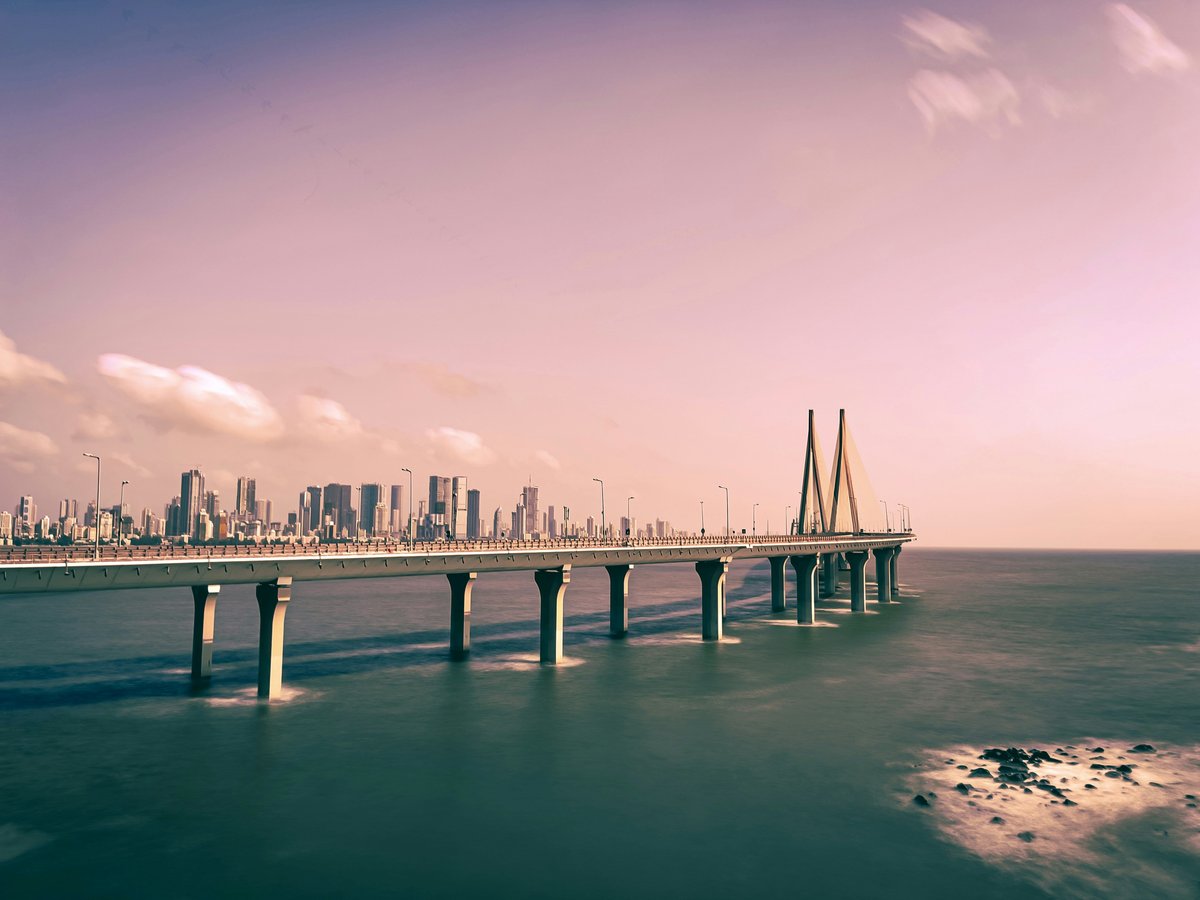
Stay in Mumbai in March
77 hotels in the Trip.com pool for Mumbai, from US$10 a night.
Opens Trip.com on Fri 5 Mar to Sun 7 Mar 2027; change the dates there.
March in Mumbai is hot and bone-dry. Daytime temperatures reach 33.6°C (92°F), nights rarely dip below 23°C (73°F), and rain is almost nonexistent at 3mm for the entire month. The humidity holds at 57%, which is about as dry as Mumbai gets. You'll notice the warmth the moment you step outside your hotel. The air tastes faintly of sea salt and urban dust, and the afternoon light takes on a hazy golden quality that photographers tend to like.
The month's defining moment is Holi, the festival of colors, which typically falls in early to mid-March depending on the Hindu lunar calendar. Mumbai celebrates with a particular intensity in neighborhoods like Dadar, Girgaon, and Lalbaug. Colored powder fills the air from morning onward, and the sound of dhol drums and Bollywood music carries through the lanes. A couple of weeks later, Gudi Padwa marks the Maharashtrian New Year with decorated doorways and street processions.
March sits at the tail of Mumbai's tourist season, which runs roughly November through February. You've missed the coolest weather by a month or so, but you've also missed peak-season pricing and the December crowds at the Gateway of India. Most outdoor sightseeing still works if you plan around the midday sun, sticking to mornings before 10 a.m. and evenings after 4 p.m. The monsoon won't arrive for another three months.
Why visit in March
- Virtually zero rainfall at 3mm for the month. You can plan outdoor activities without checking the forecast.
- Holi celebrations in neighborhoods like Girgaon and Dadar offer a sensory experience that's hard to replicate elsewhere in the world.
- Hotel rates drop 15-25% from December-January peaks as the tourist season winds down, especially in Colaba and Bandra.
- The Arabian Sea is calm and warm, making the ferry to Elephanta Caves smooth and swimming at Juhu and Girgaon Chowpatty comfortable.
- Early Alphonso mangoes from Ratnagiri and Devgad start appearing at Crawford Market in late March, weeks before the main season.
Worth knowing
- Afternoon temperatures above 33°C make midday sightseeing between 11 a.m. and 3 p.m. genuinely uncomfortable, especially at open sites like the Elephanta Caves plateau and the Gateway of India plaza.
- Air quality tends to dip in March as pre-monsoon dust and vehicle emissions get trapped by temperature inversions over the city.
- The dry heat catches visitors off guard. Dehydration sets in faster than you'd expect when walking through Fort or Colaba without water.
- Holi week means some shops and restaurants close for 1-2 days, and transport gets unpredictable on the main festival day.
Best for
Think twice if
March in Mumbai is dry and warm, sitting firmly in the pre-monsoon window. Skies are typically clear or lightly hazy. Mornings start around 25°C and feel pleasant, but by early afternoon the temperature climbs past 33°C. Evenings cool to about 26-27°C, which is when the city really comes alive. You might spot a stray cloud, but rain is almost unheard of. The sea breeze picks up along Marine Drive and Worli in the late afternoon, dropping the perceived temperature by 2-3 degrees near the coast.
Seasonal caution
- Occasional temperature spikes to 37-38°C (99-100°F) are possible during late-March heat events, particularly in inland areas like Andheri and Powai. The coastal strip from Colaba to Bandra stays 2-3°C cooler.
- UV index reaches 10-11 by midday in March. Sunburn can develop in under 20 minutes of direct exposure, even on hazy days.
Year-round climate
Averages from the last 5 years.
| Month | Avg high (°C) | Avg low (°C) | Rainfall (mm) |
|---|---|---|---|
| Jan | 30 | 19 | 2 |
| Feb | 32 | 20 | 0 |
| Mar | 34 | 23 | 3 |
| Apr | 34 | 25 | 1 |
| May | 33 | 27 | 97 |
| Jun | 30 | 26 | 461 |
| Jul | 28 | 25 | 856 |
| Aug | 28 | 25 | 413 |
| Sep | 28 | 25 | 478 |
| Oct | 31 | 24 | 95 |
| Nov | 33 | 22 | 7 |
| Dec | 31 | 21 | 20 |
Headline events
Holi
Early to mid-March, varies by Hindu lunar calendar
India's festival of colors takes over Mumbai for a full day of gulal (colored powder), water balloons, thandai drinks, and street celebrations. Neighborhoods like Dadar, Girgaon, and Lalbaug host some of the city's most intense gatherings. The atmosphere is joyful and loud, with dhol drums and Bollywood music carrying through the lanes from about 9 a.m. Bollywood often hosts its own Holi parties in Juhu and Bandra, though those typically require invitations.
Best things to do in March
Experience Holi in Dadar and Girgaon
culturalThe residential lanes of Dadar and Girgaon transform during Holi. Residents gather in building compounds and on streets, throwing gulal and dancing to dhol drums. The celebrations typically start around 9 a.m. and wind down by early afternoon. Wear old clothes, leave your phone in a sealed bag, and be ready for the smell of wet color powder mixed with rose water.
Holi falls in early to mid-March. This is the only time of year Mumbai's streets turn into a spontaneous color festival.Booking tipNo booking needed. Show up in old white clothes. Avoid carrying valuables or electronics without waterproof protection.
Ferry to Elephanta Caves
sightseeingThe 1-hour ferry from the Gateway of India to Elephanta Island crosses calm March seas. The 6th-century rock-cut Shiva temples are a UNESCO World Heritage Site. The main cave houses a 6-meter-tall Trimurti sculpture. About 120 steps lead up from the dock to the cave complex. Monkeys are territorial near the food stalls at the base.
Calm pre-monsoon seas mean smooth crossings, and dry weather makes exploring the open-air cave complex comfortable. During monsoon months, the ferry service is often suspended entirely.Booking tipFirst ferry departs at 9 a.m. from the Gateway of India jetty. Buy tickets at the counter. Weekday mornings are significantly less crowded than weekends.
Sunset walk along Marine Drive
outdoorsThe 3.6-kilometer arc from Nariman Point to Girgaon Chowpatty faces west over the Arabian Sea. In March, the dry atmosphere produces clear sunsets that light up the water. Locals call it the Queen's Necklace after dark, when the streetlights trace the curve of the bay. The concrete sea wall fills up by about 5:30 p.m.
March's dry skies and 57% humidity produce sharper sunsets than the hazy monsoon months. Evening temperatures drop to 26-27°C, making the walk comfortable rather than sticky.Early morning at Sanjay Gandhi National Park
natureThis 104-square-kilometer national park in Borivali is home to leopards, spotted deer, and the Kanheri Caves. Dry March conditions thin the undergrowth, making wildlife sightings more likely near the park's three lakes. The Kanheri Caves, a complex of 109 Buddhist rock-cut monuments dating to the 1st century BCE, sit about 6 km into the park.
Dry season means animals congregate near remaining water sources, and reduced vegetation improves visibility. By June, the monsoon makes many trails muddy and leech-prone.Booking tipEnter before 7:30 a.m. to beat both the heat and the crowds. The park closes on Mondays.
Street food crawl through Mohammed Ali Road
foodAfter sundown, Mohammed Ali Road in South Mumbai becomes one of the city's most concentrated street food corridors. Kebab stalls fire up around 7 p.m., and the smell of charred meat and fresh naan carries down the street. Try the seekh kebabs, malpua (fried sweet pancakes), and phirni (set rice pudding served in clay pots). The area around Minara Masjid is the densest stretch.
March evenings cool to about 26°C, making standing at outdoor food stalls comfortable. During monsoon months, the open-air stalls scale back significantly.Booking tipNo booking needed. Go after 8 p.m. for the full range of vendors. Weeknights are less overwhelming than Friday or Saturday.
Cricket at Wankhede Stadium
sportsThe IPL (Indian Premier League) season typically opens in late March. The Mumbai Indians play home matches at the 33,000-seat Wankhede Stadium in Churchgate. The stadium sits about 200 meters from the Marine Drive waterfront. The atmosphere during an IPL match is loud, partisan, and unlike most sporting events outside India.
The IPL season usually starts in the last week of March. This is one of few windows to catch T20 cricket at Wankhede outside international tours.Booking tipIPL tickets sell out fast. Check BookMyShow 2-3 weeks before match dates. General admission starts around 800-1,500 rupees.
Heritage walk through the Fort district
cultureThe Fort neighborhood in South Mumbai holds the densest concentration of Victorian Gothic and Art Deco architecture in India. The stretch from Chhatrapati Shivaji Maharaj Terminus to the Oval Maidan passes the Bombay High Court, the University of Mumbai's Rajabai Clock Tower, and rows of Art Deco apartments along Oval Maidan's western edge. The UNESCO World Heritage Victorian Gothic ensemble is best seen in morning light.
March's dry weather and lower humidity make 2-3 hour outdoor walks feasible. Start by 8 a.m. to avoid the midday heat and you'll have comfortable conditions until about 11 a.m.Booking tipGuided walking tours operate on weekends. Khaki Tours and Mumbai Magic run well-regarded routes through the Fort area.
Dawn visit to Banganga Tank
heritageThis ancient freshwater tank in Malabar Hill dates to the 12th century. Small temples surround the stepped tank, and the stone edges have a worn, meditative quality. At dawn, temple bells sound as residents perform morning rituals at the water's edge. The Walkeshwar temple complex nearby is one of the oldest surviving religious sites in Mumbai.
The dry March air means clear early morning light on the water. Temperatures at 6-7 a.m. hover around 24-25°C, comfortable for an unhurried visit. Worth the early alarm.Booking tipNo booking needed. Arrive between 6 and 7 a.m. for the best light and fewest visitors. Free to enter.
What to eat in March
In season: fruit
Alphonso mango (Hapus)
The first Alphonso mangoes from Ratnagiri and Devgad arrive at Mumbai's wholesale markets in late March. They tend to be smaller and pricier than the April-May peak supply, but the flavor is intense, almost perfume-like. Look for them at Crawford Market (Mahatma Jyotiba Phule Mandai) and the Dadar wholesale fruit market.
What to drink
Thandai
Cold spiced milk blended with almonds, fennel seeds, poppy seeds, rose petals, and saffron. Traditionally served during Holi. Street vendors across Mohammed Ali Road and Bhendi Bazaar sell glasses for 30-60 rupees. The texture is gritty in a pleasant way, with the saffron giving it a pale golden color.
Aam Panna
A tart, cooling drink made from raw green mangoes, cumin, mint, and black salt. Mumbai starts drinking aam panna as temperatures climb in March. Juice stalls along Juhu Beach and Girgaon Chowpatty serve it fresh from about February onward. It functions as a natural rehydration drink.
Kokum Sherbet
A deep-purple cooling drink made from the kokum fruit (Garcinia indica), native to the Konkan coast south of Mumbai. Mixed with water, sugar, and cumin, it's the Maharashtrian answer to the March heat. Sold at street stalls across Dadar and Fort for 15-30 rupees a glass.
Festival food
Puran Poli
Sweet flatbread stuffed with a filling of chana dal and jaggery, cooked in ghee. This is the signature Maharashtrian dish for Gudi Padwa. Home cooks across Dadar and Girgaon prepare batches in the days leading up to the festival. Some Maharashtrian restaurants near Shivaji Park serve it through the month.
Gujiya
Deep-fried crescent-shaped pastries filled with sweetened khoya (reduced milk), coconut, and crushed nuts. The defining Holi sweet, found at every mithai shop in Mumbai during early March. Shops along Kalbadevi Road tend to make them fresh daily during festival week.
Regular events in March
Gudi PadwaFree
The Maharashtrian New Year is marked by decorated gudi poles (bamboo sticks topped with silk cloth and garlands) hanging from balconies across Dadar, Girgaon, and Lalbaug. Processions of women in traditional nauvari saris move through the streets. Homes serve puran poli and shrikhand throughout the day.
Late March to early April, follows the Hindu lunisolar calendarRang PanchamiFree
Rang Panchami falls 5 days after Holi. It is a distinctly Maharashtrian continuation of Holi, with celebrations in parts of Girgaon and the surrounding neighborhoods tending to be more community-focused and less chaotic than Holi itself.
5 days after Holi, typically mid-MarchIPL Season Opening
The Indian Premier League cricket season typically opens in late March. The Mumbai Indians, one of the most successful IPL franchises, play home matches at Wankhede Stadium in Churchgate. Match days bring a festive atmosphere to the Marine Drive area nearby.
Late March onwardBest places this March
Marine Drive
waterfrontThe 3.6 km seafront promenade faces west and delivers some of Mumbai's clearest sunsets during the dry March window. The concrete tetrapods along the sea wall collect spray from the Arabian Sea. By 6 p.m. on weekdays, office workers from Nariman Point fill the benches. The arc of lights after dark is the Queen's Necklace.
Marine LinesElephanta Caves
heritageThe UNESCO-listed 6th-century rock-cut temples on Elephanta Island are accessible by a 1-hour ferry from the Gateway of India. The main cave houses a 6-meter-tall Trimurti sculpture of Shiva. March's dry weather and calm seas make this the easiest time to visit before the monsoon ferry shutdowns.
Mumbai HarbourCrawford Market (Mahatma Jyotiba Phule Mandai)
marketMumbai's oldest and largest wholesale market was built in 1869 with Norman Gothic architecture designed by William Emerson. The fruit section on the ground floor is where early-season Alphonso mangoes first appear in late March. The pet market, flower stalls, and spice dealers fill the surrounding lanes.
FortGirgaon Chowpatty
beachThis crescent-shaped beach at the northern end of Marine Drive is Mumbai's most popular evening gathering spot. In March, the bhel puri and pav bhaji vendors set up by 5 p.m., and families arrive by 6 p.m. The sand gets uncomfortably hot before sunset, so time your visit for after 5 p.m.
GirgaonBanganga Tank
heritageA 12th-century freshwater tank in the Malabar Hill neighborhood. Small temples and old stone steps surround the tank on all sides. The place feels entirely disconnected from the high-rises 200 meters away. Dawn visits offer the sound of temple bells and soft light reflecting off the water.
Malabar HillSanjay Gandhi National Park
natureA 104 sq km forested park inside city limits at Borivali. The dry March conditions push leopards and spotted deer toward the park's lakes. The Kanheri Caves, 109 Buddhist rock-cut monuments from the 1st century BCE, are a 6 km walk or drive into the park interior.
BorivaliKala Ghoda precinct
cultural districtThe cultural quarter between the Oval Maidan and the waterfront holds the Chhatrapati Shivaji Maharaj Vastu Sangrahalaya (formerly Prince of Wales Museum), the Jehangir Art Gallery, and a cluster of cafes and galleries along Rampart Row. March's dry evenings make the outdoor cafe seating pleasant.
Fort
Your packing checklist
Tick items off as you pack. Your progress saves in this browser.
All packed — have a great trip.
Insider tips
The first Alphonso mangoes arrive at Dadar's wholesale APMC market before they reach Crawford Market, and the wholesale price is typically 30-40% less. Go to Dadar West in the last week of March and ask for 'Hapus' from Devgad. The vendors will let you smell and squeeze before buying.
During Holi, the quieter residential areas of Bandra West, particularly around Pali Hill, tend to have more organized, less intense celebrations than the South Mumbai neighborhoods. Some buildings host rooftop Holi gatherings that welcome visitors if you know a resident.
Mumbai's suburban trains are noticeably emptier during Holi week, especially on the festival day itself. If you're not celebrating, this is a rare window to ride the Western Line from Churchgate to Borivali with an actual seat.
The evening sea breeze along the Worli Sea Face promenade starts picking up around 5 p.m. in March. The stretch between Worli Fort and the Bandra-Worli Sea Link offers cooler air and better views than the more famous Marine Drive, with a fraction of the crowd.
For Gudi Padwa, walk through the lanes of Girgaon between 8 and 10 a.m. to see the decorated gudis hanging from upper-floor balconies. The visual is distinctive and specific to Maharashtra. Most guidebooks skip this entirely.
Avoid these mistakes
- Scheduling outdoor sightseeing between 11 a.m. and 3 p.m. The temperature difference between 9 a.m. (around 27°C) and 1 p.m. (33°C+) is significant, and shade is scarce at open sites like the Gateway of India plaza, Oval Maidan, and the Elephanta Caves plateau. Shift your heavy walking to mornings and evenings.
- Wearing new or expensive clothes during Holi week. The colored powder and water don't wash out of most fabrics. Even if you plan to stay indoors, there's a reasonable chance someone will get you on the street. Pack disposable clothes for the 2-3 days around the festival.
- Underestimating dehydration in dry heat. Mumbai's March humidity of 57% is low enough that sweat evaporates quickly, so you don't feel as overheated as you are. By the time you feel thirsty, you're already behind on fluids. Carry water everywhere and drink on a schedule, not on thirst.
- Trying to use taxis and auto-rickshaws on Holi day. Many drivers don't operate, and those who do may charge 2-3 times the meter rate. Plan to walk or use the metro and suburban trains if you need to move around the city during the festival.
Practical tips for March
Book accommodation in Colaba or Fort for walkable access to most March attractions. These neighborhoods put the Gateway of India, Crawford Market, Kala Ghoda, and Marine Drive within a 2 km radius. Hotels often discount 15-25% from peak season rates if you book directly and mention a multi-night stay. For Holi, confirm with your hotel whether they host celebrations or provide a quiet retreat. Some properties in Juhu and Bandra organize controlled Holi events for guests. Carry cash in small denominations (100 and 200 rupee notes) for street food, auto-rickshaws, and market vendors. UPI (India's mobile payment system) has high adoption but not universal coverage at street stalls. Temple visits at Siddhivinayak and Haji Ali require removing shoes and covering shoulders. The Churchgate-to-Borivali Western Line suburban train is the fastest way to reach Sanjay Gandhi National Park. Buy a return ticket at the station counter for about 15 rupees. Women-only carriages, marked in green, are less crowded and available during all hours.
FAQ
Is March a good time to visit Mumbai?
March is a solid time to visit. It's the tail end of the dry season, with virtually no rain and manageable humidity at 57%. The main trade-off is heat, with daytime temperatures around 33-34°C (92-93°F). It's noticeably warmer than the ideal December-February window but still far more comfortable than the April-May pre-monsoon heat or the June-September monsoon. If you time your outdoor activities for mornings and evenings, the heat is workable. The bonus is lower prices and thinner crowds than peak season, plus Holi if your dates line up.
What is the weather like in Mumbai in March?
Hot and dry. Average highs reach 33.6°C (92°F) and lows sit around 22.9°C (73°F). Rainfall is negligible at 3mm for the entire month, and humidity averages 57%. Mornings before 9 a.m. are the most comfortable part of the day, typically around 25-27°C. Afternoons between 12 and 3 p.m. are the least pleasant. The sea breeze picks up along the coast at Marine Drive, Worli, and Juhu in the late afternoon and provides noticeable relief. You won't need rain gear.
Is it safe for tourists to celebrate Holi in Mumbai?
Generally yes, with some precautions. Holi celebrations in residential neighborhoods like Dadar and Girgaon are community events where visitors are typically welcomed. That said, people will throw colored powder and water at you without asking. Some colors contain chemicals that can irritate skin, so apply coconut oil on exposed skin before going out, which helps the color wash off later. Avoid isolated areas during the festival and stay with groups. Keep valuables sealed in waterproof bags. Women travelers sometimes report unwanted physical contact during Holi. Sticking with organized hotel events or trusted groups is a reasonable alternative to open-street celebrations.
What should I wear in Mumbai in March?
Light, breathable cotton or linen in loose fits. Mumbai is more conservative than beach destinations like Goa. Shorts and sleeveless tops are fine in tourist areas like Colaba and Bandra, but temple visits at Siddhivinayak and Haji Ali require covered shoulders and long pants or a skirt. For Holi, wear old white cotton clothes you can throw away afterward. At 33°C, dark synthetic fabrics will make you miserable within an hour of walking.
How crowded is Mumbai in March?
Mumbai is always crowded. It's a city of over 20 million people. But in terms of tourist crowds specifically, March is noticeably lighter than December-January. You'll find shorter waits at the Elephanta Caves ferry, fewer queues at the Chhatrapati Shivaji Maharaj Vastu Sangrahalaya museum, and easier restaurant reservations in Bandra and Colaba. The exception is Holi weekend, when domestic tourism sees a brief spike. Public transport stays packed year-round during rush hours from 8-10 a.m. and 5-8 p.m.
Things to Do in Mumbai in March
 Free cancellation
 Dharavi slum tour in Mumbai by Female tour guides of the slum
Day trip: free cancellation.
via Viator Free cancellation
 Private Mumbai Sightseeing Tour (Traveller's Choice Award Winner)
Day trip: free cancellation.
via Viator Free cancellation
 Elephanta Caves & Island Guided Private Tour
Day trip: free cancellation.
via Viator Free cancellation
 Highlights of Mumbai Sightseeing Tour: TRAVELLERS CHOICE AWARDED
Day trip: free cancellation.
via Viator Free cancellation
 The Original Mumbai by Dawn - Recommended by Nigella Lawson & Nat Geo Traveller!
Day trip: 3 hours, free cancellation.
via Viator Free cancellation
 Private Mumbai Sightseeing Tour(Travellers Choice Award Winner)
Day trip: free cancellation.
via ViatorFind a flight to Mumbai
Live fares to Mumbai appear here once cookies are accepted.
Last verified by automated review (v1.7.2) on . What is automated review?