Stay in Mumbai in February
77 hotels in the Trip.com pool for Mumbai, from US$10 a night.
Opens Trip.com on Fri 5 Feb to Sun 7 Feb 2027; change the dates there.
February might be your last window of genuinely comfortable weather in Mumbai before the pre-monsoon heat takes hold in March. Daytime temperatures sit around 32°C (89°F), nights cool to about 20°C (68°F), and rainfall is effectively zero. Humidity hovers near 54%, which is about as dry as this coastal city gets. The warm salt breeze off the Arabian Sea still carries a faint coolness in February, the last month you'll notice it before the air turns thick and heavy.
The timing lines up with the Kala Ghoda Arts Festival, which typically fills the narrow lanes around Rampart Row in the Fort district during the first week of February. Open-air installations, live music, and food stalls take over the stretch between the Chhatrapati Shivaji Maharaj Vastu Sangrahalaya and Elphinstone College. It tends to draw well over 150,000 visitors across 9 days. Worth noting, this is also peak tourist season. Domestic visitors from Delhi and Kolkata come south to escape northern winters, overlapping with international travelers who've been arriving since November.
You'll pay for the timing. Hotel rates in Colaba and Bandra run roughly 30-50% above the annual average, and popular restaurants in Lower Parel and Worli can fill up on weekends without a reservation. That said, the trade-off is real. February's dry skies unlock experiences the monsoon shuts down for 4 months. Ferries to Elephanta Caves run on schedule. Sanjay Gandhi National Park's trails stay passable. Street food vendors along Mohammed Ali Road operate without the tarps and rain shields that cover their grills from June through September.
Why visit in February
- Zero rainfall and 54% humidity make February the driest month of the year, ideal for walking the 3.6 km Marine Drive promenade and spending full days outdoors without monsoon interruptions.
- The Kala Ghoda Arts Festival in the first week of February is South Asia's largest street arts festival, with free open-air exhibitions, food stalls, and live performances concentrated in a 6-block area of Fort district.
- Winter fishing season means pomfret, surmai, and bombil arrive fresh at markets like Sassoon Dock in Colaba. Seafood at restaurants in Mahim and Bandra is noticeably better than in monsoon months.
- Ferries to Elephanta Caves and Alibaug run reliably all month. During monsoon season (June through September), rough seas cancel these routes for weeks at a time.
- Evening temperatures around 20°C (68°F) make rooftop dining and waterfront walks genuinely pleasant, a contrast to the sticky 25°C nights of July and August.
Worth knowing
- Peak season pricing. Hotel rates in Colaba, Bandra, and Juhu run 30-50% above the annual average. A room that costs ₹4,000 per night in August might reach ₹6,000 or more in February.
- Crowds at major sites like Gateway of India, Elephanta Caves, and Marine Drive are at their highest. Marine Drive after 5 pm on weekends gets dense enough that the waterfront railing feels shoulder-to-shoulder.
- Daytime UV intensity is strong despite the moderate 32°C readings. Clear skies and low humidity mean less atmospheric filtering. Sunburn catches tourists off guard by day 2.
- Air quality in Mumbai tends to be moderate to poor in February, with PM2.5 readings sometimes reaching 80-120 µg/m³ in areas near traffic corridors like the Western Express Highway.
Best for
Think twice if
February in Mumbai is warm and almost completely dry. You'll feel the sun strongly during midday hours, but mornings and evenings are comfortable. Expect clear skies for nearly the entire month. The air carries a faint coastal humidity but nothing close to the damp heaviness of monsoon season. A light breeze off the Arabian Sea tends to pick up in the late afternoon, cooling things down along Marine Drive and the Bandra waterfront. By 8 pm, the temperature has usually dropped enough that a light layer feels welcome for the first time all day.
Year-round climate
Averages from the last 5 years.
| Month | Avg high (°C) | Avg low (°C) | Rainfall (mm) |
|---|---|---|---|
| Jan | 30 | 19 | 2 |
| Feb | 32 | 20 | 0 |
| Mar | 34 | 23 | 3 |
| Apr | 34 | 25 | 1 |
| May | 33 | 27 | 97 |
| Jun | 30 | 26 | 461 |
| Jul | 28 | 25 | 856 |
| Aug | 28 | 25 | 413 |
| Sep | 28 | 25 | 478 |
| Oct | 31 | 24 | 95 |
| Nov | 33 | 22 | 7 |
| Dec | 31 | 21 | 20 |
Headline events
Kala Ghoda Arts Festival
Late January through first week of February
South Asia's largest street arts festival takes over the Kala Ghoda precinct in Fort district for 9 days. Expect open-air art installations along Rampart Row, live theatre at the Cross Maidan, literary readings, food stalls selling everything from Parsi akuri to Malvani fish curry, and live music stages. The festival draws over 150,000 visitors and is entirely free to attend. It fills the narrow lanes between the Chhatrapati Shivaji Maharaj Vastu Sangrahalaya and the Rhythm House building site.
Best things to do in February
Walk the Kala Ghoda Arts Festival
cultureThe festival transforms the Kala Ghoda neighborhood in Fort district into an open-air gallery for 9 days. Art installations line Rampart Row, theatre performances run at Cross Maidan, and food stalls serve regional dishes from across Maharashtra. The literary discussions and film screenings tend to be the quieter draws. Evenings bring live music to the main stage near the David Sassoon Library.
The festival only runs once a year, typically ending in the first week of February. There is no equivalent event the other 11 months.Booking tipNo booking needed. The entire festival is free and open. Go on a weekday morning for thinner crowds. Weekend evenings get dense enough to make the narrow lanes difficult to navigate.
Day trip to Elephanta Caves
sightseeingThe UNESCO-listed cave temples sit on Elephanta Island in Mumbai Harbour, a 1-hour ferry ride from the Gateway of India jetty. The main cave holds a 6-metre Trimurti sculpture of Shiva carved from basalt rock in the 5th or 6th century. The climb from the jetty to the caves takes about 20 minutes on a paved path with roughly 120 steps.
February's zero rainfall means reliable ferry service and dry paths. During monsoon months (June through September), ferries cancel frequently due to rough seas, and the stone steps become slippery.Booking tipFerries depart from Gateway of India starting at 9 am. Buy tickets at the jetty counter. The first and second boats tend to be less crowded than later departures.
Sunset walk along Worli Sea Face
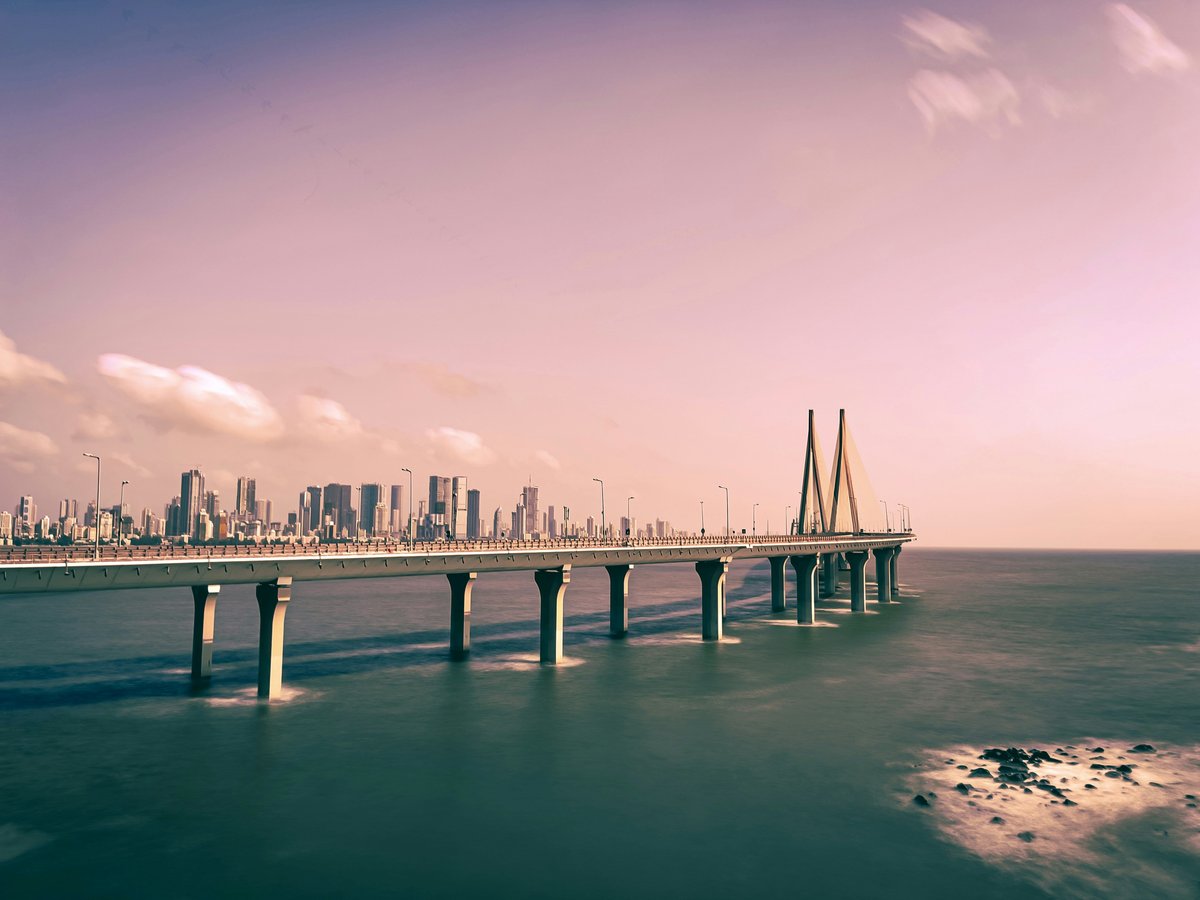
outdoorsThe Worli Sea Face promenade stretches roughly 3 km along the western coastline, with views of the Bandra-Worli Sea Link and the open Arabian Sea. The concrete seawall fills up with families and couples after 5 pm. In February, the sun drops behind the sea link around 6:15 pm, casting the cables in orange light. The breeze picks up noticeably along this stretch.
Clear February skies produce reliable sunset colours. During monsoon months, the promenade floods from wave surges and sections are barricaded off entirely.Street food walk through Mohammed Ali Road
foodMohammed Ali Road in south-central Mumbai is lined with food stalls serving kebabs, malpua, nalli nihari, and phirni. The best stalls cluster near Minara Masjid. The smell of charcoal-grilled seekh kebabs and the hiss of flatbread hitting hot tawas define the experience. Most stalls open after 7 pm and stay busy past midnight.
February's dry weather and lower humidity make evening street food walks comfortable. In monsoon months, the road floods regularly and many stalls close or relocate. The 20°C evening temperature is ideal for standing at outdoor counters.Booking tipNo booking needed. Go after 8 pm for the full selection. Weekday nights are less hectic.
Watch cricket at Wankhede Stadium
sportsWankhede Stadium in Churchgate holds 33,000 spectators and hosts international and IPL matches. The atmosphere during a day-night match, with the floodlights reflecting off Marine Drive to the north, is distinctive to Mumbai. February often falls during India's home international cricket season.
India's cricket season typically runs from October through March. February often features international test or ODI matches. IPL preseason activity also picks up. Check the BCCI schedule, as fixtures vary year to year.Booking tipTickets for international matches sell out within hours of release. Check BookMyShow or the BCCI website 3-4 weeks before the match date. IPL tickets are even harder to get.
Morning hike in Sanjay Gandhi National Park
outdoorsThis 104 sq km national park in the northern suburb of Borivali holds deciduous forest, the Kanheri Caves (109 Buddhist rock-cut caves dating from the 1st century BCE), and a small population of leopards. The main trail from the park entrance to Kanheri Caves is about 5 km one way on a paved road, though side trails branch into denser forest.
February's dry conditions keep trails firm and stream crossings passable. Deciduous trees have shed some foliage, improving sight lines for birdwatching. The park closes several trails during heavy monsoon months due to flooding and landslide risk.Booking tipThe park opens at 7:30 am. Entry fee is ₹53 for adults. Arrive early to avoid the midday heat on exposed sections of the trail.
Attend the Elephanta Festival of Music and Dance
cultureOrganized by the Maharashtra Tourism Development Corporation, this 2-day festival features classical Indian music and dance performances. It has historically been held at the amphitheatre on Elephanta Island or near the Gateway of India. Sitar, tabla, Bharatanatyam, and Kathak performers from across India participate.
The festival is held annually in February, timed to coincide with the peak dry season when outdoor performances and ferry access to Elephanta Island are reliable.Booking tipCheck MTDC's website for confirmed dates, which typically land in mid to late February. Some performances require tickets, while others are open-air and free.
Ferry to Alibaug
day tripAlibaug is a coastal town about 30 km south of Mumbai across the harbour. The Mandwa ferry from Gateway of India takes roughly 45 minutes. The Kolaba Fort, accessible on foot at low tide across a sandy causeway, sits about 1.2 km offshore. The beaches at Alibaug and Nagaon are quieter alternatives to Juhu.
February's calm seas make the ferry crossing smooth and departures reliable. During monsoon, the Mandwa ferry service is suspended entirely for 3-4 months due to rough waters.Booking tipBook ferry tickets on the Mandwa Jetty or through operators like AJANTA. Weekend ferries fill up. A weekday trip avoids the crowds at Kolaba Fort.
What to eat in February
In season: fruit
Mahabaleshwar strawberries
Strawberries from the hill station of Mahabaleshwar, about 260 km southeast of Mumbai, hit peak season in February. Vendors at Crawford Market (Mahatma Jyotiba Phule Mandai) and Dadar's wholesale market sell them for ₹100-200 per kg. They're smaller and more tart than California varieties, with a fragrance that fills the market stalls.
Ber
Indian jujube fruit, called ber locally, reaches its brief peak in January and February. Vendors sell it in small paper bags outside train stations across the city. The green ones are tart and crunchy. The ripe brown ones are sweeter, with a texture somewhere between an apple and a date.
Street food peaks
Bombil fry
Bombil, known as Bombay duck despite being a fish, is dried on racks along the Vasai and Arnala coastline north of the city during the dry winter months. Street stalls in Girgaon and Dadar fry it until the exterior shatters and the inside stays soft. The smell is pungent and polarizing. February's low humidity produces the crispiest fry.
Lonavala chikki
Chikki, a brittle made from jaggery and groundnuts, is a winter specialty from the hill town of Lonavala, 95 km east of Mumbai. Cool February temperatures help the jaggery set properly during production. Shops along Lonavala's main road sell dozens of varieties, but the peanut original is still the benchmark. In Mumbai, vendors at Crawford Market carry fresh stock.
What to drink
Fresh sugarcane juice
Sugarcane harvest season in Maharashtra runs November through March, and February juice is noticeably sweeter than what you'd get from stored stalks later in the year. Vendors with hand-cranked presses line the streets near Girgaon Chowpatty and outside Dadar station, charging ₹20-30 per glass. They squeeze it with ginger and lime.
In markets
Pomfret and surmai
Winter fishing season runs through February, and silver pomfret and surmai (king mackerel) arrive fresh at Sassoon Dock in Colaba and Versova's fishing jetty by 6 am. Restaurants in Mahim and Bandra West serve them fried whole or in green masala preparations. The texture of fresh winter pomfret is noticeably firmer than frozen monsoon-season stock.
Regular events in February
Elephanta Festival of Music and Dance
A 2-day classical Indian music and dance festival organized by MTDC, typically featuring performances of sitar, Kathak, and Bharatanatyam at the amphitheatre on Elephanta Island or near the Gateway of India.
Mid to late February, dates vary annuallyMaha ShivratriFree
Major Hindu festival honouring Shiva, observed with night-long vigils and temple visits. In Mumbai, the Babulnath Temple near Girgaon and Siddhivinayak Temple in Prabhadevi see the largest gatherings. Devotees fast and queue for darshan through the night. The date follows the Hindu lunar calendar and falls in February in some years, March in others.
Late February or early March, varies by lunar calendarHorse racing season at Mahalaxmi Racecourse
The Royal Western India Turf Club runs its winter racing season at the Mahalaxmi Racecourse, one of the few operational horse racing venues in India. The track sits against the Mumbai skyline with views of Haji Ali Dargah. Race days typically run on weekends with crowds of 5,000-10,000.
Weekends throughout February, part of the November-April racing seasonBest places this February
Kala Ghoda district
neighborhoodThe art precinct in south Mumbai's Fort area holds the Chhatrapati Shivaji Maharaj Vastu Sangrahalaya, the Jehangir Art Gallery, and a concentration of colonial-era buildings. In early February, the Kala Ghoda Arts Festival transforms the narrow lanes into an open-air gallery. Even outside festival week, the neighbourhood has more gallery density per block than anywhere else in the city.
FortMarine Drive
promenadeThe 3.6 km arc of Art Deco buildings along Back Bay is at its most walkable in February. The concrete seawall fills up by late afternoon, but mornings before 8 am are quiet enough to hear the waves. The stretch from Nariman Point to Girgaon Chowpatty takes about 45 minutes at an easy pace. Clear February skies mean you can see the full curve of the necklace lights after dark.
ChurchgateBanganga Tank
historic siteA freshwater tank on Malabar Hill surrounded by temples dating to the 12th century. It sits in a quiet residential pocket that feels disconnected from the rest of south Mumbai. The stone steps leading down to the water are lined with small shrines. February mornings here are cool and still, with temple bells and birdsong the dominant sounds. The annual Banganga Festival of classical music sometimes falls in late January or February.
Malabar HillCrawford Market (Mahatma Jyotiba Phule Mandai)
marketMumbai's main wholesale produce market, housed in a Norman Gothic building designed by William Emerson in 1869. February is when Mahabaleshwar strawberries flood the fruit section. Vendors stack them in wooden crates near the Carnac Road entrance. The building's stone reliefs by Lockwood Kipling (Rudyard's father) are worth a look above the entrance arches.
FortGirgaon Chowpatty
beachThe beach at the northern end of Marine Drive is more of a gathering place than a swimming beach. In February evenings, the sand fills with families buying bhel puri and pav bhaji from the row of stalls along the road. The water is calmer in February than during monsoon, when waves crash over the seawall. The 20°C evening breeze off the water makes it one of the more comfortable months to sit here.
GirgaonSassoon Dock
marketMumbai's oldest dock, in Colaba, is where fishing boats unload their catch starting at 5 am. February's winter fishing season brings in fresh pomfret, surmai, and prawns. The dock smells strongly of fish and salt water. It has also become an art space, with the Sassoon Dock Art Project occasionally hosting installations in the old warehouse buildings.
ColabaSanjay Gandhi National Park
parkThe 104 sq km park in Borivali is the only national park within a major city's limits. February's dry season means firm trails, reduced mosquito activity, and better sightlines through the partially bare deciduous canopy. The Kanheri Caves, a complex of 109 Buddhist rock-cut caves, sit about 5 km into the park on a paved approach road.
BorivaliBandra Fort and Bandstand Promenade
historic siteThe Portuguese-era Castella de Aguada, now called Bandra Fort, sits on a small promontory with views across Mahim Bay toward the Worli skyline. The Bandstand Promenade below runs roughly 1.5 km along the waterfront. In February, the low humidity means clearer views toward the Bandra-Worli Sea Link, and the sunset from the fort ruins around 6:15 pm tends to be worth the walk.
Bandra
Your packing checklist
Tick items off as you pack. Your progress saves in this browser.
All packed — have a great trip.
Insider tips
The Dadar Phool Galli (flower market) on weekday mornings between 6 and 9 am has better variety and lower prices than the tourist-oriented flower sellers at Crawford Market. It sits right outside Dadar station's west exit. The scent of jasmine and marigold is strong enough to hit you from the platform.
Skip the restaurants directly facing Gateway of India. Walk 10 minutes south along Colaba Causeway to the lane stalls near the Strand Cinema side. The food is better, portions are larger, and prices drop by roughly half. Bademiya, the well-known kebab stall, operates on Tulloch Road behind the Taj Mahal Palace.
Local trains are noticeably less crowded in February than during monsoon, when flooding delays compress commuters into fewer services. Try the Churchgate-to-Bandra Western line between 11 am and 4 pm. A second-class ticket costs ₹10-15 and gives you a 25-minute window into how Mumbai moves. Avoid the 8-10 am and 5-8 pm windows entirely.
For sunset, most tourists crowd Marine Drive's southern end near Nariman Point. The view is better from the Worli Sea Face promenade or from the ruins at Bandra Fort, where you get the Bandra-Worli Sea Link in the foreground and far fewer people.
The Chhatrapati Shivaji Maharaj Vastu Sangrahalaya (the old Prince of Wales Museum) in Kala Ghoda is less crowded on weekday mornings than the Gateway of India next door, and the Mughal armour and miniature painting galleries alone are worth 2 hours. Entry is ₹85 for foreign nationals.
Avoid these mistakes
- Scheduling outdoor sightseeing between noon and 3 pm. The 32°C reading feels significantly hotter in direct sun, especially at exposed sites like Gateway of India, Elephanta Caves, and Girgaon Chowpatty. Shift your itinerary to mornings before 10 am and late afternoons after 4 pm.
- Budgeting based on annual-average hotel prices found online. Those averages include the monsoon trough (June through September), when rates drop 30-40%. February prices are 30-50% above the listed average. A hotel showing ₹3,500 per night as its average might charge ₹5,000 or more in February.
- Underestimating Mumbai distances. The city stretches roughly 70 km from Colaba in the south to Borivali in the north. A taxi from the airport to Colaba can take 90 minutes in daytime traffic. Plan no more than 2 areas per day, and use the local train system for north-south travel instead of relying on taxis during peak hours.
- Packing only shorts and tank tops. While February is warm, several temples (Siddhivinayak, Babulnath, Mahalaxmi) and the Haji Ali Dargah require covered shoulders and knees. Carry a light cotton scarf or full-length trousers for religious site visits.
Practical tips for February
Book Colaba and Bandra hotels at least 3-4 weeks ahead for February stays. Weekend rates can be ₹1,000-2,000 higher than weekday rates at the same property. If the Kala Ghoda Arts Festival falls during your visit (check exact dates, as they shift slightly each year), plan to arrive in the Fort district by 10 am on festival days to avoid the worst crowds. Auto-rickshaws are not permitted south of Bandra in Mumbai, so you'll rely on taxis (black-and-yellow or app-based) and local trains in south Mumbai. The Ola and Uber apps both work, though surge pricing near Gateway of India and Colaba can reach 2-3x during evening hours. Carry cash in denominations of ₹100 and ₹500 for street food vendors, auto-rickshaws, and smaller shops that don't accept cards. Most sit-down restaurants and hotels accept UPI and cards. The Chhatrapati Shivaji Maharaj International Airport (CSMIA) Terminal 2 has a prepaid taxi counter outside arrivals. Use it to avoid haggling with drivers at the exit. Religious sites close early, typically by 7-8 pm, and Haji Ali Dargah is only accessible during low tide due to the causeway. Check tide timings before visiting.
FAQ
Is February a good time to visit Mumbai?
February is one of the 3 best months to visit Mumbai, behind December and January by a small margin. You get zero rainfall, 54% humidity (the driest the city gets), and daytime highs around 32°C (89°F) that are warm but still manageable with shade and water. The trade-off is peak-season pricing. Hotels cost 30-50% more than the annual average, and major sites like Gateway of India and Elephanta Caves draw their highest visitor numbers. If you can absorb the higher costs, the weather alone makes February worth it.
What is the weather like in Mumbai in February?
Expect average highs of 32°C (89°F) and lows around 20°C (68°F). Rainfall is effectively zero for the entire month. Humidity sits near 54%, which feels dry by Mumbai's monsoon-season standards (when it can exceed 85%). Skies are typically clear all day. The sun is strong, especially between 11 am and 3 pm, so sunscreen and a hat are more important than an umbrella. Evenings cool down enough that a light layer feels comfortable along the waterfront.
Is Mumbai crowded in February?
Yes, February falls in Mumbai's peak tourist season (November through March). Domestic travelers from northern India visit to escape winter, and international tourist numbers are at their highest. You'll feel the crowds most at Gateway of India, Marine Drive after 5 pm on weekends, and the Elephanta Caves ferry queue. That said, Mumbai is a city of 20 million people. It always feels busy. February's tourist crowds add a noticeable layer on top of the baseline. Weekday mornings at major sites are measurably calmer than weekends.
What should I wear in Mumbai in February?
Light, breathable cotton or linen clothing works for daytime. Temperatures around 32°C with dry air mean you'll sweat less than in monsoon months, but dark colours still absorb heat on exposed walks. Pack at least one outfit with covered shoulders and knees for temple visits (Siddhivinayak, Haji Ali Dargah, and Babulnath all enforce modest dress). Evenings near the waterfront drop to about 20°C, so a thin long-sleeve layer is useful. Closed-toe shoes are recommended for Elephanta Caves and Sanjay Gandhi National Park trails.
How many days do I need in Mumbai in February?
Four to 5 days covers south Mumbai's landmarks (Gateway of India, Colaba, Fort district, Marine Drive), a day trip to Elephanta Caves, a morning at Sanjay Gandhi National Park, and enough time for dedicated street food exploration in areas like Mohammed Ali Road and Girgaon Chowpatty. If the Kala Ghoda Arts Festival overlaps with your trip, add a day for it. Three days feels rushed, as Mumbai's distances and traffic eat into sightseeing hours. The city stretches 70 km north to south, so trying to fit Colaba, Bandra, and Borivali into one day is a mistake.
Things to Do in Mumbai in February
 Free cancellation
 Dharavi slum tour in Mumbai by Female tour guides of the slum
Day trip: free cancellation.
via Viator Free cancellation
 Private Mumbai Sightseeing Tour (Traveller's Choice Award Winner)
Day trip: free cancellation.
via Viator Free cancellation
 Elephanta Caves & Island Guided Private Tour
Day trip: free cancellation.
via Viator Free cancellation
 Highlights of Mumbai Sightseeing Tour: TRAVELLERS CHOICE AWARDED
Day trip: free cancellation.
via Viator Free cancellation
 The Original Mumbai by Dawn - Recommended by Nigella Lawson & Nat Geo Traveller!
Day trip: 3 hours, free cancellation.
via Viator Free cancellation
 Private Mumbai Sightseeing Tour(Travellers Choice Award Winner)
Day trip: free cancellation.
via ViatorFind a flight to Mumbai
Live fares to Mumbai appear here once cookies are accepted.
Last verified by automated review (v1.7.2) on . What is automated review?