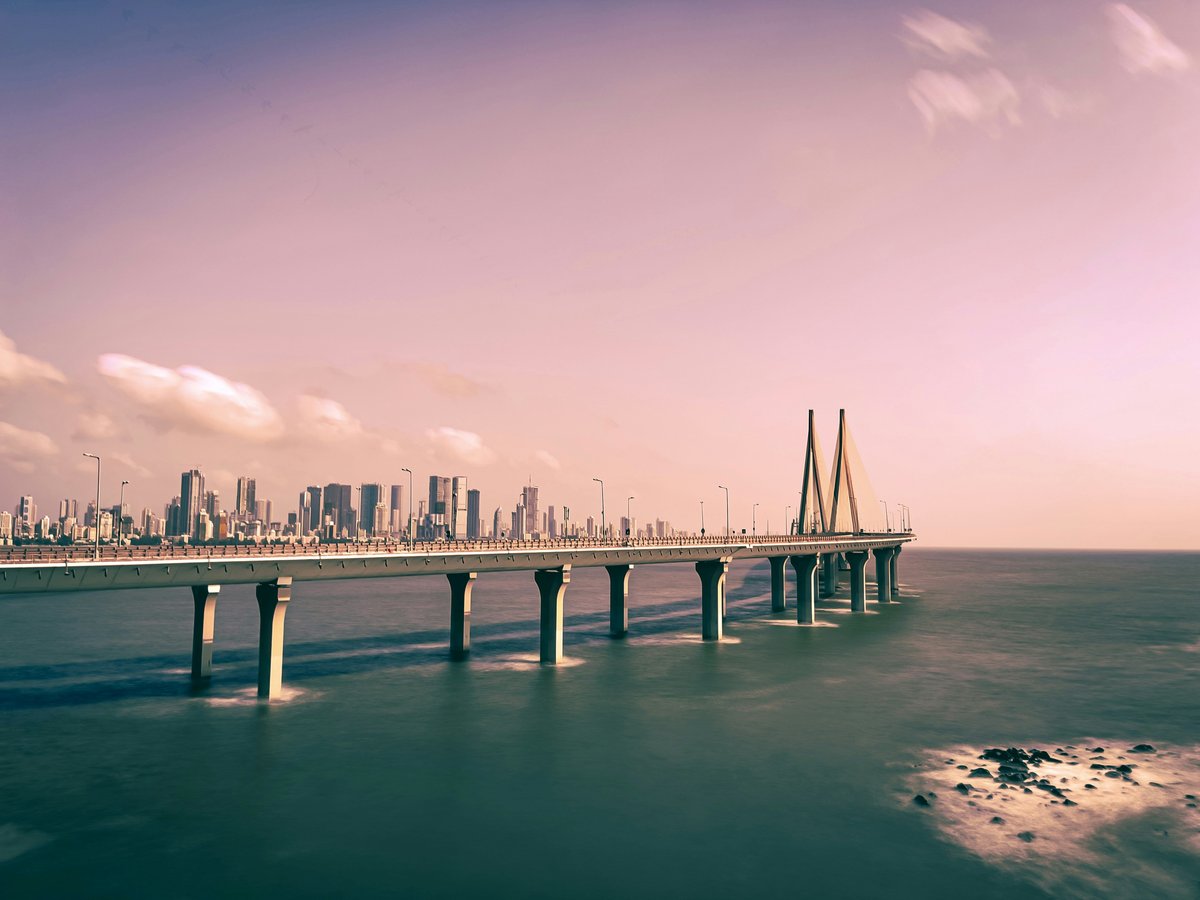
What's the must-see thing in Mumbai?
Chhatrapati Shivaji Maharaj Terminus, the 1888 railway station in Fort district, is Mumbai's one non-negotiable sight. UNESCO-listed and still running 3 million commuters daily through its Victorian Gothic halls. Visit around 10am when the rush eases but morning light still hits the stained glass. Free to enter. The Gateway of India and CSMVS museum sit within 2km south.
The building that tells you more about Mumbai than any guidebook is Chhatrapati Shivaji Maharaj Terminus, the railway station the British completed in 1888 at the southern tip of Fort district. It carries roughly 3 million passengers per day through arched corridors where pigeons roost in stone brackets 40 feet overhead and the ticket hall smells of chai, printer ink, and warm metal from the tracks below. The stained glass and carved sandstone make it look like a cathedral. That is not an accident. Frederick William Stevens designed it to announce Bombay as an imperial capital. Go around 10am. Before that, the commuter crush is serious, bodies pressed tight enough that you feel the heat of strangers' shoulders through your shirt. After 11am, the light through the west-facing rose windows fades. No ticket required to walk the main hall. The platforms are public, through the regular entry gates.
Walk 2km south from CSMT along Dadabhai Naoroji Road and you reach the Apollo Bunder waterfront, where the Gateway of India has stood since 1924. The basalt arch was built as a ceremonial landing for King George V, and it ended up being the spot where the last British troops left India in 1948. Worth noting, the monument itself takes about 10 minutes. The reason to come is the surrounding 500 metres. The Taj Mahal Palace Hotel sits directly behind it, open since 1903, and its lobby is accessible to visitors who pass through security screening. The harbour smells of diesel and salt. Touts will approach you about boat rides to Elephanta Island. Ignore the ones at the gate. The legitimate MTDC ferry counter is at the jetty itself, 250 rupees round trip, about $2.65 at current rates. The crossing takes an hour each way, and the 5th-century cave temples on Elephanta are worth it if you have a full half-day, but not worth rushing.
Between CSMT and the Gateway, set back from Mahatma Gandhi Road behind a garden of mature palms, Chhatrapati Shivaji Maharaj Vastu Sangrahalaya has occupied the same Indo-Saracenic building since 1922. Admission is currently 100 rupees for Indian residents, 650 rupees (about $6.85) for foreign nationals. The Gandhara Buddhist sculpture collection on the ground floor is the reason to visit. Stone heads from the 2nd century with expressions so specific they look like portraits. The natural history wing upstairs feels dated, glass cases with taxidermy from the 1930s, but the miniature paintings gallery on the second floor holds Mughal and Deccani works you will not see outside the V&A or the Met. Air-conditioned throughout, which matters when it is 34°C with 77% humidity outside. Plan 90 minutes. The museum closes at 6pm, with last entry at 5:15pm.
All three sit within a 2km walk of each other in South Mumbai, between Fort and Colaba. That matters because Mumbai is a city where distances lie. A place 15 minutes away on Google Maps might take 90 minutes in a taxi during the evening crawl north on the Western Express Highway. For your first day, stay south of Churchgate station and walk. The pavements are uneven and often broken, so wear shoes with real soles, not sandals. Mumbai is currently in monsoon season. The drizzle today is light, but June storms can dump 50mm in under an hour, flooding low-lying streets around Hindmata Junction and Sion within minutes. Carry a compact rain jacket, not an umbrella. The wind will invert it before you get any use from it. The Kala Ghoda neighbourhood between the museum and CSMT has the best concentration of cafes for a mid-walk pause. Cafe Mondegar on Metro House has been serving cold Kingfisher since 1932, and the Mario Miranda murals on its walls are a Mumbai institution. A pint costs around 350 rupees, about $3.70.
The top three
Chhatrapati Shivaji Maharaj Terminus
The 1888 UNESCO-listed railway station still moves 3 million commuters daily through halls designed by Frederick William Stevens. Free to enter. Morning light through the rose windows peaks around 10am before flattening at midday.
Gateway of India
The 1924 basalt arch at Apollo Bunder where the last British troops departed in 1948. Ten minutes for the monument itself, but the Taj Mahal Palace lobby, harbour walk, and Elephanta Island ferry access fill a half-day.
Chhatrapati Shivaji Maharaj Vastu Sangrahalaya
Mumbai's principal museum since 1922. The Gandhara Buddhist sculptures from the 2nd century and Mughal miniature paintings are on the level of the V&A or the Met. Air-conditioned throughout, which matters at 34°C and 77% humidity.
Verified attractions
Sourced from Wikidata and OpenStreetMap: each entry links to its authoritative page.
-
Gateway of India
monumentmonument in Mumbai, India
View on Wikidata -
Haji Ali Dargah
place of worshipDargah and mosque in India
View on Wikidata -
Sanjay Gandhi National Park
parknational park in Mumbai, India
View on Wikidata -
Chhatrapati Shivaji Maharaj Vastu Sangrahalaya
museummuseum in Mumbai, India
View on Wikidata -
Marine Drive
promenadescenic road and promenade in Mumbai, India
View on Wikidata -
Siddhivinayak Temple, Mumbai
place of worshipHindu temple in Prabhadevi, Mumbai, Maharashtra, India
View on Wikidata -
DY Patil Stadium
stadiumcricket and football stadium
View on Wikidata -
Mumba Devi Temple
place of worshiptemple in India
View on Wikidata -
Global Vipassana Pagoda
attractionPagoda in Mumbai, India
View on Wikidata -
Knesset Eliyahoo
place of worshipSephardic synagogue in Mumbai
View on Wikidata -
EsselWorld
theme parkAmusement park in Mumbai
View on Wikidata -
Mahim Fort
castlebuilding in India
View on Wikidata -
Mount Mary Church
churchRoman Catholic basilica in Bandra, Mumbai
View on Wikidata -
Aksa Beach
beachbeach in Mumbai
View on Wikidata -
Cathedral of the Holy Name
churchCatholic cathedral in Mumbai, India
View on Wikidata -
Mani Bhavan
museummuseum in Mumbai, India
View on Wikidata -
Rajabai Clock Tower
towerbuilding in Mumbai, India
View on Wikidata -
Walkeshwar Temple
place of worshipbuilding in India
View on Wikidata -
Asiatic Society of Mumbai
museumtown hall in Fort, Mumbai.
View on Wikidata -
Belapur Fort
castlemedieval coastal fort near Mumbai
View on Wikidata -
Girgaum Chowpatty
beachbeach in Girgaum, Mumbai, Maharashtra, India
View on Wikidata -
Jama Masjid, Mumbai
place of worshipmosque in India
View on Wikidata -
Royal Opera House
theateropera house and former cinema in Mumbai, India
View on Wikidata -
Worli Fort
castlefort in Mumbai
View on Wikidata -
Afghan Church
churchbuilding in India
View on Wikidata -
Bombay Castle
castlefort in Bombay
View on Wikidata -
Castella de Aguada
castlebuilding in India
View on Wikidata -
Chaitya Bhoomi
monumentBuddhist shrine and resting place of Babasaheb Ambedkar
View on Wikidata -
Jijamata Udyaan
zoozoo in Mumbai, India
View on Wikidata -
Kamala Nehru Park
parkpark in Hanging Gardens Complex, Mumbai
View on Wikidata -
Mahalakshmi Temple, Mumbai
place of worshiptemple in India
View on Wikidata -
Mumbai Television Tower
towersteel lattice television tower in Mumbai
View on Wikidata -
Riwa Fort
castlefort in Mumbai, India
View on Wikidata -
Flora Fountain
monumenthistoric fountain in Mumbai, India
View on Wikidata -
Fort George
castlefort in Mumbai
View on Wikidata -
Ghodbunder Fort
castlebuilding in India
View on Wikidata -
Gowalia Tank
plazapark in Mumbai
View on Wikidata -
Hutatma Chowk
plazasquare in Mumbai, Maharashtra, India
View on Wikidata -
Madh Fort
castlesmall fort in northern Mumbai, India situated at Madh Island
View on Wikidata -
National Gallery of Modern Art, Mumbai
museummuseum in Mumbai, India
View on Wikidata
Last verified by automated review (v1.7.2) on . What is automated review?