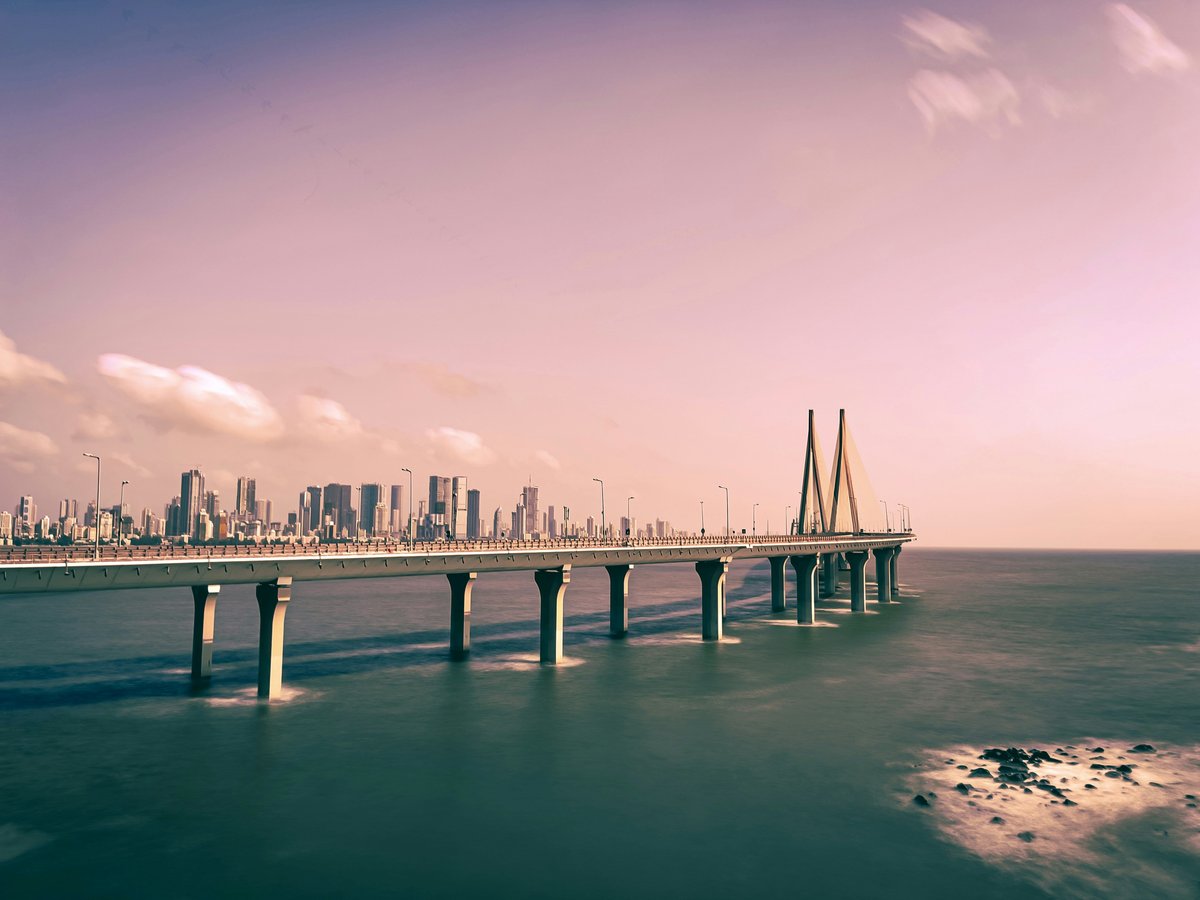
Mumbai tends to surprise visitors who assume India's most expensive city demands a big travel budget. The Arabian Sea coastline runs roughly 150 km along Greater Mumbai, and most of that waterfront is open to anyone, any hour. The Gothic Revival facades lining Dadabhai Naoroji Road and the Fort district carry more architectural density than many ticketed museums elsewhere. Marine Drive's 3.6-km promenade, locally called the Queen's Necklace, costs nothing to walk at sunset, when the warm salt air off Back Bay mixes with the sound of waves hitting the tetrapods below. Temples like Siddhivinayak in Prabhadevi and the 15th-century Haji Ali Dargah welcome all visitors without entry fees. Jehangir Art Gallery in Kala Ghoda rotates exhibitions year-round with no ticket required. And the local train network moves roughly 7.5 million commuters on weekdays at fares starting from ₹5, which puts Juhu Beach and Colaba within the same afternoon. Mind you, it's the layered texture of a city of over 20 million people that tends to reward attention more than rupees.
Free attractions
-
Gateway of India
This 26-metre basalt arch on the Apollo Bunder waterfront was completed in 1924 to commemorate King George V's visit. The Indo-Saracenic stonework faces Mumbai Harbour, and the plaza stays open 24 hours. Expect crowds most evenings, when the warm harbour wind carries the smell of roasted peanuts from nearby vendors. The Taj Mahal Palace Hotel sits directly behind, which makes for a striking backdrop.
Colabalandmark -
Marine Drive (Queen's Necklace)
This 3.6-km C-shaped promenade runs along Back Bay from Nariman Point to Girgaon Chowpatty. The concrete seawall benches fill up after 6 pm, when the art deco apartment blocks on the inland side catch the last light. On clear December evenings, you can see all the way to Malabar Hill. The name comes from the curved line of streetlights that resembles a pearl necklace when viewed from the Hanging Gardens above.
Churchgatepromenade -
Haji Ali Dargah
The whitewashed marble mosque and dargah sits on a tiny islet about 500 metres into the Arabian Sea, connected to the Mahalaxmi shoreline by a narrow concrete causeway. It was built in 1431, likely by the merchant Sayyed Peer Haji Ali Shah Bukhari. The causeway floods at high tide, so check tide times before walking out. Inside, the tomb chamber smells of rose petals and agarbatti. Free entry, though donations are welcome.
Mahalaxmireligious site -
Jehangir Art Gallery
Jehangir Art Gallery stands at 161B M.G. Road in the Kala Ghoda art district and has hosted rotating exhibitions since 1952. The 4 exhibition halls show everything from oil paintings to photography, and shows change roughly every 10 to 14 days. No entry fee, ever. The building, designed by G.M. Bhuta, sits next to the larger Chhatrapati Shivaji Maharaj Vastu Sangrahalaya, which does charge admission.
Kala Ghoda, Fortgallery and museum -
RBI Monetary Museum
The RBI Monetary Museum occupies a small space inside the Reserve Bank of India's Fort-area campus on Mint Road. The collection traces Indian currency from punch-marked coins of the 6th century BCE through colonial-era notes to modern polymer bills. Free admission. You'll need a photo ID for the security check at the gate. The exhibits fill 2 floors and take about 45 minutes to browse. Worth noting, the museum tends to close on bank holidays and second and fourth Saturdays.
Fortmuseum -
Hanging Gardens (Pherozeshah Mehta Gardens)
These terraced gardens sit on top of Malabar Hill, built over the city's main reservoir in 1881. The topiary animals, some of them decades old, are a bit weathered but still charming. From the western edge, you get an unobstructed view of the Arabian Sea and, on hazy evenings, the glow of Marine Drive's streetlights below. Open daily from 5 am to 9 pm, no ticket needed.
Malabar Hillpark -
Horniman Circle Gardens
A 2.8-hectare oval garden in Fort, surrounded by a ring of Neoclassical buildings from the 1860s and 1870s. The garden originally opened in 1872 as the Elphinstone Circle and was renamed after Benjamin Horniman in 1947. Old rain trees provide shade dense enough to drop the temperature a few degrees compared to the street outside. Open daily, no fee.
Fortpark -
Kamala Nehru Park
This small park sits on Malabar Hill alongside the Hanging Gardens and offers what might be the best free viewpoint in South Mumbai. The Old Woman's Shoe, a large boot-shaped structure based on the nursery rhyme, has been a landmark here since the park opened in 1952. Sunset views over Back Bay and Marine Drive are clearest from October to February. Open daily, 5 am to 9 pm.
Malabar Hillpark -
Banganga Tank
A freshwater tank dating to at least the 12th century, inside the Walkeshwar temple complex on Malabar Hill. The stepped stone ghats descend to the water, flanked by small temples and older residential buildings. The atmosphere feels removed from the surrounding city noise. According to local tradition, the tank was created by an arrow shot by Lord Rama. Free to visit at any time.
Malabar Hillheritage site -
Bandra Fort (Castella de Aguada)
The Portuguese built this small watchtower fort in 1640 on the rocky shoreline of Bandra's Land's End. The structure is largely in ruins, but the basalt walls and the view of the Bandra-Worli Sea Link from the promontory are the real draw. You'll smell the salt spray and hear waves crashing on the rocks below. Free entry at all times.
Bandra Westheritage site -
Girgaon Chowpatty Beach
This stretch of sand at the northern end of Marine Drive has been Mumbai's democratic public space for over a century. Ganesh Chaturthi visarjan processions end here each September, when tens of thousands of idols are immersed in the water. On regular evenings, the sand gets warm underfoot and the bhelpuri stalls set up around 5 pm. Free to access, always.
Girgaonbeach -
Oval Maidan
A large open ground in Fort, flanked by the Rajabai Clock Tower and the University of Mumbai's Gothic buildings on one side and Art Deco residential blocks on the other. Cricket matches run most weekends from October to March, sometimes 8 or 10 simultaneous games. The Maidan became part of the UNESCO World Heritage Victorian and Art Deco Ensemble in 2018. Free to enter and watch.
Fortpublic ground
Free activities
-
Colaba Causeway market walk
Colaba Causeway runs about 1 km from the Regal Cinema circle toward the Afghan Church. The pavement stalls sell everything from leather sandals to old Bollywood posters, and browsing costs nothing. The side lanes off Causeway, particularly around Merewether Road and Wodehouse Road, have older residential buildings with cast-iron balconies worth looking up at. That said, the Causeway gets uncomfortably crowded on weekends after 4 pm.
Colabamarket walk -
Crawford Market (Mahatma Jyotiba Phule Mandai)
The 1869 Norman-Gothic market building at the junction of Lokmanya Tilak Road and Dr. D.N. Road was designed by William Emerson, with stone reliefs by Rudyard Kipling's father, Lockwood Kipling. The ground-floor fruit and vegetable section smells of ripe alphonso mangoes from April through June. The wholesale spice wing and the pet section upstairs are free to walk through.
Crawford Marketmarket walk -
Kala Ghoda art district walk
The roughly 8-block stretch between M.G. Road and Shahid Bhagat Singh Road in Fort holds Mumbai's densest concentration of galleries, heritage buildings, and cafes. Start at the Rhythm House corner and walk south past the David Sassoon Library, the Elphinstone College facade, and Max Mueller Bhavan. Pavement art and murals change regularly. Free to wander year-round.
Fortwalking route -
Sassoon Docks early morning visit
Mumbai's oldest fishing dock, built by David Sassoon in 1875, sits at the southern end of Colaba. By 5 am, the catch comes in and the entire quay fills with the smell of fresh fish and the sound of Koli women auctioning the haul in rapid Marathi. The Sassoon Docks Art Project has added large-scale murals and installations to the dock buildings since 2017. Free to visit, though arriving before 7 am is essential for the market activity.
Colabamarket and street art -
Worli Seaface promenade
The promenade along Dr. Annie Besant Road in Worli runs about 2.5 km along the Arabian Sea. The Bandra-Worli Sea Link towers directly ahead when you walk north. During monsoon months from June through September, waves crash over the seawall and soak the pathway, which locals treat as entertainment rather than inconvenience. Free and open at all times.
Worlipromenade -
Bandra street art trail
The lanes around Chapel Road and Hill Road in Bandra have accumulated several dozen murals and paste-ups since the neighborhood became Mumbai's informal street art district around 2014. The St+art India Foundation has contributed pieces near Bandra Station and along the Western Express Highway overpass. A walk from Bandra Station to Mount Mary Church covers most of the notable walls in about 40 minutes.
Bandra Weststreet art walk -
Chor Bazaar browsing
Chor Bazaar spreads along Mutton Street near Grant Road and has been Mumbai's flea market since at least the early 1900s. The stalls sell antique furniture, gramophones, old cameras, and vintage Bollywood memorabilia. Browsing is free, though bargaining starts the moment you touch anything. Friday mornings tend to have the freshest stock.
Grant Roadmarket walk
Free events
-
Kala Ghoda Arts Festival
Annually, late January to early February (9 days)Mumbai's largest public arts festival has been held annually in the Kala Ghoda precinct, typically over 9 days in late January or early February, since 1999. The festival includes open-air art installations, street theatre, live music, film screenings, and food stalls across several blocks of the Fort district. Most events and exhibitions are free. Attendance has reached over 150,000 visitors across the festival's run in recent years.
Kala Ghoda, Fort -
Ganesh Chaturthi visarjan processions
Annually, August or September (10 days, culminating on Anant Chaturdashi)During the 10-day Ganesh Chaturthi festival, typically in August or September, Mumbai hosts thousands of public mandals with idols ranging from small neighbourhood figures to 6-metre-tall installations. The visarjan processions on the final day, Anant Chaturdashi, move through major roads toward Girgaon Chowpatty, Juhu Beach, and other immersion points. The Lalbaug-Parel route, featuring the Lalbaugcha Raja idol, often runs over 18 hours and draws hundreds of thousands of spectators. Free to watch from anywhere along the route.
Citywide, major procession routes through Lalbaug-Parel, Girgaon, Dadar -
Banganga Festival
Annually, usually January (2 days)An annual 2-day Hindustani classical music festival held at the Banganga Tank on Malabar Hill, usually in January. The Maharashtra Tourism Development Corporation has organized it since the early 1990s. Performances happen on a stage set against the ancient stepped ghats, and the acoustics off the water and stone carry well. Free admission, open seating.
Banganga Tank, Malabar Hill -
Gallery openings across Kala Ghoda and Colaba
Multiple times monthly, typically weekday eveningsJehangir Art Gallery, Gallery Chemould Prescott Road, Chatterjee & Lal in Colaba, and Project 88 all host free opening receptions when new exhibitions launch. These typically fall on weekday evenings, often Tuesdays or Thursdays, and are open to anyone who walks in. Exhibition cycles tend to run 2 to 4 weeks, so new openings are frequent.
Kala Ghoda and Colaba gallery districts -
Nariali Purnima at Versova and Koli fishing villages
Annually, full moon of Shravan (usually August)Koli fishing communities celebrate Nariali Purnima, also called Coconut Day, on the full moon of Shravan, usually in August. The festival marks the end of the rough monsoon seas and the start of the fishing season. At Versova, Madh Island, and other coastal Koli settlements, fishermen offer coconuts to the sea and decorate their boats with flowers and flags. Free to watch from the beaches.
Versova Beach, Madh Island, and other Koli coastal villages
Walking the Fort Heritage District
The Fort area of South Mumbai holds the densest concentration of Victorian Gothic and Art Deco buildings in any city outside London. Start at Chhatrapati Shivaji Terminus, which was completed in 1888 and earned UNESCO World Heritage status in 2004. Walk south along Dr. D.N. Road, past the Central Telegraph Office and Handloom House, to Flora Fountain at Hutatma Chowk. Turn east toward St. Thomas Cathedral, consecrated in 1718, which is the oldest English building in Mumbai and still holds services. Continue to Horniman Circle, then south to the Town Hall, home to the Asiatic Society Library since 1833. The entire route covers about 2.5 km and takes roughly 90 minutes at a comfortable pace with stops. No entry fees for exteriors, and St. Thomas Cathedral welcomes visitors inside for free. To be fair, the interiors of some buildings along Dr. D.N. Road are closed to the public, but the facade details are visible from the pavement. Look up at the first and second floors for carved stone panels and stained-glass transoms that most people walk right past.
Best free viewpoints
Kamala Nehru Park and the Hanging Gardens on Malabar Hill give elevated westward views over Back Bay and Marine Drive. The pedestrian overpass near Mahalaxmi Station offers the well-known downward view into Dhobi Ghat, where roughly 700 dhobis wash laundry in open-air concrete troughs daily. That view costs nothing, though organized tours inside the ghat area might charge ₹100 to ₹200. The Bandra Bandstand promenade at Land's End gives a sea-level perspective on the Bandra-Worli Sea Link, particularly at sunset when the cable-stayed towers catch the orange light. On the eastern side of the city, the Trombay hills near the Mahul nature park offer views over the Thane Creek mudflats, where flamingos gather from November through May. The birds typically number between 10,000 and 30,000, depending on the year, and they're visible from the Sewri jetty area too.
Mumbai's free beaches
Mumbai has 7 main public beaches, all free to access. Girgaon Chowpatty, at the north end of Marine Drive, has the most character and the best evening food vendors. Juhu Beach stretches about 6 km in the western suburbs and draws large crowds on weekends but offers more space than Chowpatty. Versova Beach sits next to a working Koli fishing village and stays quieter. Aksa Beach near Malad is the most removed from central Mumbai and has cleaner sand, though reaching it from Colaba takes about 90 minutes by train and auto-rickshaw. Manori Beach, across the Manori creek from Marve, requires a short ₹10 ferry crossing but the beach itself is free. During monsoon from June through September, swimming is prohibited at all Mumbai beaches due to strong undercurrents. Mind you, watching the rough monsoon surf crash against the rocks at Bandstand or Worli is an experience in itself, and plenty of locals line up along the seawalls specifically for that.
Religious sites that welcome visitors for free
Mumbai's major religious sites are open to visitors of all faiths without entry fees. Siddhivinayak Temple in Prabhadevi, dedicated to Ganesh, draws roughly 25,000 devotees on Tuesdays and has a darshan queue that can run 2 to 3 hours on busy days. The faster weekday queue tends to take 15 to 20 minutes. Mahalaxmi Temple, perched above the Arabian Sea near the racecourse, dates to 1831 and is one of the city's most visited sites. Mount Mary Basilica in Bandra, built by the Portuguese in the 16th century and rebuilt in 1904, welcomes visitors daily. The Bandra Fair each September fills the streets around the basilica with stalls for about 8 days. The Global Vipassana Pagoda in Gorai, completed in 2009, houses a meditation hall that can seat 8,000 people and is free to enter, though you'll need to take the ferry from Gorai Creek (currently around ₹50 round trip). Shoes must be removed at all Hindu temples, and modest clothing covering shoulders and knees is expected at Haji Ali Dargah and most mosques.
FAQ
Is Mumbai safe for walking around at night?
Most of South Mumbai, including Marine Drive, Colaba, and the Fort area, stays active and reasonably well-lit until 11 pm or midnight. Local trains run until about 1 am. That said, quieter stretches of beach or industrial areas near the docks are best avoided after dark. Bandra, Juhu, and Andheri in the western suburbs also stay busy late, particularly around Linking Road and Carter Road.
When is the best time of year for free outdoor activities in Mumbai?
October through February offers the most comfortable weather, with temperatures between 20°C and 32°C and almost no rain. The monsoon from June through September brings heavy downpours but also dramatic wave displays at Marine Drive and Worli Seaface. Ganesh Chaturthi and Nariali Purnima fall during monsoon season too. March to May gets hot and humid, with temperatures reaching 35°C to 38°C, which makes long walks less pleasant.
Do I need to dress conservatively for free temple and mosque visits?
At Haji Ali Dargah, women should cover their heads and both men and women should wear clothing that covers shoulders and knees. Headscarves are available at the entrance for a small donation. At Hindu temples like Siddhivinayak and Mahalaxmi, modest clothing is expected but the strictness varies. Shoes must be removed at all religious sites. Jehangir Art Gallery and other secular venues have no dress requirements.
How do I get around Mumbai without spending much?
The Mumbai local train network is the most practical option. A second-class ticket from Churchgate to Andheri, about 25 km, currently costs ₹10. First-class runs ₹150 for the same stretch. BEST buses cover routes the trains don't, with fares starting at ₹6. Avoid peak hours on trains, roughly 8:30 to 10:30 am and 5:30 to 8 pm, if you're carrying bags or unfamiliar with the system. Trains carry roughly 4,500 passengers per 9-car rake during rush hour, well above the designed capacity of 1,750.
Are there any free guided walking tours in Mumbai?
A few organizations run free or pay-what-you-wish walking tours. The Khaki Tours group operates heritage walks through Fort, Colaba, and other neighbourhoods on weekends, typically requesting a voluntary donation at the end. INTACH (Indian National Trust for Art and Cultural Heritage) sometimes offers free walks, particularly around World Heritage Day on April 18. The MTDC (Maharashtra Tourism Development Corporation) calendar lists occasional free guided walks tied to festivals and cultural events.
Can I visit Dharavi independently without paying for a tour?
Walking through Dharavi's public streets and commercial areas is free and legal. Dharavi is a working neighbourhood of roughly 600,000 to over 1 million residents, with a recycling and manufacturing economy estimated at over $1 billion annually. Organized tours through companies like Reality Tours and Travel typically charge ₹900 to ₹1,500 per person. If you walk independently, the main commercial lanes around Mahim Station and the 90 Feet Road area are the most accessible. Photography of people requires their consent.
Last verified by automated review (v1.7.2) on June 23, 2026. What is automated review?