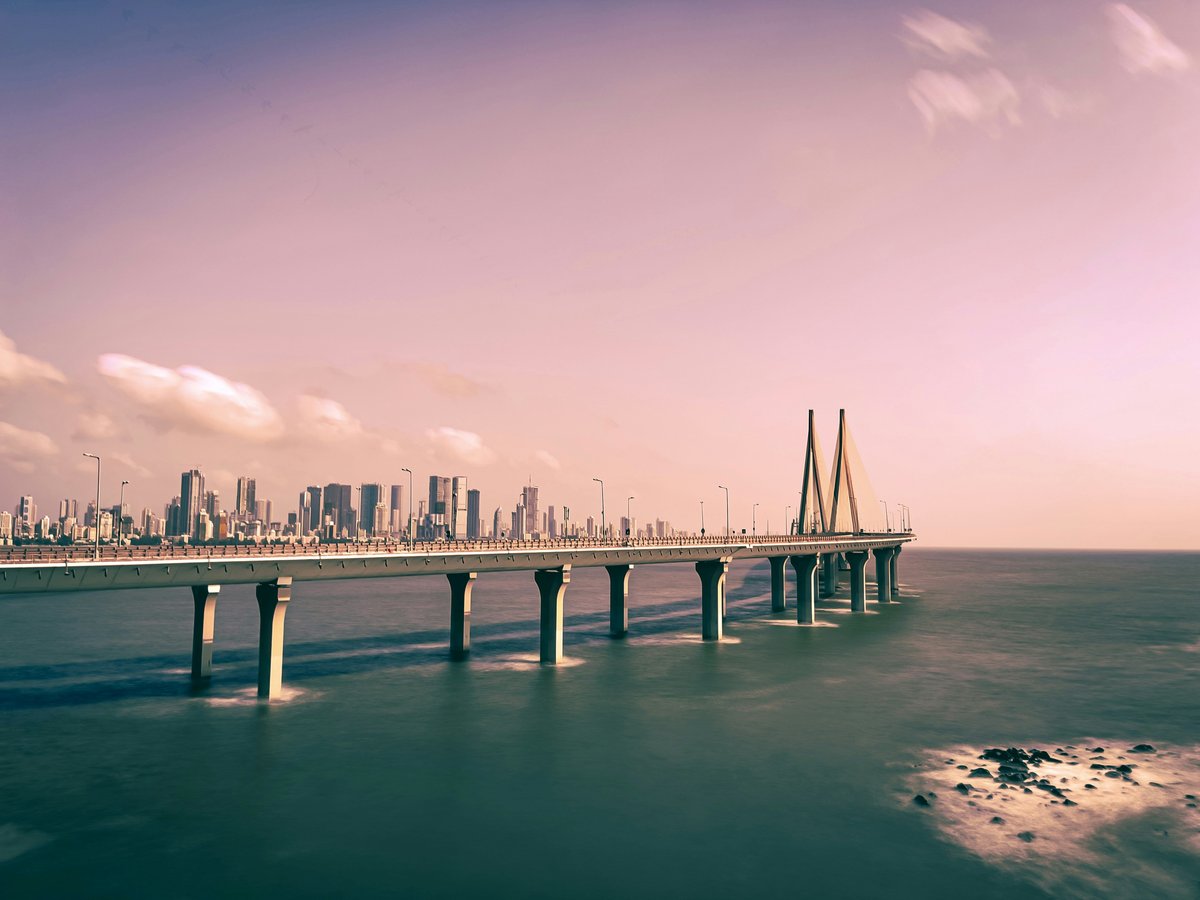
Mumbai sits on a narrow peninsula along the Arabian Sea coast, with the Western Ghats rising to 1,000 meters about 80 kilometers inland. That geography gives the city two distinct outdoor personalities. From October through February, the air dries out and temperatures hover around 25 to 32 degrees Celsius, perfect for hiking the Sahyadri hills or cycling along Marine Drive at dawn. Then monsoon arrives in June, and the trails around Lonavala and Matheran turn into mud-slicked streams while the waterfalls come roaring to life. The city itself has more green space than most visitors expect. Sanjay Gandhi National Park covers 104 square kilometers within the municipal limits, which is unusual for a city of 20 million people. You'll find joggers circling Powai Lake before 6 AM, rock climbers on the basalt walls near Ghatkopar, and paragliders launching from ridges at Kamshet, roughly 100 kilometers southeast. Mind you, the humidity will test your patience from March to May, when pre-monsoon temperatures can push past 36 degrees Celsius with 80 percent humidity. But the post-monsoon window from October to December might be the finest outdoor season in western India.
Outdoor activities
-
Rock Climbing at Belapur (Parsik Hills)
The basalt cliffs near CBD Belapur in Navi Mumbai offer 15 to 25 meter routes on columnar basalt. A few local climbing groups, including the Girivihar climbing club founded in 1960, run weekend sessions here. The rock tends to be sharp on bare hands, so bring your own chalk and shoes if you have them. Routes range from 5a to 6b on the French scale. The holds are solid but small, and you'll feel the salt breeze from the Thane Creek while pulling through the crux sections.
- Difficulty
- Moderate to Difficult
- Duration
- 3-5 hours per session
- Best season
- October to February
-
Cycling along the Konkan Coast Road
The NH66 stretch from Alibaug south toward Murud covers about 40 kilometers of rolling coastal terrain. You'll pass through fishing villages where the smell of drying Bombay duck hangs in the warm air, laterite-red cliffs, and cashew plantations. Road surfaces vary from smooth tarmac to broken patches near village crossings. Start early, by 5:30 AM if possible, to beat both the heat and the truck traffic. Several operators in Alibaug rent hybrid bikes for around 500 to 800 rupees per day.
- Difficulty
- Moderate
- Duration
- 4-6 hours for 40 km
- Best season
- November to February
-
Paragliding at Kamshet
Kamshet sits in a valley about 100 kilometers from Mumbai near the Pune Expressway, with launch sites at Tower Hill and Shelar. Tandem flights with a certified pilot typically last 15 to 25 minutes and cost between 2,500 and 4,500 rupees depending on the operator and flight duration. The thermals are strongest between 10 AM and 2 PM. You'll see the Pavana Lake below and the Sahyadri ridgeline stretching north. Nirvana Adventures and Temple Pilots are two established schools here that also offer multi-day P1/P2 certification courses.
- Difficulty
- Easy (tandem), Moderate to Difficult (solo courses)
- Duration
- Half-day trip for tandem, 7-15 days for certification
- Best season
- October to May
-
Trail Running in Sanjay Gandhi National Park
The park's internal roads and trails between the Kanheri Caves and the Tulsi Lake dam offer about 12 to 15 kilometers of runnable terrain on packed red earth. The elevation gain is gentle, maybe 150 meters total, but roots and loose gravel keep your ankles honest. Entry costs 53 rupees for Indian nationals. Gates open at 7:30 AM, though the serious runners tend to cluster near the Borivali entrance by 7 AM. You might spot a Malabar giant squirrel in the canopy. Leopards live here too, around 40 of them, but they stick to the deeper forest and are rarely seen on the main trails.
- Difficulty
- Easy to Moderate
- Duration
- 1.5-3 hours
- Best season
- October to February
-
Rappelling at Sandhan Valley
Sandhan Valley, sometimes called the Valley of Shadows, lies about 160 kilometers northeast of Mumbai near Bhandardara. The route involves roughly 5 rappelling descents of 15 to 50 feet each through a narrow canyon with walls that block direct sunlight for most of the day. The rock is basalt and stays cool to the touch even in November. You'll wade through knee-deep pools in the post-monsoon season. This is not a solo activity. Go with an experienced group like Trek Mates India or Maharashtra Mountaineering, and expect a full 8 to 10 hour commitment including the approach.
- Difficulty
- Difficult
- Duration
- Full day (8-10 hours)
- Best season
- October to January
-
Sunset Cycling on Worli Sea Link Promenade
The Bandra-Worli Sea Link itself is off-limits to cyclists, but the Worli Seaface promenade running from Worli Village to Haji Ali covers about 3 kilometers of flat, paved pathway along the water. It gets crowded after 5 PM, so arrive by 4:30 to get a few uninterrupted laps before the walkers fill in. The sea spray hits your face when the tide is high, and you'll watch the light change on the cable-stayed bridge from the south end. Rent bikes from nearby shops for 100 to 200 rupees per hour.
- Difficulty
- Easy
- Duration
- 1-2 hours
- Best season
- October to March
Day hikes
-
Kalavantin Durg
This pinnacle fort sits at about 700 meters elevation near Panvel, roughly 70 kilometers from central Mumbai. The trail starts from the base of Prabalgad and splits partway up. The final 20 minutes involve climbing hand-carved stone steps cut directly into a near-vertical rock face with no railing. The exposure is serious. One misstep on the polished rock, especially if it is wet, is a long fall. That said, hundreds of people do this trek on dry-season weekends. The views from the top look south toward Matheran and east across the Konkan plateau. Start by 6 AM to avoid both the heat and the crowds at the bottleneck sections.
- Difficulty
- Difficult (exposed rock steps, vertigo risk)
- Duration
- 5-6 hours round trip from Prabalgad base
- Best season
- October to February
-
Lohagad Fort Trek
Lohagad sits at 1,033 meters about 60 kilometers from Pune and 120 kilometers from Mumbai, near Lonavala. The trail from the village of Lohagadwadi is a steady uphill walk on stone steps built during the Maratha period. It takes about 90 minutes up. The fort has four gates, and the Vinchukata (scorpion tail) spur at the western edge offers a narrow ridge walk with drops on both sides. During and right after monsoon, the fort is wrapped in cloud, and the surrounding Pawna Lake fills to its brim. The steps get slippery from July through September.
- Difficulty
- Easy to Moderate
- Duration
- 3-4 hours round trip
- Best season
- October to February (post-monsoon greenery), June to September for waterfalls but slippery
-
Rajmachi Trek from Karjat
Rajmachi is a fortified complex at about 900 meters elevation with two smaller forts, Shrivardhan and Manaranjan, sitting on top. The route from Udhewadi village near Karjat covers about 6 kilometers one way with around 600 meters of elevation gain. The path climbs through thick forest where you can hear the crack of dry bamboo in the wind during post-monsoon months. There is a small village at the top, Udhewadi, where families offer basic meals of rice, dal, and bhakri for 80 to 150 rupees. Carry at least 2 liters of water per person because there is no reliable source on the trail itself.
- Difficulty
- Moderate to Difficult
- Duration
- 6-8 hours round trip
- Best season
- October to January
-
Matheran Trails (Charlotte Lake Loop)
Matheran is a hill station at 800 meters elevation, about 80 kilometers east of Mumbai. Private vehicles are banned, so the last 3 kilometers are on foot or by horse. Once inside, the red-dirt trails connect roughly 30 viewpoints along the plateau rim. The loop from the main bazaar to Charlotte Lake and back via Louisa Point covers about 7 kilometers on flat to gently rolling terrain through tropical semi-evergreen forest. You'll hear the rustle of giant Malabar squirrels in the trees. Charlotte Lake is the town's sole water source, and swimming in it is banned.
- Difficulty
- Easy
- Duration
- 3-4 hours for the lake loop
- Best season
- October to May (closed during peak monsoon, roughly mid-June to mid-September)
-
Harishchandragad via Nalichi Vaat
This is a serious trek. Harishchandragad fort sits at about 1,424 meters, some 170 kilometers from Mumbai near Malshej Ghat. The Nalichi Vaat route is a traditional path involving rock patches, a cave squeeze, and one stretch where you're pulling yourself up wet rock using tree roots. The Konkan Kada cliff face at the summit is a concave overhang dropping about 500 meters. It is not fenced. Plan for an overnight camp at the Kedareshwar cave temple at the top, where a Shiva lingam stands surrounded by waist-deep water during the rainy season. This hike needs an early start from Mumbai, leaving by 3 or 4 AM.
- Difficulty
- Difficult to Very Difficult (Nalichi Vaat route)
- Duration
- Full day plus overnight (or very long single day, 12+ hours)
- Best season
- October to February
-
Tungareshwar Wildlife Sanctuary Trail
Tungareshwar is only about 25 kilometers from Borivali, making it one of the closest proper hikes to northern Mumbai. The trail from Tungareshwar village to the temple at the top covers roughly 5 kilometers with moderate elevation gain through deciduous forest. The Tungareshwar temple at the summit is a small Shiva shrine dating back several centuries. The path is well-trodden and family-friendly in the dry season. During monsoon, the route has seasonal streams you'll need to cross, and leeches become a certainty in July and August. You'll feel them before you see them.
- Difficulty
- Easy to Moderate
- Duration
- 3-4 hours round trip
- Best season
- October to February
Water activities
-
Kayaking at Mandwa Creek (Alibaug)
Mandwa is a small port town across the harbor from Gateway of India, about a 45-minute ferry ride on the Mandwa Jetty catamaran. A couple of operators run sit-on-top kayak tours through the mangrove channels that feed into the creek. The water is calm, rarely more than a foot of chop, and the mangrove roots are thick with fiddler crabs. Paddles run for about 90 minutes and cost between 1,200 and 2,000 rupees per person. The water is silty and brackish, not the sort of thing you want in your mouth.
- Difficulty
- Easy
- Duration
- 1.5-2 hours on water
- Best season
- October to May
-
Open Water Swimming at Girgaum Chowpatty
Chowpatty Beach sits at the northern end of Marine Drive, and a small but committed group of open-water swimmers uses the stretch between Chowpatty and the Wilson College end. The water quality has improved since the 2015 clean-up drives, though it still is not pristine. Swim in the early morning, between 5:30 and 7 AM, when the water is relatively calm and the beach is quiet. The seabed drops off gradually for about 100 meters. Local swimming groups like the Mumbai Open Water Swimmers community coordinate weekend swims. That said, always check local advisories during monsoon when riptides become dangerous.
- Difficulty
- Moderate (currents, water quality considerations)
- Duration
- 1-2 hours
- Best season
- November to April
-
Sailing at Gateway Sailing Club
The Royal Bombay Yacht Club near the Gateway of India has been operating since 1846, though membership is pricey and has a waitlist. A more accessible option is the sailing programs at Colaba or through organizations that run introductory keelboat sessions in Mumbai Harbour. Expect to pay around 3,000 to 5,000 rupees for a 2-hour introductory sail. The harbour is busy with ferry traffic and fishing boats, so you need to stay alert. The wind picks up reliably after 2 PM from October through March, giving you 8 to 12 knots on most days.
- Difficulty
- Easy (introductory sessions) to Difficult (solo sailing in harbour traffic)
- Duration
- 2-3 hours per session
- Best season
- October to March
-
Pawna Lake Camping and Kayaking
Pawna Lake is an artificial reservoir near Lonavala, about 120 kilometers from Mumbai. Several campsites along the northern shore offer overnight stays with kayaking included, typically costing 1,500 to 2,500 rupees per person for a tent, dinner, and a 30-minute kayak session. The lake water is cleaner than most reservoirs in the region, a deep green-blue that turns grey under overcast skies. The surrounding hills hold Lohagad and Tikona forts, so you can combine a morning paddle with an afternoon hike. The water level drops significantly by March, and some campsites close for monsoon.
- Difficulty
- Easy
- Duration
- Overnight trip, 30-60 minutes kayaking
- Best season
- October to February
-
Scuba Diving at Grande Island (Goa Border)
This is a stretch, at roughly 600 kilometers south, but it remains the nearest proper dive site for Mumbai residents. Grande Island off Bat Island near Vasco da Gama offers visibility of 5 to 15 meters depending on the season. You'll see sea fans, occasional reef sharks, and schools of fusiliers. Dive operators in Goa charge around 3,500 to 5,000 rupees for a discover scuba dive and 4,500 to 7,000 for a two-tank certified dive. Worth noting, the visibility drops sharply during and after monsoon. The November to February window gives the clearest water.
- Difficulty
- Easy (discover scuba) to Moderate (certified open water)
- Duration
- Full day from Goa (2 dives)
- Best season
- November to February
Parks & gardens
-
Sanjay Gandhi National Park
At 104 square kilometers, this is one of the largest urban national parks in Asia. It starts at Borivali and extends north into the Thane district. The park holds the 2,000-year-old Kanheri Caves, Tulsi and Vihar lakes that supply part of Mumbai's drinking water, and a resident leopard population of roughly 40 animals. The forest is mostly tropical moist deciduous, and it smells like wet earth and teak leaves after the monsoon. Morning light filters through the canopy in a way that makes the whole place feel cooler than the 33-degree city outside.
Highlights: Kanheri Caves (109 Buddhist cave monuments), Tulsi Lake, lion and tiger safari enclosure, nature trails, butterfly garden near the main gate
-
Hanging Gardens (Pherozeshah Mehta Gardens)
FreePerched on top of the Malabar Hill ridge at about 90 meters elevation, these terraced gardens sit directly above the Palav reservoir. They were laid out in 1881 and cover roughly 2 hectares. The hedges are trimmed into animal shapes, which feels a bit old-fashioned but charming. The real draw is the vantage point over Chowpatty Beach and the Queen's Necklace curve of Marine Drive. Come at 5:30 AM on a clear December morning and you'll have the benches mostly to yourself.
Highlights: Topiary animal hedges, panoramic views of Marine Drive and Chowpatty, sunrise point, old rain trees with 15-meter canopy spread
-
Aarey Milk Colony Green Belt
FreeAarey covers about 1,300 hectares of grassland and secondary forest between Goregaon and Powai. It still operates as a dairy colony, so you'll see cattle grazing alongside Warli tribal settlements. The area has been at the center of conservation debates since 2019 when parts were cleared for a Metro car shed. The surviving stretches hold thick tree cover, a few seasonal streams, and at least 3 leopards. The trails here are informal, rutted tracks used by dairy workers, but they make for a surprisingly quiet walk given that you're technically inside the city.
Highlights: Chhota Kashmir lake area, Warli tribal hamlet visits, birdwatching along dairy tracks (over 80 species recorded), seasonal wildflower meadows in September
-
Horniman Circle Gardens
FreeThis small elliptical garden in the Fort district dates to 1872 and covers less than half a hectare. It sits inside a ring of Victorian and Art Deco commercial buildings, with the Asiatic Society library on one edge and the old Mint on another. The central fountain is a quiet spot during weekday lunchtimes when office workers from Dalal Street come here with their lunchboxes. The lawn is thick Bermuda grass, and the rain trees are over a century old.
Highlights: 19th-century fountain, 150-year-old rain trees, surrounding Heritage Mile architecture, proximity to St. Thomas Cathedral (1718)
-
Joggers Park, Bandra
FreeA compact 1-hectare park along the Carter Road seaface in Bandra West. It opened in 2000 and has become the neighborhood's default outdoor gym. The rubberized jogging track loops for about 400 meters, and the western edge overlooks the Arabian Sea. The salt-air breeze picks up after 4 PM. Weekday mornings are the quieter window. Worth noting, the park has a strict no-photography rule that is intermittently enforced.
Highlights: 400-meter jogging track, seaface views toward Bandra-Worli Sea Link, outdoor exercise stations, children's play area
-
Veermata Jijabai Bhosale Udyan (Byculla Zoo and Gardens)
Mumbai's oldest public garden, established in 1861, covers about 21 hectares in central Mumbai. It doubles as a zoo with around 300 animals across 90 species. The gardens were restored in a major 2015-2018 renovation that brought back heritage plantings and a penguin enclosure with Humboldt penguins. The botanical section holds old banyan trees with aerial roots touching the ground in curtains, and there is a decent collection of tropical palms along the main walkway.
Highlights: Humboldt penguin enclosure (opened 2016), 160-year-old banyan trees, heritage botanical collection, restored Victorian-era pathways
Practical tips
- Hydration and Heat
- Carry at least 2 liters of water per person for any trek over 3 hours. Mumbai's humidity can sit above 75 percent even in winter, so you lose fluid faster than you might expect. Oral rehydration salts (available at any medical store for 10 to 20 rupees) are worth packing. Coconut water vendors appear at the base of most popular treks on weekends and charge about 30 to 50 rupees per coconut.
- Sun Protection
- The UV index in Mumbai runs between 7 and 12 for most of the year, which is high to extreme. Wear SPF 50 sunscreen and reapply every 90 minutes if you are sweating. A wide-brimmed hat helps more than sunscreen on the Sahyadri ridgelines where there is no tree cover. Sunburn at this latitude can happen in under 30 minutes of direct exposure, especially on water activities where reflection doubles the dose.
- Monsoon Gear (June to September)
- If you trek during monsoon, bring gaiters or high socks treated with salt water to discourage leeches. Waterproof bags for your phone and wallet are non-negotiable. Quick-dry synthetic clothing beats cotton, which stays wet and heavy for hours. Sturdy sandals with good grip, like Teva-style straps, often work better than waterlogged hiking boots on the muddy Sahyadri trails.
- Trail Conditions and Navigation
- Most Sahyadri trails are not formally maintained or marked. Cairns and paint marks appear on popular routes like Lohagad and Rajmachi, but they can be missing on less-trafficked paths. Download offline maps on apps like Avenza or use the Maharashtra Tourism trails on Google Maps before you lose signal. Cell coverage on Jio and Airtel drops out above 800 meters on many routes. Ask locals at the trailhead about recent conditions, because a trail that was fine in November might have a washed-out section by December.
- Getting to Trailheads
- Most hikes east of Mumbai are reached via local trains on the Central Railway line to Karjat or Neral (about 90 minutes from CST, tickets costing 15 to 30 rupees in second class). From these stations, shared auto-rickshaws run to trailhead villages for 30 to 100 rupees per person. For treks near Lonavala, the Pune Expressway is quicker by car, roughly 2 hours from Bandra. Weekend traffic on the expressway backs up heavily after 6 AM on Saturdays, so leave before 5 AM.
- Responsible Trekking
- The Sahyadri forts and trails have a serious litter problem, especially on popular routes like Lohagad and Kalsubai. Carry a bag for your own waste, and if you are feeling generous, pick up a few plastic bottles on the way down. Several groups, including the Sahyadri Mitra initiative, organize regular cleanup treks. Camp only at designated spots near village areas, and ask before setting up tents on private farmland. Fires are restricted in forest areas within the Western Ghats.
FAQ
What is the best time of year for outdoor activities around Mumbai?
October through February is the prime window. Temperatures range from 22 to 32 degrees Celsius, humidity drops to around 50 to 65 percent, and the Sahyadri trails are dry but still green from the receding monsoon. March through May gets progressively hotter and more humid. June through September is monsoon season, which brings dramatic waterfalls and lush landscapes but also leeches, slippery trails, flash floods, and route closures. Matheran closes entirely during peak monsoon. Some seasoned trekkers prefer the early monsoon in June for the scenery, but it adds real risk.
Are the trails around Mumbai safe for solo hikers?
Popular routes like Lohagad, Tungareshwar, and the Matheran trails are busy enough on weekends that you will rarely be alone. Weekday solo hikes are generally fine on these well-known routes. For more remote or technical treks like Harishchandragad via Nalichi Vaat or Sandhan Valley, go with a group. There are no mountain rescue services on these trails, and cell coverage drops out in many valleys. Several trekking groups in Mumbai, including YHAI (Youth Hostels Association of India) and Sahyadri Trekkers, run organized weekend treks for 500 to 1,500 rupees per person including transport.
Do I need permits for trekking in the Western Ghats near Mumbai?
Most fort treks in the Sahyadri range do not require formal permits. Sanjay Gandhi National Park charges a 53-rupee entry fee for Indian nationals and has set opening hours. Some wildlife sanctuaries and protected forests may require a forest department entry permit, which is typically available at the entrance gate for a nominal fee. Harishchandragad currently has no formal permit system, but that may change as conservation efforts increase. Always check current requirements locally, because policies shift without much online notice.
Can I swim in the sea at Mumbai's beaches?
Swimming is possible at a few beaches, but conditions vary. Girgaum Chowpatty and Juhu have gentler waves and gradual drop-offs, making them the most common swimming spots. Aksa Beach near Malad is another option with slightly cleaner water. Lifeguard coverage is inconsistent, so swim during staffed hours, typically 7 AM to 6 PM. Avoid swimming during monsoon from June to September, when riptides and strong currents account for multiple drownings each year. The water quality at all Mumbai beaches remains below international swimming standards, so avoid submerging your face if you have open wounds or sensitivities.
What gear should I bring for a weekend hike near Mumbai?
For a dry-season day hike, you need sturdy footwear with ankle support (the basalt rock is uneven), at least 2 liters of water, sunscreen, a hat, and snacks. A headlamp is smart if you are starting early or might return after dark. During monsoon, add a rain jacket, leech socks or gaiters, waterproof phone pouch, and quick-dry clothes. A basic first aid kit with antiseptic and bandages is sensible because the nearest medical facility on most Sahyadri routes is at least an hour away by road. Most gear is available at Decathlon stores in Malad and Thane, with hiking shoes starting around 1,500 rupees.
How do I reach hiking trailheads from Mumbai without a car?
Mumbai's suburban railway is your best friend. The Central line from CST station reaches Karjat in about 90 minutes and Neral (for Matheran) in about 75 minutes. Second class tickets cost between 15 and 30 rupees. From these railheads, shared auto-rickshaws or state transport buses connect to most trailhead villages. For locations near Lonavala or Kamshet, the Shivneri bus from Mumbai Central to Pune stops at Lonavala, taking about 3 hours and costing around 350 to 450 rupees. Alibaug, for coastal activities, is a 45-minute catamaran ride from Gateway of India, with boats running every 1 to 2 hours and tickets around 250 to 350 rupees.
Outdoor experiences in Mumbai
 Free cancellation
 Dharavi Slum Tour with a Dharavi-Born Local Guide
Outdoor experience: 2 hours, free cancellation.
via Viator Free cancellation
 Mumbai SGNP: Kanheri Caves, Tiger Safari & Jain Temple
Outdoor experience: free cancellation.
via Viator Free cancellation
 Hill-station & Heritage: Lonavala & Karla Caves Tour from Mumbai
Outdoor experience: free cancellation.
via ViatorLast verified by automated review (v1.7.2) on . What is automated review?