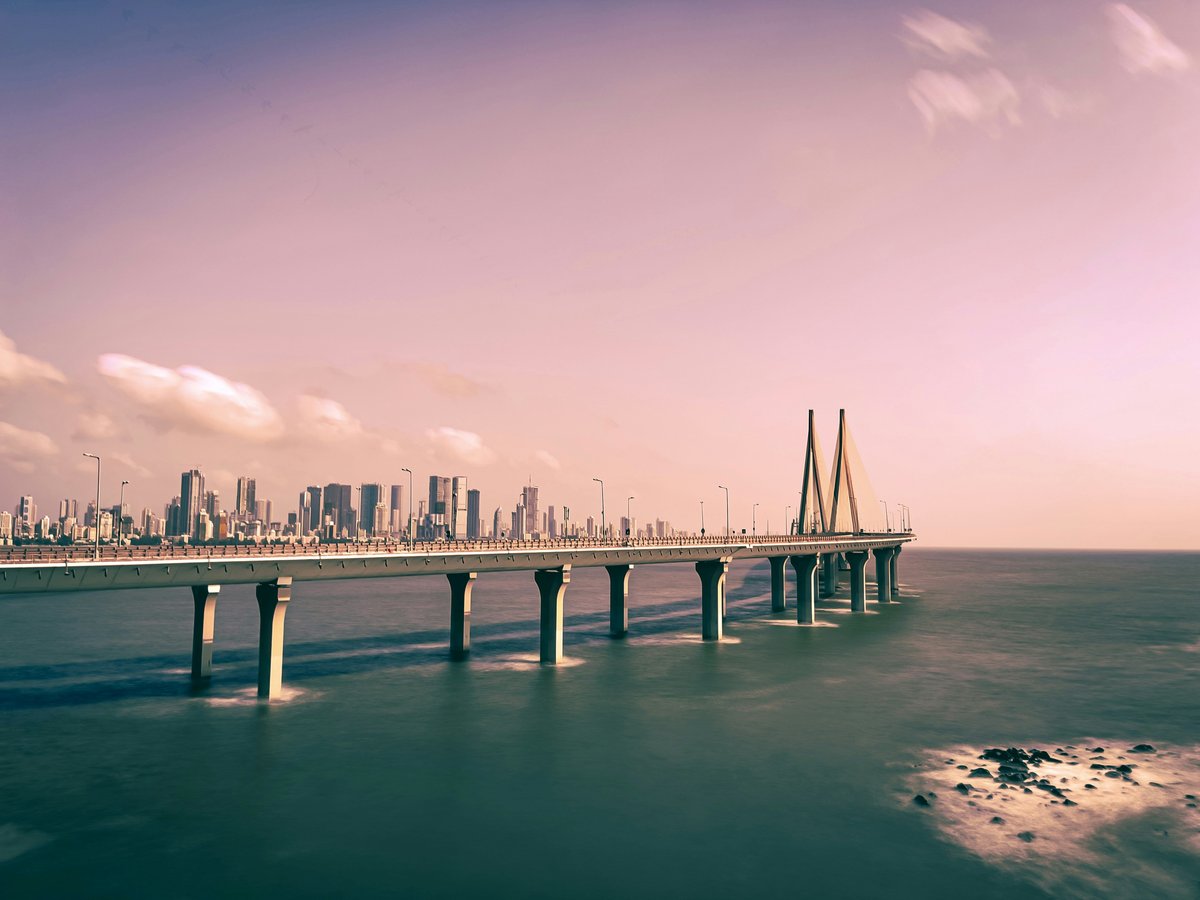
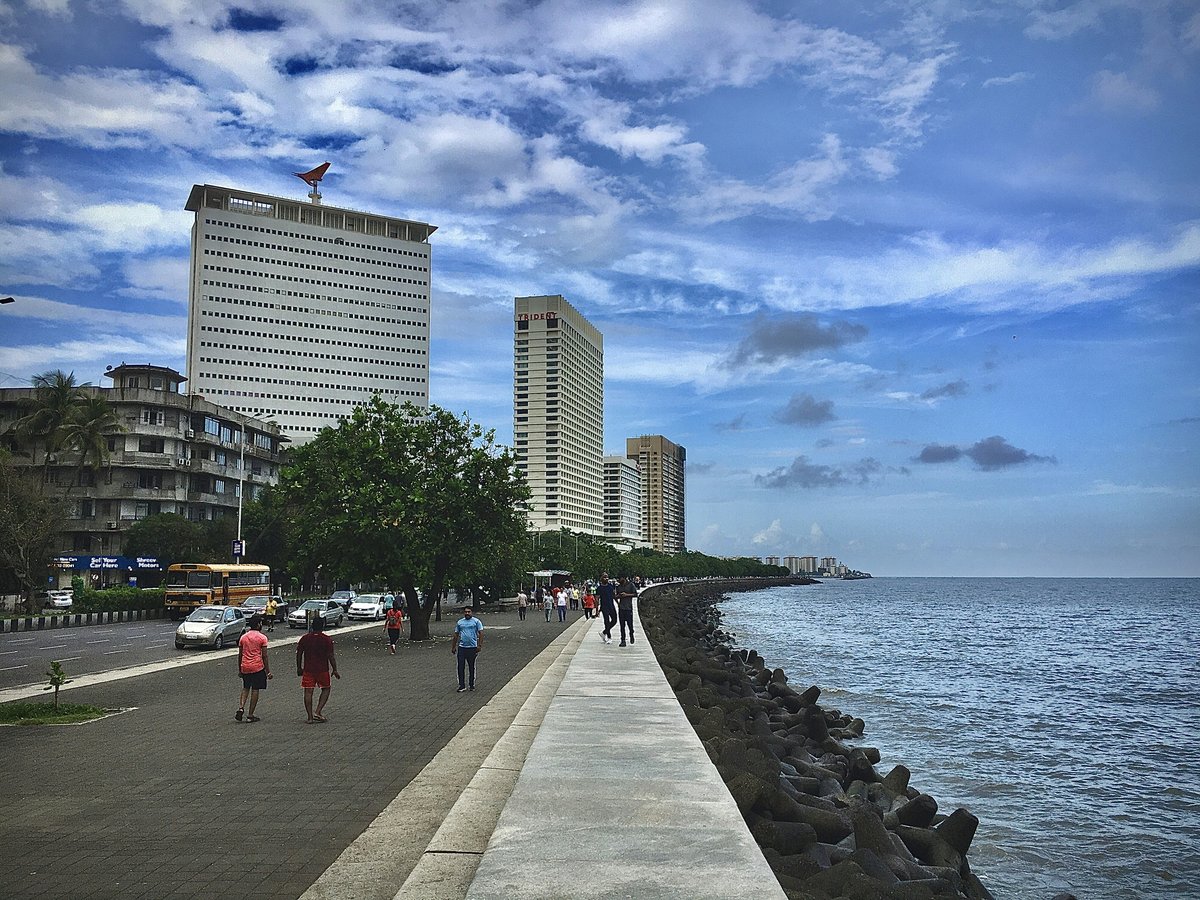
Mumbai sits on a narrow peninsula that juts into the Arabian Sea, a strip of reclaimed land stitched from seven original islands over centuries of Portuguese and then British colonial engineering. Its roughly twelve and a half million residents share this compressed geography, which explains the density you feel the moment you step outside Chhatrapati Shivaji Maharaj Terminus, the Victorian Gothic railway station that still handles over three million commuters a day. Your first morning probably starts in South Mumbai, where the colonial core around Fort and Colaba gives way to the waterfront promenade at Marine Drive, a three-kilometre arc of Art Deco apartment blocks facing the sea that locals call the Queen's Necklace after dark when the streetlights trace its curve. From there the city stretches north through Dadar, where the flower market opens before dawn and Marathi-speaking families have lived for generations, into Bandra, the former Portuguese fishing village that now anchors the cafe and gallery scene along Hill Road and Linking Road. Mumbai runs on its local trains, and learning even one line (the Western line from Churchgate to Andheri) collapses what looks on a map like an impossible commute into forty minutes of packed but functional transit. The food operates on a similar logic of compression: a Maharashtrian lunch of thalipeeth and misal pav sits around the corner from an Irani cafe pouring sweet chai alongside brun maska, a pairing left behind by the city's Zoroastrian Iranian community. The monsoon arrives in early June and does not politely rain but floods streets and turns the coastline dramatic, so timing matters here more than in most Indian cities. What strikes first-time visitors is not any single landmark but the sheer simultaneity (commerce, devotion, cooking, argument, construction) happening in the same square metre of pavement, all at once.
Mumbai in photos
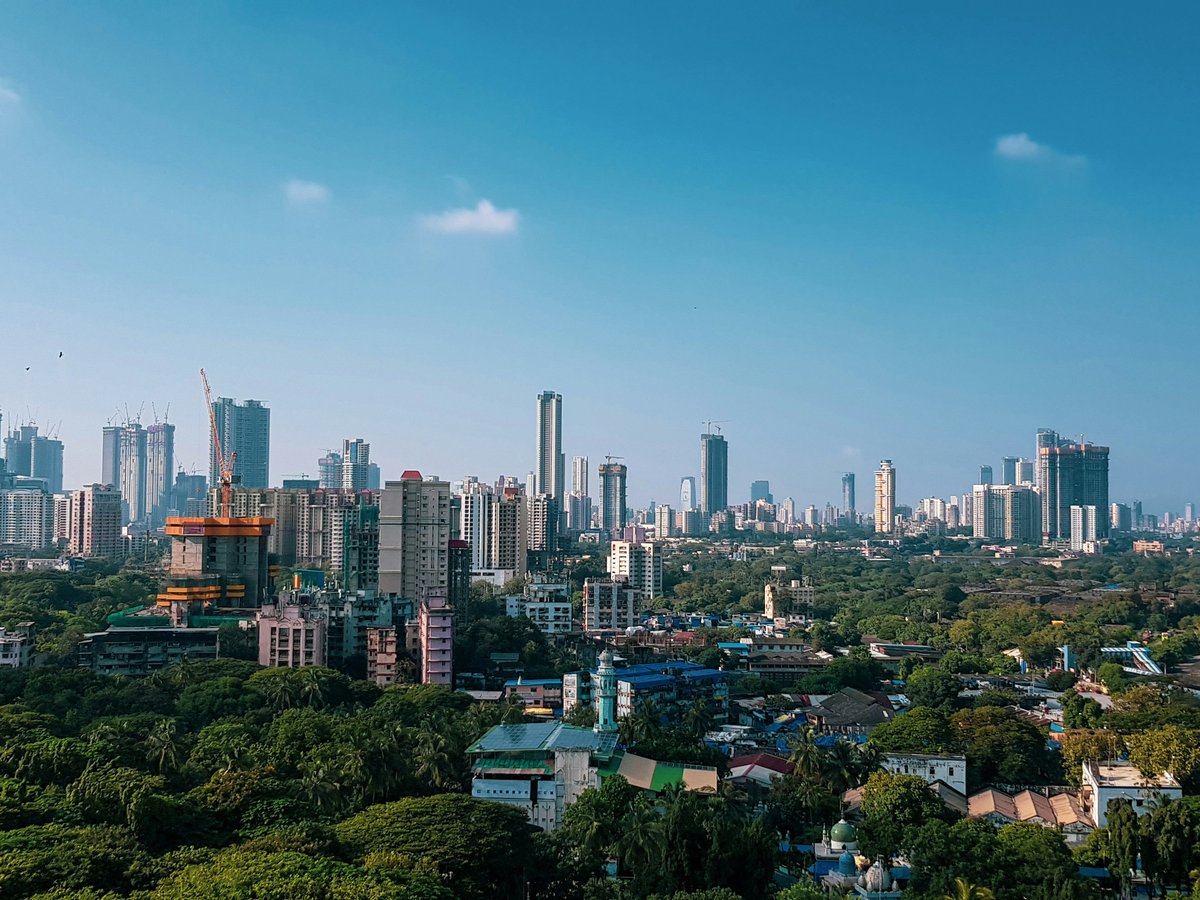
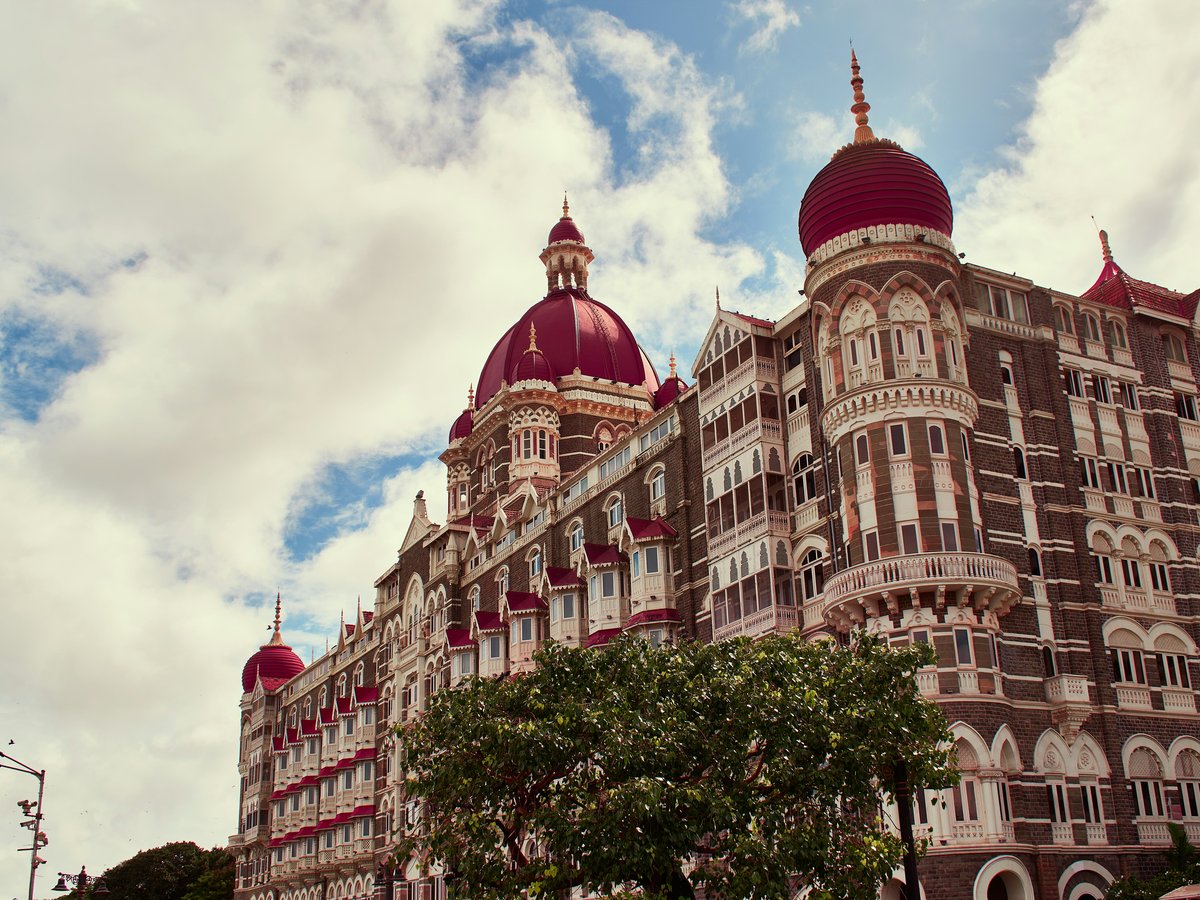
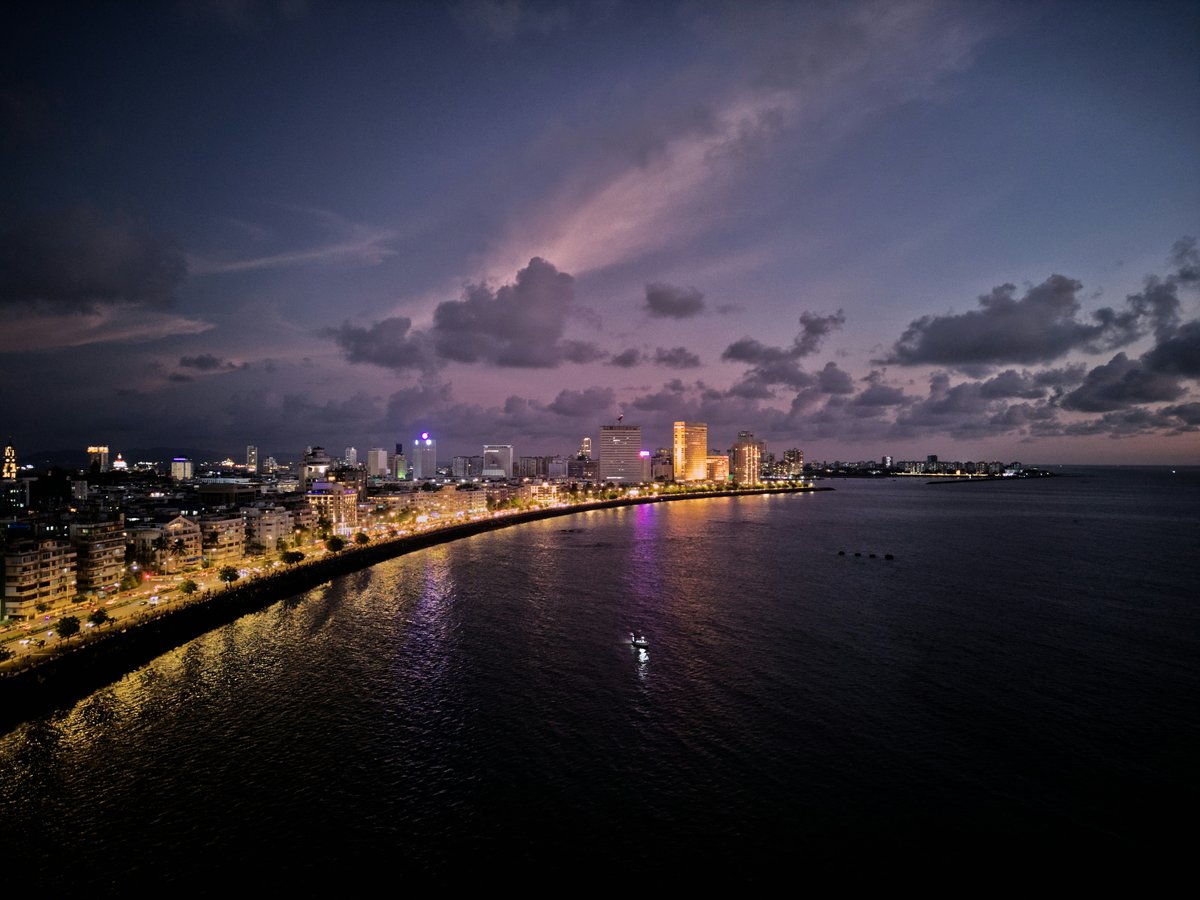
Mumbai right now
Answers about Mumbai
-
Airport to city
From Chhatrapati Shivaji Maharaj International Airport (BOM), take a pre-paid taxi from the counter inside arrivals. Pay ₹700-900 ($7-10) for South Mumbai destinations like Colaba or Marine Drive, 45-90 minutes depending on traffic. Pre-paid means a fixed fare with no meter disputes. Ola and Uber also work but expect surge pricing during Mumbai's June-September monsoon.
Read the full answer → -
Best time to visit
November through February is the right window for Mumbai. Daytime temperatures sit around 25-32°C with almost no rain, and humidity drops from the monsoon's 85-90% to a more bearable 60-65%. Hotel rates along Marine Drive climb 20-40% in late December, but the trade-off is dry skies and comfortable evenings on the Colaba waterfront.
Read the full answer → -
Cost per day
Budget travelers in Mumbai spend around ₹1,400/day ($15) with hostel dorms in Colaba at ₹500-700, three street-food meals for ₹300 total, and suburban train rides at ₹5-15 per trip. Midrange spending lands near ₹5,000/day ($53) with a private room and restaurant dinners. Mumbai's local trains carry 7.5 million riders daily and remain the cheapest urban rail in any megacity over 20 million people.
Read the full answer → -
Cultural etiquette
Greet with 'namaste' (palms together, slight nod) in most of Mumbai. Use your right hand for giving and receiving anything. Remove shoes before entering any temple, mosque, or home. Tipping 10% at restaurants is now standard. Cover shoulders and knees at Haji Ali Dargah, Siddhivinayak Temple, and Mount Mary Church in Bandra. Public displays of affection draw stares and potential police attention under Section 294 of the Indian Penal Code.
Read the full answer → -
Best day trips
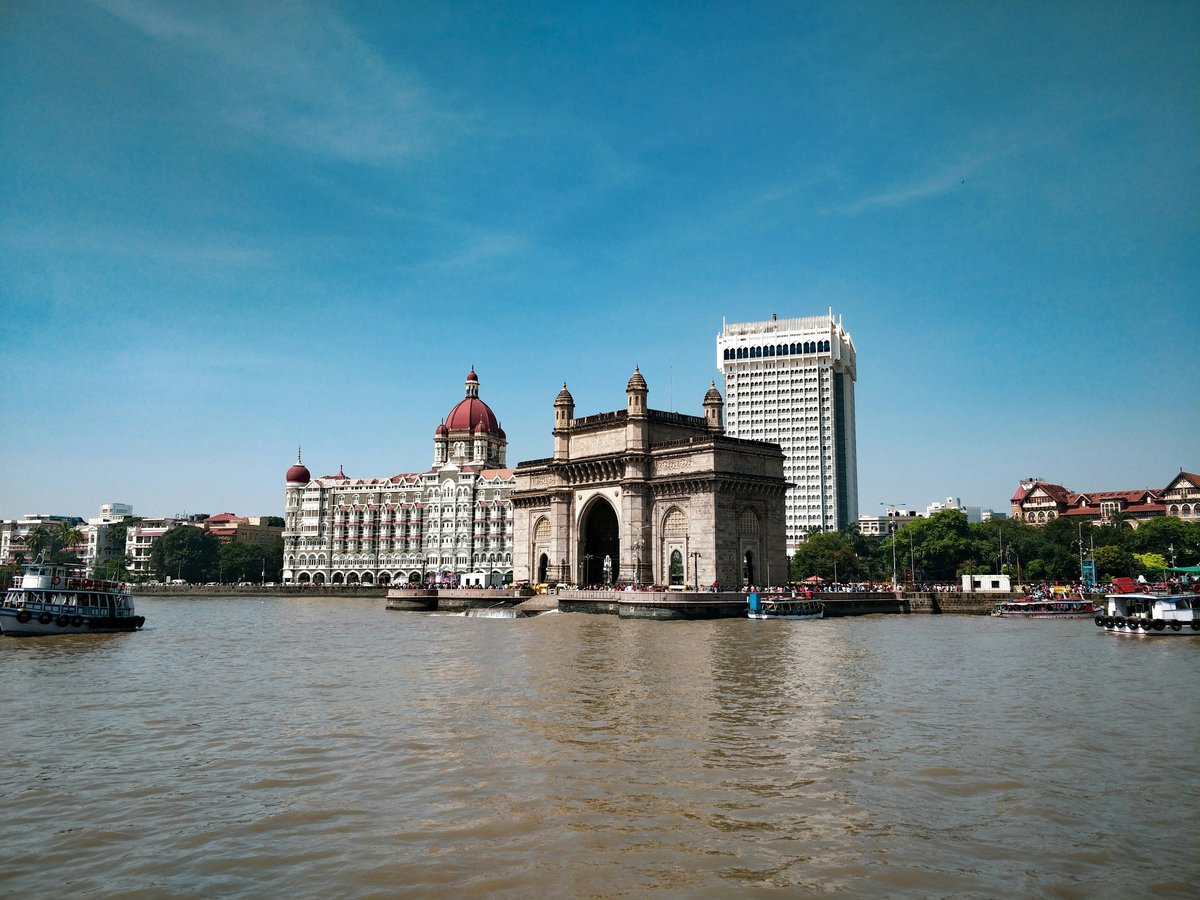
Elephanta Island (10 km, ₹200 return ferry from Gateway of India) is the best half-day option from Mumbai. For a full day, Lonavala (83 km east, 2 hours by car) pairs Karla Caves with monsoon waterfalls. Alibaug (95 km south, 45-minute catamaran) has beaches and the walk-at-low-tide Kolaba Fort. Pune works via the 1930-vintage Deccan Queen if you leave CSMT by 7:15 AM.
Read the full answer → -
Digital nomads
Mumbai has solid nomad infrastructure with seasonal weak spots. Jio Fiber delivers 100-150 Mbps in Bandra and Andheri West for ₹999/month (~$11). Coworking runs ₹6,500-12,000/month at WeWork BKC or 91springboard Lower Parel. Monthly all-in budget sits around $1,200. Monsoon season from June through September brings flooding that knocks out power and internet for hours. Most nomads enter on the e-Tourist Visa's 30-to-60-day window, as India has no digital nomad visa.
Read the full answer → -
Family-friendly
Mumbai rates 5 out of 10 for families (sourced from cities.family_friendliness_score). The monsoon months from June through September add humidity above 85% and slick sidewalks. Kids age 5 and up handle it better. EsselWorld on Gorai Island, KidZania in Ghatkopar's R City Mall, and the toy train at Sanjay Gandhi National Park are the reliable wins. Bring a carrier, not a stroller.
Read the full answer → -
Food culture
Mumbai eats on its feet. Vada pav from Anand Stall near Mithibai College costs 30 rupees. Pav bhaji sizzles on Juhu Beach griddles past 9pm. Mohammed Ali Road fills with seekh kebab smoke during Ramadan. The city runs on street food between 7am and midnight, and the best meals happen standing up.
Read the full answer → -
Getting around
Local trains and Ola are Mumbai's two essential modes. The suburban railway (Western and Central lines) costs ₹5-15 per trip and moves 7.5 million people daily. Ola and Uber run ₹150-350 for most cross-city rides with fares locked upfront. Auto-rickshaws cover everything north of Bandra at ₹23 flagfall.
Read the full answer → -
How to get there
Mumbai's Chhatrapati Shivaji Maharaj International Airport (BOM) sits 30 km north of the South Mumbai tourist district. Nonstop flights arrive from London (9 hours, BA and Air India), Dubai (3 hours, Emirates), and New York JFK (16 hours, Air India). Round-trip fares from the US typically run $800-1,400; from the UK, £400-700. Prepaid taxis from BOM to Colaba take 60-90 minutes.
Read the full answer → -
Is it safe?
Mumbai is safe enough for a careful solo traveller, though it is hard work. We put its solo-traveler safety at 4.8/10 (see the TTDI Solo-Safety Index), and violent crime against visitors is rare. The hazards that tend to hurt people are the suburban trains at rush hour, road traffic, monsoon flooding, and the touts on Colaba Causeway. Dial 112 for any emergency.
Read the full answer → -
Language basics
Hindi and Marathi, both written in Devanagari script. Mumbai runs on practical trilingualism. English works well in Colaba, Bandra, and Fort with anyone under 40. Outside South Mumbai, at local train stations and street food stalls, Hindi is your fallback. Marathi is the state language of Maharashtra and appears on all official signage.
Read the full answer → -
Layover guide
Yes, but only with a visa arranged before you land. India has no visa-free transit window for leaving the terminal. Chhatrapati Shivaji Maharaj International Airport sits 25 km north of South Mumbai, and monsoon-season traffic can stretch that drive to 70 minutes by pre-paid taxi. Budget 7 hours minimum. Bandra, 25 minutes from the terminal, is the realistic layover neighborhood.
Read the full answer → -
LGBTQ-friendly
Mumbai rates 5/10 for LGBTQ travellers. India decriminalized homosexuality in September 2018, but same-sex marriage remains unrecognized. Mumbai is India's most progressive city for queer life, with a small scene in Bandra and Lower Parel, though public affection between same-sex couples still draws stares outside of dedicated spaces.
Read the full answer → -
Where locals go
Carter Road in Bandra West after 7pm, Matunga's Cafe Madras on weekday mornings, Dadar's Phool Gully at 5am, Versova's fishing village lanes before 9am. Mumbaikars tend to socialize by neighborhood, not by scene. The western suburbs from Bandra to Versova hold the density of locals-only spots that most visitors to South Mumbai never reach.
Read the full answer → -
Must-see
Chhatrapati Shivaji Maharaj Terminus, the 1888 railway station in Fort district, is Mumbai's one non-negotiable sight. UNESCO-listed and still running 3 million commuters daily through its Victorian Gothic halls. Visit around 10am when the rush eases but morning light still hits the stained glass. Free to enter. The Gateway of India and CSMVS museum sit within 2km south.
Read the full answer → -
Solo travel
Mumbai suits solo travelers better than most Indian cities, though the first 48 hours test your patience. The suburban railway costs ₹15 per ride and runs 18 hours daily. Colaba and Bandra West feel safe after dark, women-only train compartments run on every service, and single-occupancy hotel rooms in Fort start around ₹2,200 ($23). The June-September monsoon drops hotel rates 30-40% but floods some streets.
Read the full answer → -
This week
Mumbai's week follows monsoon rhythms. Rain cells hit hardest between 2pm and 5pm. Mornings stay dry enough for Colaba and Fort walks. Most museums close Monday. Saturday night is restaurant night in Bandra. Sunday mornings belong to the Marine Drive promenade before the humidity climbs past 90%.
Read the full answer → -
3-day itinerary
Day 1 covers South Mumbai on foot. Gateway of India at 8 AM, the Chhatrapati Shivaji Maharaj Vastu Sangrahalaya by 9:30, Trishna in Kala Ghoda for lunch, Marine Drive at sunset. Day 2 moves north to Mahalaxmi and Bandra. Day 3 takes the ferry to Elephanta Caves, then Mani Bhavan and Chowpatty Beach. About 28 kilometres of walking and transit across three days.
Read the full answer → -
What to avoid
Skip CSMIA's prepaid taxi counters (Ola costs 40-60% less to Colaba), the "free" henna artists at Gateway of India who demand ₹2,000 after, and EsselWorld's 90-minute commute for 1990s rides. Monsoon flooding between June and September shuts down the Western Line for hours. Use Metro Line 1 and local trains, not autorickshaws south of Bandra.
Read the full answer → -
What to pack
Pack lightweight cotton for 28-33°C heat and 85%+ humidity. Waterproof sandals with back straps are the single most important item during June-September monsoon, when Mumbai streets flood and hide open drainage grates. India uses 230V Type C/D/M outlets, so bring a universal adapter. Skip the umbrella. Buy Odomos repellent at any Mumbai chemist for ₹50.
Read the full answer → -
Where to stay
Stay in Colaba for a first trip to Mumbai. You can walk to the Gateway of India in 8 minutes and to the CSMVS museum in 12, with Churchgate Station 15 minutes north for the Western Line trains. Budget $80-150 per night for a mid-range hotel. Bandra West is the calmer alternative with lower rates around $60-110.
Read the full answer →
Deep guides for Mumbai
-
Mumbai Street Food: Where Locals Eat
Seven stops across Mumbai's actual geography, from Chaayos chai at dawn in Bandra to monica momos at 04:00 on Military Road. Every tourist trap named, every local alternative in your hand.
Read the guide → -
Mumbai Restaurants: What's Worth It
Five splurge rooms and five workaday kitchens across Bandra, BKC, Dadar, Powai and Chembur, each named with who it serves, what hours it keeps, and the honest verdict on where to eat first.
Read the guide →
Curated lists for Mumbai
accommodation
-
Best boutique hotels
Mumbai stretches along the Arabian Sea coast in a narrow north-south corridor, and the neighborhoods sort themselves by proximity to either the airport in the north or the historic waterfront in the south. The airport cluster, anchored around Andheri and Chakala, suits arrivals on late flights and business travelers commuting to the Bandra Kurla Complex corporate district. South Mumbai holds the Gateway of India, Colaba Causeway, and the densest concentration of colonial architecture. Between these poles, the Western Line local trains connect suburbs like Bandra West and Juhu to the center, though rush-hour crowds make taxis or rickshaws the saner choice. Price tiers overlap more than expected: a mid-range room near the airport can cost as much as a well-rated room in the south, and the BKC corporate zone holds some of the city's best per-night value. The neighborhoods below run from the densest hotel clusters to the thinnest, each framed by walking radius, transit, and the tier of inventory the area anchors.
See the picks → -
Best hostels
Mumbai's hostel belt stretches along the Western Line from Andheri north through the suburbs that ring Chhatrapati Shivaji Maharaj International Airport. Most travelers arriving on a late flight or catching an early departure will end up somewhere along this corridor, and the neighborhood differences matter more than the star rating on the booking page. The airport cluster, concentrated around Chakala and Andheri East, delivers reliable chain-hotel beds within a short auto-rickshaw ride of the terminals, but it trades city life for convenience. Push west toward Andheri's Lokhandwala stretch or south toward Bandra-Kurla and the street food, local bars, and sense of Mumbai beyond the departure lounge open up. Budget travelers will find that the $32 to $78 range here buys cleaner, newer rooms than the same money gets in the old city around Colaba or Fort, where heritage buildings carry charm but aging plumbing. The tradeoff is distance: South Mumbai's colonial waterfront sits a long local-train ride away during rush hour. For a short layover or a base camp before heading to Goa, these suburbs deliver. For travelers who want Marine Drive and the Gateway of India on foot, they do not. Choosing the right neighborhood here means deciding what you came to Mumbai for.
See the picks → -
Where to stay
Mumbai splits into two cities for the traveler deciding where to sleep. South Mumbai, the colonial core around Churchgate and Colaba, puts the Gateway of India and Crawford Market on foot but charges heritage-district rates. The airport belt, stretching through Andheri, Chakala, and Santacruz, trades landmark proximity for transit convenience and keeps prices honest: a 9.2-rated room near the terminal costs less than a middling room in the Fort district. Between the two, the Western Suburbs corridor puts Bandra's cafe culture and Juhu's beachfront chaat stalls within reach. Budget does not mean grim here; several rooms below $80 a night score above 9.0 on Trip.com, and the mid-range tier frequently outperforms what other cities label luxury. The neighborhoods below run from the dense, loud heritage streets of the south to the quieter residential pockets near the airport perimeter. Each answers a different version of the same question: how close do you want to be to the chaos? The list follows hotel density, not preference; the right choice is the one that matches your itinerary, your noise tolerance, and your morning plans.
See the picks →
attractions
-
Best free attractions
Free Mumbai is mostly open ground, and this list doesn't soften that fact. Most of the 9 places here are recorded simply as parks, joined by a national park, a recreational garden, a square and a sports ground. Two carry founding dates: 1884 for a garden in Mazagaon and 1942 for the national park. Two publish their hours, 05:00 to 21:00 in both cases, and one carries the title of State Protected Monument. None of that requires a guide, a booking, or a plan formed the week before. It works for the visitor with a spare hour and a pair of walking shoes, and equally for the traveller who would sooner sit where the city sits than queue where the tour buses stop. Where our sources give us no hours and no street address, we say so rather than guess. Take water, go early or late, and treat each of these as somewhere to stay a while, not a box to tick.
See the picks → -
Best museums
Mumbai's museums do not sit in one district or follow one idea, and this list of 10 reflects that. One is dedicated to cinema, one is a science museum, one carries the central bank's initials in its name and lives on the bank's own website, and two are not recorded as museums at all: one described as a town hall in Fort and another as a public hall. That mix is the point. This is a city where a collection can share an address with a botanical garden and zoo or occupy a named house on Pedder Road. The list is for visitors who would rather spend two hours in one building than twenty minutes in five. A word on method: we print only what our verified record supports. Where it gives a street number, a postal code, or a phone line, you get it. Where it gives no address or hours, we say so plainly and point you to the official site when one exists, because a confident guess about opening times is worse than none.
See the picks → -
Must-see attractions
Mumbai's must-see list reads less like a skyline tour and more like a record of who built the city and who still prays in it. Half of the twelve places below are churches, running from Holy Cross Church in Kurla to Gloria Church in Byculla, and among them sit a cathedral dating from 1902 and a Bandra basilica from 1904. Haji Ali Dargah, a dargah and mosque with a recorded inception of 1431, and Rajgruha, the home and memorial of B. R. Ambedkar, pull the list in other directions entirely. The colonial set pieces are here too: the Gateway of India, from 1924, and the Royal Opera House, an opera house and former cinema from 1912. Most of these are places of worship or memory before they are sights, so dress modestly, keep your voice down, and give each one time. A fort that opens at 04:00 rewards an early alarm more than another hour of shopping does. This list is for the visitor who wants to understand the city's faiths and history, not just collect photographs of them.
See the picks →
food
-
Best cafes
Mumbai's cafe scene is not a single thing. It is a Bandra bungalow with a roaster in the back, a Ghatkopar counter that never closes, a Santacruz kitchen that treats a sandwich as a serious proposition, and a Chembur chain outlet that still fills at 09:00 with people who have somewhere to be. The twelve rooms below sit in that spread: some are single-address obsessives, some are branches of names you already know, and one or two hedge the word cafe entirely and serve momos, bagels, or fries with the same all-day rhythm. What ties them together is a service window and a street: each one is mapped, each one has a door you can push at a specific hour, and each one earns its slot by doing one thing the category label alone would not tell you. Read the addresses as the anchor; the prose is the argument for why the address is worth your morning.
See the picks → -
Best restaurants
Mumbai eats on a long clock, and this list is built around that fact. The earliest door here opens at 06:30 and the latest closes at 02:30, so the useful question is rarely where to eat and usually when. The 12 picks run from a hotel kitchen cooking Pan-Asian and Japanese food on Juhu Tara Road to a single-cuisine South Indian room on D K Sandu Marg, taking in a rooftop opposite Ghatkopar East Railway Station that lists Jain cooking beside Mexican and Italian. Several of these menus sprawl across four or five cuisines, and our advice throughout is the same: pick one lane and order it well. We built this list for visitors who would rather plan around opening hours and postal codes than around hype. Two of these kitchens close on Mondays, one runs only morning-to-lunch hours, and one shows no Wednesday service at all. Read the hours before you read the menu.
See the picks →
Browse by traveler type
Book experiences in Mumbai
 Free cancellation
 Dharavi slum tour in Mumbai by Female tour guides of the slum
Day trip: free cancellation.
via Viator Free cancellation
 Private Mumbai Sightseeing Tour (Traveller's Choice Award Winner)
Day trip: free cancellation.
via Viator Free cancellation
 Elephanta Caves & Island Guided Private Tour
Day trip: free cancellation.
via Viator Free cancellation
 Highlights of Mumbai Sightseeing Tour: TRAVELLERS CHOICE AWARDED
Day trip: free cancellation.
via Viator Free cancellation
 The Original Mumbai by Dawn - Recommended by Nigella Lawson & Nat Geo Traveller!
Day trip: 3 hours, free cancellation.
via Viator Free cancellation
 Private Mumbai Sightseeing Tour(Travellers Choice Award Winner)
Day trip: free cancellation.
via Viator Free cancellation
 Best Bollywood Tour with Rahil Khan (Transport Included)
Day trip: free cancellation.
via Viator Free cancellation
 Dharavi Slum tour in Mumbai by local resident
Day trip: free cancellation.
via Viator Free cancellation
 Private Half-Day Sightseeing Tour in Mumbai
Day trip: free cancellation.
via Viator Free cancellation
 Private Sunrise Taj Mahal Tour from Delhi By Car -All inclusive
Day trip: 12 hours, free cancellation.
via Viator Free cancellation
 Mumbai: Dharavi Slum & Dhobi Ghat Laundry Tour
Day trip: 3 hours, free cancellation.
via Viator Free cancellation
 2-Hour Guided Tour of Dharavi
Day trip: 2 hours, free cancellation.
via ViatorBrowse by interest
Find a flight to Mumbai
Live fares to Mumbai appear here once cookies are accepted.
Last verified by automated review (v1.7.2) on . What is automated review?