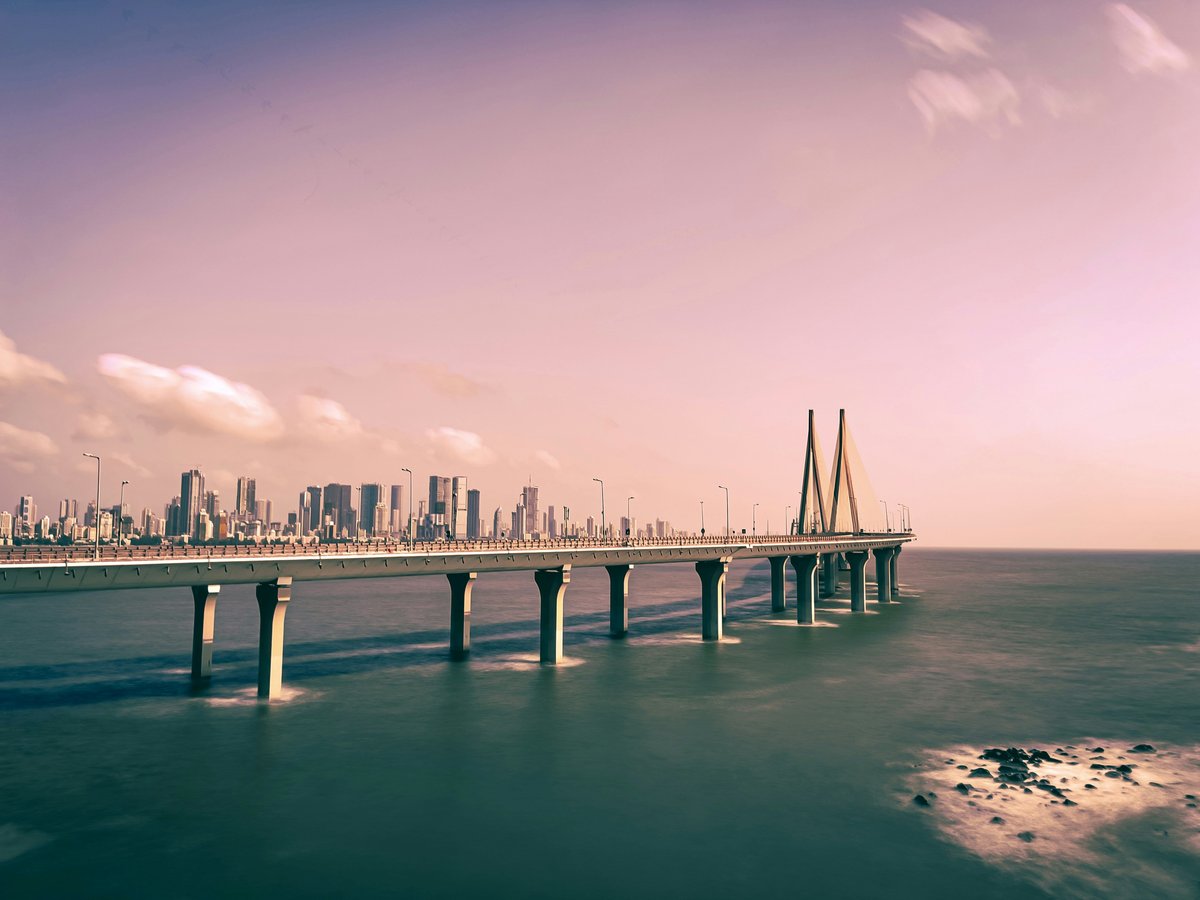
October is when Mumbai shakes off the monsoon. The southwest monsoon, which drops roughly 2,200mm on the city between June and September, typically retreats in the first or second week of October. You'll still get about 12 rainy days totaling 95mm for the month, and humidity sits at 78%, but compared to July's 856mm that feels like another city. Daytime temperatures climb back to around 31°C (88°F) after months stuck near 28°C, and nights settle around 24°C (76°F). The real reason to consider October is Navratri. This 9-night festival sends Mumbai into a frenzy of garba and dandiya raas, with dance events at grounds from Borivali in the north to Girgaum in the south. Dussehra follows on the tenth day. Bengali communities around Shivaji Park in Dadar set up Durga Puja pandals that rival Kolkata's. If you time your visit right, you'll see a side of the city the dry-season tourist crowd never encounters.
That said, October is still a coin flip on weather. The monsoon doesn't follow a calendar. Some years, heavy rain lingers well into late October, flooding low-lying areas around Hindmata and Sion. The Arabian Sea remains rough, so boat trips to Elephanta Caves get cancelled without warning. You won't get the clear-sky comfort of November through February. The 78% humidity makes 31°C feel closer to 37°C on the skin. Pack patience alongside your rain jacket.
But there is a texture to Mumbai in October that the peak-season months lack. The city is visibly relieved. After 4 months of grey skies and flooded commutes, people come out. Shivaji Park fills for Ravan dahan on Dussehra night. The crack of dandiya sticks carries through Ghatkopar and Andheri. Sweet shops in Bhuleshwar stock up on Navratri specialties. Hotel rates haven't climbed to their November peak. If you can tolerate unpredictable rain and high humidity, and you time your trip around the festivals, October rewards you with a Mumbai that most visitors never see.
Why visit in October
- Navratri and Dussehra transform the city for 10 days. Garba events run nightly at dozens of grounds across Borivali, Ghatkopar, Andheri, and Girgaum, with open participation regardless of skill level.
- Hotel rates in Colaba and Bandra sit 20-30% below the November-February peak, and last-minute bookings at 4-star properties are still possible.
- Rainfall drops from September's 478mm to about 95mm. Stretches of 3-4 consecutive dry days become common in the second half of the month.
- Sanjay Gandhi National Park in Borivali is at its greenest, with waterfalls and streams running full from 4 months of monsoon rain. By December, many of these dry up entirely.
- The Matheran toy train reopens after its monsoon shutdown, typically around mid-October, restoring access to one of the best day trips near Mumbai.
Worth knowing
- The monsoon withdrawal date varies by 2-3 weeks year to year. A late retreat means heavy downpours, waterlogged streets in Hindmata and King's Circle, and cancelled outdoor plans.
- At 78% humidity and 31°C, the heat feels substantially worse than the thermometer reads. You'll sweat through clothes within 20 minutes of walking outdoors in Fort or Colaba.
- Rough Arabian Sea conditions mean Elephanta Caves ferries from the Gateway of India get cancelled frequently, especially in the first half of October.
- Mosquito populations peak after 4 months of standing water. Dengue cases in Mumbai typically rise through October, making repellent a necessity rather than an afterthought.
Best for
Think twice if
October is transitional. The monsoon is pulling back, but it has not fully left. The first half of the month tends to be wetter than the second, though this pattern is not guaranteed. Expect warm days around 31.2°C (88°F) and mild nights near 24.2°C (76°F). Humidity at 78% makes the daytime heat feel substantially worse than in drier months with higher thermometer readings. About 95mm of rain falls across 12 days, a sharp drop from September's 478mm but still enough to catch you unprepared on any given afternoon. The sky alternates between overcast and partly cloudy. When the clouds break, the UV at this latitude burns through the thin remaining cover.
Seasonal caution
- Late monsoon withdrawal can bring single-day downpours of 50-100mm, flooding low-lying areas in Hindmata, Sion, and King's Circle. Mumbai's suburban rail network, which carries over 7 million commuters daily, shuts down during waterlogging events.
- Dengue and malaria risk is elevated after 4 months of monsoon-season mosquito breeding. The BMC (Brihanmumbai Municipal Corporation) runs fumigation drives, but standing water remains widespread in many neighborhoods.
- The Arabian Sea stays rough through early-to-mid October. Rip currents and high waves make swimming dangerous at Juhu, Versova, and Aksa beaches. Lifeguard warnings should be taken seriously.
Year-round climate
Averages from the last 5 years.
| Month | Avg high (°C) | Avg low (°C) | Rainfall (mm) |
|---|---|---|---|
| Jan | 30 | 19 | 2 |
| Feb | 32 | 20 | 0 |
| Mar | 34 | 23 | 3 |
| Apr | 34 | 25 | 1 |
| May | 33 | 27 | 97 |
| Jun | 30 | 26 | 461 |
| Jul | 28 | 25 | 856 |
| Aug | 28 | 25 | 413 |
| Sep | 28 | 25 | 478 |
| Oct | 31 | 24 | 95 |
| Nov | 33 | 22 | 7 |
| Dec | 31 | 21 | 20 |
Holidays and festivals in October
Public holidays
- Gandhi Jayanti(गांधी जयंती)2 October 2026
Headline events
Navratri
Early to mid-October (dates follow the Hindu lunar calendar and shift annually)
Nine nights of garba and dandiya raas dancing take over Mumbai. Grounds from Borivali's NESCO Centre to Girgaum's neighbourhood circles host thousands of dancers nightly. Falguni Pathak's annual concert series in Goregaon draws 10,000-plus attendees per night with live orchestras. Participation is open to everyone regardless of skill. The crack of dandiya sticks and thump of dhol drums carry blocks through residential neighbourhoods.
Dussehra (Vijayadashami)
Mid-October (the day after Navratri ends)
The tenth day after Navratri begins, marking the defeat of Ravana. Shivaji Park in Dadar hosts one of Mumbai's largest Ravan dahan (effigy burning) events, drawing tens of thousands of families. Processions wind through Girgaum. Bengali community Durga Puja pandals reach their immersion-day climax at Girgaum Chowpatty Beach. Free, public, and genuinely atmospheric.
Best things to do in October
Attend a Navratri garba night
culturalGarba and dandiya raas events run for all 9 nights of Navratri at grounds across Mumbai. The scale ranges from intimate neighbourhood circles of 50-100 people in Girgaum to massive ticketed events with 10,000-plus attendees at NESCO Centre in Goregaon. Traditional dress (chaniya choli for women, kediyu for men) is common but not required. The music mixes traditional garba beats with Bollywood remixes at the larger events.
Navratri falls in October most years, tied to the Hindu lunar calendar. This is a once-a-year event.Booking tipTicketed events by popular artists like Falguni Pathak sell out 1-2 weeks ahead. Free neighbourhood garba in residential compounds across Andheri and Borivali requires no booking.
Watch the Ravan dahan at Shivaji Park
culturalOn Dussehra evening, Shivaji Park in Dadar fills with families for the burning of a towering Ravana effigy. Fireworks follow the ignition, and the collective roar from the crowd carries across Dadar. Food stalls line the perimeter. Arrive by 5 PM to get a reasonable vantage point.
Dussehra occurs once a year on the tenth day of Navratri, typically falling in October.Booking tipFree and open to all. Take the local train to Dadar station rather than driving. The surrounding roads are impassable by car from about 4 PM.
Walk the Durga Puja pandals around Shivaji Park
culturalMumbai's Bengali community builds elaborate pandals (temporary structures housing Durga idols) across the city, with the densest cluster around Shivaji Park in Dadar and parts of Bandra. Some pandals feature full-scale artistic installations that take weeks to build. The smell of dhunuchi incense and the rhythm of dhaak drums are constant. Free bhog (community meals) of khichuri and payesh is served at many pandals.
Durga Puja coincides with Navratri and peaks at Dussehra. The pandals exist only for these 5-6 days each year.Booking tipNo booking needed. Peak crowds arrive on Ashtami (8th night) and Dashami (immersion day). Go on Shashthi or Saptami (6th or 7th night) for a calmer experience.
Hike the Kanheri Caves trail in Sanjay Gandhi National Park
natureThe 104-sq-km national park in Borivali is at peak green in October. The Kanheri Caves trail covers about 5 km one way through dense forest, passing troops of bonnet macaques and over 100 Buddhist rock-cut caves dating to the 1st century BCE. The park's 2 lakes, Vihar and Tulsi, are typically full to capacity after the monsoon.
Four months of monsoon rain have charged every stream and waterfall. The forest canopy is dense. By December, many streams dry up and the green fades.Booking tipThe park opens at 7:30 AM. Go early on weekdays. Entry is around 50 rupees for Indian residents, 200 for foreign nationals.
Walk Marine Drive at sunset after a rain break
sightseeingWhen October's clouds part, the sunsets over the Arabian Sea from Marine Drive's 3.6-km arc are more dramatic than in any other season. Residual monsoon moisture scatters the light into deeper oranges and pinks than the clear-sky months produce. The wet concrete reflects the Queen's Necklace lights as they switch on. The air carries salt and the smell of recent rain.
Post-monsoon cloud formations create more varied sunset colours than the reliably clear skies of November through March.Watch the Durga idol immersion at Girgaum Chowpatty
culturalOn Dashami, communities carry their Durga idols through the streets to Girgaum Chowpatty Beach for immersion in the Arabian Sea. The procession includes drumming, dancing, and chanting that echoes off the Art Deco buildings along Marine Drive. It runs from late afternoon well past midnight. The energy builds as larger and more elaborate idols arrive through the evening.
The immersion happens once a year on Vijaya Dashami, typically in October. Girgaum Chowpatty is Mumbai's primary immersion site.Booking tipNo tickets required. Position yourself on the Chowpatty sand or along the Marine Drive seawall by 4 PM for a good vantage.
Explore the Kala Ghoda Art District on foot
artsThe precinct around Rampart Row in Fort has over a dozen galleries, the NGMA (National Gallery of Modern Art), and the Chhatrapati Shivaji Maharaj Vastu Sangrahalaya museum. Walking between galleries is comfortable in the slightly cooler mornings before 10 AM. Cafes along the lanes serve strong filter coffee and Parsi brun maska.
Galleries reduce programming during the June-September monsoon. October marks the start of the new exhibition season, with fresh shows opening across the precinct.Booking tipThe CSMVS museum is closed on Mondays. Weekday mornings in early October are the quietest time before festival-week crowds arrive.
Take a day trip to Matheran by toy train
day tripMatheran sits at 800 metres elevation, about 80 km east of Mumbai. The hill station is entirely car-free. Forest trails lead to viewpoints like Louisa Point, Charlotte Lake, and Panorama Point. The temperature hovers around 25°C (77°F), a genuine relief from Mumbai's humidity. The forest is green and misty from the monsoon.
The Central Railway toy train from Neral typically reopens in mid-October after its annual monsoon closure. The landscape is at peak green but the trails are passable again.Booking tipCheck Central Railway's website or local news for the exact toy train reopening date, which varies each year. Alternatively, drive to Dasturi Naka and walk or hire a horse for the last 3 km.
What to eat in October
In season: fruit
Sitaphal (Custard Apple)
October is peak custard apple season in Maharashtra. Street vendors along Dadar station and Crawford Market stack them in pyramids. The local variety has creamy, sweet pulp with a grainy texture. Look for ones that give slightly when pressed. Prices drop to roughly 80-120 rupees per kilo at wholesale markets.
Pomegranate (Anar)
Maharashtra produces over half of India's pomegranates, and October marks the start of the main harvest. Fruit from Solapur and Nashik districts arrives at Crawford Market and neighbourhood vendors at noticeably lower prices than the imported varieties available earlier in the year. The seeds are deep red and sharp-sweet.
On menus now
Thalipeeth
Multi-grain flatbread made from bhajani, a roasted flour mix of rice, wheat, jowar, and spices. October's festival cooking brings it into heavier rotation at home-style eateries in Dadar and Matunga. The crust crisps on a hot tawa, and it pairs well with fresh white butter and green chutney.
Festival food
Sabudana Khichdi
Tapioca pearls fried with peanuts, green chillies, and cumin. This is the signature Navratri fasting dish across Maharashtra. During the 9 days of Navratri, street stalls and restaurants from Dadar to Andheri serve it from early morning. The texture is chewy and slightly sticky, with a crunch from roasted peanuts. Every family has a version.
Puran Poli
Sweet flatbread stuffed with chana dal, jaggery, and cardamom. Families across Mumbai prepare it for Dussehra, and home-style restaurants in Girgaum and Dadar serve it warm with a spoonful of ghee. The smell of jaggery cooking in ghee is one of October's kitchen signatures in Maharashtrian households.
Rajgira Chikki
Amaranth grain brittle sweetened with jaggery. A Navratri fasting snack sold in stacks at sweet shops along S.V. Road and in Bhuleshwar. It shatters when you bite into it, scattering tiny popped amaranth seeds. Available year-round, but production and variety peak during Navratri.
Regular events in October
Durga Puja pandal-hopping across Dadar and BandraFree
Over 200 Durga Puja pandals go up across Mumbai, with the densest cluster around Shivaji Park in Dadar. Bengali associations compete on artistic installations, some themed around social or political topics. Free bhog (community meals of khichuri, labra, and payesh) is served at many pandals throughout the day.
Coincides with Navratri, typically early to mid-OctoberJio MAMI Mumbai Film Festival
Mumbai's annual film festival screens 150-200 films across venues including the NCPA in Nariman Point and PVR cinemas. The program spans Bollywood premieres, independent Indian cinema, and international selections, with filmmaker Q&A sessions after screenings.
Late October to early November (dates shift annually)Pre-Diwali shopping season at Bhuleshwar and Crawford MarketFree
Wholesale markets in Bhuleshwar and Crawford Market (Mahatma Jyotiba Phule Mandai) fill with Diwali stock from late October. Stalls sell diyas, rangoli powders, decorative lights, and boxes of mithai (sweets). The narrow lanes of Bhuleshwar become packed with shoppers by the final week of October.
Late October through DiwaliNeighbourhood dandiya events in the western suburbsFree
Free or low-cost garba events in residential compounds and community halls across Andheri, Malad, Borivali, and Kandivali. These smaller gatherings tend to be more traditional than the ticketed mega-events, with live dhol players rather than DJ setups. Participants range from 5-year-olds to grandparents.
All 9 nights of NavratriBest places this October
Sanjay Gandhi National Park
natureThe 104-sq-km park in Borivali is at its greenest in October. Waterfalls run full, the Kanheri Caves trail passes through dense canopy, and the 2 reservoir lakes (Vihar and Tulsi) are at capacity. Morning visits before 9 AM offer the best light and fewer crowds.
BorivaliShivaji Park
culturalDadar's 28-acre ground becomes the centre of Dussehra and Durga Puja celebrations. The Ravan dahan draws tens of thousands on Dussehra evening. Durga Puja pandals line the perimeter for the full festival period. On non-festival days, it is one of Mumbai's best open spaces for a morning walk.
DadarGirgaum Chowpatty
culturalThe beach at the southern end of Marine Drive is Mumbai's primary site for Durga idol immersion on Dashami. The processions arrive from late afternoon and continue past midnight. Outside festival days, the beach has pav bhaji and bhel puri stalls that operate from 5 PM.
GirgaumMarine Drive
sightseeingThe 3.6-km seafront promenade offers post-monsoon sunsets that are more dramatic than during the clear-sky winter months. The wet concrete reflects streetlights. The Art Deco buildings along the curve are best photographed in the soft light after a rain shower clears.
ChurchgateKala Ghoda Art District
artsFort's gallery precinct reopens for the new exhibition season in October after a quieter monsoon period. The NGMA, CSMVS museum, and over a dozen private galleries cluster within a 10-minute walking radius. Cafe Mondegar on S.B. Road and Kala Ghoda Cafe are good stops between galleries.
FortCrawford Market (Mahatma Jyotiba Phule Mandai)
marketThe 1869 market building near CST station is the place to buy October's seasonal fruit. Sitaphal (custard apple) and pomegranates from Maharashtra's orchards arrive in bulk. The fruit section is on the ground floor. Festival supplies (flowers, sweets, diyas) fill the surrounding lanes.
FortBhuleshwar Market
marketThe wholesale market district north of Crawford Market fills with Diwali merchandise from late October. Narrow lanes sell everything from decorative lights to rangoli stencils. The density of colour and activity in these lanes is higher in late October than at almost any other time of year.
BhuleshwarMatheran
day tripThe car-free hill station 80 km east of Mumbai reopens fully when the toy train resumes service in mid-October. At 800 metres elevation, the temperature sits near 25°C (77°F). Forest trails to Louisa Point and Charlotte Lake pass through green post-monsoon canopy. The quiet is striking after Mumbai's noise.
Your packing checklist
Tick items off as you pack. Your progress saves in this browser.
All packed — have a great trip.
Insider tips
The free neighbourhood garba events in residential compounds across Andheri, Malad, and Borivali are often more enjoyable than the expensive ticketed mega-events. The music is more traditional, the crowd is friendlier, and the dancing is less performative. Ask your hotel staff which local events are happening nearby.
The second half of October is significantly drier and more comfortable than the first. If you have flexibility on dates, aim for October 15-31 rather than the first two weeks, when the monsoon's tail end can still deliver heavy rain days.
Crawford Market's fruit section sells sitaphal (custard apple) for roughly half the price you'll pay from street vendors near tourist areas in Colaba. Go before 10 AM when the best stock is still available.
During Navratri, many restaurants across Mumbai switch to vegetarian-only menus, and some close entirely. If you eat meat, stock up on restaurant options in Bandra or Colaba that maintain their full menu during the festival.
The local train is faster than any car, auto, or taxi during festival evenings. Roads around Dadar, Girgaum, and Andheri are gridlocked from about 6 PM during Navratri. Download the m-Indicator app for real-time train schedules and plan your route via the Western or Central line.
Avoid these mistakes
- Booking Elephanta Caves for the first week of October. The Arabian Sea is still rough from the monsoon, and ferry cancellations from the Gateway of India are common. If Elephanta is a priority, push it to the last week of October or visit in November instead.
- Underestimating the humidity. At 78% and 31°C, walking 2 km in Colaba or Fort leaves you drenched in sweat. Tourists who plan 8-hour walking itineraries from November guidebooks end up exhausted by noon. Plan outdoor time before 10 AM or after 4 PM, and schedule air-conditioned breaks between stops.
- Assuming outdoor festival events will happen rain or shine. Large garba nights and Ravan dahan events do get postponed or cancelled during heavy rain. Check local news sources the day of rather than assuming the schedule is fixed.
- Wearing expensive or delicate shoes during festival season. Between puddles on pavements, crowded dance floors at garba events, and the general state of Mumbai's October streets, anything you care about preserving should stay in your hotel room. Wear waterproof sandals or old trainers.
Practical tips for October
Book hotels in Colaba or Bandra West for the best combination of restaurant access, local train connectivity, and proximity to October's major events. Navratri garba events run late, often past midnight, so staying near a Western Line station (Bandra, Andheri, Borivali) gives you easier returns. Many restaurants go vegetarian-only during the 9 days of Navratri. Carry cash in small denominations (50 and 100 rupee notes) for street food, auto-rickshaws, and pandal donations, as UPI coverage at street stalls is inconsistent. The suburban rail is your primary transport during festival evenings when roads lock up. Download the m-Indicator app for schedules. If you plan to attend a ticketed garba event by Falguni Pathak or another major artist, book 10-14 days ahead. Ferries to Elephanta Caves (if running) depart from the Gateway of India between 9 AM and 2 PM, with the last return around 5:30 PM. Check the day of before heading to the jetty. The CSMVS museum and most galleries in Kala Ghoda close on Mondays. Matheran's toy train schedule is weather-dependent in October, so confirm availability through Central Railway's site or local news before making the trip.
FAQ
Is October a good time to visit Mumbai?
October is fair, not great. The monsoon is retreating, which means rainfall drops from September's 478mm to about 95mm, but humidity remains high at 78% and the rain is unpredictable. The major draw is Navratri and Dussehra, which transform the city for about 10 days with garba dancing, Ravan dahan events, and Durga Puja pandals. If you specifically want to experience these festivals, October is worth the weather trade-off. If you want comfortable sightseeing weather, November through February is a better bet.
What is the weather like in Mumbai in October?
Warm and humid. Average highs reach 31.2°C (88°F) with lows around 24.2°C (76°F). Humidity sits near 78%, which makes the temperature feel significantly hotter. About 95mm of rain falls across 12 days, mostly as afternoon showers lasting 30-90 minutes. The first half of October tends to be wetter than the second, as the monsoon completes its retreat. Skies alternate between overcast and partly cloudy. The Arabian Sea remains rough, especially in early October.
Is Mumbai crowded in October?
Medium crowds overall. October falls in the shoulder season between monsoon lows (June-September, when tourism drops sharply) and winter highs (November-February, peak tourist season). However, Navratri week is an exception. Garba grounds across the city attract hundreds of thousands of people nightly. Festival areas around Shivaji Park in Dadar and Girgaum Chowpatty get extremely congested on Dussehra. Domestic tourist numbers rise for the festivals, but international visitor counts remain below winter levels.
When is Navratri celebrated in Mumbai?
Navratri dates follow the Hindu lunar calendar and shift each year, typically falling in late September to mid-October. The festival lasts 9 nights, with Dussehra (Vijayadashami) on the 10th day. In most years, the main celebrations land in the first half of October. Garba and dandiya events run every night for the full 9-night period at grounds across Mumbai. The festival ends with Ravan dahan effigy burning and Durga idol immersion ceremonies on Dussehra day.
What should I wear to a garba event in Mumbai?
Traditional attire is common but not required. Women typically wear chaniya choli (embroidered skirt and blouse) and men wear kediyu (short gathered top) with dhoti or trousers. You can buy affordable sets at markets in Bhuleshwar or along Linking Road in Bandra starting around 800-1,500 rupees. If you prefer regular clothes, opt for something light and breathable, because you will sweat. Each night of Navratri traditionally has a designated colour. Comfortable footwear is important, as dandiya involves quick lateral movement on uneven ground.
Things to Do in Mumbai in October
 Free cancellation
 Dharavi slum tour in Mumbai by Female tour guides of the slum
Day trip: free cancellation.
via Viator Free cancellation
 Private Mumbai Sightseeing Tour (Traveller's Choice Award Winner)
Day trip: free cancellation.
via Viator Free cancellation
 Elephanta Caves & Island Guided Private Tour
Day trip: free cancellation.
via Viator Free cancellation
 Highlights of Mumbai Sightseeing Tour: TRAVELLERS CHOICE AWARDED
Day trip: free cancellation.
via Viator Free cancellation
 The Original Mumbai by Dawn - Recommended by Nigella Lawson & Nat Geo Traveller!
Day trip: 3 hours, free cancellation.
via Viator Free cancellation
 Private Mumbai Sightseeing Tour(Travellers Choice Award Winner)
Day trip: free cancellation.
via ViatorFind a flight to Mumbai
Live fares to Mumbai appear here once cookies are accepted.
Last verified by automated review (v1.7.2) on . What is automated review?