Stay in Mumbai in June
77 hotels in the Trip.com pool for Mumbai, from US$10 a night.
Opens Trip.com on Fri 4 Jun to Sun 6 Jun 2027; change the dates there.
June is when the Southwest monsoon arrives in Mumbai, typically between June 7 and June 15, and the city changes overnight. Expect 461mm of rainfall spread across 26 rainy days, with humidity sitting around 83% and temperatures between 26.2°C (79°F) and 30.1°C (86°F). The heat drops from May's 33°C peak, but the trade-off is relentless moisture. Streets in low-lying areas like Hindmata and Sion can flood within hours of heavy downpours. The suburban railway network that 7.5 million commuters depend on daily gets disrupted. Ferry services to Elephanta Island are suspended until October.
That said, there's a reason Mumbaikars treat the monsoon's arrival as an event in itself. Marine Drive fills with locals watching the first big waves crash over the sea wall. The air across the seafront, after months of pre-monsoon dust, smells like wet earth and salt. The Western Ghats within 100km of the city turn an almost unreal shade of green by the third week of June.
If this is your first trip to Mumbai, June is not the month to pick. November through February offers comfortable weather, full access to every attraction, and reliable transport. June is for the traveler who has already done Mumbai in the dry season and wants to experience its monsoon personality, or the budget-conscious visitor willing to trade convenience for hotel rates that drop 30-50% below the winter peak.
Why visit in June
- Hotel rates drop 30-50% below the November-February peak. A room at a Colaba guesthouse that costs ₹4,000 in December might go for ₹2,000-2,500 in June.
- The monsoon's first rains break months of heat and dust. Temperatures fall from May's 33°C to around 30°C, and the air after a downpour carries the smell of wet laterite and frangipani.
- Day trips to the Western Ghats become spectacular. Waterfalls at Bhivpuri and near Karjat that are dry trickles in March turn into full cascades by mid-June.
- Fewer tourists at every indoor attraction. You'll likely have Jehangir Art Gallery in Kala Ghoda and the Chhatrapati Shivaji Maharaj Vastu Sangrahalaya largely to yourself on weekday mornings.
- The tail end of Alphonso mango season. The last Ratnagiri Alphonsos of the year arrive at Crawford Market through the first 2 weeks of June, often at lower prices than the April-May peak.
Worth knowing
- 461mm of rainfall across 26 days means you will get rained on, repeatedly. Downpours can last anywhere from 20 minutes to several hours, and they rarely announce themselves politely.
- Mumbai's drainage infrastructure cannot handle heavy monsoon rain. Streets in Hindmata, Sion, Dadar, and King's Circle regularly flood knee-deep, and the suburban trains halt during heavy spells.
- Humidity at 83% makes 30°C feel considerably worse. Clothes don't dry, leather goods grow mold in hotel rooms, and the air conditioning in budget hotels tends to struggle.
- Elephanta Caves, one of Mumbai's marquee UNESCO sites, is effectively off-limits. Ferry services from the Gateway of India are suspended from June through September due to rough seas in the harbour.
Best for
Think twice if
June marks the Southwest monsoon's arrival in Mumbai, typically in the second week. The transition from May is dramatic. Pre-monsoon May recorded 97mm of rain across the whole month. June reaches 461mm across 26 rainy days. Daytime temperatures average 30.1°C (86°F), nights around 26.2°C (79°F). The 83% humidity is the defining feature, more than the rain itself. It makes 30°C feel closer to 36-37°C on exposed skin. Mornings often start overcast, with rain likely by afternoon, though some days bring continuous grey drizzle from dawn. Sunny breaks do happen, particularly in the first week before the monsoon fully establishes itself. Wind picks up noticeably along the western coastline at Marine Drive and Worli.
Seasonal caution
- Mumbai receives 461mm of rain in June, with 26 out of 30 days recording rainfall. Flash flooding in low-lying areas like Hindmata, Sion, and King's Circle is common during intense spells. The July 2005 deluge (944mm in 24 hours) remains the extreme benchmark, but June regularly sees 100mm-plus single-day events that paralyze transport.
- The suburban railway network, which carries 7.5 million daily passengers, suspends services when tracks flood. A heavy downpour during rush hour can strand commuters for 3-6 hours. Always keep a backup plan and avoid scheduling tight connections on rain days.
- Sea conditions along Mumbai's western coast become rough from June onward. Swimming at Juhu, Chowpatty, and Aksa beaches is prohibited by lifeguards during monsoon. Rip currents and submerged debris make the water dangerous.
- Waterborne disease risk rises sharply. Leptospirosis cases in Mumbai climb during monsoon, contracted through skin cuts exposed to contaminated floodwater. Mosquito-borne dengue also increases starting in June. Avoid wading through standing water and drink only bottled or filtered water.
Year-round climate
Averages from the last 5 years.
| Month | Avg high (°C) | Avg low (°C) | Rainfall (mm) |
|---|---|---|---|
| Jan | 30 | 19 | 2 |
| Feb | 32 | 20 | 0 |
| Mar | 34 | 23 | 3 |
| Apr | 34 | 25 | 1 |
| May | 33 | 27 | 97 |
| Jun | 30 | 26 | 461 |
| Jul | 28 | 25 | 856 |
| Aug | 28 | 25 | 413 |
| Sep | 28 | 25 | 478 |
| Oct | 31 | 24 | 95 |
| Nov | 33 | 22 | 7 |
| Dec | 31 | 21 | 20 |
Best things to do in June
Watch the monsoon arrive at Marine Drive
experienceMarine Drive's 3.6km arc along Back Bay becomes Mumbai's front-row seat for the monsoon. When the first major storm rolls in, typically between June 7 and 15, hundreds of Mumbaikars gather along the promenade to watch waves crash over the tetrapods. The spray reaches 10-15 metres high during strong surges. The wet concrete, the salt in the air, the roar of the Arabian Sea. This is a communal experience specific to early June.
The monsoon's first arrival is a one-time annual event, usually in the second week of June. By July the rain is routine. The novelty and the collective energy belong to June.Booking tipNo booking needed. Go when the first heavy rain is forecast. Mumbai weather accounts on social media and the IMD Mumbai page give 24-48 hour notice.
Day trek to monsoon waterfalls near Karjat or Bhivpuri
outdoorThe Western Ghats within 80-100km of Mumbai transform once the monsoon hits. Waterfalls at Bhivpuri (accessible by local train from CSMT), near Kondana Caves outside Karjat, and Zenith Waterfall near Khopoli come alive with water that simply isn't there from November to May. The trails are muddy and slippery. You will get completely soaked. The green is so saturated it looks edited.
Waterfall volume depends directly on cumulative rainfall. By mid-June, after 2-3 weeks of monsoon, water levels are strong but trails are not yet as eroded as they become in August.Booking tipBook through local trekking groups in Mumbai. Weekend treks fill up fast. Reserve by Wednesday for a Saturday departure.
Explore Kanheri Caves inside Sanjay Gandhi National Park
culturalThe 109 Buddhist rock-cut caves at Kanheri, carved between the 1st and 10th centuries CE, sit inside Sanjay Gandhi National Park in Borivali. During monsoon, rainwater streams down the basalt faces between the caves, and the surrounding forest turns thick and green. The sound of running water inside the cave chambers is particular to this season.
The monsoon transforms Kanheri from a dry archaeological site into something closer to its original setting. Water channels carved 2,000 years ago to collect monsoon runoff function in June. The park's vegetation is at peak green.Booking tipSanjay Gandhi National Park charges ₹53 entry for foreign nationals. Go on a weekday morning. The park occasionally closes during extremely heavy rainfall, so check the BMC or park's social media pages before heading out.
Indoor heritage walk through the Fort district
culturalThe Fort neighbourhood between CSMT and Horniman Circle holds Mumbai's densest concentration of Victorian Gothic, Art Deco, and Indo-Saracenic buildings. A monsoon walking tour focuses on covered arcades and interior spaces like the Asiatic Society Library (founded 1804), the BMC headquarters (completed 1893), and the University of Mumbai's Rajabai Clock Tower (1878). The rain clears the usual crowds and gives the sandstone a darker, more photographic tone.
The monsoon empties Fort's streets of casual foot traffic, so you can look up at the architecture. The wet stonework photographs differently than in dry season. Indoor portions keep you comfortable regardless of rain.Booking tipSeveral operators run heritage walks in Fort. Weekday mornings starting at 8:00 AM offer the quietest streets and a window before the heaviest afternoon rain.
Monsoon seafood at Versova or Mahim fishing villages
foodMumbai's Koli fishing communities in Versova, Mahim, and Sassoon Dock in Colaba continue fishing through the early monsoon, bringing in pomfret, surmai (kingfish), and prawns. The catch fluctuates more than in dry season. Some days the fish is extraordinarily fresh and abundant, other days thin. The small open-air restaurants near Versova Koliwada and along Mahim Causeway serve fish fried in rava (semolina) coating, cooked within hours of landing.
Early monsoon in June still sees active fishing before Maharashtra enforces a fishing moratorium along parts of the coast in mid-July. Fresh local catch becomes harder to source after that.Booking tipNo reservation needed at the Koliwada stalls. Go for lunch between 12:00 and 14:00 for the freshest fish. Bring cash, as most stalls do not accept cards.
Evening at Prithvi Theatre in Juhu
culturalPrithvi Theatre on Juhu Church Road has staged Hindi and Marathi plays since 1978. The 200-seat intimate space hosts performances almost every evening. Monsoon evenings in Mumbai, with rain pattering on the roof overhead, make for an atmospheric setting. Tickets typically cost ₹100-300. The Prithvi Cafe next door is a gathering spot for Mumbai's theatre and film crowd, and the Irish coffee there has a small reputation of its own.
Monsoon is Mumbai's indoor-culture season. Prithvi's schedule stays full while outdoor events get cancelled, concentrating the city's creative energy in spaces like this.Booking tipCheck Prithvi's website or BookMyShow for the schedule. Popular productions sell out. Book 3-5 days ahead for weekend shows.
Chai and pakora crawl through surviving Irani cafes
foodMumbai's Irani cafes, established by Zoroastrian immigrants from Iran in the early 1900s, become natural monsoon shelters. Kyani & Co (opened 1904) near Marine Lines, Britannia & Co (opened 1923) in Ballard Estate, and Yazdani Bakery (opened 1953) near CSMT all serve cutting chai and fresh-baked goods. The combination of hot milky tea, fried snacks, and rain drumming against the windows is a specific Mumbai monsoon pleasure. Bentwood chairs, Formica tables, and no-frills service.
Monsoon rain drives people indoors more than any other season. The pairing of hot chai with cool damp air and the sound of rain is the reason these cafes occupy the place they do in Mumbai's collective memory.Booking tipNo booking needed or possible. Most close by 20:00-21:00. Kyani & Co is closed on Sundays. Carry cash.
Rain raga concerts at NCPA
culturalThe National Centre for the Performing Arts at Nariman Point hosts classical Indian music, Western orchestral concerts, jazz, and dance across its 5 venues. June programming often includes monsoon-themed classical recitals featuring Raag Malhar and Megh Malhar, which are traditionally associated with rain in Hindustani classical music. The Tata Theatre seats 1,000 and has strong acoustics. Ticket prices range from ₹200 to ₹2,000 depending on the performer.
Monsoon season has a specific raga tradition in Hindustani classical music. NCPA schedules performances of rain ragas during June and July that do not appear at other times of year. The cultural programming leans into the season deliberately.Booking tipBook through the NCPA website or box office. Performances by well-known artists sell out 1-2 weeks ahead. Weeknight concerts are easier to get into.
What to eat in June
In season: fruit
Alphonso Mango (Hapus)
The tail end of Ratnagiri Alphonso season. Early June is your last window to find them at Crawford Market (Mahatma Jyotiba Phule Mandai) before the season closes. Prices tend to drop in the final 2 weeks. A dozen might cost ₹600-800, down from ₹1,200 in April.
On menus now
Sol Kadhi
A Konkani-Maharashtrian coconut milk and kokum curry, served chilled alongside rice and fish. Pink, creamy, and sour. It appears more frequently on restaurant menus during monsoon. Trishna in Fort and Gajalee in Vile Parle are known for reliable versions.
Street food peaks
Bhutta (Monsoon Roasted Corn)
The defining monsoon street food of Mumbai. Vendors appear along Marine Drive, Juhu Beach, and Carter Road in Bandra the moment the first rains hit. The corn is roasted over charcoal, then rubbed with lime and red chili salt. Typically ₹20-40 per cob. The smoky char against the wet sea air is a sensory combination specific to Mumbai's monsoon.
Kanda Bhaji (Onion Pakoras)
Thinly sliced onion fritters deep-fried in chickpea batter, sold at every street corner and chai stall once the rains start. The crunch of the exterior against soft onion inside, eaten with green chutney while watching the rain from under an awning. Best found at the Irani cafes around Fort and at roadside stalls in Dadar.
Batatawada
A spiced potato ball coated in chickpea batter and deep-fried, served in a pav (bread roll) with dry garlic chutney. A monsoon comfort staple across Mumbai. Ashok Vada Pav near Kirti College in Dadar has served them since the 1970s. ₹15-30 per piece at most stalls.
What to drink
Kokum Sherbet
A deep-purple cooling drink made from kokum fruit (Garcinia indica), native to the Konkan coast south of Mumbai. Mixed with water, sugar, and cumin, it's served cold at juice stalls across the city. Locals drink it to counter the humidity. It has a tart, slightly smoky flavor unlike anything in the Western drink vocabulary. Try it at juice vendors along Mohammad Ali Road.
Regular events in June
International Day of YogaFree
Large-scale group yoga sessions organized across Mumbai on June 21 each year. Marine Drive, Shivaji Park in Dadar, and the Gateway of India plaza typically host free sessions starting at sunrise, drawing several thousand participants at the larger venues. The BMC and various yoga organizations coordinate the events.
June 21World Environment Day celebrations at Sanjay Gandhi National ParkFree
The national park in Borivali hosts tree-planting drives, nature walks, and educational programs around June 5 each year. Local environmental NGOs set up stalls near the main entrance. The park's nature interpretation centre runs special monsoon ecology talks about the Western Ghats ecosystem.
June 5Monsoon theatre season opening across Mumbai's indoor venues
Mumbai's indoor cultural venues, including Prithvi Theatre in Juhu, the NCPA at Nariman Point, and the Royal Opera House in Girgaon, schedule heavily in June as outdoor events wind down. New play premieres and retrospective film screenings tend to cluster in the first 3 weeks of the month. The Royal Opera House, restored in 2016, often programmes Marathi and Hindi productions during this window.
Throughout JuneBest places this June
Marine Drive
promenadeThe 3.6km seafront promenade along Back Bay is where Mumbai greets the monsoon. During June storms, waves crash over the concrete tetrapods and spray reaches the pedestrian walkway. The Art Deco buildings along the curve are part of a UNESCO World Heritage ensemble. Early morning walks before the rain starts, or late evening when the streetlights reflect off the wet pavement, offer the best atmosphere.
ChurchgateSanjay Gandhi National Park and Kanheri Caves
parkThe 104 sq km national park in Borivali turns dense and green from the first week of June onward. The 109 rock-cut Buddhist caves at Kanheri (1st-10th century CE) come alive when ancient water-harvesting channels fill with monsoon rain. Seasonal waterfalls appear along the hiking trails that are completely dry the rest of the year.
BorivaliJehangir Art Gallery
galleryFree admission and rotating exhibitions across 4 halls in the Kala Ghoda arts district. During monsoon, the gallery becomes a reliable dry refuge in the middle of a Fort heritage walk. The adjacent Kala Ghoda cafe strip offers covered seating. The gallery has operated continuously since 1952.
Kala GhodaChhatrapati Shivaji Maharaj Vastu Sangrahalaya
museumFormerly the Prince of Wales Museum, this Indo-Saracenic building holds over 50,000 artefacts across art, archaeology, and natural history. The monsoon courtyard experience, rain falling on the garden while you're dry under the dome, is particular to a June visit. Entry is ₹85 for Indian residents, ₹650 for foreign nationals.
FortBanganga Tank
heritageA freshwater tank surrounded by temples and old residential buildings in Malabar Hill, dating to at least the 12th century. It sits in the middle of one of Mumbai's wealthiest neighbourhoods. During monsoon the tank fills and the surrounding greenery thickens. Considerably fewer visitors in June compared to the dry season. Free to enter.
Malabar HillCrawford Market (Mahatma Jyotiba Phule Mandai)
marketMumbai's oldest municipal market, built in 1869. Rudyard Kipling's father John Lockwood Kipling designed the stone friezes at the entrance. The covered wholesale fruit section is the best place to find the last Alphonso mangoes of the season in early June. By mid-month, monsoon fruits like jamun (Indian blackberry) and karonda fill the stalls.
FortWorli Sea Face
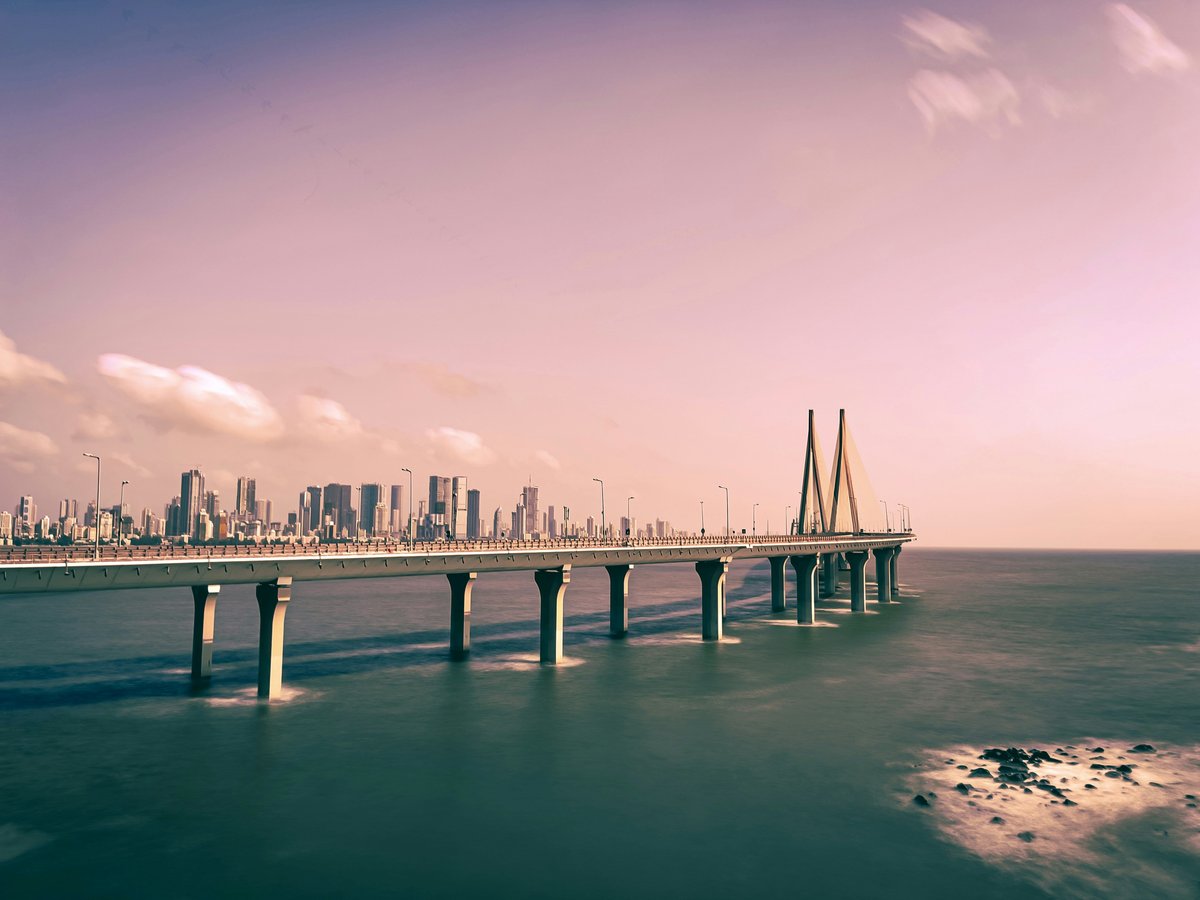
promenadeThe promenade along Worli's western edge catches the full force of Arabian Sea monsoon waves. The Bandra-Worli Sea Link, visible from the promenade, often disappears into low monsoon clouds. Less touristy than Marine Drive, and the surrounding Worli Village retains old Koli fishing community heritage. Stay well back from the sea wall during strong surges.
Worli
Your packing checklist
Tick items off as you pack. Your progress saves in this browser.
All packed — have a great trip.
Insider tips
Mumbai's suburban trains are your primary transport, and they flood during heavy rains. The Western Line (Churchgate to Borivali) handles water slightly better than the Central Line. If the IMD issues a red alert, trains will halt. Keep the m-Indicator app on your phone for live disruption updates. On heavy-rain days, the Mumbai Metro Line 1 (Versova-Andheri-Ghatkopar) runs elevated and is flood-proof.
The best monsoon street food appears after 17:00 along Carter Road in Bandra, near Girgaon Chowpatty, and outside Mithibai College in Vile Parle. Vendors set up specifically for the evening snack crowd. Corn, pakoras, and hot chai are ₹20-50, and quality is generally better at these regular neighbourhood stalls than at tourist-facing ones near the Gateway of India.
If you want monsoon scenery without Mumbai's flooding, take the morning Deccan Express from CSMT to Lonavala (about 2.5 hours). The viewpoints at Tiger Point and Bhushi Dam overflow with seasonal waterfalls from mid-June onward. Return the same evening. The railway scenery through the Bhor Ghat section alone is worth the trip.
Book an upper-floor hotel room. Ground-floor and basement rooms in older Colaba and Fort buildings can take water during heavy downpours. Third floor and above avoids this entirely. Ask specifically when booking, and confirm the room has functioning air conditioning, since monsoon humidity makes a broken AC unit genuinely miserable.
Avoid these mistakes
- Scheduling a tight multi-stop itinerary that assumes reliable transport. A 3-hour monsoon downpour can shut down the suburban rail network and gridlock road traffic across the city. Build 2-3 hour buffers between commitments, and keep at least one full backup indoor day in your plan for when heavy rain cancels outdoor activities.
- Planning to visit Elephanta Caves. The ferry from the Gateway of India to Elephanta Island is suspended throughout monsoon (June through September) due to rough sea conditions. Some booking websites continue to show availability year-round. The caves reopen in October.
- Walking through floodwater in open sandals or barefoot. Mumbai floodwater mixes with sewage overflow, construction debris, and industrial runoff. Leptospirosis, contracted through skin cuts exposed to contaminated water, is a documented monsoon risk in the city. If you wade through a flooded stretch, wash and disinfect your feet and legs thoroughly afterward.
- Packing only an umbrella for rain protection. Mumbai monsoon rain falls sideways in wind gusts along the seafront. An umbrella inverts within minutes at Marine Drive or Worli Sea Face. A rain jacket protects your upper body. Waterproof sandals protect your feet. Accept that your legs will get wet from the knees down.
Practical tips for June
Book accommodation in Colaba, Fort, or Churchgate for walkable access to indoor museums, galleries, and heritage buildings. These southern Mumbai neighbourhoods sit on higher ground than Sion, King's Circle, or Hindmata, and flood less frequently. Pre-book a cab service (Ola and Uber both operate in Mumbai) for airport transfers, since autorickshaws do not operate south of Bandra and metered taxis at the airport may charge surge rates during heavy rain. Chhatrapati Shivaji International Airport's single active runway occasionally delays flights by 1-3 hours during June downpours, so avoid booking tight international connections. Carry a physical printout of your hotel address and phone number in case your phone dies or loses signal in a flooded area. Most sit-down restaurants in Bandra, Lower Parel, and Fort accept cards, but street food is cash-only. Carry ₹500-1,000 in small denominations. Dress modestly when visiting religious sites like Siddhivinayak Temple in Prabhadevi and Haji Ali Dargah in Worli. The causeway to Haji Ali is submerged at high tide year-round, but during June's combination of high tide and monsoon rain, it can be impassable for 4-6 hours daily. Check tide tables before visiting.
FAQ
Is June a good time to visit Mumbai?
Honestly, not for most travelers. June is the start of Mumbai's Southwest monsoon, bringing 461mm of rain across 26 days and 83% humidity. Streets in low-lying areas flood, suburban trains get disrupted, and Elephanta Caves are closed for the season. If this is your first visit, November through February is significantly better. That said, if you have been to Mumbai before and want to experience the monsoon deliberately, June has genuine appeal. Hotel prices drop 30-50%, the city turns green, monsoon street food culture kicks in, and the indoor cultural calendar is strong at venues like NCPA and Prithvi Theatre.
What is the weather like in Mumbai in June?
The average daily high is 30.1°C (86°F) and the low is 26.2°C (79°F), which sounds manageable on paper, but 83% humidity makes it feel considerably more oppressive. Rainfall averages 461mm across 26 rainy days. The monsoon typically arrives between June 7 and 15. Before it hits, the air is hot and heavy with anticipation. Once it breaks, rain ranges from light drizzle to multi-hour downpours. Sunny breaks still happen, particularly in the first week, but always carry rain protection after the monsoon establishes.
Does Mumbai flood in June?
Yes. Low-lying areas including Hindmata, Sion, King's Circle, and parts of Dadar regularly flood during heavy rainfall events. The suburban railway tracks, which sit at ground level, accumulate water and train services halt when tracks are submerged. Flooding tends to be worst when heavy rain coincides with high tide, preventing drainage into the sea. The BMC and IMD issue colour-coded warnings (green, yellow, orange, red). On red-alert days, staying indoors is the practical choice. Southern Mumbai neighbourhoods like Colaba and Fort flood less than the central suburbs.
Are Elephanta Caves open in June?
No. Ferry services from the Gateway of India to Elephanta Island are suspended from approximately June 1 through September 30 each year due to rough monsoon seas in Mumbai Harbour. The caves themselves remain intact, but the public ferry is the only practical way to reach the island and it does not operate during monsoon. Plan Elephanta for an October through May visit instead.
What should I eat in Mumbai during the monsoon?
The monsoon triggers a specific street food culture across Mumbai. Bhutta (charcoal-roasted corn rubbed with lime and chili salt) appears along Marine Drive and Juhu Beach for ₹20-40 per cob. Kanda bhaji (onion pakoras) and batatawada are at every chai stall in Dadar and Fort. Kokum sherbet, a tart purple drink made from Konkan coast kokum fruit, is the local cooling drink. Early June is also the tail end of Alphonso mango season. Head to Crawford Market in Fort for the last Ratnagiri Hapus mangoes of the year, often at reduced prices. For seafood, the Koli fishing villages at Versova and Mahim serve rava-fried pomfret and surmai before the mid-monsoon fishing moratorium reduces fresh supply.
Things to Do in Mumbai in June
 Free cancellation
 Dharavi slum tour in Mumbai by Female tour guides of the slum
Day trip: free cancellation.
via Viator Free cancellation
 Private Mumbai Sightseeing Tour (Traveller's Choice Award Winner)
Day trip: free cancellation.
via Viator Free cancellation
 Elephanta Caves & Island Guided Private Tour
Day trip: free cancellation.
via Viator Free cancellation
 Highlights of Mumbai Sightseeing Tour: TRAVELLERS CHOICE AWARDED
Day trip: free cancellation.
via Viator Free cancellation
 The Original Mumbai by Dawn - Recommended by Nigella Lawson & Nat Geo Traveller!
Day trip: 3 hours, free cancellation.
via Viator Free cancellation
 Private Mumbai Sightseeing Tour(Travellers Choice Award Winner)
Day trip: free cancellation.
via ViatorFind a flight to Mumbai
Live fares to Mumbai appear here once cookies are accepted.
Last verified by automated review (v1.7.2) on . What is automated review?