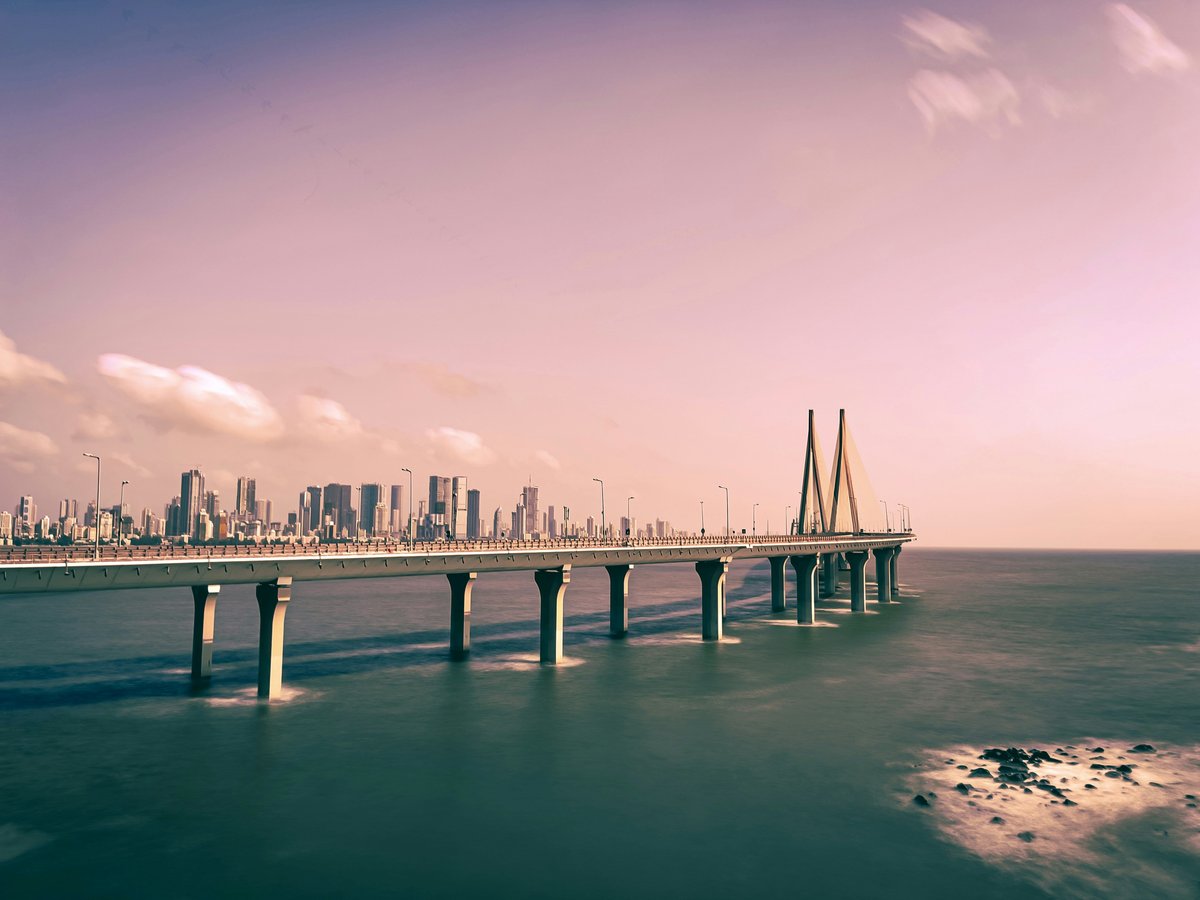
Stay in Mumbai in November
77 hotels in the Trip.com pool for Mumbai, from US$10 a night.
Opens Trip.com on Fri 6 Nov to Sun 8 Nov 2026; change the dates there.
November is when Mumbai gets its weather back. The monsoon ends in October, and by early November, 4 months of relentless rain, roughly 2,200mm between June and September, are behind you. Daytime temperatures average 32.5°C (90°F) with nighttime lows around 22.3°C (72°F). Humidity sits at 61%, a noticeable relief from the 85%+ of July and August. Total rainfall for November is about 7mm across maybe 2 rainy days. For a city that spent the previous 4 months partially underwater, that shift feels dramatic.
The calendar lines up well too. Diwali often falls in November, and when it does, Mumbai treats it like a second New Year. Markets in Dadar West and Matunga fill with diyas, rangoli powders, and mithai boxes weeks in advance. On Diwali night, the fireworks over Marine Drive go on for hours. Even after the main celebration, the festive atmosphere lingers through mid-month, especially in neighborhoods like Girgaon and Bandra West where residential colonies keep their decorative lights up.
This is also when Mumbai's peak tourist and wedding season starts to build. Hotel rates are climbing but haven't reached the December-January highs. The post-monsoon Arabian Sea is calm and warm, Elephanta Island is accessible again after months of rough ferry crossings, and the city's outdoor spaces, from Sanjay Gandhi National Park in the north to Colaba's waterfront promenade in the south, are usable without an umbrella for the first time since April.
Why visit in November
- Post-monsoon weather is nearly ideal. Highs of 32.5°C, lows of 22°C, only 7mm of rain for the entire month, and humidity at 61%, almost half of what it was in August.
- Diwali falls in November in many years, including 2024 and likely 2026. Mumbai's celebrations are among the largest in India, with weeks of buildup across markets in Dadar, Matunga, and Bhuleshwar.
- Outdoor Mumbai is fully accessible again. Elephanta Island ferries run daily, Sanjay Gandhi National Park trails have dried out, and Marine Drive is walkable after sunset without monsoon gear.
- Hotel rates typically sit 15-25% below the December-January peak, with noticeably better last-minute availability for mid-range and luxury properties.
- Peak seafood season is underway. The Arabian Sea catch is at its best, and restaurants from Mahim to Colaba feature fresh pomfret and surmai through the month.
Worth knowing
- Daytime heat still reaches 32-34°C (90-93°F) on most days. November in Mumbai does not feel like autumn. The coolest it gets overnight is around 22°C, which still requires air conditioning for most visitors from temperate climates.
- If Diwali falls in November, expect 2-3 nights of intense fireworks and noticeably worse air quality from the smoke. Parts of South Mumbai and Bandra become very loud well past midnight.
- The tourist and wedding season is picking up. Popular restaurants in Bandra and Lower Parel fill up on weekends, and hotel inventory tightens around Diwali week and wedding dates.
Best for
Think twice if
November brings Mumbai's cleanest weather window of the year. The monsoon has finished, and what remains is warm, dry, and comparatively comfortable. Expect sunshine on most days with temperatures in the low 30s Celsius. Mornings and evenings feel genuinely pleasant by Mumbai standards. The humidity at 61% is noticeable but manageable, a world away from the monsoon months when it sits above 85%. You might get 1-2 brief episodes of rain all month, totaling about 7mm. The Arabian Sea breeze picks up after sunset along Marine Drive and Worli Sea Face, pulling temperatures down to around 22-24°C by late evening.
Seasonal caution
- Air quality drops for 2-3 days around Diwali due to firework smoke. AQI in parts of South Mumbai and the western suburbs can reach the unhealthy range (150-200) on Diwali night itself. Travelers with asthma or respiratory conditions should carry medication and consider staying indoors during peak firework hours.
Year-round climate
Averages from the last 5 years.
| Month | Avg high (°C) | Avg low (°C) | Rainfall (mm) |
|---|---|---|---|
| Jan | 30 | 19 | 2 |
| Feb | 32 | 20 | 0 |
| Mar | 34 | 23 | 3 |
| Apr | 34 | 25 | 1 |
| May | 33 | 27 | 97 |
| Jun | 30 | 26 | 461 |
| Jul | 28 | 25 | 856 |
| Aug | 28 | 25 | 413 |
| Sep | 28 | 25 | 478 |
| Oct | 31 | 24 | 95 |
| Nov | 33 | 22 | 7 |
| Dec | 31 | 21 | 20 |
Holidays and festivals in November
Public holidays
- Diwali (Deepavali)(दीपावली)8 November 2026
When is Diwali in 2026?
8 November 2026
Diwali is a major cultural celebration in Mumbai. In 2026 it falls on 8 November 2026.
Headline events
Diwali (Festival of Lights)
Late October to mid-November (varies annually with the Hindu lunar calendar)
India's largest festival transforms Mumbai for nearly 2 weeks. Markets across Dadar, Matunga, and Bhuleshwar overflow with clay diyas, rangoli powders, sweets, and fireworks. The main night fills the skyline over Marine Drive and Bandra with hours of continuous fireworks. Homes across the city light oil lamps along windowsills and balconies. Dates shift annually with the Hindu lunar calendar, so confirm the specific year before booking. In years when Diwali falls in late October, the festive energy and decorations still carry well into early November.
Best things to do in November
Walk the Colaba-to-Fort heritage trail
sightseeingThe 4-5km route from Gateway of India north through Colaba, past the Regal Cinema and into the Kala Ghoda art district, then onward to Chhatrapati Shivaji Maharaj Terminus (CSMT), passes some of Mumbai's finest colonial and Art Deco architecture. The pavement is flat and the route is mostly shaded by old trees along the Fort area's streets.
Post-monsoon dry weather makes this the first comfortable month for extended outdoor walking since April. Humidity at 61% is manageable compared to the 85%+ of monsoon season.Booking tipStart before 9am to beat the midday 32°C heat and to catch CSMT in morning light.
Ferry to Elephanta Caves
day_tripThe UNESCO World Heritage cave temples sit on Elephanta Island in Mumbai Harbour, a 1-hour ferry ride from the Gateway of India jetty. The main cave holds a 6-meter-tall Trimurti sculpture of Shiva carved in the 5th-8th century. The island has a toy train from the jetty to the base of the hill, then about 120 steps up to the caves.
Ferry service is fully reliable again after months of monsoon cancellations and rough seas. The caves stay cooler in November than during the March-May heat.Booking tipTake the first ferry at 9am to avoid the midday tour group crowds. Ferries depart from the Gateway of India jetty roughly every 30 minutes.
Sunrise at Sassoon Docks
photographyColaba's working fishing docks come alive around 5:30am when the Koli fisherwomen begin sorting and auctioning the morning catch. The combination of wet fish, colored saris against grey concrete, and harsh overhead lighting makes it one of Mumbai's most striking photographic locations. The dock has also hosted contemporary art installations in recent years.
The fishing season is in full swing after the monsoon-period ban. November mornings are warm enough (around 24-25°C at dawn) to go early comfortably, without the rain risk that rules out monsoon months.Booking tipArrive by 5:45am. The peak activity lasts about 90 minutes. Stay on the elevated concrete walkway to avoid getting in the way of the workers.
Evening street food walk in Mohammed Ali Road
foodThis stretch in South Mumbai has been one of the city's great street food corridors for generations. Stalls line both sides of the road after sunset, and the smoke from charcoal grills, the smell of slow-cooked nihari, and the sizzle of seekh kebabs on open flame create a sensory overload that is hard to find anywhere else in the city.
Dry, cooler evenings (around 26-28°C after dark) mean the outdoor stalls run at full capacity for the first time since the monsoon ended. The lack of rain also keeps the road surfaces cleaner.Booking tipGo after 8pm when the full range of stalls is open. Weekday evenings are less crowded than weekends.
Hike to Kanheri Caves in Sanjay Gandhi National Park
natureA 6km paved path through 104 square kilometers of protected forest leads to a complex of 109 Buddhist caves carved between the 1st and 10th centuries. The park sits in Mumbai's northern suburbs and feels like a different world from the city's density. Langur monkeys, butterflies, and bird calls replace traffic noise within minutes of the gate.
Trails are dry but the post-monsoon greenery is still lush, creating the best visual contrast of the year. No mud, no leeches, and comfortable temperatures in the forest canopy.Booking tipEnter the park before 8am when it opens. The Kanheri Caves path is well-marked. Carry at least 2 liters of water per person.
Sunset walk along Worli Sea Face
leisureThe 3km promenade along Worli Sea Face offers unobstructed views of the Arabian Sea to the west and the Bandra-Worli Sea Link to the north. Locals gather along the sea wall in the early evening, and the sunset view is one of the most photographed in the city. The sound of waves against the rocks, the smell of salt air, and the gradual lighting of the Sea Link make this a quintessential Mumbai evening.
November sunsets along the west coast come earlier, around 5:50-6:00pm. The post-monsoon air clarity gives cleaner horizon lines and more vivid colors than the hazy pre-monsoon months.Explore Chor Bazaar and Mutton Street
shoppingMumbai's famous flea market in the Kamathipura area sells antiques, Bollywood memorabilia, vintage cameras, old maps, brass fittings, and architectural salvage. The narrow lanes are packed with small shops and pavement stalls. Haggling is expected and part of the experience. The texture of old wood, tarnished brass, and dusty film posters is unlike any mall.
Dry weather makes browsing the outdoor sections comfortable. The pre-wedding-season energy brings more dealers out with their better stock as families shop for home decor and gifts.Booking tipSaturday mornings have the widest selection. Go before 11am for the best browsing before the heat builds.
Attend a performance at Prithvi Theatre
cultureThis intimate 200-seat theatre in Juhu has been the heart of Mumbai's Hindi and Marathi theatre scene since 1978. The space is small enough that you feel the actors' energy from every seat. The cafe outside, shaded by old trees, serves chai and sandwiches and is a gathering spot for the city's theatre community.
The annual Prithvi Theatre Festival typically runs in November, featuring 10+ days of special programming, workshops, and back-to-back performances that draw theatre enthusiasts from across India.Booking tipFestival shows sell out fast. Check the Prithvi Theatre website for the November schedule and book online as soon as dates are announced.
What to eat in November
In season: fruit
Sitaphal (custard apple)
Custard apple season peaks across Maharashtra in October and November. Street vendors near Dadar station and at Crawford Market (Mahatma Jyotiba Phule Market) sell them by the kilo. The flesh is creamy, fragrant, and sweet when ripe, with a texture somewhere between pudding and pear.
Guava (peru)
November is peak guava season in Maharashtra. The fruit appears at every street cart and railway station platform. The pink-fleshed variety tends to be sweeter. Locals eat it with a sprinkle of chaat masala and salt, which sounds odd but works.
On menus now
Fresh pomfret
Whole pomfret from the Arabian Sea reaches peak quality in November as the post-monsoon catch comes in strong. Restaurants across Colaba and Bandra prepare it fried, tandoori, or in a coastal green masala. This flat silver fish is central to Mumbai's seafood identity.
Surmai (seer fish) steaks
Surmai is the other pillar of Mumbai's seafood kitchen alongside pomfret. November brings thick, firm steaks that are typically pan-fried with a turmeric-and-chili marinade or grilled over charcoal. Coastal Maharashtrian and Goan-style restaurants in Bandra feature it heavily this month.
Street food peaks
Bombil fry (Bombay duck)
Dried and deep-fried bombil is a Mumbai signature. November's active fishing season means fresh bombil arrives daily at Sassoon Docks and the Koli markets in Versova. The battered version, crispy outside and soft inside, is served as a starter at most coastal Maharashtrian restaurants.
Festival food
Diwali mithai (festival sweets)
In years when Diwali falls in November, sweet shops across Matunga, Lalbaug, and Bhuleshwar produce vast quantities of kaju katli, motichoor ladoo, and barfi. The smell of roasting cashews and cardamom drifts through entire neighborhoods for weeks. Many families gift decorated boxes of mixed mithai.
Regular events in November
Prithvi Theatre Festival
Annual theatre festival at Prithvi Theatre in Juhu with over 10 days of plays, workshops, panel discussions, and performances in Hindi, Marathi, and English. The festival has run since the 1990s and draws actors, directors, and theatre lovers from across India.
Early to mid-NovemberGuru Nanak JayantiFree
Sikh holy day celebrating the birth of Guru Nanak, the founder of Sikhism. Gurudwaras in Matunga, Dadar, and Chembur hold large processions called nagar kirtan through the streets. The langar (community kitchen) at major gurudwaras serves free meals to thousands of people regardless of faith. The processions feature singing, music, and decorated floats.
Mid to late November, varies with the lunar calendarChildren's Day (Bal Divas)
November 14 marks the birthday of Jawaharlal Nehru, India's first Prime Minister, and is celebrated as Children's Day across the country. Museums, the Nehru Planetarium in Worli, and cultural venues across Mumbai run special programs, reduced-price entry, and children's workshops.
November 14Kartik PurnimaFree
The full moon of the Hindu month of Kartik is considered auspicious for bathing in sacred water. Banganga Tank in Malabar Hill holds a ceremony with oil lamps floated on the water. The sight of hundreds of small flames reflected in the ancient tank in the middle of the night is quietly striking.
Late November, varies with lunar calendarBest places this November
Marine Drive (Netaji Subhash Chandra Bose Road)
waterfrontThe 3.6km arc from Nariman Point to Girgaon Chowpatty is one of the great urban waterfronts. November's calm seas and clear evenings make it ideal for the walk. At dusk, the streetlights trace the curve of the bay, creating the Queen's Necklace view. The concrete sea wall is where half of Mumbai seems to sit after work, watching the sunset and eating roasted peanuts from paper cones.
Churchgate / Marine LinesKala Ghoda art district
cultural districtThe galleries and cultural spaces in this Fort-area neighborhood are open year-round, but November marks the start of the exhibition season. Jehangir Art Gallery and the National Gallery of Modern Art both tend to open major shows in November ahead of the January Kala Ghoda Arts Festival. The streets are lined with Art Deco and colonial buildings, and the pavement cafes are comfortable to sit at now that the rain has stopped.
FortSanjay Gandhi National Park
nature104 square kilometers of protected forest in Mumbai's northern suburbs. November is likely the best hiking month. The Kanheri Caves trail is dry and accessible, the forest canopy is still green from the monsoon, and the temperature under the trees stays a few degrees cooler than the city. Early mornings bring the best chance of spotting deer and langur monkeys.
BorivaliSassoon Docks
marketColaba's working fishing dock has been operational since 1875. The 5:30am fish landing is when the Koli fisherwomen sort the day's catch on the wet concrete floor. November brings peak fishing activity. The dock has become a site for annual contemporary art installations, with works placed among the fish crates and netting.
ColabaBanganga Tank
heritageA spring-fed freshwater tank in Malabar Hill, surrounded by small temples and ghats, dating to at least the 12th century. In November, the tank is full from recent monsoon recharge. The morning light between 7-8am creates strong reflections. Few tourists make it here even in peak season, and the quiet is remarkable given that it sits in one of Mumbai's most expensive residential areas.
Malabar HillGirgaon Chowpatty
beachMumbai's most popular beach for street food is at its best in dry, cooler months. November evenings bring comfortable temperatures and the full lineup of bhel puri, pav bhaji, and kulfi stalls. The sand is clean compared to monsoon months, and families spread out along the waterline after sunset. The warm smell of roasting corn and spiced chaat carries across the beach.
GirgaonBandra Fort (Castella de Aguada)
viewpointThis ruined Portuguese fort sits on a headland in Bandra West with views of the Arabian Sea, the Bandra-Worli Sea Link, and the Mumbai skyline to the south. The structure dates to 1640. November sunsets from this vantage point, with the Sea Link lit against the darkening sky, are one of Mumbai's quieter visual treats. It is rarely crowded.
Bandra West
Your packing checklist
Tick items off as you pack. Your progress saves in this browser.
All packed — have a great trip.
Insider tips
The Sassoon Docks fish market in Colaba is best before 7am. By 8am the Koli fisherwomen have sorted and sold the prime catch, and the remainder gets packed in ice for wholesale. If you want to see the auction atmosphere, arrive by 5:45am. Stay on the elevated walkway to avoid disrupting work.
For Diwali shopping, skip the tourist-facing shops along Colaba Causeway. The wholesale sweet and snack markets along Bhuleshwar and Zaveri Bazaar in South Mumbai carry the same kaju katli and chakli at lower prices, with better variety. The lanes are narrow and chaotic, but the savings are real and the experience is closer to how Mumbaikars shop.
Mumbai's suburban train system is the fastest way across the city, but avoid the 8-9am and 6-7:30pm rush hours entirely. The first-class compartment costs roughly 10 times the second-class fare but is still very affordable by international standards. It is the difference between a comfortable ride and being pressed against strangers for 40 minutes.
Bandra Fort (Castella de Aguada) gives a better photography angle of the Bandra-Worli Sea Link than the more popular Bandra Bandstand promenade. The ruined Portuguese walls frame the bridge against the water, and the spot is rarely crowded even at sunset.
If you are in Mumbai during Kartik Purnima in late November, the lamp-floating ceremony at Banganga Tank in Malabar Hill is one of the city's most atmospheric moments. Hundreds of small oil lamps on the dark water, surrounded by centuries-old temples. It is not widely promoted and draws mostly local devotees.
Avoid these mistakes
- Booking a full-day outdoor sightseeing tour without accounting for the 32°C heat. November is dry, but it is still tropical. Plan your outdoor walking for before 10am or after 4pm, and spend the midday hours in air-conditioned spaces. Museums, malls, and restaurants are natural midday refuges.
- Assuming Mumbai has autumn weather because it is November. There are no leaves changing color, no cool breezes, no sweater weather. Pack for warm tropical conditions. Travelers from Europe or North America frequently bring too many layers and not enough sun protection.
- Trying to cover North and South Mumbai in the same day. The city is long and narrow, roughly 60km from Colaba in the south to Borivali in the north. Traffic between Bandra and South Mumbai alone can take 90 minutes by road. Base yourself in one area per day and use the suburban trains for longer north-south trips.
- Underestimating Diwali's impact on the city's rhythm. Shops, restaurants, and offices close for 1-2 days around the main festival day. Some restaurants close for up to 3 days. Stock up on essentials and confirm your restaurant plans in advance during Diwali week.
Practical tips for November
November sits at the transition between off-season and peak season in Mumbai. Book hotels at least 2-3 weeks ahead if your dates overlap with Diwali, as the city fills with domestic travelers returning home for the festival. Weekend rates at hotels in Juhu, Bandra, and South Mumbai climb noticeably once the wedding season starts in mid-November. For popular restaurants in Lower Parel and Bandra West, weekend dinner reservations are worth making 3-4 days in advance. Cotton is the right fabric for everything you wear. Dress modestly for temple visits and the Haji Ali Dargah, with covered shoulders and knees. The Chhatrapati Shivaji Maharaj International Airport connects to South Mumbai via the Western Express Highway, roughly 60-90 minutes by taxi depending on traffic. Late-night arrivals see much lighter roads. Most shops and restaurants close for 1-2 days around Diwali itself, so plan indoor activities or beach time for those days. Tipping at restaurants is typically 10%, though some add a service charge to the bill. Uber and Ola ride-hailing apps work well across the city and are generally the easiest transport option for visitors alongside the suburban trains.
FAQ
Is November a good time to visit Mumbai?
November is one of the 3 best months to visit Mumbai, alongside December and January. The monsoon is completely over, rainfall drops to about 7mm for the entire month, humidity falls to 61%, and temperatures are warm but not extreme at 32.5°C (90°F). Hotel prices are lower than the December-January peak, and availability is better. If Diwali happens to fall in November that year, you also get India's biggest festival as a bonus. The main thing to know is that it still feels like the tropics, not autumn.
What is the weather like in Mumbai in November?
Warm and dry. Average highs reach 32.5°C (90°F) and lows sit around 22.3°C (72°F). Humidity is about 61%, which feels noticeably more comfortable than the 85%+ of monsoon season. You will likely see rain on only 1-2 days all month, totaling roughly 7mm. Evenings along the coast get a sea breeze that takes the edge off. It does not feel like autumn at all. Think of it as a pleasant tropical dry-season month with reliable sunshine.
Is Mumbai crowded in November?
Moderately. November is the start of the tourist and wedding season, so it is busier than the July-September monsoon lull but not yet at December-January peak levels. Domestic tourism picks up significantly around Diwali, when trains and flights into Mumbai fill up and hotel occupancy spikes. After Diwali, things calm briefly before the Christmas and New Year rush builds in mid-December. Tourist sites like Gateway of India and Elephanta Caves are busy but manageable.
What should I wear in Mumbai in November?
Light, breathable fabrics. Cotton and linen are ideal for 32°C days. Carry a light layer for heavily air-conditioned restaurants, malls, and trains. For temple visits, you will need covered shoulders and knees. A lightweight scarf doubles as sun protection and temple-appropriate cover. Footwear should be comfortable sandals or walking shoes you can slip off easily, as many religious sites require removing shoes at the entrance.
Is it safe to eat street food in Mumbai in November?
November is one of the safer months for street food because the dry conditions mean less waterborne contamination risk compared to monsoon season. Stick to stalls with high turnover where food is cooked fresh in front of you. Mohammed Ali Road, Girgaon Chowpatty, and Juhu Beach are well-established areas with vendors who have been operating for decades. Start with cooked items like pav bhaji, vada pav, or kebabs before trying uncooked preparations like bhel puri. Carry hand sanitizer.
Things to Do in Mumbai in November
 Free cancellation
 Dharavi slum tour in Mumbai by Female tour guides of the slum
Day trip: free cancellation.
via Viator Free cancellation
 Private Mumbai Sightseeing Tour (Traveller's Choice Award Winner)
Day trip: free cancellation.
via Viator Free cancellation
 Elephanta Caves & Island Guided Private Tour
Day trip: free cancellation.
via Viator Free cancellation
 Highlights of Mumbai Sightseeing Tour: TRAVELLERS CHOICE AWARDED
Day trip: free cancellation.
via Viator Free cancellation
 The Original Mumbai by Dawn - Recommended by Nigella Lawson & Nat Geo Traveller!
Day trip: 3 hours, free cancellation.
via Viator Free cancellation
 Private Mumbai Sightseeing Tour(Travellers Choice Award Winner)
Day trip: free cancellation.
via ViatorFind a flight to Mumbai
Live fares to Mumbai appear here once cookies are accepted.
Last verified by automated review (v1.7.2) on . What is automated review?