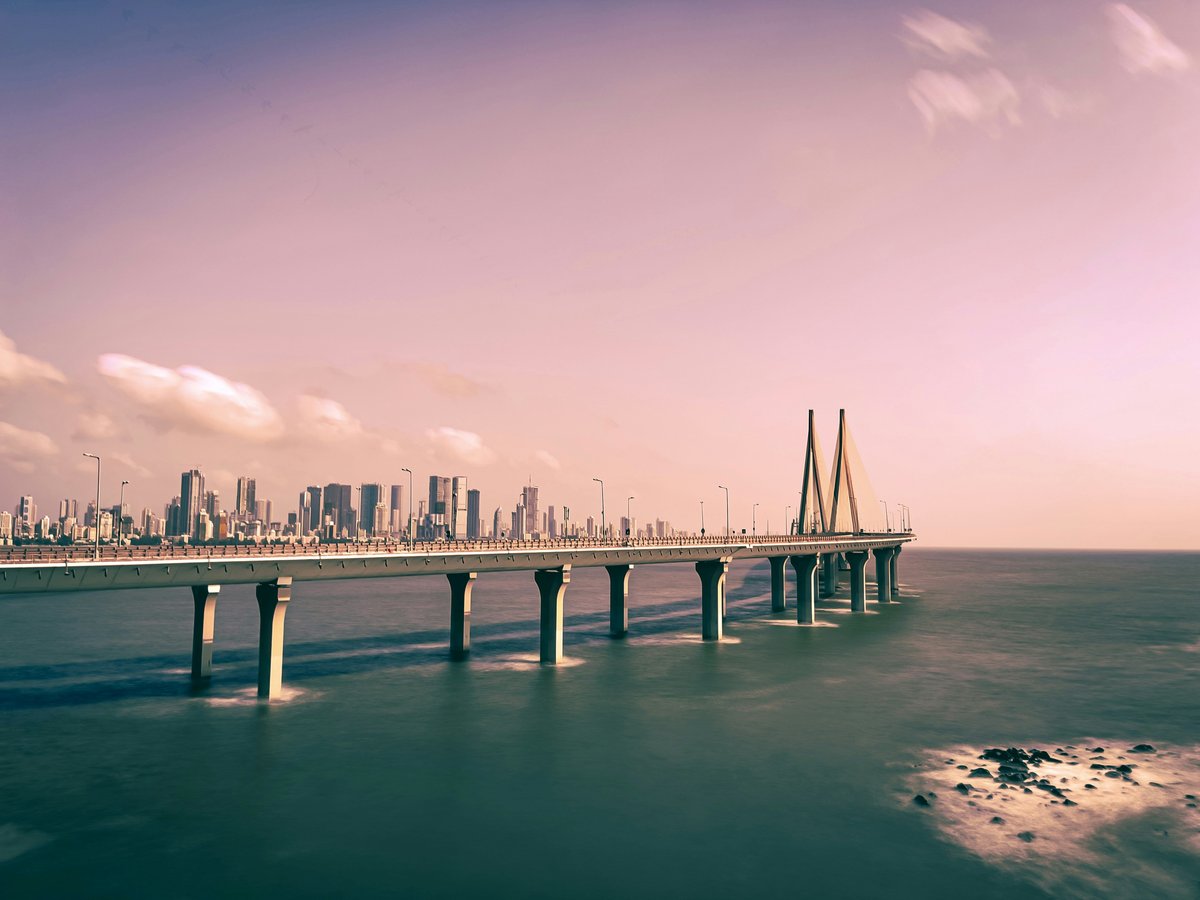
Stay in Mumbai in August
77 hotels in the Trip.com pool for Mumbai, from US$10 a night.
Opens Trip.com on Fri 6 Aug to Sun 8 Aug 2027; change the dates there.
August in Mumbai means monsoon, and that single word defines every aspect of a visit this month. The city receives roughly 413mm of rain across 30 days, streets in low-lying areas like Hindmata and Sion flood regularly, and suburban train services on the Western and Central lines get suspended during heavy downpours. Humidity sits at about 86%, and the air feels thick even though temperatures hover around 28°C (83°F), well below the 34°C peaks of April.
To be fair, monsoon Mumbai has a strange appeal that the polished November-February tourist season cannot replicate. Marine Drive transforms when Arabian Sea waves crash over the tetrapod sea wall at high tide, sending spray 10 to 15 feet into the air. The hills inside Sanjay Gandhi National Park turn an electric green. Mumbai's Koli fishing community celebrates Narali Purnima by offering coconuts to the sea at Worli Koliwada and Versova. And if Janmashtami falls in August, you'll see govinda teams forming human pyramids 30 to 40 feet high across Dadar and Lalbaug, competing to break clay pots filled with curd.
But none of that changes the practical reality. Your shoes will likely not survive 3 days. Taxis become scarce during heavy spells, and an afternoon downpour can strand you for 2 to 3 hours in a doorway. Hotel rates in Colaba and Bandra drop 30 to 50% from the November peak, which is the city's own honest signal about the month. August is for people who want to see Mumbai raw and unpolished, with a high tolerance for wet feet and broken plans.
Why visit in August
- Hotel rates across Colaba, Bandra, and Juhu drop 30-50% from peak season (November-February), making 4-star properties accessible on a 3-star budget.
- Janmashtami's Dahi Handi celebrations turn neighborhoods like Dadar and Lalbaug into open-air spectacles, with govinda teams building human pyramids 30-40 feet high for cash prizes.
- Sanjay Gandhi National Park and the Kanheri Caves are at their most dramatic, with seasonal waterfalls cascading between 1st-century BCE rock-cut caves and dense green canopy visible only during monsoon months.
- The monsoon street-food scene peaks across Girgaon and Mohammad Ali Road, with bhutta (roasted corn) vendors, fresh kanda bhaji (onion fritters), and piping cutting chai on every other corner for 10-40 INR.
Worth knowing
- 413mm of rain across 30 days means waterlogging in low-lying areas like Hindmata, Sion, and King's Circle, sometimes to knee or waist depth for hours.
- Suburban rail services on the Western Line, Central Line, and Harbour Line suspend operations during heavy downpours, sometimes for 6-12 hours, stranding millions and making cross-city travel unpredictable.
- Humidity at 86% makes even 28°C (83°F) feel oppressive, and clothes take a full day to dry indoors without air conditioning.
- Elephanta Island ferries from the Gateway of India run irregularly or cancel during rough seas, cutting off one of Mumbai's most popular day trips for much of August.
Best for
Think twice if
August sits in the second half of Mumbai's monsoon, which arrived in early June. Temperatures hold steady at 28.1°C (83°F) high and 25.2°C (77°F) low, but the 86% humidity makes the air feel heavier than those numbers suggest. Rain falls on virtually every day of the month, totaling around 413mm. Most showers arrive in intense 1-to-3-hour bursts, often between 2 PM and 6 PM or overnight, with gray overcast skies between them. You might get a few hours of pale sun in the morning before the next spell rolls in from the Arabian Sea. The temperature barely shifts between day and night, which tends to feel relentless after a few days.
Seasonal caution
- Mumbai experiences severe waterlogging during heavy monsoon spells. Low-lying areas like Hindmata junction, Sion, King's Circle, and parts of Andheri can flood to waist depth within hours of sustained 50mm-per-hour rainfall.
- Suburban rail services on the Western, Central, and Harbour lines suspend operations during heavy downpours, sometimes for 6-12 hours. The network carries about 7.5 million passengers daily, and its shutdown affects all surface traffic as commuters shift to roads.
- The India Meteorological Department (IMD) issues red alerts for Mumbai several times during a typical August, indicating rainfall exceeding 200mm in 24 hours. Monitor IMD bulletins and local news daily during your stay.
- High tides coinciding with heavy rain cause seawater to push back into Mumbai's drainage system, worsening flooding in coastal stretches from Marine Drive to Versova. Tide tables are published by the BMC (Municipal Corporation) and are worth checking each morning.
Year-round climate
Averages from the last 5 years.
| Month | Avg high (°C) | Avg low (°C) | Rainfall (mm) |
|---|---|---|---|
| Jan | 30 | 19 | 2 |
| Feb | 32 | 20 | 0 |
| Mar | 34 | 23 | 3 |
| Apr | 34 | 25 | 1 |
| May | 33 | 27 | 97 |
| Jun | 30 | 26 | 461 |
| Jul | 28 | 25 | 856 |
| Aug | 28 | 25 | 413 |
| Sep | 28 | 25 | 478 |
| Oct | 31 | 24 | 95 |
| Nov | 33 | 22 | 7 |
| Dec | 31 | 21 | 20 |
Headline events
Janmashtami and Dahi Handi
Typically mid-to-late August, varies annually with the Hindu lunar calendar
Lord Krishna's birthday is celebrated across India, but Mumbai's Dahi Handi tradition makes it a citywide spectacle without equal. Teams of young men called govindas form human pyramids to reach and break clay pots filled with curd, suspended 20 to 40 feet above the ground. Neighborhoods like Dadar, Lalbaug, Worli, and Thane host competitive events with cash prizes reaching several lakhs of rupees. Crowds of thousands gather at major intersections, dhol drums pound, and the occasional pyramid collapse is followed by immediate rebuilding. The atmosphere is loud, wet, and charged.
Best things to do in August
Watch high-tide waves crash over Marine Drive
natureDuring August high tides, waves from the Arabian Sea crash over the tetrapods lining Marine Drive's sea wall, sending spray 10-15 feet into the air. Thousands of Mumbaikars gather along the 3.6 km Queen's Necklace promenade to watch, especially during evening high tides. The wetter it gets, the better the spectacle. You will get soaked by spray within 5 minutes if you stand at the railing.
August high tides combined with monsoon swells create the most dramatic wave action of the year along Marine Drive's sea wall.Booking tipNo booking needed. Check tide tables online for the day's high-tide timing, typically published by BMC and available via local news apps.
Explore Kanheri Caves in monsoon green
heritageThe 109 Buddhist rock-cut caves inside Sanjay Gandhi National Park date back to the 1st century BCE. In August, seasonal waterfalls pour down the basalt cliff faces between cave entrances, and the surrounding forest turns dense green. The walk from the park gate to the caves takes about 45 minutes on a muddy trail. Entry runs about 25 INR for Indian visitors and 300 INR for foreigners.
Monsoon waterfalls between the cave entrances and the lush forest canopy make August the most visually dramatic month to visit Kanheri.Booking tipGo on a weekday morning to avoid weekend crowds from Borivali. The park opens at 7:30 AM. Wear shoes with grip.
Attend a performance at NCPA, Nariman Point
cultureThe National Centre for the Performing Arts at Nariman Point programs theatre, classical Indian music, Western classical, jazz, and film screenings. The Tata Theatre (1,109 seats) and the smaller Experimental Theatre both run regular August programs. Ticket prices range from 300 to 2,000 INR depending on the production.
Monsoon rains make outdoor plans unreliable most afternoons. NCPA schedules frequent performances during the monsoon months, and evening shows pair well with the sound of rain on the building.Booking tipBook through the NCPA website at least 3-5 days in advance for weekend performances. Weeknight shows are easier to walk into.
Monsoon street-food crawl through Mohammad Ali Road
foodThe stretch of Mohammad Ali Road near Minara Masjid is one of Mumbai's densest food corridors. Start with seekh kebabs at a corner stall, move to malpua (fried pancakes soaked in syrup), and finish with phirni (chilled rice pudding) in clay pots. The area comes alive from 7 PM onward. Budget about 300-500 INR per person to eat well.
Monsoon evenings drop temperatures enough to make walking and eating along this dense food stretch comfortable. Seasonal items like special halwa and hot chai stalls appear only during the rains.Booking tipNo bookings. Go after 7 PM on a weeknight. Carry cash since most stalls and small shops don't accept cards.
Visit Jehangir Art Gallery and the Kala Ghoda galleries
cultureThe Kala Ghoda district in Fort holds Mumbai's densest concentration of galleries within a few walkable blocks. Jehangir Art Gallery on M.G. Road shows rotating exhibitions by Indian contemporary artists, with free entry. Surrounding lanes hold smaller galleries, independent bookstores, and art cafes. A monsoon afternoon moving between them keeps you dry and occupied for 3-4 hours.
Heavy rain makes outdoor sightseeing unreliable after noon. The free galleries in Kala Ghoda are open rain or shine and rarely crowded in August's off-season tourist lull.Booking tipNo booking needed. Jehangir Art Gallery opens Tuesday to Sunday, 11 AM to 7 PM. Free entry.
Watch Dahi Handi celebrations during Janmashtami
festivalIf Janmashtami falls in August, head to Dadar or Lalbaug by 9 AM to watch govinda teams from across Maharashtra build human pyramids 6-8 tiers high. The largest events draw hundreds of teams and thousands of spectators. Dhol drums, chanting crowds, collapsing pyramids rebuilt in seconds. You will stand in a dense crowd, likely in the rain, for hours.
Janmashtami typically falls in August, and Mumbai's Dahi Handi tradition is the most intense and competitive version of this celebration anywhere in India.Booking tipNo tickets. Arrive by 9-10 AM for a decent viewing spot near major mandals. Dadar, Worli, and Lalbaug host the biggest events.
Catch a play at Prithvi Theatre in Juhu
culturePrithvi Theatre has been one of Mumbai's most respected intimate theatre spaces since 1978, seating about 200 people. It programs Hindi, Marathi, and occasional English plays, poetry readings, and performances. The cafe outside the theatre serves good coffee. Tickets stay accessible at 100-500 INR.
Monsoon evenings are ideal for theatre in a small venue. Prithvi's August schedule tends to be full, and the intimate setting feels warm when rain hammers the roof outside.Booking tipCheck Prithvi's website for the weekly schedule. Weekend shows sell out. Book online or arrive 30 minutes early for the box office.
Photograph Banganga Tank in monsoon
heritageBanganga Tank is a roughly 1,000-year-old freshwater tank in the Walkeshwar area of Malabar Hill, surrounded by old temples and stone steps. In August, the monsoon fills it fully. Temple spires and palms reflected in the still water between rain spells make for striking photographs. The site is quiet and rarely crowded even on weekends.
The monsoon fills Banganga Tank to capacity, creating mirror-like reflections of the surrounding 12th-century temples that are absent in the dry months when water levels drop.Booking tipNo booking or entry fee. Early morning light between 7-8 AM is best before overcast skies flatten the contrast.
What to eat in August
In season: fruit
Jamun (Java plum)
Small, dark purple stone fruits that peak during monsoon months, sold in paper bags by roadside vendors for 30-50 INR. They stain your tongue and fingers purple for hours. The tart-sweet flavor with a slight astringent finish is distinctive to this season.
On menus now
Misal Pav
A fiery Maharashtrian dish of sprouted moth beans in a spicy gravy called kat, topped with crunchy farsan, raw onion, and lime, served with soft pav bread. The warmth of misal feels right against August rain. Aaswad in Dadar serves a particularly intense version.
Street food peaks
Bhutta (roasted corn on the cob)
Mumbai's monsoon street food icon. Vendors roast fresh cobs over charcoal, then rub them with lime, salt, and red chili powder. You'll find them along Marine Drive, Juhu, and Carter Road for 20-40 INR per cob. The smell of charcoal smoke mixing with wet earth after a rain spell is peak monsoon Mumbai.
Kanda Bhaji (onion pakoras)
Thinly sliced onion fritters fried crisp in gram-flour batter, served piping hot with green chutney. Demand at street stalls across Girgaon and Dadar rises sharply during monsoon. They pair with cutting chai during the 4 PM downpour, ideally under a corrugated tin awning.
Vada Pav
Available year-round, but monsoon is when Mumbai's signature potato-fritter-in-a-bun reaches peak consumption. Stalls in Dadar station and Andheri sell thousands daily. Spiced potato, fried gram-flour shell, green and dry garlic chutneys, soft pav. About 15-30 INR.
What to drink
Cutting Chai
Mumbai's signature half-glass of sweet, milky, ginger-laced tea reaches peak cultural relevance during monsoon. Tapris (tea stalls) in Fort, Churchgate, and Matunga see their highest turnover when rain drives people under awnings. About 10-15 INR per glass.
Regular events in August
Indian Independence DayFree
August 15 marks India's independence from British rule in 1947. In Mumbai, the main state ceremony takes place at Mantralaya, the government secretariat. Schools, government offices, and many businesses close. Flag-hoisting ceremonies happen in neighborhoods across the city. This is a dry day by law, so all bars, restaurants serving alcohol, and liquor shops remain closed.
August 15Raksha BandhanFree
A Hindu and Sikh festival where sisters tie a rakhi (decorative thread) on their brothers' wrists. Markets in Dadar, Crawford Market, and Linking Road in Bandra see heavy foot traffic in the days before as families buy rakhis and sweets. Banks close, and ATMs may run low on cash.
Full moon day of Shravan month, typically early-to-mid AugustNarali Purnima (Coconut Day)Free
Mumbai's Koli fishing community celebrates the end of the monsoon fishing ban by offering coconuts to the Arabian Sea. Ceremonies take place at Worli Koliwada, Versova, and other Koli settlements along the coast. Decorated fishing boats head out for the first catch in weeks. The festival falls on the same full-moon day as Raksha Bandhan.
Full moon day of Shravan month, typically early-to-mid AugustLokmanya Tilak JayantiFree
Birth anniversary of Bal Gangadhar Tilak, the freedom fighter who started public Ganesh Chaturthi celebrations in Pune and Mumbai in the 1890s. Political gatherings and cultural programs take place, particularly in Girgaon and Dadar.
August 23Best places this August
Marine Drive (Queen's Necklace)
promenadeThe 3.6 km arc along the Arabian Sea is Mumbai's most iconic promenade. In August, high-tide waves crash over the sea wall while thousands watch. Evening visits, when streetlights trace the curve of the bay through the mist and spray, are best. Locals gather here specifically during dramatic monsoon weather.
ChurchgateSanjay Gandhi National Park and Kanheri Caves
parkA 104 sq km national park inside Mumbai's northern suburbs. The 109 Buddhist rock-cut caves date to the 1st century BCE. In August, monsoon waterfalls cascade between cave entrances, and the forest turns dense green. Leopard sightings are rare but documented. Entry is about 65 INR for adults.
BorivaliJehangir Art Gallery
galleryMumbai's most established art gallery, showing rotating exhibitions of Indian contemporary art since 1952. Free entry. Located on M.G. Road in the Kala Ghoda precinct, surrounded by cafes and bookstores. A reliable rain-day activity with no advance planning needed.
FortBanganga Tank
heritageA roughly 1,000-year-old freshwater tank surrounded by old temples in the Walkeshwar area of Malabar Hill. August monsoon rains fill the tank fully, and the surrounding stone steps and temple spires reflected in the still water create striking compositions. Quiet and rarely crowded.
Malabar HillMahatma Jyotiba Phule Mandai (Crawford Market)
marketMumbai's grand Victorian-era wholesale market near CST station. The fruit, vegetable, and spice sections are worth walking through in August when monsoon produce like jamun, karonda, and fresh turmeric appears on the stalls. The building itself has bas-relief sculptures by Lockwood Kipling.
FortChhatrapati Shivaji Maharaj Vastu Sangrahalaya (CSMVS)
museumMumbai's premier museum, housed in a 1922 Indo-Saracenic building with palm gardens. Collections span Indus Valley artefacts, Mughal miniatures, and natural history. A full visit takes 2-3 hours. Entry is about 85 INR for Indian visitors and 650 INR for foreigners. An ideal monsoon afternoon.
FortWorli Sea Face and Worli Fort
promenadeThe seafront promenade along Worli offers views of the Bandra-Worli Sea Link and dramatic monsoon waves, with fewer crowds than Marine Drive. Worli Fort, a small 16th-century Portuguese structure, sits at the southern end. In August, spray from the waves reaches the promenade railing.
Worli
Your packing checklist
Tick items off as you pack. Your progress saves in this browser.
All packed — have a great trip.
Insider tips
When suburban trains stop during heavy rain, BEST bus services keep running on many routes across Mumbai. Locals switch to buses on flooded days. Download the m-Indicator app, which tracks Mumbai train and bus schedules in real time and pushes rain disruption alerts.
The Koli fishing villages at Worli Koliwada and Versova are worth visiting during Narali Purnima, when decorated boats and coconut offerings draw the entire community to the shore. Tourists are welcome but this is a neighborhood ceremony, not a ticketed performance.
Avoid Juhu Beach during monsoon entirely. The water turns brown with runoff from the Mithi River, debris washes ashore, and swimming is genuinely dangerous due to strong currents. Marine Drive and Worli Sea Face are the better seafront experiences in August.
Many 4- and 5-star Mumbai hotels offer unpublished monsoon packages in August with steep discounts, spa credits, and room upgrades. Call the hotel directly rather than booking through aggregator sites, because these deals are often not listed on OTAs like MakeMyTrip or Booking.
The Dhobi Ghat open-air laundry near Mahalaxmi station is oddly compelling in monsoon. The dhobis work through the rain, beating clothes against stone slabs in concrete wash pens. Morning light between 7-9 AM, before the overcast thickens, is best for photography from the Mahalaxmi bridge viewpoint.
Avoid these mistakes
- Scheduling outdoor activities for the afternoon. Mumbai's heaviest August rainfall typically falls between 2 PM and 6 PM. Plan outdoor sightseeing for mornings before 11 AM, and keep afternoons flexible for indoor alternatives like NCPA, CSMVS, or the Kala Ghoda galleries.
- Wearing white or light-colored clothing. Splashes from passing taxis, BEST buses, and auto-rickshaws on waterlogged roads leave brown stains on light fabrics within an hour of walking. Darker colors are far more practical.
- Planning a day trip to Elephanta Island without a backup. The MTDC ferry from the Gateway of India to Elephanta Caves gets cancelled frequently in August due to rough Arabian Sea conditions. You might waste an entire morning at the dock waiting for a service that never departs.
- Underestimating travel times across the city. A 30-minute taxi ride in dry weather can take 2 hours during a heavy August downpour. Build at least 90-minute buffers into any time-sensitive plan, especially for flights from Chhatrapati Shivaji International Airport.
Practical tips for August
Book accommodation in South Mumbai if possible. Colaba, Fort, and Churchgate flood less severely than low-lying suburbs like Sion and Andheri, and most indoor cultural attractions (NCPA, Jehangir Art Gallery, CSMVS) are within walking distance of each other. Carry cash since card machines at street stalls and small restaurants sometimes fail during power fluctuations. August 15 (Independence Day) is a dry day, meaning all bars and liquor shops close by law for 24 hours. Raksha Bandhan is a bank holiday, so ATMs may run low and branches stay shut. Download the Uber and Ola apps before you arrive, since finding an empty kaali-peeli taxi in the rain becomes nearly impossible. Auto-rickshaws operate only in the suburbs north of Bandra. If you need to catch a flight during a heavy rain spell, leave at least 4 hours before departure, because the road from South Mumbai to the airport near Andheri can gridlock completely. Mobile data reception can drop during intense downpours, so download offline maps of Mumbai in Google Maps or Maps.me before your trip.
FAQ
Is August a good time to visit Mumbai?
Honestly, no. August is deep monsoon in Mumbai, with 413mm of rain across 30 days and 86% humidity. Streets flood, suburban trains stop, Elephanta Island ferries cancel, and outdoor sightseeing plans fall apart on most days. That said, if you are drawn to monsoon drama on Marine Drive, budget hotel rates (30-50% below the November-February peak), and festivals like Janmashtami's Dahi Handi celebrations, August has a raw energy that the polished tourist season lacks. Come with low expectations for smooth logistics and a high tolerance for wet feet.
Does Mumbai flood in August?
Yes, regularly. Low-lying areas like Hindmata junction, Sion, King's Circle, and parts of Andheri flood during sustained heavy rain, sometimes to waist depth. The suburban rail network, which carries about 7.5 million passengers daily, suspends service during severe waterlogging, and disruptions lasting 6-12 hours happen several times each August. Stay in areas with better drainage, like Colaba or Malabar Hill, and keep your daily schedule flexible enough to absorb a 3-4 hour delay.
What should I wear in Mumbai in August?
Quick-dry synthetic clothing in darker colors. Cotton absorbs water and takes 12 or more hours to dry at 86% humidity. Waterproof sandals or rubber-soled shoes are necessary since your feet will get wet daily. Avoid leather shoes entirely. Carry a rain jacket and a wind-resistant umbrella. Light layers work fine for the 25-28°C (77-83°F) range. Temples and some restaurants expect covered shoulders and knees, so pack at least one pair of lightweight long trousers.
Are there any festivals in Mumbai in August?
Several. Indian Independence Day falls on August 15 every year, with flag-hoisting ceremonies across the city (note it is a dry day with no alcohol sales). Janmashtami typically falls in mid-to-late August, and Mumbai's Dahi Handi celebrations are among the most spectacular in India, with human-pyramid competitions in Dadar, Worli, and Lalbaug. Raksha Bandhan and Narali Purnima fall on the same full-moon day, usually in early-to-mid August. Lokmanya Tilak Jayanti on August 23 brings cultural programs to Girgaon and Dadar.
Is it safe to eat street food in Mumbai during monsoon?
Street food is central to the Mumbai monsoon experience, but use reasonable caution. Stick to stalls with high turnover where food is fried or roasted fresh in front of you, like bhutta vendors along Marine Drive or bhaji stalls in Girgaon. Avoid pre-cut fruit and raw salads from open-air stalls where rainwater can splash into the food. The risk of waterborne stomach issues rises slightly during monsoon across the city. Carry ORS packets and stay hydrated. Most travelers who eat freshly cooked items from busy stalls report no trouble.
Things to Do in Mumbai in August
 Free cancellation
 Dharavi slum tour in Mumbai by Female tour guides of the slum
Day trip: free cancellation.
via Viator Free cancellation
 Private Mumbai Sightseeing Tour (Traveller's Choice Award Winner)
Day trip: free cancellation.
via Viator Free cancellation
 Elephanta Caves & Island Guided Private Tour
Day trip: free cancellation.
via Viator Free cancellation
 Highlights of Mumbai Sightseeing Tour: TRAVELLERS CHOICE AWARDED
Day trip: free cancellation.
via Viator Free cancellation
 The Original Mumbai by Dawn - Recommended by Nigella Lawson & Nat Geo Traveller!
Day trip: 3 hours, free cancellation.
via Viator Free cancellation
 Private Mumbai Sightseeing Tour(Travellers Choice Award Winner)
Day trip: free cancellation.
via ViatorFind a flight to Mumbai
Live fares to Mumbai appear here once cookies are accepted.
Last verified by automated review (v1.7.2) on . What is automated review?