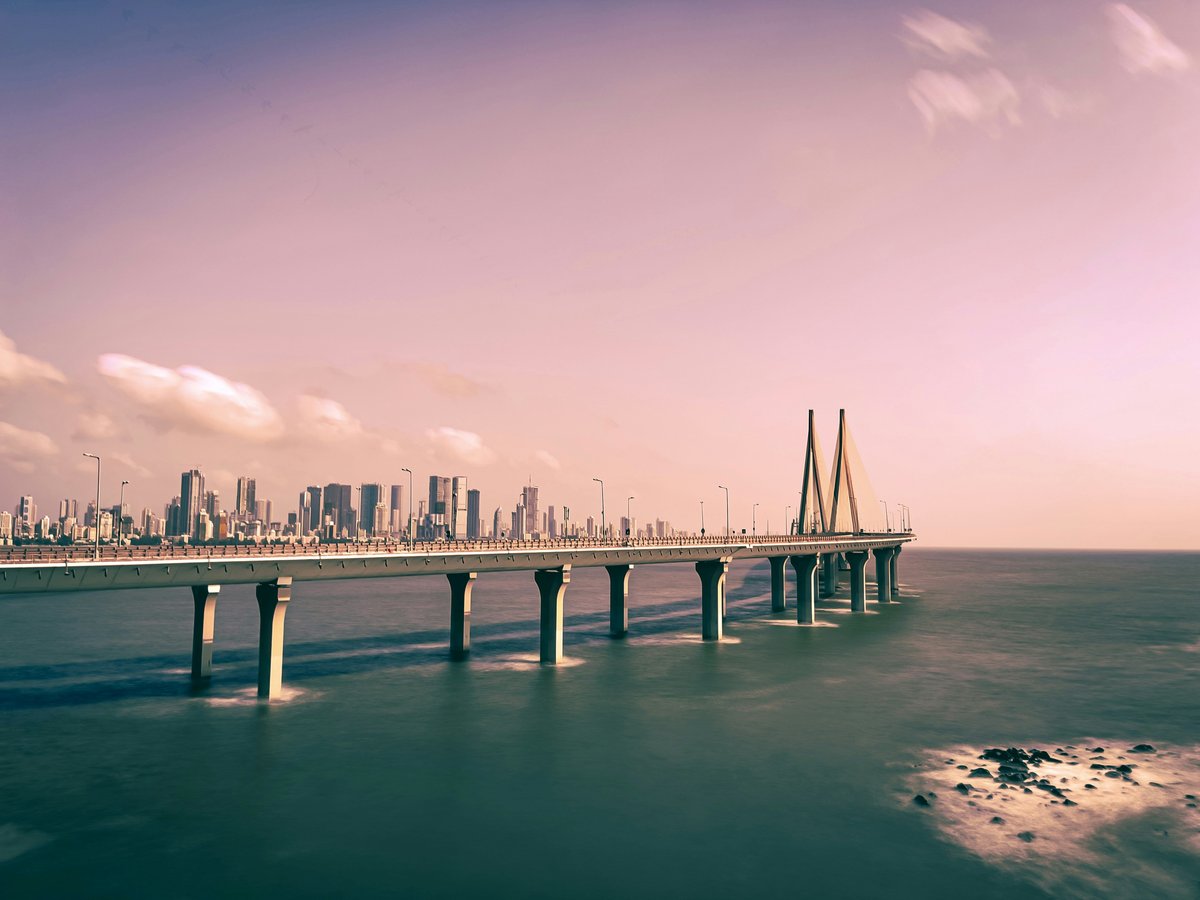
Stay in Mumbai in January
77 hotels in the Trip.com pool for Mumbai, from US$10 a night.
Opens Trip.com on Fri 1 Jan to Sun 3 Jan 2027; change the dates there.
January is likely the most comfortable month you'll find in Mumbai. Daytime temperatures sit around 30°C (86°F), and evenings cool to roughly 19°C (67°F), which by Mumbai standards feels almost crisp. There's virtually no rain. The 2mm monthly average is a rounding error compared to the 856mm that July dumps on the city. Humidity hovers near 63%, and you'll feel a breeze off the Arabian Sea that the monsoon months tend to suffocate entirely.
This is peak tourist season, and the city knows it. Hotel rates in Colaba and Bandra reflect the demand. But the trade-off seems fair, because January gives you a version of Mumbai that the other 8 months of heat and rain don't. You can walk for hours through the Fort district without wringing out your shirt. You can sit through an entire outdoor event at Cross Maidan without checking the sky for clouds. The Tata Mumbai Marathon typically falls on the third Sunday of the month, drawing over 55,000 runners past the Gateway of India and along the Bandra-Worli Sea Link.
To be fair, Mumbai never really cools down the way Delhi or Jaipur do in January. You won't need a heavy jacket. But the difference between 30°C with 63% humidity and 30°C with 85% humidity is the difference between a pleasant walk along Marine Drive and a punishing one. January delivers the former, and that dry warmth makes the whole city feel more approachable. Makar Sankranti on January 14 fills the sky above Girgaon Chowpatty with kites, and Republic Day on January 26 brings parades and a rare festive energy to South Mumbai's colonial-era streets.
Why visit in January
- The driest month of the year at 2mm of rain, with 63% humidity that makes outdoor sightseeing comfortable from dawn through sunset
- Calm Arabian Sea conditions make the 1-hour ferry to Elephanta Caves smooth and reliable, unlike the monsoon months when the service shuts down entirely
- Makar Sankranti on January 14 and Republic Day on January 26 give you two distinct cultural experiences within 12 days
- Evening temperatures around 19°C (67°F) make rooftop dining and Marine Drive walks genuinely pleasant, a rarity in this city
- The Tata Mumbai Marathon, typically held on the third Sunday, brings an international athletic energy and temporary road closures that turn the city's most scenic stretches into pedestrian-friendly corridors
Worth knowing
- Peak-season hotel pricing in Colaba and Bandra runs 40-60% above the annual average, and popular restaurants in Lower Parel and BKC fill up on weekends without reservations
- Air quality in Mumbai tends to dip during January, with PM2.5 readings occasionally climbing above 100, particularly near construction zones in the eastern suburbs
- Domestic tourist numbers peak around Republic Day week, and popular spots like the Gateway of India and Elephanta Caves see noticeably heavier foot traffic
- The pleasant weather draws large school groups and tour buses to heritage sites in Fort and Colaba, especially between 10am and 2pm
Best for
Think twice if
January is Mumbai's coolest and driest month, though 'cool' is relative. Expect warm, sunny days around 30°C (86°F) with a dry breeze off the Arabian Sea. Evenings dip to 19°C (67°F), the closest thing to jacket weather this city gets. Rain is essentially absent at 2mm for the entire month. Humidity at 63% is noticeable but manageable, a far cry from the 85-90% that makes June through September feel like breathing through a wet towel. Skies tend to stay clear, and the low-angle winter sun produces a warm golden light that photographers particularly enjoy.
Year-round climate
Averages from the last 5 years.
| Month | Avg high (°C) | Avg low (°C) | Rainfall (mm) |
|---|---|---|---|
| Jan | 30 | 19 | 2 |
| Feb | 32 | 20 | 0 |
| Mar | 34 | 23 | 3 |
| Apr | 34 | 25 | 1 |
| May | 33 | 27 | 97 |
| Jun | 30 | 26 | 461 |
| Jul | 28 | 25 | 856 |
| Aug | 28 | 25 | 413 |
| Sep | 28 | 25 | 478 |
| Oct | 31 | 24 | 95 |
| Nov | 33 | 22 | 7 |
| Dec | 31 | 21 | 20 |
Headline events
Tata Mumbai Marathon
Third Sunday of January
One of Asia's largest and richest marathons, drawing over 55,000 participants across full marathon, half marathon, and dream run categories. The course passes the Gateway of India, Haji Ali Dargah, Worli Sea Face, and the Bandra-Worli Sea Link. The dream run (6km) is open to casual participants. Road closures along the route turn major arterials into pedestrian corridors for the morning.
Best things to do in January
Walk the Tata Mumbai Marathon dream run route
sportsEven if you don't run, the dream run route (6km) takes you through some of Mumbai's most photogenic stretches. The course typically passes Marine Drive, crosses into Worli, and offers views of the Sea Link. The temporary road closures create a rare car-free experience on streets that normally choke with traffic.
The marathon only happens once a year, on the third Sunday of January. The temporary road closures and festive atmosphere along the route are unique to this weekend.Booking tipDream run registrations open months in advance and sell out. Check the official site by October for slots.
Ferry to Elephanta Caves from the Gateway of India
cultureThe 1-hour boat ride across Mumbai Harbour to Elephanta Island is smooth in January, with calm seas and clear skies. The 6th-century rock-cut Shiva temples, particularly the 6-metre Trimurti sculpture, are worth the 120-step climb from the jetty. The island's langur monkeys are bold, so watch your belongings.
Monsoon swells shut down or disrupt the ferry service from June through September. January's flat seas and 0 rainy days make this the most reliable month for the trip.Booking tipFerries depart from 9am. Go on a weekday to avoid Republic Day week crowds. The last return ferry leaves Elephanta at 5:30pm.
Kite flying at Girgaon Chowpatty for Makar Sankranti
cultural festivalOn January 14, the sky above Girgaon Chowpatty and rooftops across the city fills with thousands of kites. Families set up on terraces and the beach with spools of manja (kite string). The atmosphere is competitive. Kite sellers line the roads around Girgaon and Grant Road for weeks before.
Makar Sankranti falls on January 14 every year. The kite-flying tradition is specific to this harvest festival and doesn't repeat.Booking tipNo booking needed. Buy kites from vendors near Grant Road station for around 20-50 rupees each.
Heritage walk through the Fort district and Kala Ghoda
walking tourJanuary's dry warmth makes this the ideal month to cover the 3-4km walking loop through Mumbai's densest concentration of colonial-era and Art Deco buildings. Start at Chhatrapati Shivaji Maharaj Terminus, walk through the Kala Ghoda arts precinct, pass the Rajabai Clock Tower and the University of Mumbai campus, and finish at Flora Fountain.
Temperatures around 30°C with low humidity make a 2-3 hour outdoor walk comfortable. Attempting this route in May's 34°C heat or July's downpours is considerably less pleasant.Booking tipSeveral organizations run guided walks on weekend mornings. Saturday 7:30am departures beat both the heat and the crowds.
Sunset from Bandra Fort
sightseeingThe ruins of this 17th-century Portuguese fort sit on a rocky promontory in Bandra, facing west across the Arabian Sea. January's clear skies produce reliable sunsets, and the low humidity means sharper colors than the hazy pre-monsoon months. The Bandra-Worli Sea Link frames the southern view.
January's low humidity and clear skies produce the most photogenic sunsets of the year. The monsoon and pre-monsoon haze significantly mutes the colors from April through October.Explore Sanjay Gandhi National Park and Kanheri Caves
natureThis 104-square-kilometre national park sits inside Mumbai's northern suburbs. January's dry conditions improve trail visibility and make the 2km uphill walk to the Kanheri Caves, a complex of 109 Buddhist rock-cut caves dating from the 1st century BCE, more manageable. Leopard sightings are more likely when vegetation thins in the dry season.
Dry trails, thinner vegetation, and cooler mornings make January one of the 3-4 best months for wildlife spotting and cave exploration. Monsoon months render many trails impassable.Booking tipEnter before 9am on weekends to avoid the crowds that build by mid-morning. The park closes on Mondays.
Street food walk through Mohammad Ali Road
foodThis stretch in South Mumbai is one of the city's densest street food corridors. January's dry, cooler evenings make an extended walk past the kebab stalls, malpua vendors, and fresh fruit juice carts more comfortable. The smoke from charcoal grills mixes with cardamom from chai stalls, and the noise of the crowd carries down the narrow lanes.
Cooler evening temperatures around 19-22°C make standing and eating at outdoor stalls genuinely comfortable. The monsoon months bring hygiene concerns and waterlogged streets that complicate access.Attend Republic Day celebrations at Shivaji Park
cultural eventJanuary 26 brings flag-hoisting ceremonies, cultural programs, and a patriotic atmosphere to Shivaji Park in Dadar and other public grounds across the city. The event is free, draws families and school groups, and offers a window into Indian civic life that tourist itineraries often miss.
Republic Day falls on January 26 every year, a national holiday. Shivaji Park's celebration is one of Mumbai's largest public gatherings outside of political rallies.What to eat in January
In season: fruit
Mahabaleshwar strawberries
Bright red, sweet strawberries from Mahabaleshwar hill station, about 260km southeast of Mumbai, hit peak season in January. Street vendors near Dadar station and Crawford Market sell them by the kilo. The fruit is notably smaller and sweeter than commercial varieties, with a fragrance that fills the area around the stalls.
On menus now
Undhiyu
A Gujarati winter specialty of mixed vegetables, including purple yam, raw banana, and surti papdi beans, slow-cooked with a masala paste of coconut, coriander, and green chili. January is peak season for the specific winter vegetables this dish requires. Try it at Gujarati thali restaurants in Matunga.
Bajra roti with white butter
Pearl millet flatbread, thicker and heartier than regular chapati, paired with a generous slab of fresh white butter. This is a Maharashtrian winter staple because bajra is considered warming. Street stalls and smaller Maharashtrian restaurants in Dadar and Parel serve it fresh off the tawa with garlic chutney.
Gajar ka halwa
Grated red carrots slow-cooked in milk and ghee with cardamom, then topped with chopped almonds and pistachios. January's cooler evenings make this warm dessert particularly satisfying. The halwa turns up on dessert menus across the city and at street-side sweet shops in Mohammad Ali Road.
Festival food
Tilgul
Sesame-and-jaggery sweets exchanged during Makar Sankranti on January 14. The phrase 'tilgul ghya, god god bola' (eat tilgul, speak sweetly) accompanies every offering. You'll find fresh batches at sweet shops across Dadar and Girgaon, with textures ranging from brittle chikki to soft laddoo.
Puran poli
A sweet flatbread stuffed with a chana dal and jaggery filling, flavored with cardamom and nutmeg. Traditionally made for Makar Sankranti on January 14 in Maharashtrian households. Restaurants in Girgaon and Dadar run Sankranti specials featuring this alongside tilgul and other seasonal sweets.
Regular events in January
Makar SankrantiFree
A harvest festival on January 14 marked by kite flying across the city, particularly at Girgaon Chowpatty and on residential rooftops. Families exchange tilgul sweets. The sky fills with hundreds of colourful kites from early morning.
January 14Republic DayFree
India's national holiday on January 26, celebrating the adoption of the Constitution. Flag-hoisting ceremonies at Shivaji Park in Dadar, cultural programs at public grounds, and a general holiday atmosphere across the city. Government buildings in South Mumbai are illuminated at night.
January 26Kala Ghoda Arts FestivalFree
A 9-day multi-arts festival in the Kala Ghoda precinct of South Mumbai featuring visual art installations, music performances, dance, theatre, literature, and food stalls. The streets around Rampart Row and the David Sassoon Library fill with temporary galleries and stages. Dates vary between late January and early February.
Late January to early February (dates shift annually)Banganga FestivalFree
A classical music festival held at the ancient Banganga Tank in Malabar Hill. Performers play through the night against the backdrop of the 12th-century temple complex and water tank. The acoustics of the stone enclosure add a particular resonance to vocal performances.
Mid-January (dates vary)Best places this January
Marine Drive
promenadeThe 3.6km arc of Art Deco buildings along Back Bay is at its best in January. Evening temperatures around 19°C make the full promenade walk from Nariman Point to Girgaon Chowpatty comfortable. The 'Queen's Necklace' view of the streetlights curving along the shore appears after sunset. Concrete tetrapods line the sea wall, and the sound of waves hitting them carries clearly in the dry air.
ChurchgateCrawford Market (Mahatma Jyotiba Phule Mandai)
marketThis 1869 Norman Gothic market building near CST station is where you'll find peak-season Mahabaleshwar strawberries in January, stacked in red pyramids at fruit stalls. The stone reliefs above the entrance were designed by Rudyard Kipling's father. The pet section at the back remains one of Mumbai's more chaotic sensory experiences.
FortBanganga Tank
heritage siteA freshwater tank surrounded by temples in the Malabar Hill neighborhood, said to date from the 12th century. January's dry season keeps the stone steps clean and the atmosphere calm. The classical music festival held here in mid-January fills the ancient enclosure with sitar and tabla performances under the open sky.
Malabar HillDhobi Ghat
landmarkMumbai's open-air laundry district in Mahalaxmi, where hundreds of concrete wash pens stretch in rows. January's dry weather means full production, with thousands of garments and linens drying on lines in the open air. The view from the Mahalaxmi Road bridge above gives the full scale of the operation. Best visited in morning light.
MahalaxmiWorli Fort and Worli Sea Face
heritage siteA 17th-century Portuguese watchtower on a basalt promontory, with views south toward Haji Ali Dargah and the city skyline. The sea face promenade running north from the fort is popular with joggers and couples at sunset. January's calm seas mean the rocks below the fort are accessible.
WorliJuhu Beach
beachMumbai's most well-known beach stretches for 6km along the Arabian Sea in the western suburbs. January evenings bring a cooler breeze and the beach fills with families, cricket players, and pav bhaji vendors. The sand cools enough after sunset that walking barefoot is comfortable, unlike the scorching surface of April and May.
JuhuSassoon Docks
marketMumbai's oldest fishing dock in Colaba, operational since 1875. Arrive before 7am to see the night's catch being unloaded, sorted by species, and auctioned. The smell is strong, the floors are wet, and the light at dawn cuts through gaps in the corrugated roofing. January's dry conditions keep the dock more accessible than monsoon months.
ColabaSanjay Gandhi National Park
national parkA 104-square-kilometre protected forest in Mumbai's northern suburbs, home to leopards, spotted deer, and the 109 Kanheri Caves. January's thinner canopy and dry trails make it the best month for the 2km walk to the caves. The park entrance at Borivali is accessible by suburban train.
Borivali
Your packing checklist
Tick items off as you pack. Your progress saves in this browser.
All packed — have a great trip.
Insider tips
The Dadar flower market operates daily from about 4am, but January mornings bring the best marigold and rose stock because of cooler overnight temperatures that preserve the blooms during transport from Nashik. Get there before 6am for peak activity and the best light for photos. It's in the lanes behind Dadar West station.
If you're watching the Tata Mumbai Marathon but not running, position yourself at the Pedder Road flyover around 8am. You get an elevated view of the elite runners, with the Sea Link and the Worli skyline behind them. Most spectators crowd Marine Drive, where the view is at street level.
For the Kala Ghoda Arts Festival, skip the weekend days entirely if you can. The weekday evening sessions, particularly Tuesday through Thursday after 5pm, have the same performances with a fraction of the crowd. The food stalls run out of popular items by Saturday afternoon.
Local trains are Mumbai's real transport system, and January's comfortable weather makes them more bearable than usual. Avoid the 8:30-10:30am and 5:30-8pm crushes on the Western line. The church gate direction empties out by Dadar, so boarding at Bandra going south after 10am is manageable even in second class.
Skip the overpriced tourist restaurants on Colaba Causeway. Walk 10 minutes inland to Ling's Pavilion or the Irani cafes on Shahid Bhagat Singh Road for meals at a third of the price. The Causeway markup is steep, and the food rarely justifies it.
Avoid these mistakes
- Booking Elephanta Caves on a Monday. The caves are closed every Monday, and the ferry service reduces to a minimal schedule. At least a few tourists arrive at the Gateway of India jetty on Mondays to find this out the hard way. Check before you go.
- Underestimating Mumbai distances because the map looks compact. A trip from Colaba to Bandra is 20km and can take 90 minutes by car in daytime traffic. The local train covers it in 35 minutes. Build your itinerary around train accessibility, not driving distance.
- Scheduling outdoor sightseeing during the 12pm-3pm window. Even at January's moderate 30°C, the midday sun is strong and shade is scarce along Marine Drive and at Elephanta Caves. Start walking tours at 7am or after 4pm.
- Assuming January is cool enough to skip hydration planning. The 30°C daytime temperature with direct sun means you'll sweat more than you expect, particularly if you're walking the 120 steps up to Elephanta Caves or covering 4km through the Fort district on foot. Carry water.
Practical tips for January
Book South Mumbai hotels 4-6 weeks ahead for January stays, especially if your dates overlap with the Tata Mumbai Marathon weekend or the Republic Day holiday on January 26, when domestic tourists fill Colaba and Marine Drive properties. Restaurants in Lower Parel and BKC fill on Friday and Saturday evenings, so reserve by Wednesday. Dress modestly for temple visits at Siddhivinayak and Mahalaxmi, where shoulders and knees should be covered. The Mumbai Metro Line 1 (Versova-Andheri-Ghatkopar) runs from 5:30am to 11pm and connects the western suburbs to the Central line. Buy a rechargeable card at any Metro station to skip ticket queues. Many government museums and some heritage sites close on national holidays including Republic Day, so confirm opening hours if you're visiting on January 26. Street food vendors in Girgaon and Mohammad Ali Road typically open after 6pm and peak around 9pm. The Indian rupee is the only accepted currency; card acceptance is widespread in restaurants and shops but bring cash for street food, auto-rickshaws, and market purchases.
FAQ
Is January a good time to visit Mumbai?
January is arguably the best month to visit Mumbai. It's the driest month of the year at 2mm of rainfall, with temperatures around 30°C (86°F) by day and 19°C (67°F) at night. Humidity at 63% is the lowest you'll find. Compared to the monsoon months (June-September, 400-850mm rain) or the pre-monsoon heat of April-May (34°C with rising humidity), January offers the most comfortable conditions for sightseeing, walking tours, and outdoor dining. The trade-off is peak-season pricing and higher tourist numbers, particularly around Republic Day on January 26.
What is the weather like in Mumbai in January?
Warm and dry. Average highs reach 29.6°C (85°F) and lows dip to 19.3°C (67°F). Rainfall is essentially zero at 2mm for the month, and humidity sits around 63%. You'll get sunny days with a light sea breeze. Evenings feel noticeably cooler, especially along Marine Drive and the seafront promenades, where the breeze picks up after sunset. It's not cold by any standard, but locals consider it winter and you'll see Mumbaikars in jackets and scarves on the trains.
Is Mumbai crowded in January?
Yes, January is peak season. Domestic and international tourist numbers are at their highest, particularly during the Tata Mumbai Marathon weekend (third Sunday) and the Republic Day holiday on January 26. Heritage sites like the Gateway of India and Elephanta Caves see heavy foot traffic, especially between 10am and 3pm. The Kala Ghoda area fills during the arts festival in late January. That said, Mumbai is a city of 21 million people, so it always feels crowded. January's tourist crowds add a layer, but the city's infrastructure absorbs it better than smaller destinations might.
What should I wear in Mumbai in January?
Light, breathable clothing in cotton or linen works for daytime. Temperatures reach 30°C and the sun is strong. Bring a thin layer for evenings, when it drops to 19°C, and for air-conditioned spaces that can feel cold after the outdoor heat. Cover shoulders and knees for temple visits at Siddhivinayak, Mahalaxmi, and other religious sites. Comfortable closed-toe shoes handle the uneven pavements in Fort and Colaba better than sandals. You won't need rain gear.
How far in advance should I book hotels in Mumbai for January?
Book 4-6 weeks ahead for hotels in South Mumbai (Colaba, Fort, Churchgate) and Bandra. January is peak season, and availability tightens around the Tata Mumbai Marathon weekend and Republic Day. Budget hotels in Colaba can sell out entirely during marathon week. If your dates are flexible, mid-week arrivals (Tuesday-Thursday) tend to have better availability and occasionally lower rates than weekend check-ins. Properties further north in Andheri near the airport are easier to book on shorter notice.
Things to Do in Mumbai in January
 Free cancellation
 Dharavi slum tour in Mumbai by Female tour guides of the slum
Day trip: free cancellation.
via Viator Free cancellation
 Private Mumbai Sightseeing Tour (Traveller's Choice Award Winner)
Day trip: free cancellation.
via Viator Free cancellation
 Elephanta Caves & Island Guided Private Tour
Day trip: free cancellation.
via Viator Free cancellation
 Highlights of Mumbai Sightseeing Tour: TRAVELLERS CHOICE AWARDED
Day trip: free cancellation.
via Viator Free cancellation
 The Original Mumbai by Dawn - Recommended by Nigella Lawson & Nat Geo Traveller!
Day trip: 3 hours, free cancellation.
via Viator Free cancellation
 Private Mumbai Sightseeing Tour(Travellers Choice Award Winner)
Day trip: free cancellation.
via ViatorFind a flight to Mumbai
Live fares to Mumbai appear here once cookies are accepted.
Last verified by automated review (v1.7.2) on . What is automated review?