Stay in Mumbai in September
77 hotels in the Trip.com pool for Mumbai, from US$10 a night.
Opens Trip.com on Fri 3 Sep to Sun 5 Sep 2027; change the dates there.
September in Mumbai means monsoon. The city receives roughly 478mm of rain across 28 of the month's 30 days, with humidity pinned at 87% and temperatures sitting at a deceptively moderate 28°C (83°F). The heat is not the problem. The water is. Low-lying areas near Hindmata Junction, Sion, and King's Circle flood after heavy downpours, suburban trains on the Western and Central lines stall on waterlogged tracks, and auto-rickshaw drivers in Bandra and Andheri triple their fares or refuse to run altogether.
There is one enormous exception to the general stay-away advice. Ganesh Chaturthi, Mumbai's most important festival, typically falls in early to mid-September. For 10 days the city transforms. Thousands of pandals go up in neighborhoods like Lalbaug, Dadar, and Girgaon, housing Ganesh idols that range from modest 2-foot statues to towering 20-foot figures. The Lalbaugcha Raja pandal in Lalbaug draws queues of 8 to 12 hours. On the final day, Anant Chaturdashi, millions join the Visarjan immersion procession to Girgaon Chowpatty and Juhu Beach, drumming and dancing through flooded streets. If you can handle the rain, there is nothing else like it in India.
Outside of Ganesh Chaturthi week, though, September is a difficult month for sightseeing. Beaches are closed due to rough Arabian Sea swells, the Elephanta Island ferry operates on a reduced schedule or cancels entirely, and your plans will bend around weather radar. Hotel rates reflect reality, dropping to their lowest point of the year.
Why visit in September
- Ganesh Chaturthi, Mumbai's defining 10-day festival, likely falls in September, with immersion processions drawing millions to Girgaon Chowpatty and Juhu Beach.
- Hotel rates across South Mumbai and Bandra drop 40-50% from peak-season levels in November through February, with 4-star rooms often available under 4,000 rupees per night.
- The Western Ghats within 100km of Mumbai turn intensely green during monsoon, and day-trip treks to forts like Karnala and Lohagad pass through waterfalls and cloud-soaked ridgelines.
- Monsoon street food peaks in September. Charcoal-roasted bhutta and hot kanda bhaji appear at every other corner, eaten standing in the rain with cutting chai.
Worth knowing
- 478mm of rainfall across 28 rainy days means outdoor sightseeing is unreliable, and several days each month bring heavy enough downpours to flood streets in Dadar, Sion, and Kurla.
- The suburban rail network, which carries over 7 million commuters daily, halts or runs severely delayed after heavy rain, leaving commuters and tourists stranded for hours.
- 87% humidity at 28°C (83°F) makes walking even short distances uncomfortable. The air feels thick enough to drink.
- The Elephanta Island ferry and several coastal attractions operate on reduced schedules or shut entirely because of rough seas in the Arabian Sea.
Best for
Think twice if
Deep monsoon. September typically delivers 478mm of rain across 28 days, making it the third-wettest month after July at 856mm and June at 461mm. Temperatures stay moderate at 28°C highs and 25°C lows, but 87% humidity makes even mild days feel oppressive. You might get a streak of 3-4 hours of hazy sunshine in the morning before clouds build, but assume rain every afternoon and often through the night. The rain tends to come in intense bursts of 30-60 minutes rather than all-day drizzle, though multi-day heavy spells do happen and trigger the worst flooding.
Seasonal caution
- Mumbai receives an average of 478mm of rain in September, with individual days sometimes exceeding 100mm. The BMC issues flood warnings multiple times per month, and low-lying areas like Hindmata, Sion, Dadar, and King's Circle regularly see knee-deep to waist-deep waterlogging.
- The Mumbai suburban railway, which carries over 7 million commuters daily, halts service on flooded tracks during heavy rain. Being stranded at a station for 2-4 hours during a downpour is a real risk that affects tourists and locals alike.
- The Arabian Sea becomes rough in September, with high swells and strong rip currents. Beach swimming is prohibited. The Elephanta Island ferry from the Gateway of India cancels during rough weather, sometimes for days at a stretch.
- Leptospirosis and waterborne illness risk rises during monsoon. Avoid wading through floodwater if possible, and cover any open cuts or scrapes on your feet and legs before stepping outside.
Year-round climate
Averages from the last 5 years.
| Month | Avg high (°C) | Avg low (°C) | Rainfall (mm) |
|---|---|---|---|
| Jan | 30 | 19 | 2 |
| Feb | 32 | 20 | 0 |
| Mar | 34 | 23 | 3 |
| Apr | 34 | 25 | 1 |
| May | 33 | 27 | 97 |
| Jun | 30 | 26 | 461 |
| Jul | 28 | 25 | 856 |
| Aug | 28 | 25 | 413 |
| Sep | 28 | 25 | 478 |
| Oct | 31 | 24 | 95 |
| Nov | 33 | 22 | 7 |
| Dec | 31 | 21 | 20 |
Headline events
Ganesh Chaturthi
Typically early to mid-September, varying with the Hindu lunar calendar. The festival runs 10 days from Chaturthi to Anant Chaturdashi.
Mumbai's largest and most emotionally charged festival. The city installs thousands of Ganesh idols in decorated pandals across every neighborhood, with Lalbaugcha Raja in Lalbaug and Ganesh Galli in Lalbaug-Parel drawing the largest crowds. The 10-day celebration peaks on Anant Chaturdashi, when millions join Visarjan immersion processions through the streets to Girgaon Chowpatty, Juhu Beach, and other waterfronts. Dhol-tasha drumming troupes lead the processions, which run from afternoon well past midnight. The queue at Lalbaugcha Raja alone can stretch 8-12 hours. Nothing in India matches the scale of Ganesh Chaturthi in Mumbai.
Best things to do in September
Attend Ganesh Chaturthi pandal hopping in Lalbaug and Girgaon
culturalWalk the circuit of major pandals across Lalbaug, Ganesh Galli, Girgaon, and Dadar to see the decorated idols. Each pandal has a theme, from mythological scenes to social commentary, and the craftsmanship ranges from modest to breathtaking. Lalbaugcha Raja in Lalbaug is the most famous, believed to grant wishes. The atmosphere in the lanes between pandals is thick with incense smoke, the sound of dhol-tasha drums, and the press of devotees.
Ganesh Chaturthi is a September event, and the pandals exist only during this 10-day festival. There is no other time of year to see them.Booking tipNo booking needed. Pandals are free and open to all. Visit Lalbaugcha Raja on a weekday morning to avoid the longest queues. The queue moves faster after midnight.
Watch the Visarjan procession at Girgaon Chowpatty
culturalOn Anant Chaturdashi, the final day of Ganesh Chaturthi, the Visarjan immersion procession brings millions into the streets. Devotees carry idols of all sizes to the beach for immersion in the Arabian Sea. The procession along Girgaon Chowpatty runs from late afternoon until well past midnight, with competing dhol-tasha troupes creating a wall of sound. The view from the Marine Drive promenade above gives you the full panorama of the beach, the crowds, and the sea.
Visarjan happens once a year, on the 10th day of Ganesh Chaturthi, which typically falls in September.Booking tipArrive by 4pm to claim a spot along the Marine Drive parapet wall. Bring water and snacks. Expect to be in the crowd for 4-6 hours.
Monsoon trek to Karnala Fort
outdoorKarnala Fort sits inside the Karnala Bird Sanctuary about 55km south of Mumbai off the Mumbai-Goa highway. The trail climbs roughly 400 metres through forest that turns dense green during monsoon, with seasonal streams crossing the path and clouds drifting through the tree canopy. The trek takes about 2 hours up. The basalt pinnacle at the top, Karnala Peak, is wrapped in mist on most September mornings.
Monsoon transforms the dry, brown Karnala trail into a green corridor with active waterfalls and cloud-level hiking. The forest canopy is at its densest from August through September.Booking tipEntry is through the Karnala Bird Sanctuary gate. Weekday mornings avoid the weekend trekker crowds from Navi Mumbai. Wear shoes with grip since the trail gets slippery on exposed rock.
Eat your way through monsoon street food on Mohammed Ali Road
foodMohammed Ali Road in South Mumbai, stretching from Crawford Market toward Bhendi Bazaar, runs some of Mumbai's oldest and most concentrated street food stalls. During monsoon evenings the narrow lanes fill with smoke from grills turning out seekh kebabs, nalli nihari, and malpua. The contrast of hot, oily, spiced food against the cool damp air is a sensory experience particular to monsoon months.
Hot fried and grilled street food peaks during monsoon when the cooler evening air makes standing at outdoor stalls comfortable. Several seasonal-only items appear during monsoon months.Booking tipGo after 8pm when the full range of stalls opens. No reservations. Carry cash, since most street stalls do not accept cards.
Visit the Chhatrapati Shivaji Maharaj Vastu Sangrahalaya museum
culturalFormerly the Prince of Wales Museum, this Indo-Saracenic building in the Fort district houses collections spanning Indus Valley artefacts, Mughal miniature paintings, and Gandharan Buddhist sculpture. The building itself, designed by George Wittet and completed in 1922, is worth the visit. The interior courtyard and the upper-floor galleries stay cool and dry, a genuine relief from the humidity outside. The museum garden holds rain-washed palms and a koi pond.
September's relentless rain makes indoor activities essential. The museum is one of the best ways to spend a flooded-out afternoon in South Mumbai, and monsoon-season crowds are thin.Booking tipTickets are available at the gate. Weekday mornings are nearly empty in September.
Walk Marine Drive at high tide during an evening storm
experienceMarine Drive, the 3.6km arc from Nariman Point to Girgaon Chowpatty, becomes Mumbai's most dramatic promenade during September high tides. Waves crash over the sea wall, sending spray across the road, and the Art Deco buildings along the curve glow under wet streetlights. Locals gather deliberately during evening storms to watch the sea. The Queen's Necklace of lights along the curve appears and vanishes behind curtains of rain.
September's monsoon swells and high tides create the most dramatic wave action of the year along Marine Drive. The effect only happens during active monsoon months.Booking tipCheck Mumbai tide tables online. Evening high tides plus rain produce the best conditions. Bring a waterproof phone case.
Explore Kala Ghoda's galleries and cafes on a rainy afternoon
culturalThe Kala Ghoda district in Fort is Mumbai's compact art neighborhood. Jehangir Art Gallery, the National Gallery of Modern Art, and a rotating set of smaller galleries sit within a few blocks of each other. Between gallery visits, the neighborhood's cafes offer sheltered spots to wait out afternoon downpours. The narrow streets look their best when wet, and foot traffic in September is a fraction of the winter gallery season.
Rain-forced indoor time makes gallery hopping a natural September activity, and the neighborhood is walkable even in downpours because of covered walkways and close spacing between venues.Booking tipJehangir Art Gallery is free and open Tuesday through Sunday. Check Instagram accounts of smaller galleries for current exhibitions.
Take a Maharashtrian festival cooking class
foodSeveral home cooks and small cooking schools in Dadar and Matunga run special Ganesh Chaturthi sessions teaching modak preparation, puran poli, and other festival dishes. You work with fresh coconut, jaggery, rice flour, and spice pastes in a home kitchen, and eat everything you make. The classes typically run 3-4 hours and cover dishes you will not find on cooking-class menus the rest of the year.
Ganesh Chaturthi-specific cooking classes only run during the festival period in September. The festival foods taught are seasonal and culturally specific to this time of year.Booking tipSearch for classes on platforms like Airbnb Experiences or ask your hotel concierge. Book at least a week ahead, since Ganesh Chaturthi sessions fill quickly.
What to eat in September
Street food peaks
Bhutta
Charcoal-roasted corn on the cob rubbed with lime wedges dipped in salt and red chili powder. This is Mumbai's definitive monsoon street food, sold at every major seafront from Marine Drive to Juhu Beach. The char from the coal, the heat of the chili, and the sour lime hit is the taste of monsoon Mumbai. Vendors set up during rain and do their best business when the downpours are heaviest.
Kanda Bhaji
Thin-sliced onion fritters deep-fried in gram flour batter, eaten piping hot with green chutney during rain. Every tea stall and street corner fries them fresh through monsoon season. The crunch of the batter against soft, sweet onion, paired with milky cutting chai, is the single most popular monsoon snack in the city.
Batata Vada
Spiced mashed potato balls coated in gram flour batter and deep-fried, typically served inside a pav bun as the core of vada pav. A year-round staple that sees a genuine spike during monsoon, when rain-soaked commuters at Dadar station and Churchgate line up at stalls for a hot vada pav with fried green chili on the side.
What to drink
Solkadhi
A thin, bright-pink drink made from kokum fruit and coconut milk, served chilled as a digestive after meals. Kokum reaches its peak during the monsoon months along the Konkan coast south of Mumbai. Restaurants in Fort and Colaba serve it alongside Malvani fish thalis. The tartness cuts through the heaviness of fried monsoon snacks.
Festival food
Modak
The definitive Ganesh Chaturthi sweet. Steamed rice-flour dumplings filled with fresh coconut and jaggery, shaped like a teardrop. The ukadiche (steamed) version is the traditional Maharashtrian original, though fried modak and chocolate modak have appeared everywhere in recent years. During the festival, every Maharashtrian household makes them, and sweet shops in Dadar, Girgaon, and Matunga stock fresh batches throughout the day.
Puran Poli
A sweet flatbread stuffed with a cooked chana dal and jaggery filling, served warm with a spoonful of ghee. Traditionally made during Ganesh Chaturthi and other Maharashtrian festivals. Households in Dadar and Girgaon prepare large batches during the festival period. The filling is spiced with cardamom and nutmeg.
Regular events in September
Lalbaugcha Raja DarshanFree
The most visited Ganesh pandal in Mumbai, located in Lalbaug, attracts an estimated 1.5 million visitors daily during the 10-day Ganesh Chaturthi festival. The idol is replaced each year, and the queue for darshan can stretch several kilometres through the Lalbaug lanes.
10 days in early to mid-September, coinciding with Ganesh Chaturthi datesDhol-tasha street performances across central MumbaiFree
During Ganesh Chaturthi, amateur and semi-professional dhol-tasha drumming troupes perform in the streets surrounding major pandals in Lalbaug, Girgaon, and Dadar. The percussion groups rehearse for months and compete informally for crowd energy. The sound carries for blocks.
Throughout the 10-day Ganesh Chaturthi period, peaking on days 1, 5, and 10Siddhivinayak Temple extended puja sessionsFree
The Siddhivinayak Temple in Prabhadevi, Mumbai's most visited Ganesh temple year-round and built in 1801, holds extended prayer sessions and special aarti ceremonies during Ganesh Chaturthi. The temple sees its heaviest foot traffic of the year during this period.
Throughout Ganesh Chaturthi, with special aarti at dawn and duskGanesh idol workshops open to visitors in Lalbaug-ParelFree
In the weeks leading up to and during early Ganesh Chaturthi, the idol-making workshops along the lanes of Lalbaug and Chinchpokli open to visitors. Artisans from Pen, a town about 100km south of Mumbai, shape and paint clay idols ranging from 1 foot to over 20 feet tall.
Early September, before and during the first days of Ganesh ChaturthiBest places this September
Girgaon Chowpatty
beachThis crescent beach at the north end of Marine Drive is the epicentre of Ganesh Visarjan. During non-festival days, the beach is moody under monsoon clouds, with the city skyline curving behind it. The street food stalls along the sand serve pav bhaji and bhel puri even during rain. On Visarjan day, the beach becomes possibly the most crowded single location in India.
GirgaonLalbaugcha Raja Pandal
cultural landmarkThe most famous Ganesh Chaturthi pandal in India, located in the Lalbaug neighborhood. The idol changes every year, and the pandal's decoration typically reflects a social or mythological theme. During the festival, the surrounding lanes fill with food stalls, flower sellers, and devotional merchandise. The queue wraps through several streets and can take 8-12 hours.
LalbaugJehangir Art Gallery
galleryA free public gallery in the Fort area showing rotating exhibitions of Indian contemporary art. The building dates to 1952 and sits next to the CSMVS museum. During monsoon, the gallery is an ideal 1-2 hour stop between rain spells. September shows tend to attract serious collectors and fewer tourists than the winter season.
FortWorli Sea Face promenade
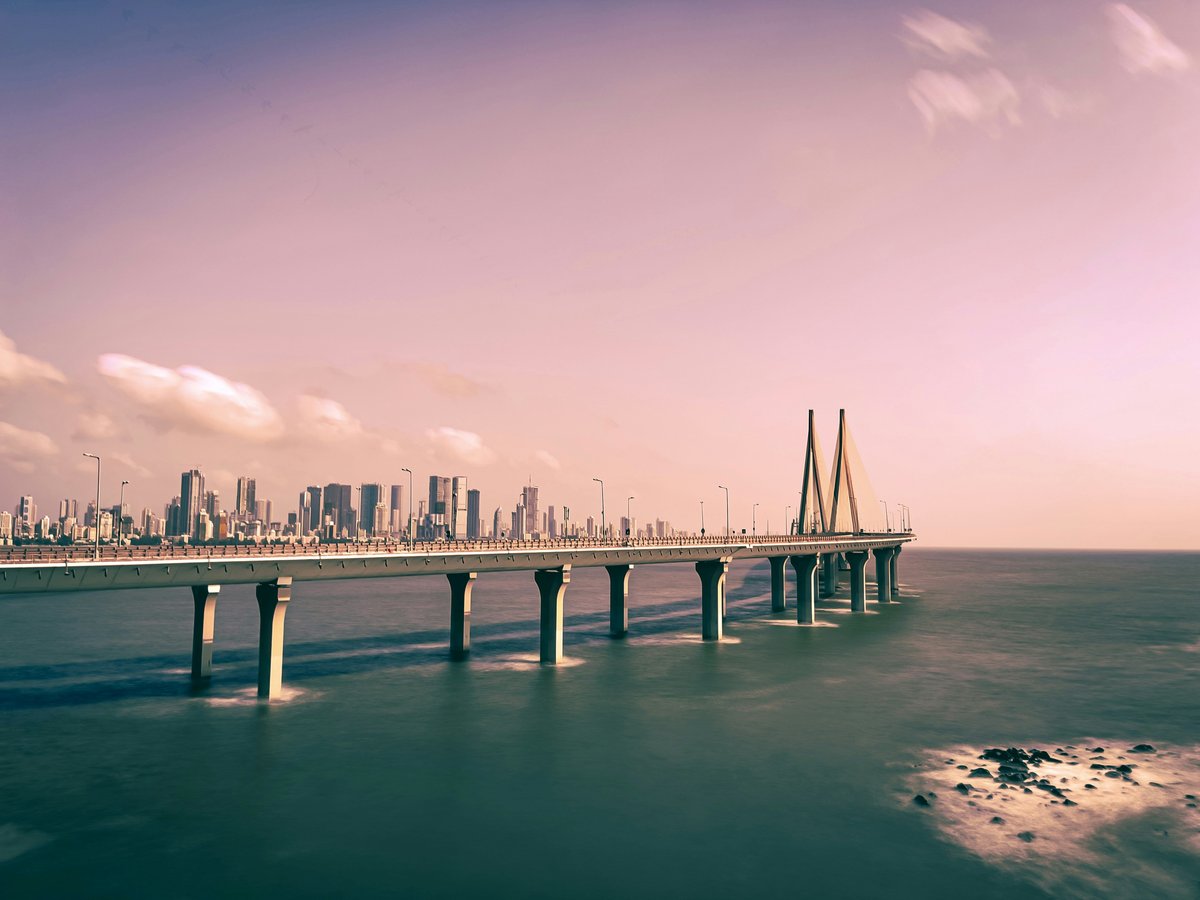
promenadeThe kilometre-long promenade along Worli's coastline faces the Arabian Sea head-on and gets some of Mumbai's most dramatic wave action during September high tides. Waves regularly breach the sea wall. Locals come here specifically during monsoon to watch the sea. The Bandra-Worli Sea Link is visible to the north, often half-obscured by rain clouds.
WorliMahalakshmi Dhobi Ghat
landmarkThe open-air laundry where hundreds of washermen work in concrete wash pens visible from the bridge above. During monsoon, the concrete pens fill with rainwater, the laundry takes longer to dry on overhead lines, and the workers carry on regardless. The view from the Dr. E. Moses Road bridge is most atmospheric in overcast monsoon light.
MahalakshmiSanjay Gandhi National Park and Kanheri Caves
parkThe 104 sq km park at Mumbai's northern edge turns its most green during September. The Kanheri Caves, a set of 109 rock-cut Buddhist caves dating from the 1st century BCE, sit inside the park and are accessible by road. The forest around the caves is thick with monsoon growth, and seasonal waterfalls appear along the approach road. Watch for leeches on forest trails.
BorivaliCrawford Market (Mahatma Jyotiba Phule Mandai)
marketThis 1869 market building near CST station sells fresh fruit, vegetables, spices, and flowers. The stone building designed by William Emerson features Rudyard Kipling's father's bas-relief carvings above the entrance. During Ganesh Chaturthi, the flower section expands with marigolds, jasmine, and hibiscus sold for pandal decoration. The covered interior stays dry through even the heaviest downpours.
Fort
Your packing checklist
Tick items off as you pack. Your progress saves in this browser.
All packed — have a great trip.
Insider tips
Download the m-Indicator app before arriving. It tracks Mumbai suburban train status in real time, and during September you will need to know which lines are running and which are halted due to waterlogging. The Western Line between Churchgate and Borivali and the Central Line between CST and Thane are the two most flood-prone routes.
For Ganesh Chaturthi pandal hopping, start in Lalbaug around 6am before the queues build. The lanes between Lalbaugcha Raja and Ganesh Galli in Lalbaug-Parel are walkable in about 2 hours at that time. By noon, the same route takes 5-6 hours due to crowd density.
The Konkan Railway runs south from Mumbai through the Western Ghats during monsoon, and the 5-hour stretch to Ratnagiri passes through tunnels, over bridges above swollen rivers, and through some of the greenest scenery in peninsular India. September is peak drama on this route. Book a window seat on the left side heading south.
If monsoon rains trap you in Colaba, walk the Causeway from the Gateway of India toward Regal Cinema. The covered colonnade near the Taj Mahal Palace hotel and the arcade buildings along Shahid Bhagat Singh Road keep you mostly dry for about a kilometre. Cafe Mondegar near Regal Cinema has been a rainy-day refuge for decades.
Mumbai's malls become social hubs during monsoon. Phoenix Palladium in Lower Parel fills up with locals escaping the rain, and the restaurants inside offer more reliable dining than trying to reach a standalone restaurant through flooded streets.
Avoid these mistakes
- Booking the Elephanta Island ferry on your only free day without a backup plan. The ferry from the Gateway of India cancels frequently in September due to rough seas, sometimes for 3-4 consecutive days. Build in 2-3 flexible days if Elephanta is important to you.
- Wearing leather shoes or expensive sneakers. They will get soaked within hours, possibly ruined, and take days to dry. Mumbai locals switch to rubber chappals or waterproof sandals from June through September for good reason.
- Underestimating how long the Lalbaugcha Raja queue takes during Ganesh Chaturthi. First-time visitors budget 2 hours and end up standing for 8-10. Go between 2am and 5am when the queue is shortest, or accept that you will lose most of a day.
- Assuming Uber and Ola rides will work normally during heavy rain. Surge pricing reaches 3-4x during downpours, drivers cancel frequently because flooded roads make pickups impossible, and wait times stretch past 30 minutes. Keep cash for auto-rickshaws and kaali-peeli taxis, which stay more available but charge premium monsoon rates.
Practical tips for September
Book accommodation in South Mumbai (Colaba, Fort, or Churchgate) if your focus is heritage sightseeing and museums, since the area floods less frequently than central and northern suburbs. For Ganesh Chaturthi, staying near Dadar or Lower Parel gives you walking access to Lalbaug pandals without relying on trains or taxis. Most restaurants and shops keep regular hours through monsoon, but call ahead for restaurants outside malls since some close early during heavy rain days. Carry 500-rupee and 100-rupee notes for auto-rickshaws and street food, since digital payments fail when cell networks get overloaded during heavy rain. Temple visits during Ganesh Chaturthi require modest dress covering shoulders and knees. The Visarjan procession on Anant Chaturdashi closes major roads across South and Central Mumbai for 12 or more hours. Plan to walk or stay put that day rather than trying to cross the city by car.
FAQ
Is September a good time to visit Mumbai?
Honestly, no. September is deep monsoon season with 478mm of rain across 28 days, 87% humidity, flooded streets, and disrupted transit. The one significant exception is Ganesh Chaturthi, Mumbai's biggest festival, which typically falls in September. If you time your visit around that 10-day festival, the monsoon becomes the backdrop to a cultural experience you cannot get elsewhere. Outside Ganesh Chaturthi, October through February is a far better window.
What is the weather like in Mumbai in September?
Relentlessly wet. Average highs sit around 28°C (83°F) and lows around 25°C (77°F), so the temperature itself is mild. But 87% humidity and near-daily heavy rain make it feel oppressive. Expect rain on 28 out of 30 days, totalling roughly 478mm for the month. Rain arrives in intense bursts of 30-60 minutes rather than steady drizzle, so you might get a few dry morning hours before afternoon downpours. Several days each September bring heavy enough rain to flood parts of the city and halt the suburban train network.
When is Ganesh Chaturthi in Mumbai in 2026?
Ganesh Chaturthi follows the Hindu lunar calendar, so the exact date shifts each year. In 2026, it likely falls in early to mid-September. The festival runs for 10 days, ending with the Visarjan immersion procession on Anant Chaturdashi. Check specific dates closer to the month, as they are confirmed based on the Bhadrapada lunar cycle. Plan to be in Mumbai for at least the first day and the final day for the full experience.
Is Mumbai crowded in September?
For international tourists, no. September is the lowest tourist season, and hotels, museums, and restaurants are noticeably quiet. Domestic tourism also drops sharply. The major exception is Ganesh Chaturthi, when Mumbai fills with domestic visitors and the streets around major pandals in Lalbaug and Dadar become genuinely packed with millions of participants. Outside the festival period, crowd levels are minimal.
Can I visit Elephanta Caves in September?
Possibly, but not reliably. The ferry from the Gateway of India to Elephanta Island operates on a reduced monsoon schedule and cancels frequently when seas are rough. In September, cancellations can stretch 3-4 consecutive days. Give yourself at least 3 flexible days and check the morning ferry status at the dock before buying a ticket. Alternatively, save Elephanta for a return visit between October and May when the ferry runs daily.
Things to Do in Mumbai in September
 Free cancellation
 Dharavi slum tour in Mumbai by Female tour guides of the slum
Day trip: free cancellation.
via Viator Free cancellation
 Private Mumbai Sightseeing Tour (Traveller's Choice Award Winner)
Day trip: free cancellation.
via Viator Free cancellation
 Elephanta Caves & Island Guided Private Tour
Day trip: free cancellation.
via Viator Free cancellation
 Highlights of Mumbai Sightseeing Tour: TRAVELLERS CHOICE AWARDED
Day trip: free cancellation.
via Viator Free cancellation
 The Original Mumbai by Dawn - Recommended by Nigella Lawson & Nat Geo Traveller!
Day trip: 3 hours, free cancellation.
via Viator Free cancellation
 Private Mumbai Sightseeing Tour(Travellers Choice Award Winner)
Day trip: free cancellation.
via ViatorFind a flight to Mumbai
Live fares to Mumbai appear here once cookies are accepted.
Last verified by automated review (v1.7.2) on . What is automated review?