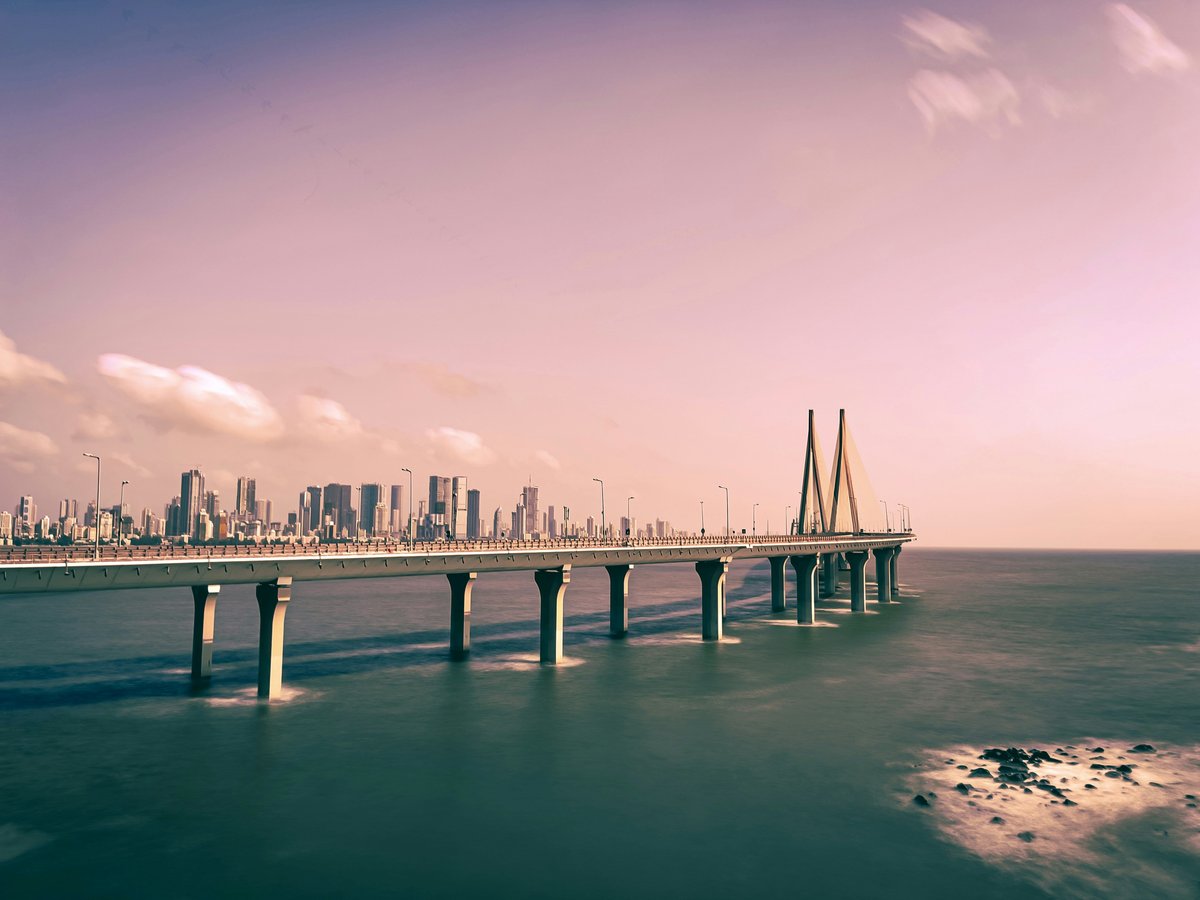
Stay in Mumbai in April
77 hotels in the Trip.com pool for Mumbai, from US$10 a night.
Opens Trip.com on Fri 2 Apr to Sun 4 Apr 2027; change the dates there.
April in Mumbai is hot, sticky, and honestly not the month most locals would recommend to a visiting friend. Daytime temperatures hover around 33.7°C (93°F), which sounds manageable on paper, but the 70% humidity turns every walk along Marine Drive into something closer to 40°C (104°F) on exposed skin. The air sits heavy. You'll feel a film of sweat within 5 minutes of stepping outside, and it stays with you until you find air conditioning again.
That said, April has a few genuine advantages that the cooler months don't. This is the start of Alphonso mango season, and fruit stalls across Crawford Market and Dadar pile high with crates of Ratnagiri and Devgad Hapus that won't reach export markets for another 3 weeks. If you've never tasted a proper Alphonso at source, that alone might be worth the sweat. Hotel rates drop noticeably from the December-February peak, and the usual tourist crowds at the Gateway of India thin out enough that you can photograph the structure without 40 strangers in the frame.
April also brings Ambedkar Jayanti on the 14th, a public holiday in Maharashtra that draws hundreds of thousands of people to Chaityabhoomi in Dadar. Ram Navami typically falls in this window too, depending on the lunar calendar. Both give you a window into the city's civic and devotional life that the peak tourist months rarely show. Mind you, you'll be doing all of this in serious heat. Plan around it or you'll wilt by noon.
Why visit in April
- Alphonso mango season peaks in April. Crates of Ratnagiri Hapus sell at Crawford Market for roughly 30-50% less than export prices in London or Dubai.
- Hotel rates across Colaba and Bandra drop 25-40% from the December-February peak, and last-minute availability is common even at well-known properties.
- Essentially zero rainfall. The 5-year average is 1mm for the entire month, so you won't lose a single day to monsoon washouts.
- Major sites like Elephanta Caves and Chhatrapati Shivaji Maharaj Vastu Sangrahalaya have shorter queues. Weekend wait times at Elephanta drop from 45+ minutes in January to under 15.
Worth knowing
- The heat-humidity combination is genuinely draining. At 33.7°C (93°F) with 70% humidity, the apparent temperature often reaches 38-40°C (100-104°F), especially between 11am and 4pm.
- Air quality tends to dip in pre-monsoon April. Particulate matter levels in areas around Sion and Chembur can reach 2-3 times WHO guidelines on still days, and there's a persistent haze over the harbour.
- Outdoor sightseeing windows shrink to early morning (before 9am) and late evening (after 5pm). Midday walking tours through Fort or Kala Ghoda are borderline miserable.
- Several cultural venues scale back programming ahead of the monsoon season. The NCPA in Nariman Point and Prithvi Theatre in Juhu both tend to thin their April schedules compared to winter months.
Best for
Think twice if
April is Mumbai's second-hottest month after May, and arguably the most uncomfortable because the pre-monsoon humidity ramps up before any rain arrives to break the tension. The average high sits at 33.7°C (93°F) and the low only drops to 25.1°C (77°F), so nights offer limited relief. Rainfall is negligible at 1mm for the entire month, essentially 0 rainy days. Humidity averages 70%, which pushes the apparent temperature well above the thermometer reading. The Arabian Sea breeze along Marine Drive and Worli Seaface offers some relief after sunset, but inland neighborhoods like Dadar and Andheri hold heat like an oven. Mornings before 8am tend to be the most bearable window.
Seasonal caution
- Heat index regularly exceeds 38°C (100°F) between 11am and 4pm. Heatstroke risk is real for visitors unaccustomed to tropical humidity. Carry water, seek shade, and take midday breaks in air-conditioned spaces.
- Pre-monsoon air quality deteriorates in April, particularly in eastern suburbs near industrial zones. Travelers with respiratory conditions should monitor AQI readings for areas around Chembur and Sion, where PM2.5 levels can spike above 150.
Year-round climate
Averages from the last 5 years.
| Month | Avg high (°C) | Avg low (°C) | Rainfall (mm) |
|---|---|---|---|
| Jan | 30 | 19 | 2 |
| Feb | 32 | 20 | 0 |
| Mar | 34 | 23 | 3 |
| Apr | 34 | 25 | 1 |
| May | 33 | 27 | 97 |
| Jun | 30 | 26 | 461 |
| Jul | 28 | 25 | 856 |
| Aug | 28 | 25 | 413 |
| Sep | 28 | 25 | 478 |
| Oct | 31 | 24 | 95 |
| Nov | 33 | 22 | 7 |
| Dec | 31 | 21 | 20 |
Headline events
Ambedkar Jayanti
April 14 (fixed date)
The birth anniversary of Dr. B.R. Ambedkar on April 14 is a public holiday in Maharashtra and draws hundreds of thousands of followers to Chaityabhoomi in Dadar, where Ambedkar was cremated in 1956. Processions wind through central Mumbai, and the area around Shivaji Park fills with crowds from the night before. It's one of the largest civic gatherings you'll witness in the city.
Best things to do in April
Early-morning ferry to Elephanta Caves
sightseeingThe 1st-century rock-cut caves on Elephanta Island, a UNESCO World Heritage Site, sit about 10km east of the Gateway of India. The 7-metre Trimurti sculpture of Shiva is the centrepiece. The ferry ride across Mumbai Harbour takes roughly an hour each way, and the breeze off the water is one of the few genuinely cool sensations you'll find in April.
April's low tourist traffic means shorter queues at the cave entrance and on the ferry. The 9am boat, which has 60-90 minute waits in January, often departs with empty seats in April. Go early before the heat builds on the island's exposed walkways.Booking tipFerries depart from the Gateway of India starting at 9am. Buy tickets at the PNP or Ajanta launch counters. No advance booking needed in April.
Sunset walk along Marine Drive
outdoorsThe 3.6km arc of Marine Drive from Nariman Point to Girgaon Chowpatty is Mumbai's most recognizable promenade. The concrete sea wall fills up at dusk as the city cools from 34°C to something closer to 28°C (82°F). The smell of roasting corn and bhelpuri from Chowpatty's vendors drifts up the curve. You can see the full sweep of the Queen's Necklace lights coming on from the Chowpatty end.
After a hot April day, the Arabian Sea breeze along Marine Drive drops the apparent temperature by 5-7°C. The 6pm-8pm window is the most comfortable outdoor period. Clear pre-monsoon skies also mean sharper sunsets than the hazy monsoon months.Crawford Market mango tasting
foodMahatma Jyotiba Phule Mandai, still called Crawford Market by most Mumbaikars, sits near CST station in South Mumbai. The fruit section in April becomes a wall of stacked Alphonso crates. Vendors will cut a mango for you to taste before buying. The building itself, designed by William Emerson in 1869, has Rudyard Kipling's father's stone reliefs over the entrance.
April is the peak arrival window for Ratnagiri and Devgad Hapus mangoes. The wholesale-to-retail markup at Crawford Market is lower than at supermarkets, and the selection is broader. By late May, the season is winding down.Booking tipGo before 10am when the market is cooler and vendors are still arranging fresh stock. The market closes by 8pm and is shut on Sundays.
Night street food crawl in Mohammed Ali Road
foodMohammed Ali Road in South Mumbai runs through a dense corridor of kebab stalls, malpua vendors, and haleem shops. The stretch between Minara Masjid and Bhendi Bazaar is the core. Charcoal smoke, sizzling seekh kebabs, and the caramel scent of malpua frying in ghee are the dominant sensory notes. Portions are large and prices stay low, typically ₹100-300 per dish.
April's heat makes daytime food exploration unpleasant, but Mohammed Ali Road comes alive after 9pm when temperatures drop below 30°C (86°F). The stalls run until midnight or later. You'll also catch some Ramadan specialties if the lunar calendar aligns, as Ramadan often overlaps with March-April.Banganga Tank at dawn
culturalA freshwater tank surrounded by temples and old Brahmin houses in Walkeshwar, Malabar Hill. The tank dates to at least the 12th century and sits on one of Mumbai's highest points. At 6am, the sound of temple bells and the smell of incense mix with the calls of resident pigeons and egrets. The stone steps down to the water stay cool in the early morning shade.
April's clear skies and low humidity at dawn make this the best time for photography at Banganga. The tank's reflections are sharper than during monsoon months. By 9am the site gets hot, so early morning is the only comfortable window.Kala Ghoda heritage walk
culturalThe Kala Ghoda district in Fort contains Mumbai's densest cluster of colonial-era buildings, galleries, and cafes within a 15-minute walking radius. The Chhatrapati Shivaji Maharaj Vastu Sangrahalaya (formerly Prince of Wales Museum), the Jehangir Art Gallery, and the David Sassoon Library all sit within 500 metres of each other. The narrow lanes between the buildings provide some shade.
April's thin crowds mean you can enter the museum without the 30-minute queues common in December and January. Gallery exhibitions tend to rotate in April, and the air-conditioned interiors offer a genuine refuge from the heat outside.Booking tipThe museum opens at 10:15am. Arrive right at opening to get the coolest indoor hour before the building warms up.
Sanjay Gandhi National Park before 8am
natureA 104-square-kilometre national park in the northern suburbs, home to the Kanheri Caves (109 Buddhist rock-cut caves dating from the 1st century BCE). The park's entrance at Borivali opens at 7:30am. Spotted deer, langurs, and if you're fortunate, leopards are resident. The forest canopy keeps temperatures 3-4°C below the city centre.
The deciduous trees in the park are at their driest in April, making wildlife spotting easier before the monsoon's green cover returns. Leopard sightings, while never guaranteed, tend to be more frequent when undergrowth is thin. The Kanheri Caves are practically empty on April weekday mornings.Booking tipEntry closes at 5pm. The park is closed on Mondays. Aim for a 7:30am arrival on a Tuesday or Wednesday for the quietest experience.
Worli Seaface evening cycle
outdoorsThe Worli Seaface promenade runs along the western coastline with views of the Bandra-Worli Sea Link and the open Arabian Sea. Several rental cycle services operate along the stretch. The salt breeze and open water view make this one of the city's best spots for catching moving air in April.
April evenings between 6pm and 8pm offer the strongest onshore breeze along Worli Seaface. The Sea Link is well-lit after dark, and the promenade is less packed than Marine Drive. Clear pre-monsoon skies make the sunset over the Arabian Sea sharper than in any other season.What to eat in April
In season: fruit
Alphonso Mango (Hapus)
April is peak Hapus season in Mumbai. Crates from Ratnagiri and Devgad arrive daily at Crawford Market and Dadar's wholesale stalls. The fruit is smaller, more aromatic, and significantly sweeter than the export-grade Alphonsos that reach foreign markets weeks later. Look for the Devgad GI-tagged variety. A dozen typically run ₹800-1,500 depending on grade.
Street food peaks
Ice Gola
Mumbai's shaved-ice street food peaks in April's heat. Vendors at Juhu Beach and Girgaon Chowpatty shave blocks of ice and drench them in kala khatta (a sour-sweet berry syrup), rose, and raw mango syrups. The better vendors add a layer of rabdi (thickened milk) on top. About ₹40-80 depending on the beach and toppings.
What to drink
Aam Panna
Raw green mango pulp cooked with sugar, cumin, and black salt, then mixed with cold water. Every street-side juice vendor across Girgaon and Dadar starts selling this by early April. It's the traditional Maharashtrian answer to heat exhaustion, and it works. Roughly ₹30-50 per glass.
Kokum Sherbet
Made from the Garcinia indica fruit that grows along the Konkan coast south of Mumbai. The deep purple, tart-sweet drink appears at restaurants and street stalls across the city by April. Sol kadhi, the coconut-milk-and-kokum variant, is the standard accompaniment to Malvani fish thalis in Bandra's coastal restaurants.
Mango Mastani
A thick Alphonso mango milkshake topped with a scoop of ice cream, originally from Pune but now a fixture at juice shops across Mumbai by April. Bandra and Linking Road shops compete for the thickest version. The consistency is closer to soft-serve than a drink.
Festival food
Puran Poli
A sweet flatbread stuffed with chana dal and jaggery, traditionally prepared for Gudi Padwa (Marathi New Year, which sometimes falls in early April). Dadar's Maharashtrian restaurants serve it through the month, often with a side of amti dal. The turmeric-yellow bread has a faintly nutty sweetness that pairs well with ghee.
Regular events in April
Ram NavamiFree
The celebration of Lord Ram's birth typically falls in late March or April, depending on the Hindu lunar calendar. Processions pass through Girgaon, Dadar, and Lalbaug. Temples across the city hold special pujas, and many Maharashtrian households prepare panaka (jaggery-pepper drink) and kosambari for distribution.
Variable, typically late March to mid-April (lunar calendar)Gudi PadwaFree
Marathi New Year, celebrated with decorated gudis (bamboo poles topped with cloth, neem leaves, and a copper pot) hung from windows across Dadar, Girgaon, and Dombivli. Shobha Yatra processions wind through Girgaon. Falls in March or early April depending on the lunar calendar.
Variable, typically late March to early April (lunar calendar)Good FridayFree
A public holiday observed at churches across Mumbai, particularly at the Basilica of Our Lady of the Mount in Bandra (Mount Mary Church) and St. Thomas Cathedral in Fort. Bandra's Catholic community holds processions and the church sees significant attendance. Many businesses and government offices close.
Variable, typically falls in March or AprilBest places this April
Girgaon Chowpatty Beach
beachMumbai's most accessible city beach, at the northern end of Marine Drive. In April evenings, the sand cools enough after 6pm to walk barefoot. The bhelpuri and pav bhaji vendors set up by 5pm, and the smell of tamarind chutney and butter hangs in the sea air. Worth noting, the beach itself isn't for swimming. It's for eating, people-watching, and catching the breeze.
GirgaonHanging Gardens (Pherozeshah Mehta Gardens)
parkTerraced gardens on Malabar Hill, built over the city's old reservoirs. The topiary animals look a bit tired, to be fair, but the elevation and tree cover keep temperatures 2-3°C below street level. At 6am the gardens fill with joggers and yoga groups. Views across to Chowpatty Beach and Marine Drive from the western edge.
Malabar HillColaba Causeway
marketThe 1km commercial stretch running south from the Taj Mahal Palace hotel toward the Afghan Church. Street vendors sell everything from oxidized silver jewellery to old Bollywood posters. In April, the tourist markup drops since fewer foreigners are browsing. Cafe Mondegar and Leopold Cafe sit roughly halfway along and both have functioning air conditioning, which matters more in April than in any other month.
ColabaBandra Bandstand Promenade
promenadeA seafront walkway in Bandra West, passing the former Castella de Aguada (Bandra Fort) and Shah Rukh Khan's Mannat residence. The fort ruin offers partial shade and a direct view west across the Arabian Sea. Evening breeze here is consistent and the salt air has a cooling effect. April sunsets from the fort wall tend to be a deep orange-red thanks to the pre-monsoon dust layer.
BandraChhatrapati Shivaji Maharaj Vastu Sangrahalaya
museumMumbai's premier museum in the Kala Ghoda area of Fort, housed in a 1914 Indo-Saracenic building. The Mughal miniatures gallery and the natural history wing are the strongest sections. Air-conditioned throughout, which in April makes it function as both a cultural destination and a cooling station. Ticket price is ₹85 for Indian nationals, ₹650 for foreign visitors.
FortMahalaxmi Dhobi Ghat
landmarkThe open-air laundry where roughly 700 washers work in concrete troughs, visible from the Mahalaxmi Road bridge. The snap and crack of wet cotton on stone carries up to the viewing point. In April's dry heat, the laundry dries faster, so the midday activity is intense. Morning light between 7am and 9am gives the best angles for photography.
MahalaxmiJehangir Art Gallery
galleryA free-entry gallery in Kala Ghoda that hosts rotating exhibitions of contemporary Indian art. The building is small, 4 exhibition halls, but the turnover is rapid. In April, group shows from graduating art students at the nearby Sir J.J. School of Art often appear here. The attached Samovar Cafe closed permanently, but the gallery garden has benches in the shade.
Fort
Your packing checklist
Tick items off as you pack. Your progress saves in this browser.
All packed — have a great trip.
Insider tips
The local trains (Western and Central lines) are air-conditioned in the newer rakes, and the AC first-class compartment costs about ₹100-200 for a cross-city trip. In April, the 30°C difference between a non-AC and AC compartment is worth every rupee. Avoid rush hour (8:30-10:30am and 5:30-8pm) entirely.
Alphonso mangoes at Crawford Market vary enormously in quality. Ask for 'Devgad Hapus' specifically and smell the stem end. A ripe Alphonso has a strong, almost resinous sweetness at the stem. If it smells like nothing, it was picked too green. Vendors expect you to check before buying.
The Gateway of India area attracts aggressive touts selling boat rides and Elephanta tickets at marked-up rates. Walk past them to the official PNP or Ajanta ticket counters about 50 metres to the left of the main arch. The official ferry price is ₹150-200 per person, not the ₹500-700 touts quote.
For the best view of Mumbai's skyline, skip the rooftop bars in Colaba (most are overpriced and face the wrong direction). Instead, take the Bandra-Worli Sea Link at dusk from a taxi headed southbound. The 5.6km crossing offers a 270-degree panorama of the coastline that no restaurant matches.
Avoid these mistakes
- Scheduling outdoor sightseeing between 11am and 4pm. The 34°C thermometer reading with 70% humidity creates an apparent temperature near 40°C. Visitors from temperate climates underestimate this and end up heat-sick by 2pm. Structure your day around 6am-10am outdoors, midday in museums or malls, then 5pm-9pm outdoors again.
- Drinking tap water or accepting ice at street stalls. Mumbai's municipal water is chlorinated, but the pipes are old and contamination between plant and tap is common. Sealed bottles only. Street-food ice is factory-made in most cases, but if the stall looks questionable, skip it. An upset stomach in April heat compounds into something worse fast.
- Packing only Western-cut clothing for temple visits. Siddhivinayak Temple, Haji Ali Dargah, and Mahalaxmi Temple all expect covered shoulders and knees. Carrying a scarf solves this, but tourists who arrive in tank tops and shorts get turned away and have to buy overpriced cover-ups from vendors outside.
- Assuming Uber or Ola will be fast during April afternoons. App-based cab drivers in Mumbai are fewer during the pre-monsoon heat. Wait times of 15-25 minutes are common between 1pm and 5pm. The black-and-yellow metered taxis, while less comfortable, are more consistently available at taxi stands across the city.
Practical tips for April
Book hotels with functioning air conditioning and confirm this at reservation time, since some older guesthouses in Colaba and Fort rely on window units that struggle above 32°C. The Chhatrapati Shivaji Maharaj International Airport is well-connected by the Western Express Highway, but April traffic can stretch a 14km ride to 90 minutes during peak hours. Pre-book airport transfers or use the Mumbai Metro Line 1 from Andheri if you're staying in the western suburbs. April 14 (Ambedkar Jayanti) is a public holiday, so banks, government offices, and some businesses close. ATMs get busier the day before. If Ram Navami or Gudi Padwa falls in April that year, expect similar closures. Carry cash in smaller denominations since ₹2,000 notes are out of circulation and many street vendors don't carry change for ₹500. UPI payments via Google Pay or PhonePe are accepted at most shops and restaurants, but you'll need an Indian bank account or a travel-friendly setup. Dress modestly when visiting religious sites. Lightweight, long cotton clothing works better than shorts and a cover-up in this heat. Most restaurants serve lunch from 12pm-3pm and dinner from 7pm-11pm. The late Indian dining schedule works in your favour in April since eating at 9pm means you're walking to dinner in cooler air.
FAQ
Is April a good time to visit Mumbai?
It's not the best month, honestly. April ranks around 7th out of 12 for Mumbai, behind the cooler months of November through March. The heat and humidity are the main drawback. Daytime temperatures reach 33.7°C (93°F) with 70% humidity, which feels closer to 40°C. That said, it's the driest month of the year with only 1mm of rain, hotel rates drop 25-40% from peak season, tourist crowds thin out, and it's prime Alphonso mango season. If you're comfortable with heat and plan your outdoor time for early morning and evening, it's workable. If you have the flexibility to choose your month, December through February is the better window.
What is the weather like in Mumbai in April?
Hot and humid with almost no rain. Average highs reach 33.7°C (93°F) and lows hover around 25.1°C (77°F), so nights don't cool down much. Humidity sits at roughly 70%, which makes the heat feel significantly worse than the raw temperature suggests. Total rainfall for the month averages 1mm, essentially zero rainy days. The sky is typically hazy rather than clear blue, with a pre-monsoon dust layer that softens the light. The Arabian Sea breeze picks up along the western coastline after 5pm, dropping temperatures by 3-5°C along Marine Drive and Worli Seaface.
Is Mumbai crowded in April?
Considerably less than peak season. Foreign tourist numbers drop noticeably after March, and domestic leisure travel slows before the May school holidays. Major sites like Elephanta Caves, the Gateway of India, and the Chhatrapati Shivaji Maharaj Vastu Sangrahalaya have shorter queues. The exception is April 14, Ambedkar Jayanti, when Dadar and central Mumbai draw massive crowds for the public holiday. Restaurants that need reservations 3 days out in January often have same-day availability in April.
What should I eat in Mumbai in April?
Alphonso mangoes are the headline. April is peak season for Ratnagiri and Devgad Hapus, and you'll find crates at Crawford Market, Dadar, and fruit stalls citywide. Try aam panna (raw mango drink) and mango mastani (thick mango shake with ice cream) from street vendors. Kokum sherbet and sol kadhi are traditional Konkan cooling drinks that appear everywhere in the heat. Ice gola (shaved ice with kala khatta syrup) from Chowpatty and Juhu Beach vendors is the classic street cooldown. For evening eating, Mohammed Ali Road's kebab stalls near Minara Masjid peak after 9pm when the heat breaks.
How many days do I need in Mumbai in April?
Three to four days is enough to cover the major sites without burning out in the heat. Day 1 could cover Colaba, the Gateway of India, and Kala Ghoda with a museum visit. Day 2 works for Elephanta Caves (full morning) and Marine Drive in the evening. Day 3 for Bandra, Bandstand, and Mount Mary area. A 4th day gives you time for Sanjay Gandhi National Park in the early morning, Crawford Market for mango shopping, and Mohammed Ali Road after dark. More than 5 days in April's heat starts to feel like endurance rather than travel.
Things to Do in Mumbai in April
 Free cancellation
 Dharavi slum tour in Mumbai by Female tour guides of the slum
Day trip: free cancellation.
via Viator Free cancellation
 Private Mumbai Sightseeing Tour (Traveller's Choice Award Winner)
Day trip: free cancellation.
via Viator Free cancellation
 Elephanta Caves & Island Guided Private Tour
Day trip: free cancellation.
via Viator Free cancellation
 Highlights of Mumbai Sightseeing Tour: TRAVELLERS CHOICE AWARDED
Day trip: free cancellation.
via Viator Free cancellation
 The Original Mumbai by Dawn - Recommended by Nigella Lawson & Nat Geo Traveller!
Day trip: 3 hours, free cancellation.
via Viator Free cancellation
 Private Mumbai Sightseeing Tour(Travellers Choice Award Winner)
Day trip: free cancellation.
via ViatorFind a flight to Mumbai
Live fares to Mumbai appear here once cookies are accepted.
Last verified by automated review (v1.7.2) on . What is automated review?