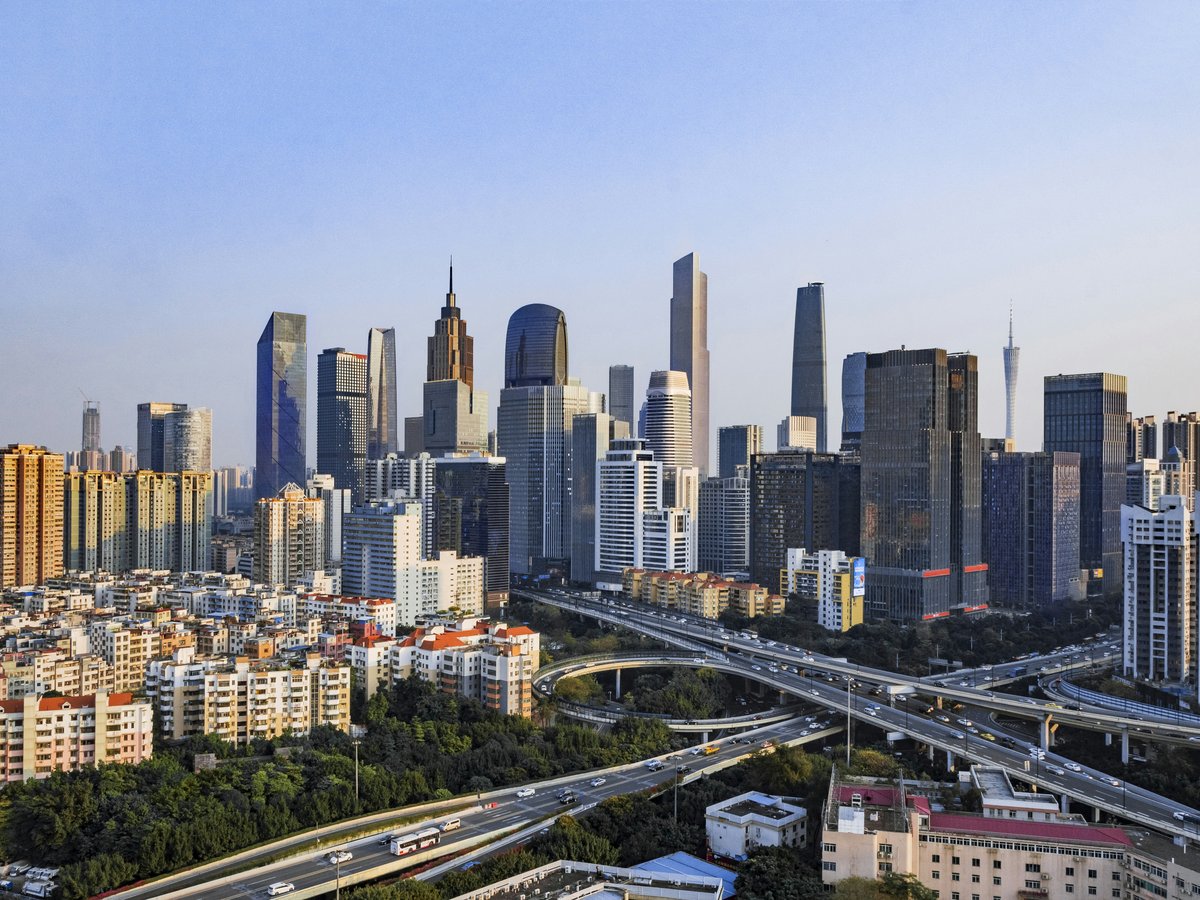
Stay in Guangzhou in February
108 hotels in the Trip.com pool for Guangzhou, from US$15 a night.
Opens Trip.com on Fri 5 Feb to Sun 7 Feb 2027; change the dates there.
February in Guangzhou revolves around Chinese New Year. The Spring Festival date shifts with the lunar calendar, landing somewhere between late January and mid-February in most years, and it reshapes the entire city for weeks. Guangzhou's signature contribution to the holiday is the Yingchun Flower Fair (迎春花市), a tradition stretching back centuries. Residents crowd the temporary flower markets that line major streets across Liwan, Yuexiu, and Tianhe districts in the 3 days before Lunar New Year's Eve. The scent of kumquat trees and narcissus bulbs fills the cool night air, and the crowds press shoulder to shoulder until well past midnight.
The flip side is real. Guangzhou is a migrant city, and millions of workers leave for their hometowns during the holiday. Restaurants close. Small shops shutter for a week or more. The metro feels oddly quiet outside of flower-fair hours. The weather sits in that in-between zone, comfortable enough for walking during the day but damp and chilly once the sun sets. Rainfall nearly quadruples compared to January, and overcast skies show up more often than not.
To be fair, if you time it right, February can be genuinely rewarding. The flower fair is one of the great urban spectacles in southern China, something you won't find replicated anywhere else at this scale. And the week after the holiday, before the city fully reboots, offers a rare chance to walk Guangzhou's historic lanes in Dongshan and Xiguan at a human pace.
Why visit in February
- The Yingchun Flower Fair in Liwan and Yuexiu districts is one of the most spectacular urban festival traditions in southern China, with hundreds of vendors selling kumquat trees, orchids, peach blossoms, and narcissus along streets closed to traffic for 3 days before Lunar New Year's Eve
- Cool daytime temperatures make walking Guangzhou's sprawling historic neighborhoods far more comfortable than the sweltering summer months, when highs regularly exceed 32°C (90°F)
- Post-CNY prices drop quickly, and the second half of February often offers near-empty museums and smooth restaurant access that would be unthinkable during Canton Fair periods in April and October
- Lion and dragon dance troupes appear spontaneously at temples, restaurants, and shopping plazas across the city during the first 5 days of CNY, often with percussion ensembles that perform without any announced schedule
Worth knowing
- During CNY week, 60-70% of smaller restaurants and shops in neighborhoods like Dongshan and Xiguan close entirely, leaving limited dining options beyond hotel restaurants and chain outlets
- The persistent dampness combines with the lack of indoor heating (standard in Chinese cities south of the Yangtze) to create a penetrating chill that surprises visitors from drier or centrally heated climates
- Train and bus tickets to and from Guangzhou sell out weeks in advance during the Spring Festival travel rush (春运 Chunyun), making spontaneous intercity travel plans difficult
- Accommodation rates during the CNY window can reach double or triple the annual average, even for mid-range hotels in Tianhe and Haizhu districts
Best for
Think twice if
February marks Guangzhou's transition from dry winter into wet spring. Expect overcast mornings that sometimes clear by midday, with rain falling on roughly 7 days across the month. The dampness is the defining feature of the weather. Without central heating in most buildings, indoor spaces can feel as cold as outdoors during overcast stretches. A warm afternoon might tempt you into a single layer, but evenings along the Pearl River drop enough to need a proper jacket. The humidity sits noticeably higher than January and can make laundry slow to dry in hotel rooms without a dryer.
Seasonal caution
- Occasional cold fronts can push overnight temperatures below 5°C (41°F) for 2-3 consecutive days. Combined with the near-total absence of indoor heating in Guangzhou buildings, including most hotels below the luxury tier, indoor temperatures can match outdoor readings. Pack thermal layers even though the monthly averages look mild.
Year-round climate
Averages from the last 5 years.
| Month | Avg high (°C) | Avg low (°C) | Rainfall (mm) |
|---|---|---|---|
| Jan | 20 | 11 | 21 |
| Feb | 21 | 13 | 80 |
| Mar | 25 | 16 | 126 |
| Apr | 28 | 20 | 282 |
| May | 29 | 23 | 300 |
| Jun | 31 | 25 | 441 |
| Jul | 33 | 26 | 265 |
| Aug | 32 | 26 | 345 |
| Sep | 32 | 25 | 284 |
| Oct | 29 | 21 | 123 |
| Nov | 25 | 17 | 52 |
| Dec | 20 | 12 | 25 |
Holidays and festivals in February
Public holidays
- Chinese New Year (Spring Festival)(春节)6 February 2027
Headline events
Chinese New Year (Spring Festival)
Late January to mid-February (varies with the lunar calendar)
China's biggest annual holiday brings 7 days of official public celebrations. In Guangzhou, the Cantonese tradition centers on family reunion dinners, temple visits to Guangxiao Temple and the Temple of the Six Banyan Trees, and spontaneous lion dance performances through the streets of Yuexiu and Liwan. The holiday period reshapes the city's rhythm completely, with businesses closing, transit schedules shifting, and neighborhoods alternating between dense festivity and unusual quiet.
Guangzhou Yingchun Flower Fair (迎春花市)
3 days ending on Lunar New Year's Eve
Guangzhou's most beloved tradition and one of the Four Great Flower Fairs of Guangdong province. Temporary markets stretch along major roads in every district, selling potted kumquat trees, peach blossoms, orchids, and narcissus bulbs believed to bring prosperity. The Liwan and Yuexiu fairs are the oldest and draw the densest crowds, with over a million visitors on the final night alone. Vendors auction off the last trees as midnight approaches, and the clean-up crews sweep in within hours. The whole spectacle runs for exactly 3 days and then vanishes.
Best things to do in February
Walk the Yingchun Flower Fair in Liwan district
cultureThe Liwan flower fair stretches along closed-off streets with hundreds of vendors selling potted kumquats, orchids, narcissus, and peach blossom branches. The atmosphere peaks after dark, when families crowd the aisles and vendors begin calling prices. The last-night auctions, as vendors try to sell remaining trees before the midnight deadline, are worth staying late for.
The fair runs for exactly 3 days before Lunar New Year's Eve and then disappears until the following year. There is no other window.Booking tipNo booking needed. Arrive after 8 PM for peak atmosphere, or before 6 PM if you prefer to browse without the densest crowds.
Watch lion dance performances across the city
cultureLion dance troupes, often accompanied by drum and cymbal ensembles, perform at temples, restaurant entrances, and shopping plazas during the first 5 days of CNY. The performances appear without formal scheduling. You might hear the drums from 2 blocks away and follow the sound to find a troupe mid-routine outside a jewelry shop in Yuexiu.
The troupes perform only during the CNY holiday period, then go dormant until the next year. February is the only reliable window.Hike Baiyun Mountain from the south gate
outdoorsGuangzhou's most accessible mountain hike starts from the south gate in Baiyun district. The main trail to Moxing Ridge takes about 90 minutes at a moderate pace, with views across the Pearl River Delta on clear days. February's cool mornings make the climb comfortable rather than the endurance test it becomes in July and August.
Daytime temperatures in the low 20s Celsius make the ascent far more pleasant than summer, when heat and humidity turn the trail into a sauna.Booking tipThe cable car runs from the south gate to the summit. Taking it one way and walking the other saves energy while still giving the forest trail experience.
Visit Chen Clan Ancestral Hall (陈家祠)
cultureThis 19th-century ancestral hall in Liwan showcases some of the finest surviving Lingnan decorative arts in Guangdong. The roof ridges carry ceramic figurine scenes, the screen walls feature intricate woodcarving, and the courtyards display iron-cast balustrades. The Guangdong Folk Art Museum occupies the complex and rotates exhibitions of ivory carving, embroidery, and lacquerwork.
Post-CNY visitor numbers thin out noticeably, giving you room to study the architectural details without tour-group congestion.Evening walk along the Pearl River in Haizhu
sightseeingThe Haizhu riverside promenade runs for several kilometers opposite Shamian Island and east toward Canton Tower. In the evening, the tower's LED display illuminates the skyline, and during CNY the lighting scheme shifts to festive red and gold patterns. The temperature after sundown is cool enough for a comfortable walk but not cold enough to cut the stroll short.
Canton Tower's CNY-themed lighting runs only through the holiday period, and February's mild evenings are the most comfortable for riverside walking before the muggy season begins in April.Dim sum breakfast at a traditional teahouse
foodThe Cantonese dim sum tradition reaches its most concentrated expression during CNY week, when multi-generational families occupy round tables from before 7 AM. Har gow, siu mai, cheung fun, and char siu bao rotate on carts between tables. The restaurants that remain open during the holiday tend to be the established, locally rooted ones rather than chains.
You'll eat alongside Cantonese families keeping their New Year traditions. The post-7 AM window on CNY Day 1 and Day 2 is when the tradition is most alive.Booking tipArrive before 7:30 AM for walk-in seating. After 8 AM, expect a 45-60 minute wait at popular spots.
Explore Sun Yat-sen Memorial Hall and its grounds
cultureThe octagonal auditorium in Yuexiu district seats 4,700 and hosts special performances during the CNY cultural calendar. The surrounding park grounds, landscaped with kapok trees, begin showing early buds by late February. The hall itself commemorates the founding figure of the Republic of China and is worth visiting for the architecture alone.
CNY-season concerts and cultural performances fill the hall's calendar, and the kapok buds signal the first visual shift toward spring.Walk Shamian Island on a quiet post-CNY morning
sightseeingThis small sandbank island in Liwan district preserves European colonial architecture from the 19th-century concession era. Tree-lined avenues connect former consulate buildings, churches, and trading houses. The island is a 15-minute walk end to end, best absorbed slowly.
The migrant-worker exodus during CNY empties Guangzhou noticeably, and Shamian Island, already quieter than the commercial districts, becomes almost meditative in the days after the holiday.What to eat in February
In season: fruit
Sugarcane
February is peak sugarcane season in Guangdong province. Street vendors near the flower fair stalls and along Beijing Road sell freshly pressed sugarcane juice that tastes sharply sweet in the cool air. The purple-skinned variety grown locally tends to be juicier than the green.
Kumquats (金桔)
Sold by the potted tree at every flower fair stall, kumquats symbolize gold and prosperity for CNY. The small, tangy-sweet fruits are edible skin and all. Street vendors sell bags of fresh-picked ones alongside candied versions rolled in sugar.
On menus now
Poon choi (盆菜)
A layered basin feast of abalone, sea cucumber, roast duck, dried oysters, mushrooms, and leafy greens, built up in a single deep pot. Originally a Hakka tradition adopted by Cantonese families for CNY reunion dinners. Restaurants in Tianhe and Panyu offer pre-order versions that serve 8-10 people.
Festival food
Nian gao (年糕)
Glutinous rice cake steamed with brown sugar, then sliced and pan-fried until the edges caramelize. Every bakery and dim sum house in Guangzhou makes its own version during CNY, and quality varies wildly between shops. Look for the denser, less sweet versions sold at traditional Cantonese pastry shops in Xiguan.
Turnip cake (萝卜糕, lo bak go)
Cantonese-style turnip cake studded with dried shrimp, lup cheung sausage, and mushroom. Served at dim sum year-round but produced in enormous quantities for CNY. Families steam whole trays and pan-fry slices for breakfast through the holiday week. The best ones have a crisp golden crust and a soft, savory interior.
Tang yuan (汤圆)
Glutinous rice balls filled with black sesame paste, served in sweet ginger soup. Traditionally eaten on the Lantern Festival, 15 days after CNY. The hot filling cracks open in the broth with a richness that cuts through February's damp chill.
Regular events in February
Lantern Festival (元宵节, Yuan Xiao Jie)Free
Paper lanterns, riddle-guessing games, and tang yuan eating mark the 15th and final night of the Spring Festival season. Yuexiu Park and the Pearl River waterfront host lantern displays, and families walk through the neighborhoods carrying small lanterns. The festival caps the CNY period and signals the return to normal city rhythms.
15th day of the Lunar New Year (late February or early March depending on the year)Temple fairs at Guangxiao TempleFree
Guangzhou's oldest Buddhist temple, with roots predating the city itself, hosts incense ceremonies, blessing rituals, and fortune-drawing traditions through the first week of CNY. The courtyard fills with families burning tall sticks of incense and praying for prosperity. The scale of participation is noticeably larger than any other week of the year.
First 7 days of Chinese New YearGuangzhou Opera House CNY performance season
The Zaha Hadid-designed hall in Zhujiang New Town programs a concentrated run of Cantonese opera, orchestral concerts, and dance performances through February. The building itself, completed in 2010, sits along the Pearl River and is worth visiting for its pebble-shaped exterior and acoustics even without a specific performance.
Throughout FebruaryBest places this February
Yuexiu Park
parkGuangzhou's largest central park covers 86 hectares and hosts the Five Rams Statue, the city's unofficial symbol. During CNY, the park adds flower installations and lantern displays around the main pathways. The Zhenhai Tower, a 14th-century watchtower rebuilt several times since, sits at the park's highest point with views across Yuexiu district.
YuexiuShamian Island
historic districtA 900-meter-long sandbank island preserving European colonial architecture from the 19th-century British and French concession. The tree-lined central boulevard connects former consulates, a Gothic church, and trading houses. February's bare-branched trees let more light through than the dense canopy of summer, changing the feel of the architecture.
LiwanSacred Heart Cathedral (石室圣心大教堂)
landmarkCompleted in 1888 after 25 years of construction, this Gothic cathedral built entirely of granite is one of very few all-stone churches in East Asia. The stained glass windows catch the diffused February light differently than the harsh summer sun, producing softer interior colors. The cathedral sits in Yuexiu district, a 10-minute walk from Beijing Road.
YuexiuCanton Tower observation deck
landmarkThe 600-meter television and tourism tower, completed in 2010, dominates the Haizhu skyline. February's lower humidity and occasional clear days produce sharper views across the Pearl River Delta than the haze-heavy summer months. The outdoor observation deck at 488 meters is less punishing in cool weather.
HaizhuLychee Bay (荔枝湾, Lizhiwan)
historic districtA restored canal area in Liwan decorated with red lanterns and traditional Lingnan timber-frame buildings reflected in the still water. During CNY, the decorations intensify and local Cantonese opera troupes sometimes perform on floating stages. The narrow lanes branching off the canal lead to Xiguan's oldest residential blocks.
LiwanBeijing Road Archaeological Site
historic siteBeneath the glass panels set into the pedestrian shopping street lies a cross-section of road surfaces dating back over 1,000 years, revealing layers from the Song, Ming, and Qing dynasties. The dig is free to view from street level. February foot traffic on Beijing Road drops enough after CNY that you can stand and study the layers without blocking the flow.
YuexiuBaiyun Mountain south entrance
natureThe most popular entry point for the main hiking trail up Guangzhou's signature mountain. February mornings bring cool air through the forested paths, and the visibility from Moxing Ridge tends to be clearer than during summer's persistent haze.
BaiyunGuangzhou Opera House
performing artsZaha Hadid's twin-boulder design sits on the Pearl River waterfront in Zhujiang New Town. The main auditorium seats 1,800 and programs a concentrated cultural season through February. Even from outside, the building's geometry and its reflection in the adjacent landscape pool make it one of the more distinctive pieces of contemporary architecture in southern China.
Tianhe
Your packing checklist
Tick items off as you pack. Your progress saves in this browser.
All packed — have a great trip.
Insider tips
The Liwan district flower fair is the one locals consider the authentic experience, with vendor families who have held the same pitch for decades. The Tianhe fair near the CBD is physically larger but more commercial and tourist-oriented. If you only have one evening, choose Liwan.
Dim sum restaurants that remain open through CNY Eve and the first 3 days tend to fill up fast. Show up before 7:30 AM and you can usually get a table immediately. After 8 AM, the wait stretches past 45 minutes and there's no reservation system at most traditional teahouses.
The Guangzhou Metro runs extended service hours on CNY Eve, typically until about 1:00 AM, to handle flower fair crowds heading home. Check the Metro Guangzhou app for the exact timetable each year, as it's announced only a few days in advance.
If you're visiting after CNY week, know that the city restarts unevenly. Tianhe district's malls and chain restaurants reopen within 2-3 days of the holiday's end, but family-run shops in Xiguan and Dongshan might not resume until the 10th or 15th day of the lunar new year. Plan meals around the commercial districts early in the month.
Avoid these mistakes
- Flying into Guangzhou Baiyun International Airport during the first 2 days of CNY without a hotel reservation confirmed weeks in advance. The airport operates normally, but finding last-minute accommodation at any reasonable rate is nearly impossible during the peak of the holiday.
- Expecting to eat at the dim sum restaurant a guidebook recommended without checking its CNY schedule. Even well-known spots in the Shangxiajiu pedestrian area close for 3-7 days. Screenshot the restaurant's WeChat page before you go, or ask your hotel concierge to confirm hours.
- Packing only summer clothes because Guangzhou is technically a southern, subtropical city. The nighttime lows, combined with persistent humidity and zero indoor heating, feel significantly colder than the numbers suggest. Visitors from Southeast Asia and centrally heated climates are consistently caught off guard.
Practical tips for February
Book intercity train tickets at least 2 weeks before CNY through the 12306 app or the China Railway website. Tickets for routes to and from Guangzhou sell out within hours of release during the Chunyun travel rush, which starts about 15 days before the holiday. Many attractions, including the Guangdong Provincial Museum in Zhujiang New Town, adjust their hours or close entirely during the first 3 days of CNY, so check official WeChat accounts for updated schedules before heading out. Guangzhou's solo-traveler safety sits at 6.5 out of 10 (see the TTDI Solo-Safety Index), and the heightened crowds at flower fairs and transit hubs during this period warrant extra attention to belongings. Mobile payment via WeChat Pay or Alipay covers most transactions in normal months, but during CNY older vendors at the flower fairs and small family restaurants may only take cash. A VPN is necessary for accessing Google Maps, WhatsApp, and most Western social media. The Guangzhou Metro connects Baiyun airport to the city center in about 50 minutes on Line 3, and service runs normally through the holiday except for the extended hours on CNY Eve.
FAQ
Is February a good time to visit Guangzhou?
It depends on what you're after. If Chinese New Year falls in February and you want to experience the Yingchun Flower Fair and Cantonese holiday traditions, the cultural immersion can be extraordinary for a few specific days. For general sightseeing, dining, and museum visits, the widespread CNY closures make it less practical than the dry, temperate months of October through December. The second half of February, after the holiday wraps up, offers a brief window of low prices and thin crowds before the city fully restarts.
What is the weather like in Guangzhou in February?
Mild but damp. Daytime highs sit in the low 20s Celsius (upper 60s Fahrenheit), with nights dropping into the low teens. Expect regular drizzle across roughly a quarter of the month and noticeable humidity that makes cool days feel cooler than the thermometer suggests. Most buildings lack central heating, so bring layers even for time spent indoors. Compared to the bone-dry January or the heavy downpours that begin in April, February's weather is a transitional middle ground.
Is Guangzhou crowded in February?
It depends on when in February you visit and where you go. During the flower fair's 3-day run, specific neighborhoods in Liwan become extremely dense with foot traffic. But the city overall feels emptier than usual because millions of migrant workers leave Guangzhou to visit their hometowns for the holiday. After CNY week ends, Guangzhou is noticeably quieter than any typical month, especially in residential areas and smaller commercial streets.
What is the Guangzhou Yingchun Flower Fair?
The Yingchun Huashi is Guangzhou's signature CNY tradition, a 3-day open-air flower market held across every district in the city before Lunar New Year's Eve. Vendors sell potted kumquat trees, peach blossom branches, orchids, and narcissus bulbs, all carrying symbolic meanings tied to prosperity and good fortune. The Liwan and Yuexiu district fairs are the oldest and draw the largest crowds, with the final night building to a crescendo of last-minute auctions and midnight countdowns before clean-up crews dismantle everything by dawn.
Do I need to speak Mandarin or Cantonese to get around Guangzhou in February?
Mandarin works throughout the city, and younger staff at hotels and major attractions often speak basic English. During CNY, you're more likely to encounter situations where only Cantonese is spoken, particularly at flower fair stalls and neighborhood temples. Having a translation app on your phone covers most gaps. The Guangzhou Metro signage is bilingual in Chinese and English, and announcements run in Mandarin, Cantonese, and English.
Things to Do in Guangzhou in February


Last verified by automated review (v1.7.2) on . What is automated review?