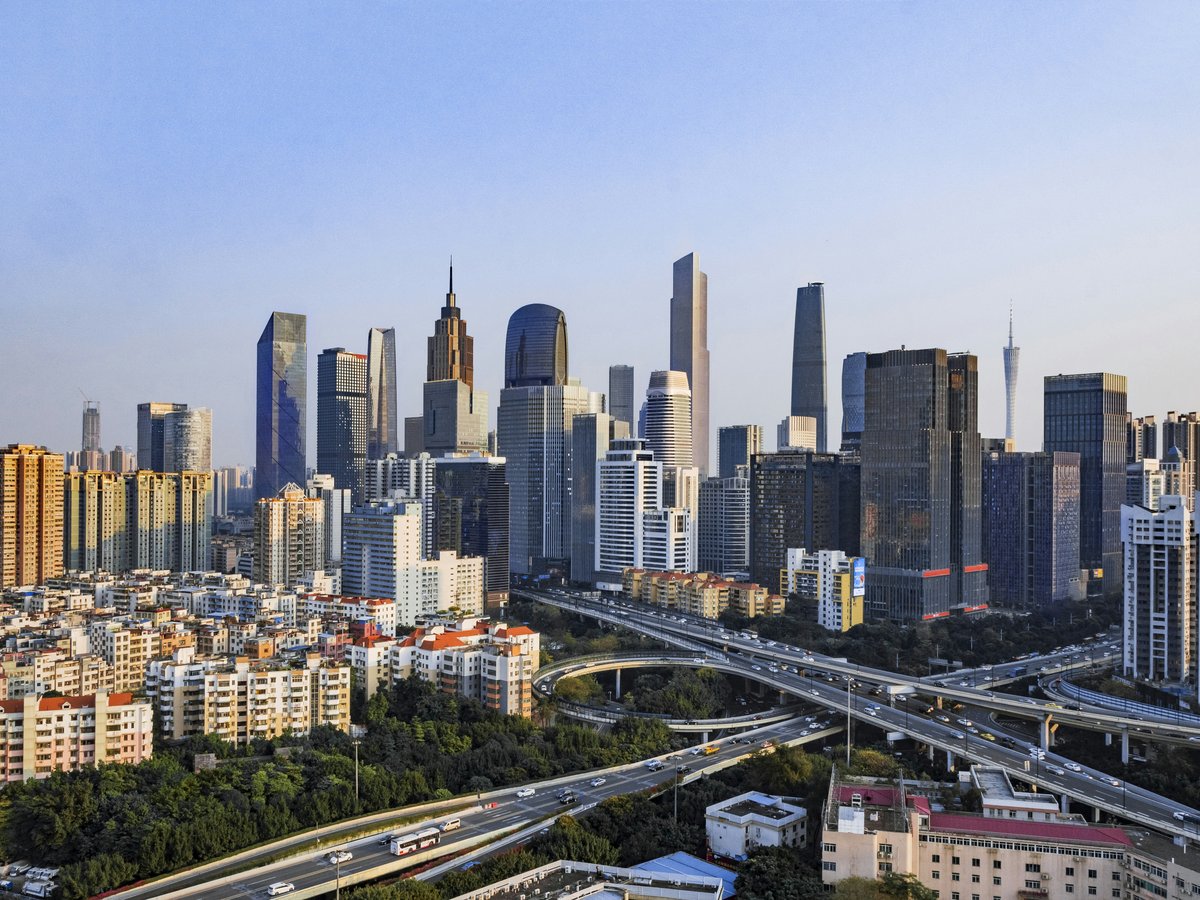
Guangzhou sits where the Pearl River widens toward its delta, roughly 120 km inland from the South China Sea. The northern districts push into the Baiyun Mountains, while Nansha to the south flattens toward tidal mudflats and mangrove coast. At latitude 23°N, winter days rarely dip below 10°C, and the wet season from April through September brings afternoon downpours that can flood low-lying trails within an hour. October through December tends to be the best window for hiking and cycling, with lower humidity and daytime temperatures around 20-25°C. Baiyun Mountain's 382-meter summit is visible from much of the urban core, and the city's park system spans all 11 districts. You'll find locals running the stone steps of Yuexiu Park before 6 AM, filling thermoses at mountain springs further north, and stretching under banyans at Liuhua Lake Park by mid-morning. Many of the popular trailheads are accessible by metro, with Line 2 and Line 3 serving the most useful stops for the northern hill parks.
Outdoor activities
-
Pearl River Greenway Cycling
The Pearl River Greenway stretches along both banks of the river, connecting Haizhu District to Liwan District with a paved path that passes under banyan shade and through pocket parks. You can rent bikes from the city's shared cycling stations using the Meituan or Hellobike apps. A leisurely ride from Ersha Island past the Canton Tower to the White Swan Hotel on Shamian covers about 12 km one way. Morning rides before 8 AM avoid the worst of the heat and the foot traffic from riverside exercisers.
- Difficulty
- Easy
- Duration
- 2-3 hours
- Best season
- October through March
-
Road Cycling to Conghua
Conghua District sits about 80 km northeast of central Guangzhou, and the ride out through Baiyun and Huadu follows progressively quieter roads as the urban sprawl gives way to lychee orchards and fish ponds. Cycling clubs from Tianhe typically gather at Guangzhou East Station on weekend mornings for the ride out. The route gains about 200 meters of elevation over its length, with most of the climbing in the final 15 km. Conghua's hot springs area makes a good turnaround point, and you can take a Didi back if your legs have had enough.
- Difficulty
- Moderate to challenging
- Duration
- Full day (5-7 hours riding)
- Best season
- November through February
-
Running the Ersha Island Riverside Loop
Ersha Island sits in the middle of the Pearl River between Yuexiu and Haizhu, and a paved loop of roughly 5 km circles the island's perimeter along the waterfront. Sections of the path run under kapok and fig trees, with views of the Canton Tower to the southeast and the Shamian area to the west. Runners and walkers dominate before 7 AM, and the loop is lit well enough for evening runs after dark. The Guangdong Museum of Art sits along the island's northern edge, and access is by bridge from either bank of the Pearl River.
- Difficulty
- Easy
- Duration
- 30-60 minutes running, 1-2 hours walking
- Best season
- October through April
-
Mountain Biking at Huolushan
Huolushan Forest Park in Tianhe District has a network of dirt trails through dense subtropical forest that draws mountain bikers on weekends. The peak stands at about 222 meters, and the trails involve short, steep pitches with loose gravel and exposed tree roots. Bring your own bike, as there are no rental shops at the park. The trails get slippery after rain, and the park gates close at 6 PM, though enforcement seems relaxed.
- Difficulty
- Moderate
- Duration
- 2-3 hours
- Best season
- October through March
-
Canton Tower Outdoor Observation
Canton Tower, completed in 2010, rises 600 meters above the south bank of the Pearl River in Haizhu District. The tower's upper observation levels include an outdoor terrace and a freefall ride near the top. Wind and rain can close the outdoor sections without notice, so check conditions before making the trip. Worth noting, the views toward Zhujiang New Town and the Tianhe supertall cluster are clearest between November and February when the haze lifts.
- Difficulty
- Easy (elevator access)
- Duration
- 1-2 hours
- Best season
- November through February
Day hikes
-
Baiyun Mountain, South Gate to Moxing Ridge
The most popular route starts at the south gate in Baiyun District, accessible by bus from nearby metro stations. A paved road zigzags upward, and most people take about 2 hours going up at a walking pace. A less crowded path follows stone steps from the Luhu Lake entrance on the east side through forest and past several spring-water stations. Expect thick canopy shade, the smell of damp earth and camphor, and occasional views of the city through gaps in the trees. The summit area at Moxing Ridge has a few restaurants and a cable car back down if you would rather not walk the descent.
- Difficulty
- Easy (paved road) to Moderate (side trails)
- Duration
- 3-5 hours round trip
- Best season
- October through March
-
Maofeng Mountain
Maofeng Mountain sits in northern Baiyun District, about 25 km from central Guangzhou. At 534 meters, it is taller than the Baiyun range and sees noticeably fewer visitors. The main trail uses a mix of paved road and stone steps, with a bamboo forest section near the middle where the air cools and the wind sounds different moving through the stalks. A reservoir at the base has a cluster of restaurants serving local chicken dishes. The climb takes about 2 hours up and is steeper than Baiyun, with some sections requiring hands on rock.
- Difficulty
- Moderate
- Duration
- 4-5 hours round trip
- Best season
- October through April
-
Lianhua Mountain (Lotus Mountain, Panyu)
Lianhua Mountain in Panyu District, about 30 km southeast of central Guangzhou, is an old stone quarry that was worked for over 2,000 years. The carved cliff faces and remnant quarry pits have been partially flooded and landscaped into a park. A 40-meter gilded Guanyin statue stands at the highest point, and the climb from the entrance gate to the top takes about 30-40 minutes on paved paths. The quarry walls show tool marks from centuries of stone cutting. Entry costs around ¥50, and the rock faces glow orange in the late afternoon light.
- Difficulty
- Easy
- Duration
- 2-3 hours
- Best season
- Year-round (quarry walls provide shade in summer)
-
Nankunshan National Forest Park
Nankunshan lies about 130 km northeast of Guangzhou, in Longmen County, Huizhou. The drive takes roughly 2 hours via the Guanghe Expressway. Trails wind through old-growth subtropical forest, passing waterfalls and stream crossings, and the highest peak reaches about 1,228 meters. The Guanyin Pool waterfall trail is the most popular route, taking about 3 hours out and back on a mix of forest path and wooden boardwalk. Humidity stays heavy even in the cooler months, and the trails can be muddy after the frequent rains that feed the forest. Leeches appear on lower trails during and after heavy rain from May through September.
- Difficulty
- Moderate to challenging
- Duration
- Full day (including 4 hours driving round trip)
- Best season
- October through December
Water activities
-
Pearl River Evening Cruise
The standard evening cruise on the Pearl River runs about 1 hour and departs from Tianzi Pier near Beijing Road in Yuexiu District. Boats loop downstream past Shamian Island, then upstream past Ersha Island and the lit-up Canton Tower before returning. Ticket prices start around ¥80 for open deck seating. The river is wide enough that the boat barely rocks, and the evening breeze off the water makes the summer heat more bearable. Sailings typically run between 6:30 PM and 10 PM.
- Difficulty
- Easy (sightseeing)
- Duration
- About 1 hour
- Best season
- Year-round
-
Kayaking on Liuxi River
Liuxi River flows through Conghua District north of the city, and the upper reaches near Liuxi River National Forest Park are calm enough for recreational kayaking. Outfitters in the Conghua area rent sit-on-top kayaks and offer guided paddles on sections of the reservoir above the dam. The water tends to be green and clean by Pearl River Delta standards, and the banks are lined with camphor trees and bamboo. A half-day paddle covers about 5-8 km of relatively flat water. The drive from central Guangzhou takes about 90 minutes.
- Difficulty
- Easy to moderate
- Duration
- Half day (including travel)
- Best season
- October through April
-
Dragon Boat Paddling on the Pearl River
Dragon boat racing is deeply rooted in Guangzhou, and the annual Dragon Boat Festival races in June draw teams from across Guangdong Province. Outside the festival period, several clubs in Haizhu and Liwan districts offer weekly practice sessions open to newcomers, typically on Saturday mornings. The long, narrow boats seat 20 paddlers, and the synchronized stroke rhythm is harder to maintain than it looks. Training sessions usually run about 2 hours on a calm section of the Pearl River near Zhongda Pier. You will smell river silt and engine exhaust from passing barges, and your forearms will ache for 2 days afterward.
- Difficulty
- Moderate (requires team coordination)
- Duration
- About 2 hours per session
- Best season
- March through October
-
Nansha Coast and Wetland Birdwatching
Nansha District, about 55 km south of central Guangzhou, sits where the Pearl River meets the South China Sea. Nansha Binhai Greenway runs along the coast for several kilometers, and a few managed beach areas open for swimming during summer months, though the water here is shallow and silty. The mangrove wetland reserve at Nansha Wetland Park has boardwalks through coastal habitat and is better suited for birdwatching than swimming. Mind you, if you want clear water and real waves, you will need to head 2-3 hours east toward the beaches around Huizhou or Shanwei.
- Difficulty
- Easy
- Duration
- Half to full day
- Best season
- June through September for swimming, November through February for birdwatching
Parks & gardens
-
Yuexiu Park
FreeYuexiu Park covers about 86 hectares in Yuexiu District, making it the largest park in the city center. The Five Rams Sculpture near the park's southern hilltop has become one of Guangzhou's most recognized symbols, and the Ming-dynasty Zhenhai Tower sits on the highest point with views across the rooftops. Several lakes, shaded walking paths under old banyans, and stone plazas fill the grounds. Early mornings bring ballroom dancers, erhu players, and groups doing synchronized fan dances on the lower terraces.
Highlights: Five Rams Sculpture, Zhenhai Tower with a city history museum inside, three artificial lakes, and a public swimming pool open in summer
-
South China Botanical Garden
The South China Botanical Garden in Tianhe District covers more than 300 hectares, and its tropical and subtropical plant collections rank among the largest in China. The grounds include a rainforest walk, a bamboo garden, a medicinal herbs section, and several large greenhouses. You can easily spend 3-4 hours here without covering the full grounds. The garden sits about 1 km from Longdong metro station on Line 6, and entry to the main grounds costs about ¥20.
Highlights: Rainforest simulation walk, bamboo grove with over 200 species, medicinal herb garden, and orchid greenhouses
-
Haizhu Wetland Park
Haizhu Wetland Park encompasses about 1,100 hectares on Haizhu Island, sandwiched between two branches of the Pearl River. The park preserves a patch of fruit orchard and wetland habitat in the middle of one of the densest urban areas in the country. Boardwalks wind through reed beds and lotus ponds, and migratory birds arrive between November and February. The northern section near the main entrance has paved paths and a visitor center, while the deeper southern sections stay notably quieter.
Highlights: Boardwalks through lotus ponds and reed beds, migratory bird habitat, and fruit orchards from the area's agricultural past
-
Liuhua Lake Park
FreeLiuhua Lake Park spreads across about 60 hectares near Guangzhou Railway Station in Yuexiu District. Three connected lakes form the core, surrounded by pavilions, stone bridges, and thick stands of palms and rain trees. The park tends to be quieter than its larger neighbor to the east, and the lakeside benches fill up with residents playing chess and cards through the afternoon. A section of the park borders the Orchid Garden, which charges a separate small entry fee and maintains several hundred orchid varieties in covered greenhouses.
Highlights: Three interconnected lakes with rental paddle boats, adjacent Orchid Garden with covered greenhouses, and morning tai chi groups
-
Huacheng Square (Flower City Square)
FreeHuacheng Square sits on the central axis of Zhujiang New Town in Tianhe District, flanked by the Guangzhou Library, the Guangdong Museum, and the Guangzhou Opera House, which opened in 2010. The sunken garden and palm-lined walkways run about 1.5 km north to south. The space is best visited in the early evening when the surrounding tower lights come on and the fountains run. Mind you, it is more urban plaza than garden, but the landscaping includes several hundred mature trees and seasonal flower beds.
Highlights: Central-axis fountains, riverside walkway connecting south to the Canton Tower area, and evening light shows from surrounding skyscrapers
-
Sun Yat-sen Memorial Hall Gardens
FreeThe Sun Yat-sen Memorial Hall in Yuexiu District sits in formal gardens covering about 6 hectares, with a grove of kapok trees that bloom red in March and April. The octagonal hall hosts performances, but the surrounding grounds are free to walk and include stone paths, manicured lawns, and a row of old trees that shade the walkways even in midsummer heat. The site is a 10-minute walk south from Yuexiu Park.
Highlights: Kapok trees flowering red in spring, octagonal memorial hall architecture, and formal garden paths under mature shade trees
Practical tips
- Sun Protection
- Guangzhou sits south of the Tropic of Cancer, and the UV index regularly exceeds 10 between April and October. Wear SPF 50+ sunscreen and reapply every 90 minutes when hiking. A wide-brimmed hat is more useful here than sunglasses alone, since the summer sun angle is nearly overhead. Locals carry UV-blocking umbrellas year-round, which doubles as rain gear.
- Hydration
- At 89% humidity and a feels-like temperature near 31°C in mid-September, you will sweat through your shirt within 20 minutes of sustained effort. Carry at least 2 liters of water for any hike over 2 hours. Convenience stores like Family Mart and 7-Eleven are common in the city but absent on mountain trails, so fill up before the trailhead.
- Trail Conditions and Footwear
- Most trails inside the city are paved or use stone steps, so heavy hiking boots are not necessary. Trail running shoes or sturdy sneakers with grip work well for Baiyun Mountain and Huolushan. For Nankunshan or Maofeng Mountain, bring shoes that handle wet rock and mud. After heavy rain, which can dump 50+ mm in an hour during the wet season, lower trail sections may flood temporarily. The Moji Tianqi weather app tends to be more accurate for Guangzhou microclimates than international services.
- Currency and Costs
- At the current exchange rate of roughly 6.71 CNY to 1 USD, outdoor activities in Guangzhou are affordable by most standards. Mountain entrance fees typically run between ¥5 and ¥60. Set up WeChat Pay or Alipay before arriving, as many park ticket machines and small vendors do not accept international credit cards. Cash is useful as a backup for older ticket booths.
- Gear and Clothing
- Pack light, breathable fabric that dries fast. Cotton is miserable in Guangzhou's humidity. A packable rain jacket is essential year-round, as afternoon storms appear with roughly 15-20 minutes of warning. Mosquito repellent with DEET is worth carrying for any trail near standing water or forest understory, especially between May and November. Decathlon stores in Tianhe and Panyu stock affordable hiking gear if you arrive underprepared.
- Safety
- Guangzhou scores 6.5 out of 10 for solo-traveler safety (see the TTDI Solo-Safety Index). Trails and parks within the city are well-trafficked and generally safe during daylight hours. For more remote areas like Nankunshan, go with a partner or group, and tell someone your intended route. Snakes are present in forested areas in summer, including a few venomous species. Stick to established trails and watch where you put your hands when scrambling over rocks.
FAQ
What is the best time of year for outdoor activities in Guangzhou?
October through December offers the most comfortable conditions, with temperatures between 15-25°C, lower humidity, and minimal rain. January and February can dip to 5-10°C, which is fine for hiking but feels cold without layers since most buildings in Guangzhou lack central heating. The April through September wet season brings daily downpours and heavy humidity, though early morning windows before 9 AM can still work for shorter outings.
Are hiking trails in Guangzhou marked in English?
The major trails on Baiyun Mountain have bilingual signs at main intersections and near the cable car stations. Smaller parks like Huolushan and Maofeng Mountain generally have Chinese-only signage. Download offline maps on Amap or Baidu Maps before heading out, as Google Maps requires a VPN in mainland China. Trail markers are color-coded where they exist, but do not rely on them for navigation on less-traveled routes.
Do I need permits for hiking near Guangzhou?
No special hiking permits are required for any of the trails covered in this guide. Baiyun Mountain, Lianhua Mountain, and Nankunshan National Forest Park charge entrance fees payable at the gate. Huolushan and most city parks are free to enter. Some nature reserves in the wider Guangdong Province require group registration through local forestry offices, but those are beyond standard day-trip range from the city.
Is tap water safe to drink in Guangzhou?
Tap water in Guangzhou is not considered safe to drink without boiling, which is the standard across mainland China. Bottled water costs about ¥2 for 550 ml at any convenience store. Hotels provide electric kettles as standard. You can fill reusable bottles from the hot water dispensers found at metro stations, shopping malls, and most public buildings.
Can I rent bikes easily for cycling around Guangzhou?
Meituan Bike and Hellobike are the two main shared bike services, and you will find docked and dockless bikes on nearly every block in the central districts. Both apps require a Chinese phone number and a small deposit via WeChat Pay or Alipay, with rental costing about ¥1.5 per 30 minutes. For longer rides or road cycling, rental shops near Ersha Island and in Conghua rent road bikes by the day.
What about air quality for outdoor exercise in Guangzhou?
Guangzhou's air quality has improved over the past decade, but AQI readings above 100 still occur, particularly in winter when atmospheric inversions trap pollution near ground level. Check the IQAir app or the local government AQI reading before heading out for strenuous exercise. On high-pollution days, the air tends to be worst in the morning and may clear by afternoon. Conditions are consistently better after heavy rain or during sustained winds from the south.
Last verified by automated review (v1.7.2) on . What is automated review?