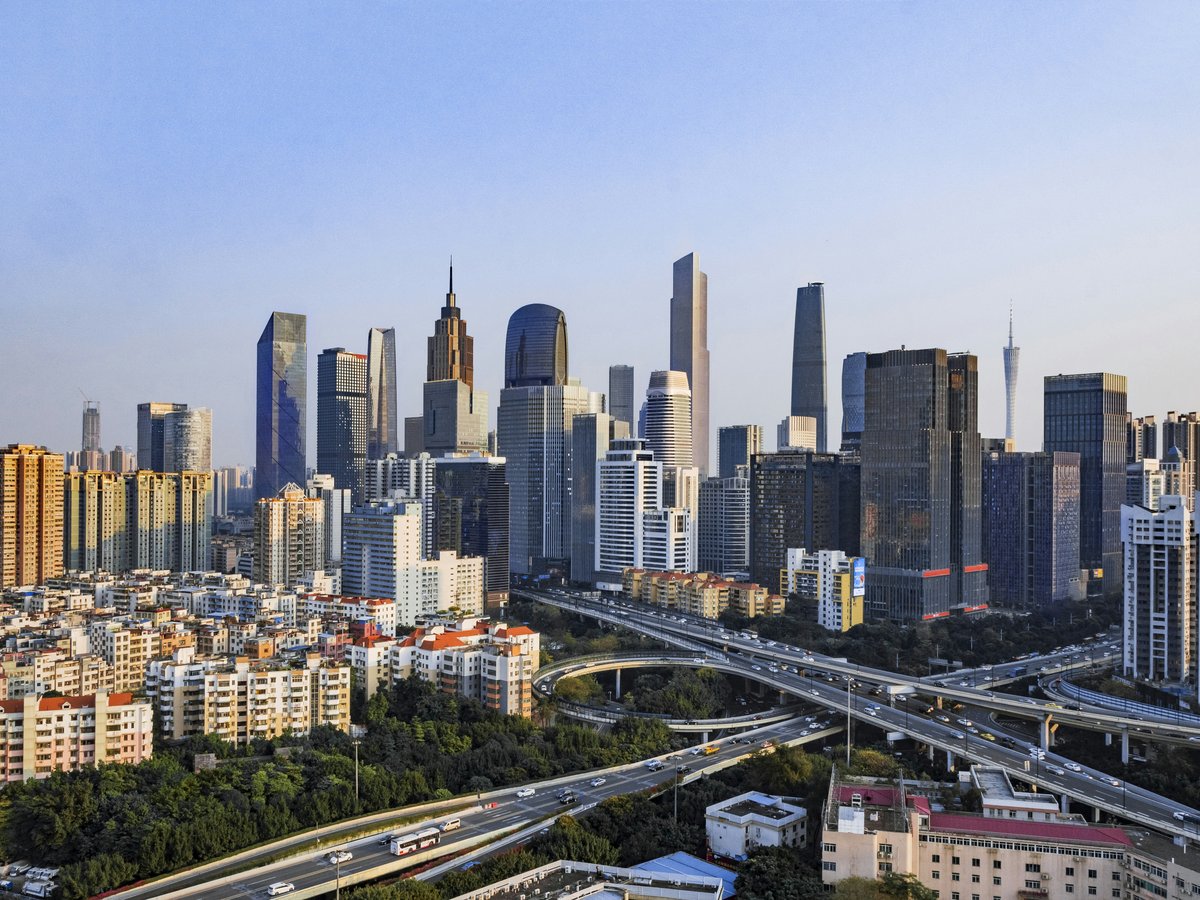
Guangzhou eats late. Cantonese dinner culture runs 2 to 3 hours, and the bar crowd typically doesn't appear until the last plates of char siu and siu mei have been cleared. The Pearl River splits the city into distinct after-dark zones, each with its own tempo. Zhujiang New Town on the north bank fills with rooftop lounges and cocktail bars above the water. Older districts like Yuexiu keep things looser, with sidewalk beer spots where Tsingtao tallboys go for about 10 CNY. You might hear Cantonese pop from a karaoke parlor on one block and deep bass through a club entrance on the next. The waterfront scene has grown steadily since Canton Tower opened in 2010, when investment started flowing into the riverside strip. Mind you, Guangzhou still runs second to Shanghai and Beijing in the international nightlife press, though locals don't seem bothered. Groups of 8 or more pack into hotpot restaurants, then move to the bar streets. They often don't arrive until 12:30 AM.
Guangzhou's Bar Landscape
The cocktail bar wave that hit Shanghai around 2015 reached Guangzhou a few years later. Zhujiang New Town and Tianhe hold most of the polished cocktail spots, where bartenders work with lychee, longan, and Guangdong-grown oolong. Expect to pay 60 to 120 CNY per cocktail in these places, roughly 9 to 18 USD. Guangzhou bartenders tend to lean into Cantonese flavor profiles rather than copying Tokyo or New York templates. Rooftop bars cluster near the Pearl River waterfront, particularly around the streets near the Guangzhou Opera House, which opened the same year as Canton Tower. On a clear night the view takes in both banks and the lit-up Haiyin Bridge. September evenings currently sit around 25 to 26 degrees Celsius with thick humidity, so rooftop seating can feel damp and warm against bare skin. Guangzhou stays warm enough for outdoor drinking roughly 9 months of the year. Dive bars are harder to track down than in Beijing's hutong belt, but Yuexiu and the older parts of Liwan still have small local spots where a Zhujiang Beer costs 8 to 15 CNY. The city's hometown lager has been brewed here since 1985 and sits on practically every menu in town. You'll spot these neighborhood bars by the plastic stools on the sidewalk and the clatter of dice games through open doors. WeChat is usually the only way they post hours or specials. Wine bars have been growing in Tianhe and the Pazhou area since around 2018, driven partly by Guangzhou's proximity to Hong Kong's wine-import market. By-the-glass pours start around 50 CNY. The selection tends toward French and Australian bottles, though the occasional Georgian or Ningxia label turns up.
Clubs and Table Culture
At most Tianhe clubs, the bass hits your chest before you clear the entrance. Table culture dominates the floor from there. Locals don't walk up to a bar and order individual drinks in Guangzhou. They book a table, buy bottles of Hennessy or Chivas Regal, and share with a group of 6 to 12 friends. Fruit platters, ice buckets, and Red Bull mixers come with every table. Solo visitors or couples can sometimes find bar seating, but the table-and-bottle model is how roughly 80% of the room operates on a busy night. EDM and hip-hop split the programming at the bigger venues, with Mandopop remixes and Cantonese pop edits filling out the sets. The crowd tends to listen more than dance during the early hours. The floor opens up past 1 AM and peaks around 3 AM. Some Zhujiang New Town and Tianhe clubs stay open until 5 or 6 AM on Friday and Saturday. Dress codes are more relaxed than in Shanghai or Hong Kong. Clean sneakers and dark jeans pass at most doors, though flip-flops and athletic shorts will get turned away. Clubs scan IDs at entry, sometimes via WeChat QR. Foreign visitors should carry a passport, since Chinese national ID cards are the standard entry document. Cover charges at mid-range clubs tend to fall between 50 and 150 CNY and usually include 1 or 2 drinks. Higher-end venues sometimes charge 200 CNY or above. A bottle-service table for a group commonly starts around 800 to 2,000 CNY depending on the spirit brand and the night of the week.
Live Music and the Livehouse Scene
Guangzhou has a deeper live music tradition than most visitors expect. The city's Cantonese rock scene traces back to the early 1990s, and local bands still draw loyal crowds in the university districts. Indie rock, post-punk, and hip-hop have the strongest followings at the moment. Small livehouse venues (the Chinese term for intimate music clubs, typically 200 to 500 capacity) cluster in Haizhu and Tianhe. Ticket prices generally run 80 to 200 CNY, with touring acts sometimes reaching 300 CNY. Friday and Saturday nights are busiest, but midweek shows run regularly when the university population is in session. Expect raw acoustics at most Guangzhou livehouses. Concrete walls and low ceilings. The crowd presses in close enough to feel the kick drum. Cantonese hip-hop has grown since the mid-2010s, partly fueled by the reality show The Rap of China, which featured several Guangzhou artists. Dedicated hip-hop nights happen at smaller venues in Haizhu and near Guangzhou University Town in Panyu. Jazz has a niche following, with perhaps 5 or 6 dedicated spots across the city. Weekly jazz sessions in Zhujiang New Town usually land on Wednesday or Thursday, starting around 8:30 PM and wrapping before the late-night rush. The Guangzhou live scene has historically operated in a gray area with venue licensing. Clubs open and close faster than in other major Chinese cities. Check Damai or local WeChat groups for current show listings.
Nightlife neighborhoods
-
Zhujiang New Town (珠江新城)
Skyscrapers lit up blue and gold after dark, polished cocktail bars on the ground floors, the Pearl River waterfront pulling couples and small groups toward the promenades. The area around the Opera House stays busy until 1 or 2 AM.
- Best for
- Cocktail bars, rooftop drinking, dates, visitors staying in the Tianhe CBD hotels
- Standouts
- Bars cluster along Xingsheng Lu and the blocks behind the Zhujiang New Town metro station
-
Tianhe (天河)
Commercial energy from Taikoo Hui and the surrounding shopping complexes keeps foot traffic heavy into the evening. Bars and restaurants mix together around the malls, and the crowd skews young professional. The noise of traffic barely fades by the time the bars pick up.
- Best for
- After-work drinks, group dinners that become bar crawls, easy Metro Line 3 access
- Standouts
- The blocks around Taikoo Hui and Tianhe Bei Lu have the densest concentration of late-night spots
-
Yuexiu (越秀)
Narrow streets with local beer spots, KTV parlors with colored lights bleeding through curtained doorways, the smell of grilled skewers from sidewalk vendors. Cantonese-speaking crowds and very little English signage.
- Best for
- Cheap local beers, an unfiltered neighborhood experience, travelers who want to skip the tourist-facing scene
- Standouts
- Scattered along Huanshi Lu and the smaller streets near Yuexiu Park, with no single bar strip to follow
-
Haizhu (海珠)
The livehouse district sits near the river and draws a younger, more artistic crowd. Neon from Canton Tower reflects off the water on the Haizhu bank. Late-night noodle shops line the side streets between venues.
- Best for
- Live music, indie shows, a creative crowd, riverside views toward Canton Tower
- Standouts
- Livehouse venues near Jiangnan Xi and along Binjiang Dong Lu
-
Changdi and Yanjiang Lu (长堤/沿江路)
One of Guangzhou's older bar strips along the Pearl River's north bank. Colonial-era buildings house a mix of KTV spots, beer bars, and a few cocktail places. The river breeze takes the edge off the humidity in summer.
- Best for
- A riverside bar crawl on foot, Pearl River night scenery at lower prices than the New Town
- Standouts
- The stretch between the Haizhu Bridge and Renmin Bridge on the north bank has the tightest cluster
Safety after dark
Guangzhou rates 6.5/10 for solo-traveler safety (see the TTDI Solo-Safety Index), and after-dark risks are relatively low for a city of more than 15 million. The metro shuts down between 11 PM and 11:30 PM on most lines, so you'll likely need a rideshare to get home. DiDi is the standard app and works reliably, though some drivers cancel on foreign pickups because of the language barrier. Write your destination in Chinese characters on your phone before you head out.
Drink spiking is not commonly reported in Guangzhou, but the usual caution applies anywhere the rooms get crowded and dark.
The most common after-dark scam is the tea-ceremony or art-student invitation, where a friendly stranger leads you to a venue and you end up with an inflated bill of 500 to 1,000 CNY. These approaches happen most often around Beijing Lu and the Shangxiajiu pedestrian street during evening hours.
The LGBTQ+ scene in Guangzhou rates 3/10 (sourced from TTDI's editorial rubric). A few bars in Tianhe cater to LGBTQ+ patrons, but public displays of affection between same-sex couples draw stares outside those spaces. Discretion is the norm in the local LGBTQ+ community.
Petty theft is the main physical risk in Guangzhou nightlife, concentrated in packed club queues and on late-night Metro Line 3 trains. Stick to well-lit streets on the walk back, and avoid the quieter stretches along the Pearl River embankment past 2 AM.
Practical tips
- Payment
- WeChat Pay and Alipay dominate Guangzhou nightlife. Many bars and clubs don't accept international credit cards, and some don't take cash at all. Foreign visitors can link an international Visa or Mastercard to WeChat Pay, a feature opened to overseas cards around 2023. Set this up before your first night out.
- Tipping
- Tipping is not customary in Guangzhou bars, clubs, or restaurants. Higher-end hotel bars occasionally add a 10 to 15% service charge to the bill. If you leave extra cash on the bar, the bartender will likely return it to you.
- Language at the bar
- Cantonese is the dominant language in Guangzhou nightlife, not Mandarin. Staff at upscale Zhujiang New Town bars may speak some English, but in Yuexiu and Liwan you'll need Mandarin at minimum. Download WeChat and use its built-in translation function for menus and basic communication.
- Timing your night
- Bars fill by 10 PM, but clubs in Guangzhou take another 2 hours to find their rhythm. Walk into a Tianhe club early and you'll spend that time in a near-empty room. Weekends run latest, with some doors not closing until well after sunrise.
- Table reservations
- For clubs, book a table through WeChat in advance, especially on Friday and Saturday. Walk-ins at popular venues past midnight often face queues or get turned away. KTV rooms fill fast on weekends and should be reserved hours ahead.
- Currency
- The exchange rate sits at roughly 6.71 CNY to 1 USD as of September 2026. A casual night at local bars in Yuexiu or Liwan might cost 100 to 200 CNY per person, about 15 to 30 USD. Cocktail-bar evenings in the nicer districts run closer to 300 to 500 CNY.
FAQ
What time do bars and clubs close in Guangzhou?
Most bars stay open until 2 to 3 AM on weeknights. Clubs in Tianhe and Zhujiang New Town run latest, sometimes keeping the music going until sunrise on Saturday mornings. Smaller spots in Yuexiu tend to wrap up around 1 AM.
What do locals order when they go out in Guangzhou?
Guangzhou runs on cold beer. The local Zhujiang lager appears on nearly every table alongside Tsingtao and Snow Beer. Club tables tend toward cognac and whisky mixed with green tea or soft drinks. Baijiu, the grain spirit that dominates in northern cities like Harbin, appears less often this far south. Cantonese drinkers generally prefer lighter spirits and cold lager.
Is Guangzhou nightlife cheaper than Shanghai or Beijing?
Generally, yes. Cocktail prices and club minimums in Guangzhou typically run 20 to 30% below equivalent venues in Shanghai. The gap narrows at the high end, but mid-range bars and clubs feel noticeably more affordable. Beer prices at local spots are especially low compared to bar-heavy districts like Sanlitun in Beijing.
Can I bar-hop on foot in Guangzhou?
In certain neighborhoods, yes. The Zhujiang New Town waterfront and the Changdi strip along the Pearl River both work as walking bar crawls. Between neighborhoods you'll need the metro (if it's still running) or a DiDi ride. The city is spread out, and Guangzhou's nightlife clusters are not adjacent to each other.
What nights are best for going out in Guangzhou?
Friday and Saturday are the main nights, as in most cities. Thursday has become an unofficial warm-up night at many Tianhe bars, with some running drink specials. Sunday through Wednesday are quiet at most venues, though weeknight live music happens during the university term. Avoid the National Day holiday (October 1 to 7) if you want a local-feeling night, as the city fills with domestic tourists and some prices rise.
Last verified by automated review (v1.7.2) on . What is automated review?