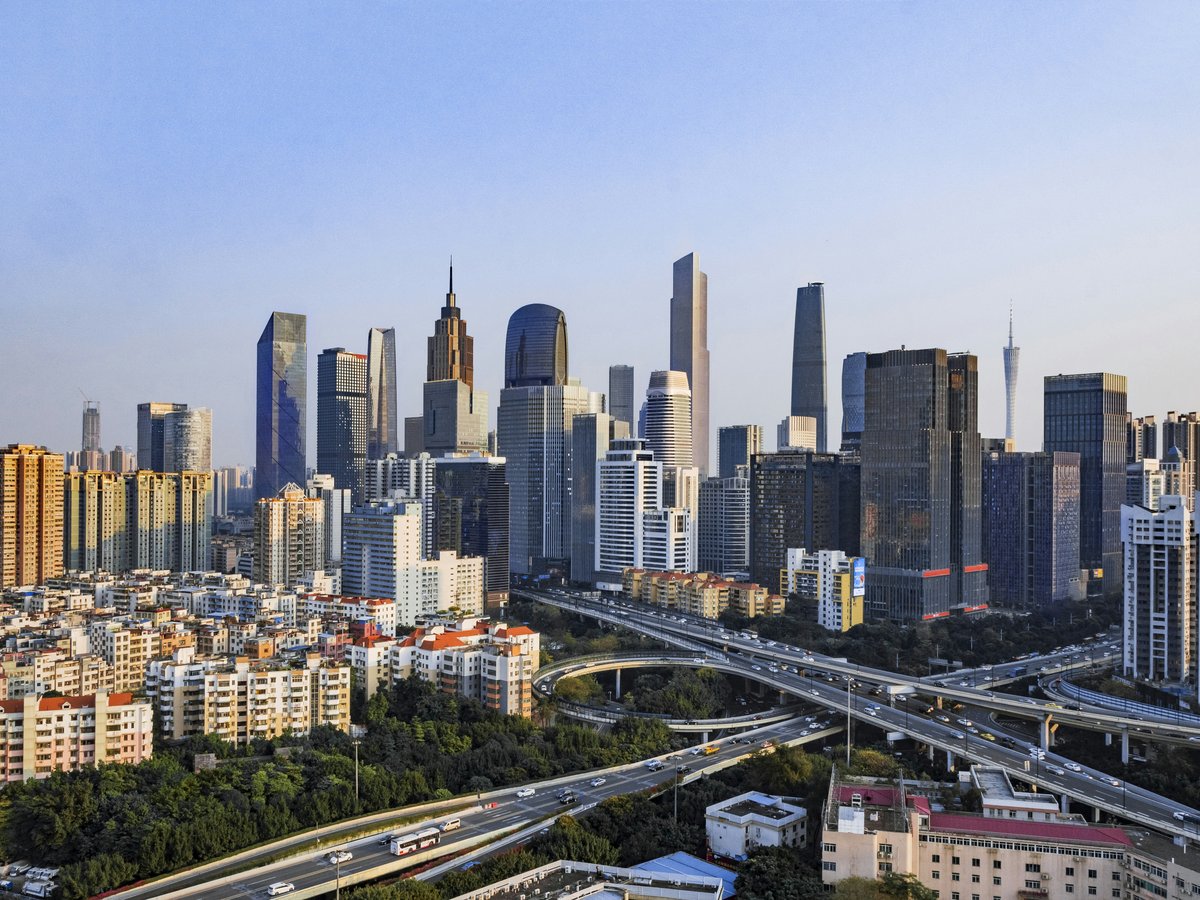
Guangzhou sits on the Pearl River Delta with over 2,200 years of trading history. Guangzhou's municipal government funds free admission at major museums, and the subtropical climate keeps parks and promenades usable for roughly 10 months of the year. Cantonese food culture fills the street markets around Qingping and Beijing Road, where watching wok stations fire up and browsing dried-goods stalls costs nothing. Between colonial-era Shamian Island, the waterfront path along the Pearl River, and the evening skyline at Huacheng Square, a zero-budget visitor could fill 3 or 4 days without running out of new ground. The city's Metro system, one of the longest anywhere at over 600 km of track, connects most free sites within a few stops. That said, walking from old Liwan to the Pearl River promenade takes about 20 minutes and covers most of the district's free landmarks along the way.
Free attractions
-
Guangdong Provincial Museum (广东省博物馆)
Guangzhou's premier museum sits on the east side of Huacheng Square in Zhujiang New Town. The permanent collection covers Guangdong's natural history, Cantonese porcelain, Chaozhou woodcarving, and Maritime Silk Road trade artifacts. Admission is free, though you need to reserve a timed slot online or present your passport at the entrance. The building, designed by Rocco Yim and finished in 2010, has a distinctive irregular-box shape that locals sometimes call the "treasure chest." Four floors of galleries can take 2 to 3 hours to work through. The museum closes on Mondays.
Zhujiang New Townmuseum -
Guangdong Museum of Art (广东美术馆)
This free art museum sits on Ersha Island in the Pearl River, near the Xinghai Concert Hall and waterfront parkland. The permanent holdings lean toward modern Chinese painting, Cantonese ink work, and contemporary installations, with rotating exhibitions that change every few months. The original Ersha building opened in 1997, and a second branch near Canton Tower opened more recently. Open Tuesday through Sunday. The Ersha Island location is worth combining with a walk along the island's sculpture-lined waterfront path.
Ersha Islandmuseum -
Sacred Heart Cathedral (石室圣心大教堂)
This Gothic Revival cathedral on Yide Road was completed in 1888 after 25 years of construction. The structure uses Guangdong granite throughout, which is unusual for a Gothic church of this scale outside Europe. Over 40 stained glass windows cast colored light across the nave on sunny mornings. Entry is free, and the cathedral is still an active parish, so you might walk into a Cantonese-language Mass on any given Sunday. The surrounding Yide Road area is one of Guangzhou's older commercial streets, lined with dried-seafood wholesalers.
Yuexiulandmark -
Yuexiu Park (越秀公园)
At 86 hectares, Yuexiu is the largest park in central Guangzhou and has been public green space since the 1920s. The Five Rams Statue (五羊石像), a symbol of the city tied to a founding myth about 5 celestial rams, sits on a hill near the south entrance. Zhenhai Tower, a watchtower originally built in 1380 and rebuilt several times since, stands at the highest point. The park's 3 artificial lakes, paths through bamboo groves, and open-air tai chi groups in the morning make it a solid 2-hour walk. No admission fee at any of Yuexiu's entrances.
Yuexiupark -
Shamian Island (沙面岛)
This 900-meter-long sandbank island in the Pearl River served as a foreign concession from the 1860s to the 1940s, shared between British and French administrations. Around 150 colonial-era buildings survive in neoclassical, Baroque, and Art Deco styles, many now restored as cafes, boutique hotels, and consular offices. Shamian is fully pedestrianized and free to explore. Old banyan trees, some well over a century old, shade the central boulevard. The Our Lady of Lourdes Chapel on the French side is open to visitors. Shamian connects to the Liwan district by a short bridge, putting it within walking distance of Qingping Market.
Liwanneighborhood -
Huacheng Square (花城广场)
Guangzhou's main civic plaza stretches 1.5 km through the Zhujiang New Town CBD, flanked by the Guangdong Provincial Museum on one side and the Guangzhou Library on the other. The name translates to Flower City Square, a reference to Guangzhou's old nickname. Open around the clock with no fences or fees, Huacheng Square fills up after dark when Canton Tower and the surrounding high-rises glow across the river. A sunken garden with reflecting pools and subtropical plantings sits at the south end. The square hosts the annual Guangzhou Light Festival each winter.
Zhujiang New Townpublic space -
Peasant Movement Institute (农民运动讲习所)
This former Confucian temple complex at 42 Zhongshan Si Road hosted training sessions for peasant organizers in 1926, with Mao Zedong serving as director of the sixth class. The site preserves dormitories, lecture halls, and period documents from that era. It functions as a free museum of revolutionary history. The Ming-dynasty temple buildings, with their red walls and curved roof tiles, are worth seeing for the architecture alone. Open daily except Mondays. Allow about 45 minutes for a full visit.
Yuexiumuseum -
Liwan Lake Park (荔湾湖公园)
This park in the old Xiguan district spreads across 3 connected lakes, ornamental bridges, and Lingnan-style garden architecture. Free to enter at all hours. The park connects to the Yongqing Fang heritage district, a cluster of restored Qing-dynasty lane houses now functioning as tea shops, bookstores, and small galleries. Morning visitors will find retirees practicing Cantonese opera on the covered stages near the east lake. The park sits 10 minutes on foot from Shamian Island.
Liwanpark -
Huanghuagang Park (黄花岗公园)
This park and mausoleum on Xianlie Road commemorates 72 revolutionaries killed during the 1911 Guangzhou Uprising against the Qing dynasty. The central monument, a stone obelisk topped with a Kuomintang party emblem, sits at the end of a tree-lined axis. The surrounding park on Xianlie Road is free and considerably less crowded than Yuexiu, which makes it a good stop when the larger parks feel overrun. Old-growth tropical trees provide heavy shade along the walking paths.
Yuexiupark
Free activities
-
Beijing Road Pedestrian Street (北京路步行街)
Guangzhou's main shopping street has been a commercial axis for over 1,000 years. The road surface includes glass-covered archaeological sections that reveal layers of paving from the Song, Ming, and Qing dynasties stacked on top of each other. Browsing the shops and food stalls along Beijing Road costs nothing. The street runs about 1 km from Gongyuanqian Metro to the riverfront. Beijing Road gets densely packed on weekend evenings, so weekday mornings before 10:00 are calmer for examining the archaeological display.
Yuexiuwalking route -
Pearl River Promenade (珠江沿岸)
A continuous waterfront walkway runs along both banks of the Pearl River through central Guangzhou. The south bank section between the Haizhu Bridge and Guangzhou Bridge stretches about 3 km and offers direct views of the colonial Bund buildings on the north side. After dark, the bridges, Canton Tower, and CBD towers light up in sequence. The north bank path connects the old customs house area near Shamian Island to the Ersha Island bridges. The Pearl River promenade is free to walk at any hour.
multiple districtswalking route -
Qingping Market Area (清平市场)
The streets around Qingping Road in Liwan have been a market district since the 1970s. The original live-animal market that once filled Qingping's lanes is largely gone, replaced by blocks of dried-goods stalls selling herbs, dried seafood, mushrooms, and traditional Chinese medicine ingredients. Walk through the Qingping lanes and the smell of star anise and dried tangerine peel hangs thick in the air. Browsing the Qingping stalls is free, and vendors are generally indifferent to tourists, which makes for comfortable wandering. The market sits within a 5-minute walk of Shamian Island.
Liwanmarket -
Ersha Island Sculpture Park (二沙岛)
This island in the Pearl River between central Guangzhou and Haizhu district is lined with open-air sculptures, landscaped lawns, and river-facing benches. The walk from the island's west tip to the Guangdong Museum of Art on the east side takes about 30 minutes at a slow pace. On weekday mornings, Ersha's paths are nearly empty. The south side of the island offers a clear sightline to Canton Tower across the water.
Yuexiuwalking route -
Sun Yat-sen Memorial Hall Grounds (中山纪念堂)
The parkland and gardens surrounding the Sun Yat-sen Memorial Hall are free to enter. The octagonal main hall, designed by Lu Yanzhi, seats nearly 5,000 people under a single unsupported dome span. The surrounding garden includes centuries-old kapok trees and a bronze statue of Sun Yat-sen. Worth noting, the main hall's interior requires a ticket of about 10 CNY, but the grounds, the exterior architecture, and the gardens cost nothing to explore. The site sits on Dongfeng Road, a 15-minute walk north of Beijing Road.
Yuexiuwalking route
Free events
-
Guangzhou International Light Festival (广州国际灯光节)
Late November to early January, nightlyAn annual light-art festival centered on Huacheng Square and the Pearl River waterfront, featuring LED installations, projection mapping on the surrounding towers, and light sculptures by Chinese and international artists. The festival has run annually since 2011 and draws large evening crowds. Free to attend, though Huacheng Square gets packed on opening night.
Huacheng Square, Zhujiang New Town -
Spring Festival Flower Markets (迎春花市)
3 to 4 days before Chinese New Year, typically late January or FebruaryFor 3 to 4 days before Chinese New Year, temporary flower markets fill streets across Guangzhou's districts. The largest set up in Yuexiu, Liwan, and Haizhu. Vendors sell kumquat trees, peach blossoms, chrysanthemums, and calligraphy scrolls. Browsing is free, and the Yuexiu market stays open past midnight on the final night. The tradition dates back to the Ming dynasty in Guangzhou.
Multiple districts, largest in Yuexiu and Liwan -
Dragon Boat Festival Races (龙舟赛)
5th day of the 5th lunar month, typically late May or JunePearl River channel races and village-level competitions happen across Guangzhou during the Duanwu Festival. The races in the Liwan and Haizhu waterways tend to draw the biggest crowds. Teams of 20 to 80 paddlers race long wooden boats while drums set the stroke rate. Watching from the Pearl River canal banks is free. Cantonese families set up picnics and the smell of zongzi, sticky rice dumplings wrapped in bamboo leaves, carries from nearby stalls.
Pearl River channels, especially Liwan and Haizhu -
Mid-Autumn Festival Lantern Displays
Around the 15th of the 8th lunar month, usually September or October, for about 2 weeksYuexiu Park and Liwan Lake Park host free lantern displays during the Mid-Autumn Festival period. Traditional Cantonese paper lanterns, some standing over 3 meters tall, line the park pathways for about 2 weeks around the festival date. Evening crowds at Yuexiu bring mooncakes and fruit for lakeside picnics. The Yuexiu display tends to be the larger installation.
Yuexiu Park and Liwan Lake Park
What costs almost nothing
Several of Guangzhou's ticketed sites charge fees so small they barely register. The Guangzhou Museum inside Zhenhai Tower at Yuexiu Park charges about 10 CNY. A single ride on the Metro starts at 2 CNY. The Pearl River ferry crossing between Tianzi Wharf and the south bank currently runs about 2 CNY per trip. Street food in the Xiguan district tends to run 5 to 15 CNY per dish. A bowl of bamboo-noodle wonton soup at a neighborhood shop currently goes for about 12 CNY. Rice rolls (肠粉) from a morning street cart are hovering around 5 to 8 CNY. Even the Canton Tower observation deck, while not cheap at 150 CNY for the main level, looks reasonable against comparable structures in Tokyo or Shanghai. Mind you, this is a city where eating well on 50 CNY a day is feasible if you stick to local breakfast spots, market stalls, and canteen-style restaurants.
Timing your free-activity days
Most of Guangzhou's free museums close on Mondays, which makes that day better suited to park walks, market browsing, and waterfront routes. Mornings before 10:00 are the quietest window at Yuexiu Park and along the Pearl River promenade. Huacheng Square is at its most photogenic after sunset, when Canton Tower and the surrounding CBD light up across the river. Summer months, roughly June through September, bring heavy rain and temperatures that can feel above 35°C with humidity, so early-morning and late-evening walks are more comfortable. Right now in mid-September, Guangzhou sits at about 27°C but feels closer to 33°C with 85% humidity. Worth noting, typhoon season peaks in July and August, and outdoor plans can shift on short notice. The winter months from December through February are milder, with temperatures between 10°C and 18°C, and tend to produce the clearest skies for skyline photography. For general climate context, see https://en.wikivoyage.org/wiki/Guangzhou#Cope.
Free things that changed, or never were
A few Guangzhou sites that appear on older free-attraction lists have shifted or were never free in the first place. Chen Clan Ancestral Hall (陈家祠), a lavishly carved Qing-dynasty academy on Zhongshan Qi Road, charges about 10 CNY admission and has never been regularly free despite occasionally appearing on English-language "free things" lists. Baiyun Mountain (白云山), the forested ridge on the city's north edge, charges a 5 CNY gate fee at the main entrance. The Canton Tower observation decks have been paid since the tower opened in 2010. The Guangzhou Opera House, which also opened that same year and was designed by Zaha Hadid, does not offer free lobby access outside of ticketed performance times. If an older blog post claims any of these are free, check the current policy before visiting. For up-to-date attraction details, the Wikivoyage Guangzhou See section at https://en.wikivoyage.org/wiki/Guangzhou#See tends to be reliably maintained.
FAQ
Are Guangzhou's major museums really free to enter?
The Guangdong Provincial Museum and Guangdong Museum of Art are permanently free, though both require a timed reservation or passport presentation at the door. The Peasant Movement Institute on Zhongshan Si Road is also free. The Guangzhou Museum at Yuexiu Park charges a small admission fee, so it does not qualify as free. For a broader view of what to see, the Wikivoyage coverage at https://en.wikivoyage.org/wiki/Guangzhou#See is a good starting point.
Is Guangzhou safe for solo travelers exploring on foot?
Guangzhou scores 6.5/10 for solo-traveler safety (see the TTDI Solo-Safety Index). Violent crime against tourists is uncommon, but petty theft can happen in crowded Metro stations and market areas. The main risk is traffic. Guangzhou drivers tend to be aggressive by most standards, and pedestrian signals do not always mean what they appear to. Keep to well-lit main streets after dark, and store valuables in a front pocket in market crowds. The Wikivoyage safety section at https://en.wikivoyage.org/wiki/Guangzhou#Stay_safe covers common scams and areas to be cautious about.
What is the best time of year to visit Guangzhou for free outdoor activities?
October through December tends to be the most comfortable window. Temperatures drop from the summer peak but rarely dip below 15°C, rain is less frequent, and the Guangzhou Light Festival begins in late November. The Spring Festival flower markets in late January or February are worth timing a visit around, though accommodation prices tend to rise during that period. Summer months bring heat, humidity, and typhoon risk, which limits comfortable walking to early morning before 9:00 and evening after 18:00.
How much should I budget per day if I stick to mostly free activities?
At the current rate of roughly 6.71 CNY per US dollar, a minimal daily budget of 100 to 150 CNY (about 15 to 22 USD) covers street food, Metro rides, and the occasional small-fee museum entry. If you sleep in a hostel dormitory bed at around 50 to 80 CNY per night and eat from market stalls, a full day of mostly-free activities in Guangzhou can come in under 200 CNY total. For general money and practical advice, see https://en.wikivoyage.org/wiki/Guangzhou#Cope.
Are there free activities suitable for families with children?
Guangzhou scores 7.2/10 for family friendliness (see the TTDI Family-Friendliness Index). Yuexiu Park has open lawns, lake paths, and enough space for children to run. The Ersha Island sculpture path is flat, stroller-accessible, and car-free. The archaeological display under glass on Beijing Road tends to fascinate older children. The Guangdong Provincial Museum has natural history galleries with dinosaur skeletons and mineral displays that hold younger visitors' attention. For eating options that work for families, the Wikivoyage food section at https://en.wikivoyage.org/wiki/Guangzhou#Eat lists neighborhood restaurants by district.
Can I get around Guangzhou's free sites without speaking Mandarin or Cantonese?
Most signage at major museums and parks includes English translations. The Metro system uses bilingual station names and announcements. Navigation apps like Amap (高德地图) or Baidu Maps work better in Guangzhou than Google Maps, which is blocked without a VPN. Museum staff at the larger institutions typically have limited English, but ticket-free entry means you do not need to negotiate at a window. Vendors in Qingping and along Beijing Road rarely speak English, but pointing works fine for purchases. For district-by-district navigation tips, see https://en.wikivoyage.org/wiki/Guangzhou#Get_around.
Last verified by automated review (v1.7.2) on . What is automated review?