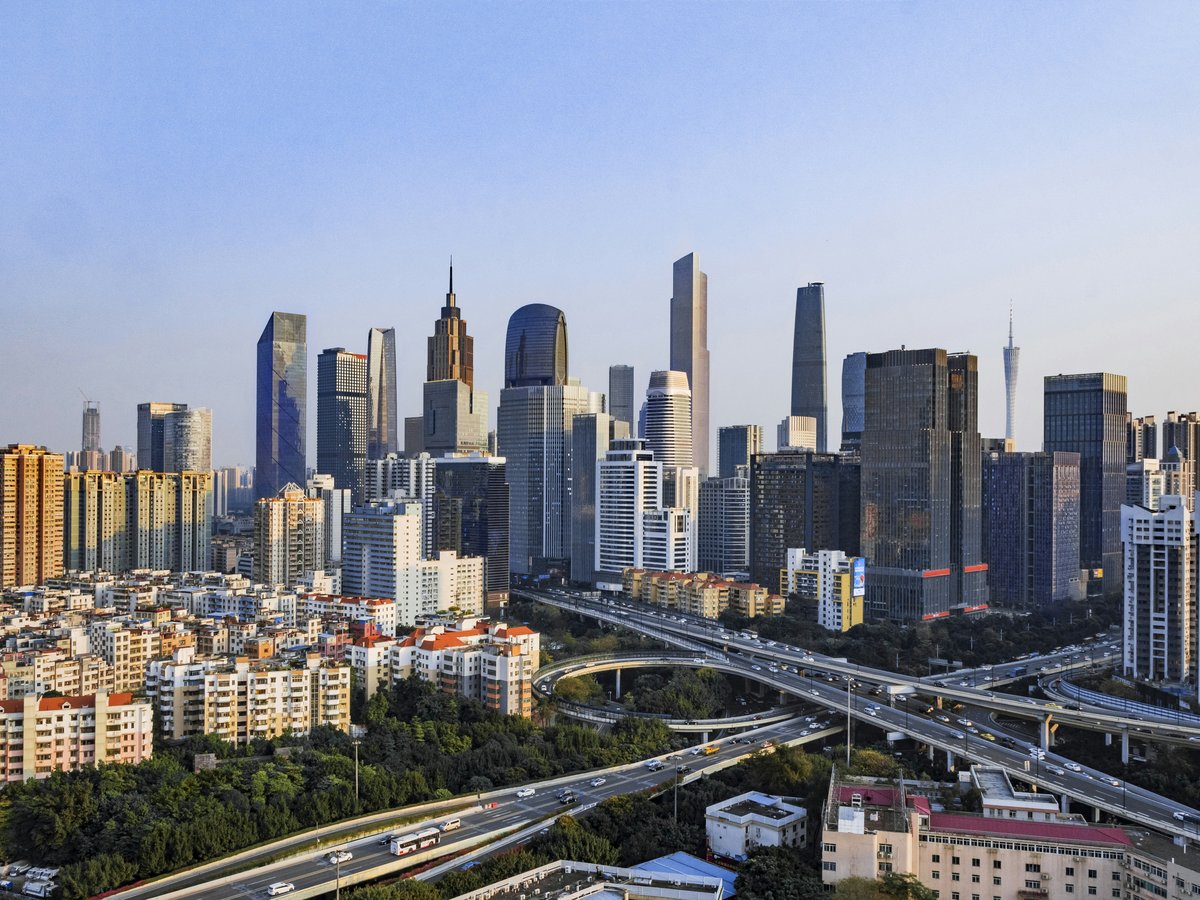
Is Guangzhou good for solo travelers?
Guangzhou suits confident solo travellers better than nervous first-timers. Violent crime is rare and the metro is cheap and signed in English, though English is thin, and Cantonese dinners are sized for a table of four. We put solo safety at 6.5/10 (see the TTDI Solo-Safety Index). Tianhe and Shamian Island make the easiest first bases.
The Guangzhou Metro is the safety net for anyone arriving alone. Line 3 runs from Baiyun Airport to Tiyu Xilu in Tianhe in roughly 50 minutes for under ¥10, and station signs, ticket machines and announcements all come in English. Most lines run their last trains between about 11pm and midnight, so we plan the final leg before 11pm and switch to DiDi after that, whose app has an English interface and a trip-sharing button. The Pearl River promenade in Zhujiang New Town stays lit and busy well past 10pm, with rollerbladers, grandparents and the low hum of traffic on the Liede Bridge. The streets around Guangzhou Railway Station feel different. Pickpockets and unlicensed taxi touts work the crowds near the Liuhua bus terminal, and we would not loiter there after dark with a phone in an open hand. Heat is the risk most visitors underrate. At 1pm on 19 October 2026 the reading was 33.5°C, and it felt like 38.4°C, so carry water and cool off in the Taikoo Hui mall.
Cantonese dinners are built around round tables and lazy Susans, and a solo diner at a banquet restaurant can end up facing a whole roast goose. Morning yum cha solves that. At Taotaoju on Dishifu Road, retirees sit alone with a pot of pu'er and a folded newspaper, and nobody blinks at a table for one. A steamer of har gow, the prawn pink through a translucent wrapper, tends to cost ¥20 to ¥35. In the evenings the wonton-noodle and claypot-rice shops around Shangxiajiu in Liwan serve single portions. Scrape the crackling rice crust off the bottom of the pot. On Guangta Road beside Huaisheng Mosque, Hui Muslim noodle counters pull lamian to order for about ¥20 a bowl, and counter seating there is the norm.
Making friends takes more effort here than in Chengdu or Shanghai, because Guangzhou's backpacker scene is small. The cafés and craft-beer bars of Liuyun Xiaoqu in Tianhe are where young locals and expats mix on weeknights. A Viator small-group day trip to the Kaiping Diaolou watchtowers, about 2.5 hours away, gets around both the single supplement and the 40-seat coach. Hotels in China usually price per room, so a ¥300 double at Ji Hotel or Hanting (about US$45) is also the single rate. The exception is the Canton Fair's autumn session, which runs in phases from mid-October into early November: during the fair, rooms near the Pazhou complex can cost two or three times the usual rate, so stay in Yuexiu instead and ride Line 8 across. Some small guesthouses still can't register foreign passports, so we book through Trip.com, which marks the hotels that accept foreign guests.
Long stays are lonelier than short ones. We score Guangzhou 3.8/10 for digital-nomad suitability (sourced from TTDI's editorial rubric), mostly because Google, WhatsApp and Instagram are blocked unless you use a roaming eSIM or a VPN. Before you land, link a Visa or Mastercard to Alipay and WeChat Pay: cash still works, but many Beiting Road stalls ask for a QR code first. Taxi drivers and older vendors speak Cantonese before Mandarin, and very few speak English, so a translation app with offline Cantonese gets you through most exchanges. Weekends on Baiyun Mountain are the easiest way to feel part of the city, where the trails fill with hiking clubs by 8am and a cable car runs to the Moxing Ridge summit at 382 metres.
Composite of safety, social options, and accommodation.
Safety notes
Violent crime against foreigners is rare, and CCTV covers most of the central districts. The real risks are pickpockets and fake taxis near the main railway station, occasional inflated bar bills in Tianhe, and heat stroke. Women travelling alone report little street harassment. After the metro closes, take DiDi with trip sharing switched on, and carry your passport: hotels and high-speed trains require it.
Ways to meet people
- Morning yum cha at Taotaoju on Dishifu Road, where tables for one are normal
- Weeknight cafés and craft-beer bars in Liuyun Xiaoqu, Tianhe
- Viator small-group day trip to the Kaiping Diaolou watchtowers
- Weekend hiking crowds on Baiyun Mountain from about 8am
- Pearl River night cruise from Tianzi Wharf, near Beijing Road
- Hostel common rooms and organised dinners in Yuexiu and Haizhu
Solo-friendly accommodation
- Mid-range Chinese chain hotels (Ji Hotel, Hanting, Atour), where the room rate is the single rate
- Hostels with private rooms in Yuexiu and Haizhu
- Boutique hotels in the colonial villas on Shamian Island
- Serviced apartments in Tianhe for stays of two weeks or more
Last verified by automated review (v1.7.2) on . What is automated review?