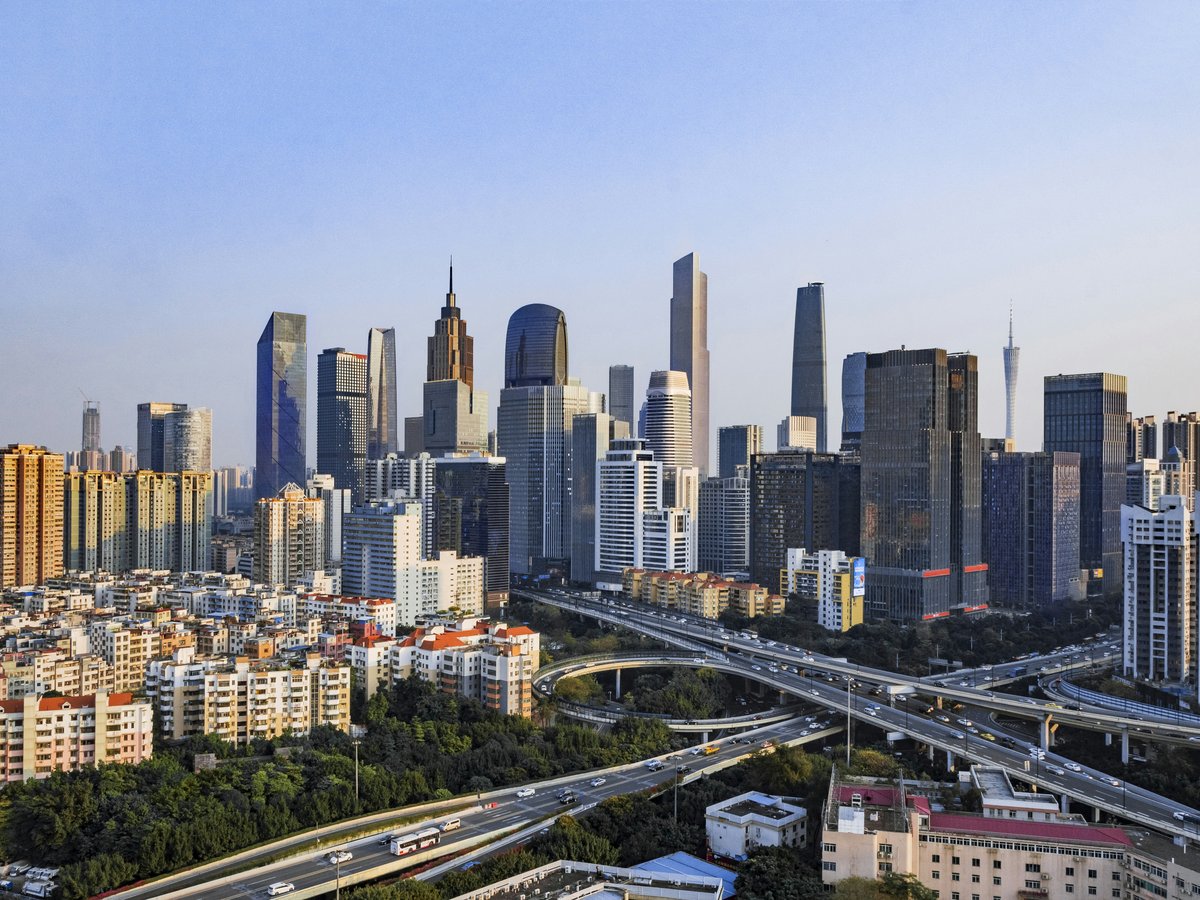
Stay in Guangzhou in August
108 hotels in the Trip.com pool for Guangzhou, from US$15 a night.
Opens Trip.com on Fri 6 Aug to Sun 8 Aug 2027; change the dates there.
August in Guangzhou is one of the year's least comfortable months for visitors. Daytime highs average 31.6°C (89°F) while overnight lows barely drop below 25.5°C (78°F), with persistent humidity around 85% that pushes the perceived temperature closer to 38°C (100°F). Step outside the arrivals hall at Baiyun International Airport and the moisture settles on your skin like a warm cloth within seconds. Rain falls on roughly 25 of the month's 31 days, totaling about 345mm. That makes August the second-wettest month after June's 441mm. Typhoon season reaches its peak along the South China coast. Guangzhou sits at the head of the Pearl River Delta, well inland from the open ocean, but the city regularly catches the outer bands of storms moving through the region.
The argument for visiting Guangzhou in August rests entirely on food. The city's Cantonese cuisine tradition operates indoors and year-round. The Canton Fair crowds that fill Tianhe's hotels in April and October are absent. Dim sum halls in the old Xiguan quarter of Liwan district have open tables, the kind that need 45-minute waits in peak season. Queues thin out at landmarks like the Sun Yat-sen Memorial Hall in Yuexiu. Guangzhou's metro connects every major district in air-conditioned comfort. A full day of eating and museum visits can need as little as 10 minutes of outdoor walking.
An August trip to Guangzhou means mostly indoor activities, organized around early mornings and late evenings for anything outside. If that approach sounds too restrictive, consider November through January instead. Guangzhou receives less than 52mm of monthly rain during those three months, and daytime highs settle to a comfortable 20-25°C (68-77°F).
Why visit in August
- The Canton Fair crowd is absent, so Tianhe and Yuexiu hotels run well below their April and October peak rates. Popular dim sum restaurants in Liwan have noticeably shorter waits, and reservations at places booked solid in autumn become walk-in-friendly.
- Cantonese summer produce peaks in August. Longan fruit floods the wet markets in Haizhu, and cold herbal teas reach their widest seasonal variety at shops across the city.
- Guangzhou's indoor infrastructure handles August well. The metro, air-conditioned malls, and food halls allow full-day itineraries with almost no outdoor exposure.
- Qixi Festival, the Chinese Valentine's Day, typically falls in early-to-mid August and brings evening lantern displays and flower installations to parks and public squares across the city, particularly in Liwan and Yuexiu districts.
Worth knowing
- Rain on 25 of 31 days, with afternoon storms that arrive suddenly and can dump 30-40mm in under an hour. Expect to get rained on multiple times per day.
- The humidity amplifies the heat so that mid-afternoon outdoors feels closer to 38-40°C (100-104°F), making outdoor sightseeing genuinely exhausting after 20-30 minutes.
- Typhoon season is at its most active. A nearby storm can ground flights at Baiyun Airport for 12-24 hours, shut down Pearl River ferry services, and bring 2-3 days of continuous heavy rain.
- Air quality dips during still, hazy periods between storms. Guangzhou's summer mix of humidity, vehicle exhaust, and photochemical ozone can push the AQI above 100 on days without wind.
Best for
Think twice if
Guangzhou in August sits deep in the subtropical monsoon belt. Mornings start overcast and warm, already near 28°C (82°F) by 9 AM, with air that feels sticky against bare skin. By early afternoon, dark thunderheads build over the Pearl River Delta. They deliver sudden, intense downpours. The sound of rain hammering tin awnings over sidewalk noodle stalls becomes the background track of any August afternoon. These storms can flood pedestrian underpasses in low-lying districts and then clear to hazy sunshine within 40 minutes. The cycle repeats most days. Nights bring almost no relief from the warmth. Expect to sleep with air conditioning running continuously. On the occasional clear day between storms, the UV index reaches 10-11 and the concrete in Tianhe radiates stored heat well into the evening.
Seasonal caution
- Typhoon season peaks in August along the South China coast. Outer rainbands from storms making landfall in Guangdong, Fujian, or Hainan province can bring sustained winds above 60 km/h (37 mph) and prolonged heavy rain to Guangzhou. Monitor the China Meteorological Administration forecasts starting 5 days before travel.
- Heat index regularly exceeds 38°C (100°F) during afternoon hours. The combination of high temperature and high humidity creates conditions where heat exhaustion can develop within 20-30 minutes of vigorous outdoor activity. Carry water and recognize the early signs of heat illness.
- Flash flooding occurs in low-lying areas of Haizhu and Panyu districts after intense downpours. Guangzhou's drainage system struggles with rainfall rates above 50mm per hour. Avoid underground pedestrian passages during heavy storms.
Year-round climate
Averages from the last 5 years.
| Month | Avg high (°C) | Avg low (°C) | Rainfall (mm) |
|---|---|---|---|
| Jan | 20 | 11 | 21 |
| Feb | 21 | 13 | 80 |
| Mar | 25 | 16 | 126 |
| Apr | 28 | 20 | 282 |
| May | 29 | 23 | 300 |
| Jun | 31 | 25 | 441 |
| Jul | 33 | 26 | 265 |
| Aug | 32 | 26 | 345 |
| Sep | 32 | 25 | 284 |
| Oct | 29 | 21 | 123 |
| Nov | 25 | 17 | 52 |
| Dec | 20 | 12 | 25 |
Best things to do in August
Evening dim sum in the Xiguan quarter
foodGuangzhou's dim sum tradition runs deeper than anywhere else in China. The old Xiguan neighborhood in Liwan district has teahouses that still serve har gow, siu mai, and cheung fun from bamboo steamers on trolley carts. The ritual of yum cha, drinking tea while picking small dishes, originated in this city.
Fewer tourists and business travelers mean shorter waits and more attentive service at teahouses packed during the Canton Fair months.Booking tipWeekend morning dim sum still draws large local crowds. Arrive before 7:30 AM or expect a 20-minute wait even in August.
Canton Tower night visit
sightseeingThe 604-meter Canton Tower, completed in 2010, dominates the Haizhu district skyline from the south bank of the Pearl River. The observation deck at 488 meters gives panoramic views in every direction. An outdoor skywalk circles the top for visitors who want the wind and the vertigo.
Summer evenings cool to around 27°C after sunset. The nightly light show works best after 8 PM when full darkness has settled, and summer sunset comes later than in other seasons.Booking tipWeekday evenings have the shortest queues. Visibility improves noticeably after a rain shower clears the haze.
Pearl River night cruise
sightseeingCruise boats run a 2-hour loop along the Pearl River between Shamian Island and Canton Tower, passing the illuminated facades of Tianzi Pier, Haiyin Bridge, and the Guangzhou skyline. Night temperatures in August hover around 27°C with a breeze off the water, making this one of the few comfortable outdoor experiences available.
Daytime heat makes river sightseeing impractical. The evening breeze on the water drops the perceived temperature by several degrees.Booking tipBoard at Tianzi Pier in Yuexiu for the full loop. Weeknight sailings are noticeably less crowded.
Liangcha tasting walk through Liwan
foodLiwan district's Xiguan quarter has a dense concentration of traditional herbal tea shops, some in the same shophouses for decades. A self-guided walk from Shangxiajiu Pedestrian Street south toward Enning Road covers 8-10 shops in about 2km. Each shop brews its own proprietary recipe. The flavors range from floral chrysanthemum blends to aggressively bitter 24-herb concoctions that make you wince.
August heat drives peak liangcha consumption. Shops stock their widest variety of blends in summer, and some seasonal recipes appear only from June through September.Guangzhou Opera House performance
cultureZaha Hadid's Guangzhou Opera House, opened in 2010, sits on the Pearl River's north bank in Zhujiang New Town. The August calendar typically features a mix of Chinese opera, Western classical music, and contemporary dance. The twin-boulder design and the riverfront setting make the building worth visiting for the architecture alone.
Summer programming often features international touring companies. The air-conditioned hall provides a comfortable 2-3 hour escape, and August ticket availability is better than during the autumn cultural season.Booking tipBook online at least a week ahead for weekend performances. Weeknight shows often have same-day availability.
Seafood selection at Huangsha Market
foodHuangsha Seafood Market in Liwan is one of Guangzhou's largest wholesale seafood operations. Tanks hold live grouper, mantis shrimp, geoduck, and dozens of species unfamiliar to most Western visitors. You select your fish at the ground-floor stalls and carry it upstairs where restaurant cooks prepare it for a cooking fee.
South China Sea fishing runs strong through August. The variety and freshness at Huangsha reach their seasonal peak, and fewer tourist groups visit in summer.Chen Clan Ancestral Hall morning visit
cultureThis ornate compound in Liwan, dating from the 1890s, served as a combined academy and ancestral hall for the Chen clan. The ceramic ridge figures on the roofline are among the finest examples of Lingnan decorative arts in South China. Inside, the Guangdong Folk Art Museum displays carved ivory, embroidery, and painted porcelain in cool interior galleries.
Early morning visits before 10 AM let you explore the courtyards in tolerable temperatures. The indoor galleries provide a cool retreat for the rest of the morning.Guangdong Provincial Museum afternoon
cultureThe museum in Zhujiang New Town, designed by Rocco Yim, houses extensive collections of Cantonese porcelain, Chaozhou woodcarving, and regional natural history. Temporary exhibitions on the upper floors rotate every 2-3 months. Admission is free and the building is fully air-conditioned.
August afternoons are the worst time to be outdoors in Guangzhou. The museum fills the 11 AM to 4 PM dead zone with 3-4 hours of genuinely interesting content in complete comfort.Booking tipFree admission but capacity-limited. Reserve a timed-entry slot online the day before to avoid the walk-up queue.
What to eat in August
In season: fruit
Longan (龙眼)
August is peak longan season across Guangdong province. These small, translucent-fleshed fruits appear at every wet market and street vendor in the city, sold in heavy bunches still on the branch. Shijing town in Baiyun district has grown longans for centuries, and the local variety tends to be sweeter and more fragrant than fruit shipped from further afield. Crack the thin brown shell and the flesh is cool, slippery, and lightly floral.
On menus now
Shuang pi nai (双皮奶, double-skin milk pudding)
This Cantonese dessert of steamed water-buffalo milk served cold features a thin protein skin on top and a texture between panna cotta and silken tofu. Shunde district in Foshan, about 30km south of central Guangzhou, claims to have invented it. Several well-known dessert shops in Liwan serve versions close to the Shunde original. The cold, creamy mouthfeel makes it a natural August order.
Dong gua tang (冬瓜汤, winter melon soup)
Despite the English name, winter melon is a summer crop in Guangdong and reaches peak harvest in August. Cantonese cooks simmer it into a clear, light broth with dried scallops or lean pork. The flavor is mild and slightly sweet. Traditional dietary theory considers it cooling, which makes it a default lunch order at restaurants across the city when temperatures climb.
He ye fan (荷叶饭, lotus leaf rice)
Sticky glutinous rice steamed inside fresh lotus leaves, filled with chicken, Chinese sausage, dried shrimp, and mushrooms. The leaves impart a faintly grassy, herbal fragrance to the rice as it cooks. Fresh lotus leaves are only available from around June through September, making this a genuinely seasonal dish. Dim sum restaurants in Liwan and Yuexiu serve it as a standard summer menu item.
What to drink
Liangcha (凉茶, herbal cooling tea)
Cantonese herbal cooling teas hit peak demand in August. Traditional shops brew dark, bitter concoctions from ingredients like chrysanthemum, selfheal (夏枯草), and honeysuckle. The taste ranges from mildly floral to intensely bitter depending on the recipe. Locals drink liangcha daily in high summer to clear what Cantonese dietary theory calls internal heat. Wanglaoji, now one of China's biggest drink brands, started as a Guangzhou liangcha recipe in the 1820s.
Regular events in August
Qixi Festival (七夕节)Free
The Chinese Valentine's Day falls on the 7th day of the 7th lunar month. Guangzhou's celebration leans more traditional than in northern Chinese cities. Parks and public squares set up evening lantern displays and flower installations. It is not a public holiday, so businesses operate normally.
Early-to-mid August, varies by lunar calendarZhongyuan Festival (中元节, Hungry Ghost Festival)Free
The 15th day of the 7th lunar month, typically about a week after Qixi. Cantonese culture observes Zhongyuan more visibly than many other Chinese regions. You might see paper offerings being burned at street corners in older neighborhoods, and temple activity increases at places like Guangxiao Temple in Yuexiu. Not a public holiday.
Mid-to-late August, varies by lunar calendarArmy Day (建军节)Free
China's annual military founding anniversary. Not a public holiday for civilians, but military-related museums and memorial sites in Guangzhou sometimes offer free or discounted admission. The Huangpu Military Academy Old Site on Changzhou Island, where Sun Yat-sen established the academy in 1924, occasionally holds small commemorative events.
August 1Guangzhou Library summer programmingFree
The Guangzhou Library in Zhujiang New Town and branch libraries across the city host reading events, author talks, and children's activities throughout the month as part of the municipal summer campaign. Most events are free but conducted in Mandarin or Cantonese.
Throughout AugustBest places this August
Shamian Island (沙面岛)
historic districtThis small sandbank island in Liwan preserves about 150 European colonial buildings from the 19th-century treaty-port era, shaded by massive banyan trees whose canopy drops the temperature 2-3°C below the surrounding streets. The car-free lanes are pleasant for an early morning walk before the heat sets in. The French and British concession architecture dates from the 1860s onward.
LiwanYuexiu Park (越秀公园)
parkGuangzhou's largest downtown park covers 86 hectares around Yuexiu Hill. The Five Rams Statue, a symbol of the city, stands near the summit. Mature tree cover provides shade corridors, and the artificial lakes create pockets of slightly cooler air. Tai chi groups gather near the southern gates before 7 AM. The Zhenhai Tower at the park's highest point houses the Guangzhou Museum.
YuexiuSacred Heart Cathedral (石室圣心大教堂)
landmarkThis granite Gothic revival cathedral in Yuexiu, completed in 1888, is one of the few entirely stone-built churches in East Asia. The interior stays noticeably cool without modern air conditioning, thanks to the massive stone walls and high vaulted ceilings. Morning light through the stained glass is strongest between 8 and 10 AM, casting colored patterns across the stone floor.
YuexiuZhujiang New Town and Huacheng Square
districtGuangzhou's CBD in Tianhe has the densest concentration of air-conditioned indoor spaces in the city. The IFC mall, the provincial museum, and the city library cluster around Huacheng Square (Flower City Plaza). On August evenings after 8 PM, the fountain shows draw families looking for relief. The smell of grilled squid from nearby street vendors mixes with the mist drifting off the water jets.
TianheLychee Bay (荔枝湾涌)
historic waterwayA restored section of historic waterway in Liwan that threads through traditional Cantonese architecture. Morning visits before 9 AM catch residents practicing tai chi on the stone banks. A handful of old breakfast spots sell congee and zhaliang, fried dough sticks wrapped in slippery rice noodle sheets. The narrow lanes and overhanging eaves create shade corridors measurably cooler than the open streets nearby.
LiwanBeijing Road Pedestrian Street (北京路步行街)
shopping streetGuangzhou's oldest commercial street in Yuexiu has been a trade road since the Tang dynasty, over 1,000 years ago. A glass-covered archaeological dig in the middle of the pedestrian zone reveals layered road surfaces from multiple dynasties. The surrounding blocks are dense with Cantonese dessert shops where cold shuang pi nai and mango-coconut puddings offer sweet relief from the heat.
YuexiuEnning Road (恩宁路)
historic streetThis partially redeveloped street in Liwan preserves some of Guangzhou's oldest qilou (arcade shophouses), with covered walkways that shield pedestrians from both rain and sun. The Yongqing Fang creative quarter along Enning Road has converted old houses into galleries, tea rooms, and small cafes. The sheltered architecture makes it one of the most walkable streets in Guangzhou during a downpour.
Liwan
Your packing checklist
Tick items off as you pack. Your progress saves in this browser.
All packed — have a great trip.
Insider tips
Guangzhou's metro is your primary survival tool in August. The system's 16-plus lines connect most tourist areas, and locals treat the air-conditioned stations and transfer halls as legitimate heat-escape infrastructure. A day built around metro-adjacent dim sum spots, museums, and malls can feel almost comfortable.
Cantonese speakers still outnumber Mandarin-first speakers in older neighborhoods around Xiguan and Shamian Island. Mandarin works everywhere, but attempting a few Cantonese phrases (nei hou for hello, m goi for thank you) gets a noticeably warmer reception in traditional teahouses than Mandarin does.
WeChat Pay and Alipay now let foreign passport holders link international credit cards. Set this up before you arrive. Many smaller food stalls and convenience stores in Guangzhou genuinely cannot process cash transactions anymore. Going without mobile payment limits where you can eat.
The Guangzhou Library in Zhujiang New Town is open to visitors without a library card. It has comfortable seating, free WiFi, and strong air conditioning. Locals use it as a daytime heat refuge, and it is a legitimate option for a quiet afternoon when the rain makes sightseeing impossible.
Avoid these mistakes
- Planning outdoor sightseeing between 11 AM and 4 PM. The heat-humidity combination makes midday outdoor activity genuinely dangerous, not merely unpleasant. Structure your day around early mornings before 9 AM and evenings after 6 PM for anything outside. Fill the middle hours with dim sum, museums, or markets.
- Ignoring typhoon forecasts. Travelers sometimes assume typhoons only matter at the coast, but Guangzhou's position at the head of the Pearl River Delta means it takes severe weather from most storms landing in Guangdong province. Check the CMA forecast a week before travel, and build 1-2 buffer days into your itinerary around any flights.
- Wearing heavy cotton or denim. Within 10 minutes of walking outside in August, jeans are soaked through with sweat and take hours to dry in the saturated air. Lightweight, quick-dry synthetics are not a preference in Guangzhou this month. They are a necessity for basic comfort.
- Attempting a Baiyun Mountain hike during the day. The roughly 380-meter summit is normally one of Guangzhou's highlights, but in August the exposed trails and heavy humidity make the 2-hour climb risky between 9 AM and 5 PM. If you go, start before 6:30 AM and carry at least 2 liters of water.
Practical tips for August
Book hotels in Tianhe or Yuexiu for the best metro access and proximity to food neighborhoods. Western services like Gmail, Google Maps, and Instagram require a VPN inside mainland China, and reliability varies, so configure yours before entering the country. Most restaurants in central Guangzhou accept only WeChat Pay or Alipay. Both apps now let foreign passport holders link international credit cards, a change from recent years. Cash is increasingly difficult to use. Dress codes are very relaxed in August. Guangzhou residents wear shorts, sandals, and t-shirts everywhere except high-end hotel dining rooms. Air conditioning in malls and metro stations is aggressive, sometimes dropping below 20°C (68°F), so a light layer prevents the hot-cold shock cycle that gives many visitors summer colds. The metro runs from roughly 6 AM to 11:30 PM on most lines, which covers early-morning dim sum and evening river cruises. Guangzhou Baiyun International Airport connects to central Tianhe via metro Line 3 in about 45 minutes. If a typhoon signal is raised, the airport posts updates on its WeChat official account before most English-language news outlets carry the story. Build a buffer day at the end of your trip in case a storm delays your departure.
FAQ
Is August a good time to visit Guangzhou?
Honestly, no. August ranks around 11th out of 12 months for visiting Guangzhou, ahead of only June which gets even heavier rain. The heat, humidity, and frequent downpours limit outdoor sightseeing to early mornings and evenings. Typhoon disruptions are possible. That said, if Cantonese food is your primary reason for visiting, August works fine. Dim sum halls, teahouses, and seafood restaurants operate year-round, and the lower tourist count means better access to popular spots. The most comfortable months for a first visit run from October through December.
What is the weather like in Guangzhou in August?
Hot, humid, and wet. Expect highs around 32°C (89°F), lows near 26°C (78°F), and humidity that rarely drops below 80%. Storms tend to arrive in the afternoon, dump rain for 30-60 minutes, and then clear to hazy sunshine. The perceived temperature with humidity factored in often exceeds 38°C (100°F) in the early afternoon. Measurable rain falls on most days of the month.
Is Guangzhou crowded in August?
Moderately. The enormous Canton Fair crowds of April and October are absent, and international tourism is relatively thin. Domestic tourism picks up because of the school summer holiday, so family-oriented attractions like Chimelong Safari Park in Panyu see higher numbers. Central districts like Tianhe and Yuexiu feel noticeably less packed than peak months. Metro trains are busy at commuter hours but manageable for tourists outside the 7:30-9 AM and 5:30-7 PM rush periods.
Do I need a visa to visit Guangzhou?
Most nationalities need a visa for mainland China. However, China currently offers 144-hour visa-free transit through Baiyun International Airport for citizens of 54 countries, provided you hold a confirmed onward ticket to a third country or region. This transit exemption has been expanded several times in recent years. Check the latest eligibility list from the Chinese embassy or consulate in your country before booking. Standard tourist visas (L-type) require advance application through a consulate or visa service center.
What should I eat in Guangzhou in August?
Start with dim sum, the city's signature culinary tradition and something that shines regardless of the weather. For seasonal eating specific to August, look for fresh longan fruit at wet markets, cold liangcha (herbal cooling teas) at traditional shops in Liwan, and chilled shuang pi nai (double-skin milk pudding) at Cantonese dessert shops along Beijing Road. Winter melon soup appears on nearly every restaurant menu as a cooling lunch option. The Huangsha Seafood Market in Liwan offers some of the freshest catches of the year, with the South China Sea fishing season running strong through the month.
Things to Do in Guangzhou in August


Last verified by automated review (v1.7.2) on . What is automated review?