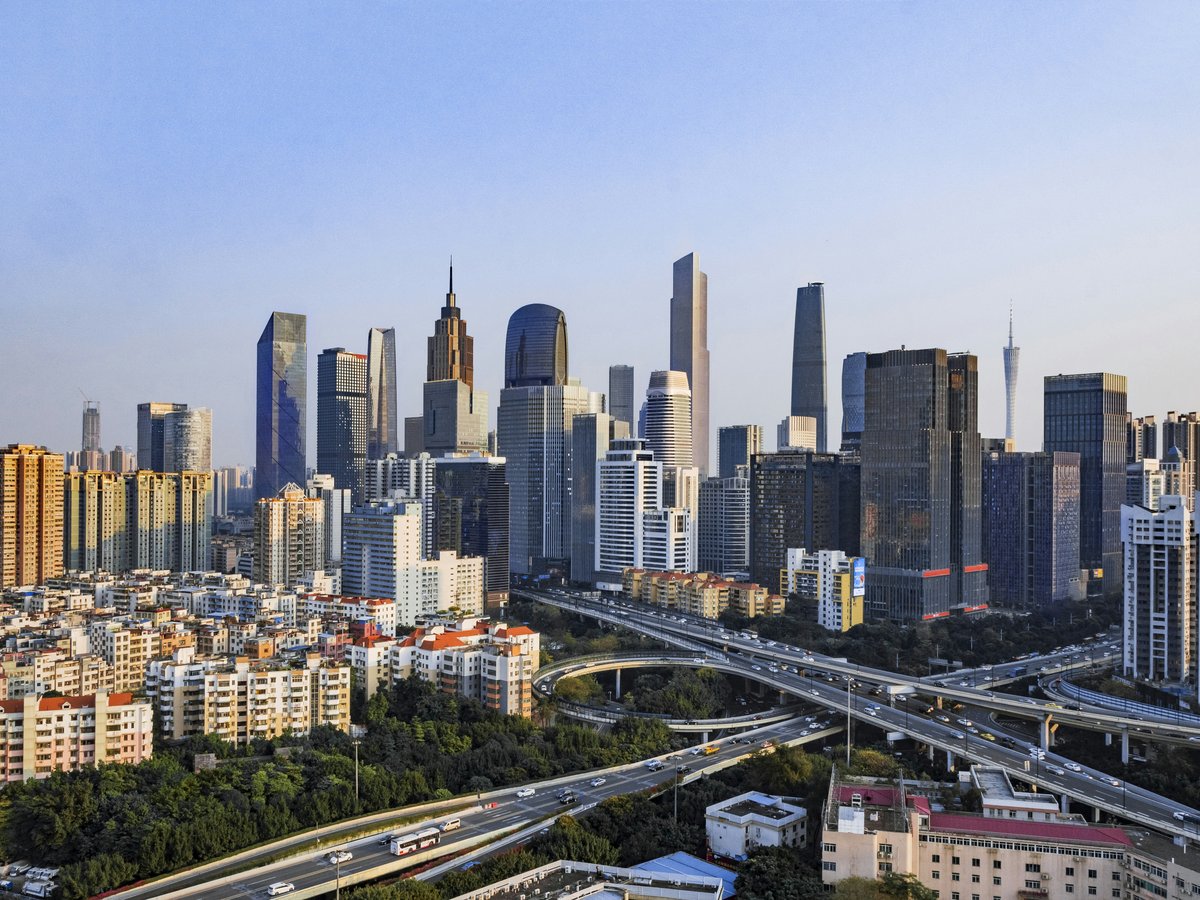
Stay in Guangzhou in July
108 hotels in the Trip.com pool for Guangzhou, from US$15 a night.
Opens Trip.com on Fri 2 Jul to Sun 4 Jul 2027; change the dates there.
July is the hottest month of the year in Guangzhou. Afternoon temperatures reach 33°C (91°F) while humidity holds at 81%, which pushes the feels-like reading toward 40°C in direct sunlight. You will be uncomfortable outdoors. That is the starting point for every plan you make here.
Rain falls on about 21 of 31 days, totaling roughly 265mm across the month. Most arrives as sudden afternoon thunderstorms that dump 20 to 30mm in half an hour and clear. The Pearl River Delta's bowl-shaped geography holds moisture in the air even between storms, so mornings feel heavy and damp. The streets in Liwan and Yuexiu steam after a downpour. Thunder cracks across the skyline around 3pm more days than not. Typhoon signals go up periodically between July and September, sometimes grounding flights at Baiyun International Airport for a day or more.
The compensations are real but specific. This is peak lychee season in Guangdong province, with Zengcheng and Conghua districts sending fruit to city markets that tastes nothing like what survives cold-chain export. Hotel rates drop below the Canton Fair peaks of April and October. The Guangzhou Metro, with its 300-plus stations, lets you hop between air-conditioned dim sum halls, museums, and shopping malls with minimal exposure to the heat. Guangzhou in July rewards travelers who plan around the climate rather than fight it. Early mornings and late evenings are yours. Midday belongs indoors.
Why visit in July
- Peak lychee season in Guangdong province, with Zengcheng and Conghua districts producing prized Guiwei and Nuomici varieties available at Jiangnan Fruit Wholesale Market and neighborhood stalls across the city
- Hotel rates sit noticeably below the Canton Fair months of April and October, when business travelers pack Tianhe and Pazhou district hotels
- The Guangzhou Metro connects air-conditioned museums, restaurants, and malls across 16-plus lines, making it possible to fill entire days without sustained outdoor exposure
- Fewer international tourists mean shorter queues at major cultural sites compared to the November-to-March high season
Worth knowing
- Sustained summer heat combined with high humidity creates a feels-like temperature near 40°C (104°F) that limits comfortable outdoor sightseeing to early morning and evening hours
- Frequent afternoon downpours mean outdoor plans need flexible backup options, and sudden storms can strand you under an awning for 30 minutes
- Typhoon season runs through September, and a direct hit or near-miss can ground flights for 12 to 24 hours with limited advance warning
- Summer haze occasionally settles over the Pearl River Delta, reducing visibility from elevated viewpoints like Baiyun Mountain and Canton Tower
Best for
Think twice if
Guangzhou's hottest month follows a predictable daily rhythm. Mornings begin hazy and warm, with air that already feels sticky against bare skin by 8am. The midday heat peak builds through noon, then afternoon thunderstorms roll across the Pearl River Delta with a suddenness that catches newcomers off guard. Nights offer limited relief. The average high of 32.7°C (91°F) and average low of 26.2°C (79°F) tell the story in numbers, but it is the 81% humidity that defines the experience. Sweat does not evaporate. Your clothes cling. Total rainfall reaches 265mm across roughly 21 rainy days, though most falls in concentrated bursts rather than all-day grey drizzle.
Seasonal caution
- Heat index frequently exceeds 38°C (100°F) between 11am and 3pm. Heat exhaustion risk is real for visitors not acclimatized to subtropical summers. Carry water constantly and stay near air-conditioned spaces during peak hours.
- Typhoon season is active from July through September. Guangzhou's meteorological bureau issues color-coded warnings (blue, yellow, orange, red) that can escalate within hours. A yellow or higher signal means public transit may suspend, flights ground, and outdoor venues close. Monitor local weather apps daily.
- Flash flooding occurs in low-lying areas of Liwan and older parts of Yuexiu during intense downpours. Underground pedestrian passages near Beijing Road can accumulate water within minutes during a heavy storm.
Year-round climate
Averages from the last 5 years.
| Month | Avg high (°C) | Avg low (°C) | Rainfall (mm) |
|---|---|---|---|
| Jan | 20 | 11 | 21 |
| Feb | 21 | 13 | 80 |
| Mar | 25 | 16 | 126 |
| Apr | 28 | 20 | 282 |
| May | 29 | 23 | 300 |
| Jun | 31 | 25 | 441 |
| Jul | 33 | 26 | 265 |
| Aug | 32 | 26 | 345 |
| Sep | 32 | 25 | 284 |
| Oct | 29 | 21 | 123 |
| Nov | 25 | 17 | 52 |
| Dec | 20 | 12 | 25 |
Best things to do in July
Early morning dim sum at a traditional teahouse
foodCantonese yum cha culture peaks in practical value during July, when the smart move is to eat a long, leisurely breakfast in an air-conditioned restaurant from 7am. Panxi Restaurant in Liwan, which has served har gow and char siu bao since 1947, sits beside a lakeside garden. By 9:30am you have had a full cultural experience before the heat builds.
The afternoon heat makes morning dining the most comfortable window for any outdoor-adjacent experience, and traditional teahouses open earliest in summerBooking tipPanxi and similar old-school restaurants do not take dim sum reservations. Arrive before 7:30am on weekends to avoid a 30-minute wait.
Pearl River night cruise past Canton Tower
sightseeingAfter sundown, temperatures ease to around 27-28°C and the breeze off the Pearl River makes open-deck seating tolerable. The 60-to-90-minute cruise passes the illuminated Canton Tower (completed in 2010, standing 600 metres tall), the Guangzhou Opera House, and Haixinsha Island. The tower's LED color sequence shifts nightly.
July sunsets fall around 7:15pm, giving a long warm twilight window, and the river breeze provides genuine relief that open streets in the city center lackBooking tipBook the later 8:30pm or 9pm departure rather than the sunset slot, which often sells out on summer weekends.
Lychee picking day trip to Conghua district
day tripConghua, a northern district of Guangzhou reachable in about 90 minutes by car, has lychee orchards that open to visitors during harvest. You walk the rows, pick fruit directly from the trees, and eat it warm from the sun. The fragrance of ripe lychee in an open orchard on a hot day is intense and floral, nothing like the faint sweetness of supermarket fruit.
The Conghua lychee harvest runs from late June through mid-July. By August the season is finished. This is a narrow window.Booking tipWeekday visits are dramatically less crowded. Most orchards operate on a per-basket pricing model with no advance reservation needed.
Guangdong Museum and Guangzhou Library double visit in Zhujiang New Town
cultureBoth buildings sit within 200 metres of each other in the Zhujiang New Town cultural cluster. The Guangdong Museum's Cantonese history and maritime trade exhibitions fill 2 to 3 hours. The Guangzhou Library next door is one of China's largest public libraries, with an English-language section and city-view reading rooms on upper floors. Both are fully air-conditioned and free.
Summer heat makes back-to-back indoor cultural venues the practical move, and the Zhujiang cluster lets you spend a full afternoon indoors with a 5-minute outdoor walk between buildingsBooking tipThe Guangdong Museum is free but requires ID-based advance booking through its WeChat mini-program. Book 2 to 3 days ahead for weekend slots.
Huangsha Seafood Market live-pick dinner
foodGuangzhou's largest wet seafood market fills a multi-story building in Liwan. You select live fish, crabs, mantis shrimp, and shellfish from ground-floor vendors, then carry your haul upstairs to a restaurant that cooks it for a per-dish preparation fee. The air smells of brine and garlic, and the noise of vendors calling out catches is a wall of Cantonese.
Mantis shrimp season peaks in July with the richest roe, and evening visits after 6pm coincide with cooler temperatures and air-conditioned dining floorsBooking tipGo between 5pm and 6pm on a weekday to beat the dinner rush. Weekend evenings after 7pm involve long waits for restaurant seating.
Shamian Island evening walk
sightseeingShamian Island in Liwan is a 900-metre sandbank lined with mature banyan trees and colonial-era European buildings from the 1860s. The tree canopy provides genuine shade, and the Pearl River on both sides creates a cross-breeze absent from the rest of central Guangzhou. The architecture is French and British consular style, now housing cafes and small galleries.
The banyan canopy drops temperatures under the trees by 3 to 5°C compared to open streets, and evening visits after 6pm are pleasant in a way few other neighborhoods manage in summerSacred Heart Cathedral visit at dawn
cultureThe Sacred Heart Cathedral in Yuexiu, completed in 1888, is one of the few entirely granite-built Gothic cathedrals in the world. The interior stays cool without air conditioning due to the thick stone construction. The granite walls feel cold to the touch even at midday. Dawn visits let you see morning light through the rose windows without the crowds that arrive later.
The stone interior is naturally 5 to 8°C cooler than the street. In summer, that differential is noticeable and welcome. Morning light between 6:30am and 7:30am hits the stained glass at its best angle.Baiyun Mountain pre-dawn hike to Moxing Ridge
outdoorsBaiyun Mountain's highest point, Moxing Ridge at 382 metres, offers panoramic views across the Guangzhou skyline. The paved trail from the south gate takes about 90 minutes at moderate pace. A 5am start puts you hiking in twilight and arriving at the summit for sunrise. Early-morning cloud cover over the Pearl River Delta sometimes creates layered views worth the alarm clock.
Summer sunrise falls around 5:50am, so a pre-dawn start gets you to the summit before the heat builds. By 9am the same hike becomes uncomfortable and haze reduces the view. This is a dawn-only activity in July.Booking tipThe south gate opens at 6am. Carry at least 1 litre of water per person and expect to be sweating heavily even at dawn.
What to eat in July
In season: fruit
Fresh lychee (荔枝)
July is the tail end of Guangdong's lychee harvest. The Guiwei and Nuomici varieties from Zengcheng district arrive at city markets with translucent, fragrant flesh and a sweetness that vanishes within 48 hours of picking. Eat them the day you buy them.
Longan (龙眼)
The season overlaps with late lychee, starting mid-to-late July. Guangdong longan tends to be smaller and more aromatic than Thai varieties common in Western supermarkets. Street vendors in Liwan sell them by the branch.
Mangosteen (山竹)
Peak supply from Southeast Asian imports floods Guangzhou's fruit markets in July. The thick purple rind cracks open to reveal cool white segments that taste like a cross between peach and citrus. Jiangnan Fruit Wholesale Market moves thousands of crates daily during peak weeks.
On menus now
Chilled mung bean soup (绿豆沙)
A Cantonese summer staple served cold at tong sui (dessert soup) shops. The version at traditional stalls along Shangxiajiu Pedestrian Street is thick, lightly sweetened, and served over shaved ice. Cool and starchy on a sweltering afternoon.
Steamed mantis shrimp (濑尿虾)
Summer is prime season for mantis shrimp in the Pearl River Delta. Roe-heavy females appear in markets from June through August. Huangsha Seafood Market in Liwan is where locals select them live and have them steamed at adjacent cooking stalls. The roe has a custard-like richness.
What to drink
Liang cha (凉茶)
Cantonese herbal cooling tea, sold at dedicated shops on nearly every block in the old city. Locals drink it daily in summer to counterbalance the seasonal heat. Wanglaoji and Huangzhenlong are the two heritage chain brands with locations across Yuexiu and Liwan. The taste is bitter, earthy, and mildly medicinal.
Regular events in July
CPC Founding Day (建党节)Free
July 1 marks the anniversary of the founding of the Communist Party of China in 1921. Red banners and displays appear across public buildings, parks, and metro stations. Sun Yat-sen Memorial Hall and the Guangzhou Uprising Memorial in Yuexiu host commemorative exhibitions.
July 1Zengcheng Lychee Cultural Festival (增城荔枝文化节)Free
Zengcheng district, about 60km east of central Guangzhou, celebrates the tail end of its lychee harvest with orchard visits, fruit-tasting events, and local produce markets. The festival doubles as a regional agricultural fair.
Late June through mid-July, varying with harvest timingTianhe summer clearance salesFree
Major malls in the Tianhe CBD, including Taikoo Hui and Grandview Mall, run coordinated summer promotions through July. Domestic and international fashion brands discount spring-summer collections. The air-conditioned malls double as heat shelters.
Throughout JulyBest places this July
Chen Clan Ancestral Hall (陈家祠)
museumA sprawling Qing Dynasty academic temple built between 1888 and 1894, now housing the Guangdong Folk Art Museum. The carved stone, brick, and wood ornamentation is extraordinary in its density. Covered courtyards and thick stone walls keep the interior noticeably cooler than the surrounding streets. Allow 90 minutes minimum.
LiwanYuexiu Park (越秀公园)
parkGuangzhou's largest downtown park covers 86 hectares and holds the Five Rams Statue, Zhenhai Tower (originally built in 1380, now the Guangzhou Museum), and Yuexiushan Stadium, which has hosted events since 1950. In July, visit before 8am when the tree canopy is still cool and local tai chi practitioners occupy the plazas.
YuexiuShangxiajiu Pedestrian Street (上下九步行街)
shoppingA 1.2-kilometre pedestrian street lined with arcaded qilou buildings from the early 20th century. The covered walkways offer shade, and the traditional Cantonese dessert shops lining the route sell cold tong sui that locals treat as essential summer cooling. The architecture alone warrants a slow walk.
LiwanCanton Tower observation deck (广州塔)
landmarkThe tower is air-conditioned throughout its observation levels. The outdoor skywalk is more worthwhile at twilight than midday, when haze often limits visibility to a few kilometres. Sunset and evening visits offer the clearest views of the Pearl River bend and the Zhujiang New Town skyline.
HaizhuLiwan Lake Park and Pantang Wuyue
parkLiwan Lake Park, adjacent to Panxi Restaurant, has lotus ponds that bloom heavily in July. Pink and white lotus flowers open at dawn, and the humid air carries a faint, papery fragrance across the water. The Pantang Wuyue area nearby is an old residential quarter with narrow lanes, local tea shops, and a neighborhood feel that Beijing Road lacks.
LiwanBeijing Road Archaeological Site (北京路千年古道遗址)
historic siteGlass panels set into Beijing Road's pedestrian surface reveal excavated layers of road construction spanning the Song, Ming, and Qing dynasties. The modern street above is Guangzhou's central shopping spine. Covered sections and mall entrances along the road provide constant air-conditioning escape routes.
YuexiuZhujiang New Town cultural cluster
cultural districtThe Guangzhou Opera House, designed by Zaha Hadid and opened in 2010, anchors a precinct that includes the Guangdong Museum and Guangzhou Library within walking distance. All three are air-conditioned and architecturally notable. The Opera House runs a summer performance season with evening shows that fit naturally into a heat-avoidance schedule.
Tianhe
Your packing checklist
Tick items off as you pack. Your progress saves in this browser.
All packed — have a great trip.
Insider tips
The real dim sum value in July is at neighborhood dai pai dong stall clusters in residential parts of Liwan and Haizhu, not the famous heritage teahouses. Follow the crowds of retirees at 6:30am to places that close by 10am.
Guangzhou's metro system is the third largest in the world and fully air-conditioned. Locals plan summer social visits around metro station proximity. If a restaurant or market sits more than a 5-minute walk from a station, many locals skip it until October. Follow that instinct.
The Pearl River Beer brewery campus in Haizhu district, near Pazhou metro, offers tours with tastings that include the unpasteurized draft you cannot find bottled anywhere. The tour takes about 90 minutes in air-conditioned comfort and covers the brewery's history since its 1985 founding.
When a typhoon signal reaches yellow or above, do not race to the airport. Baiyun International cancellations cascade across 2 days of rebooking. Locals stock snacks and settle in. If your flight window overlaps with a tracked storm, book flexible tickets from the start.
The Guangzhou East Railway Station area in Tianhe has a concentration of Sichuan and Hunan restaurants that serve spicy hot pot year-round. Cantonese locals eat it specifically in summer, following the traditional belief that spicy-food sweat cools the body. The shared tables are loud, lively, and a contrast to the quiet refinement of Cantonese dining.
Avoid these mistakes
- Scheduling outdoor sightseeing between 11am and 3pm. The combination of summer heat and humidity makes prolonged walking genuinely risky for visitors who are not acclimatized. Heat exhaustion symptoms appear faster than most travelers expect. Plan outdoor time before 9am or after 5pm.
- Packing only summer clothes without a light jacket. Guangzhou's indoor spaces run air conditioning at 18 to 20°C. The swing between street and indoor temperature catches visitors off guard and causes more summer colds than the rain does.
- Ignoring typhoon signals because the sky looks clear. The warning system can escalate from blue to orange in hours, not days. By the time rain starts, airport cancellations and metro suspensions may already be in effect. Check the Guangzhou Meteorological Bureau app each morning.
- Trying to replicate a cool-season walking itinerary. A November day might cover Shamian Island, Chen Clan Ancestral Hall, Yuexiu Park, and Sacred Heart Cathedral on foot. In July, two of those in a single day is ambitious. Cut your daily plan in half and fill the gaps with indoor alternatives.
Practical tips for July
Book accommodations in Tianhe or Zhujiang New Town for maximum proximity to metro interchanges, air-conditioned malls, and indoor dining. Liwan and Yuexiu have more historic character but older buildings and narrow streets that trap heat. Download an offline map, because underground metro signal can be patchy on older lines. Most restaurants, markets, and transit accept WeChat Pay or Alipay. Foreign passport holders can now link cards to WeChat Pay through the international feature, so set this up before arrival. Water refill stations exist in most metro stations and all malls. Plan dim sum breakfasts as your main daily anchor, shifting outdoor visits to early morning or after 6pm. If a typhoon warning reaches orange signal, expect outdoor attractions and many restaurants to close. Book domestic transport through the 12306 app for trains or Trip.com for flights, both of which push typhoon cancellation alerts in real time. Pharmacies stock heatstroke prevention supplies including Huoxiang Zhengqi liquid (藿香正气水), a herbal preparation that locals carry throughout summer.
FAQ
Is July a good time to visit Guangzhou?
Manageable, but far from ideal. July ranks roughly 8th out of 12 months for visiting. The heat limits outdoor sightseeing to early mornings and evenings, and rain arrives on the majority of days, though usually as brief afternoon downpours. The tradeoffs are lower hotel rates compared to Canton Fair months and the best lychee of the year. If you can structure your days around air-conditioned spaces and stay flexible about outdoor plans, it works. For comfortable walking weather, aim for November or October instead.
What is the weather like in Guangzhou in July?
Expect the warmest highs of the year in the low 30s Celsius (low 90s Fahrenheit), with overnight lows that barely dip into the mid-20s. Humidity stays high enough that sweat does not evaporate from skin. Rainfall is significant and concentrated in afternoon thunderstorms that clear relatively quickly. Nights bring almost no relief. Typhoon season is active, with periodic multi-day disruptions possible. Pack light, breathable clothing and always carry an umbrella.
Is Guangzhou crowded in July?
Moderately. July falls within China's summer school holiday period, which brings domestic family travelers, but the heat keeps numbers well below the October Golden Week or Canton Fair peaks. Major sites like Canton Tower and Yuexiu Park see moderate weekend crowds. International visitor numbers are low. You will not face sold-out hotels or impossibly long restaurant queues the way you might during the autumn trade fair season.
What should I eat in Guangzhou in July?
Lychee from Zengcheng and Conghua is the headline. The fruit at city markets bears no resemblance to cold-chain exports. Mantis shrimp is in peak season, best sampled steamed at Huangsha Seafood Market. Liang cha (herbal cooling tea) is a daily ritual at Cantonese herbal shops. Cold mung bean soup is the go-to dessert. Mangosteen arrives in bulk from Southeast Asian imports. All of these are specifically at their best during the summer months.
How should I handle a typhoon warning during my Guangzhou trip?
Download the Guangzhou Meteorological Bureau app or follow alerts through WeChat. The color-coded system runs from blue (be aware) through yellow, orange, and red (shelter in place). At yellow, outdoor attractions close. At orange and above, expect metro suspensions and Baiyun Airport cancellations that cascade for up to 2 days. Do not go to the airport hoping to fly out. Stay in your hotel, stock water and snacks from a convenience store at the first blue signal, and monitor updates. Flexible ticket bookings are worth the premium during typhoon season.
Things to Do in Guangzhou in July


Last verified by automated review (v1.7.2) on . What is automated review?