Compare every Turkey city in July →
Stay in Istanbul in July
77 hotels in the Trip.com pool for Istanbul, from US$29 a night.
Opens Trip.com on Fri 2 Jul to Sun 4 Jul 2027; change the dates there.
July in Istanbul is hot. Not dangerously hot (this isn't Dubai or Death Valley) but a steady, persistent 30°C (86°F) kind of hot that wears on you by mid-afternoon, when you're climbing the hills of Beyoğlu or standing in a ticket queue outside Topkapı Palace. The humidity sits around 67%, which isn't tropical but adds a sticky edge to the warmth. That said, July has its rewards. The Bosphorus practically glitters in the long summer light, sunset doesn't arrive until nearly 9pm, and rooftop terraces across the city come fully alive. Rain is almost a non-issue: maybe 33mm the entire month, spread across perhaps three brief showers.
This is peak tourist season. Cruise ships dock at Galataport, tour groups crowd the Sultanahmet district from morning to evening, and Istiklal Caddesi feels even more packed than usual. Hotel rates reflect all of this. If you're hoping for a quiet, contemplative experience of Istanbul's mosques and historic sites, July is probably not your month. But if you want long golden evenings on rooftop bars overlooking the Bosphorus, open-air concerts, seasonal fruit that tastes like it was grown specifically for you, and a city that stays awake well past midnight: July delivers.
To be fair, the heat is manageable if you plan around it. Mornings before 10am are pleasant, and the sea breeze along the Bosphorus can knock the temperature down noticeably. The locals have this figured out: they shift their schedules later, eat dinner at 9pm, and spend the hottest hours indoors or near the water. Follow their lead and you'll be fine.
Why visit in July
- Long daylight hours: sunset around 8:45pm means you get a full evening for Bosphorus walks, rooftop dining, and open-air events without feeling rushed
- July is Istanbul's driest month alongside August, with only about 33mm of rain, so outdoor plans rarely get disrupted
- Summer fruit season peaks: cherries, peaches, figs, and watermelon at market stalls are exceptional, often still warm from the sun
- The Bosphorus shoreline becomes a genuine social scene with outdoor restaurants, tea gardens, and families picnicking along the water into the late evening
- Cultural calendar fills up with outdoor concerts, film screenings, and arts festivals that don't happen in the colder months
Worth knowing
- Peak tourist season means long queues at Hagia Sophia, Topkapı Palace, and the Basilica Cistern: waits of 45 minutes or more are common by late morning
- Hotel prices climb 40-60% above the annual average, and availability in popular neighborhoods like Sultanahmet and Galata tightens considerably
- Afternoon heat between 1-5pm makes walking tours through exposed areas like the Hippodrome or the Grand Bazaar surroundings tiring
- Air quality can dip on still, hot days: the combination of traffic exhaust and stagnant summer air occasionally makes the European side hazy
Best for
Think twice if
July is consistently warm and dry. Expect daytime highs around 30°C (86°F) and overnight lows near 21°C (70°F). Humidity averages 67%, which feels noticeable but not oppressive: more a persistent clamminess than Southeast Asian steam. Rainfall totals only about 33mm for the entire month, typically falling in two or three brief afternoon showers that clear quickly. The real story is the sun: it's strong, direct, and relentless between about 11am and 5pm. Shade and water become your best friends. The Bosphorus breeze helps considerably on the waterfront, but step a few blocks inland and you'll feel the difference immediately.
Seasonal caution
- Afternoon UV index frequently reaches 8-9 (very high): sunburn happens fast, on ferry decks and open rooftops where reflected light from the water intensifies exposure
- Occasional heat spikes can push temperatures to 35°C (95°F) or above for a few days, during southeastern wind patterns: check forecasts and plan indoor activities for these stretches
Year-round climate
Averages from the last 5 years.
| Month | Avg high (°C) | Avg low (°C) | Rainfall (mm) |
|---|---|---|---|
| Jan | 10 | 5 | 91 |
| Feb | 10 | 4 | 76 |
| Mar | 12 | 5 | 76 |
| Apr | 17 | 9 | 70 |
| May | 21 | 13 | 57 |
| Jun | 27 | 18 | 42 |
| Jul | 30 | 21 | 33 |
| Aug | 30 | 22 | 20 |
| Sep | 26 | 18 | 48 |
| Oct | 20 | 13 | 53 |
| Nov | 17 | 10 | 100 |
| Dec | 12 | 7 | 90 |
Holidays and festivals in July
Public holidays
- Democracy and National Unity Day(Demokrasi ve Millî Birlik Günü)15 July 2027
Best things to do in July
Sunset Bosphorus ferry ride
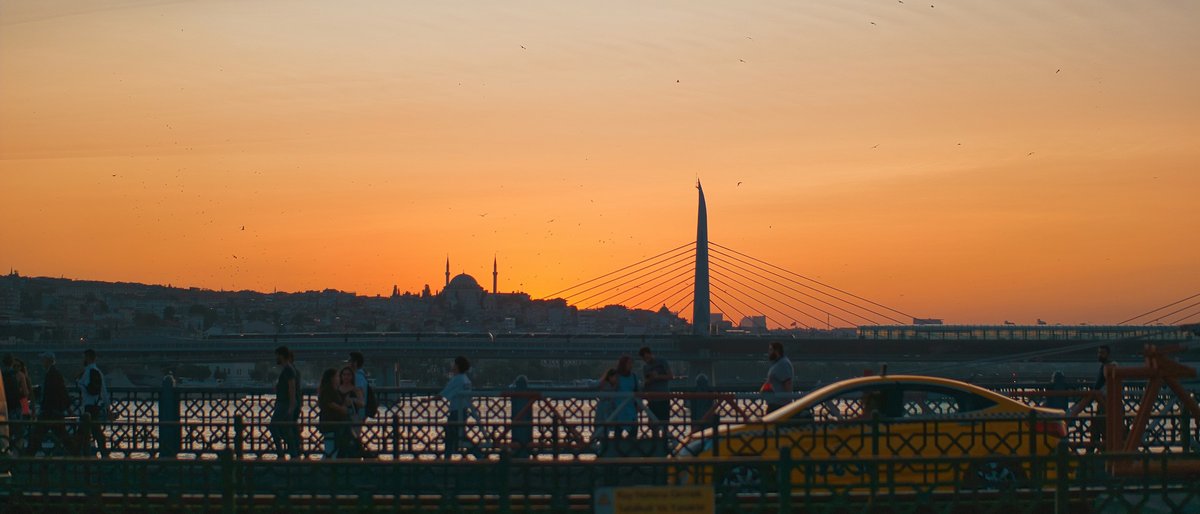
sightseeingTake the public commuter ferry from Eminönü to Anadolu Kavağı or simply hop the short crossing to Kadıköy. The evening light on the water, the silhouette of the mosques against the orange sky, the salt smell off the strait: it's the single best free experience in Istanbul and July's long evenings make it even better.
Sunset doesn't happen until nearly 9pm, giving you the longest golden hour of the year on the water. The evening breeze makes it comfortable even after a hot day.Booking tipNo booking needed, just buy an Istanbulkart at any metro station and tap on at the ferry terminal. Sit on the left side heading north for the best views of the old city.
Early morning visit to Hagia Sophia
cultureArrive when the doors open to experience this building the way it deserves: in relative quiet, with the morning light filtering through the upper windows. The interior stays cool even as temperatures rise outside. By 10am the tour groups arrive in force.
July crowds make midday visits miserable with long queues and packed interiors. The 9am opening window gives you perhaps 45 minutes of breathing room that you won't get later.Booking tipCheck current entry requirements: policies have shifted several times. As of recent years, there may be separate tourist visiting hours outside prayer times.
Swimming at Princes' Islands beaches
outdoorsTake the ferry to Büyükada or Heybeliada and head to one of the small beaches on the southern shores. The water is clean enough for swimming by July and considerably cooler than the air. The car-free islands feel like a different century: horse carriages have been replaced by electric vehicles, but the pace is still blissfully slow.
Sea temperature in the Marmara reaches 23-24°C by July, warm enough for comfortable swimming. The islands are at their liveliest with beach clubs and seafood restaurants operating at full capacity.Booking tipTake the earliest ferry: the 9:40am departure fills up fast on weekends. Buy a round-trip ticket. Return ferries after 6pm get extremely crowded on Sundays.
Evening food walk through Kadıköy
foodCross to the Asian side and wander the Kadıköy market district as it transitions from daytime produce stalls to evening meyhane culture. The fish market area (Kadıköy Balık Pazarı) spills out onto surrounding streets with tiny restaurants grilling whatever came in that morning. The energy is local, the prices are fairer than the European side, and the meze keeps coming.
Summer evenings bring the entire neighborhood outdoors. Tables line the pedestrian streets, the smell of grilled fish mixes with sea air from the nearby Moda shoreline, and people linger until well past midnight.Booking tipNo reservations needed at most casual spots. For the more popular meyhanes, a Thursday or Friday evening reservation helps.
Rooftop bar hopping in Beyoğlu
nightlifeThe cluster of rooftop terraces near the Galata Tower and along the streets off Istiklal Caddesi come alive in summer. Some have direct Bosphorus views, others face the old city skyline. The drinks aren't cheap, but the panoramas at sunset are the kind of thing you remember.
Most rooftop venues only operate at full capacity from June through September. July offers the longest evenings and the warmest nights: you can sit outside comfortably until well after midnight.Booking tipPopular spots like those near the Galata Tower area fill up by 7pm on weekends. Arrive early or call ahead. Weeknights are more relaxed.
Kayaking on the Bosphorus
outdoorsGuided kayak tours launch from spots along the European shore and take you under the bridges, past Ottoman-era waterfront mansions (yalıs), with the occasional startled seagull for company. The perspective from water level (looking up at the city rather than down at the strait) changes everything.
Calm waters, warm temperatures, and minimal rain make July good for on-the-water activities. Morning tours before the afternoon motorboat traffic picks up are peaceful.Booking tipBook at least a week in advance for weekend morning slots. Weekday tours tend to have smaller groups.
Exploring the Grand Bazaar and Spice Market in the morning
shoppingThe Grand Bazaar is a different place at 9am versus 2pm. Early morning, the shopkeepers are still setting up, the light comes in low through the arched ceilings, and you can browse without being carried along by a crowd. The Spice Market nearby smells strongest in the morning (cumin, sumac, dried chili) before the afternoon heat flattens everything.
July afternoons inside the bazaar are stiflingly hot despite the covered structure. Morning visits let you enjoy the atmosphere while it's still 24-25°C rather than the midday peak.Booking tipNo booking needed. Go on a weekday morning. The bazaar is closed Sundays.
Day trip to Belgrad Forest
outdoorsAbout 20km north of the city center, Belgrad Forest is where Istanbul goes to breathe. Tall trees, walking paths around old Ottoman-era reservoirs, and temperatures that feel 3-4 degrees cooler than the city center. Pack a picnic: the designated areas fill up but there's enough space.
When the city center is baking in July heat, this forested area offers genuine shade and cooler air. The reservoirs are pretty surrounded by full summer greenery.Booking tipDrive or take a taxi: public transit connections are limited. Arrive before 11am on weekends to secure parking and a decent picnic spot.
What to eat in July
In season: fruit
Turkish cherries (kiraz)
July is the tail end of cherry season, and the dark, almost black Napoleons from the Marmara region are at their sweetest. Sold by weight from wooden crates at street corners: the staining juice is worth it.
White peaches (şeftali)
Fragrant, dripping-ripe white peaches appear at market stalls across the city. The scent alone stops you in your tracks. Eat them over a sink.
Watermelon (karpuz)
Vendors slice them open on the spot so you can see the color before you buy. Served ice-cold at restaurants as a free palate cleanser after meals. The salt-and-white-cheese pairing at meyhanes is a July ritual.
Fresh fig season begins
Late July brings the first ripe figs (incir) of the season, the green Bursa variety. Paired with clotted cream (kaymak) for breakfast at traditional kahvaltı spots, they're worth getting up early for.
On menus now
Cacık
Turkey's answer to tzatziki but thinner, almost drinkable: cold yogurt with cucumber, garlic, and dried mint. Served alongside grilled meats as a cooling side dish. In July heat, it feels medicinal.
Street food peaks
Midye dolma (stuffed mussels)
Technically year-round street food, but the summer evening crowds along Istiklal and the Galata Bridge make this the prime time. Vendors pry open the shells, you squeeze lemon, eat, repeat. The rice filling is lightly spiced with allspice and pine nuts.
Regular events in July
Istanbul Jazz Festival
One of Turkey's longest-running music festivals, organized by the Istanbul Foundation for Culture and Arts. Performances span multiple venues across the city, from intimate clubs to open-air settings in historic locations. The lineup tends toward a broad interpretation of jazz: expect world music, fusion, and experimental acts alongside straight-ahead jazz.
Early to mid-July (dates vary annually)Open-air cinema screeningsFree
Several venues around the city (including spots in Kadıköy, along the Bosphorus, and in parks) run outdoor film screenings through the summer months. A mix of Turkish cinema, international films, and classics. Bring something to sit on and expect a relaxed, social atmosphere.
Throughout July, typically evenings starting at 9pmBeyoğlu summer street performancesFree
Istiklal Caddesi and surrounding streets see an uptick in street musicians, performance artists, and small theatrical groups during summer evenings. Quality varies wildly, but the energy is infectious and it adds to the atmosphere of evening walks.
Nightly throughout JulyBest places this July
Ortaköy waterfront
neighborhoodThe neighborhood beneath the first Bosphorus bridge transforms on summer evenings into an open-air social gathering. Kumpir (loaded baked potato) vendors line the square, the ornate Ortaköy Mosque sits right at the water's edge, and the bridge lights up after dark. It's touristy but still charming when the weather cooperates.
OrtaköyGülhane Park
parkThe old imperial gardens below Topkapı Palace offer the best shade in the Sultanahmet area. Ancient plane trees create a canopy that blocks the worst of the July sun. Benches along the paths overlook the Golden Horn. Come in the morning with a simit and tea from a nearby vendor.
SultanahmetModa shoreline walk
waterfrontOn the Asian side, the Moda coastal path traces the waterline from Kadıköy south around the peninsula. In July evenings, locals jog, fish, sit on the rocks, and watch container ships pass through the strait. The breeze is reliable and the views back toward the European skyline are striking at sunset.
KadıköyBalat and Fener neighborhoods
neighborhoodThese old Greek and Jewish quarters along the Golden Horn have become the photogenic darling of Istanbul's social media scene: colored houses climbing steep streets, independent cafés, antique shops. July mornings before the heat sets in are the time to wander here. The streets are narrow enough to stay shaded.
FatihÇamlıca Hill
viewpointThe highest point on the Asian side, recently developed with a massive new mosque and public park. The panoramic views reach across both sides of the Bosphorus and out to the Princes' Islands. Summer evenings here catch a breeze that the lower city misses entirely.
ÜsküdarKuzguncuk
neighborhoodA quiet, almost village-like neighborhood on the Asian Bosphorus shore. Tree-lined streets, small produce shops, a handful of cafés with garden seating. It feels like Istanbul before the tourism boom. In July, the shade of the plane trees along the main street is reason enough to visit.
ÜsküdarSuada Island (Galatasaray Island)
waterfrontA floating platform in the Bosphorus accessible by boat from Kuruçeşme. Has a pool, restaurants, and sun decks. It's essentially a beach club in the middle of the strait: the novelty of swimming in the Bosphorus current while looking at both continents is hard to beat in July.
Kuruçeşme
Your packing checklist
Tick items off as you pack. Your progress saves in this browser.
All packed — have a great trip.
Insider tips
The commuter ferry from Eminönü to Kadıköy costs a fraction of the tourist Bosphorus cruise boats and arguably offers better views. Locals use it as their daily commute: you get the same water, the same skyline, for the price of a metro ticket. Sit on the upper deck, right side heading to Kadıköy.
Sultanahmet restaurants with English menus displayed on easels outside are consistently the worst value in the city. Walk ten minutes in any direction (into Cankurtaran downhill toward the sea wall, or up toward Çemberlitaş) and food quality doubles while prices halve.
If you're visiting mosques, go during off-peak prayer times rather than right after the call to prayer. The Blue Mosque in particular is much more accessible mid-morning or mid-afternoon. Friday afternoon is the worst time for any mosque visit.
The Asian side (Kadıköy, Moda, Üsküdar) is where Istanbul lives. Most tourists never cross the Bosphorus, which means better food, lower prices, and neighborhoods that feel like a real city rather than a tourist corridor. Budget at least one full day there.
Turkish breakfast (kahvaltı) is a production: dozens of small plates, endless tea, and no rush. In July, rooftop breakfast spots book up by 10am on weekends. Either arrive by 9am or go on a weekday. Karaköy and Çukurcuma have some of the best spots.
Avoid these mistakes
- Scheduling outdoor walking tours or queuing for major sites between noon and 3pm: the combination of direct sun, reflected heat from pavement, and crowds makes this exhausting and occasionally dangerous for people unaccustomed to the heat. Shift your itinerary to mornings and evenings.
- Underestimating distances because the map looks small: Istanbul is built on steep hills, and what appears to be a 10-minute walk on Google Maps can be a 25-minute uphill slog in July heat. Use the tram, metro, and ferries liberally rather than trying to walk everything.
- Staying exclusively in Sultanahmet, while it's where the big-name sites are, it's also the most crowded, most overpriced, and least representative neighborhood. Base yourself in Karaköy, Galata, or Kadıköy for a better sense of the actual city, and day-trip to the historic sites early in the morning.
- Not carrying water: dehydration happens faster than you realize at 30°C with 67% humidity, if you're drinking Turkish tea and coffee instead of water. By the time you feel thirsty, you're already behind. Carry a bottle and sip constantly.
Practical tips for July
Book major attractions (Hagia Sophia, Topkapı Palace, the Basilica Cistern) for first thing in the morning, ideally on weekdays. Online ticket purchases save significant queue time and some sites now require timed entry. Dress code matters at all active mosques: knees and shoulders covered for everyone, head covering for women. Carry your own scarf rather than relying on loaners at the door. The Istanbulkart transit card works on all ferries, trams, metro lines, and buses: load it at any metro station and avoid buying individual tickets. July's long daylight hours mean the city operates on a later schedule than you might expect: dinner reservations before 8pm mark you as a tourist, and many restaurants don't fill up until 9:30pm. Tipping is generally 10-15% at sit-down restaurants; rounding up is fine at casual spots. The Grand Bazaar and Spice Market are closed on Sundays. If you're planning a Bosphorus cruise, the morning departures tend to be less packed than afternoon ones. Pharmacies (eczane) are widely available and well-stocked if you need sunburn cream or electrolyte packets: both common July purchases.
FAQ
Is July a good time to visit Istanbul?
July is a solid but not ideal time. You get long sunny days, minimal rain, and a lively summer atmosphere, but you also get peak tourist crowds, the highest hotel prices of the year, and enough heat to make midday sightseeing tiring. It ranks roughly seventh out of twelve months. The best months tend to be April-May and September-October, when temperatures are milder and crowds thinner. That said, if July is when your schedule allows, you'll still have a good trip, just plan around the heat and book accommodations early.
What is the weather like in Istanbul in July?
Warm and dry. Average highs around 30°C (86°F), lows near 21°C (70°F), with humidity around 67%. Rain is rare: about 33mm total for the month, maybe three brief showers. The sun is strong, with UV index frequently reaching 8-9. Mornings and evenings are pleasant, but the 12-4pm window feels hot, in areas without shade or sea breeze. The Bosphorus waterfront is noticeably cooler than inland neighborhoods.
Is Istanbul crowded in July?
Yes, quite. July is peak tourist season. Expect long queues at Hagia Sophia, Topkapı Palace, and the Basilica Cistern: between 10am and 4pm. The Grand Bazaar is shoulder-to-shoulder. Istiklal Caddesi is packed every evening. Cruise ship arrivals at Galataport add periodic surges. The Asian side (Kadıköy, Üsküdar) is noticeably less crowded and worth spending time on. Early morning visits to major sites help significantly.
How many days do you need in Istanbul in July?
Four to five days is the sweet spot. That gives you time for the main historical sites (Sultanahmet area), a day on the Asian side, a Bosphorus experience, a Princes' Islands day trip, and enough slack to retreat indoors during the hottest afternoons without feeling like you're wasting time. With fewer than three days, the heat and crowds mean you'll feel rushed trying to check boxes rather than experiencing the city.
Is it safe to swim in the Bosphorus in July?
The designated beaches on the Princes' Islands and the Bosphorus beach clubs are generally safe for swimming. Water temperature reaches about 23-24°C by July, which is comfortable. The Bosphorus strait itself has strong currents, so stick to official swimming areas rather than jumping in from random waterfront spots. Suada Island and the beaches on Büyükada are popular, monitored options. The Marmara Sea side tends to be calmer than the Black Sea entrance.
Things to Do in Istanbul in July
 Free cancellation
 Best of Istanbul 1, 2 or 3-Day Private Guided Istanbul Tour
Cruise: free cancellation.
via Viator Free cancellation
 Istanbul Bosphorus Sunset Cruise Experience on Luxury Yacht
Cruise: 2.2 hours, free cancellation.
via Viator Free cancellation
 Istanbul Mega Lufer Dinner Cruise Bosphorus and Show Pvt Table
Day trip: 3 hours, free cancellation.
via Viator Free cancellation
 Istanbul Sunset Luxury Yacht Cruise Experience with Local Guide
Cruise: 2 hours, free cancellation.
via Viator Free cancellation
 Istanbul Bosphorus Sunset Luxury Yacht Cruise with Snacks
Day trip: 2.5 hours, free cancellation.
via Viator Free cancellation
 Istanbul Bosphorus Yacht Cruise with Live Guide & Asian Side Stop
Day trip: 2.5 hours, free cancellation.
via ViatorFind a flight to Istanbul
Live fares to Istanbul appear here once cookies are accepted.
Last verified by automated review (v1.7.1) on . What is automated review?