Compare every Turkey city in August →
Stay in Istanbul in August
77 hotels in the Trip.com pool for Istanbul, from US$29 a night.
Opens Trip.com on Fri 6 Aug to Sun 8 Aug 2027; change the dates there.
August in Istanbul is hot, dry, and packed with international visitors. Expect daytime temperatures hovering around 30°C (86°F), sometimes pushing past that, with humidity around 69% that makes the heat feel stickier than the numbers suggest: in the narrow streets of Sultanahmet and the covered corridors of the Grand Bazaar. This is the driest month of the year with only about 20mm of rain across roughly four days, so you likely won't need an umbrella. But you will need patience: August brings peak tourist crowds and peak prices to a city that already draws tens of millions annually.
There's a curious counterbalance, though. Many Istanbul locals head to the Aegean and Mediterranean coasts for their own summer holidays, which means some neighborhood restaurants and smaller shops close for a week or two. The city takes on a slightly different character: more tourist-oriented, less of the everyday local rhythm that gives Istanbul much of its personality. You'll still find plenty open, mind you, but certain side-street meyhanes and family-run lokantası might have a handwritten sign on the door saying they'll return in September.
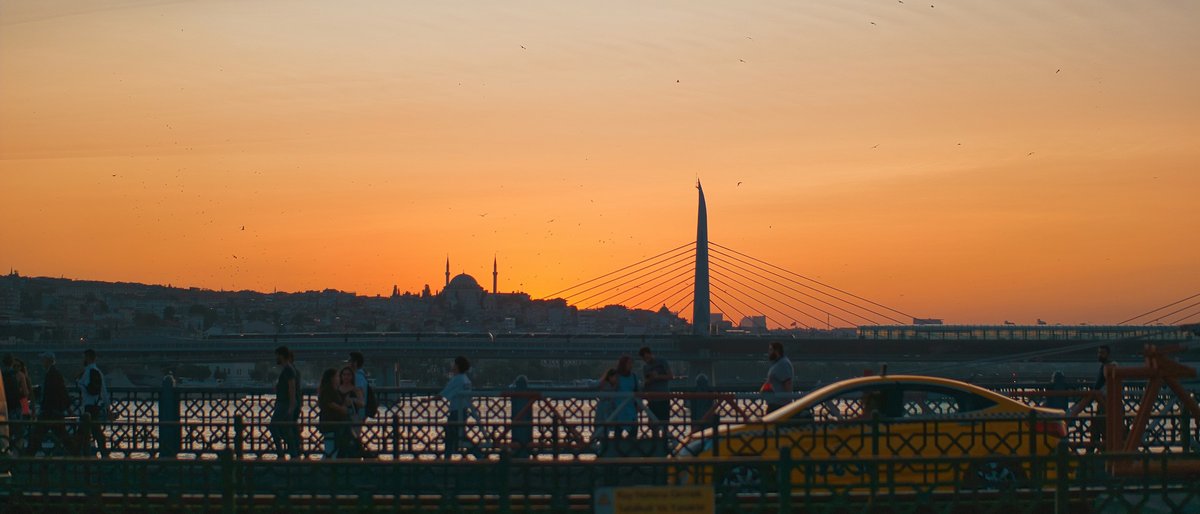
If you can handle the heat and don't mind sharing the Hagia Sophia with what feels like half of Europe, August does offer reliably clear skies, long evenings good for rooftop dining along the Bosphorus, and some of the best seasonal produce Turkey has to offer: figs and peaches and watermelon so sweet it borders on absurd. The sunsets over the Golden Horn tend to be spectacular when there's no cloud cover to get in the way. Just don't expect to have any of it to yourself.
Why visit in August
- The driest month of the year: rain is almost nonexistent, so outdoor plans rarely get disrupted
- Long daylight hours and clear skies make for exceptional Bosphorus sunset views that stretch past 8pm
- Summer fruit season peaks with figs, peaches, and watermelon appearing at every street cart and breakfast spread
- Warm sea temperatures in the Bosphorus and around the Prince's Islands finally make swimming comfortable
- Open-air rooftop restaurants and bars operate at full capacity, many with views you simply cannot get in colder months
Worth knowing
- Peak tourist season: queues at the Hagia Sophia, Topkapı Palace, and the Basilica Cistern can stretch well past an hour
- Hotel and flight prices hit their annual high, often 50-70% above shoulder season rates
- The heat and humidity combination makes midday walking tours exhausting, on the hilly streets of Beyoğlu and Balat
- Many local-favorite restaurants and small businesses close for owners' summer holidays, reducing the neighborhood dining scene
Best for
Think twice if
August is Istanbul's hottest and driest month. Daytime temperatures typically reach around 30°C (86°F), occasionally touching 33-34°C (91-93°F) during heat spikes, while nights stay warm at about 22°C (71°F). Humidity sits around 69%, which isn't tropical but is enough to make the afternoon heat feel heavier than you'd expect from the thermometer alone. Rain is nearly absent: roughly 20mm across maybe four brief showers the entire month. The Bosphorus breeze offers some relief along the waterfront, but step a few blocks inland and the air tends to sit still between the buildings. Skies are overwhelmingly clear, and the sun doesn't set until after 8pm.
Seasonal caution
- Midday temperatures can feel closer to 35°C (95°F) with the humidity factored in: heat exhaustion is a real risk if you're doing extended walking tours between noon and 3pm, in shadeless areas around Sultanahmet Square
- UV index is consistently high through August: sunburn happens fast on Bosphorus boat tours where the water reflects the light from all angles
Year-round climate
Averages from the last 5 years.
| Month | Avg high (°C) | Avg low (°C) | Rainfall (mm) |
|---|---|---|---|
| Jan | 10 | 5 | 91 |
| Feb | 10 | 4 | 76 |
| Mar | 12 | 5 | 76 |
| Apr | 17 | 9 | 70 |
| May | 21 | 13 | 57 |
| Jun | 27 | 18 | 42 |
| Jul | 30 | 21 | 33 |
| Aug | 30 | 22 | 20 |
| Sep | 26 | 18 | 48 |
| Oct | 20 | 13 | 53 |
| Nov | 17 | 10 | 100 |
| Dec | 12 | 7 | 90 |
Holidays and festivals in August
Public holidays
- Victory Day(Zafer Bayramı)30 August 2027
Headline events
Victory Day (Zafer Bayramı)
August 30
Turkey's national holiday commemorating the decisive victory at the Battle of Dumlupınar in 1922, which effectively ended the Turkish War of Independence. Istanbul sees military parades, flag displays across every bridge and boulevard, and a palpable sense of national pride. Shops and some attractions may have adjusted hours, but the city takes on a festive atmosphere with free concerts and public celebrations, around Taksim Square and along İstiklal Caddesi.
Best things to do in August
Evening Bosphorus ferry cruise
sightseeingThe public ferries that run between Eminönü and Anadolu Kavağı offer what is essentially a sightseeing cruise for the price of a transit ticket. In August, the evening departures catch the golden light falling across the waterfront yalıs (wooden Ottoman mansions) and the Rumeli Fortress. The breeze off the water is the best air conditioning you'll find in the city, and watching the sun drop behind the minarets of Süleymaniye from the upper deck is the kind of moment that justifies the trip.
Clear August skies produce the most reliable sunset light of the year, and the warm evening temperatures make the open deck comfortable rather than chillyBooking tipNo booking needed, just tap your Istanbulkart at the ferry terminal. The 10:35am full-length Bosphorus cruise fills up fast on weekends, so arrive 20 minutes early for a good seat.
Swimming at Büyükada (Prince's Islands)
outdoorThe largest of the Prince's Islands is about an hour by ferry from Kabataş, and in August the water temperature finally reaches a comfortable 24-25°C. The car-free island has several beach clubs and public swimming spots along its southern coast. The pine-scented air and the sound of horse-drawn carriages (well, electric carriages now) are a sharp contrast to the mainland chaos. Pack a picnic: the island restaurants tend to be overpriced.
Sea temperatures peak in August, making swimming pleasant rather than the bracing experience it is in June or SeptemberBooking tipTake the earliest possible ferry to beat the crowds: the 9am departure from Kabataş fills up on weekends and you may have to stand for the full hour.
Dawn visit to the Hagia Sophia
culturalVisiting the Hagia Sophia as a mosque means free entry, but August's tourist volume creates hour-long queues by mid-morning. Going at dawn (right when doors open for the first prayer) lets you experience the interior in relative quiet with morning light filtering through the upper windows. The cool stone interior is also a welcome refuge before the heat sets in.
Peak-season crowds make midday visits miserable; the dawn strategy is specifically an August survival tactic that lets you see it properlyBooking tipNo booking needed, but check prayer times: the mosque closes to tourists during prayer. Dress code is enforced: women need a headscarf, and everyone needs covered knees and shoulders.
Rooftop dining in Beyoğlu
diningSeveral rooftop restaurants in the Beyoğlu district offer panoramic views across the Golden Horn to the Old City's skyline of domes and minarets. In August, these terraces operate at full capacity with the warm evening air and no rain risk. The experience of eating grilled sea bass while watching the lights come on across the peninsula at dusk is hard to replicate in cooler months when these terraces are closed or enclosed in plastic sheeting.
August's warm, rain-free evenings are the only time these outdoor terraces operate without any weather contingency: the experience is at its peakBooking tipReserve at least 3-4 days ahead for weekend sunset tables. Weeknight bookings are easier to secure on shorter notice.
Exploring Balat and Fener neighborhoods
neighborhoodThese adjacent neighborhoods along the Golden Horn are known for their colorful Ottoman-era houses, Greek and Armenian churches, and a growing café scene. August's long daylight hours give you time to wander the steep streets and photograph the facades in late-afternoon light. The neighborhood is also noticeably less crowded with locals on holiday, which (for once) works in the tourist's favor since the narrow streets can feel claustrophobic when busy.
Extended golden-hour light and reduced local traffic make the photogenic streets more accessible, though go in the morning or late afternoon to avoid peak heatNight swimming at Suada Club
nightlifeThis floating platform club in the middle of the Bosphorus offers swimming pools, dining, and nightlife surrounded by open water. In August, the night sessions run late and the water stays warm enough that the pool is comfortable after midnight. The novelty of swimming in the middle of the Bosphorus with the city lights on both shores is unique to Istanbul's summer.
Water and air temperatures are both warm enough for comfortable night swimming: this doesn't work outside the July-August windowBooking tipBook weekend reservations well in advance through their website. Weeknight visits are walk-in friendly but still worth calling ahead.
Belgrad Forest morning hike
outdoorIstanbul's largest forest, about 20km north of the city center, sits within the old Ottoman aqueduct system and offers shaded trails, historic reservoirs, and temperatures that run several degrees cooler than the city streets. The canopy cover and proximity to the Black Sea coast create a microclimate that feels like a different city. The sound of birds replaces traffic, and the dappled light through the trees is restorative after days of pavement.
The shade and cooler microclimate offer the best escape from August's heat without leaving the city; mornings here are 5-6°C cooler than SultanahmetBooking tipNo booking needed. Go before 9am on weekends: locals use it as their heat-escape too. Take the 42T bus from Taksim.
Late-night fish sandwich at Karaköy
foodThe balık ekmek (fish sandwich) boats at Eminönü are the famous version, but the Karaköy side has less frenetic energy and the same fresh catch. In August, the waterfront stays lively well past midnight with the warm air keeping people out. Eating a grilled mackerel sandwich on the quay at 11pm, with the Galata Bridge lit up and ferries crossing in the dark, is one of those specific Istanbul moments that works best in summer.
August's warm nights extend the waterfront dining culture past midnight: this is a cold-weather impossibilityWhat to eat in August
In season: fruit
Fresh figs (taze incir)
August is when the first proper fig harvest arrives from the Aegean region. You'll see them piled high at street markets: soft, purple-skinned Bursa figs that taste nothing like the dried versions most people know. Eat them with a chunk of beyaz peynir (white cheese) at breakfast. The combination of sweet and salty is the kind of thing that stays with you.
Watermelon (karpuz)
Peak watermelon season turns Istanbul into a city of watermelon carts. Street vendors slice them open on the spot, and the smell of fresh-cut karpuz on a hot afternoon is one of those sensory memories that defines a summer in Turkey. Restaurants serve it as a palate cleanser after grilled meats, sometimes with crumbled feta.
White peaches (şeftali)
Turkish white peaches hit their peak in August: fragrant, dripping with juice, and far more aromatic than the ones exported to European supermarkets. You'll find them at every neighborhood pazar (weekly market) for a fraction of what stone fruit costs in most Western cities.
On menus now
Cacık
This chilled yogurt soup: somewhere between a cold soup and a thick dip, made with cucumber, garlic, dried mint, and a splash of ice water: is the traditional Turkish answer to summer heat. It appears alongside nearly every August dinner table as a cooling side dish. The tanginess of the yogurt against the garlic hits differently when you're overheated.
Street food peaks
Grilled corn on the cob (mısır)
The charcoal-roasted corn vendors set up along the Bosphorus waterfront, at Eminönü, and near ferry terminals. The kernels get slightly charred and smoky, rubbed with salt, and the smell of the coals mixing with the sea air is distinctly August in Istanbul. A couple of lira for a solid snack.
Dondurma (Turkish ice cream)
The sticky, stretchy Maraş-style ice cream is available year-round, but August is when you'll crave it. Vendors in Beyoğlu and along İstiklal put on a performance: flipping the cone, teasing you with the long-handled paddle. The mastic and salep give it a chewier texture than anything you've had before. Pistachio and sour cherry are the flavors to get.
Regular events in August
Istanbul International Music Festival (late programs)
While the main festival typically runs June through July, some concert programs and satellite events extend into early August, featuring classical music performances in historic venues like Hagia Irene. Worth checking the IKSV calendar for specific dates.
Early August (varies by year)Victory Day celebrationsFree
August 30 brings patriotic events across the city: flag displays on every bridge and building, military band performances, and public concerts in Taksim Square and major parks. A good window into Turkish civic culture that most tourists walk right past.
August 30Beyoğlu open-air cinema screenings
Several venues in and around İstiklal Caddesi run open-air cinema programs through August, screening both Turkish and international films in courtyards and on rooftops. The warm nights make these surprisingly comfortable, and it's a side of Istanbul's cultural life that doesn't show up in most guidebooks.
Throughout August, typically Thursday-Saturday eveningsWeekly neighborhood pazarları (street markets)Free
Istanbul's rotating street markets operate year-round, but August brings the most spectacular produce displays: towers of watermelons, crates of figs, bunches of fresh herbs. The Kadıköy Tuesday market and the Beşiktaş Saturday market are worth visiting for the seasonal bounty.
Various days depending on neighborhood, running weeklyBest places this August
Kadıköy waterfront and Moda
neighborhoodThe Asian-side neighborhood of Kadıköy has a completely different energy from the tourist-heavy European side. The waterfront walk from the ferry terminal through Moda catches the Bosphorus breeze and is lined with tea gardens and casual fish restaurants. In August, the sunset views from Moda's coastal path toward the Old City skyline are exceptional, and the neighborhood stays lively late into the warm evenings.
KadıköyGülhane Park
parkThis park adjacent to Topkapı Palace is one of the few green, shaded areas in the Sultanahmet district. In August, the mature trees provide genuine relief from the sun, and you can sit on a bench with a glass of Turkish tea from the park's tea garden while watching the Bosphorus traffic below. It's where locals come to cool down: you might notice it's noticeably less touristy than the surrounding streets.
SultanahmetOrtaköy waterfront
waterfrontThe neighborhood beneath the Bosphorus Bridge comes alive on summer evenings. The small square around the baroque Ortaköy Mosque fills with street vendors selling kumpir (loaded baked potatoes), waffle stands, and craft stalls. The mosque lit up at night with the bridge behind it is one of Istanbul's most photographed scenes, and August's warm nights mean you can linger comfortably.
OrtaköyKuzguncuk
neighborhoodA quiet, tree-lined neighborhood on the Asian side of the Bosphorus that feels like a small village accidentally attached to a megacity. The main street has independent cafés and bookshops, and the old wooden houses in pastel colors are photogenic without the Balat-level crowds. August's reduced local population makes it even more peaceful.
KuzguncukÇamlıca Hill
viewpointThe highest point on Istanbul's Asian side gives you a panoramic view across the entire city and both sides of the Bosphorus. The tea gardens at the top are surrounded by pine trees and catch a breeze that the lower city never gets. In August, come at sunset when the air cools and the light turns the minarets gold. The recently built Çamlıca Mosque, Turkey's largest, is next door.
ÜsküdarPrinces' Islands beaches
beachBeyond Büyükada, the smaller islands of Heybeliada and Burgazada have quieter beaches with fewer day-trippers. The water reaches its warmest in August (around 24-25°C) and the pine-covered hills provide afternoon shade. Heybeliada's south-facing beaches have a distinctly Mediterranean feel that surprises people who associate Istanbul only with mosques and bazaars.
Prince's IslandsIstanbul Modern (Beyoğlu)
museumWhen the August heat becomes oppressive around midday, Istanbul's premier contemporary art museum on the Bosphorus waterfront offers air-conditioned galleries and a café with water views. The building itself, designed by Renzo Piano, is worth seeing. A two-hour visit during peak heat hours is a smart tactical move.
Beyoğlu
Your packing checklist
Tick items off as you pack. Your progress saves in this browser.
All packed — have a great trip.
Insider tips
The ferry from Karaköy to Kadıköy costs a fraction of a tourist Bosphorus cruise and gives you nearly the same views. Grab a çay from the onboard vendor, sit on the upper deck's right side heading to Kadıköy, and you'll pass close enough to Maiden's Tower to get a proper photo. Locals use this as their daily commute: you get to use it as a scenic cruise.
Skip the Sultanahmet breakfast restaurants charging tourist prices for a standard Turkish spread. Instead, take the tram to Beşiktaş and eat at one of the neighborhood kahvaltıcı spots on the backstreets: same simit, same kaymak, same menemen, half the price, and surrounded by Turks eating breakfast rather than posing for photos.
Istanbul's tap water is safe but tastes heavily of chlorine. Most locals drink filtered or bottled water. The big 5-liter jugs from any market are cheap and save you from buying small plastic bottles all week. Many mosques also have free cold water dispensers: Süleymaniye's is refreshing after climbing the hill.
The Asian side of Istanbul (Kadıköy, Moda, Üsküdar) is cooler, less crowded, and significantly cheaper than the European tourist districts. A ferry ride takes 20 minutes. Spending at least two of your August days on the Asian side gives you a far more complete picture of how the city functions, and the waterfront restaurants have better prices for the same Bosphorus views.
If you're visiting the Basilica Cistern, buy your ticket online in advance. The August queue at the door can stretch to 90 minutes in the midday heat with no shade. Online ticket holders walk past the entire line. Same goes for Topkapı Palace: the online ticket saves genuine suffering in August.
Avoid these mistakes
- Scheduling an outdoor walking tour for midday: the heat between noon and 3pm in August, combined with Istanbul's steep hills and minimal shade, leads to genuine heat exhaustion. Several hospitals near Sultanahmet see tourist heat-related visits spike in August. Book morning or late-afternoon time slots for any guided walking tour.
- Spending the entire trip on the European side: most first-time visitors never cross to Asia, missing Kadıköy's food scene, Çamlıca's panoramic views, and some of the best waterfront dining in the city. The ferry ride itself is half the experience. Limiting yourself to Sultanahmet and Beyoğlu means seeing the tourist version of Istanbul, not the city.
- Wearing inappropriate clothing to mosque visits and getting turned away: the Hagia Sophia enforces dress code strictly in August when volume is highest. Bare shoulders, shorts above the knee, and uncovered hair for women will get you sent to the loaner-garment pile (which in August's heat means wrapping yourself in a communal, well-worn covering). Bring your own scarf and wear long pants.
- Not booking major attractions online in advance: the Hagia Sophia, Topkapı Palace, and Basilica Cistern all have online ticketing that lets you skip queues. In August, the difference between online and walk-up can be over an hour standing in direct sun. This is not a minor convenience: it's a health and sanity issue in peak heat.
Practical tips for August
Book accommodation and any internal flights at least 4-6 weeks ahead: August is peak season and prices climb steeply as the month approaches. Hotels in Sultanahmet and Galata fill up first, but the Asian-side Kadıköy neighborhood offers better value with a 20-minute ferry commute. Plan your daily schedule around the heat: tackle outdoor sights before 10am or after 5pm, and reserve the midday hours for indoor activities like museums, bazaar shopping, or a long Turkish lunch. Most restaurants serve continuously through the day, but some neighborhood lokantası close for August holidays: don't count on a specific small place being open without checking. Mosque visits require covered shoulders and knees for everyone, and a headscarf for women: carry these with you rather than relying on loaners. The Istanbul Museum Pass covers multiple major sites and includes skip-the-line access at some, which is valuable in August queues. Tipping is expected at sit-down restaurants (10-15% is standard), and rounding up taxi fares is customary. Istanbul's metro, tram, and ferry system runs later in summer: ferries to the Asian side often run past midnight in August, which makes evening trips across the Bosphorus very practical.
FAQ
Is August a good time to visit Istanbul?
It's a fair time, not the worst, but far from the best. The weather is reliably dry and sunny, which is good for planning, but temperatures around 30°C (86°F) with humidity make walking tours tiring. The bigger issue is that August brings peak crowds and peak prices simultaneously. If you have flexibility, September and October offer similar warmth with noticeably fewer tourists and lower prices. That said, if August is your only option, Istanbul still delivers: you just need to plan around the heat and book things in advance.
What is the weather like in Istanbul in August?
Hot, humid, and dry. Average highs sit around 30°C (86°F) with lows near 22°C (71°F), so nights stay warm too. Humidity hovers around 69%, which makes the heat feel heavier than the thermometer suggests, in enclosed spaces like the Grand Bazaar. Rainfall is minimal (about 20mm for the entire month) so rain gear is unnecessary. The Bosphorus breeze helps along the waterfront but disappears a few blocks inland. UV is strong enough to burn quickly, on boat tours.
Is Istanbul crowded in August?
Yes: this is the city's busiest tourist month. Major sites like the Hagia Sophia, Topkapı Palace, and the Grand Bazaar see their highest visitor numbers. Queue times can exceed an hour at popular attractions without advance online tickets. The upside is that many Istanbul residents leave the city for coastal holidays, so residential neighborhoods feel quieter. The tourist-heavy areas, though, are packed. Going early morning or late afternoon helps significantly.
How many days do you need in Istanbul in August?
Four to five full days is a comfortable pace for August specifically, because the heat forces you to take midday breaks that you wouldn't need in spring or autumn. That gives you time for the major historical sites, a Bosphorus ferry ride, a day trip to the Prince's Islands, and at least one day exploring the Asian side: all without exhausting yourself in the heat. Trying to cram Istanbul into two or three days in August usually means rushing between sites in peak heat, which turns what should be a fascinating city into an endurance test.
What should I wear in Istanbul in August?
Lightweight, loose-fitting clothes in natural fabrics: cotton and linen handle the humidity far better than synthetics. Keep mosque visits in mind when planning outfits: you'll need covered knees and shoulders at minimum, and women need a headscarf. Rather than changing outfits, many visitors just wear light long pants and keep a scarf in their bag. A sun hat is strongly recommended for the shadeless walks between major sites in Sultanahmet. Comfortable sandals with good grip work for most days, but pack proper walking shoes for the serious site-hopping days.
Things to Do in Istanbul in August
 Free cancellation
 Best of Istanbul 1, 2 or 3-Day Private Guided Istanbul Tour
Cruise: free cancellation.
via Viator Free cancellation
 Istanbul Bosphorus Sunset Cruise Experience on Luxury Yacht
Cruise: 2.2 hours, free cancellation.
via Viator Free cancellation
 Istanbul Mega Lufer Dinner Cruise Bosphorus and Show Pvt Table
Day trip: 3 hours, free cancellation.
via Viator Free cancellation
 Istanbul Sunset Luxury Yacht Cruise Experience with Local Guide
Cruise: 2 hours, free cancellation.
via Viator Free cancellation
 Istanbul Bosphorus Sunset Luxury Yacht Cruise with Snacks
Day trip: 2.5 hours, free cancellation.
via Viator Free cancellation
 Istanbul Bosphorus Yacht Cruise with Live Guide & Asian Side Stop
Day trip: 2.5 hours, free cancellation.
via ViatorFind a flight to Istanbul
Live fares to Istanbul appear here once cookies are accepted.
Last verified by automated review (v1.7.1) on . What is automated review?