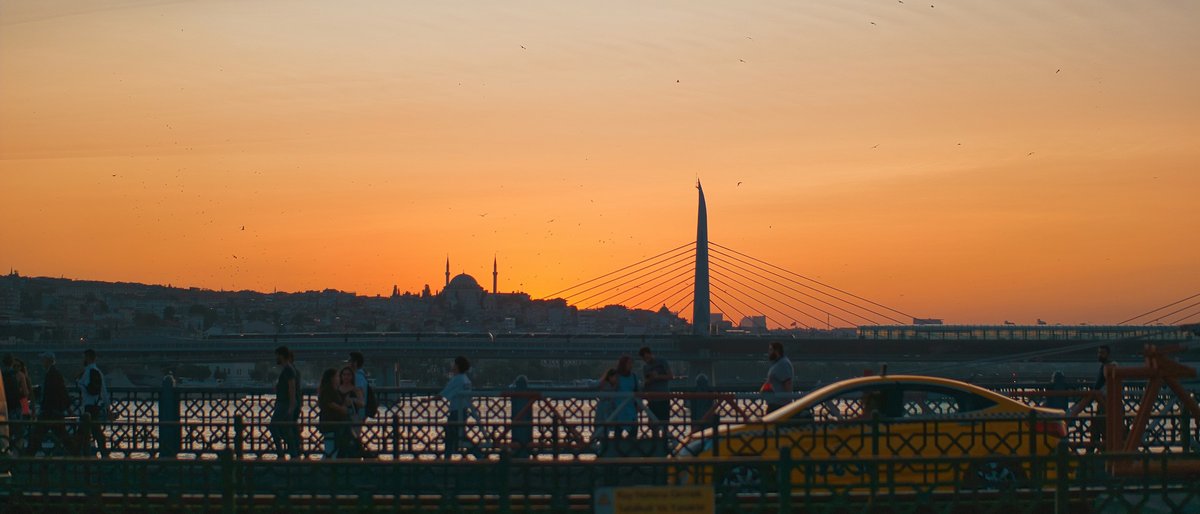
Istanbul is a city split by water, and that split defines everything about how it feels to move through it. The Bosphorus strait runs north-south, dividing Europe from Asia. Then the Golden Horn, an inlet on the European side, creates a second division: the old city to the south, the newer commercial districts to the north. So you end up with three broad zones: the historic peninsula (Sultanahmet, Fatih, Eminönü), the European "new city" north of the Golden Horn (Beyoğlu, Karaköy, Beşiktaş), and the Asian side across the Bosphorus (Kadıköy, Üsküdar, Moda). Most first-timers stick to the European side, and that's fair: the density of things to see is hard to argue with. But the Asian neighborhoods have a slower, more residential pulse that rewards anyone willing to hop a ferry. Getting between districts is easier than the map suggests. Trams, the metro, ferries, and the Marmaray tunnel under the Bosphorus all connect surprisingly well. The real question when deciding where to stay isn't distance: it's what pace you want your mornings and evenings to have. Sultanahmet is quiet after dark. Beyoğlu barely sleeps. Kadıköy hums along at its own unhurried rhythm. Worth noting: Istanbul is a city of hills, and the cobblestones can be unforgiving in the wrong shoes. Factor that in when you're looking at a map that makes everything seem flat.
Neighborhoods
-
Sultanahmet
This is the historic core, and it feels like it. The Hagia Sophia and Blue Mosque face each other across a park where tulips bloom in April and tour groups gather year-round. The streets behind the main sights are quieter than you'd expect: narrow, slightly worn, lined with small carpet shops and pensions converted from Ottoman-era houses. The architecture is heavy stone, domed, layered with centuries. Mornings here smell like fresh simit from the carts and tea brewing in the small lokantası that feed the neighborhood's workers. The pace is slow by Istanbul standards, almost village-like once you step off the main drag. After about 9 PM, things go still. That's either peaceful or boring depending on what you're after.
- Best for
- First-time visitors who want to walk to the major historic sites, couples looking for a quiet base, anyone who prefers early mornings over late nights
- Key streets
- Divanyolu Caddesi is the main artery running west from Sultanahmet Square: it follows the old Byzantine road and is lined with shops and cafes. Küçük Ayasofya Caddesi, south toward the sea walls, has a calmer residential feel and leads to the Little Hagia Sophia mosque, which most tourists skip. Akbıyık Caddesi is the backpacker strip with hostels and rooftop bars.
-
Beyoğlu / İstiklal Caddesi
North of the Golden Horn, Beyoğlu is the district that most people mean when they say "modern Istanbul," though much of it dates to the 19th century. İstiklal Caddesi, the long pedestrian avenue, carries an almost constant stream of people past consulates, churches, bookshops, and chain stores. The nostalgic red tram rattles down the middle. Side streets are where things get interesting: narrow passages open into courtyards with live music bars, meyhanes serving meze and rakı, or tiny galleries. The buildings are mostly late Ottoman and Art Nouveau, many with crumbling facades that somehow add to the appeal. It's loud. It smells like roasted chestnuts in winter and grilled corn in summer. There's a persistent low hum of conversation and street musicians.
- Best for
- Solo travelers, nightlife seekers, anyone who wants to be in the thick of the city's cultural energy, people who don't mind noise at night
- Key streets
- İstiklal Caddesi itself is the backbone, but duck into the fish passage (Çiçek Pasajı) for the old-school meyhane experience. Nevizade Sokak, the alley just behind, is tighter and louder: wall-to-wall restaurants with tables spilling into the lane. Asmalımescit has a denser bar scene. Cezayir Sokak (French Street) is touristy but the architecture is worth a glance.
-
Karaköy / Galata
Karaköy sits at the base of the Galata Tower hill, right where the Golden Horn meets the Bosphorus. It went through a serious transformation over the past decade: old port warehouses and hardware shops now share block space with specialty coffee roasters, design studios, and boutique hotels. The streets are steep and paved with worn stone. The Galata Tower anchors the skyline, and the surrounding streets have a density of small restaurants and galleries that feels almost compressed. Morning light hits the waterfront in a way that makes the ferry terminals and fishermen along the Galata Bridge look like a film set. The smell of fish (fresh from the boats, fried on the bridge) is constant near the water.
- Best for
- Design-minded travelers, photographers, coffee obsessives, couples who want walkable access to both the old city and Beyoğlu without being stuck in either
- Key streets
- Bankalar Caddesi (Banks Street) was the financial center of the Ottoman Empire: the old bank buildings still have their original facades. Serdar-ı Ekrem Sokak is the narrow uphill street with the highest concentration of boutiques and cafes. Galata Kulesi Sokak wraps around the tower. Mumhane Caddesi, closer to the port, has a grittier, less polished feel.
-
Fatih
Fatih is conservative, residential, and rooted. The Fatih Mosque complex, built on the site of the old Church of the Holy Apostles, sets the tone: this is a neighborhood defined by religious life and community rather than tourism. The streets are wider than in Sultanahmet, lined with apartment blocks and wholesale shops. Wednesday is market day (the Fatih Çarşamba Pazarı), and the market sprawls across several streets with produce, textiles, household goods, and crowds that make it hard to stand still. The food here tends to be hearty southeastern Turkish cooking: thick lahmacun, İskender kebab, and fresh-baked pide from wood-fired ovens. You'll hear more Arabic and Kurdish spoken here than in other districts.
- Best for
- Travelers who want to see a working-class Istanbul neighborhood that doesn't cater to tourists, food-focused visitors willing to explore, anyone interested in Ottoman religious architecture beyond the usual sites
- Key streets
- Fevzi Paşa Caddesi is the main commercial road. The backstreets around the Fatih Mosque complex have some of the best casual kebab restaurants in the city. Yavuz Selim Caddesi leads up to the Yavuz Sultan Selim Mosque, which has a terrace with Golden Horn views and almost no visitors.
-
Beşiktaş
Beşiktaş is where you start to feel the rhythm of Istanbul as a city people live and work in, not just visit. It's wedged along the Bosphorus north of Karaköy, centered around a loud, perpetually crowded market square. The fish market here is real: locals queue for it, prices are fair, and the quality is better than what you'll find near Eminönü. Match days for Beşiktaş football club transform the whole district. The Dolmabahçe Palace sits at its edge, all marble and excess, facing the water. Behind the palace, the streets climb steeply toward Yıldız Park. The smell of the neighborhood is a mix of fresh fish, grilled köfte from the hole-in-the-wall restaurants, and sea air off the Bosphorus.
- Best for
- Travelers who want a local feel with good transit connections, football fans, anyone who likes being near the water without the tourist markup
- Key streets
- The Beşiktaş Çarşı (market square) area around the fish market and produce stalls is the heart of the neighborhood. Barbaros Bulvarı runs uphill toward the metro. The waterfront promenade between Beşiktaş and Ortaköy is one of the better walks in the city: you pass under the Bosphorus Bridge and can see both continents.
-
Kadıköy
Crossing to the Asian side by ferry (about 20 minutes from Eminönü or Karaköy) drops you into a district that feels like a different city. Kadıköy is flatter, greener, and moves at a pace that's noticeably calmer. The market streets near the ferry terminal are packed with produce stalls, cheese shops, olive vendors, and fishmongers shouting prices. Beyond the market, the streets spread out into a mix of bookstores, vinyl record shops, and casual restaurants. The architecture is a jumble of mid-century apartment blocks and older stone buildings. Street art covers a lot of the walls, some of it quite good. The neighborhood skews young and slightly countercultural: there's a Turkish punk and indie music scene rooted here.
- Best for
- Return visitors who've already seen the historic peninsula, foodies who want the best market experience in the city, travelers who prefer a residential neighborhood over a tourist district
- Key streets
- The Kadıköy Çarşısı (market area) is a maze of interconnected streets between the ferry terminal and Söğütlüçeşme: bring no particular plan and just walk. Bahariye Caddesi is the main shopping street. Moda Caddesi leads south toward the Moda neighborhood and the seaside.
-
Moda
Moda is technically part of Kadıköy but has its own distinct identity: quieter, leafier, with a coastal path that wraps around a small peninsula. The streets are lined with low-rise apartment buildings, independent cafes, and the occasional antique shop. It has the feel of a university neighborhood that aged gracefully. Cats outnumber tourists here by a significant margin. The Moda waterfront, with its benches and tea gardens, looks directly across the Bosphorus at the European side: the view of the old city skyline at sunset is arguably the best vantage point in Istanbul, and there's no admission fee or crowd. The sound of the neighborhood is seagulls, the low thrum of ferry engines, and Turkish pop drifting from open windows.
- Best for
- Couples, remote workers looking for a calm base, anyone who wants beautiful Bosphorus views without the Sultanahmet crowds
- Key streets
- Moda Caddesi is the main street running through the neighborhood. Caferağa Mahallesi, the area between Kadıköy center and Moda proper, has the densest concentration of cafes. The Moda coastal path (sahil yolu) loops around the peninsula: allow about 40 minutes for a slow walk.
-
Balat / Fener
These two neighborhoods sit along the Golden Horn on the European side, uphill from Eminönü. They were historically Greek, Jewish, and Armenian quarters, and the architecture tells that story: narrow streets lined with brightly painted wooden houses, many tilting slightly with age. Greek Orthodox and Armenian churches sit alongside synagogues and mosques within a few blocks of each other. Over the past several years, cafes and antique shops have moved in, and the neighborhood has become popular with photographers: the colorful house facades on certain streets draw steady foot traffic. But step a few blocks away from those Instagram-famous corners and you're in a working-class neighborhood where laundry hangs between buildings and kids play football in the street.
- Best for
- Architecture and history enthusiasts, photographers, travelers looking for a neighborhood with layers of visible history
- Key streets
- Vodina Caddesi has the concentrated stretch of cafes and colorful houses. Fener's main landmark is the red-brick Greek Orthodox Patriarchate (the Ecumenical Patriarchate of Constantinople) on Sadrazam Ali Paşa Caddesi. Küçük Mustafa Paşa Caddesi winds through the quieter parts of Balat with some of the oldest surviving houses.
-
Ortaköy
Ortaköy occupies a small stretch of Bosphorus waterfront directly beneath the first Bosphorus Bridge. The neighborhood is compact: really just a few blocks around a central square and the waterfront Ortaköy Mosque, which is one of the most photographed buildings in the city. On weekends, a craft market sets up along the water and the kumpir (stuffed baked potato) stalls do steady business. The potatoes are split open and loaded with an improbable amount of toppings. The neighborhood has a nightclub strip: several large clubs sit right on the water, and the energy shifts dramatically after midnight on weekends. During the day, it's families and tourists eating kumpir. At night, it's a different crowd entirely.
- Best for
- Weekend day-trippers, nightlife seekers who want waterfront clubs, anyone who wants the well-known Bosphorus Bridge photo
- Key streets
- The waterfront square around Ortaköy Mosque is the center of everything. Muallim Naci Caddesi runs along the water toward Kuruçeşme and has several of the larger nightclubs.
-
Üsküdar
Üsküdar is the quieter, more conservative counterpart to Kadıköy on the Asian side. The ferry terminal sits right across from the Maiden's Tower, that tiny lighthouse-island that appears on every Istanbul postcard. The waterfront has a wide promenade where families walk in the evenings and fishermen cast lines into the Bosphorus. The neighborhood feels residential and unhurried. Mosques are prominent: the Mihrimah Sultan Mosque by Sinan sits right at the ferry landing, and several others dot the hillside. The backstreets are steep and peaceful, with small neighborhood bakeries and tea gardens. The light in Üsküdar tends to be softer than the European side, something about the eastern orientation and the way the hills catch the afternoon sun.
- Best for
- Travelers seeking a quiet residential base, anyone interested in Ottoman mosque architecture, visitors who want to watch the Bosphorus without the crowds
- Key streets
- The Üsküdar waterfront promenade stretches from the ferry terminal south toward Salacak, where you get the postcard view of the Maiden's Tower. Hakimiyeti Milliye Caddesi is the main commercial street running inland. Bağlarbaşı Caddesi climbs the hill toward Altunizade.
FAQ
Which neighborhood in Istanbul is best for first-time visitors?
Sultanahmet is still the most practical base for a first visit. You can walk to the Hagia Sophia, Blue Mosque, Topkapı Palace, and the Basilica Cistern. The tradeoff is that it goes quiet at night and the restaurant options cater heavily to tourists. If you want more evening life but still easy access to the historic sites, staying in Karaköy or lower Beyoğlu puts you a tram ride or 20-minute walk from the old city while keeping you close to better food and nightlife.
Is the Asian side of Istanbul worth visiting?
, yes, and not just as a day trip. Kadıköy's market is one of the best food experiences in the city, and the ferry ride over is part of the appeal. Moda's waterfront gives you a perspective on the city skyline that you can't get from the European side. If you've been to Istanbul before and already seen the historic peninsula, staying on the Asian side for a few nights gives a completely different rhythm. The ferry system makes crossing easy, though the last boats run around midnight so plan accordingly.
How do you get between neighborhoods in Istanbul?
The transit system is better than most visitors expect. The T1 tram connects Sultanahmet to Eminönü, across the Galata Bridge to Karaköy, and onward to Kabataş. The metro (M2) runs from Taksim through Şişhane down to the Golden Horn. Ferries connect Eminönü, Karaköy, and Kabataş to Kadıköy and Üsküdar on the Asian side: the ride takes about 20 minutes and costs the same as a bus. The Marmaray tunnel train also crosses under the Bosphorus if you prefer not to wait for a ferry. Get an Istanbulkart at any kiosk near a transit stop: it works on everything and saves significant money over single tickets.
Where should I eat in Istanbul if I only have a few days?
Kadıköy market for breakfast ingredients or street food: grab a fish sandwich from the stalls near the ferry, then wander into the market for fresh-squeezed pomegranate juice and a few bites of kaşar cheese. For a proper sit-down meal, Çiya Sofrası in Kadıköy does regional Anatolian dishes you won't find elsewhere. In Beyoğlu, the meyhanes on Nevizade Sokak are the classic rakı-and-meze experience: go on a weeknight to avoid the worst crowds. Beşiktaş has honest, inexpensive köfte and fish near the market square. Skip any restaurant within 50 meters of the Blue Mosque that has a guy out front waving a menu: the food is rarely worth the price.
Is Istanbul safe for solo travelers?
Istanbul is generally quite safe for solo travelers, including women traveling alone, though normal city precautions apply. The main tourist areas (Sultanahmet, Beyoğlu, Karaköy) are well-policed and busy at most hours. Pickpocketing happens on İstiklal Caddesi and on crowded trams, so keep your belongings close. The Asian side tends to feel even calmer. Late at night, the area around Taksim Square can get rowdy on weekends but it's more boisterous than threatening. Taxi scams are the most common issue tourists face: use the BiTaksi app or insist on the meter. Public transit is reliable and feels safe even late in the evening.
When is the best time to visit Istanbul?
Late April through mid-June and September through early November tend to be the most comfortable. Summer (July-August) brings heat and humidity that makes walking the hilly streets tiring, plus the tourist crowds peak. Winter is cold and grey but has its own appeal: fewer visitors, lower hotel prices, and the city takes on a moodier atmosphere with fog rolling off the Bosphorus. Tulip season in April fills the parks with color, and the light in October has a quality that photographers tend to chase. Ramadan dates shift each year, and while the city functions normally during the day, some restaurants in conservative neighborhoods like Fatih may close until iftar.
Last verified by automated review (v1.7.1) on . What is automated review?