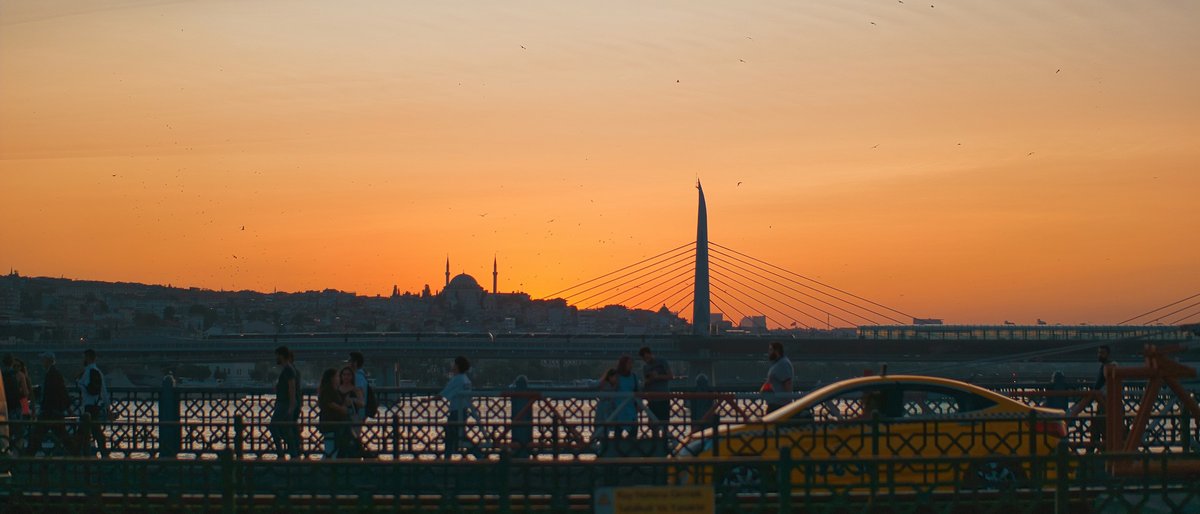
Istanbul sits across two continents, split by the Bosphorus strait, and that geography alone gives it an outdoor character you won't find anywhere else. The European side rolls through hills (some quite steep) while the Asian side tends to flatten out toward the Marmara coast before climbing into the forested ridges of Kocaeli province to the east. The city itself is massive, close to 16 million people, so you have to know where to look. But the green spaces are there: remnants of Ottoman hunting grounds turned public parks, long stretches of Black Sea coastline an hour north of the center, and the Princes' Islands sitting out in the Sea of Marmara like a quiet afterthought. The climate helps too. Summers run hot and humid (July and August can feel oppressive by midday) but spring and autumn are pleasant for anything outdoors. Winters are mild compared to central Anatolia, though the wind off the Bosphorus cuts right through you in January. Worth noting: Istanbul is not a city most visitors associate with outdoor pursuits. That works in your favor. The trails in Belgrad Forest on a Tuesday morning might have you and a handful of dog walkers, nothing more. The Bosphorus shoreline walks are busy on weekends but manageable on weekdays. And if you're willing to take a ferry to the Princes' Islands or drive ninety minutes to the Black Sea forests near Ağva, you'll find yourself in surprisingly wild terrain for a city this size.
Outdoor activities
-
Bosphorus Shoreline Running and Walking
The paved waterfront paths on both the European and Asian sides of the Bosphorus make for some of the most scenic urban running you'll find. The stretch from Ortaköy north toward Bebek is popular: roughly 3 km one way, flat, with the strait right there beside you. On the Asian side, the Kadıköy to Moda coastal path loops around the peninsula with views across to the old city. Mornings are best before the fishermen and tea drinkers claim the benches. The surface is mostly smooth concrete or asphalt, though some sections near Arnavutköy get narrow.
- Difficulty
- Easy
- Duration
- 1-2 hours depending on distance
- Best season
- March through June, September through November
-
Road Cycling Along the Black Sea Coast
Head north out of the city toward Kilyos and the terrain changes fast. The roads climb through Belgrad Forest and then drop toward the Black Sea. From Sarıyer to Kilyos is roughly 15 km of rolling hills on a two-lane road: traffic is manageable on weekday mornings but gets busy on summer weekends. More committed riders continue east along the coast toward Şile, though the road surface deteriorates in places. You'll want a proper road bike, not a city rental. Local cycling groups organize weekend rides: check Istanbul Bisiklet Topluluğu for group schedules.
- Difficulty
- Moderate to challenging depending on distance
- Duration
- Half day to full day
- Best season
- April through October
-
Rock Climbing at Ballıkayalar Canyon
About 90 minutes southeast of central Istanbul, near Gebze, Ballıkayalar is the closest real climbing area to the city. The canyon has limestone walls with bolted sport routes ranging from 5a to 7c on the French scale. The setting is a narrow gorge with a stream running through it: cooler than you'd expect in summer. There are probably 60-odd routes spread across several sectors. The approach walk from the parking area takes about 20 minutes along the streambed. Bring your own gear; there's no rental operation on-site. The rock can be slippery after rain, so check conditions.
- Difficulty
- Moderate to advanced depending on route grade
- Duration
- Full day
- Best season
- Spring and autumn: summer is tolerable in the shaded canyon
-
Paragliding Over the Princes' Islands
Tandem paragliding operates from Heybeliada, the second-largest of the Princes' Islands, during summer months when thermals cooperate. The launch site is on the island's central ridge, and flights typically last 10 to 15 minutes, landing on or near the shoreline. It's not Ölüdeniz (the altitude is modest and the flights are short) but the views of the Marmara and the Istanbul skyline in the distance have a quality all their own. Operators come and go, so confirm availability in advance. Wind conditions can cancel flights on short notice.
- Difficulty
- Easy (tandem flights require no experience)
- Duration
- Half day including ferry travel
- Best season
- June through September
-
Mountain Biking in Belgrad Forest
Belgrad Forest, about 20 km north of Taksim, has a network of dirt trails and fire roads through oak, beech, and chestnut woodland. The terrain is rolling rather than technical: think packed earth with some root sections and moderate climbs. The main loop around the old reservoirs covers roughly 10-12 km. It's popular with joggers and families on weekends, so weekday rides are more enjoyable. You can rent decent mountain bikes from shops in Bahçeköy at the forest entrance. The forest floor gets muddy after rain and stays that way for days, in late autumn.
- Difficulty
- Easy to moderate
- Duration
- 2-4 hours
- Best season
- April through June, September through November
-
Trail Running in Aydos Forest
On the Asian side, Aydos Hill is the highest point within Istanbul's boundaries at around 537 meters. The forested slopes have unmarked but well-worn trails that local runners use regularly. The terrain is steeper and more rugged than Belgrad Forest: loose rock on some sections, and the climb from the base to the summit is a proper workout. You'll pass through pine forest and scrubby meadow. The summit has communication towers and a somewhat anticlimactic feel, but the views toward the Marmara and across the Asian sprawl are worth the effort. Not many tourists come here.
- Difficulty
- Moderate to challenging
- Duration
- 2-3 hours
- Best season
- March through May, October through November
Day hikes
-
Belgrad Forest Reservoir Circuit
The most accessible proper walk near Istanbul. A loop trail connects several Ottoman-era reservoirs and aqueducts through mature deciduous forest. The paths are wide, mostly flat to gently rolling, and well-maintained. You'll pass Büyük Bent and Valide Bent, stone dams that have been here since the 1700s. The forest canopy is dense enough to keep things cool even in early summer. Navigation is straightforward: the main trail is obvious, though side paths branch off. Start from the Bahçeköy entrance. The only real challenge is the weekend crowd; go early or midweek.
- Difficulty
- Easy
- Duration
- 2-3 hours for the full loop
- Best season
- April through June, September through November
-
Ballıkayalar Canyon Trail
Near Gebze, about 90 minutes from central Istanbul by car. The trail follows a narrow limestone canyon along a streambed, passing under climbing walls and through sections where you'll need to hop between rocks. After rain the stream rises and the rock crossings get tricky: ankle-rolling territory. The canyon is shaded and cooler than the surrounding countryside. The full out-and-back to the canyon's end and back is roughly 6-7 km. Not technically demanding in dry conditions, but the uneven footing and some scrambling sections keep it interesting.
- Difficulty
- Moderate
- Duration
- 3-4 hours
- Best season
- March through June, October through November: avoid after heavy rain
-
Polonezköy Nature Park
A small forested area about 30 km northeast of the city center on the Asian side, originally settled by Polish immigrants in the 1840s. The marked trails loop through beech forest: quiet, shaded, and flat enough for families. The longest loop is around 5 km. The village itself has guesthouses and restaurants serving both Turkish and Polish-influenced food, which makes for a good post-hike lunch stop. The park charges a small vehicle entry fee. It's a gentle outing rather than a serious hike, but the forest is pleasant and the history is interesting.
- Difficulty
- Easy
- Duration
- 1.5-2.5 hours
- Best season
- Year-round, though spring wildflowers and autumn color are best
-
Şile Lighthouse Coastal Walk
Şile sits on the Black Sea coast about two hours northeast of Istanbul. The town itself is unremarkable, but the coastal path from the lighthouse area heading east offers rough clifftop walking with views down to rocky coves. This is not a maintained trail: you're following fishermen's paths and informal tracks along the headlands. The terrain is uneven, with loose soil and some exposure near the cliff edges. The Black Sea wind can be fierce. In summer the beaches below fill with Istanbul families, but the clifftop walk stays relatively empty. Combine it with a swim at one of the coves if conditions allow.
- Difficulty
- Moderate: uneven terrain and some exposed sections
- Duration
- 2-4 hours depending on how far you walk
- Best season
- May through September
-
Princes' Islands: Büyükada Ridge Walk
Take the ferry from Kabataş or Kadıköy to Büyükada, the largest of the Princes' Islands. From the ferry dock, head uphill through the old Greek and Armenian neighborhoods (wooden Victorian houses in various states of grandeur) to the pine-forested ridge. The walk to the Aya Yorgi monastery at the summit takes about 45 minutes at a steady pace. The climb is real but short. From the top, the view stretches across the Marmara to the Asian shore and on clear days toward the distant Uludağ range. The monastery itself is simple and quiet. Worth timing with a late lunch at one of the fish restaurants near the dock on the way back.
- Difficulty
- Easy to moderate: one sustained uphill section
- Duration
- 3-5 hours including ferry time and lunch
- Best season
- April through October
Water activities
-
Bosphorus Kayaking
Several operators run guided kayak tours on the Bosphorus, typically launching from the European side near Bebek or İstinye. Paddling the strait itself is a serious undertaking: the current runs from the Black Sea to the Marmara, and cargo ship traffic is constant. Guided tours stick to the shoreline and time departures with current patterns. Early morning paddles, before the ferry traffic picks up, offer the calmest conditions. You'll pass under waterfront yalıs, Ottoman mansions with gardens dropping to the water's edge. The water temperature is swimmable from June through September but the Bosphorus current keeps it cooler than you'd expect.
- Difficulty
- Moderate: current and ship traffic require attention
- Duration
- 2-3 hours
- Best season
- May through September
-
Swimming at Şile and Kilyos Beaches
Istanbul has proper beaches, though they take some effort to reach. Kilyos on the European Black Sea coast is closest (about 35 km from the center) with both public and private beach clubs. The Black Sea water here is noticeably cooler than the Marmara side and the currents can be strong; pay attention to warning flags. Şile, on the Asian Black Sea coast, has a longer stretch of sand and a more relaxed feel, though the drive is longer. The water at both tends to be clean, if cold. Beach clubs charge entry fees that typically include a sun lounger. Public sections are free but get packed on hot weekends.
- Difficulty
- Easy, but respect Black Sea currents
- Duration
- Half day to full day
- Best season
- June through August
-
Stand-Up Paddleboarding on the Marmara Coast
The Sea of Marmara side (along the Kadıköy and Caddebostan waterfront on the Asian shore) offers calmer water than the Bosphorus for stand-up paddleboarding. A few rental spots have appeared along the Caddebostan promenade in recent years, though the scene is still developing. Morning sessions before the wind picks up are best. The water is warmer than the Black Sea side and generally calmer, though afternoon chop can build. You'll paddle with the Istanbul skyline as a backdrop, which never quite gets old. Skill level needed is minimal in calm conditions.
- Difficulty
- Easy in calm conditions
- Duration
- 1-2 hours
- Best season
- May through September
-
Sailing on the Sea of Marmara
Istanbul has an active sailing community, centered around several yacht clubs and marinas: Ataköy Marina on the European side and Kalamış Marina in Kadıköy are the main ones. Day charter sailboats are available, typically with a skipper, and some clubs offer introductory sailing courses. The Marmara offers reliable summer winds without the ferocity of the Aegean meltemi. A day sail might take you out toward the Princes' Islands and back, or along the coast toward Tuzla. The Bosphorus itself is navigable by experienced sailors but the current, commercial traffic, and regulations make it more complex than open-water sailing.
- Difficulty
- Varies: day charters require no experience, independent sailing requires certification
- Duration
- Full day
- Best season
- May through October
-
Ağva River Canoeing
The small town of Ağva, about two hours east of Istanbul on the Black Sea coast, sits where the Göksu and Yeşilçay rivers meet the sea. Both rivers are calm enough for recreational canoeing, winding through low forested banks. Local operators rent canoes and kayaks by the hour. The Yeşilçay is the more scenic of the two: narrower, with overhanging trees creating a tunnel effect in places. The water is shallow and slow-moving, suitable for beginners and families. Ağva itself has a handful of riverside restaurants where you can eat grilled fish after your paddle. It makes for a good overnight trip combined with the Şile coastal walk.
- Difficulty
- Easy
- Duration
- 2-3 hours paddling, full day with travel
- Best season
- May through September
Parks & gardens
-
Gülhane Park
FreeThe oldest public park in Istanbul, right at the foot of Topkapı Palace. Gülhane runs downhill toward the Bosphorus through avenues of plane trees and past rose gardens that peak in late April and May. The park has a quiet, slightly worn dignity to it: benches full of older men reading newspapers, vendors selling roasted corn near the gates. The lower terrace has views across the Golden Horn to Galata. It fills up on weekends but rarely feels chaotic. The tulip festival in April transforms the flower beds.
Highlights: Rose gardens in spring, Golden Horn views from the lower terrace, tulip displays in April, ancient plane trees
-
Yıldız Park
FreeA former imperial hunting ground spread across the hillside above the Çırağan Palace in Beşiktaş. The paths wind uphill through dense woodland (magnolias, cedars, oaks) and past crumbling Ottoman pavilions that feel half-forgotten. It's steep in places, which keeps the crowds manageable. The upper sections are quiet on weekday afternoons. There's a small lake and a couple of tea gardens tucked into the trees where you can sit for an hour and forget you're in a city of 16 million.
Highlights: Ottoman pavilions, mature woodland canopy, hilltop tea gardens with Bosphorus glimpses, peaceful upper trails
-
Emirgan Grove
FreeThree historic Ottoman mansions (the Yellow, Pink, and White Pavilions) sit within this park on the European Bosphorus shore. The grounds are hilly and heavily wooded with specimen trees, some of them old. Emirgan is best known for the annual tulip festival in April, when the city plants hundreds of thousands of bulbs across the lawns. Outside of tulip season, it's a good place for a shaded walk. The tea garden at the Yellow Pavilion serves solid Turkish breakfast on weekends, though you'll wait for a table.
Highlights: April tulip festival, three restored Ottoman pavilions, hillside walking paths, Yellow Pavilion tea garden
-
Fenerbahçe Park
FreeA small peninsula park on the Asian side in Kadıköy, jutting out into the Sea of Marmara. It's not grand, just a loop path around the point with views toward the Princes' Islands and the European shore. The wind comes off the water and there's a smell of salt and grilled fish from the nearby restaurants. Popular with joggers in the early morning and families in the evening. The lighthouse at the tip is modest but photogenic. On clear days you can see Büyükada across the water.
Highlights: Marmara Sea views, lighthouse at the peninsula tip, waterfront walking loop, proximity to Kadıköy restaurants
-
Atatürk Arboretum
Tucked into the edge of Belgrad Forest near Bahçeköy, this botanical collection covers about 300 hectares with over 2,000 plant species. The trails are well-maintained gravel paths winding through themed sections: Mediterranean flora, East Asian maples, native Anatolian species. Autumn color here is the best you'll find in Istanbul, the liquidambar and maple sections in late October and November. It's a working research facility, so the labeling is thorough. Weekday visits are calm; weekend parking fills early.
Highlights: Autumn foliage in October-November, 2,000+ plant species, well-labeled botanical collections, peaceful forest setting
-
Fethi Paşa Grove
FreeA steep hillside park on the Asian shore in Üsküdar, draped over the slope between the Bosphorus waterfront and the neighborhood above. Old stone paths switchback up through cypress, pine, and fig trees. The views of the Bosphorus from the upper levels (with the European skyline spread out across the water) are hard to beat for a public park. It's small enough that you can walk the whole thing in forty minutes, but the grade is real. Bring water in summer; there's limited shade on the upper paths.
Highlights: Panoramic Bosphorus views, historic stone pathways, cypress and pine canopy, steep terrain for a workout
Practical tips
- Sun Protection
- Istanbul's latitude is roughly the same as Naples. From May through September, UV exposure is significant, on the water or at treeless summits. Bring a hat with a brim and apply sunscreen before you leave: the waterfront pharmacy markup is steep. The Bosphorus breeze masks the heat, which makes sunburn sneaky. Turkish pharmacies carry good European sunscreen brands if you forget yours.
- Water and Hydration
- Tap water in Istanbul is technically treated but most locals drink bottled or filtered water. For day hikes, carry at least 2 liters per person: there are no reliable water sources on most trails outside Belgrad Forest, which has a few fountains of uncertain reliability. Convenience stores and bakeries near trailheads sell 1.5-liter bottles cheaply. In summer heat, electrolyte packets are worth packing.
- Footwear and Trail Conditions
- Most Istanbul-area trails are not technical, but they're often muddy after rain, in Belgrad Forest where clay soil holds water for days. Light hiking shoes with decent tread are better than trail runners for anything beyond paved paths. For Ballıkayalar Canyon, ankle support matters: the streambed crossings are slippery. City shoreline walks are fine in any comfortable walking shoe.
- Getting to Trailheads
- Public transit reaches Belgrad Forest via bus from Hacıosman metro station to Bahçeköy. The Princes' Islands are an easy ferry from Kabataş or Kadıköy: İDO and Şehir Hatları both run regular service. For Şile, Ağva, or Ballıkayalar, you'll want a car or a shared taxi. Dolmuş minibuses serve some Black Sea coast towns from Üsküdar but schedules are irregular. Weekend traffic heading north out of the city can double your drive time: leave early.
- Seasonal Timing
- The sweet spot for outdoor activity in Istanbul is mid-April through mid-June and September through mid-November. July and August are hot and humid: manageable for water activities but draining for hiking. Winter is mild but grey and wet, with occasional snow that melts within days. Spring brings wildflowers to the forest floor and tulips to every park. Autumn color peaks in late October at the Arboretum.
- Safety and Etiquette
- Stray dogs are everywhere in Istanbul, including on trails. They're almost always harmless (the city vaccinates and tags them) but give nursing mothers space. Trail marking is inconsistent outside managed parks; download offline maps before heading out. Mobile reception is generally good even in forested areas. Turkish hikers tend to be gregarious and will likely offer you tea if you cross paths at a rest stop. Accept it.
FAQ
Is Istanbul a good city for outdoor activities?
Better than most people expect. The combination of two seas, forested hills within the city limits, and islands a short ferry ride away gives you genuine variety. It's not a mountain town, but for a megacity, the outdoor access is surprisingly good. Spring and autumn are the prime seasons: summer heat limits what's comfortable during midday hours.
Can you swim in the Bosphorus or the Sea of Marmara?
Swimming in the Bosphorus happens (there's even an annual cross-continental swimming race) but the current is strong and boat traffic makes casual dips risky outside of designated spots. The Sea of Marmara coastline has some swimmable beaches, though water quality varies by location. Your best bet for a proper beach day is the Black Sea coast at Kilyos or Şile, where the water is cleaner and there's actual sand, though currents require caution.
What should I wear for hiking near Istanbul?
Layering works well here. Mornings can be cool even in May, but you'll warm up quickly on any climb. Lightweight long pants are better than shorts for the scrubby sections where thorny undergrowth reaches the trail. A light rain jacket is worth carrying from October through April: weather shifts quickly, near the Black Sea coast. Proper hiking boots are only necessary for Ballıkayalar and rougher coastal paths; light trail shoes handle everything else.
Are there guided outdoor tours available in Istanbul?
Yes, though the outdoor tour scene is still more niche than, say, Cappadocia or the Lycian coast. A handful of operators run Bosphorus kayaking tours, and climbing groups organize trips to Ballıkayalar. For hiking, Istanbul Hiking and similar meetup groups organize regular weekend outings: often the best way to find trails and company. Hotel concierges tend to push bus tours; you might need to search online for activity-specific operators.
How do I get to the Princes' Islands from central Istanbul?
Ferries run regularly from Kabataş on the European side and from Kadıköy on the Asian side. Şehir Hatları operates the traditional public ferries, which take about 90 minutes to Büyükada with stops at the smaller islands. İDO runs faster sea buses that cut the time roughly in half. Weekend ferries fill up, so arrive early or buy tickets in advance through the apps. Motor vehicles are banned on the islands, so you'll be walking or renting a bicycle once you arrive.
Is it safe to hike alone around Istanbul?
Generally yes. The trails near the city (Belgrad Forest, Polonezköy, the Princes' Islands) are well-trafficked and close to civilization. Mobile phone reception is reliable in most areas. The main risks are the usual outdoor ones: twisted ankles on uneven terrain, dehydration in summer, and getting caught in rain without a jacket. Stray dogs are present but almost universally docile. For more remote areas like the Şile coastline or Ballıkayalar, hiking with a companion is sensible, if you're unfamiliar with the terrain.
Outdoor experiences in Istanbul
 Free cancellation
 Istanbul Guided Bosphorus Afternoon or Swimming Cruise
Outdoor experience: 2 hours, free cancellation.
via Viator Free cancellation
 Istanbul Eurasia Bike & Boat Tour
Outdoor experience: free cancellation.
via Viator Free cancellation
 Istanbul Dolmabahce Palace Tour with Bosphorus Cruise with Guide
Outdoor experience: 5 hours, free cancellation.
via Viator Free cancellation
 Istanbul Afternoon Bosphorus or Swimming Yacht Cruise
Outdoor experience: 2 hours, free cancellation.
via ViatorLast verified by automated review (v1.7.1) on . What is automated review?