What should I pack for Istanbul?
A headscarf and knee-covering layers for mosque visits: the Blue Mosque hands out loaners but the queue costs you twenty minutes in peak season. Pack slip-on shoes (you remove them at every mosque entrance), broken-in walking shoes for steep cobblestone hills, and a windproof layer for the Bosphorus gusts that cut through everything from October to April.
Shop the packing list (16 items)The single thing most visitors get wrong: mosque dress code. The Blue Mosque, Süleymaniye, Rüstem Paşa: all require covered knees and shoulders for everyone, plus a headscarf for women. The Blue Mosque does offer loaner wraps at the entrance, but during peak hours the distribution line eats fifteen to twenty minutes you'd rather spend inside. Pack a lightweight scarf you can throw on quickly and one pair of long pants or a skirt that hits below the knee. You'll remove your shoes at every mosque door, so slip-ons or shoes with pull-tabs save you from the crouch-and-unlace routine six times a day. Carry a plastic bag for your shoes: the provided racks overflow on busy afternoons, and walking away from the entrance in socks on cold marble is not the experience you came for.
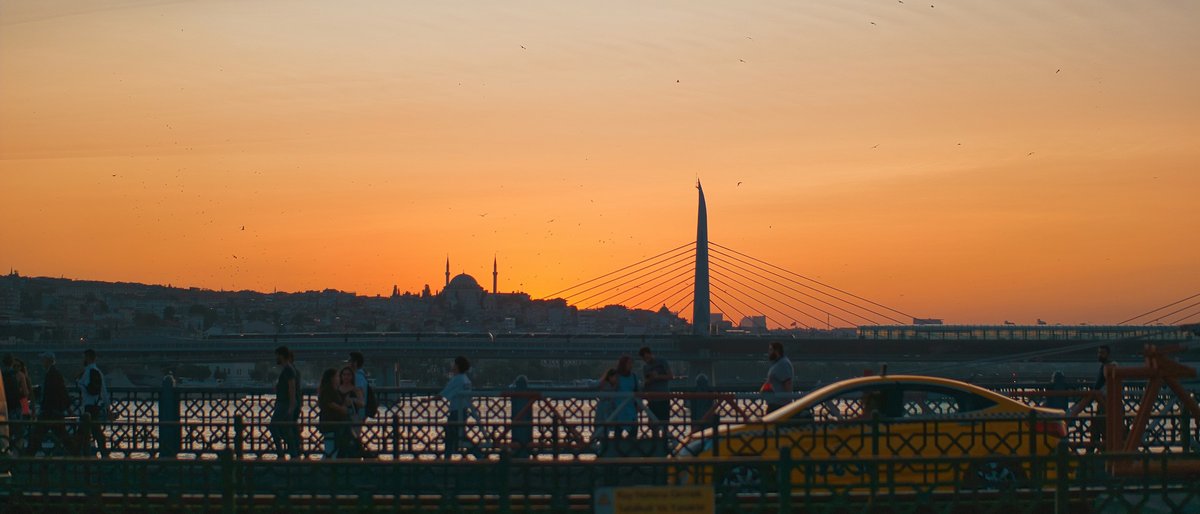
Istanbul's weather will fool you. April mornings currently sit around 8–9°C with a wind chill that drops it closer to 5°C, but by mid-afternoon the sun can push things to 17–18°C. The Bosphorus funnels wind straight through the city, and that wind has a bite to it: standing on Galata Bridge at sunset without a windproof shell feels like a punishment. Summer, June through September, brings 30°C and sticky humidity, though the sea breeze on the Kadıköy side keeps things more bearable than the packed streets around the Grand Bazaar. Winter is real cold: December and January regularly dip to 2–3°C with freezing rain. Layering matters here more than in most cities because you'll move between heated interiors, cold streets, and wind-blasted ferry decks within the same hour.
Forget flat. Istanbul is built on hills that would make San Francisco nod in recognition. The walk from Karaköy up through the steep backstreets to İstiklal Caddesi is a serious climb on uneven cobblestones and cracked pavement. Sultanahmet's side streets have the kind of worn stone surfaces that turn slick the moment it rains. Your shoes need grip and a sole thick enough to handle hours on hard stone: fashion sneakers with flat rubber bottoms will leave your feet aching by noon. Broken-in trail runners or sturdy walking shoes with lugged soles are the right call. You might also consider a small daypack rather than a shoulder bag: the steep grades and crowded trams make one-shoulder bags a constant annoyance, and you'll want both hands free on the steeper streets off İstiklal.
Skip packing these: they're cheaper and often better here. Turkish pharmacies (look for the green Eczane cross on every other block) carry ibuprofen, sunscreen, and cold medicine at a fraction of North American prices. A peştemal (the thin cotton hamam towel) from shops in Mahmutpaşa or the streets around the Grand Bazaar tends to run roughly 150–300 TRY (around $3–7 USD at current rates) and works as a beach towel, scarf, and picnic blanket for the rest of your trip. Packing a bulky towel from home is wasted suitcase space. Umbrellas: any Migros or BİM has them for around 60–100 TRY when a squall hits. Travel adapters for Turkey's Type F outlets show up at electronics shops in Eminönü for 40–80 TRY. The one thing harder to find locally: your preferred deodorant brand. Turkish stores carry local options that work fine, but if you're particular, bring your own.
Essentials
- Headscarf for mosque visits: required for women at every major mosque, and it doubles as wind protection for everyone Shop
- Long pants or below-knee skirt for mosque dress code (enforced at Blue Mosque, Süleymaniye, and every neighborhood mosque) Shop
- Slip-on shoes or pull-tab shoes: you remove them at every mosque entrance, six or more times a day Shop
- Broken-in walking shoes with lugged soles for cobblestones and steep hills (flat-sole fashion sneakers will punish you by noon) Shop
- Windproof shell layer: the Bosphorus wind cuts through cotton and fleece like they aren't there Shop
- Small daypack with both shoulder straps for hands-free walking on steep grades and crowded trams Shop
- Portable charger: Google Maps navigation through Istanbul's winding backstreets drains battery by mid-afternoon Shop
- Plastic bags for carrying shoes at mosque entrances when the racks overflow Shop
- Travel adapter: Turkey uses Type F (Schuko round pin), 220V; leave 110V hair tools at home or bring a voltage converter Shop
- Layers you can add and remove quickly: indoor-outdoor temperature swings of 10–15°C are normal year-round Shop
Seasonal extras
- Winter (Dec–Feb): Insulated waterproof jacket; freezing rain is common and the Bosphorus wind makes 3°C feel far worse Shop
- Winter: Thermal base layer, warm hat, and gloves; the ferry crossings and Galata Bridge are brutally cold Shop
- Summer (Jun–Sep): SPF 50+ sunscreen; hours walking between mosques and palaces mean direct sun exposure with little shade Shop
- Summer: Refillable water bottle; Istanbul tap water is drinkable and refill stations are common near major sights Shop
- Spring/Fall (Mar–May, Oct–Nov): Packable rain jacket; afternoon squalls appear without warning and vanish just as fast Shop
- Spring/Fall: Mid-weight fleece or merino pullover for the 8–18°C daily temperature swing Shop
Buy on arrival
- Peştemal (thin cotton hamam towel): roughly 150–300 TRY at Mahmutpaşa shops, lighter and more useful than a bulky travel towel
- Umbrella: 60–100 TRY at any Migros or BİM grocery store
- Over-the-counter medicine: Turkish eczane pharmacies stock most things at a fraction of Western prices
- Travel adapter for Type F outlets: 40–80 TRY at Eminönü electronics stalls
- Lip balm: the Bosphorus wind dries everything out; any eczane carries it for under 50 TRY
Last verified by automated review (v1.5.J.2) on . What is automated review?