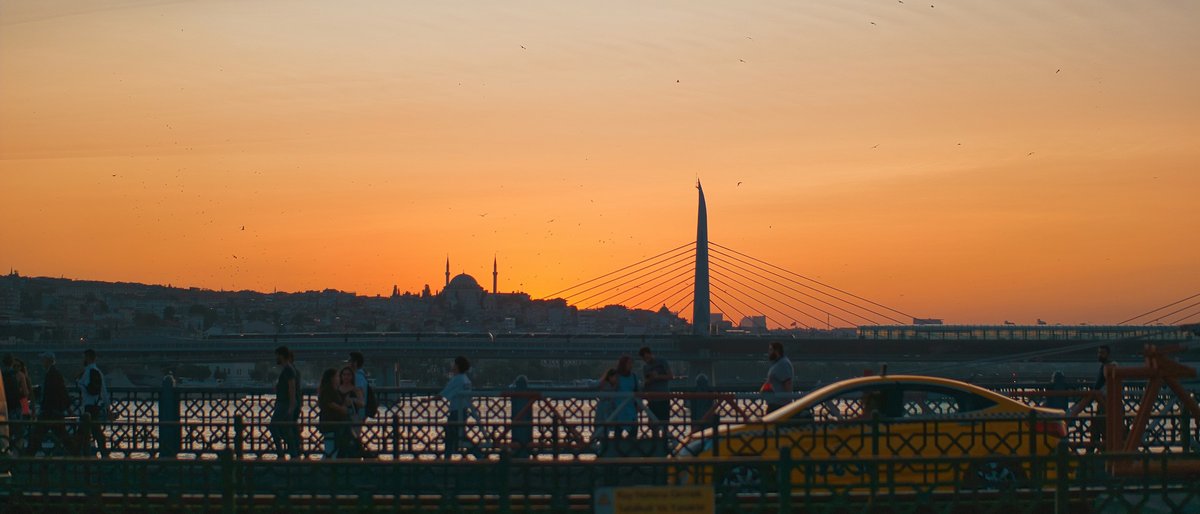
Is Istanbul safe?
Istanbul is safe enough for a solo trip, and TTDI scores its solo-traveler safety at 6/10 (see the TTDI Solo-Safety Index). Violent crime against visitors is rare, but the real costs come from taxi overcharging, the Beyoğlu bar-bill scam, pickpockets on the T1 tram, counterfeit rakı, and an earthquake risk from the North Anatolian Fault that no itinerary can remove.
The risk that most often hits solo travellers in Istanbul is a friendly stranger on İstiklal Caddesi. A well-dressed man asks a lone male visitor for a light near Taksim Square, suggests a drink, and steers him to a basement club off the avenue, where the bill can pass 20,000 TRY (about 405 USD at the 13 October 2026 rate of 49.37 TRY to the dollar) and the doormen walk you to an ATM. We'd decline every invitation from a stranger within 500 metres of Taksim. The shoe-shine man who drops his brush on Galata Bridge runs a smaller version of the same play: hand it back and keep walking, because the 'free' shine ends in a demand for several hundred lira. Taxis are the daily irritation in Fatih and Beyoğlu. Drivers at Sultanahmet and outside Galata Tower tend to refuse the meter, or swap your 200 TRY note for a 20 and claim you underpaid. Order through BiTaksi or Uber, which both dispatch licensed yellow cabs with a logged route, and say the note's value aloud as you hand it over.
After dark, Beyoğlu splits in two. Tarlabaşı and Dolapdere, the streets downhill from Tarlabaşı Bulvarı and only 300 metres from the square, are dim and half-derelict, and most of the muggings reported in the district seem to happen there. Aksaray and Laleli feel leery for solo women after 10pm, with kerb-crawling cars and men calling out from doorways. Sultanahmet is the opposite problem: the lanes between Hagia Sophia and the Sultan Ahmed Mosque are safe but empty out by 22:00, and the only voices left belong to carpet touts. Our pick for an evening alone is Kadıköy on the Asian side, where Moda's tea gardens smell of grilled mackerel and sea salt and women sit alone past midnight without comment. Cihangir and Beşiktaş Çarşı come close.
Night transit holds up better than Istanbul's reputation suggests. The M2 metro and the Marmaray tunnel under the Bosphorus run until around midnight, and several metro lines have tended to run through the night on Fridays and Saturdays since 2019 (check the Metro İstanbul app before you rely on that). The last ferries from Karaköy to Kadıköy leave late in the evening, and the 20-minute crossing, hot tea in a tulip glass and diesel on the wind, is the calmest way home we know. Pickpockets concentrate on the T1 tram, with teams working the crush at the Eminönü and Sultanahmet doors, so wear your daypack on your chest for those 3 stops. Watch your footing in Galata too: on an overcast 16.8°C evening at 88% humidity, like 13 October, the polished cobbles on the slope below the tower are slick as soap, and a twisted ankle is a likelier injury than anything a thief will do.
Three larger risks deserve plain words. Istanbul sits beside the North Anatolian Fault, and a magnitude 6.2 earthquake under the Sea of Marmara on 23 April 2025 sent more than 200 people to hospital, mostly after panicked jumps from windows, so ask your hotel in which decade the building went up (codes tightened after the 1999 İzmit quake) and learn the stairwell on night 1. Second, counterfeit rakı: methanol-laced spirits killed dozens of people in Istanbul in the winter of 2024 to 2025, so we drink at licensed venues and skip any bottle priced suspiciously low. Third, politics. Demonstrations gather at Taksim and Saraçhane, as they did in March 2025, and police tend to respond with tear gas and close the nearest metro station without warning, so leave the area when you hear chanting on İstiklal. Visitors who are gay or trans face a harder city, and TTDI's LGBTQ+ friendliness score is 3/10 (sourced from TTDI's editorial rubric). Pride marches have been banned since 2015, and public affection draws hostility outside a few Beyoğlu bars.
Solo logistics shape safety in Istanbul more than crime does. The meyhanes of Nevizade Sokak and Asmalımescit are built around tables of 4 and shared meze, and a few might turn away one diner on a Friday. We'd head instead to an esnaf lokantası, the steam-table canteens where you point at trays of stewed aubergine and lamb, or to the counters in Kadıköy's fish market. A small-group Bosphorus or food tour of 8 to 12 people on day 1 tends to carry no single supplement and hands you dinner company by evening. Buy insurance with medical evacuation before you fly to Istanbul. For any emergency dial 112, which now covers police, ambulance and fire on one line, and the Tourist Police office in Sultanahmet usually has English speakers on duty.
Emergency number: 112
Official travel advisories
Reconsider non-essential travel the most cautious of 3 government assessments
- Government of CanadaLevel 2Exercise a high degree of caution View advisory
- UK Foreign OfficeLevel 3FCDO advises against travel to all or parts View advisory
- US State DepartmentLevel 2Exercise Increased Caution View advisory
Verified from the issuing governments' own feeds.
Areas to avoid
- Tarlabaşı after dark
- Dolapdere after dark
- Aksaray at night
- Laleli at night
- Basement clubs off İstiklal Caddesi suggested by strangers
- Taksim Square and Saraçhane during demonstrations
Common concerns
- Bar-bill scam targeting solo men around Taksim and İstiklal Caddesi
- Taxi drivers refusing the meter or swapping banknotes
- Shoe-shine brush-drop scam on Galata Bridge
- Pickpockets on the T1 tram between Eminönü and Sultanahmet
- Counterfeit alcohol containing methanol
- Earthquake risk from the North Anatolian Fault
- Tear gas and metro closures during protests
- Street harassment of solo women in Aksaray and Laleli
- Hostility toward LGBTQ+ visitors
- Slippery cobbles on the Galata slopes in wet weather
Last verified by automated review (v1.7.2) on . What is automated review?