How do I get around Istanbul?
İstanbulkart loaded with 200 TRY handles three days of tram, metro, ferry, and bus. The T1 tram covers Sultanahmet to Karaköy; ferries cross the Bosphorus for the same tap. BiTaksi for taxis, never flag one down without it. Walkable within neighborhoods, but the hills between them will remind you.
Book the connection
One search across trains, buses & flights: live times and prices for Istanbul.
Your first stop after clearing customs should be an İstanbulkart machine: they sit at every metro and tram station entrance, with English-language screens, and the card itself costs around 100 TRY (about $2). Load 200 TRY and you're covered for two to three days across tram, metro, bus, ferry, the Marmaray rail tunnel, and both funiculars. Each tap runs roughly 20 TRY, with discounted transfers when you tap again within two hours on a different line. The card is non-negotiable. Buses stopped accepting cash years ago. Ferries charge more at the window. And the old jeton token machines are mostly gone from metro stations. Buy the card at the airport before you even think about which exit to take.
The T1 tram is your workhorse in the old city. It runs from Kabataş (where the Bosphorus ferries dock) through Karaköy, across the Galata Bridge, past Eminönü, and straight down to Sultanahmet. Hagia Sophia and the Blue Mosque sit a two-minute walk from the Sultanahmet stop. The cars get crushed during rush hour; they smell like wet wool and diesel in cold weather, sweat and cologne in summer. Stand near the doors. From Taksim, the F1 funicular drops you to Kabataş in 90 seconds to connect to the T1, or the M2 metro runs north toward Şişli and Levent. The Marmaray tunnel deserves a mention of its own: it shoots under the Bosphorus in four minutes, connecting Sirkeci on the European side to Üsküdar on the Asian side. Same İstanbulkart tap. For the price of a metro ride, you cross a continent.
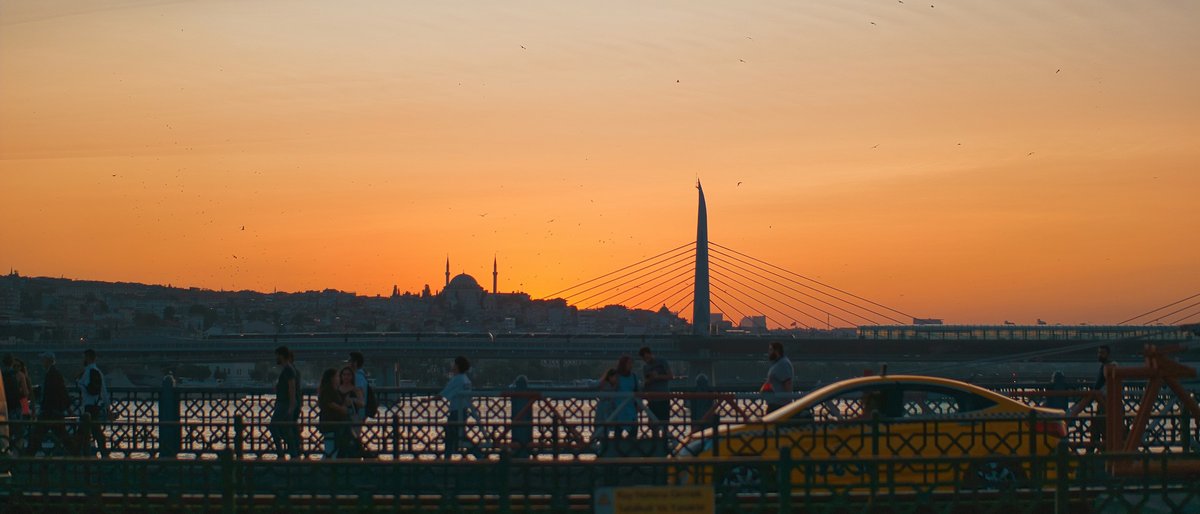
Take the ferry. This is not a scenic suggestion: it is the most practical way to move between the European and Asian sides, and it costs the same İstanbulkart tap as a tram ride. The Eminönü-to-Kadıköy route takes about 25 minutes, and the upper deck in late afternoon gives you the old city skyline backlit by the sun, tea vendors weaving between the wooden benches, seagulls close enough you could touch one. That said, the Bosphorus cruise boats docked at the same Eminönü piers charge 200 to 400 TRY per person for what amounts to the same water and roughly the same views, just slower. The regular commuter ferry is better in every way and costs a fraction. Mind you, ferry schedules thin out after 10 PM: plan your return from Kadıköy accordingly or you're stuck hailing a taxi at the pier.
Istanbul taxis are cheap by Western standards (a 10-minute ride across Beyoğlu might run 150 to 200 TRY, roughly $3 to $4) but the reputation for overcharging tourists is, to be fair, still earned. The classic moves: the meter "isn't working," the driver takes the coastal road to your hotel three blocks inland, or the 200 TRY note you handed over gets palmed and replaced with a 20 that the driver holds up claiming you shorted him. BiTaksi fixes all of this. Download it before you land. The app shows the estimated fare, the GPS-tracked route, and the driver's rating. You can pay through the app and skip the cash theater entirely. Uber technically operates here but dispatches the same yellow taxi fleet, so BiTaksi with its larger local driver pool tends to be the better pick. One more thing: if your hotel is in Sultanahmet or Fatih, the streets are too narrow for cars during the day. Expect to be dropped at the edge of the neighborhood and walk the last few minutes with your bags over cobblestone.
Walking within a single neighborhood works fine. Walking between neighborhoods is a calf workout. The climb from Karaköy up to Beyoğlu gains about 60 meters of elevation in under a kilometer: you'll feel it in your knees by day two. Sultanahmet is flatter but the cobblestones are uneven and slick when wet. İstiklal Caddesi, the long pedestrian boulevard above the Galata Tower, is smooth and level and packed shoulder-to-shoulder on weekend evenings. The smell of roasting chestnuts and corn from the street carts mixes with perfume drifting out of shop doorways and the occasional drift of cigarette smoke from someone at a sidewalk table. Comfortable shoes with real tread are the difference between enjoying this city and limping back to your hotel by nightfall.
On-the-ground: metro available · ride-hail apps work.
Primary modes of transit
- Tram (T1)
- Metro (M2, Marmaray)
- Ferry
- Taxi / BiTaksi
- Funicular (F1)
- Bus
- Walking
Popular connections from Istanbul
Lowest fares and fastest times for the most-booked departures, as observed on Omio in August 2025. Live prices vary.
Istanbul to Paris
Check times & book on Omio →Mode Fare from Fastest Bus from £89.28 43 h 50 min Flight Most booked from £52.01 3 h 40 min Istanbul to Barcelona
Check times & book on Omio →Mode Fare from Fastest Flight Most booked from £127.12 3 h 40 min Istanbul to Cologne
Check times & book on Omio →Mode Fare from Fastest Flight Most booked from £26.50 3 h 20 min Istanbul to Madrid
Check times & book on Omio →Mode Fare from Fastest Flight Most booked from £90.61 4 h 15 min Istanbul to Sofia
Check times & book on Omio →Mode Fare from Fastest Bus Most booked from £26.00 8 h 30 min Flight from £31.29 1 h 15 min Istanbul to London
Check times & book on Omio →Mode Fare from Fastest Flight Most booked from £26.97 3 h 50 min
Ready to book the connection?
Compare trains, buses & flights to and around Istanbul on Omio: live times & prices in one search.
Compare on Omio →More transport questions
How do I get from the airport to Istanbul?
From Istanbul Airport (IST), take the M11 metro to Gayrettepe, then transfer to the M2 for Taksim. About 50 minutes total, under 30 TRY with an Istanbulkart. Buy the transit card from vending machines in the arrivals hall. After midnight, Havaist shuttle buses run to Taksim hourly for 140 TRY.
Full answerHow do I get to Istanbul?
Istanbul Airport (IST), 35 km northwest of the city center, is Turkish Airlines' global hub with nonstop service from JFK, LHR, and 300+ other cities. Sabiha Gökçen (SAW) on the Asian side handles Pegasus and European budget carriers. From the US East Coast, direct flights run 10-11 hours at $600-1,200 round-trip; from London, 3.5 hours at £200-450.
Full answerWhat are the best day trips from Istanbul?
Büyükada tops the list: a 90-minute ferry from Kabataş to a car-free island with pine-shaded bike loops and hilltop fish restaurants. Bursa works if one of you wants İskender kebab at the original shop while the other photographs Sinan's Green Mosque. Yalova's Ottoman thermal baths are the couples' pick.
Full answerLast verified by automated review (v1.5.J.2) on . What is automated review?