Compare every Turkey city in March →
Stay in Bodrum in March
87 hotels in the Trip.com pool for Bodrum, from US$37 a night.
Opens Trip.com on Fri 5 Mar to Sun 7 Mar 2027; change the dates there.
March in Bodrum is off-season. This is a peninsula built for Aegean summer, and with daytime highs around 16.9°C (62°F) and lows near 10°C (50°F), the beach clubs along Gümbet and Türkbükü stay shuttered. Roughly half the restaurants in Bodrum town remain closed until April or May. Bars along Neyzen Tevfik Caddesi won't open for another 2 months.
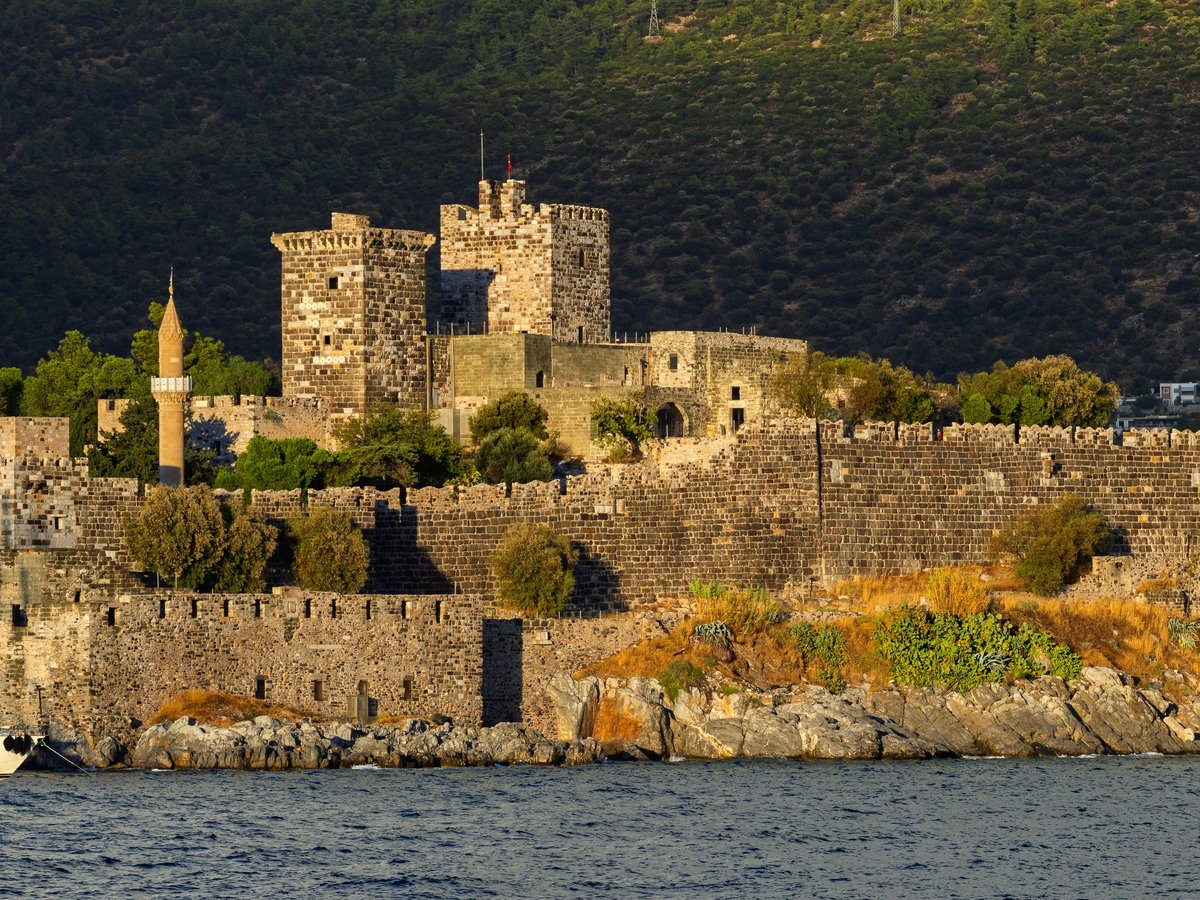
A different Bodrum surfaces in March, though. The hillsides between Bitez and Ortakent turn green after winter rains. Wild thyme and oregano spread across the Aegean slopes, and almond trees hold the last of their pale blossoms into the first week or two. Bodrum Castle stands nearly empty of tour groups, and you can spend a full morning in its grounds without encountering another visitor.
The Aegean still carries its winter chill through March. Nightlife in Gümbet and along Bar Street won't start until May or June. Rain falls on about 8 days through the month, sometimes in grey stretches lasting 2 or 3 days. But if archaeology, hiking, and a quiet Turkish coastal town are the draw, March delivers a version of Bodrum that July never offers. Hotel rates across the Bodrum peninsula sit at their annual floor.
Why visit in March
- Accommodation rates drop to their annual low, well below the June-September peak, making the peninsula accessible to travelers who'd find summer pricing prohibitive
- Bodrum Castle and the Mausoleum site are nearly free of tour groups, giving you room to wander at your own pace through galleries and ruins that require queuing in summer
- Peninsula hillsides between Bitez and Ortakent bloom with wildflowers and wild herbs after winter rains, and almond trees carry their last blossoms in the first 2 weeks
- Temperatures in the mid-teens Celsius (low 60s Fahrenheit) are comfortable for all-day walking, ruin-hopping, and cycling without the 35°C heat that makes summer sightseeing exhausting
Worth knowing
- Most beach clubs, many boutique hotels, and roughly half the coastal restaurants remain closed until late April or May, limiting dining and lodging options outside Bodrum center
- Sea temperature hovers around 15-16°C, far too cold for casual swimming or snorkeling without a wetsuit
- Rain arrives on about 8 days through the month, and extended grey stretches of 2-3 consecutive wet days are common enough to disrupt outdoor plans
- Nightlife is dormant compared to summer months, with clubs and waterfront bars along Bar Street not operating until the season begins in May or June
Best for
Think twice if
Early spring on the Aegean coast, with cool mornings that warm to light-jacket afternoons. Rain arrives in Mediterranean-pattern showers, rarely spanning a full day, but wind off the water makes the air feel colder than the thermometer reads. The Bodrum peninsula's exposed western headlands near Turgutreis amplify the wind chill on clear days.
Year-round climate
Averages from the last 5 years.
| Month | Avg high (°C) | Avg low (°C) | Rainfall (mm) |
|---|---|---|---|
| Jan | 15 | 10 | 118 |
| Feb | 15 | 9 | 44 |
| Mar | 17 | 10 | 53 |
| Apr | 21 | 14 | 38 |
| May | 26 | 17 | 22 |
| Jun | 31 | 22 | 10 |
| Jul | 35 | 25 | 1 |
| Aug | 34 | 25 | 2 |
| Sep | 30 | 22 | 6 |
| Oct | 25 | 17 | 41 |
| Nov | 21 | 14 | 115 |
| Dec | 17 | 11 | 144 |
Holidays and festivals in March
Public holidays
- Eid al-Fitr First Day (Tentative Date)(Ramazan Bayramı 1. Gün (Tentative Date))10 March 2027
- Eid al-Fitr Second Day (Tentative Date)(Ramazan Bayramı 2. Gün (Tentative Date))11 March 2027
- Eid al-Fitr Third Day (Tentative Date)(Ramazan Bayramı 3. Gün (Tentative Date))12 March 2027
Best things to do in March
Walk sections of the Carian Trail near Pedasa
outdoorsThe ancient Lelegian fortress at Pedasa sits on a pine-covered hilltop above Bodrum, reached by a marked trail segment of the long-distance Carian Trail. The walk takes about 2-3 hours round trip and passes through terraced olive groves, stone walls, and scattered wildflowers. The ruins at the top include defensive walls and cisterns with views across the peninsula.
Wildflowers peak on the slopes and mid-teens temperatures are ideal for multi-hour hikes without the heat stress that makes this trail unbearable by JuneBooking tipLocal hiking guides can be arranged through guesthouses in Bodrum center. Give 3-4 days notice in March as guides may not be on standby.
Explore Bodrum Castle and the Museum of Underwater Archaeology
cultureThe Knights Hospitaller fortification dating to 1522 dominates the harbor and houses one of the world's finest underwater archaeology collections, including Bronze Age shipwreck finds from the Aegean seabed. The castle grounds include towers, gardens, and exhibition halls spread across multiple levels. Allow 2-3 hours for a full visit.
Summer tour-group queues disappear entirely in March, and comfortable outdoor temperatures make the castle's open-air grounds pleasant for extended explorationBooking tipNo booking needed in March. The museum opens at 08:30 and you'll likely have the first hour nearly to yourself.
Visit the Mausoleum at Halicarnassus
cultureThe 350 BC tomb of Mausolus, one of the Seven Wonders of the Ancient World. The open-air ruin site preserves foundation stones, drainage tunnels, and fragments of the original structure. A small on-site museum displays models showing the mausoleum's original 45-meter height and sculptures now held at the British Museum in London.
Pleasant walking weather for this entirely outdoor site compared to the 35°C July heat that limits midday visits to a few minutesPeninsula market day trips
cultureBodrum's Tuesday market (Salı Pazarı) near the bus station fills with produce, olives, honey, spices, and textiles. Turgutreis hosts a larger Saturday market popular with locals from across the peninsula. March stalls feature spring artichokes, fresh almonds, and wild-foraged greens alongside the usual Aegean staples of dried herbs, olive oil, and cheeses.
Off-season markets show their local character without summer tourist crowds, and March produce stalls carry the first spring harvestBooking tipArrive before 09:00 for the best produce selection. Both markets wind down by early afternoon.
Turkish hamam experience
wellnessA traditional steam bath with scrub and massage in one of Bodrum's year-round hamams. The ritual involves progressively hotter marble rooms, a kese (rough mitt scrub), and a foam massage. Sessions typically last 45-60 minutes. The old-town hamams in the Çarşı district tend to be more traditional than resort-attached options.
Cool March evenings around 10°C make the contrast of stepping into a steam-filled hamam particularly rewarding, and off-season means no wait for a marble slabBooking tipWalk-ins are fine in March. In summer you'd need a reservation at popular hamams.
Cycle the Bodrum peninsula coast road
outdoorsThe road connecting Bodrum center to Turgutreis via Ortakent-Yahşi runs along the south coast with views of the Aegean and the Greek islands. The full loop around the peninsula covers roughly 100 km, but shorter segments between coastal towns work well for a half-day ride. The terrain is hilly with some steep climbs between bays.
March traffic is a fraction of summer volume, and temperatures in the mid-teens Celsius are in the comfortable cycling range before the heat arrivesBooking tipBike rental shops in Bodrum center operate year-round but March stock may be limited. Reserve 1-2 days ahead for a road bike.
Walk to the Myndos Gate and ancient city walls
cultureThe Myndos Gate (Myndos Kapısı) is the only surviving entrance of the ancient walls of Halicarnassus, where Alexander the Great's army fought its way into the city in 334 BC. The gate and surrounding wall fragments sit about 2 km west of Bodrum center. The walk from town passes through residential streets and ends at an open grassy area around the ruins.
Comfortable walking weather for the 2 km route from Bodrum center, with wildflowers lining the path and no summer heat to contend withWhat to eat in March
On menus now
Ot kavurması
A sauté of wild greens foraged from the peninsula hillsides after winter rains. The mix typically includes radika (dandelion greens), hardal otu (wild mustard), and other Aegean field plants, scrambled with eggs and olive oil. March is peak foraging season.
Çipura ızgara (grilled sea bream)
Winter and early spring fishing in the Aegean yields excellent wild-caught sea bream, grilled whole over charcoal at the harbor-side restaurants that operate year-round. March fish tends to be fattier and more flavorful than summer catches. Ask for günlük balık (daily fish) to get whatever came off the boats that morning.
What to drink
Sübye
Bodrum's traditional cold-pressed almond milk drink, made from the peninsula's own almond crop. Served at old-town shops in the Çarşı district, it has a slightly grainy texture and pairs well with the tail end of winter citrus. Thinned with water and lightly sweetened.
In markets
Enginar (artichoke)
Aegean artichoke season peaks from March into April. Every lokanta that stays open through winter serves zeytinyağlı enginar, the olive-oil braised preparation with dill and lemon, often alongside rice-stuffed variations. The Tuesday market stalls in Bodrum pile them high.
Deniz börülcesi (samphire)
Wild sea beans harvested from the rocky Aegean coastline from March through May. Served cold, dressed in olive oil and lemon, with a crunchy, briny bite that tastes like the coast. Look for it as a meze at year-round fish restaurants near the harbor.
Regular events in March
Çanakkale Victory and Martyrs' DayFree
National public holiday commemorating the 1915 naval victory in the Dardanelles. Government offices, schools, and banks close across Turkey. Bodrum holds smaller observances with flag displays and wreath-laying ceremonies at the Atatürk monument near the harbor.
March 18NevruzFree
Spring equinox celebration with Central Asian and Persian roots, observed across Turkey. Communities light bonfires and hold folk music gatherings on the evening of March 21. Bodrum's observance tends to be more subdued than in eastern Turkey, but you'll see bonfires and small public gatherings in the Çarşı district.
March 21Dünya Kadınlar Günü (International Women's Day)Free
Turkey marks the day with marches, panel discussions, and cultural exhibitions in city centers. Bodrum's Çarşı area typically hosts a small march and community displays during the first week of March. University groups and local women's organizations participate.
March 8Best places this March
Bodrum Castle (Bodrum Kalesi)
museumThe 1522 fortification at the harbor entrance houses the Museum of Underwater Archaeology, including the Uluburun shipwreck collection dating to the 14th century BC. March means empty galleries and comfortable temperatures for the outdoor castle grounds with their citrus trees and harbor views.
ÇarşıMausoleum at Halicarnassus
historic siteThe 350 BC tomb site, one of the Seven Wonders of the Ancient World. Foundation stones, drainage tunnels, and a small explanatory museum occupy the site. March's mild weather makes the entirely open-air visit comfortable compared to summer.
TepecikMyndos Gate (Myndos Kapısı)
historic siteThe sole surviving gate of ancient Halicarnassus, site of Alexander the Great's 334 BC siege. Free to visit at any hour, with surrounding wall fragments and a grassy area. A 2 km walk west from the town center.
YeniköyYalıkavak harbor
neighborhoodThe fishing-village character of this northern peninsula town shows through in March before the mega-yachts and summer crowds arrive. Year-round cafés line the small harbor, and the weekly market operates through the off-season. Worth the 20 km drive from Bodrum center.
YalıkavakDibeklihan
cultural centerA restored old stone village complex in the Ortakent area, functioning as a culture and art center with craft workshops, a small courtyard café, and seasonal exhibitions. Open year-round, and March visitors often have the courtyard and galleries to themselves.
OrtakentZeki Müren Arts Museum (Zeki Müren Sanat Müzesi)
museumThe preserved home of Zeki Müren, one of Turkey's most beloved singers and performers, who lived his final years in Bodrum. The small museum displays personal belongings, stage costumes, and memorabilia. A 15-20 minute visit that feels more intimate without summer queues.
Çarşı
Your packing checklist
Tick items off as you pack. Your progress saves in this browser.
All packed — have a great trip.
Insider tips
The Bodrum Tuesday market (Salı Pazarı) near the bus station is where locals buy produce, olives, and cheese at a fraction of what harbor-front shops charge. March's spring greens and artichokes are the real find at the stalls, not the tourist-oriented spice mixes.
If you rent a car to explore the peninsula, the road from Bodrum to Turgutreis via Ortakent-Yahşi passes through some of the best almond grove scenery in early March. The mid-morning light around 10:00 hits the groves at their most photogenic angle.
Seafood at the year-round harbor restaurants tends to be better in March than in peak season. Winter and early spring Aegean fishing yields higher-quality wild-caught fish, and you can usually get a table at places that require 2-week advance booking by July.
The dolmuş (shared minibus) system runs between Bodrum center and peninsula towns year-round, but March schedules are less frequent than summer. Last departures from smaller towns like Yalıkavak and Turgutreis can be as early as 19:00, so plan return trips accordingly.
Avoid these mistakes
- Booking a seaside resort or beach hotel expecting it to be open. Many coastal properties along Türkbükü and Gümbet don't operate between November and April. Confirm directly with the property before booking, and default to Bodrum town center where year-round options cluster.
- Planning outdoor activities without a rain contingency. Eight rainy days in March means you have roughly a 1-in-4 chance of any given day being wet. Have indoor alternatives like the castle museum, the Zeki Müren house, or a hamam visit ready for grey days.
- Underestimating the wind on exposed headlands and boat trips. The peninsula's position between the Aegean and Mediterranean creates strong lodos (southwest) and poyraz (northeast) gusts that can turn a mild 17°C day into a much colder experience. Dress for the wind, not the thermometer.
Practical tips for March
March falls outside Bodrum's tourism season, so several adjustments apply. Book accommodation in Bodrum town center around the Çarşı district rather than the coastal resort strips, as year-round hotels and pensions concentrate there. The dolmuş network runs reduced schedules between peninsula towns, with last departures as early as 19:00 from Yalıkavak and Turgutreis. Ferry service to the Greek island of Kos may be limited or suspended in March, so check with operators before planning a day trip. Restaurants that do stay open tend to close by 21:00 or 22:00 on weeknights. Milas-Bodrum Airport (BJV) has fewer flight connections in winter and spring, though Turkish Airlines and Pegasus Airlines maintain year-round routes through Istanbul. The drive from BJV to Bodrum center takes about 35 minutes. Cell coverage is reliable across the peninsula on Turkcell and Vodafone networks. Mosque visits require covered shoulders and knees, and tipping in restaurants typically runs 5-10% of the bill.
FAQ
Is March a good time to visit Bodrum?
March rates as fair for visiting Bodrum. It suits travelers interested in archaeology, hiking, and the quieter side of the Aegean peninsula at off-season rates. Most beach infrastructure stays closed, nightlife is dormant, and the sea is too cold for swimming. But ancient sites stand crowd-free, wildflowers bloom across the hillsides, and accommodation sits at its annual low. It works well for history-focused, budget-minded, and solo travelers. It does not work for beach vacations or party trips.
Can you swim in Bodrum in March?
Casual swimming is not realistic in March. The Aegean has not warmed up from winter and water temperatures hover in the 15-16°C range, which is wetsuit territory. Most beach clubs and waterfront facilities remain closed. A few hotel pools begin opening with heated water toward the end of the month, and Turkish hamams provide a warm-water alternative, but the sea itself won't be comfortable for swimming until late May at the earliest.
Are restaurants and hotels open in Bodrum in March?
Many are not. Coastal resort properties along Türkbükü, Gümbet, and Bitez tend to close from November through April. Bodrum town center around the Çarşı district has the highest concentration of year-round accommodation and dining. Expect roughly half the total restaurants on the peninsula to be shuttered, with those that remain open keeping shorter hours. Harbor-side fish restaurants and traditional lokantas are your most reliable options for eating out.
What should I wear in Bodrum in March?
Dress for European spring, not Mediterranean summer. Mornings require a warm layer like a fleece or light jacket, and by midday you can often strip down to a long-sleeve shirt. A waterproof shell is essential for the rain days that come roughly once every 4 days. Closed-toe shoes with decent grip handle the cobblestones in the old town and the uneven ground at archaeological sites. Bring a scarf for wind protection on headlands and for mosque entry requirements. Sunscreen remains necessary, especially on clear days with reflected Aegean light.
Things to Do in Bodrum in March
 Free cancellation
 Private Bodrum City Tour for Cruisers
Day trip: free cancellation.
via Viator Free cancellation
 Bodrum Private Luxury Gulet Cruise – Swim, Lunch, Hidden Bays
Day trip: free cancellation.
via Viator Free cancellation
 Private VIP Gulet Boat Tour With Lunch in Bodrum For 6 Hour
Cruise: 6 hours, free cancellation.
via Viator Free cancellation
 Private Full Day Ephesus Tour from Bodrum
Day trip: free cancellation.
via Viator Free cancellation
 Authentic Bodrum Village Life & Rug Weaving Experience
Day trip: free cancellation.
via Viator Free cancellation
 6 Hour Private Shore Excursion To Bodrum with Lunch Included
Day trip: 6 hours, free cancellation.
via ViatorLast verified by automated review (v1.7.2) on . What is automated review?