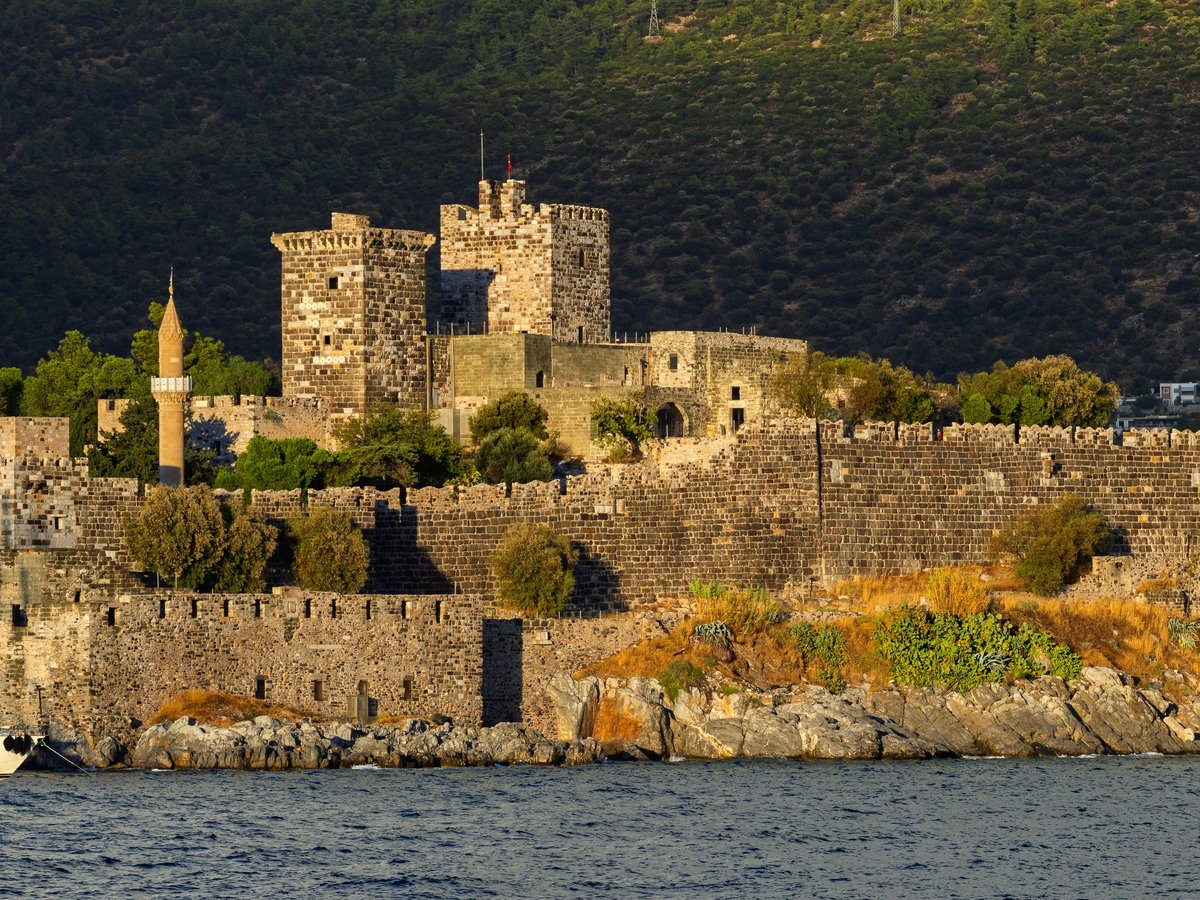
Bodrum wraps around a peninsula that pushes into the Aegean from Turkey's southwest coast. The site has been inhabited since the founding of Halicarnassus around 1099 BC. Layers of Greek, Roman, and Ottoman construction still show through the modern town. The center sits on the south-facing harbor, anchored by Bodrum Castle at the water's edge. From there, the peninsula splits into two arms. The northeast shore holds the wealthier, quieter villages of Türkbükü and Yalıkavak. The western arm stretches through the beach resorts of Gümbet, Bitez, and Ortakent before reaching the market town of Turgutreis and the fishing village of Gümüşlük near the tip. First-time visitors tend to underestimate the 25 km spread of the peninsula. Dolmuş minibuses connect the villages, but service stops around midnight. You'll need a car or taxi to move between Bodrum's neighborhoods after that. Mid-September evenings currently hover around 23.9°C with 78% humidity.
Neighborhoods
-
Bodrum Center (Merkez)
The old town packs itself between the harbor and the hillside south of Bodrum Castle, which dates to 1522. The Knights of St. Peter built it using stones hauled from the Mausoleum at Halicarnassus, a structure that had stood since 350 BC as one of the Seven Wonders of the Ancient World. White-washed houses with blue shutters line the lanes behind the bazaar on Cevat Şakir Caddesi. By noon, the smell of grilled levrek and octopus drifts up from the harbor fish restaurants. Neyzen Tevfik Caddesi traces the western waterfront, where gulet masts crowd the skyline and waiters set tables close enough to the sea that you'll feel the salt air on your skin. The eastern side near Milta Bodrum Marina tends to be calmer. After 23:00, noise from the bars on Dr. Alim Bey Caddesi carries several blocks.
- Best for
- First-time visitors who want to walk everywhere, couples, history-focused travelers
- Key streets
- Neyzen Tevfik Caddesi (western waterfront), Dr. Alim Bey Caddesi (bar street), Cevat Şakir Caddesi (bazaar and fish market), Kale Caddesi (approach to the castle)
-
Gümbet
Gümbet fills the first bay west of Bodrum center, about 3 km along the coast road. Package tourists from northern Europe have claimed this strip since the 1990s, and the beach bars blast music from mid-morning through late night during July and August. The sand beach runs roughly 500 meters, backed by budget hotels and all-day breakfast spots serving full English alongside menemen. To be fair, September quiets things down. You'll hear more Turkish on the beach by mid-month. The water in the bay is calm and shallow, wading-depth for a good 50 meters out. Side streets behind the beach road have gözleme stalls selling 2-3 flatbreads for around 100 TRY.
- Best for
- Budget travelers, party-focused visitors in their 20s, anyone wanting a beach within walking distance of Bodrum's nightlife
- Key streets
- Gümbet Sahil Yolu (main beach road), the Gümbet roundabout and dolmuş stop, the alleys behind the central hotel strip
-
Bitez
Bitez spreads along a wider bay about 6 km west of Bodrum center. Windsurfers and kitesurfers have claimed this beach for over 20 years, and the afternoon meltemi wind still pulls them out reliably from June through September. The beach is mostly pebble with sand patches near the Bitez Yalısı end, and tangerine orchards back up to the shoreline in several spots. Before 09:00, you can smell the citrus when the meltemi hasn't started yet. Small pensions and boutique hotels line the road behind the beach, priced 20-30% lower than Bodrum center for comparable rooms. A few waterfront restaurants stay open past midnight with low-key live music on Fridays. The village mosque's 05:30 call to prayer carries across the bay.
- Best for
- Windsurfers, couples looking for a quieter beach base, mid-budget travelers who still want evening restaurant options
- Key streets
- Bitez Yalısı (the beachfront road), the lane running inland past the old tangerine groves toward Bitez village
-
Ortakent-Yahşi
Ortakent sits about 12 km west of Bodrum center, split between the hilltop village and the Yahşi beach strip below. The beach runs nearly a kilometer of coarse sand, gentler and shallower than most Bodrum peninsula alternatives. Families with small children fill the Yahşi end by 10:00 on summer mornings. The Mustafa Paşa tower, a roughly 400-year-old Ottoman watchtower, still stands in the village proper and you can spot it from the beach road. Yahşi has a small promenade with ice cream shops and lokanta-style restaurants where a full meal of köfte, salad, and ayran runs about 250 TRY. Most streets in Ortakent empty out by 22:00.
- Best for
- Families with young children, travelers who want a car-free beach day, anyone who needs distance from nightlife noise
- Key streets
- Yahşi beach promenade, the uphill road through Ortakent village past the Mustafa Paşa tower
-
Türkbükü
Türkbükü sits on the north shore of the peninsula, about 20 km from Bodrum center. Turkish celebrities and Istanbul money discovered this bay in the early 2000s, and it has stayed expensive since. Sunbed rentals at the beach clubs run 1,500-3,000 TRY per person. The Türkbükü bay is small and sheltered, the water clear and green-blue against a rocky shore. Stone houses climb the hillside behind a single waterfront road lined with seafood restaurants where a meze spread for two starts around 2,000 TRY. Macakızı and the Mandarin Oriental anchor the luxury end. Mind you, you'll see more designer sunglasses per square meter here than anywhere else on the Aegean coast. By mid-September, several beach clubs start to close for the season.
- Best for
- Well-funded couples, design-conscious travelers, anyone who wants to see Turkey's moneyed summer scene up close
- Key streets
- The single waterfront road through Türkbükü, the hillside path up toward Gölköy
-
Yalıkavak
Yalıkavak occupies the northwestern tip of the peninsula, about 18 km from Bodrum center. The old village sits uphill from the water, with stone houses and a weekly Thursday market that still sells produce, olives, and sponges alongside tourist trinkets. Down at the waterfront, Palmarina Bodrum opened in 2014 and brought a strip of upscale restaurants and brand-name shops that feels disconnected from the village above. The marina berths superyachts in the 40-60 meter range. Fishermen mend nets 200 meters from where someone is parking a Riva. Wind picks up hard in the afternoon. The clanking rigging at Palmarina's cafes gets loud. More residents live here year-round than in Türkbükü, so the shops and restaurants keep more consistent hours.
- Best for
- Couples and older travelers who want upscale dining with village character, superyacht watchers, Thursday-market browsers
- Key streets
- The Thursday market lane in upper Yalıkavak, the Palmarina Bodrum waterfront promenade, Tilkicik Koyu (small bay east of town)
-
Gümüşlük
Gümüşlük sits at the western end of the peninsula, about 25 km from Bodrum center. The village was built over the ruins of Myndus, an ancient Carian city, and you can still see submerged wall fragments in the shallow water near the shore. A stone causeway connects to Tavşan Adası (Rabbit Island) at low tide, and you walk through ankle-deep water to reach it. That said, the kitchen quality at Gümüşlük's waterfront fish restaurants tends to match the sunset views, which might be the best on the Bodrum peninsula. Tables sit on wooden platforms over the water, close enough that you can hear the waves beneath your chair. Gümüşlük has no clubs, no beach bars, and no construction above 2 stories in the archaeological protection zone. Most waterfront restaurants close by 23:00.
- Best for
- Sunset seekers, seafood lovers, couples or solo travelers who want genuine quiet, photographers
- Key streets
- The waterfront restaurant row along the bay, the stone causeway to Tavşan Adası, the back lanes through the old Greek-era stone houses
-
Turgutreis
Turgutreis faces due west on the peninsula, about 22 km from Bodrum center. It functions as the main market town for the western arm, with a Saturday bazaar that draws shoppers from surrounding villages. The produce stalls sell local honey, dried figs, and Bodrum's tangerines when they're in season from November through February. Turgutreis has a long waterfront promenade with a public beach, and D-Marin Turgutreis at the southern end serves a yachting crowd that is less flashy than the Yalıkavak set. Worth noting that apartment rentals here run 40-50% cheaper than Bodrum center, which has made the town popular with longer-stay visitors. The sunset view from Turgutreis reaches the Greek islands. Kos sits about 20 km across the strait.
- Best for
- Long-stay travelers on a budget, self-catering visitors, anyone who wants a working Turkish town rather than a resort strip
- Key streets
- The Saturday bazaar area near the town center, the waterfront promenade from D-Marin Turgutreis north, Akyarlar road south toward the peninsula's tip
FAQ
Is Bodrum safe for solo travelers?
Bodrum scores 7.2 out of 10 for solo-traveler safety (see the TTDI Solo-Safety Index). The town center and main resort areas feel safe on foot after dark. The bar district near the castle gets rowdy past midnight, so keep to well-lit streets at that hour. In quieter villages like Gümüşlük or Ortakent, bring a flashlight for poorly lit side roads after sundown. Women traveling solo on the Bodrum peninsula report generally positive experiences. A late-night taxi from Gümüşlük back to center runs roughly 800-1,000 TRY.
Which Bodrum neighborhood is best for families with children?
Bodrum rates 6.8 out of 10 for family friendliness (see the TTDI Family-Friendliness Index). Ortakent-Yahşi has the most family-suited beach on the peninsula, with gentle sand that stays wading-depth well offshore and a promenade with casual restaurants. Bitez works too if your children handle a pebble beach without complaint. Avoid Gümbet if noise is a concern. Türkbükü is technically calm but the prices tend to assume adults-only budgets.
How LGBTQ+ friendly is Bodrum?
Bodrum scores 3.5 out of 10 for LGBTQ+ friendliness (sourced from TTDI's editorial rubric). Turkey's broader social conservatism is the primary factor. The resort areas tend to be more tolerant than inland Turkey, and same-sex couples do visit the peninsula. Public displays of affection draw attention in most parts of the Bodrum peninsula outside the resort hotels. The Türkbükü beach club scene is probably the least likely pocket to raise eyebrows. No dedicated LGBTQ+ venues operate on the peninsula as of September 2026.
How much should I budget for a day in Bodrum?
At the September 2026 rate of 48.5964 TRY to 1 USD, a mid-range day in Bodrum center costs roughly 3,500-5,000 TRY (72-103 USD) covering a pension room, two restaurant meals, a museum entry, and local transport. Gümbet and Turgutreis run 25-40% cheaper for accommodation. The north-shore villages of Türkbükü and Yalıkavak can easily double those figures. A waterfront fish dinner for two in the center runs 1,200-2,000 TRY before drinks.
Can I work remotely from Bodrum?
Bodrum scores 6.8 out of 10 for digital-nomad suitability (sourced from TTDI's editorial rubric). Reliable Wi-Fi is common in Bodrum center hotels and most waterfront cafes. Co-working spaces are limited compared to Istanbul or Antalya. Bodrum center and Yalıkavak have the best infrastructure for longer stays. Off-season, from October through April, brings lower rents, fewer crowds, and a quieter rhythm that suits focused work. Some restaurants and smaller shops in Bodrum close between November and March.
How do I get between Bodrum's neighborhoods?
Dolmuş minibuses depart from the Bodrum otogar (bus station) near the center to all major neighborhoods. Routes run every 15-30 minutes in summer, less frequently after October. The ride to Turgutreis takes about 45 minutes; Gümbet is 10 minutes. Fares sit in the 25-45 TRY range depending on distance. Past midnight, taxis become the main option. A rental car helps for reaching Türkbükü, Yalıkavak, and other north-shore villages on your own schedule. Wikivoyage's Bodrum guide (https://en.wikivoyage.org/wiki/Bodrum#Get_around) has useful route-by-route details.
Last verified by automated review (v1.7.2) on . What is automated review?